
The Man Who Chose Insomnia
You lie awake at three in the morning and the ceiling becomes a philosophical problem. Not the ceiling itself, but what it means that you are staring at it again, that sleep has once more refused you, that the darkness in the room feels less like absence of light and less like presence of something you cannot name but which seems to have opinions about you. The mind at that hour does not rest — it accelerates, it turns on itself, it produces thoughts that daylight would be too embarrassed to think. You are not suffering exactly. You are being educated by a teacher who never agreed to teach you.

Emil Cioran spent decades in that classroom. From his arrival in Paris in 1937, a young Romanian from Sibiu carrying a scholarship and a temperament already cracked along lines that would never fully close, through the long stateless middle of his life in a chambre de bonne on the Rue de l’Odéon, insomnia was not a symptom he sought to cure. It was, as he would come to understand it, the central fact of his existence — the condition under which everything he thought and wrote was produced. He slept badly, chronically, catastrophically, and out of that refusal of rest came one of the most unsettling bodies of philosophical writing in the twentieth century. Not because insomnia is romantic, which it is not, but because it strips the self of its official story. At four in the morning you cannot maintain the fiction that you are a coherent person with reasonable intentions.
Cioran was born in 1911 in Răşinari, a village in the Carpathian foothills where his father was an Orthodox priest. He studied philosophy in Bucharest, became intoxicated by Nietzsche and Schopenhauer with the specific fervor of a young man who recognizes in a thinker not an influence but a mirror, and published his first book, On the Heights of Despair, in Romanian in 1934 when he was twenty-three years old. The title was not a metaphor. The prose was written, he said, during nights when the alternative to writing was something he preferred not to specify. That book won the Royal Foundation Prize for Literature in Romania and was praised by figures who would soon be horrified by other things Cioran wrote — a fact worth remembering, because it establishes that the darkness was there from the beginning, before any of the later complications, before the political catastrophes of the 1930s that would mark his reputation for the rest of his life.
What is philosophically significant about insomnia — and Cioran understood this with a precision that most comfort-seeking thinkers deliberately avoid — is that it abolishes the boundary between the self and its own terror. In normal waking life, consciousness maintains a working distance from the void it secretly knows is there. Sleep is one of the mechanisms by which that distance is preserved. Remove it and the architecture collapses. You are left with what Cioran called, in his 1949 masterwork A Short History of Decay, the spectacle of a consciousness that has nothing left to believe in, including itself. That book, his first written in French rather than Romanian — a linguistic exile he chose deliberately, using the foreignness of the language as a kind of ascetic discipline, forcing himself to write in a tongue that would not permit him the warm irresponsibilities of his mother language — announced a thinker who had decided that clarity was more important than consolation.
He was not performing despair. That is the mistake most readers make on first encounter. The aphoristic ferocity, the contempt for progress, the corrosive skepticism toward every system of meaning humans have ever constructed — none of this was a pose adopted for literary effect. It was reported, with the precision of a man describing weather he was standing in.
A Better Life
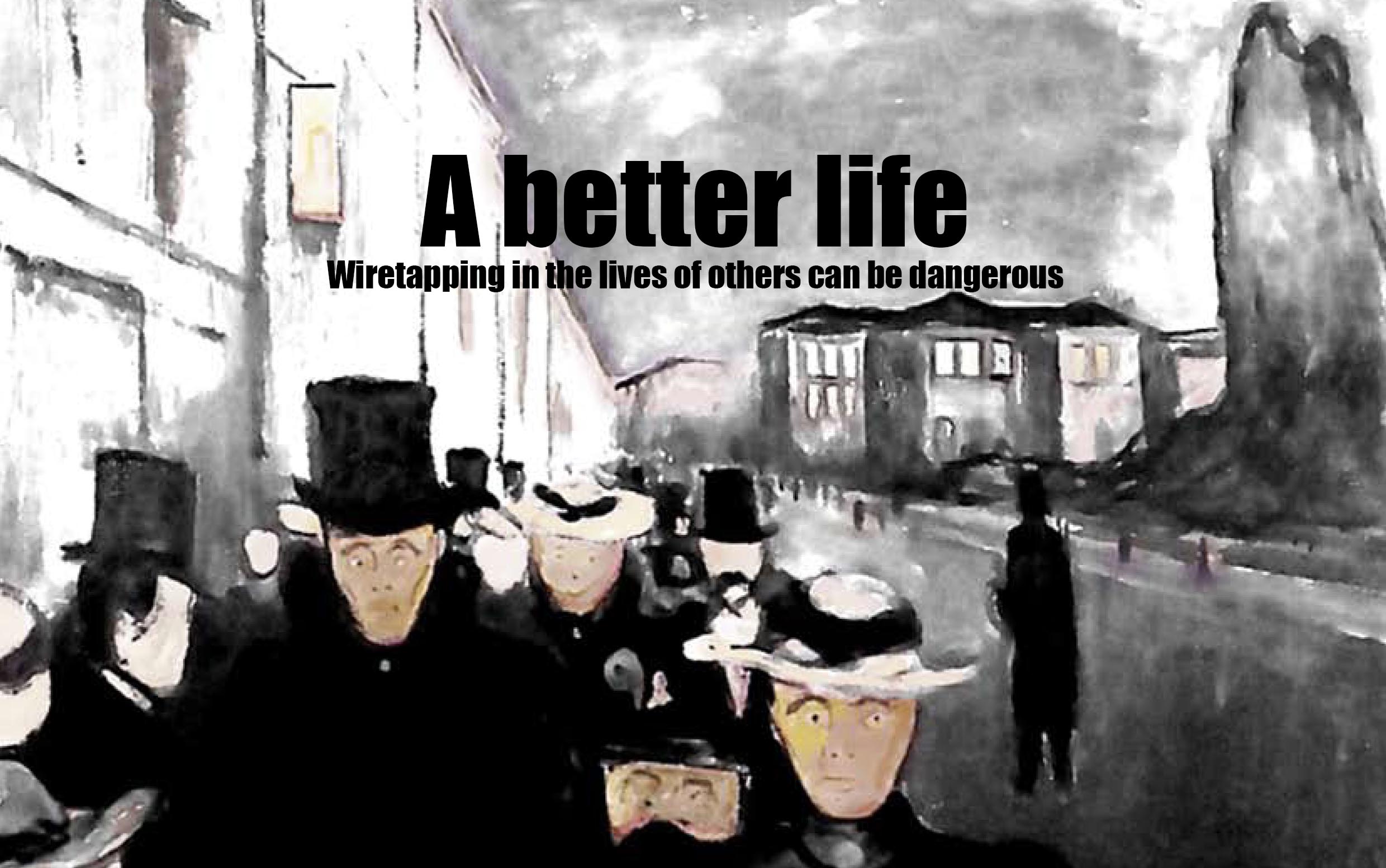
Drama, thriller, by Fabio Del Greco, Italy, 2007.
Rome: Andrea Casadei is a young investigator specializing in audio wiretapping who conducts investigations commissioned by husbands betrayed by their wives, or by parents worried about what their children are doing outside the home. But what interests him most is understanding the human soul, listening to casual conversations in the streets, knowing what people think. He often meets in Piazza Navona with his friend Gigi, a frustrated street artist obsessed with success at all costs, with whom he shares a passion for wiretapping. Shocked by the mystery of the disappearance of Ciccio Simpatia, another street artist common friend, Andrea decides to abandon the commissioned works to seek a better life and reflect on his own and others' existence. He will meet the actress Marina and with a bug he will slowly enter her life until he discovers her most unthinkable secrets. The film deals with an important theme of contemporary Western society: the lack of love. The mysterious and tormented figure of Marina is reflected in a gloomy and soulless Rome.
Director Fabio Del Greco declared about his film: "Perhaps this film is a reflection on the art of observing, of listening, in short, of what one does when one leaves the real world to tell about it. Perhaps he wants to talk about the subtle relationship between the mirages of success touted by today's society, power and the most authentic human relationships.A 'dark cloud' hangs over the city: it is engulfing everyone in a sort of indistinct, uniform mass, where everyone thinks the same things, where everyone they are more alone. Where is the truest part that makes us unique? Maybe you can try to intercept it only secretly."
LANGUAGE: Italian
SUBTITLES: English, Spanish, French, German, Portuguese, Dutch.
Romania as a Wound
You are nine years old and you live at the edge of the known world — not metaphorically, but geographically, administratively, culturally. The village of Rășinari sits in the Carpathian foothills of Transylvania, a settlement so peripheral that its very existence seems like an oversight of history, a place that empires passed through without stopping, that modernity glanced at and then looked away. Emil Cioran was born there in 1911, the son of an Orthodox priest, and what that means is not simply a biographical detail but an entire epistemological condition: to be born in Rășinari in 1911 is to be born inside a wound that has not yet been given a name.
Transylvania at that moment was not yet Romanian — it would not be formally incorporated until 1918, following the collapse of the Austro-Hungarian Empire. Which means the young Cioran grew up in a province that belonged simultaneously to everywhere and nowhere, governed by an administrative apparatus that spoke German and Hungarian while the villages murmured in Romanian, a language that the state around him treated as the dialect of servants. This is the condition that shapes a mind before it can defend itself: the discovery that the tongue in your mouth is not the tongue that counts, that the words your mother used to call you in from the cold are the wrong kind of words for the world that decides things. Georg Simmel, writing in his 1908 essay on the stranger, described a figure who carries the freedom and the anxiety of never fully belonging to the place they inhabit. Cioran did not choose that position — it was installed in him before he could walk.
He left Romania for Paris in 1937, on a scholarship from the French Institute, and he never returned to live there. But the more consequential departure happened earlier, invisibly, when he made the decision — documented in his letters and reconstructed by scholars like Patrice Bollon in his 1997 biography Cioran, l’hérétique — to abandon Romanian entirely and write only in French. This was not an act of assimilation. It was closer to an act of mutilation performed in the hope of liberation. French, for Cioran, was a language he had learned as an adult, a language with no childhood inside it, no lullabies, no prayers heard through a door left ajar. It was, precisely because of this, a language in which he could be ruthless. You cannot be sentimental about a tongue that carries none of your sediment.
What emerged from this transplantation is a prose style that operates like a scalpel — the extreme compression of the Syllogismes de l’amertume, published in 1952, or the glacial aphorisms of De l’inconvénient d’être né in 1973 — but what drives the blade is not aesthetic preference. It is the discovered advantage of homelessness. A man who belongs nowhere is under no obligation to protect anything. He has no community whose feelings he must manage, no national tradition he is duty-bound to flatter, no ancestral pride that requires him to soften a verdict. The Romanian province did not give Cioran roots. It gave him a preview of how thoroughly a human being can be made to feel superfluous by the structures around him — and that preview, internalized and radicalized, became his entire philosophical method.
The self-erasure at the center of his thought — the suspicion of consciousness itself, the conviction that birth is the original catastrophe — is not an abstract metaphysical position arrived at through reading. It is the philosophical elaboration of what it felt like to be a child whose language did not appear on the official maps, in a province that history treated as a transitional inconvenience, learning early that existence does not come with any guarantee of legitimacy.

The Seduction of Fascism and Its Aftermath
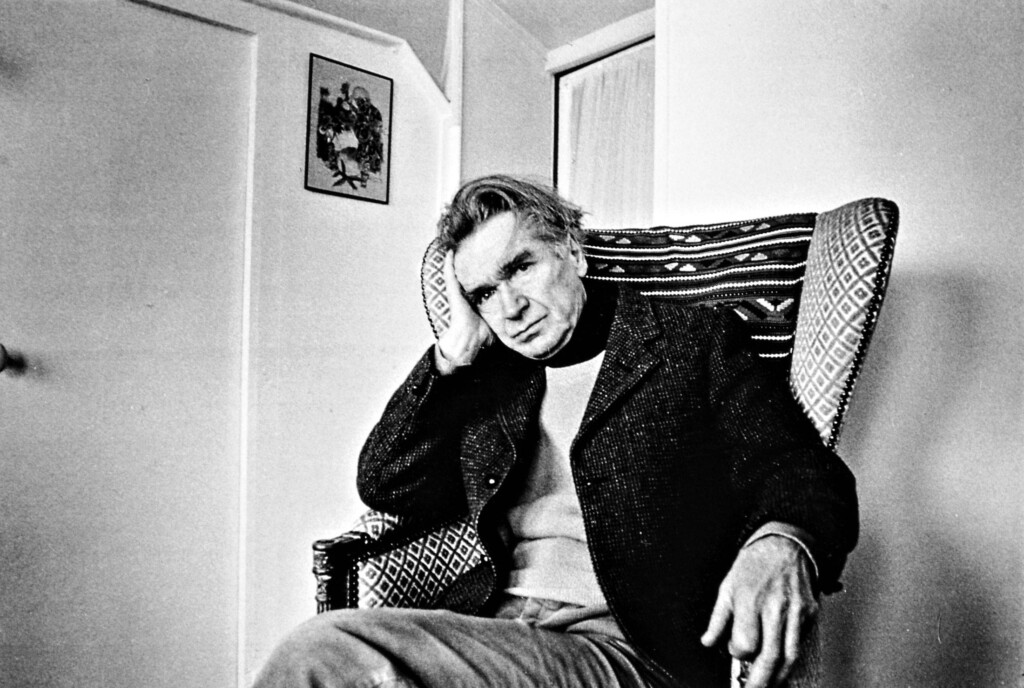
You are reading a man who spent decades insisting that all ideas are traps, all collectives are lies, all enthusiasm a form of self-betrayal — and yet in his thirties he wrote sentences praising the Iron Guard with the ardor of someone who had never doubted anything in his life. This is not hypocrisy in the ordinary sense. It is something more instructive and more disturbing: proof that lucidity is not a permanent condition but a destination arrived at only after catastrophic error.
In the mid-1930s, the young Cioran published “The Transfiguration of Romania,” a text so saturated with nationalist fervor and longing for violent renewal that it reads today like a document from another civilization — which in a sense it is. He called for the transformation of Romania through collective ecstasy, praised Corneliu Zelea Codreanu and the Legion of the Archangel Michael, and wrote with genuine intoxication about the redemptive force of a people awakened to its destiny. The language is not the cautious flirtation of an intellectual trying on dangerous ideas. It is the language of someone who believed, completely, that blood and soil and sacred violence could cure what history had left incomplete. He was twenty-four years old and had already read Nietzsche and Bergson with the kind of attention that leaves permanent marks on a mind — and none of it protected him.
This is the part that should destabilize any reader who considers philosophical sophistication a defense against barbarism. George Orwell, writing in 1945, observed that nationalism is not a theory but a hunger — an emotional need so powerful it can colonize any intellectual structure built on top of it. Cioran’s case proves the thesis at its most brutal: the same sensitivity that made him capable of writing about suffering with surgical precision also made him susceptible to the aesthetics of a movement that promised suffering transformed into glory. The Iron Guard was not merely a political organization. It was a cult of martyrdom, death mysticism, and Orthodox Christian fanaticism that by 1938 had already participated in assassinations, pogroms, and public rituals designed to make murder feel transcendent. Cioran did not merely fail to notice. He participated rhetorically in the seduction.
What followed was not a clean break but a long silence on the question, and then something rarer than a retraction: a kind of philosophical self-dissolution in which the very faculty that had produced the enthusiasm — the will to meaning, the appetite for collective salvation — became the primary object of his suspicion. By the time he arrived in Paris after the war, writing in French rather than Romanian, the shift was not linguistic convenience. It was surgical self-exile from the version of himself that had been capable of such writing. French, as he said himself, was a language without a homeland, and that was precisely the point.
But the question his life refuses to answer cleanly is whether the later work — the aphorisms on illusion, the meditations on futility, the corrosive skepticism about every form of historical hope — is wisdom earned through confrontation with his error, or wisdom used as an alibi for it. Susan Sontag, writing in the early 1980s, noted that certain intellectuals treat their past enthusiasms the way a snake treats its shed skin: with no acknowledgment that it was ever theirs. Cioran never publicly renounced “The Transfiguration of Romania.” He allowed it to remain out of print, avoided the subject in interviews, and cultivated an image of radical disengagement that made questions about political commitment seem almost incoherent given who he had become. The performance was flawless, which is itself a kind of answer.
What it means that a mind capable of that later clarity was also capable of that earlier intoxication is a question that does not resolve simply by cataloguing the error.
The Suicide of the Mother Tongue
You sit down one evening with a language you have spoken since birth, the language in which you first named fear and first named your mother, and you decide to kill it. Not abandon it — kill it. Cioran made this choice sometime around 1947, when he began writing exclusively in French, and the decision carried none of the immigrant’s usual nostalgia, none of the exile’s quiet grief over a lost warmth. It was surgical, deliberate, and in his own account, almost clinical in its satisfaction. He described Romanian as a language too organic, too soaked in the body, too willing to accommodate the lyrical excess he needed to destroy in himself. French, by contrast, was a scalpel — precise, cold, skeptical of its own music.
What makes this act philosophically strange is that Cioran was not seeking clarity. He was not moving toward something. He was amputating a faculty precisely because it functioned too well. Romanian had allowed him to write with a kind of ferocious, unguarded velocity — the aphorisms of On the Heights of Despair, published in 1934 when he was twenty-three, pour out of the page with an almost feverish energy, the prose of someone who has not yet learned to distrust his own fluency. That book made him famous in Bucharest. It also, he later suggested, made him dangerous to himself. A language that flows that easily becomes a narcotic. You begin to love the sound of your own suffering.
French imposed a completely different constraint, one that linguists and cognitive theorists have circled around for decades without fully naming: when you write in a language you did not absorb through the skin, you cannot write on automatic. Every sentence requires a small act of will, a tiny hesitation before the verb. George Steiner, in After Babel published in 1975, argued that translation is not a secondary activity but the very model of all human understanding — that we are always, in some sense, translating ourselves into the available grammar. Cioran radicalized this intuition by choosing a grammar that would never fully accept him, ensuring that the translation was always slightly wrong, always bearing the friction of a foreign speaker who knows he is foreign. The imperfection was the point.
This is what A Short History of Decay, his first book written in French and published in 1949, is actually doing beneath its catalogue of spiritual failures and civilizational exhaustion. The argument Cioran builds across those pages — that every system of thought is secretly a vanity, that history is the graveyard of enthusiasm, that the only honest intellectual position is a kind of luminous surrender — could only be made in a language that did not belong to him. The style itself enacts the thesis. Each sentence arrives with a kind of cool, slightly alien authority, the authority not of someone who owns the language but of someone who has studied it long enough to understand its pretensions from the outside. Style, for Cioran, was not decoration. It was the only position still available after every ideology, every faith, and every philosophical system had been exposed as a performance of its own desire to persist.
What disappears when you surrender a mother tongue is not vocabulary. It is the particular texture of your unconscious — the metaphors that arrive before you choose them, the rhythms that think for you before you think. Cioran spent years rewriting single French sentences, not for elegance but to exhaust every automatic response, to arrive at formulations that had cost him something. His notebooks from the period record the labor with an almost obsessive precision. He was not building a new self in French. He was ensuring that no self could be built at all — that the language would keep him permanently unsettled, permanently a stranger to his own statements, unable to take comfort in the sound of his own voice because the voice was always, slightly, not his.
Pessimism as Precision Instrument
You are reading a philosopher who seems to hate everything, and your first instinct is sympathy — you think you recognize a wounded man dressing his wounds in language. That instinct is the trap. What Cioran performs in On the Heights of Despair, published in Romanian in 1934 when he was twenty-three, is not the transcription of suffering but the construction of a perceptual instrument. Despair, for him, is not a condition to be cured but a lens ground with uncommon precision, one that corrects the distortions introduced by hope.
The difference matters enormously. Arthur Schopenhauer built a metaphysical architecture around suffering — the Will as blind cosmic engine, desire as the mechanism of perpetual dissatisfaction, and quietism as the only dignified exit. That system, however rigorous, still requires a foundation: Schopenhauer needs the noumenal, needs Kant’s inheritance, needs the scaffolding of a complete ontology to support his conclusions. The suffering arrives at the end of a syllogism. Cioran begins where Schopenhauer concludes, and then refuses the comfort of having concluded anything. There is no system here, no scaffold, because the moment you organize despair into a metaphysics you have already softened it — you have given it a shape the mind can grip and therefore survive.
What makes On the Heights of Despair philosophically strange is its insistence on treating insomnia, fever, and exhaustion not as symptoms requiring diagnosis but as epistemological states with cognitive privileges. The sleepless body, Cioran argues, has stripped away the merciful film that covers ordinary waking experience. You see the furniture of your room at three in the morning not as furniture but as dense, indifferent objects that preceded you and will outlast you without registering your presence. This is not melodrama. It is phenomenology conducted at the outermost edge of what the nervous system can sustain, and it produces a kind of knowledge that comfort systematically forecloses.
Tears and Saints, published three years later in 1937, moves this logic into theological territory without abandoning it. Cioran is not interested in the mystics as believers. He is interested in them as people who had looked directly at the insufficiency of the world long enough to burn through the concept of the world entirely. Saint Teresa of Ávila, John of the Cross — their ecstasies are, in his reading, not arrivals but annihilations, the self dissolving not into grace but into the unbearable recognition that nothing in ordinary experience justifies ordinary experience. The sacred, here, functions as the name for whatever remains when all consolation has been methodically removed.
Samuel Beckett, who would later become one of Cioran’s few genuine intellectual affinities in Paris, arrived at endurance through narrative. His characters persist — not because they believe in persistence but because stopping requires a decision, and the will has atrophied past the point of decision. That is a different kind of precision. Beckett works through exhaustion of form, through the slow dissolution of plot, character, and language itself, until what remains is the bare fact of continuation. Cioran does not continue in that sense. He refuses the horizontal dimension. Each aphorism, each fragment, is vertical — a single shaft driven into the same ground, not a journey across terrain. The question Beckett’s work asks is how long a human being can go on; the question Cioran’s work asks is whether the categories that make going on legible were ever honest.
This is what separates pessimism as precision from pessimism as temperament. A man in a bad mood reaches for dark conclusions. A precision instrument reaches for accurate ones regardless of where they land. Whether accuracy at this register is compatible with a life that can sustain itself across decades — whether Cioran himself could survive his own instrument — is something the biography answers in ways the philosophy does not anticipate.
A vision curated by a filmmaker, not an algorithm
In this video I explain our vision
The Trouble with Being Born

You are handed a life before you have the faintest capacity to refuse it. The body arrives, the nervous system fires, and somewhere in the accumulated shock of sensation and need, something begins to call itself “I” — not because it chose to, but because the machinery of consciousness has no off switch. This is where Cioran begins in 1973, with a book that refuses to argue and instead accumulates, aphorism by aphorism, the case that existence precedes not only essence but consent. The scandal of the work is not its pessimism. It is its precision.
Most readers approach that text as a literary performance, an aesthetic of despair crafted for effect. This misreads the epistemological seriousness underneath the style. Cioran is not lamenting existence — he is diagnosing the structural condition of being thrown into a self without consultation, and then expected to defend that self as though it were a choice. What he describes in sentences sharp enough to draw blood is the particular vertigo of a consciousness that can turn on itself, that can look at its own origin and find nothing there that resembles a decision. The Romanian verb a se naște — to be born — is reflexive in construction but not in meaning: you do not birth yourself. The grammar lies.
What is striking, in retrospect, is how closely this maps onto findings that developmental psychology would spend the following decades assembling from entirely different materials. John Bowlby’s attachment theory, elaborated through the 1960s and 1970s in his three-volume Attachment and Loss, demonstrated that the psychological architecture of a human being is constructed almost entirely through unchosen relationships in the first years of life — bonds the infant does not select, caregiving patterns the child cannot evaluate, emotional templates laid down before language exists to question them. By the time a person develops the cognitive machinery to ask who they are, the answer has already been written into the nervous system by others. Cioran, without a single citation, had located the same problem from the inside: the self is not yours. It was assembled by forces that preceded your awareness of being a self at all.
What makes this philosophically inconvenient — which is why it tends to be dismissed rather than engaged — is that it destabilizes the entire apparatus of moral responsibility and self-improvement that Western modernity runs on. If the core of what you are was installed before you were capable of consent or refusal, then the relentless cultural insistence on self-authorship, on curating your identity, on becoming the person you want to be, rests on a foundation that doesn’t exist. Not as pessimism. As architecture. The house was built before you arrived, and you were handed a key you never asked for and told the place was yours.
There is a kind of social contract that operates entirely below the level of politics — the contract that says you will want to persist, that you will treat your continued existence as self-evidently worthwhile, that you will not pause too long at the question of whether the whole enterprise was worth entering. Cioran breaks this contract on every page, and the discomfort this produces in readers is not intellectual. It is existential. The book functions less like an argument and more like a mirror held at an angle you were never supposed to use, reflecting back not your face but the seam where the stitching shows, the place where you were assembled rather than born entire.
The question Cioran never answers — and clearly has no interest in answering — is what one does with this knowledge. Not because he is being evasive, but because the moment you frame it as a question requiring an answer, you have already slipped back into the problem: the assumption that consciousness is a problem-solving instrument, that discomfort is a symptom waiting for its cure, that the unasked-for life must still justify
The Saint Without God
You have prayed before, even if you called it something else — that moment in the small hours when the mind empties itself not toward sleep but toward a kind of erasure, when you want not an answer but the dissolution of the one asking. Cioran lived permanently in that moment. He did not arrive there by accident or despair alone; he arrived there through a methodical reading of the Christian mystics, particularly Meister Eckhart, whose sermons from the late thirteenth and early fourteenth centuries proposed something so radical it was nearly condemned by the Church that housed it: that the highest relation to God was to move beyond God, to reach the Gottheit, the Godhead, the formless ground beneath all divine personhood. Eckhart’s mystic did not pray to a figure; he annihilated himself until the distinction between subject and divine collapsed. For Cioran, this was not theology. It was autobiography.
What drew him to the apophatic tradition — to negative theology in its most uncompromising forms — was its structural honesty. Every positive claim about the sacred, every affirmation of divine goodness or divine love, struck him as a kind of sentimentality, a failure of nerve in the face of absolute silence. The via negativa, the path that defines the divine only by what it is not, at least had the decency to stop pretending. By the time Cioran published Tears and Saints in 1937, still writing in Romanian, still belonging technically to a country and a language, he had produced something almost unprecedented: a book that adored the mystics precisely because they had suffered past the point of meaning, not because their suffering had redeemed anything. Saint Teresa of Ávila interested him not for her theological conclusions but for the raw phenomenology of her dissolution — the body failing, the mind fragmenting, the self becoming so porous it could no longer hold its own shape. He read sanctity as a clinical condition that happened to have found, in religion, a vocabulary adequate to its extremity.
The paradox his critics never quite resolved is that someone so viscerally hostile to faith — he called Christianity a mechanism for consoling mediocrity, for manufacturing hope where only void existed — should have spent decades in intimate conversation with its most ferocious practitioners. But the contradiction dissolves once you understand that Cioran was not anti-religious in the way a rationalist is anti-religious. He did not object to the sacred; he mourned it. He lived inside what the German theologian Rudolf Otto in 1917 called the numinous, that experience of the mysterium tremendum et fascinans, the terrifying and irresistible presence of something wholly other — but he experienced it with no object on the other side. The trembling without the apparition. The altar without the god.
This is what makes his atheism categorically different from the confident unbelief of the Enlightenment project. Where Voltaire dismantled religion with irony and Feuerbach reduced God to a projection of human wish-fulfillment, Cioran refused the comfort of disenchantment. He could not be freed from the sacred by proving it false, because his attachment to it was never propositional in the first place. It was somatic, nocturnal, constitutional. He wrote in The Trouble with Being Born, published in French in 1973, that he envied people who could believe, not with the condescension of the secular intellectual toward the naive, but with the grief of someone who has been locked out of a room where a fire is burning. He could feel the heat through the wall.
What he constructed in that locked-out position was its own form of rigor — a spirituality of pure negation, in which the refusal to name the void was itself an act of reverence. The mystics had stripped away every image of God until almost nothing remained. Cioran stripped away the last thing they had left.
The Aphorist’s Trap
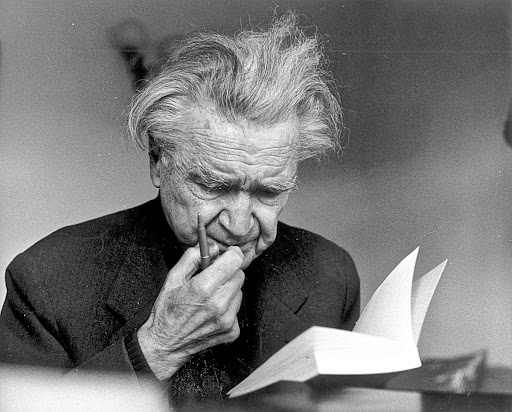
You have done it at least once. You copied a line from Cioran into a message, a caption, a notebook margin — and the moment you wrote it, something drained from it. The venom stayed on the page. What arrived at the destination was a kind of beautiful bitterness, framed, portable, safe.
This is the specific trap the aphorism sets, and Cioran walked into it with his eyes open, which makes his case stranger than most. The fragment as a form has its own aristocratic lineage — Pascal's Pensées, La Rochefoucauld’s Maximes, Nietzsche’s scattered hammers — but what unites these writers is not style. It is the conviction that a complete system would falsify what they were trying to say. Pascal broke his argument into pieces because God, for him, was not a proposition to be demonstrated but a wager to be felt in the chest. La Rochefoucauld shattered the sentence because self-love, in his view, corrupts any sustained argument before it finishes forming. The fragment was an epistemological position, not an aesthetic preference. Cioran inherited this and radicalized it: for him, the aphorism was the only honest form available to someone who believed that existence itself was structurally incoherent. To write a sustained philosophical treatise would have been an act of bad faith.
But institutions do not receive forms on their own terms. They receive products. When Gallimard published Syllogismes de l’amertume in 1952, and when the English translations began circulating through academic circles in the 1970s and 1980s, what the publishing apparatus quietly did was convert a series of intellectual detonations into a collection. Collections are browsable. They invite the reader to pick and choose, to extract the lines that resonate and leave behind the ones that disturb. This is precisely how the neutralization happens — not through censorship but through curation. The reader becomes a consumer of moods, and Cioran becomes the supplier of a particularly sophisticated kind of melancholy branding.
Susan Sontag, writing in the late 1970s, observed that the contemporary appetite for aphoristic writing often masks a deeper impatience with sustained thought — that the fragment flatters the reader’s sense of intellectual agility while demanding nothing of their endurance. She was not writing about Cioran specifically, but the diagnosis fits him better than almost anyone. His lines have become the intellectual equivalent of luxury objects: costly-seeming, easily displayed, divorced from the labor that produced them. A sentence like “It is not worth the bother of killing yourself, since you always kill yourself too late” circulates on social media with a kind of dark chic, appreciated for its edge without triggering the actual vertigo it was designed to produce.
What disappears in this process is the cumulative pressure of reading Cioran consecutively. Any single aphorism can be absorbed as a striking thought. Fifty read in sequence begin to feel like suffocation — which is what he intended. The form was meant to exhaust comfort, not provide it. He was after a specific physiological effect: the sensation of having the ground removed incrementally, sentence by sentence, until the reader could no longer remember what stable ground had felt like. This effect requires submission to the whole, and the whole is exactly what the culture of extractable content refuses.
There is also the question of what gets left out of the Cioran that circulates. His Romanian writings, particularly the violent nationalist positions of the 1930s collected in Schimbarea la față a României, are rarely paired with the aphorisms on suffering and consciousness. The aestheticized version of Cioran is a man who suffered exquisitely and wrote beautifully about it. The complete version is considerably more uncomfortable, and the discomfort does not resolve into wisdom — it simply sits there, demanding to be held without being explained away, which is perhaps the most Cioranian demand of all.
🌀 Wandering Through the Labyrinth of Existence
Emil Cioran’s relentless interrogation of suffering, time, and the absurdity of existence places him in dialogue with some of the most provocative minds in Western literature. The following works share his obsession with labyrinths — of identity, memory, and the void — each offering a different corridor in the same infinite maze.
Jorge Luis Borges: Life and Works
Like Cioran, Jorge Luis Borges constructed entire philosophical universes from the raw material of doubt and wonder. His labyrinths are not merely spatial but metaphysical, reflecting the same existential vertigo that haunts every page of Cioran’s aphorisms. Both writers transform literature into an arena where meaning perpetually collapses and rebuilds itself.
GO TO THE SELECTION: Jorge Luis Borges: Life and Works
Jorge Luis Borges and the Labyrinth of Identity
Borges’s exploration of identity through the labyrinth resonates deeply with Cioran’s conviction that the self is a fiction we endure rather than possess. This essay examines how Borges dissolves the boundaries of selfhood into mirrors, doubles, and infinite corridors. It is an essential companion for understanding how literature maps the unmappable terrain of consciousness.
GO TO THE SELECTION: Jorge Luis Borges and the Labyrinth of Identity
Waiting for Godot by Beckett: Analysis
Beckett’s Waiting for Godot shares with Cioran a profound meditation on paralysis, nothingness, and the cruel persistence of hope. Both artists strip existence down to its most unbearable and absurd core, leaving their audiences suspended between despair and dark laughter. Analyzing Beckett alongside Cioran reveals the existentialist pulse beating beneath twentieth-century literary modernism.
GO TO THE SELECTION: Waiting for Godot by Beckett: Analysis
In Search of Lost Time by Proust: Analysis
Proust’s monumental work on time and involuntary memory offers a counterpoint to Cioran’s nihilistic tendencies, yet both writers are consumed by the impossibility of truly inhabiting the present. Where Cioran mourns time as a wound, Proust transforms it into an elaborate cathedral of recollection. Together they chart the extremes of how consciousness wages war against its own impermanence.
GO TO THE SELECTION: À la recherche du temps perdu de Proust : Analyse
Discover More Visionary Worlds on Indiecinema
The existential questions raised by Cioran and his literary companions do not end on the page — they continue to haunt the frames of independent cinema. On Indiecinema streaming, you will find bold, uncompromising films that explore the same labyrinths of identity, time, and the human condition. Dare to venture further and let independent cinema illuminate the shadows that literature has mapped.
👉 EXPLORE THE CATALOG: Watch Indie Films in Streaming
A vision curated by a filmmaker, not an algorithm
In this video I explain our vision

