
The Body Before the Concept
You step through a door and the city behind you disappears. Not gradually — suddenly, the way a sentence ends. The sound hits you before the light does, a pressure more than a frequency, something that reorganizes the interior of your chest before your brain has categorized it as music. Your eyes adjust in stages: strobes carving faces out of darkness, bodies in various states of coherence, a smoke machine rendering the air itself uncertain. Within thirty seconds, something has already happened to you. Your posture has changed. The particular tension you carry in your jaw — the one assembled over eight hours of screens and obligations and performed competence — has begun, without your permission, to release. Nobody asked you to surrender it. The room took it.

This is not metaphor. The threshold between outside and inside a functioning club is one of the few remaining architectural experiences in contemporary life that produces an involuntary physiological state. You did not decide to feel different. You were made to feel different. And that distinction — between chosen transformation and imposed one — is where the real sociology begins.
Long before there were clubs, there was the dark, and inside the dark, there were bodies pressed together making rhythmic sound. The archaeological record of human gathering reaches back at least forty thousand years to sites where fire rings, bone flutes, and the geometric spacing of remains suggest organized nocturnal assembly — not for survival logistics but for something that produced altered states through collective participation. Çatalhöyük, the Neolithic settlement in Anatolia occupied from roughly 7500 BCE, contains interior wall paintings that archaeologists now associate with trance-induction ceremony, images of dancing human figures rendered in repetitive patterns consistent with entoptic phenomena — the visual noise the brain generates when it turns inward. These people were not primitive precursors to the weekend. They were operating the same hardware, running a different version of the same software.
Émile Durkheim, writing in 1912 in The Elementary Forms of Religious Life, identified what he called collective effervescence — the specific charge generated when bodies gather with shared intentionality, a state in which individual identity becomes temporarily permeable and something larger than the person moves through the crowd. He was describing Aboriginal corroborees, ritual assemblies in which dance, percussion, and sustained proximity generated what participants reported as contact with forces outside themselves. Durkheim’s insight was not that this was delusion but that the force was real — it was the group itself, made suddenly tangible. The social becomes sensory. The individual does not dissolve so much as expand past its usual membrane.
What is significant about this framework is not the religious vocabulary but the mechanics underneath it. The ingredients Durkheim catalogued — darkness or altered light, repetitive rhythm, physical proximity, the suspension of ordinary role and rank — are not incidental features of ritual. They are the active compounds. Remove any one of them and the reaction degrades. Which means the nightclub, stripped of its commercial context and its contemporary aesthetics, is running an ancient and remarkably stable technology. The DJ did not invent the function of the person who controls the rhythm. That figure exists in every documented pre-state society, carrying different names and different instruments, but always positioned at the same structural point: between the crowd and whatever the crowd is trying to become.
What civilization did was not create this gathering — it inherited it, repackaged it, and periodically tried to prohibit it, which tells you something precise about what power understands this space to be capable of.
Darkness as Political Technology
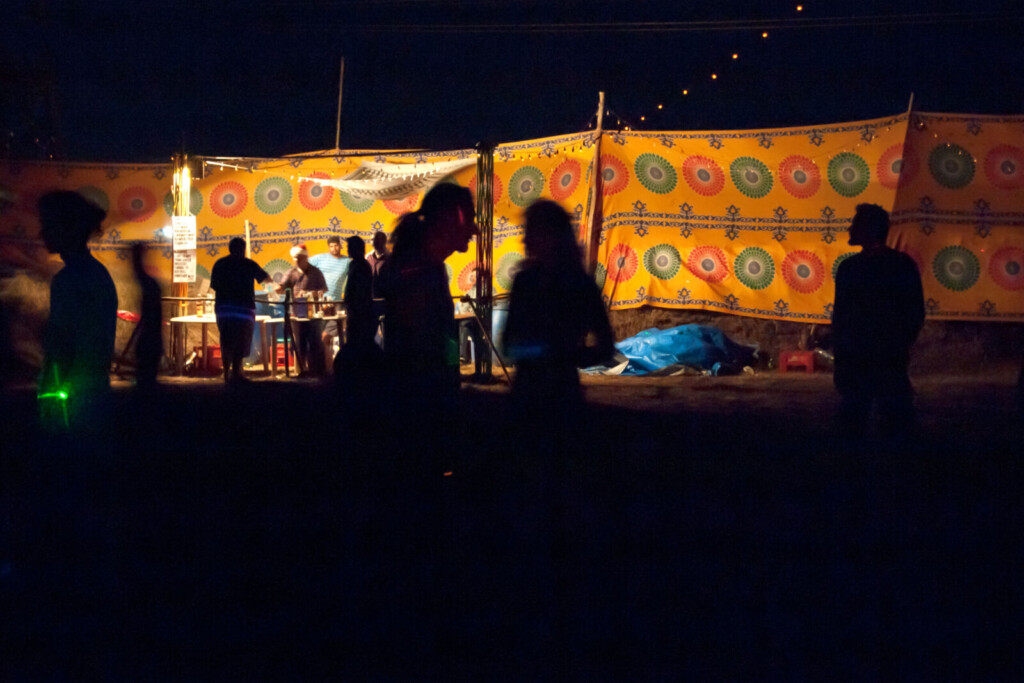
You arrive home at 11 p.m. on a Tuesday and the street outside is quiet in the specific way that cities are engineered to be quiet — the bars closed by municipal ordinance, the corner store shuttered behind a rolling metal grate, the bus frequency halved since midnight. You did not choose this arrangement. It was decided for you by zoning boards and licensing committees whose names you will never learn, meeting in rooms that do not appear on any public calendar.
The night has never been ungoverned. Rome’s Lex Iulia de vi publica, consolidated under Augustus around 17 BCE, imposed restrictions on nocturnal movement that were less concerned with public safety than with suppressing the associational life of the poor — the collegia, the informal guilds, the political clubs that met after dark precisely because daylight belonged to those with property and standing. The night was where plebeian Rome organized, where identity was rehearsed outside the surveillance of class hierarchy, and the legal apparatus that targeted it was surgical in its precision. To control the night was to interrupt the formation of collective consciousness before it could harden into resistance.
What Haussmann did to Paris between 1853 and 1870 is typically framed as urban modernization — the grands travaux, the boulevards that replaced the dense medieval quartiers. But the gaslight installations that accompanied this demolition were not simply a gift of visibility. They extended the operational hours of commercial Paris while simultaneously exposing the street to police gaze. The working-class neighborhoods that were razed had been places where darkness provided cover for a social world the Second Empire found threatening. The new Paris was legible, illuminated, and surveilled. Light was not the opposite of control; it was its instrument.
The American urban renewal programs of the 1950s and 1960s reproduced this logic with bureaucratic precision. Robert Moses‘s use of Title I housing funds in New York, documented in Robert Caro’s 1974 biography of Moses, systematically relocated Black and Puerto Rican communities away from waterfronts and transit corridors. Nightlife districts that had flourished in Harlem through the 1920s and 1930s — generating cultural production that the rest of the country would consume for decades — were gradually strangled through licensing restrictions, noise ordinances, and zoning reclassifications that coded Black sociality as disorder. The policy language was neutral. The geography of its enforcement was not.
There is something worth sitting with in the consistency of this pattern across radically different political systems and centuries: the recurring administrative instinct to treat nocturnal assembly as inherently suspect, to legislate darkness as a space requiring management. Michel Foucault‘s work on the panopticon in Discipline and Punish, published in 1975, located the modern governance of bodies in visibility — the terror of being seen. But darkness inverts the equation and creates its own form of freedom precisely by breaking the circuit of observation. Those in power have always understood this before the theorists articulated it.
What the post-war city accomplished through zoning, the nineteenth-century city accomplished through closing times. England’s Defence of the Realm Act of 1914 introduced pub closing hours not as a permanent fixture but as a wartime emergency measure to preserve worker productivity in munitions factories. Those hours remained legally entrenched in various forms until 2003. Emergency became infrastructure. The temporary calcified into architecture.
The dance floor, when it finally emerges in this history, is not a refuge from politics but its most direct theater — a space that exists because the forces arrayed against it have never fully succeeded, and whose terms of existence are always already a negotiation with the same regulatory machinery that has policed darkness since the first emperor decided the night belonged to him.

Subculture, Deviance, and the Invention of the Underground
You are standing in a basement that smells like concrete and sweat, and the man behind the decks has been playing for six hours without a break, and nobody in this room has anywhere else to be, because for most of them, everywhere else is exactly the problem.
What gets called the underground is rarely underground in any geographical sense. It is the spatial consequence of exclusion. When Black gay men in late 1970s New York built the infrastructure of what would become house and ballroom culture — the loft parties, the piers, the warehouse residencies that operated outside licensed premises and outside the gaze of institutions that had no interest in protecting them — they were not choosing the margins romantically. They were constructing a counter-institution from the material available after every front door had been closed. The sociologist E. Patrick Johnson, in his sustained work on Black queer vernacular culture, describes this not as retreat but as what he calls “quare” world-making: a mode of producing liveable reality from within conditions designed to make that life unliveable. The music was the architecture. The DJ was not entertainment. The DJ was infrastructure.
Stuart Hall understood something about this that most theorists of subculture missed, which is that symbolic resistance is not a consolation prize for the politically powerless. In his collaborative work Policing the Crisis, published in 1978, Hall and his co-authors demonstrated how moral panics serve to manage social contradictions that dominant culture cannot resolve at the structural level — and that subcultural style, whether in the form of dress, sound, or spatial practice, enacts a semiotic refusal of the terms offered by that dominant order. The keyword is refusal, not escape. The kids appropriating Jamaican sound system culture in Birmingham were not retreating from England. They were restructuring its symbolic grammar from the inside, using the tools of dispossession as the instruments of a counter-claim.
Chicago house in the early 1980s intensifies this. The Warehouse, opened by Frankie Knuckles in 1977 and running into the early eighties, drew a predominantly Black and Latino gay clientele into a space that the city’s entertainment economy had effectively abandoned — a former warehouse on the South Side, a neighborhood already subject to the systematic disinvestment that followed white flight and the collapse of industrial employment. What emerged there was not a response to the mainstream. It was a practice that preceded any awareness of the mainstream’s eventual interest. When white promoters and European journalists arrived years later with the vocabulary of “discovery,” they were narrating a process of extraction rather than recognition.
The Berlin case pushes a different edge. After the Wall fell in November 1989, the eastern districts of the city entered a juridical vacuum: properties unowned or contested, municipal authority absent or paralyzed, entire blocks of derelict infrastructure available for occupation. Techno culture did not fill this vacuum accidentally. It was populated by a specific demographic — East German youth who had lost a symbolic order overnight, West German artists and queers who had gathered in the subsidized enclave the Wall had made of West Berlin, and a European diaspora drawn by the sudden porousness of a previously sealed geography. The clubs that formed in those conditions — in power stations, in Stasi bunkers, in train station vaults — were not countercultural in the classic sense, because there was no stable culture to stand against. They were post-institutional in a more literal sense: built in the gap left by the simultaneous collapse of two state systems, each of which had promised a different version of social legibility.
What these three formations share is not aesthetics or even politics in any programmatic sense. They share a relationship to legibility itself: each of them constituted a space where the usual terms for being recognized — by the state, by commerce, by the medical establishment, by the police — were suspended, and where the cost of that suspension was precisely the freedom it produced.
The Commodification of Transgression

You are handed a wristband at the door, and the color tells the security staff exactly how much you paid.
There is a version of this that feels like access. The wristband is fluorescent, the bass is real, the crowd is sweating and anonymous in the dark, and for a moment the transaction that produced this experience becomes invisible — which is precisely the point. The invisibility is not incidental. It is the product itself.
Theodor Adorno and Max Horkheimer argued in Dialectic of Enlightenment, published in 1944, that the culture industry does not destroy pleasure — it administers it. It does not silence desire; it reroutes desire through channels it has already built. The specific genius of this operation is that it requires the content it consumes to carry the residue of the thing it replaced. Pop music must still sound like it emerged from somewhere raw. The festival must still feel like temporary escape. The brand-sponsored rave must still produce the physiological sensation of collective dissolution. If it stops doing that, the customer stops coming. The market does not commodify transgression despite its energy — it commodifies it because of that energy, and the energy must be periodically replenished from sources the market itself has not yet fully processed.
House music left Chicago’s South Side warehouse circuit and entered the European mainstream between 1987 and 1990 in a span of time so compressed it barely allowed for misunderstanding. Techno, born in Detroit from the collision of post-industrial despair and Giorgio Moroder synthesizers, was being licensed to automotive commercials within a decade of its first pressings on Transmat and KMS Records. The velocity matters. The absorption happened not after a long resistance but almost simultaneously with the cultural production itself, which suggests that the market had developed mechanisms sensitive enough to identify transgressive value before communities could consolidate enough to protect it. What gets sold is not a diluted version of the original — it is the original’s affective signature, extracted cleanly and reproduced at scale.
The festival economy makes this architecture visible in ways the underground never could. A single major event can generate revenues exceeding one hundred million dollars while presenting itself through the language of community, liberation, and democratic access to sound. The scholarship of Sarah Thornton, particularly in Club Cultures from 1995, identified the operation of what she called subcultural capital — the prestige economy internal to dance scenes, where authenticity, obscurity, and bodily knowledge function as currency. What she did not fully anticipate was the speed with which that subcultural capital would be harvested as a brand asset, the very signs of distinction converted into marketing vocabulary. Knowing the right records, arriving at the right time, moving in the right way — all of it now photographable, postable, and therefore auditable by the platforms that profit from documentation.
What this produces is not false pleasure. The dancing is real. The chemical openness is real. The moment of genuine contact between strangers in a room built for that purpose is real. But surrounding that moment, structurally enabling it and simultaneously containing it, is an apparatus that has already calculated its value and set the conditions of its reproduction. The subversive act has been pre-approved. The temporary autonomous zone that Hakim Bey theorized in 1991 as a space of radical spontaneity outside state and market control has been issued a permit, assigned a fire marshal, and given a sponsored stage.
What troubles is not that people enjoy manufactured experiences — they always have. What troubles is the increasing difficulty of distinguishing the genuine rupture from its licensed simulation, and whether that distinction still produces any consequence that matters.
Surveillance, Sobriety, and the Sober Gaze
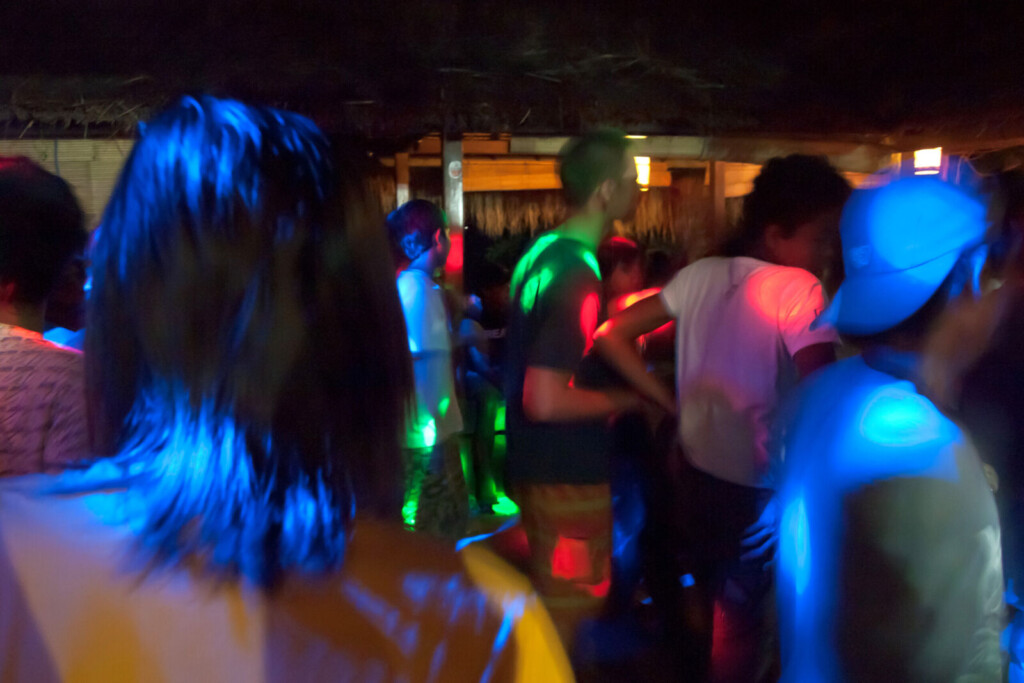
You are already being scanned before you cross the threshold. The camera reads your face in 340 milliseconds — faster than you recognize a friend — and somewhere a server decides whether you constitute a risk. This is not a hypothetical future. By 2023, venues across London, Berlin, and Amsterdam had piloted biometric entry systems under the banner of safety, each press release careful to use the word “frictionless,” as though the friction being removed were merely logistical rather than the last productive ambiguity a body could inhabit.
The entire architectural logic of the club was historically built on illegibility. Darkness was not a mood choice — it was a structural condition that permitted bodies to exist outside the categories that owned them during daylight hours. Erving Goffman, writing in 1959 in The Presentation of Self in Everyday Life, described how all social actors manage “front stage” performances calibrated for surveillance. The club was one of the rare built environments that disabled the front stage almost entirely, because no coherent audience could assemble in the dark to receive the performance. What facial recognition accomplishes is the reintroduction of an audience that never blinks, never gets drunk, never loses interest. The watched body cannot dissolve. It can only perform.
There is a particular irony in the simultaneous rise of what the wellness industry now markets as “sober raves” — events beginning at six in the morning or ending at ten at night, serving adaptogenic drinks at fourteen dollars each, promising the euphoria of collective movement without the chemical negotiation. The marketing language is saturated with words like “authentic” and “present,” as if the historical function of intoxication were mere escapism rather than a deliberate pharmacological loosening of the self-monitoring apparatus. When William James wrote in 1902 in The Varieties of Religious Experience that alcohol’s power lay in its ability to stimulate “the mystical faculties of human nature,” he was identifying something that wellness culture has now decided to offer as a simulation — the container without the solvent. Bodies move together in full sobriety, fully photographable, fully coherent, producing content that confirms rather than suspends the social identity each person arrived wearing.
The smartphone is the sharpest instrument in this transformation. Theodor Adorno and Max Horkheimer, in the 1944 Dialectic of Enlightenment, argued that the culture industry converts experience into product by imposing reproducibility on what was once singular and fugitive. They were writing about cinema and radio, but the mechanism they described finds its most intimate expression in a person raising a lit screen above a crowd at two in the morning, converting the unrecorded into the archived, the felt into the shareable. The night that could not be described afterward because language was inadequate to it has been replaced by the night that must be described immediately, in real time, for an audience that is constituted precisely by its distance from the room.
What is actually being sold in a fully legible night out is the aesthetic residue of transgression stripped of its consequences. The imagery of underground culture — the sweat, the dark, the lost hours — circulates as brand vocabulary for events where nothing is genuinely at risk. Foucault observed in Discipline and Punish in 1975 that modern power does not primarily operate through prohibition but through the internalization of visibility: subjects surveilled long enough eventually surveil themselves. The contemporary clubber who documents their own experience for external validation has not been coerced into self-surveillance; they have simply completed a process of enclosure so gradual that the cage arrived before anyone thought to name it. The question that remains is not whether freedom can survive inside a fully readable space, but whether a generation that has never inhabited an unreadable one retains the appetite for what legibility permanently forecloses.
A vision curated by a filmmaker, not an algorithm
In this video I explain our vision
🌀 Rites, Rhythms & Underground Identities
Club culture has always been more than dancing in the dark — it is a sociological laboratory where identity, belonging, ritual, and transgression intersect. To fully understand the night as a social space, one must explore its philosophical, psychological, and cultural roots, from the rites that structure collective experience to the urban spaces that give it meaning.
The Rite of Initiation in Psychology and Anthropology
The rite of initiation is one of the most ancient mechanisms through which communities mark transformation and belonging. Club culture inherits this anthropological structure: the threshold of the club door, the darkness, the shared trance of music all function as symbolic passages from the ordinary world into a liminal space. Understanding initiation in psychology and anthropology illuminates why the night exerts such a powerful pull on the collective imagination.
GO TO THE SELECTION: The Rite of Initiation in Psychology and Anthropology
Bourdieu’s Distinction: Taste and Social Class
Pierre Bourdieu‘s concept of distinction reveals how taste in music, fashion, and nightlife is never purely personal but deeply embedded in class and social capital. The history of club culture — from the underground discotheques of the 1970s to the superclubs of the 1990s — is inseparable from questions of who gets to belong and who is excluded. Bourdieu’s framework remains essential for decoding the invisible hierarchies that structure the dance floor.
GO TO THE SELECTION: Bourdieu’s Distinction: Taste and Social Class
Situationist Psychogeography: The City as Lived Space
Situationist psychogeography understood the city as a field of emotional forces that shape behavior and desire in ways that official urban planning never acknowledges. The night club, the illegal rave in an abandoned warehouse, the sound system in a derelict dock — these are all psychogeographic interventions that reclaim urban space for collective pleasure and resistance. Guy Debord‘s dérives find their most visceral expression in the nocturnal geography of underground culture.
GO TO THE SELECTION: Situationist Psychogeography: The City as Lived Space
Drugs in History: From Origins to Modernity
The history of drugs is inseparable from the history of altered states sought through collective ritual, and club culture has been one of its most visible modern theaters. From the MDMA wave that transformed British warehouse parties into communal experiences of empathy to the psychedelic ceremonies that preceded the rave, substances have always mediated the boundary between self and crowd. Exploring this history honestly means confronting both the liberating and the destructive dimensions of chemical communion.
GO TO THE SELECTION: Drugs in History: From Origins to Modernity
Discover the Cinema of the Night on Indiecinema
If club culture and its underground worlds fascinate you, Indiecinema streaming is the place where independent cinema explores these same territories — documenting subcultures, celebrating marginalized voices, and capturing the raw energy of collective experience that mainstream platforms ignore. Come explore films that pulse with the same rhythm as the night itself.
👉 EXPLORE THE CATALOG: Watch Indie Films in Streaming
A vision curated by a filmmaker, not an algorithm
In this video I explain our vision

