
The Panel That Stopped You
You are twelve years old, or thirty-four, or fifty-one — it doesn’t matter — and you have stopped turning the page. Something in the arrangement of ink and color and silence has caught you the way a hand catches a sleeve, not violently but with absolute certainty. You are not reading anymore. You are looking. There is a figure standing at the edge of a panel border, and the white gutter beside it seems to breathe, and you do not know why this particular configuration of lines feels like grief or like memory or like the specific quality of late afternoon light in a room where something irreversible has just happened. You haven’t moved in several seconds. You won’t be able to explain this to anyone.

That gap between experience and explanation is not a failure of vocabulary. It is the condition of genuine aesthetic encounter. Roger Fry, writing in 1920 in his collected essays on vision and design, described the formal properties of visual art as capable of producing what he called “aesthetic emotion” — a response prior to narrative meaning, triggered by composition, line, rhythm, spatial tension. He was talking about Cézanne. He had never considered a comic strip. But the experience he was naming is the one you just had over a page that cost four dollars.
The history of how comics arrived at being taken seriously is inseparable from the history of what a culture decides deserves seriousness. For most of the twentieth century, that decision was made by gatekeepers who had not actually looked at what they were dismissing. Fredric Wertham‘s 1954 book Seduction of the Innocent argued, with the confidence of someone who had already reached his conclusion before collecting evidence, that comic books caused juvenile delinquency, damaged literacy, and corrupted moral development. The United States Senate held hearings. Publishers submitted to the Comics Code Authority, a self-censorship apparatus that effectively lobotomized the medium for nearly two decades. What Wertham’s campaign accomplished was not the protection of children. It was the institutional encoding of contempt — the transformation of a prejudice into a policy, a cultural reflex into a bureaucratic structure.
The reflex itself was older than Wertham. It ran on a particular anxiety about what happens when art becomes accessible, reproducible, cheap. Walter Benjamin in 1935 was already theorizing the way mechanical reproduction altered the “aura” of the artwork — the sense of singular presence, of being in the presence of something irreplaceable. Comics were, from their origin in the newspaper supplements of the 1890s, the opposite of aura. They were printed in millions. They were disposable by design. Richard Outcault’s Yellow Kid, which began appearing in the New York World in 1895, was not meant to last. The paper it was printed on was not meant to last. The assumption built into the medium’s infrastructure was that nothing here was worth preserving.
That assumption traveled forward through decades as an inherited judgment, absorbed by people who never questioned its origin. It operated not as an argument but as an atmosphere. And atmospheres are more durable than arguments because they don’t require defense — they simply constitute the default air that serious people breathe without noticing they’re breathing it.
What is remarkable is that the medium survived this atmosphere and, in surviving it, developed something no amount of institutional legitimacy could have manufactured: a formal language so precise, so specific to its own material conditions, that it cannot be translated into any other medium without loss. The thing that stopped you on that page — the arrested moment, the weight of the gutter, the line that implies rather than states — is not an accident of execution. It is the result of a grammar that took a century to become conscious of itself.
Slow Life
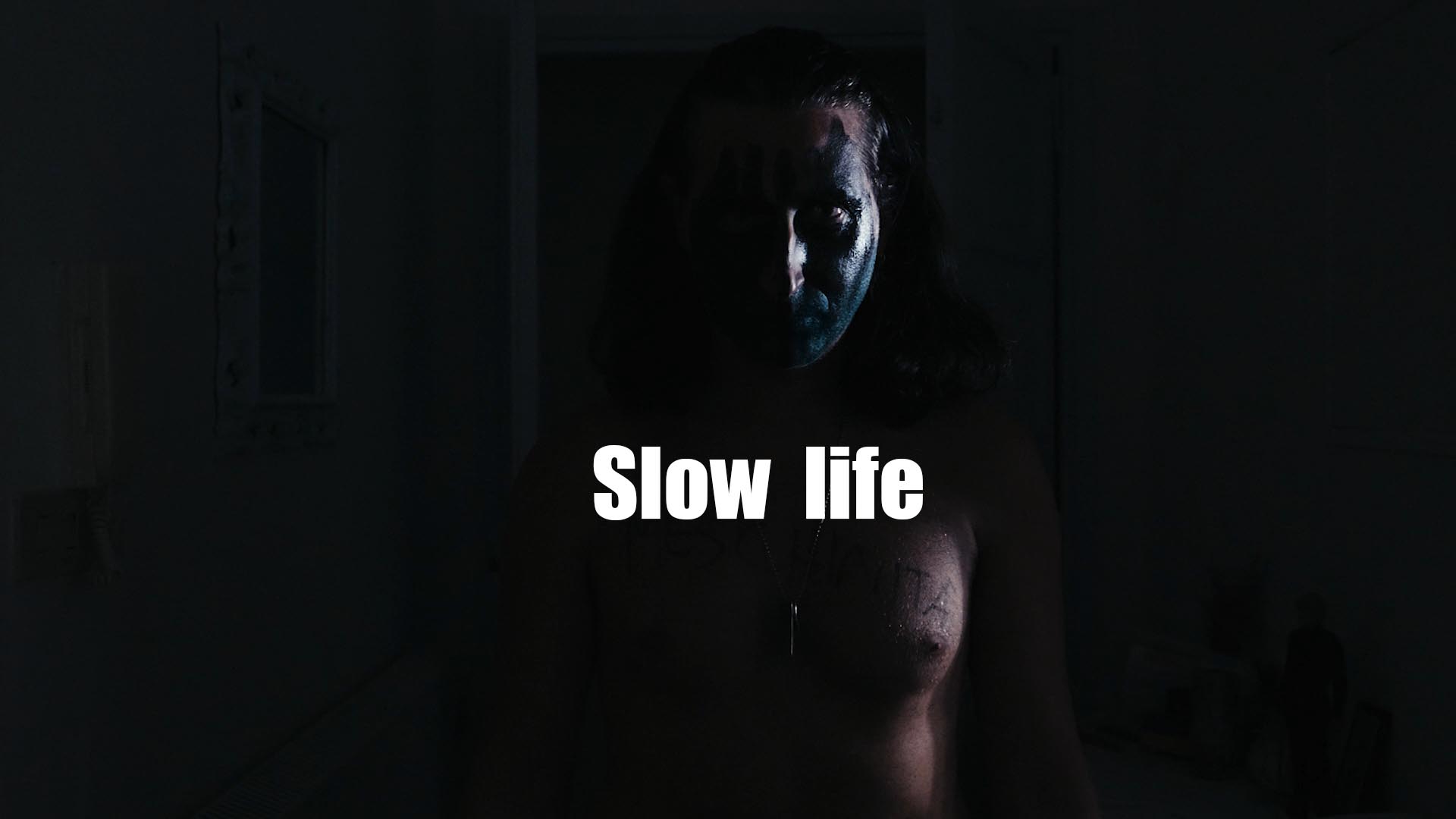
Drama, comedy, thriller, by Fabio Del Greco, Italy, 2021.
Lino Stella takes a period of vacation from his alienating job to devote himself to relaxation and his passion: drawing comics. But he did not foresee certain disturbing elements: the intrusive administrator of the building where he lives, the postman who delivers crazy fines and tax bills, an overbearing security guard, a very enterprising real estate agent, the old lady downstairs who raises the feline colony of the condominium. These characters will make his vacation hell.
Food for thought
The larger a social group is, the more rules and bureaucracy are needed, which often do not respect the individual. You have to learn to live with annoying people, but sometimes the social pressure and arrogance can become intolerable. The only laws that always come to our aid are the laws of Nature.
LANGUAGE: Italian
SUBTITLES: English, Spanish, French, German, Portuguese
A History Built on Contempt
Pick up a newspaper from 1897 and look at the letters page. Somewhere in the correspondence about Richard Outcault’s Yellow Kid — that gap-toothed, bald child printed in garish color across the Sunday supplements of Pulitzer’s World and Hearst’s Journal — you will find a particular kind of outrage. Not the outrage directed at poverty, which the strip depicted. Not at child labor, which it circled. The outrage was at the strip itself, at its vulgarity, at the presumption that ink arranged this way, for these people, on this cheap paper, could constitute anything resembling culture. Two newspaper empires were fighting over the rights to print it, which meant tens of millions of readers wanted it, which meant, by the logic of the gatekeepers, that something had to be wrong with it.
This is how contempt operates at institutional scale. It does not arrive after examination. It arrives with the audience.
Pierre Bourdieu spent much of his career mapping this mechanism with a precision that still feels uncomfortable to read. In Distinction, published in 1979, he demonstrated that aesthetic judgments are never purely aesthetic — they are instruments of social classification, ways of drawing lines between those who possess what he called cultural capital and those who do not. The consecration of certain art forms as legitimate and the dismissal of others as low or base is not a neutral process of quality recognition. It is social reproduction dressed in the language of taste. What gets called vulgar is usually what the wrong people enjoy, at too high a volume, without the appropriate hesitation.
Comics walked into this trap from their first printed panel. By the 1930s, the American comic book had become its own distinct form, and by the early 1940s the numbers were staggering: at their peak, American comic books sold over 100 million copies monthly. Superman alone, introduced in Action Comics in June 1938, was being read by an estimated audience larger than the circulation of most American newspapers. These were not marginal objects. They were the most consumed printed medium in the country. And that consumption happened largely among children, among the working class, among people whose reading habits no one in a position of cultural authority considered worth protecting — only worth policing.
The policing arrived formally in 1954, when Fredric Wertham published Seduction of the Innocent, a book arguing with clinical confidence that comic books caused juvenile delinquency, homosexuality, and moral collapse. Wertham was a psychiatrist, a man with credentials, which gave his contempt the armature of science. The book landed on a culture already anxious about postwar youth, communism, and the erosion of values that no one could quite define but everyone was certain they once possessed. The U.S. Senate Subcommittee on Juvenile Delinquency convened hearings that same year. Publishers were summoned. Images were displayed to senators who had not read the comics but recognized in them something that needed to be stopped. The Comics Code Authority was established, a system of self-censorship so comprehensive that it effectively dismantled the medium’s expressive range for nearly two decades.
What is remarkable, looking back, is not that the moral panic happened. Moral panics are a recurring structure in the history of every popular medium, from the novel in the eighteenth century to cinema to video games. What is remarkable is how completely the intellectual establishment agreed. No major university examined comics as a cultural form. No literary journal offered a serious defense. The silence of legitimate culture was its own verdict.
Wertham’s research, it emerged decades later, was fabricated — data manipulated, case studies invented or distorted, a fact documented by Carol Tilley in a 2012 study in Information and Library Science. But the damage operated independently of the truth. The stigma had already been installed. And stigma, as Bourdieu would note, does not require accuracy to function. It requires only repetition and the authority of the repeater.

The Grammar Nobody Taught You
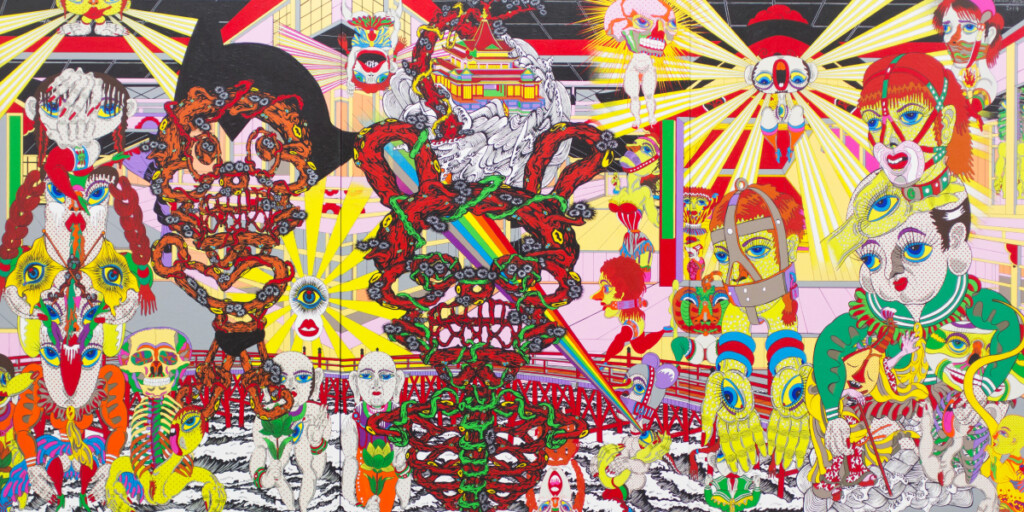
You already know how to do this. You have always known. The moment your eye crosses the white gap between two panels — a fist raised in one rectangle, a shattered window in the next — your brain does not wait for permission. It fills the gap. It invents the punch, the arc of the arm, the sound of impact, the spray of glass. You conjure an entire act of violence from two frozen images and a strip of empty paper. And then you turn the page without thinking about what you just did.
Scott McCloud, in his 1993 theoretical treatise on the form, gave this act a name: closure. The gutter — that white space between panels — is not absence. It is the most active site in all of comics. It is where the reader becomes co-author. McCloud understood something that most critics of the medium had systematically failed to notice: that comics do not depict continuous reality. They depict discontinuous fragments of it, and they trust the reader to complete the circuit. Every other major narrative form works to minimize this gap. Cinema runs at twenty-four frames per second precisely to create the illusion of unbroken movement. Prose fills every moment with language. Comics leave the wound open and ask you to close it yourself.
What this means, when you sit with its implications, is that reading comics is not a passive act of reception. It is closer to dreaming while awake. When a woman steps through a door in one panel and stands in a sunlit garden in the next, you do not experience the transition as a cut. You experience it as passage. You walked through that door. The imaginative labor is so rapid, so automatic, that it vanishes into the pleasure of reading — which is precisely why it was invisible for so long, and why the form was so easily dismissed as simple.
There is a man waiting in a room. The next panel shows an empty chair. You know he left. You know something about how he left — whether it was sudden or resigned — from the angle of the chair, the quality of light, the expression he wore in the previous panel. McCloud catalogs six types of panel-to-panel transition, from moment-to-moment to scene-to-scene to what he calls the non-sequitur, where no logical relationship is implied at all. Each type demands a different register of cognitive and emotional participation. The non-sequitur, which avant-garde comics use to produce a specific kind of unease, requires the reader to hold two unrelated images in mind and search for a connection that the author has deliberately withheld. It is the gutter as an open question rather than a closed answer.
What is remarkable is that none of this was ever taught to you. No curriculum prepared you for the grammar of the gutter. You absorbed it somewhere between childhood and adolescence, reading in secret under blankets or openly at kitchen tables, and the mechanics became invisible because they worked. This is what distinguishes a truly internalized grammar from one merely studied: you do not think in it, you think with it. The comics reader performs constant acts of narrative synthesis without ever having been handed the instructions, which means the form achieved something that most institutionally sanctioned art forms struggle to claim — it created a genuinely participatory literacy that spread entirely outside formal education.
McCloud’s deeper argument, the one that unsettles, is that this makes the comics reader not merely a consumer of meaning but a manufacturer of it. The author provides the materials. The reader builds the event. What you remember reading is not entirely what was drawn. Part of it was yours all along — assembled in the gutter, in that white space nobody ever thought to teach you how to cross.
What the Sequence Does to Time
Nine panels. No words. A man appears at a doorway, one hand raised against heat you cannot feel. The second panel is almost identical — his arm slightly lower, his weight shifted forward by perhaps an inch. By the fifth panel he has moved three feet into smoke that fills the upper third of the frame. You are not watching this. You are measuring it.
That distinction matters more than it first appears. In a moving image, time flows past you whether you consent or not. The burning building arrives and departs at the director’s pace, carrying you forward in a current you never chose to enter. But here, in this sequence, you hold each moment in your hand. You decide when panel five becomes panel six. You are, in the most literal sense, the mechanism by which time moves — and because you are the mechanism, you are also responsible for what you witness. The dread that accumulates is not delivered to you. You build it yourself, one deliberate glance at a time.
Thierry Groensteen, in his 1999 work “The System of Comics,” named this structural condition arthrology: the network of visual relationships that connect panels not merely in sequence but across the entire spatial field of a page. A panel in the bottom-right corner is in silent conversation with the panel at the top-left, even when your eye hasn’t traveled there yet. The page is not a corridor you walk through — it is a room you stand inside, and every element is simultaneously present. When the ninth panel shows the man’s hand reaching toward a door handle he will never reach, you already carry the memory of the first panel’s doorway in your peripheral vision. Groensteen understood that comics do not merely tell a story across time; they hold time still and spread it spatially, forcing an awareness that no other narrative form produces.
Walter Benjamin, writing in 1936 about photography and early cinema, described the optical unconscious — the idea that mechanical reproduction reveals aspects of movement and space that the naked, present eye cannot perceive. A photograph of a running man captures what no human observer could freeze in the moment of seeing. Comics operate in a structurally inverted version of this logic. They do not reveal what the eye misses in motion. They reveal what the mind fills in during stillness. The gutters between panels — those white or black silences that Scott McCloud would later call the site of “closure” in his 1993 “Understanding Comics” — are where the reader’s imagination performs acts of violence or tenderness or catastrophe that the artist never drew. The burning building does not collapse in any panel. It collapses in the gutter between panel eight and panel nine, inside you, without permission.
This is a different species of dread than anything a moving image can produce. Film’s horror is sensory — it happens to your body, to your nervous system, through sound and motion and light. The silent nine-panel sequence does something stranger: it makes you complicit. You chose to look at the fifth panel. You chose to advance. No soundtrack compressed your chest. No editing rhythm made the decision for you. The dread has your fingerprints on it.
Literature creates interiority but not simultaneity. A novel can tell you what the man feels as the heat rises, but it cannot show you his third step and his first step at the same time, cannot force the spatial coexistence that makes the page feel like a held breath. The sequence without sound is not an absence of cinema’s tools. It is a different instrument entirely, one that transforms the reader’s body into the mechanism of narrative time — and in doing so, asks a question that moving images are structurally unable to ask: at what point did you decide to keep going?
The Underground and the Unspeakable
You are standing in a head shop in San Francisco, 1968, and someone hands you a folded pamphlet that looks, at first glance, like a comic book. The cover shows figures distorted beyond recognition — bodies bloated, genitals exposed, faces stretched into grimaces of ecstasy or horror or both simultaneously. Your first instinct is embarrassment. Your second is that you cannot put it down.
Zap Comix did not arrive as a manifesto. It arrived as an object, cheap newsprint and raw ink, sold outside the official channels of newsstands and drugstores precisely because no official channel would carry it. Robert Crumb, who drew much of that first issue himself and reportedly sold copies from a baby carriage on Haight Street, was not theorizing transgression — he was enacting it with the same bodily directness as the content on the page. Spain Rodriguez followed with imagery that pulled the violence of street politics into a visual language borrowed from superhero conventions and then detonated those conventions from the inside. These were not comics that had been denied mainstream approval. They were comics that had decided the question was irrelevant.
Mikhail Bakhtin, writing about Rabelais in 1965 in a book that had itself been suppressed for over two decades by Soviet authorities, identified something he called the carnivalesque — a cultural mode in which the hierarchies of official life are temporarily inverted, where the body, the obscene, the grotesque, and the profane are not aberrations but the very substance of a deeper social truth. Carnival, for Bakhtin, was not chaos. It was a language with its own grammar, one that official culture had to suppress precisely because it was legible, because people understood it immediately and recognized in its excesses something the elevated discourse of institutions could not accommodate. The underground comix were carnivalesque in exactly this structural sense, not metaphorically but operationally: they used the low form, the despised medium, the cheap paper and the infantilized cultural space that comics occupied, and they loaded it with everything that the polite distribution of American culture had agreed not to say out loud.
What the Comics Code Authority had done in 1954 — establishing a self-regulatory system so severe that publishers who failed to comply found their books pulled from distribution — was not merely censorship. It was the formalization of a cultural agreement about what the medium was for. Comics were for children. Comics were for reassurance. Comics could show crime but not its logic, violence but not its pleasure, sexuality but not its existence. The underground did not fight the Code. It simply printed outside it, which was a more radical gesture than any argument could have been, because it demonstrated that the Code’s authority had always been contingent on everyone agreeing to pretend it was absolute.
When a medium stops asking permission, it does not automatically become art. The underground comix produced work of extraordinary psychological rawness alongside work that was merely offensive in ways that reproduced rather than examined the brutalities it depicted. The carnivalesque is not inherently liberating — Bakhtin was too careful a thinker to claim that. But the rupture itself changes what is possible inside the form. Once Crumb had drawn Mr. Natural, once the page had held that particular combination of spiritual fraud, sexual compulsion, and genuine cosmic searching without resolving any of it into a lesson, the question of what comics could contain had been permanently reopened. The space had been expanded not by argument but by example, which is the only way artistic spaces ever actually expand.
The child reading Superman in 1955 and the adult holding Zap in 1968 were both holding ink on paper. The distance between those two objects is a history of what a culture decides it is willing to see written down.
A vision curated by a filmmaker, not an algorithm
In this video I explain our vision
The Novel That Refused to Be a Novel

You have held it in your hands and felt something shift. Not the shift of turning a page in a novel, where one word follows another in the patient queue of syntax, but something more disorienting — a simultaneity, a demand that your eye do two things at once and refuse to choose between them.
There is a moment where a man sits at a desk drawing mice, and the mice are his parents, and his parents were murdered, and the drawing is the only resurrection available. The image shows the desk. The text says something else entirely. Neither one explains the other. They do not illustrate each other. They hold each other hostage, and the tension between them is where the meaning lives — not in the resolution of that tension, but in its permanent, irresolvable state.
W.J.T. Mitchell, in his 1994 work “Picture Theory,” named this condition the imagetext: not a hybrid of two existing forms, not a literary novel that happens to have pictures, not a picture book that happens to have words, but a distinct ontological category in which neither element can be read as primary without falsifying the work. The imagetext is not a meeting point. It is a third thing, and the third thing has no adequate name in the inherited vocabulary of either medium. Mitchell was building on a deeper problem that had preoccupied semiotics since Roland Barthes noted, in his 1964 essay “Rhetoric of the Image,” that language and image do not merely coexist — they compete for the authority to fix meaning, each one constraining and resisting the other.
Art Spiegelman‘s work, completed in serialized form across the 1980s and collected into its final shape in 1991 — the year it became the first graphic work to receive a Pulitzer Prize — is frequently described as a memoir, a Holocaust narrative, a work of postmodern historiography. All of these descriptions are accurate and all of them are insufficient, because they locate the work within categories that were designed for language alone. The drawn line in that work is not an illustration of the verbal testimony. The verbal testimony is not a caption for the image. The specific visual grammar of the animal faces — the mouse, the cat, the pig — operates on a register of abstraction that language cannot reach without becoming allegory, and the moment it becomes allegory it loses the particular weight of the face, the specific grief of a drawn eye. The image does what the sentence cannot, and the sentence does what the image cannot, and the reader is suspended between them with no exit.
Chris Ware‘s 2012 work takes this further into the structural, distributing its narrative across loose pages, booklets, boxes, and formats that cannot be assembled into a single correct sequence. The physical object resists not only the category of novel but the category of book itself. Reading it requires decisions that novels do not require — spatial decisions, architectural ones, choices about what to open first that will shape everything that follows. The story of a woman’s interior life becomes inseparable from the formal experience of navigating its container. Thierry Groensteen, in his foundational 2007 study “The System of Comics,” argued that the panel is never read in isolation but always in relation to all other panels simultaneously present on the page and in memory — what he called arthrology, the system of relations between distant panels. Ware weaponizes this principle until the form itself becomes the psychological content.
What both works share is the refusal of assimilation. Literary criticism has tried, repeatedly, to absorb them into existing frameworks — to call them novels, to call them illustrated texts, to treat the visual as ornament and the verbal as the real event. Each attempt fails the same way, by assuming a hierarchy that the works themselves actively destroy. The discomfort that follows that failure is not a sign that the reader has misunderstood the form.
The Global Cartography of the Form
You are reading this on your phone, scrolling vertically, the panels sliding upward one after another in long luminous strips optimized for a screen held in one hand on a subway car in Seoul. The story does not paginate. It flows. The gutter between panels has been replaced by negative space, by deliberate breath, by the rhythm of your thumb. What you are experiencing is not a degraded version of something that existed before on paper. It is a form that emerged fully conscious of its medium, built from the ground up for the device in your hand, and it reaches roughly 100 million users monthly through a single platform alone. The webtoon industry in South Korea crossed one billion dollars in revenue before most Western critics had learned to spell the word.
Meanwhile, in Japan, the annual manga market sustains itself at figures approaching 800 billion yen, a number so large it becomes abstract until you break it into its components: convenience stores with entire manga sections, serialized stories running for decades, a reading public that treats the form not as a subgenre of something else but as a primary literary mode. Osamu Tezuka, who absorbed the cinematic grammar of postwar American film and fused it with a visual language derived partly from Disney and partly from kabuki, produced a body of work in the 1950s and 60s that would generate entire genealogies of storytelling. His approach to panel rhythm, his use of close-up and wide shot as emotional registers rather than merely spatial ones, his willingness to let silence carry narrative weight across a full page — none of this was received in Anglophone critical discourse as a contribution to the theory of sequential art. It was received, when received at all, as a curiosity from elsewhere.
Edward Said, in his 1978 study of how European scholarship constructed the idea of the Orient as a knowable, containable, ultimately inferior other, described a process by which Western intellectual frameworks produce not knowledge but self-confirmation. The critical apparatus that evaluates culture does not encounter other traditions neutrally. It measures them against its own standards, finds them eccentric or derivative or naively popular, and files them accordingly. What Said called Orientalism was a specific historical formation, but the epistemological structure he identified — the way a dominant discourse naturalizes its own geography as the geography — has never been confined to colonial relations alone. When the bande dessinée tradition of France and Belgium, which the French state formally designated the ninth art in the early 1960s, fought for institutional recognition, it did so partly by positioning itself in opposition to American comic books, claiming European seriousness against transatlantic vulgarity. That claim required its own exclusions. It required not seeing what was happening in Osaka or what would later happen in Seoul.
The failure of comics criticism is therefore not simply a failure to include more examples from more places. It is a structural failure to question whose metropolitan center defines the universal. A man in a Paris apartment reads Hergé and Moebius and calls it the ninth art. A woman in Tokyo reads Naoki Urasawa’s monster story across twenty volumes and understands something about memory, guilt, and identity that no European graphic novel has quite touched. These are not equivalent experiences pointing toward a single form. They are different forms, grown from different soils, answering different needs, carrying different assumptions about what a page is for, what a body in a panel communicates, what silence between images means.
The vertical scroll of a webtoon is not the page of Tintin. Both involve sequence, image, text, time. But the theory that could hold them together without subordinating one to the other has not yet been written — or rather, it has been written many times, in many languages, and simply not translated into the one language that tends to assume translation runs only in one direction.
Recognition Without Resolution

You have been sitting with the same panel for longer than you can explain. Not studying it — sitting with it. The ink lines describing a face in three-quarter profile, the way shadow pools beneath a jaw without being named as shadow, the gutter on the left edge suggesting everything that preceded this moment without depicting any of it. You did not choose to stop here. The stopping chose you, and that distinction matters more than it first appears.
This is where the entire argument about comics and artistic legitimacy quietly collapses into something more honest. Not the question of whether comics deserve to be called art — that question has been answered by practice if not yet by institutions, by the hundred years of formal ingenuity that preceded any academic permission. The more unsettling question is what you were actually doing when you demanded an answer to it in the first place.
Susan Sontag published Against Interpretation in 1966, and the essay’s central provocation has never fully landed with the weight it deserves. Her argument was not that meaning is absent from art, but that the compulsive extraction of meaning — the insistence on translating sensory experience into interpretive content — functions as a kind of aggression. It reduces the work. It converts presence into proposition. The critic who arrives at a painting or a poem asking what it means is, in Sontag’s framing, performing an act of taming, domesticating something that was alive precisely because it refused to be summarized. What she called for instead was an erotics of art: a criticism attentive to form, to surface, to the immediate experience of the thing itself before the machinery of justification is switched on.
Comics have been subjected to an especially punishing version of this machinery, because the demand placed on them was never simply interpretive. It was ontological. They were not asked what they meant but what they were, whether they qualified, whether their particular fusion of image and sequence and guttered time could be admitted into the category that European modernity had constructed and guarded with considerable anxiety since the eighteenth century. The tools used to judge them — the criteria of originality, autonomy, disinterested contemplation, transcendence of the commercial — were not neutral instruments handed down from some aesthetic heaven. They were historical constructions, products of specific class formations, specific anxieties about industrialization and mass culture, specific desires to protect certain kinds of experience from contamination by the popular. Kant’s aesthetic subject, rapt before the sublime, was always already a particular kind of subject: propertied, leisured, literate in a specific way, insulated from the economic pressures that made most cultural production necessary rather than freely created. The judgment of taste was never just a judgment about the object. It was a performance of social positioning, and it excluded not by explicit rule but by the shape of its own framework.
Comics fell outside that framework not because they lacked formal complexity or expressive depth, but because they arrived from the wrong direction: cheap, serialized, aimed at children and workers and immigrants, drawn by hands that were paid by the page. The stigma was not aesthetic. It was sociological dressed as aesthetic, which is the most durable kind because it feels like perception rather than prejudice.
And so when you return now to the panel you have been sitting with — that face in three-quarter profile, that unnamed shadow, that gutter holding its silence — the question is not whether it qualifies. The question is what kind of looking you are willing to practice: one that arrives already equipped with verdicts, or one that stays long enough for the image to do something to you that you did not anticipate and cannot yet name, which is perhaps the only experience that has ever justified the word art at all.
🎨 Art, Form, and the Language of Images
Comics as an art form sit at the crossroads of visual culture, narrative theory, and aesthetic philosophy. To fully grasp their significance, it helps to explore the broader traditions of art criticism, iconology, and the philosophy of symbolic forms that have shaped how we understand images and meaning.
Ernst Gombrich: Life and Works
Ernst Gombrich revolutionized the way we think about pictorial representation, arguing that images are never innocent reflections of reality but always shaped by conventions and schemata. His work on the psychology of perception is essential reading for anyone exploring how comics construct visual meaning. Understanding Gombrich allows us to see the comic panel not as a window but as a coded cultural artifact.
GO TO THE SELECTION: Ernst Gombrich: Life and Works
Erwin Panofsky: Life and Iconology
Erwin Panofsky developed iconology as a method for reading images on multiple levels—from literal description to symbolic interpretation—providing a rigorous framework that applies directly to the visual language of comics. His approach helps us decode the layers of meaning embedded in sequential art, from gesture and composition to mythological resonance. Panofsky’s legacy reminds us that even popular visual culture carries deep iconographic traditions.
GO TO THE SELECTION: Erwin Panofsky: Life and Iconology
Ernst Cassirer and Myth: Philosophy of Symbolic Forms
Ernst Cassirer‘s philosophy of symbolic forms proposed that human beings are fundamentally symbol-making creatures, transforming every medium—including visual storytelling—into a vehicle of meaning and world-construction. His framework bridges myth, language, and art in ways that illuminate why comics function as a genuine semiotic system. Cassirer’s thought invites us to consider the comic strip as a modern symbolic form in its own right.
GO TO THE SELECTION: Ernst Cassirer and Myth: Philosophy of Symbolic Forms
Herbert Marcuse and Art: The Aesthetic Dimension
Herbert Marcuse argued in The Aesthetic Dimension that art possesses a unique critical power to imagine realities beyond the existing social order, a claim that resonates deeply with the subversive potential of comics as a popular art form. For Marcuse, even mass-distributed imagery can carry genuine aesthetic negation and utopian longing. This perspective opens a powerful lens for evaluating the political and emancipatory dimensions of comic art.
GO TO THE SELECTION: Herbert Marcuse and Art: The Aesthetic Dimension
Explore Art and Vision Through Independent Cinema
If the history and theory of comics as an art form has sparked your curiosity about visual culture and aesthetic experience, Indiecinema streaming offers a rich selection of independent films that push the boundaries of image-making and storytelling. From avant-garde experiments to deeply philosophical visual essays, our catalog is a living extension of these ideas in motion. Dive in and discover cinema as another great art form waiting to be explored.
👉 EXPLORE THE CATALOG: Watch Indie Films in Streaming
A vision curated by a filmmaker, not an algorithm
In this video I explain our vision

