
The Arbitrary Threshold
You are handed a card on your eighteenth birthday — a voter registration form, a legal contract, a key to something — and no one questions whether you are ready, because the question has already been answered by a number. The number precedes you. It was decided before you were born, in rooms you were never invited into, by people solving problems that had nothing to do with your development as a human being.

The specific age of eighteen as the threshold of legal majority in most Western democracies is not ancient wisdom distilled into policy. It is largely a twentieth-century administrative convenience, shaped by military conscription logic: if a body is old enough to carry a rifle and absorb a bullet on behalf of the state, the arithmetic of accountability demands it be old enough to vote, to sign, to be prosecuted as an adult. The United Kingdom lowered its voting age from twenty-one to eighteen in 1969, following sustained political pressure tied directly to the contradiction of sending men to die in colonial conflicts they had no democratic voice over. The number eighteen did not emerge from neuroscience or developmental psychology. It emerged from the uncomfortable optics of state-sanctioned death.
Anthropology has spent well over a century documenting the radical variability of what different societies recognize as the passage from child to adult, and the picture it returns is one of stunning incoherence from any universalist standpoint. In his 1909 work “The Rites of Passage,” Arnold van Gennep demonstrated that virtually every human culture constructs transitional rituals — what he called “rites de passage” — but that these rituals are triggered by social thresholds entirely specific to each culture: first menstruation, the killing of a large animal, initiation into a secret society, marriage, the birth of a first child. The age at which these transitions are socially recognized spans from nine to thirty depending on the community. The fixed numerical threshold is a peculiarity of bureaucratic modernity, not a cross-cultural human constant.
What makes this particularly strange is that the science most frequently invoked to justify age-based restrictions actually undermines the premise of a clean boundary altogether. Research in developmental neuroscience over the past two decades, including Sarah-Jayne Blakemore’s work on adolescent brain development published in journals including “Nature Reviews Neuroscience” around 2012, demonstrates that the prefrontal cortex — the region associated with risk assessment, impulse control, and long-term planning — continues developing well into the mid-twenties. If neurological maturity were the actual standard, the threshold would be a range, not a date, and it would vary meaningfully between individuals. The law, however, cannot operate on ranges. It requires a line. So a line is drawn, and then the line is naturalized, taught, repeated, until it feels discovered rather than invented.
Different societies have not only placed the line at different ages but have multiplied it into a bizarre ladder of permissions that exposes its arbitrary foundations most nakedly when examined together. In the United States, a person can drive at sixteen, be tried as an adult at seventeen in many states, vote and join the military at eighteen, but cannot legally purchase alcohol until twenty-one — a threshold inherited from Prohibition-era politics and federal highway funding leverage in the 1980s, not from any coherent theory of human development. These staggered permissions do not reflect a sophisticated understanding of when different cognitive capacities mature. They reflect the specific lobbying pressures, moral panics, and legislative compromises of particular historical moments, each one now wearing the costume of common sense.
The border between childhood and adulthood, then, is not a shoreline that exists before the map is drawn. It is a line on a map that has been mistaken for a shoreline.
The Girl from the Back Desk

Drama, by Matteo Piacenti, Corrado Bonicelli, Italy, 2020.
Viola is a lonely teenager who feels out of place in the world around her, inadequate and imperfect. The comfort and support of her parents and friends are of no use. Art is the only way she has to express herself: like a colorful mosaic, Viola represents her own world and her way of seeing reality, one drawing at a time. Then she meets Giacomo, her new deskmate. From the relationship between the two, something opens up in the shell that imprisons Viola in loneliness and social isolation. A new path opens up for her in this difficult adolescent phase, which leads her to realize something more about herself and the reality around her.
This is a film made by very young boys and girls who share a passion for films, theater, and art. The film explores the sensitivity of young people, encourages them to reflect on their own self-perception in relation to society, with a positive message and attitude towards themselves and the community. "The Girl from the Back Desk" highlights the values that adolescents believe are essential for a healthy society: respect, generosity, kindness, trust in others, courage in defending their ideals, and participation.
LANGUAGE: Italian
SUBTITLES: English, Spanish, French, German, Portuguese
Rites Without Meaning, Meanings Without Rites

You are sixteen and you have just been handed a car key, or a credit card, or a phone with no parental controls, and no one in the room has said anything ceremonial. No elder has looked you in the eye. No community has witnessed your crossing. The adults around you are slightly embarrassed by the moment, so they make a joke, and you laugh, and the threshold dissolves before you ever touched it.
Arnold van Gennep spent years cataloguing what human societies across centuries and continents understood instinctively: that the movement from one social identity to another requires a structured rupture, a liminal suspension, and a formal reincorporation. His 1909 taxonomy was not a romantic anthropologist’s fantasy about primitive wisdom. It was a clinical observation that without architecture, transition becomes chaos — that the adolescent who is not ceremonially separated from childhood, held in suspension by the community, and then publicly welcomed into adulthood does not simply skip the ritual. They skip the identity.
What replaced these structures in late-modern Western societies was not nothing. It was something far more insidious: consumption. The first drink becomes the rite of separation. The first sexual encounter, narrated afterward to friends with a precision that substitutes for the witnessing elder, becomes the liminal ordeal. The birthday party photographed for three hundred followers becomes the reincorporation ceremony, except that the community is virtual, the witnesses are algorithms, and the approval is quantified in units of dopamine that reset to zero by morning. The teenager is not being initiated. They are performing initiation for an audience that will forget them by the next scroll.
The measurable consequences arrived in the data before anyone was ready to read them. Between 2010 and 2018, rates of severe depression among American adolescents increased by more than sixty percent according to research published in Psychological Medicine in 2019. The sharpest rises tracked almost precisely with the period of maximum social media penetration into adolescent life — not because the technology caused unhappiness by magic, but because it offered the aesthetic of a rite without any of its substance. You could be seen by thousands and witnessed by no one. Visibility, it turned out, was not the same thing as recognition.
What van Gennep’s framework quietly implies, and what his intellectual heir Victor Turner made explicit in his 1969 work on liminality and communitas, is that the ordeal dimension of initiation is not cruelty. The scarification, the isolation, the hunger — these were technologies of identity consolidation, forcing the initiate to encounter a self stripped of its childhood props. What contemporary adolescents are handed instead is an endless series of optional experiences, each reversible, each deniable, each performed before an audience trained to reward surface over depth. The result is not freedom from ordeal. It is an ordeal with no end point, no witness, and no name.
There is a particular kind of self-destruction that looks, from the outside, exactly like rebellion, but functions, structurally, as a failed initiation ritual. The teenager who drives too fast, who cuts, who drinks until they black out, who picks the most dangerous version of every available choice — they are not simply seeking sensation. They are engineering the rupture that no one engineered for them, trying to force the body to mark what the culture refused to acknowledge. The violence turned inward or sideways is the improvised scarification of a society too embarrassed to say: you were a child, and now you are not, and we saw you cross.
What makes this particularly difficult to see is that the consumer substitutes for ritual are sold — genuinely sold, at a profit — using the exact vocabulary of transformation. The car commercial promises freedom. The alcohol brand promises initiation into a world of sophisticated adults. The platform promises a self that finally matters to others. The market did not accidentally colonize the space left by collapsed ritual architecture.

The Self That Was Never Yours to Lose
You remember the exact afternoon you decided who you were. Maybe it was a song, a book spine pulled from a shelf, a conversation that cracked something open. You walked away from that moment carrying a new weight — not burden, but ballast — the feeling of having finally located something true about yourself. What no one told you, and what would have been unbearable to hear anyway, is that you had not found anything. You had selected.
Erik Erikson introduced the concept of identity crisis in 1968 with Identity: Youth and Crisis, and whatever his clinical intentions, popular culture received his framework as a treasure map. The adolescent self, in the mythology that followed, was understood as a buried object awaiting excavation — patient, coherent, already formed, simply waiting for the right emotional seismic event to push it to the surface. Erikson himself was far more cautious. He described identity formation as a negotiation between the individual’s inner continuity and the way others recognize that continuity. Negotiation. Not discovery. The distinction is precise and almost universally ignored.
What fills the space where excavation does not actually occur is assembly. The social scripts available to an adolescent at any given historical moment are not neutral raw material — they are pre-loaded with values, hierarchies, aesthetics, and implied futures. In 1970s suburban America, becoming yourself often meant choosing between a small menu of masculine or feminine archetypes distributed by television and consumer goods. In the age of social media platforms optimized for engagement metrics, the self on offer is a performance optimized for legibility, for rapid recognition by strangers who share your algorithmic neighborhood. Neither moment represents freedom. Both present the sensation of freedom as part of the script itself.
Sociologist Anthony Giddens argued in Modernity and Self-Identity (1991) that the reflexive project of the self — the ongoing work of constructing a coherent personal narrative — became compulsory under late modernity precisely because traditional frameworks of identity collapsed. Religion, community, inherited vocation: these scaffolds fell away, and what remained was the terrifying demand to author yourself from scratch. The cruelty of this demand is that it arrived dressed as liberation. The more you were told you could be anyone, the more urgently you needed to become someone specific, and the more ferociously you clung to whatever markers of specificity you managed to assemble by age seventeen.
What adolescents are rarely taught is that the scripts they use to build themselves were authored long before they arrived. Pierre Bourdieu spent decades documenting how the habitus — the set of durable dispositions acquired through immersion in a social field — operates below the level of conscious choice, shaping taste, aspiration, and the very sense of what feels natural. His work in Distinction (1979) demonstrated that what feels like personal preference in music, clothing, language, and friendship is statistically predictable from family origin, educational trajectory, and class position. The teenager who discovers jazz as an act of individual rebellion is, in aggregate data, exactly the teenager you would expect to discover jazz given their parents’ bookshelves.
None of this dissolves the reality of what was felt. The afternoon with the song or the book spine was real — the recognition, the relief, the sense of landing somewhere after long suspension. But the relief was not the relief of finding a pre-existing self. It was the relief of accepting a role that fit well enough to be livable, that came with enough internal coherence to be mistaken for truth. The self you discovered in adolescence was not waiting inside you. It was waiting in the culture, held open like a coat, and someone — or something — had already decided it was approximately your size.
Acceleration, Compression, and the Collapsed Transition

You are twenty-three years old and you have already been curated. Your aesthetic preferences, your political sympathies, your romantic type, the kind of person you want to be seen as — all of it has been processed, reflected back, and hardened into a profile long before you had the cognitive tools to choose any of it deliberately. The algorithm did not ask your permission. It simply noticed what made you pause for an extra half-second and built a self around that hesitation.
This is the structural contradiction that defines coming of age in the early twenty-first century: the material conditions of adulthood have receded to the horizon while the psychological demand to be a finished person arrives earlier than at any previous moment in recorded history. The two forces do not balance each other. They compound.
The numbers are unambiguous and almost cruel in their clarity. In the United States, median age at first marriage crossed thirty for men in 2020, up from twenty-three in 1960. Homeownership among adults under thirty-five collapsed from forty-three percent in the early 1980s to roughly thirty percent by the mid-2010s, a decline that no generational attitude explains and no bootstrapping reverses. In the United Kingdom, the Resolution Foundation documented in 2018 that millennials were the first generation in modern British history earning less in their twenties and early thirties than the generation immediately preceding them had at the same age. These are not lifestyle choices. They are structural foreclosures. The traditional markers that once announced the arrival of adulthood — autonomous household, financial independence, legal and social accountability for one’s own life — have been pushed into a future that keeps retreating.
Erik Erikson, whose 1968 work Identity: Youth and Crisis gave psychology the concept of the psychosocial moratorium, imagined adolescence as a protected interval — a socially sanctioned pause in which the young person could experiment with roles without permanent consequence. What he could not anticipate was that the moratorium would be granted economically while being revoked psychologically. You are permitted, even structurally forced, to remain dependent longer. But the interior deadline has moved violently forward.
The mechanism is comparison at scale and speed. Sherry Turkle, in Alone Together from 2011, tracked how digital connectivity was already beginning to collapse the private space in which identity forms tentatively, through failure and revision. What she observed then has since been institutionalized. Platforms optimized for engagement do not reward ambiguity. They reward legibility. A seventeen-year-old performing uncertainty about who she is generates less traction than a seventeen-year-old who has already decided, who has a coherent persona, a consistent aesthetic, a recognizable point of view. The incentive structure punishes the developmental state that adolescence requires and rewards its premature closure.
Jean Twenge’s longitudinal research, particularly the data assembled in iGen in 2017, showed that American teenagers born after 1995 reported higher rates of loneliness, anxiety, and depression than any cohort measured since tracking began, with the inflection point falling precisely between 2011 and 2013 — the years smartphone penetration crossed fifty percent and Instagram became ubiquitous. The correlation is not incidental. What collapsed in those years was the gap between experience and its social evaluation. You no longer had time to feel something before being required to present it. The processing interval, the private duration in which a person metabolizes what is happening to them, was eroded not by a single technology but by the structural logic of permanent visibility.
What results is not simply a delayed or accelerated adolescence but a dissociated one — where the body is kept in extended economic childhood while the psyche is pressured into premature symbolic adulthood, leaving a person simultaneously overtreated as a dependent and underprepared for the weight of a self that was assembled too fast, from materials they never entirely chose.
What the Transition Actually Costs
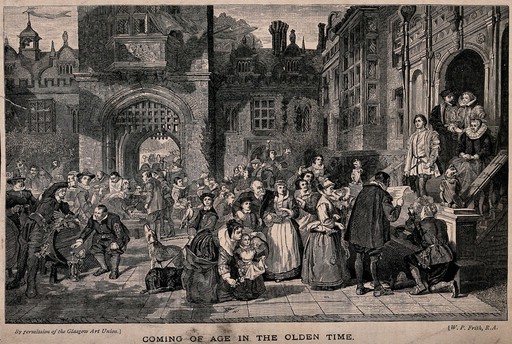
You are standing at the edge of something — not a cliff, not a threshold, but a narrowing. The corridor of your life, which once opened in every direction simultaneously, is becoming a hallway with walls you chose, or that were chosen around you so gradually you cannot locate the moment the choosing stopped.
What gets surrendered in this passage is not innocence in the saccharine sense that culture packages and sells back to itself. The neurological record is far more brutal than any sentiment. The prefrontal cortex, which governs risk assessment, impulse regulation, and the management of competing possibilities, does not fully consolidate until the mid-twenties, and what consolidation means, structurally, is the pruning of synaptic connections that were never reinforced. The brain you carry into adulthood is lighter than the one you had at fifteen — not metaphorically, but materially. Something was cut away so that what remained could operate with greater efficiency. The cost of that efficiency is a measurable reduction in the brain’s tolerance for holding contradictory possibilities open at the same time.
Aristotle drew the distinction between potentiality and actuality as a metaphysical problem, but it lives in the body before it reaches philosophy. The adolescent mind does not experience identity as a fixed coordinate — it experiences it as a field of superimposed trajectories, several versions of the self coexisting without yet collapsing into one. The philosopher Charles Taylor, in Sources of the Self published in 1989, argued that modern identity is constructed through narrative continuity, the sense that there is a coherent story connecting past to future. What he did not emphasize enough is that narrative coherence is also a form of foreclosure. To have a story is to have eliminated the other stories. The self that emerges from adolescence is the survivor of a competition most people never consented to enter.
Relational fluidity disappears with less ceremony than cognitive openness, and therefore gets mourned less consciously. In early adolescence, attachment is promiscuous in the original sense — it extends laterally, experimentally, across peer groups, ideologies, modes of being, without the defensive calculus that comes later. Sociologist Mark Granovetter demonstrated in 1973, in his now-canonical paper on the strength of weak ties, that peripheral social connections carry more novel information than close bonds precisely because they reach across structural gaps. Adulthood, with its demands of loyalty, professional role, and relational maintenance, systematically weakens those peripheral ties. The world gets smaller not because the world changed, but because the architecture of obligation makes range increasingly expensive.
What is never returned to you is the specific texture of not yet knowing what kind of person you are. That unknowing was not a deficiency. It was a form of permeability — to contradiction, to revision, to the possibility that the evidence about yourself was still coming in and had not yet reached a verdict. The psychologist Erik Erikson called the adolescent period a moratorium, a sanctioned suspension of final commitment, and what he understood was that the suspension was not a delay of real life but a different register of it — one where identity was allowed to remain a question rather than an answer. The adult world has almost no institutional tolerance for that register. It requires legibility: a job title, a declared affiliation, a coherent account of where you stand. The moratorium ends not because you have resolved anything, but because the structures surrounding you stop making room for the unresolved.
The passage into adulthood does not steal your freedom in one dramatic gesture. It reduces, by increments so small they feel like maturity, your capacity to sustain the unbearable richness of genuine openness — until one day you mistake the narrowing for wisdom, and call it growth.
A vision curated by a filmmaker, not an algorithm
In this video I explain our vision
🌱 Growing Pains: When Youth Becomes Identity
Coming of age is not simply a passage of years but a seismic shift in how we understand ourselves and our place in the world. The essays that capture this threshold moment draw from deep wells of psychology, philosophy, and social experience. These essays illuminate the forces—internal and external—that shape the self during that irreversible transformation.
Problematic Adolescence is Not a Developmental Disorder
Adolescence is too often pathologized when in fact its turbulence signals the necessary friction of identity formation. This article challenges the clinical gaze and repositions problematic adolescent behavior as a meaningful, if painful, negotiation with the world. Understanding this distinction is essential to reading coming-of-age narratives with honesty and compassion.
GO TO THE SELECTION: Problematic Adolescence is Not a Developmental Disorder
The Rite of Initiation in Psychology and Anthropology
Every coming-of-age story is, at its core, an initiation—a structured or chaotic crossing from one state of being into another. This article explores the anthropological and psychological dimensions of initiation rites, revealing how cultures have always recognized the sacred weight of this transition. The threshold between childhood and adulthood is not merely biological but deeply symbolic.
GO TO THE SELECTION: The Rite of Initiation in Psychology and Anthropology
The weight of the psychological past and the process of trauma liberation
The weight of the past does not disappear when we grow older; it travels with us, shaping every choice we make at the crossroads of youth. This article examines how unresolved traumas accumulate during formative years and how liberation from them becomes a lifelong psychological project. Coming of age, in this light, is not an event but an ongoing confrontation with what we carry.
GO TO THE SELECTION: The weight of the psychological past and the process of trauma liberation
Søren Kierkegaard and the agony of moral choices
Kierkegaard understood that the agony of moral choice is most acute precisely when the self is still being formed and the stakes feel absolute. This article traces how his philosophy of existential decision illuminates the impossible dilemmas that define adolescence—the leap into commitment, the terror of freedom, the pain of becoming. For any young protagonist on screen, Kierkegaard’s thought offers a profound philosophical mirror.
GO TO THE SELECTION: Søren Kierkegaard and the agony of moral choices
Discover Coming-of-Age Cinema on Indiecinema
If these themes resonate with you, Indiecinema is where independent films explore the uncharted territories of youth, identity, and transformation with courage and artistic depth. Stream films that dare to tell the real story of growing up—raw, complex, and unforgettable.
👉 EXPLORE THE CATALOG: Watch Indie Films in Streaming
A vision curated by a filmmaker, not an algorithm
In this video I explain our vision

