
The Glass Feeling
You adjust your posture before you even realize you have done it. The camera is mounted in the corner of the supermarket ceiling, angled down at the produce section, and something in your body — something older than thought — registers it and straightens up. You were not doing anything wrong. You were standing there, holding a mango, deciding nothing of consequence. But the camera was there, and so you became, for a moment, a version of yourself assembled for an audience you will never see and who will, in all statistical likelihood, never look at you. That is the sensation. That is where everything begins.

It is not paranoia. Paranoia implies a distortion of reality, a threat that exists only in the frightened mind. What you felt in that supermarket aisle is something far more ordinary and far more disturbing precisely because of its ordinariness. It is the low, continuous hum of being legible to systems that do not care about you but catalogue you nonetheless. It is the slight hesitation before you type a search query, the half-second pause before you post a photograph, the way you reread a message before sending it as if some invisible reviewer sits behind your screen, assessing your phrasing for evidence of something you cannot name. Nobody told you to do any of this. You simply learned, gradually and without ceremony, that you exist in multiple registers simultaneously — the one you inhabit and the one being recorded.
This feeling has a texture. It is not the sharp, dramatic terror of a knock at the door in the middle of the night. It is quieter and more corrosive than that. It lives in the small compressions of spontaneity, in the words you chose not to use, in the opinion you softened before speaking it aloud into a room where your phone sat on the table. It lives in the knowledge that the route you drove this morning exists as data somewhere, that the rhythm of your purchasing habits has already been analyzed and assigned to a demographic cluster you were never asked to join, that your face — your actual face, the one you were born with — is increasingly a key that unlocks your identity to strangers operating at scales you cannot conceptualize.
What is remarkable is how quickly and completely this became unremarkable. There was no single moment of consent, no dramatic threshold you crossed. The infrastructure of visibility assembled itself around daily life the way scaffolding appears around a building you walk past every morning — one day it is simply there, and you cannot remember when it arrived or who authorized it. The cameras multiplied. The platforms appeared. The terms of service were clicked through without reading, which was understood by everyone involved to be the real agreement: not the text, but the click. You clicked. Everyone clicked. And in clicking, you joined an arrangement whose full dimensions were never disclosed.
What David Lyon spent decades trying to articulate is precisely this: that surveillance is not an event but a condition. Not something that happens to you on particular occasions when authorities take interest in your activities, but the ambient architecture of contemporary life itself. A Canadian sociologist who built his career at Queen’s University in Kingston, Ontario, Lyon began publishing on surveillance culture in the 1990s, long before the smartphone made the argument self-evident to anyone with a pulse. He saw the shape of what was coming not because he was a prophet but because he was paying attention to what was already there — to the credit card trails, to the closed-circuit cameras spreading through British city centers, to the databases quietly accumulating what human beings left behind simply by moving through the world.
And what he understood, before most people had a vocabulary for it, was that the feeling in the supermarket aisle is not incidental. It is the whole point.
Who Is David Lyon and Why It Matters That He Exists
There is a particular kind of intellectual whose value lies not in inventing new realities but in forcing you to see the one you are already inside. You have been breathing the air of a room for so long that you stopped noticing it has no windows. Then someone names what is happening to you, and suddenly the walls become visible, the absence of light becomes undeniable, and you realize you have been suffocating in plain sight. David Lyon is that kind of thinker, which is to say the rarest and most necessary kind.
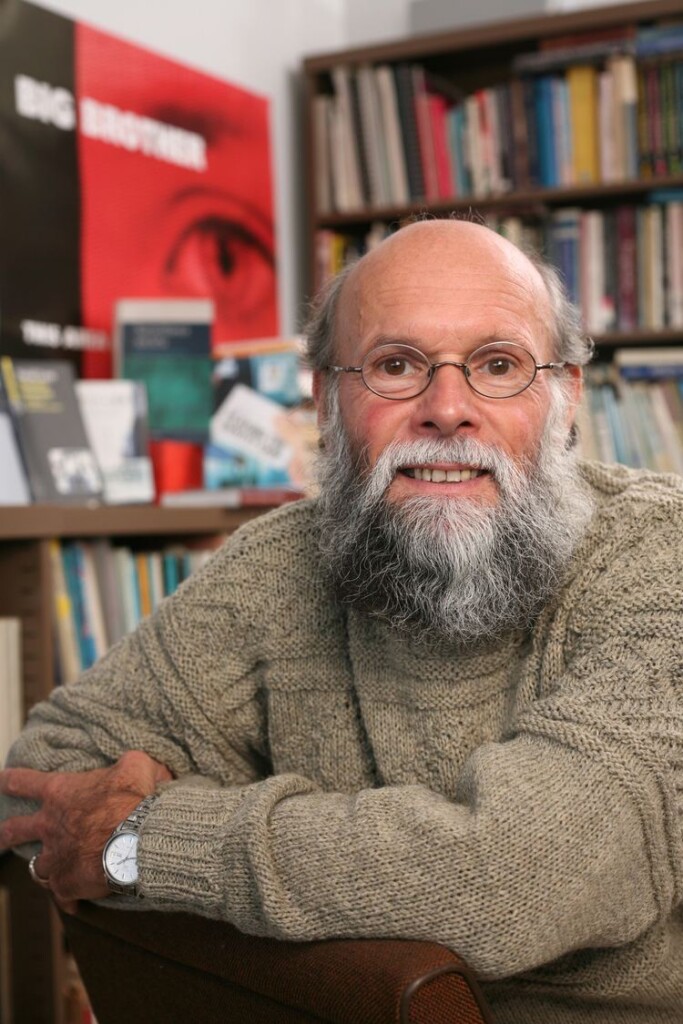
Born in 1948, Lyon built his intellectual life at Queen’s University in Kingston, Ontario, where he eventually founded the Surveillance Studies Centre and spent decades developing what would become one of the most consequential frameworks in contemporary social science. His trajectory is not the dramatic arc of a contrarian genius breaking with consensus in a single thunderclap moment. It is something more patient and more unsettling: the slow, meticulous construction of a lens through which an entire civilization can finally examine what it has been doing to itself and calling progress.
His 1994 book The Electronic Eye arrived at a moment when most people still thought surveillance was something that happened to dissidents in totalitarian states, something located elsewhere, something that by definition could not be happening here, to ordinary people going about ordinary lives. Lyon understood, with a clarity that now reads as almost prophetic, that this comfortable geography was already obsolete. The technologies of watching had migrated from the margins of political repression into the infrastructure of everyday commerce, governance, and social organization. They were hiding inside conveniences, inside services, inside the small administrative transactions that make modern life function. He mapped this not as alarmism but as sociology — with the precision of someone who has decided that accuracy is the most radical possible act.
By 2001, with Surveillance Society, the argument had matured and the stakes had escalated. Lyon was writing about a condition, not just a set of technologies. A surveillance society is not a society that happens to use surveillance tools. It is a society organized around the systematic collection, sorting, and application of information about individuals — a society in which being watched has become so structurally embedded that it no longer requires watchers in the traditional sense. The gaze has been distributed. It lives in the database, in the loyalty card, in the browser cookie, in the transaction record. Michel Foucault had already theorized the internalization of the disciplinary gaze in Discipline and Punish in 1975, arguing that power functions most efficiently when the watched begin to police themselves. Lyon took that theoretical skeleton and clothed it in the specific flesh of late-twentieth-century data capitalism, making it impossible to dismiss as philosophical abstraction.
Surveillance Studies: An Overview, published in 2007, completed the trilogy in a different register — not as argument but as cartography. Lyon was by then not just contributing to a field but defining its coordinates, establishing what questions the discipline would ask, what methods it would use, what ethical stakes it would hold itself accountable to. The fact that surveillance studies now exists as a recognized academic discipline with its own journals, conferences, and graduate programs owes a significant and largely unacknowledged debt to this patient institutional and intellectual labor.
But the reason Lyon matters beyond the academy is precisely what that room metaphor was reaching toward. A diagnosis does not create the illness. Cancer does not begin when the oncologist names it. What the naming does is end the possibility of comfortable ignorance, and comfortable ignorance is always the thing that power depends on most. Lyon named something that had been metastasizing for decades through the body of modern life, and once he named it with sufficient precision, with enough documented evidence and theoretical coherence, the claim that you had not noticed became harder and harder to make.

The Panopticon Is Not a Metaphor — It Is Your Morning
You check your phone before you open your eyes. Not because there is anything urgent, not because you are expecting a message that will change the day — but because the pause between sleep and waking has become intolerable in a way it never used to be. The hand moves before the thought does. This is not a metaphor for surveillance. This is surveillance, already completed, already internalized, before you have decided anything at all.
Foucault understood something in 1975 that most people still resist understanding: the point of the panopticon was never the guard in the tower. Jeremy Bentham designed his circular prison in 1787 as an architecture of uncertainty — inmates could not know when they were being watched, so they learned to behave as though they always were. Foucault, reading this in Discipline and Punish, saw it as the blueprint for modernity itself, not as a historical curiosity about penal reform. The genius of the system was that it eventually made the tower unnecessary. The watched internalized the watcher. The guard’s salary became an irrelevance. Discipline migrated from the institution into the body, into the posture, into the pre-conscious reflex.
David Lyon’s contribution was to take this insight seriously as social analysis rather than philosophical provocation, and then to extend it into territory Foucault never lived to map. In works like Surveillance Society (2001) and later The Culture of Surveillance (2018), Lyon traced how the panoptic logic had dispersed from its architectural origins into something altogether more ambient and more intimate. Where Foucault was concerned with institutions — the prison, the clinic, the school — Lyon was concerned with the infrastructure of ordinary life, with the way surveillance had become not a special condition imposed on the deviant or the suspect but the default texture of existence for everyone. The prison had turned itself inside out and swallowed the street.
What Lyon grasped, and what still unsettles, is that this dispersal did not weaken the mechanism. It perfected it. Consider the man preparing for a job interview who rehearses not only his answers but the angle of his gaze, the firmness of his handshake, the precise degree of enthusiasm that reads as confident rather than desperate — and who does all of this alone, in his apartment, with no interviewer present. The performance is already underway. The assessment has already begun. Something in him has deputized itself to evaluate the rest of him, and the tower is nowhere to be seen. Or consider the woman who deletes a post she has not yet published, who writes and rewrites an opinion she has not yet shared, who polices the future before it arrives. The watcher is not external. The watcher is the part of her that learned, somewhere and sometime, that being seen carried risk.
This is what Lyon means when he speaks of surveillance as a social sorting mechanism — not simply a technology of observation but a technology of subjectivity, a force that shapes who people understand themselves to be and what they believe themselves permitted to do. The philosopher Gilles Deleuze, writing in 1992 in his brief but devastating essay Postscript on the Societies of Control, argued that Foucault’s disciplinary societies had already given way to something more fluid and more relentless, where control operated not through enclosure but through modulation, continuous variation, the debt that never ends. Lyon reads Deleuze as a complement to Foucault, not a replacement — the tower dispersed into the network, the panopticon became a habit of mind running on consumer hardware.
The architecture changed. The logic didn’t. You are already standing in it, already adjusting yourself to a gaze you cannot locate, already editing the shape of your morning to fit an audience that may or may not exist.
Sorting the World: Classification as Control
There is a moment that happens in airports, in loan offices, in hospital waiting rooms, in the queue at a border crossing. Nothing has happened yet. You have not spoken, not acted, not made a single decision that could be judged. And yet something has already been decided about you. A screen somewhere has already processed your name, your zip code, your travel history, your purchase patterns, the neighborhood where you sleep. The decision arrives before you do. The category precedes the person.
This is what David Lyon identified at the center of his 2003 edited volume as the defining operation of contemporary surveillance: not watching, but sorting. The distinction matters enormously. Watching implies a neutral gaze, a witness, perhaps an intrusive one but still fundamentally passive. Sorting is something else entirely. Sorting is productive. It does not merely record what exists; it manufactures positions, assigns futures, distributes risk and reward along lines that feel technical but are nothing of the kind. Lyon’s central argument, developed across the contributions he assembled from sociologists, geographers, and legal theorists working in the early years of the data explosion, is that surveillance systems are mechanisms of social differentiation. They do not find inequality. They generate it.
The infrastructure that makes this possible is staggering in its mundane invisibility. Credit scoring systems in the United States, formalized through the FICO model first introduced commercially in 1989, condense entire financial biographies into a three-digit number that determines access to housing, education, and healthcare. Insurance algorithms calculate risk premiums that vary not only by individual behavior but by residential geography, effectively encoding decades of discriminatory lending and redlining into actuarial tables that appear purely mathematical. Predictive policing platforms deployed across dozens of American cities in the 2010s generated heat maps of anticipated criminal activity drawn from historical arrest data — data produced by policing practices that had themselves been racially concentrated for generations. The algorithm learned from a crooked teacher and then presented its conclusions as objectivity.
A man walks through a checkpoint and a light turns red. He has done nothing. He has not been accused of anything. Somewhere in a database, a pattern associated with his travel itinerary, or his name’s phonetic similarity to another name, or a financial transaction made years ago in a country he no longer visits, has triggered a classification. He is now, in the language of these systems, a person of interest. He will spend hours explaining himself to people who are themselves only reading screens. The screens will not update easily. The category is sticky. This is what sociologists mean when they speak of what the French philosopher Michel Foucault described in Discipline and Punish as the normalizing judgment — the substitution of the norm for the law, the measurement of deviation rather than the punishment of transgression. But Foucault imagined a disciplinary society that still required bodies to be physically present in institutions. What Lyon recognized is that the norm now travels ahead of the body. You are sorted before you arrive.
The philosopher Antoinette Rouvroy, working on what she calls algorithmic governmentality, has pushed this further, arguing that data systems now bypass the subject entirely. They do not address the individual in order to correct or discipline them. They simply reroute around them, adjusting flows of services, credit, security attention, and social access based on correlations that no human being can interrogate or contest. The person becomes statistically irrelevant to their own profile. A woman applies for a job, is filtered out by a resume-screening algorithm, and never receives a rejection letter because the system does not acknowledge that she applied. She does not know she was sorted. She only knows the silence.
Lyon called this the dark side of personalization. The same infrastructure that remembers your coffee order and recommends your next film also marks certain bodies as threats before they have drawn breath in the building.
The Seduction of Transparency: Why We Consent

You update your profile picture on a Tuesday afternoon for no particular reason. Not because something changed. Because you want to be seen changing. The photo is slightly better than the last one — better light, a more convincing version of ease — and you watch the notifications arrive with something that is not quite vanity and not quite hunger but lives in the narrow space between them. You are not being watched. You are inviting the watch. There is a difference, and it matters enormously, and almost nobody talks about it.
David Lyon spent years insisting on this distinction. Surveillance studies had built its entire architecture on the figure of the prisoner — Bentham’s panopticon, the few watching the many, power flowing downward from tower to cell. But what the panopticon could never explain was the queue of people waiting to get inside. What it could not account for was the selfie, the confession, the overshare, the deliberate self-exposure performed not under coercion but with something resembling joy. In the 2013 collaboration with Zygmunt Bauman, Liquid Surveillance, Lyon encountered a framework that could hold this contradiction: the synopticon, a term Thomas Mathiesen had introduced in 1997, describing the inverted structure where the many watch the few, where celebrity and visibility become not punishment but aspiration. Power, in this configuration, does not descend. It radiates. And people lean toward it.
Bauman brought to that conversation his concept of liquid modernity — the dissolution of stable structures, the replacement of solid institutions with fluid, temporary, self-assembled identities. In a world where identity is no longer inherited but constructed, visibility becomes the proof of construction. To be seen is to exist with force. To be unseen is to risk the worst modern fear, which is not persecution but irrelevance. Lyon recognized that this was not a corruption of the self but an entirely coherent response to the conditions Bauman had been mapping since 2000. The surveillance apparatus did not have to impose itself. It simply had to make itself available, and the rest followed.
There is a man who walks into a television studio and confesses everything. Not because he was caught. Because confession is the only currency he has left that feels real. He talks about his failures, his humiliations, the marriage that collapsed, the money that disappeared. The audience leans forward. He is not diminished by the exposure. He is constituted by it. Without the gaze, there is no story. Without the story told publicly, there is no self that coheres. This is what Guy Debord saw arriving in 1967 with The Society of the Spectacle — not that people would be forced into performance, but that they would eventually be unable to distinguish performance from living. Debord did not live to see the smartphone, but he described it with uncomfortable precision.
Lyon does not moralize about this. That is one of his most important intellectual moves. He does not stand outside the dynamic and condemn it. He asks what need it answers, what wound it covers, what social arrangement produced a human being for whom being watched feels like safety. The answer lives somewhere in the erosion of community structures that Bauman catalogued throughout the 1990s and 2000s — the privatization of public life, the atomization that follows when traditional belonging systems collapse. When the village disappears, the platform arrives. When the church empties, the feed fills. The logic is not pathological. It is almost reasonable, given what preceded it.
A woman posts every meal, every journey, every minor grief. Her followers number in the thousands. She is not famous by any old definition. She is simply consistently visible, and visibility has become its own category of power, its own form of social insurance. Lyon would say she is participating in a surveillance assemblage, contributing her data willingly, maintaining herself through the act of being monitored. What he would not say is that she is wrong.
A vision curated by a filmmaker, not an algorithm
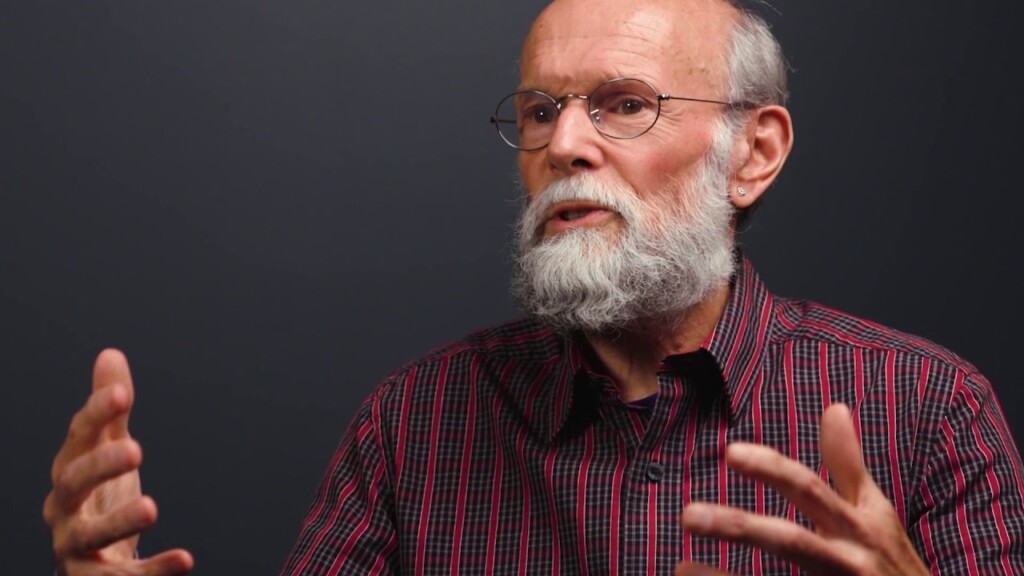
In this video I explain our vision
After September 11: When the Exception Becomes the Architecture
You pass through the scanner without breaking your stride. You place your bag on the belt, remove your shoes, hold your arms slightly out from your sides in that practiced posture of submission that nobody taught you but everyone knows. The person behind you does the same. The person in front already has their laptop out. This is simply how moving through the world works now, and the most unsettling thing about it is that it no longer unsettles you at all.
Lyon published his direct reckoning with this transformation in 2003, just two years after the towers fell, and the argument he made was precise enough to be uncomfortable: the emergency did not produce the surveillance state. It accelerated and legitimized what was already being constructed, and in doing so, it converted temporary exception into permanent architecture. The distinction matters enormously. Emergencies, by definition, end. Architecture does not. What September 11 accomplished, in Lyon’s reading, was to perform the ideological work of making the exception feel like necessity, and necessity feel like nature.
Giorgio Agamben had theorized this mechanism with forensic clarity. In his 2003 work “State of Exception,” he traced how sovereign power has historically expanded by declaring emergencies that suspend normal legal and political frameworks, and how those suspensions have a troubling tendency to become the new normal. The exception, Agamben argued, does not remain outside the rule. It becomes incorporated into it, restructuring the rule from within. What Lyon understood was that surveillance technology provided the material infrastructure through which this philosophical dynamic became literally concrete, embedded in buildings, borders, databases, and the learned choreography of your own body moving through an airport.
By 2006, there were an estimated four to five million closed-circuit television cameras operating in the United Kingdom alone, approximately one camera for every twelve people in the country. This was not the result of a single decision or a single law. It was the accumulated product of thousands of individual installations, each justified locally, each unremarkable in isolation, each contributing to a grid that, viewed from sufficient distance, constituted something like total visual coverage of public life. A man walks through a city center and is captured on more than three hundred cameras in a single day without once being stopped, questioned, or even aware of the specific moments of recording. The surveillance is so thorough that it has become invisible, which is precisely its most effective condition.
Then in 2013, Edward Snowden released documents demonstrating that the American National Security Agency had been collecting metadata on essentially every phone call made in the United States, had direct access to the servers of Google, Facebook, Apple, and Microsoft, and was running programs with names that sounded like corporate project management tools but described the collection of information on a scale no government had ever previously achieved. The reaction was significant but not transformative. People were alarmed. Editorials were written. Then people went back to their phones.
There is a scene that belongs to many lives simultaneously. A woman is at a border crossing, her documents in order, her answers rehearsed, her body language calibrated toward transparency. She is not guilty of anything. She knows this. The guard knows this. And yet something in the architecture of the moment produces in her a feeling indistinguishable from guilt, a desire to explain herself more fully than required, to volunteer information, to demonstrate through excessive compliance that she has nothing to hide. The logic of the surveillance apparatus does not require accusation. It produces its effects through the mere structure of its presence, through the asymmetry of the watched and the watcher, through the knowledge, internalized so deeply it no longer feels like knowledge, that she can be seen and the apparatus cannot.
Lyon had a name for this before the checkpoints felt inevitable. He called it the surveillant gaze, and he understood that its most complete victory would be the moment it stopped needing to announce itself.
The Body as Data: Biometric Life and Its Discontents
There is a moment, familiar to anyone who has passed through an international airport in the last decade, when the machine looks at your face and hesitates. You stand before the automated gate, your passport pressed against the reader, and something in the algorithm pauses. The camera scans again. You shift slightly, tilt your chin, try to arrange your features into whatever neutral expression satisfies the geometry of recognition. For a few seconds you are not a person. You are a hypothesis the system is trying to confirm.
This is where David Lyon’s later work arrives with particular force. In his thinking on biometric surveillance, the body itself becomes the document, the credential, the border. Fingerprints, iris patterns, facial geometry, gait — the physical fact of you is now a verifiable signal, something to be matched against a database and either cleared or flagged. The reduction is not incidental. It is the point. When your face becomes a password, what remains of everything else you are?
The genealogy of this moment runs directly through Francis Galton, the Victorian polymath who systematized fingerprint classification in the 1890s and whose 1892 work Finger Prints established the framework that criminal and colonial administrations would adopt globally. Galton was also a eugenicist, and that proximity is not a coincidence to be bracketed away. Biometrics was from its origin a technology of sorting, of distinguishing the legible body from the illegible one, the subject who belongs from the one who threatens. Lyon traces this lineage with precision, refusing the comfortable narrative that contemporary facial recognition is simply a neutral tool that bad actors might misuse. The tool was built for sorting. It has always been built for sorting.
Think of someone who walks through a checkpoint and the system simply refuses to recognize her. Not because she is trying to deceive it, but because her features — darker skin, different bone structure — fall outside the training data’s center of gravity. The machine’s hesitation is not a glitch. It is the system revealing its assumptions about which bodies were considered normative when it was built. Joy Buolamwini’s research at MIT, published in her 2018 Gender Shades study, demonstrated that commercial facial recognition systems misclassified darker-skinned women at error rates up to 34.7 percentage points higher than lighter-skinned men. The body becomes a problem not because of what the person has done, but because of what she looks like, which is to say, because of who she is.
Lyon draws on Zygmunt Bauman‘s concept of wasted lives, those rendered superfluous by the logic of modernity, to argue that biometric systems do not simply identify; they stratify. The body that cannot be read, or that is read as suspicious, is already partially excluded before any human decision is made. The algorithm performs a kind of pre-judgment, and because it is algorithmic it carries the appearance of objectivity. Numbers do not discriminate, the argument goes, even when they do nothing but discriminate.
What disturbs most is the intimacy of this capture. Earlier surveillance required distance — the file, the report, the photograph. Biometric surveillance requires the body itself to cooperate in its own registration. You press your thumb to the glass. You look into the camera. The asymmetry is total: the system knows what it is looking for, and you do not know what it finds. Michel Foucault, writing in Discipline and Punish in 1975, described the panopticon as a structure that made surveillance internalized. Biometrics goes further. It does not require you to internalize anything. It simply reads what is already written on you, in you, as you — and decides, in milliseconds, what category of person you are permitted to be.
The question Lyon leaves open, and that no technical adjustment has yet answered, is what subjectivity means when the body is simultaneously your most intimate possession and the most legible surface available to power.
What Surveillance Does to the Soul
There is a moment when you stop doing something because you want to, and start doing it because someone might be watching. The shift is so quiet, so incremental, that you cannot locate the exact second it happened. You were yourself, and then you were a performance of yourself, and the distance between those two things collapsed so gradually that you never had a chance to mourn it.
This is the territory David Lyon has always been circling, even when his language was sociological and his data was institutional. Beneath the categories of dataveillance and the sorting mechanisms and the architectures of control, there is a question about what happens to a human being who lives long enough inside the gaze. Not what the state does to the citizen, not what the corporation does to the consumer, but what permanent visibility does to the soul.
Foucault, in his late lectures at the Collège de France, described what he called technologies of the self — practices through which individuals act upon their own bodies, souls, thoughts, and conduct in order to transform themselves and attain a certain state of being. The panopticon was only the external mechanism. The deeper and more durable damage was the moment the prisoner began to do the warden’s work internally, when the tower no longer needed an occupant because the gaze had migrated inside. Philip Zimbardo’s Stanford experiment in 1971, halted after six days because its simulated power dynamics had already deformed the behavior of every participant, demonstrated something that went beyond role-playing: the observers became cruel not because they were cruel people, but because the structure of observation itself — the asymmetry between the seen and the unseen — produces a certain kind of subject on both sides of the lens. The watched become compliant, diminished, strategic. The watchers become entitled, abstracted from consequence. What the experiment revealed was not human nature under pressure but the grammar of visibility itself.
Lyon knows this grammar intimately, and his response to it is inflected by something most secular theorists leave out. His Christian ethics are not a footnote to his surveillance theory; they are its deepest stratum. The concept of care he recovers from within surveillance — the idea that monitoring can emerge from genuine concern rather than control — is a theological intuition as much as a sociological one. It assumes that there is a self worth caring for, a dignity that precedes the database, a personhood that cannot be fully captured in a data point or a behavioural profile. The tradition he draws from insists on the irreducibility of the human person, and it is precisely this irreducibility that surveillance, in its dominant contemporary form, systematically denies.
There is a man, somewhere in the middle of his life, who realizes one evening that he cannot remember the last time he did something without first imagining how it would look. Not how it would feel, not whether it was right or good or true, but how it would appear to an audience he has never met and cannot name. He has not been imprisoned. No one has threatened him. The architecture simply worked. The technologies of the self that Foucault described have been colonized by technologies of the market, and what has been lost is not freedom in the abstract but the specific, unrepeatable experience of acting from the inside of your own life.
Lyon’s deepest provocation is not his data or his categories or even his institutional critique. It is the question he leaves standing when all the analysis is done: if the subject produced by permanent visibility is a subject who has learned to see themselves from the outside, who has internalized the logic of the profile and the metric and the score, then what remains of the interiority from which genuine choice, genuine love, and genuine faith were always supposed to emerge.
👁️ Watching, Controlling, and the Politics of Visibility
David Lyon’s work on surveillance theory sits at the crossroads of power, technology, and social control. These related articles deepen the conversation by exploring the thinkers, systems, and ideologies that shaped how modern societies observe and regulate their members.
The Surveillance Society: History and Theory
The Surveillance Society traces the long historical arc from early state record-keeping to today’s algorithmic monitoring, offering essential context for understanding Lyon’s theoretical contributions. It examines how surveillance evolved from a bureaucratic tool into a pervasive infrastructure of everyday life. Reading this alongside Lyon reveals how theory and historical reality continuously inform each other.
GO TO THE SELECTION: The Surveillance Society: History and Theory
Orwell’s 1984: Big Brother and Total Surveillance
Orwell’s 1984 remains the most iconic literary embodiment of total surveillance, depicting a world where the gaze of Big Brother is inescapable and self-censorship becomes second nature. Lyon himself frequently references Orwell’s vision when discussing how contemporary surveillance systems reproduce and exceed Orwell’s dystopian imagination. This article unpacks the novel’s mechanics of control and their uncanny resonance with digital-age realities.
GO TO THE SELECTION: Orwell’s 1984: Big Brother and Total Surveillance
Banal Evil and Radical Evil: Kant and Arendt
Hannah Arendt‘s distinction between banal and radical evil offers a philosophical framework for understanding how surveillance bureaucracies can enable systemic harm without malicious intent. The normalization of monitoring technologies mirrors the normalization of administrative violence that Arendt diagnosed in totalitarian systems. Placing Lyon in dialogue with Arendt illuminates the ethical stakes of designing and accepting surveillance as routine.
GO TO THE SELECTION: Banal Evil and Radical Evil: Kant and Arendt
The Psychology of Power: History and Theory
The psychology of power examines how visibility and knowledge function as instruments of domination across political and institutional contexts. This article draws on a wide range of thinkers—from Foucault to social psychologists—to analyze why those who watch gain authority over those who are watched. It provides a crucial psychological complement to Lyon’s sociological account of surveillance as a structure of modern governance.
GO TO THE SELECTION: The Psychology of Power: History and Theory
Explore the Cinema of Power and Control on Indiecinema
If these ideas about surveillance, power, and the politics of the gaze have sparked your curiosity, Indiecinema streaming offers a carefully curated selection of independent films that confront these very themes with artistic depth and critical courage. From dystopian visions to documentary exposés, independent cinema remains one of the most powerful tools for questioning who watches, who controls, and who resists.
👉 EXPLORE THE CATALOG: Watch Indie Films in Streaming
A vision curated by a filmmaker, not an algorithm
In this video I explain our vision

