
The Illusion of the Turning Point
You remember the exact quality of the light that afternoon — the way it fell through a window at a particular angle, catching dust in suspension, and you made a decision that felt, in that instant, like yours. Maybe it was a phone call you chose to answer or not answer. Maybe it was a city you moved to because someone you’d met twice mentioned it with a specific brightness in their voice. Maybe it was a conversation on a train platform that led, through a chain of events you could not have engineered deliberately, to the person you would spend a decade alongside. The memory has the texture of a hinge. Before it: one life. After it: another. And the hinge feels like you.

This is perhaps the most seductive story the mind tells itself — that somewhere in the past there exists a point of genuine origination, a moment where the self exercised something clean and autonomous, where will and world met and something new was produced. The philosopher Daniel Dennett, in his 1984 work Elbow Room, dismantled this intuition with uncomfortable precision: what we call a free choice is almost always a choice whose causes we simply cannot see. The invisibility of the mechanism does not prove its absence. It only confirms that the human nervous system is remarkably efficient at hiding its own wiring from its owner.
What neuroscience added to that philosophical argument turned out to be even more disorienting. Benjamin Libet’s experiments in the early 1980s tracked the readiness potential in the brain — the electrical charge that precedes voluntary movement — and found it building several hundred milliseconds before subjects reported being consciously aware of deciding to act. The decision, it appeared, was already in motion before the person knew they had decided anything. Consciousness arrived not at the beginning of the choice but somewhere in the middle, like a narrator who enters a scene already underway and begins immediately to claim authorship of events that preceded their arrival.
Yet the brain’s retrospective authorship is not merely a quirk of motor control — it scales up to an entire life. The psychologist Michael Gazzaniga, in his decades of research on split-brain patients, identified what he called the “interpreter,” a left-hemisphere function that generates continuous, post-hoc narratives to bind disparate events into coherent personal history. The interpreter does not record reality; it constructs it, stitching together coincidences, accidents, and external pressures into something that resembles intention. Every turning point you can name is, at least partly, an artifact of this construction — not a discovery of what happened but an act of editing performed on raw footage that was far more chaotic than the finished version.
The chaos matters because it was never neutral. The sociologist Pierre Bourdieu spent the better part of his career demonstrating that the choices people experience as most deeply personal — career paths, romantic partners, aesthetic preferences, political convictions — are precisely the choices most saturated by structural conditioning. His concept of the habitus, developed most fully in Distinction published in 1979, described how class, language, family, and the accumulated weight of inherited position shape what options a person can even perceive as available. The turning point you remember as yours was drawn from a menu you did not design, written in a language you did not invent, in a restaurant you did not choose to enter.
None of this collapses into pure determinism, which would be its own form of narrative simplification. The more accurate and less comfortable position is that the boundary between what was chosen and what was imposed is genuinely impossible to locate — not because it is hidden, but because it may not exist as a boundary at all, only as a gradient so smooth that the mind, desperate for edges, invents one and calls it a moment.
Arte
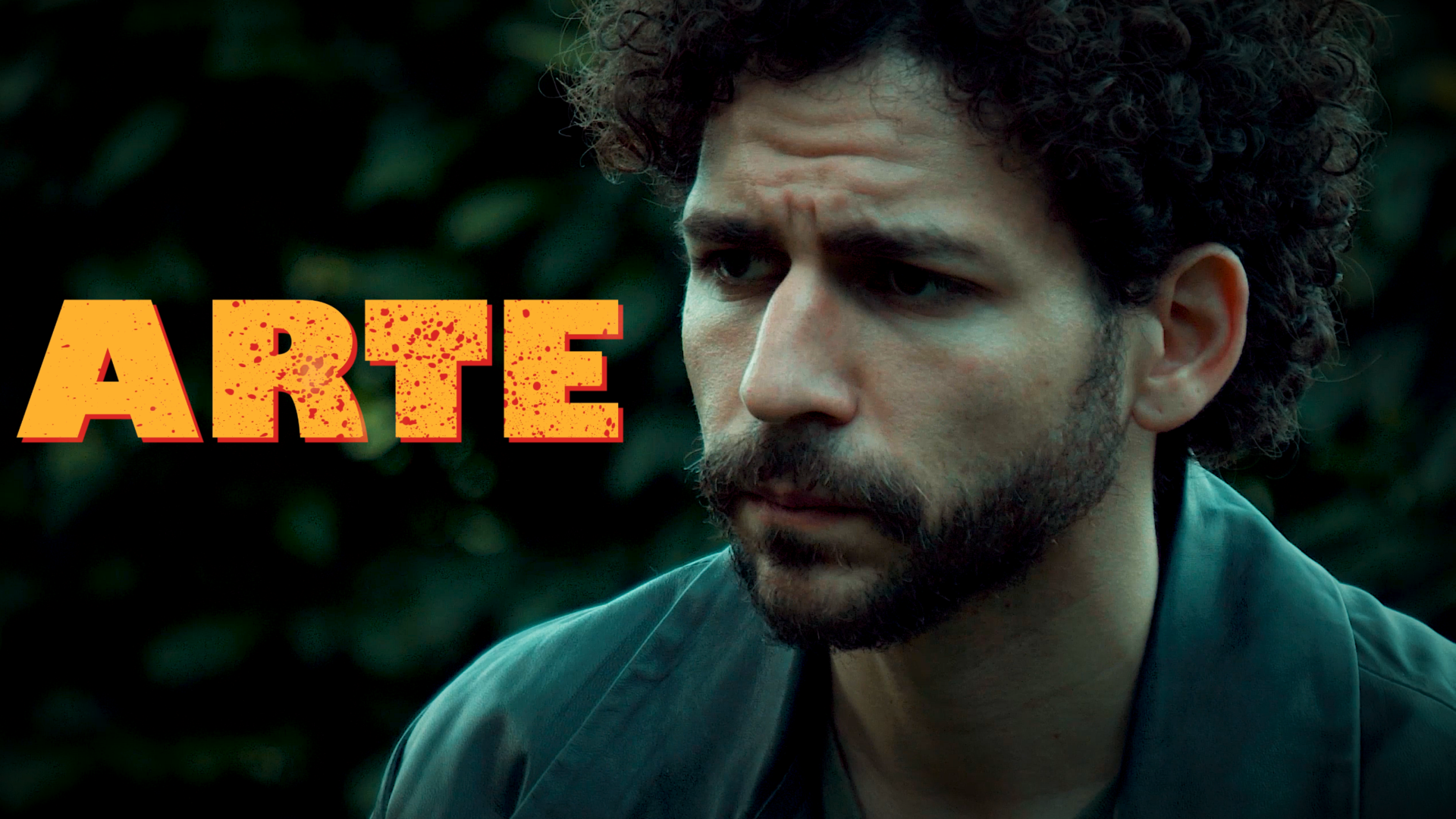
Drama, thriller, by Stefano Scala, Simone Arcidiacono, Italy, 2023.
In a secret and fascinating world, four people meet every week at the mysterious "The Circle" for a gripping game, knowing nothing about each other. However, fate has a different plan for them. As the game progresses, their lives begin to intertwine in unpredictable ways. The boundaries between the game and reality start to blur, revealing buried secrets and creating unthinkable connections. In the heart of "The Circle," the masks fall, and the players' lives will be forever changed.
LANGUAGE: Italian
SUBTITLES: English, Spanish, French, German Portuguese
Free Will as a Cultural Product
You have made a decision today that felt entirely yours. Perhaps it was the route you walked to work, the person you called instead of texted, the meal you chose from a menu while telling yourself you were in the mood for something different. The sensation was unmistakable — that quiet, interior click of authorship, the feeling that you, specifically you, initiated something from nothing. What almost no one tells you is that this sensation has a manufacturing date.
The autonomous individual who chooses freely and bears full responsibility for those choices is not a discovery about human nature. It is a construction, assembled with considerable deliberateness during a specific historical window in Western Europe, between roughly 1680 and 1790, when political economies were being reorganized around wage labor, private property, and the legal fiction of the sovereign self. Immanuel Kant‘s 1785 Groundwork of the Metaphysics of Morals gave this construction its most elegant philosophical housing: the will that legislates to itself, independent of inclination, circumstance, and causality. Kant called this autonomy. What he was also doing, whether he recognized it fully or not, was providing the moral architecture for a social order that needed individuals to be accountable units — people who could sign contracts, own things, be blamed for poverty, and be praised for wealth.
The timing is not incidental. The enclosures of common land in England, which accelerated dramatically between 1750 and 1850, forced millions off shared agricultural land into cities and factories. For this displacement to be morally tolerable, the displaced had to be understood as free agents who could, in principle, have chosen differently. The alternative — that structural forces had simply crushed them — was ideologically untenable for a system requiring voluntary labor contracts to maintain the appearance of consent. Free will, in this sense, was not a philosophical gift to humanity. It was a precondition for exploitation to feel legitimate.
This is where the sociologist Max Weber becomes unexpectedly useful, though not in the way he is usually invoked. His 1905 analysis in The Protestant Ethic and the Spirit of Capitalism traces how Calvinist theology — with its emphasis on discipline, calling, and individual moral accountability — migrated seamlessly into capitalist rationality. The Protestant self who answered to God alone became the market self who answered to no structural explanation. Failure was personal. Success was deserved. By the time Weber was writing, this had calcified into common sense so thoroughly that it no longer required theological justification.
What is remarkable is how the neuroscience of the late twentieth century arrived at findings that should have destabilized all of this, and largely failed to do so culturally. Benjamin Libet’s experiments in the 1980s demonstrated that measurable brain activity initiating voluntary movement precedes conscious awareness of the intention to move by several hundred milliseconds. The decision, neurologically, is underway before the decider knows about it. This was received as a curiosity, debated in academic journals, and then effectively quarantined from the broader cultural conversation about responsibility, punishment, and reward — because the system built on voluntary selfhood cannot afford to take it seriously.
A woman walks into a courtroom in any Western jurisdiction today. The entire architecture of the proceeding assumes that she, as a bounded individual with intact cognition, could have done otherwise. Decades of research in behavioral genetics, developmental psychology, and social epidemiology suggesting that her choices were profoundly shaped by cortisol levels in early childhood, by neighborhood poverty indices, by the specific patterning of neural development under chronic stress — none of this alters the fundamental grammar of legal accountability, because that grammar was written before any of this data existed and has proven nearly immune to revision.
The philosopher Daniel Dennett spent much of his career arguing, in works like Freedom Evolves published in 2003, that a compatible version of free will survives the neuroscientific challenge. What his argument quietly reveals, in the very effort it requires, is how much cultural energy must be spent maintaining the concept against the evidence pressing on it from every direction.

What Neuroscience Found and What We Did With It
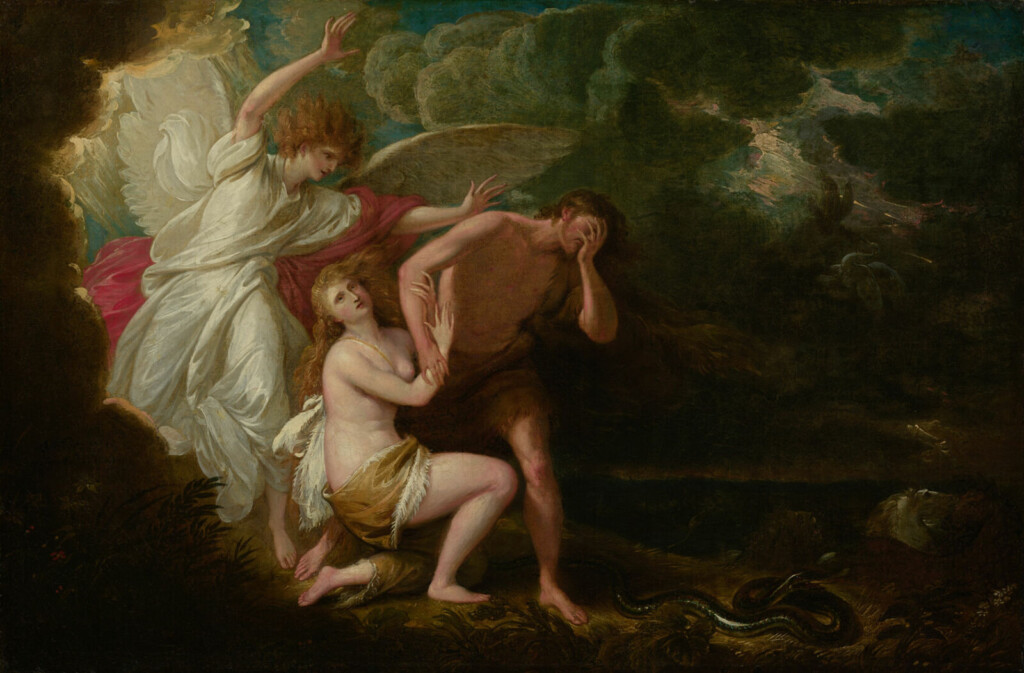
You are sitting at a table, your hand resting flat on a surface, and a researcher tells you to flex your wrist whenever you feel like it. Simple. Voluntary. Yours. Except the electrodes attached to your scalp are recording something that will take decades to stop being uncomfortable: your brain initiates the movement approximately five hundred milliseconds before you become conscious of having decided to move. The decision, in the neurological sense, is already underway before you know you made it. You are, in the most literal measurable sense, the last one informed.
Benjamin Libet published these findings in 1983 in Brain, and the philosophical earthquake they should have triggered never quite arrived. What arrived instead was a peculiar cultural management operation. The findings were acknowledged, cited, passed around academic seminars, and then quietly surrounded by qualifications until they became inert. Libet himself contributed to this process by introducing the concept of “free won’t” — the idea that even if the brain initiates action unconsciously, the conscious self retains a veto power in the final two hundred milliseconds. It was a generous lifeline thrown to a drowning belief system, and the culture grabbed it without examining the water it was drowning in.
What the veto hypothesis actually does, when you follow its logic without mercy, is confirm the original problem while appearing to dissolve it. If your role in your own decisions is editorial rather than authorial — if you are the fact-checker of a manuscript written elsewhere in your nervous system — then the self you have been building your entire life, the agent who chooses careers and partners and moral positions, is operating at a different level of causality than the one you assumed. Not absent, perhaps, but downstream. Not the source, but the filter.
The neuroscientist Antonio Damasio, in his 1994 work Descartes’ Error, had already been dismantling the Cartesian architecture from a different angle, showing through his work with patients with ventromedial prefrontal damage that rational decision-making collapses without emotional signaling — that the “cold reason” Western modernity fetishized was always a fiction propped up by somatic states, gut feelings, inherited emotional shortcuts. Libet and Damasio, read together, don’t simply complicate the picture of free will; they describe a decision-making system in which conscious deliberation is neither the initiator nor the sole evaluator of what gets chosen.
And yet the industry of self-help, the motivational apparatus, the therapeutic culture of the 1990s and 2000s, expanded precisely during the years when this neuroscientific literature was accumulating. The market for books telling people they could consciously rewire their choices, architect their destiny, reprogram their habits in twenty-one days, grew into a multi-billion-dollar global industry while the laboratories were producing data pointing in a structurally opposite direction. This is not coincidence, and it is not stupidity. It is an economic and psychological immune response. A culture organized around the myth of sovereign individual will cannot metabolize evidence that the sovereign is largely ceremonial without triggering a systemic crisis in how it justifies inequality, reward, punishment, and the entire moral architecture of merit.
The philosopher Daniel Dennett spent considerable energy after Libet arguing that the experiment’s design misunderstood what “decision” means, that timing consciousness is methodologically treacherous, that the readiness potential doesn’t map cleanly onto the folk-psychological concept of choice. He may be partially right, and that partial rightness became the permission slip for an entire generation of commentators to close the folder. But notice what was never seriously asked: not whether Libet’s instrument was perfectly calibrated, but why the results produced such visible institutional relief when they were challenged, and such visible discomfort when they were not. The shape of a culture’s anxiety is often most legible not in what it fears but in what it rushes to disprove before the implications have been fully stated.
The Sociology of the Inevitable
You wake up one morning convinced you have chosen your life. The apartment, the career, the partner, the politics, the precise voltage of ambition you permit yourself to feel — all of it seems to have emerged from a series of deliberate acts, judgments made in the open air of personal freedom. But there is a discipline that has been quietly auditing that story for decades, and its verdict is not flattering.
Pierre Bourdieu spent much of his intellectual life trying to describe the mechanism by which social structures install themselves inside human bodies before those bodies are old enough to resist. In “The Logic of Practice,” published in 1980, he named this mechanism the habitus — not a set of rules a person consciously follows, but a set of dispositions so deeply embodied that they operate below the threshold of reflection. The habitus is not ideology you believe in. It is posture, timing, the way you enter a room, the ceiling you instinctively place on your own desires, the register in which you speak to people you perceive as above or below you. It is installed through repetition long before the child has developed the vocabulary to describe what is being done to it.
What this means, practically, is that the child born into a working-class family in a post-industrial city in northern France in 1975 is not simply living in different material circumstances than the child born into a professional household in Paris that same year. Each child is being fitted with a different cognitive and emotional architecture. The first child learns, through thousands of micro-experiences that are never articulated as lessons, that ambition beyond a certain radius is presumptuous, that institutions are adversarial rather than welcoming, that the future is something that happens to you rather than something you negotiate. The second child absorbs an entirely different physics of possibility. By the time either child makes what they experience as a free choice — the subjects they study, the social worlds they enter, the risks they take or refuse — those choices have already been pre-structured by a decade of embodied training that left no paper trail.
Bourdieu’s data was not metaphorical. In “Reproduction in Education, Society and Culture,” co-written with Jean-Claude Passeron in 1970, the statistical evidence was laid out with uncomfortable precision: academic success in France tracked class background with a regularity that no theory of individual talent could absorb. Children from the top occupational quintile were vastly overrepresented at elite institutions not because they were categorically more gifted but because the entire apparatus of schooling rewarded the habitus that their families had already installed in them. The school did not create inequality; it certified what the family had already accomplished.
The cruelty of the mechanism is that it is experienced from the inside as self-determination. The person who never applied to a certain school because it “wasn’t really for people like me” does not experience that thought as a structural constraint. They experience it as self-knowledge, as realism, as a reasonable reading of their own capacities. The cap on desire feels indistinguishable from the desire itself. This is what makes the habitus so much more efficient than any external prohibition — it transforms the boundaries of the probable into the contours of the wanted.
What remains genuinely vertiginous about this framework is not what it says about the poor. It is what it says about the affluent. The professional who reads Bourdieu in a well-lit study, nodding at the injustice visited on others, has not escaped the analysis — they are its other pole. Their sense of ease inside institutions, their fluency with abstract language, their comfort treating the future as a project rather than a threat, these too are not natural endowments. They are a different set of encoded instructions running on different hardware, feeling, from the inside, exactly like freedom.
Destiny as a Retrospective Fabrication
You are sitting across from someone you have loved for eleven years, and they ask you how you two ended up together, and without hesitating you tell them about the party you almost didn’t attend, the mutual friend who almost didn’t make the introduction, the moment your eyes met across a room — and the whole story flows out of you with the internal logic of a screenplay, each accident neatly causing the next, the entire sequence feeling, as you narrate it, like it could not possibly have gone any other way. The story feels true because it is yours. It feels inevitable because you are still in it.
Michael Gazzaniga spent decades studying patients whose corpus callosum — the thick band of fibers connecting the two hemispheres of the brain — had been surgically severed to control severe epilepsy. What he discovered, detailed across his research from the 1960s onward and consolidated in his 1985 book The Social Brain, was something that should have permanently destabilized how we understand human self-knowledge. When the left hemisphere of a split-brain patient was shown an image that the right hemisphere could not see, and the patient was asked to explain why their hand had just performed an action commanded by the unseen image, the left hemisphere did not say “I don’t know.” It invented a reason. Instantly, fluently, convincingly. Gazzaniga called the mechanism the interpreter — a module in the left hemisphere whose function is not to report reality but to generate coherence, to take whatever has already happened and produce a narrative that makes it seem intended. The interpreter does not wait for facts. It works backward from outcomes.
This is not a malfunction. It is the architecture. The same cognitive mechanism that allows human beings to learn from sequences, to anticipate patterns, to build culture across generations, is the mechanism that forges chains of meaning between events that had no inherent connection. Every time a person looks back at their life and sees a path, they are not remembering the path — they are constructing it in real time, using the endpoint as the organizing principle, making the beginning serve the conclusion that only became available after the fact.
The philosopher Paul Ricoeur, writing in Time and Narrative between 1983 and 1985, argued that human identity is fundamentally narrative identity — that the self is not a substance but a story, maintained through the act of emplotment, the selection and arrangement of events into a plot that produces the illusion of a coherent character moving through time with purpose. What Ricoeur understood as a philosophical condition, Gazzaniga had already caught in the act, neurologically, in a laboratory. The story is not the record of a life. The story is the life, built fresh at every telling, always already revised to accommodate what happened next.
This is where destiny reveals its actual structure. It is not a force operating ahead of you, bending circumstances toward a predetermined end. It is a label applied retroactively to whatever happened to survive the editing process. The job you didn’t get becomes the job that “wasn’t meant to be” only after the job you did get began to feel meaningful. The relationship that ended becomes a necessary detour only once a subsequent relationship has provided the contrast. Destiny is the narrative scar tissue that forms over randomness — the mind’s refusal to tolerate the possibility that the most important things in a life arrived without reason, without summons, without anyone calling your name across whatever void precedes existence.
And yet the discomfort this produces is itself instructive, because the intensity with which people resist the idea that their defining moments were arbitrary is proportional not to the evidence that those moments were fated, but to how much of their current identity depends on the story being true.
A vision curated by a filmmaker, not an algorithm
In this video I explain our vision
When Randomness Wears the Mask of Providence

You are standing in a library that almost did not exist. The manuscripts that shaped European thought for three centuries — Lucretius, Cicero’s letters, the surgical texts of Galen — survived not because anyone treasured them, but because monasteries needed practice material for scribes learning their craft. A monk copying a text he could not read, in a language he barely recognized, for the sole purpose of training his hand, accidentally preserved an entire intellectual lineage. The survival of De Rerum Natura into the fifteenth century, recovered by Poggio Bracciolini in 1417 from a German monastery, released an atomist philosophy that would travel through Montaigne into Enlightenment materialism, into Jefferson’s drafting table, into the secular architecture of modern governance. No one intended this chain. The monk did not know what he was copying. Poggio was treasure-hunting for rhetorical style, not physics.
What we call the Renaissance is, in structural terms, a series of accidents that compounded into a pattern. The Black Death killed roughly a third of Europe’s population between 1347 and 1351, devastating the guild systems that controlled artistic training, forcing patrons to recruit from outside established hierarchies, creating the labor vacuum that accidentally elevated individual craftsmen into named artists. Giorgio Vasari, writing his Lives of the Artists in 1550, constructed a mythology of genius over this rubble — but the genius was downstream of the plague, which was itself downstream of Mongol trade routes, which were downstream of climatic shifts in Central Asia that no dynasty chose and no ambition engineered. The pattern we call cultural flourishing was built on a foundation of catastrophe that no civilization designed as a precondition.
The philosopher of science Imre Lakatos argued that scientific research programs advance not by smooth logical progression but by protective belts of auxiliary hypotheses that absorb anomalies until the pressure becomes unbearable. What he did not fully account for is how profoundly the timing of a single life reshapes which anomalies get noticed at all. Charles Darwin carried the manuscript of On the Origin of Species for more than two decades, paralyzed by what he knew it would cost him socially and theologically. He published in 1859 only because Alfred Russel Wallace, working independently in the Malay Archipelago, sent him a letter in 1858 describing an almost identical theory. The entire edifice of modern evolutionary biology accelerated by decades because two men with no coordinated intention landed on the same idea in different jungles at the same historical moment, and one of them sent a letter at the right time. Remove that letter and the delay may have swallowed Darwin’s courage entirely.
This is what is consistently underestimated in the stories civilizations tell about themselves: the narrative of progress is always retrofitted onto contingency, and the retrofitting is itself a form of psychological survival. To acknowledge that the largest turning points were uncontrolled is to dissolve the comfortable architecture of agency that makes institutions feel legitimate and traditions feel chosen. The author Nassim Taleb, working through the mathematics of extreme events in The Black Swan in 2007, identified the mechanism precisely — we are pattern-recognition animals forced to live in an environment that produces more randomness than our cognition can tolerate, so we construct causes after the fact and call them destinies.
The birth year of a thinker is not a biographical detail. It is a structural variable. Spinoza born thirty years later misses the Dutch Golden Age’s specific conditions of theological flexibility and merchant patronage that made his Ethics survivable as a project. Newton born into a different century may never have encountered the specific crisis in celestial mechanics that made his Principia Mathematica necessary rather than merely interesting. Genius is real, but genius without its accidental aperture remains a letter that never gets sent.
The Second Scene: Control Performed for Others
You have watched someone do this, or you have been this person: standing in a room where the air itself seems to demand a performance of agency. A man sits across a table from his employer, shoulders squared, voice measured, every word arriving with the studied calm of someone who has rehearsed not appearing to have rehearsed. He is negotiating his salary. He names a figure slightly higher than what he wants, because he read somewhere that this is what strategic people do. He pauses after speaking, because he read somewhere that silence is power. He watches the other man’s face for microexpressions. He feels, in this moment, profoundly in control of his own life — a navigator reading instruments, adjusting course, steering.
What neither man acknowledges, and what the scene cannot contain, is the architecture that preceded it. The negotiating man arrived at this table having already been filtered through a machinery so vast and so patient that it does not need to hide: the university that granted him credentials only because his parents could absorb the debt or because a single teacher in a specific underfunded school happened to stay late on a Tuesday in 1987; the industry his ambitions were aimed at, which expanded or contracted according to decisions made in legislative sessions he never attended; the psychological disposition he carries toward authority figures, formed in a childhood whose emotional weather he did not choose; the racial and gender legibility of his body in this particular room, which calibrates the other man’s receptivity before a word is spoken. Pierre Bourdieu spent decades documenting precisely this phenomenon, calling it the habitus — the internalized structure of the social field that produces behavior felt as spontaneous choice. His 1979 work Distinction demonstrated with sociological precision that what people experience as personal taste, individual preference, and free decision is almost entirely the expression of class position reproduced through the body. The negotiating man does not know he is performing a script written before his birth.
The audience watching this scene, if there is one, will evaluate him. They will judge whether he negotiated well or poorly, bravely or timidly. This evaluation is itself a mechanism of control — because it pressures every person in a similar position to perform agency visibly, legibly, convincingly, regardless of whether any real degree of freedom underlies the performance. The sociologist Erving Goffman described in The Presentation of Self in Everyday Life, published in 1959, how social interaction functions as theater in which participants manage impressions to uphold a shared fiction of coherent, intentional selfhood. What he did not fully excavate is the specific function of this theater within systems that benefit from the fiction of individual agency: if you believe you negotiated your way to your salary, you are far less likely to examine the wage structure that capped it before you entered the room.
The cruelty of the arrangement is not that it forces people into powerlessness. It is that it forces people to constantly rehearse, display, and emotionally invest in an experience of power that is narrowly bounded on every side by forces they cannot see and were never taught to name. The energy spent performing control is energy diverted from the possibility of perceiving its limits. A study published in Psychological Science in 2011 by Langer, Pirson, and Delizonna found that people under conditions of uncertainty significantly increase their rituals of perceived control — not because the rituals work, but because the sensation of agency is itself a psychological need so urgent it will be manufactured from gesture when it cannot be drawn from reality.
The negotiating man gets a raise. It is four percent. The structure that produced that ceiling will outlast him, will process the next person through the same room with the same furniture and the same performed silences, and will generate in them the same feeling of having steered.
The Stakes of Not Knowing
You are standing in a room where every door is labeled “your choice,” and the room itself — its dimensions, its temperature, its exits — was designed by someone else entirely before you arrived.
The most insidious function of the radical free-will narrative is not that it flatters the successful. It is that it devastates the unsuccessful with a precision that no external punishment could match. When a culture insists that outcomes are the clean product of individual decision-making, failure stops being a circumstance and becomes a verdict. The psychologist Martin Seligman, whose 1975 work on learned helplessness demonstrated how repeated exposure to uncontrollable outcomes produces a cognitive collapse — a genuine inability to recognize exits even when they appear — never quite anticipated how institutions would invert his findings: instead of acknowledging structural helplessness, they would reframe it as personal weakness, transforming the symptom into the diagnosis.
The political utility of this inversion is enormous and largely invisible precisely because it operates through the vocabulary of dignity. Telling someone they are the author of their fate sounds like respect. It sounds like you are taking them seriously as a moral agent. What it actually does is remove the burden of structural explanation from those who design the structures. The sociologist Pierre Bourdieu spent decades — his 1979 “Distinction” being only the most formally elaborated instance — documenting how class position shapes taste, ambition, confidence, and even the capacity to imagine alternatives, not through conspiracy but through the quiet mechanics of cultural transmission. When that transmission is made invisible, when the habitus that predetermines so much is declared irrelevant, the individual stands alone before outcomes they were never equally positioned to produce.
What follows from this aloneness is not rebellion but a particular and profitable kind of exhaustion. People who have internalized the logic of total personal agency do not typically organize. They optimize. They read books about habits and discipline and the five-thirty wake-up routine that will finally unlock what was always supposedly within reach. The self-help industry in the United States alone generated over eleven billion dollars in 2023 — a figure that does not measure self-improvement so much as it measures the industrialization of self-blame. Every purchase is a small renewal of the contract: I accept that the problem lives in me, and I will pay to fix it.
Uncertainty, meanwhile — the honest acknowledgment that the relationship between effort and outcome is genuinely unclear, contaminated by inheritance, geography, timing, and forces that resist individual calculation — becomes pathological in this framework. Clinical anxiety, in some of its contemporary forms, may partly reflect the psychological cost of living inside a system that demands total narrative control over outcomes that are structurally uncontrollable. The philosopher of science Ian Hacking, in his 1990 “The Taming of Chance,” traced how the nineteenth century’s statistical revolution paradoxically increased the moral pressure on individuals even as it revealed the lawlike regularity of collective human behavior — suicide rates, crime rates, marriage rates all obeying patterns no individual chose. The discovery that chance was structured did not liberate people from self-judgment. It intensified it, because now the deviation from the norm felt like a personal failure against a backdrop of statistical expectation.
What gets suppressed in all of this is not just structural critique but the stranger, more disorienting truth that meaning and agency are not the same thing. You can act with full commitment inside conditions you did not choose, toward ends whose achievement depends partly on forces indifferent to your effort, and that action can still be the most real thing about you — not because it controls the outcome, but because it is irreducibly yours within a world that was never yours to script.
🎲 Fate, Free Will, and the Hidden Forces That Guide Us
From ancient philosophy to contemporary thought, the question of whether our lives are shaped by chance or by a deeper design has never stopped haunting human consciousness. These articles explore the labyrinth of destiny, meaning, and the invisible threads that connect choice to consequence.
Jorge Luis Borges: Life and Works
Jorge Luis Borges spent his literary life mapping the infinite corridors between chance and necessity, building labyrinths where every path feels both chosen and inevitable. His work asks whether the universe is a random scatter of events or a text already written, waiting to be read. To enter Borges is to wonder whether the reader finds the story or the story finds the reader.
GO TO THE SELECTION: Jorge Luis Borges: Life and Works
Jorge Luis Borges and the Labyrinth of Identity
In this focused exploration of Borges’s thought, the labyrinth emerges not merely as a physical structure but as the defining metaphor for identity and fate. Every fork in the maze mirrors a moment of decision whose consequences branch into parallel lives we will never know. The labyrinth becomes a philosophical argument: that who we are is inseparable from the paths we did not take.
GO TO THE SELECTION: Jorge Luis Borges and the Labyrinth of Identity
Camus’s Myth of Sisyphus: The Absurd Explained
Albert Camus confronted the void at the heart of the destiny question by refusing both divine providence and blind determinism, arriving instead at the concept of the absurd. His Sisyphus neither surrenders to fate nor conquers it, but chooses defiance as the only authentically human response. In rolling the boulder endlessly uphill, Camus finds not defeat but a strange, rebellious freedom.
GO TO THE SELECTION: Camus’s Myth of Sisyphus: The Absurd Explained
The Hero’s Journey as Inner Transformation
The Hero’s Journey reveals that across every culture and mythology, human beings have imagined their lives as structured narratives with trials, turning points, and transformations that feel anything but accidental. Whether this pattern reflects an unconscious architecture of meaning or simply our need to impose order on chaos remains an open and urgent question. Exploring this archetype forces us to ask whether destiny is discovered or invented along the way.
GO TO THE SELECTION: The Hero’s Journey as Inner Transformation
Explore the Cinema of Fate and Freedom on Indiecinema
If these questions about chance, destiny, and the hidden forces shaping human lives resonate with you, Indiecinema’s streaming catalog is home to independent films that dare to explore exactly these territories — beyond mainstream answers and comfortable certainties. Discover stories that make you question every choice, every coincidence, and every thread that seems to have been woven long before you arrived.
👉 EXPLORE THE CATALOG: Watch Indie Films in Streaming
A vision curated by a filmmaker, not an algorithm
In this video I explain our vision

