
The Dissolving Ground Beneath Inherited Identity
You are standing at the kitchen counter on a Tuesday morning, coffee going cold beside your hand, and for no reason you can name — no argument, no diagnosis, no dramatic event — you cannot remember why any of this is yours. The apartment, the commute already loading itself into your shoulders, the job title that sits on your email signature like a borrowed coat. You have not had a breakdown. You have, for perhaps the first time, had a moment of unmediated perception.

This is not crisis. It is overdue arithmetic.
The identity most men carry into adulthood was not chosen in any meaningful sense of that word. It was assembled under pressure, from materials selected by others — parents, geography, class position, the particular decade in which adolescence happened to fall. Erik Erikson, who gave the modern world its clinical vocabulary for identity formation in his 1950 work Childhood and Society, understood this assembly as a developmental task, something to be completed and then inhabited. What he could not fully account for was the compounding effect of a civilization that accelerates the materials of selfhood faster than any individual psyche can sort them. By the time a man has finished constructing an identity from the available blueprints, the blueprints have already been revised three times and the building he finished is quietly considered obsolete.
The inherited self does not announce its foreignness immediately. It has the advantage of familiarity, which is routinely confused with authenticity. You wear the career your father respected because respect and love arrived in the same package and you never opened them separately. You live in the city that absorbed you at twenty-two because motion felt like intention and stopping felt like failure, and now the distinction between where you landed and where you chose to be has been smoothed over by years of lease renewals. Sociologist Anthony Giddens, writing in The Consequences of Modernity in 1990, described this condition with surgical precision: in a post-traditional order, selfhood becomes a reflexive project, but the reflexivity arrives as burden rather than liberation when the individual has no stable ground from which to reflect. The mirror is handed to you before you have a face.
What makes the Tuesday morning moment so disorienting is not that the life looks bad from the inside. Often it looks perfectly adequate. The disorientation comes from noticing the gap between the life being lived and any felt sense of having authored it. Philosopher Charles Taylor spent much of Sources of the Self, published in 1989, tracing how modernity replaced externally given moral frameworks with the demand that individuals locate meaning from within — what he called the ideal of authenticity. The cruelty of this demand is its timing: it arrives after the major structural decisions have already been made, after the mortgage, after the marriage, after the professional identity has calcified into something that would take serious losses to undo. Authenticity is offered as a birthright and delivered as a late invoice.
There is also something specifically generational operating here, though not in the way generational discourse usually frames it. It is not that one cohort is more lost than another. It is that the speed of cultural transformation since roughly the mid-twentieth century has shortened the half-life of any given identity script to the point where a man who built himself according to the available instructions in his twenties may find those instructions culturally unrecognizable by his forties. The self he assembled with genuine effort now reads, to the world and sometimes to himself, as a period artifact. Historian Eric Hobsbawm documented in The Age of Extremes how the short twentieth century dismantled more inherited structures — religious, communal, professional, familial — in seventy-five years than the previous five centuries combined. A man standing in that wreckage, holding the blueprint his grandfather trusted, is not confused because he failed to read it correctly.
Ancestral
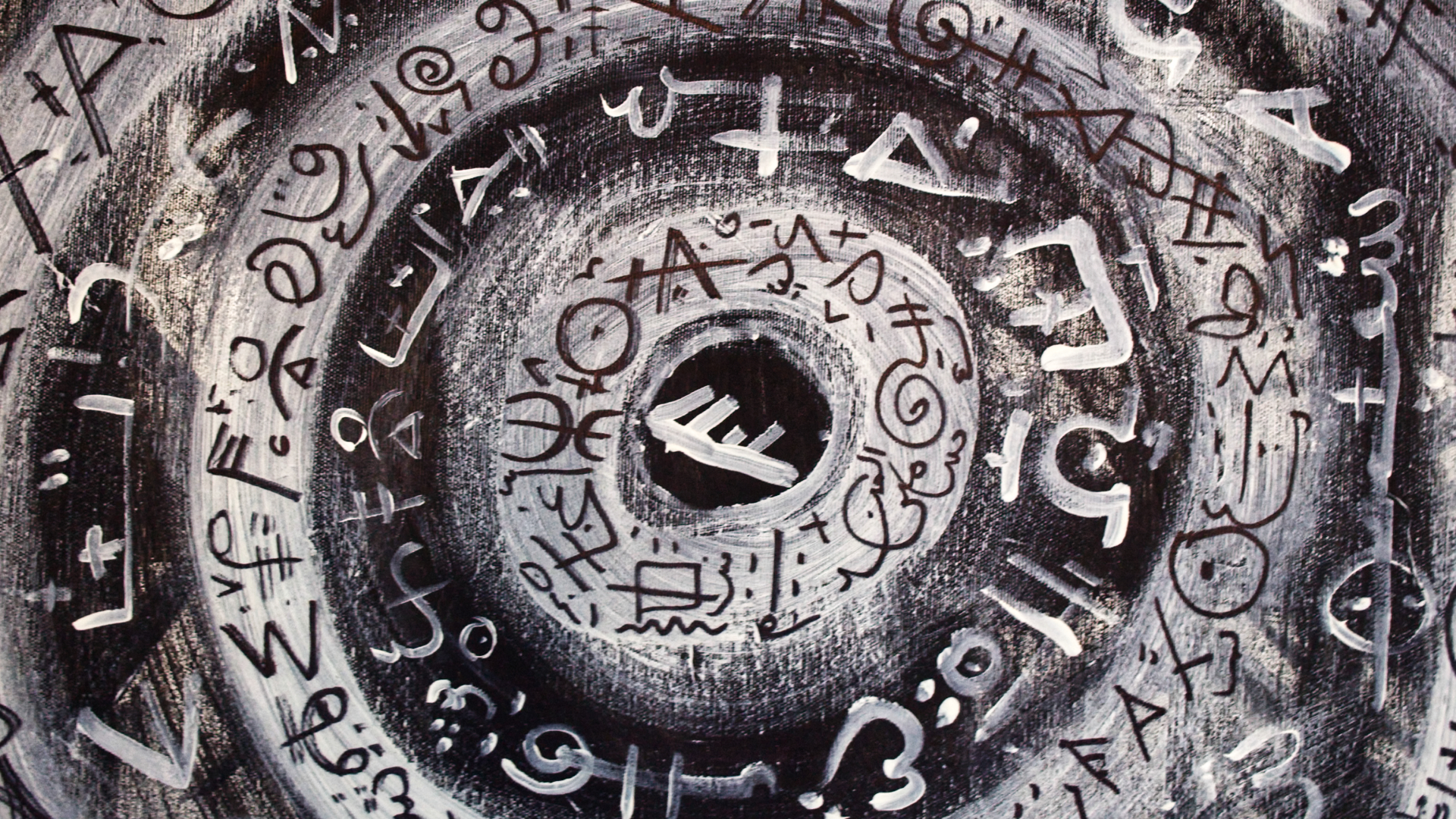
Documentary, by Lumar Brothers, Italy, 2023.
“Ancestral: Life and Art of Massinissa Askeur” is a documentary that explores the life and art of Algerian painter Massinissa Askeur. The film follows Askeur on his creative journey, showing his artistic process and his commitment to the preservation of Berber culture and tradition. Through interviews with Askeur, his family, friends and testimonies from people who knew him on a personal, professional and artistic level, the documentary tells the story of his past and his deep connection to his Berber roots. Askeur displays his art, from canvases to sculptures, which are inspired by the shapes and symbols of Berber culture, representing his search for a connection between the past and the present.
The documentary also explores the challenges Askeur faced throughout his life, including racial discrimination, poverty and the difficulty of making his art known outside of Algeria. However, despite these difficulties, Askeur continues to create and promote his art as a form of cultural resistance and celebration of his ancestral heritage. A vision far from art as a commercial product and very close, instead, to the exploration of the depths of one's own soul and the soul of the world. Massinissa's mission is to leave a testimony of his time to future generations.
LANGUAGE: Italian
SUBTITLES: English, Spanish, French, German, Portuguese
Modernity's Promise of Self-Construction and Its Structural Lie
You were told, at some point early enough that you can no longer locate the moment, that you were free to become whoever you chose. The sentence arrived through a teacher, a parent, a paperback with a cracked spine, and it landed with the weight of a gift. What nobody mentioned was that the sentence itself had a history, that it had been engineered by specific men in specific centuries to solve a specific political problem that had nothing to do with you.
John Locke published his Essay Concerning Human Understanding in 1689 at a moment when European aristocracy needed philosophical dismantling. The tabula rasa was not a description of the human condition — it was a weapon aimed at inherited titles. If no one is born with innate ideas, no one is born to rule. The argument was radical and necessary in its context, and it did its destructive work admirably. What it left behind, once the aristocracy had been theoretically leveled, was a concept of the self as blank surface waiting to be authored, a self that arrives in the world as pure potential, sculpted entirely by experience and will. Rousseau then turbocharged this architecture in Emile in 1762, imagining a child educated in isolation from corrupt social institutions, developing into a natural and autonomous subject whose interiority would be entirely his own. The philosophical project was breathtaking. The practical conditions it required never existed anywhere outside the text.
Because the tabula rasa is never actually blank. The child born in Lyon in 1740 to a weaver’s family already inhabits a grammar before she can speak — a grammar of deference, of bodily exhaustion treated as moral virtue, of space understood as something you move through without owning. Pierre Bourdieu spent much of his career, particularly in Distinction published in 1979, demonstrating that taste, aspiration, language register, and even posture are class inheritances operating below the level of conscious choice. The working-class student who enters the university and feels perpetually out of place is not suffering from a personal failure of self-construction. She is feeling the friction between two incompatible habitus, two sets of unconsciously absorbed rules about how a body should occupy a room. The Enlightenment promise told her the room was hers to claim. The room itself was built to specific measurements that fit someone else’s skeleton.
Geography compresses the architecture further. A child born in rural Appalachia in 1980, or in a Seine-Saint-Denis banlieue in 1990, or in a Rust Belt city whose industrial logic collapsed before she was born — each of them encounters the rhetoric of self-invention as a kind of ambient noise, a background frequency that describes a world structurally unavailable to them. The sociologist Robert Putnam documented in Bowling Alone in 2000 the collapse of the social networks that once allowed geographic communities to function as scaffolding for individual trajectories. When those networks dissolve, the person left standing in the wreckage is handed the ideology of individualism precisely at the moment when the collective infrastructure that made individual mobility possible has vanished. The timing is not accidental. An ideology that locates the source of failure inside the individual is extraordinarily convenient when the systems that produce failure are too expensive to repair.
Language is the most insidious predetermined script of all, because it presents itself as neutral medium rather than as inheritance. Basil Bernstein‘s sociolinguistic research in the 1970s showed that the elaborated code — the linguistic register rewarded by schools, courts, hiring committees, and cultural institutions — is not simply more developed than the restricted code. It is the dialect of a particular social position dressed up as universal competence. The child who arrives at the school gate already fluent in the elaborated code has not worked harder at language. She has simply been born into a household where that register was the water she swam in before she learned she was swimming.

Uprooting as Historical Norm, Not Existential Exception

You are standing in a train station that no longer exists, holding a ticket to a city that was renamed after the war, and the language printed on the departure board is not the one your grandmother taught you. This is not a metaphor. Between 1914 and 1950, an estimated 60 million people were forcibly displaced across Europe alone — through war, annexation, ethnic cleansing, and the mechanical redistribution of human populations that industrial states had finally learned to execute at scale. The ground was not lost gradually. It was taken.
Simone Weil wrote “The Need for Roots” in 1943, commissioned by the Free French movement as a blueprint for postwar reconstruction, but what she produced was something far more devastating than a political program. She argued that uprootedness — the severing of a human being from the communities, traditions, and soil that give existence its connective tissue — was not an accident of war but the defining pathology of industrial civilization itself. She identified the factory system, colonial administration, and mass conscription as the three great uprooting machines, each one efficient at extracting labor and loyalty while dissolving the webs of belonging that make psychological coherence possible. Her diagnosis predated the displacement statistics. She was naming a structure, not an episode.
What happened after 1945 was not recovery from that structure. It was the aestheticization of it. The millions who rebuilt lives in foreign cities, who swallowed new languages and anglicized their surnames and never again spoke of what they had left, were retrospectively cast as proof of human adaptability — resilient, resourceful, modern. The trauma of severance was reframed as the virtue of flexibility. This was not consolation. It was ideological capture: the dominant economic order needed mobile workers more than it needed rooted ones, and so rootlessness became, through the soft machinery of cultural narrative, something to be celebrated rather than grieved.
The sociologist Zygmunt Bauman spent decades mapping the consequences of this reframing. In “Liquid Modernity,” published in 2000, he documented how the dissolution of stable social forms — not just geographic but institutional, occupational, familial — produced a kind of perpetual improvisation that was sold as freedom while functioning as chronic instability. The person who moves every three years for work, who maintains relationships across four time zones, who belongs to every platform and no neighborhood, is not the liberated subject of late capitalism’s advertising. He is the logical endpoint of a process Weil had already identified in the factory worker who could not name his own village’s patron saint because his grandfather had been relocated to a mining town in 1887.
The inheritance of displacement is not always visible as displacement. It arrives as a vague incapacity for depth — in friendships that never cross into genuine vulnerability, in the inability to feel that any place is actually home, in the sense that commitment of any kind is a trap. These are not personality flaws. They are the psychological sediment of a history that was never processed because it was never named as loss. The clinical literature on intergenerational trauma — Bessel van der Kolk’s work on how unprocessed shock reshapes the nervous system, transmitted not through stories but through patterns of attachment and avoidance — suggests that the grandchildren of the displaced carry the uprooting in their bodies without knowing what they are carrying.
To treat contemporary identity fragmentation as a crisis unique to the digital age, to the algorithm, to the collapse of grand narratives, is to mistake the latest chapter for the whole book. The wound is older. It was administered systematically, at a historical moment when the institutions capable of acknowledging it were either destroyed or complicit in their own reconstruction around the very logic that had caused the damage.
The Identity Market and the Commodification of Belonging
You buy the kit, swab the inside of your cheek, seal the envelope, and wait. Six to eight weeks later, an email arrives telling you that you are 23% Irish, 14% Scandinavian, 8% Ashkenazi Jewish, and somehow, improbably, also yourself. The number on the screen is supposed to close something. Instead it opens a small, drafty room you had not noticed before — a room that immediately begins to fill with merchandise.
This is the operating logic of what might be called the identity market: it does not create desire from nothing. It finds a wound that already exists, names it in the language of self-discovery, and then sells the bandage at a premium. The ancestral DNA industry, which crossed the one billion dollar revenue threshold before 2020, is perhaps the most naked example of this mechanism, but it is hardly the only one. Heritage tourism packages entire nations into consumable experiences — Ireland sells its diaspora a walk through County Clare, Greece offers a “roots retreat” complete with olive harvesting and a genealogy consultation. The logic is identical to what Guy Debord diagnosed in 1967 in The Society of the Spectacle: lived experience has been replaced by its representation, and the representation has been packaged for sale. What Debord could not fully anticipate was how thoroughly this substitution would colonize the domain of selfhood itself.
Karl Marx identified alienation as the worker’s estrangement from the product of their labor, from the act of production, from other human beings, and finally from their own human potential. Consumer capitalism performed a remarkable inversion: it took that estrangement, which is real and felt in the body as a low-grade chronic grief, and reframed it as a preference. You are not alienated — you are simply a person who has not yet found their tribe, their ancestry, their authentic practice. The solution is always one purchase away, which guarantees the solution will never arrive, because arrival would terminate the revenue stream.
The wellness industry understood this earlier than most. By 2022 it had reached a global valuation of approximately 4.5 trillion dollars, a figure that makes no sense unless you understand that it is not selling health — it is selling the feeling of working on yourself, which is an activity that by definition cannot be completed. The Vipassana retreat, the somatic therapy weekend, the cold-plunge membership: each offers a temporary sensation of depth, of contact with something real beneath the performed surface of daily life. Erving Goffman spent much of The Presentation of Self in Everyday Life, published in 1959, mapping how relentlessly human beings manage their social performances. What he described as a structural feature of interaction has since been industrialized into a full economy — and the product sold to exhausted performers is the promise of finally stepping offstage, which is itself another performance sold by a vendor.
What makes this particularly insidious is the way it recruits genuine feeling into its service. The person weeping at a DNA result showing ancestors lost to famine is not performing. The grief is real. The hunger for continuity is real. Sociologist Zygmunt Bauman, writing in Liquid Modernity in 2000, argued that the defining condition of contemporary life is the dissolution of solid structures — family, community, vocation, faith — leaving individuals to assemble identity from whatever floats past. The market did not cause this dissolution, but it positioned itself perfectly at the downstream end, collecting everything that fragments off and selling it back in curated form. A Scottish tartan scarf sold to a man in Atlanta who has never left Georgia is not a lie, exactly. It is something more troubling: a truth so extracted from its living context that it functions as its own opposite, a symbol of belonging that deepens the disconnection it decorates.
Memory, Narrative, and the False Continuity of the Self
You have told the story of your life so many times that you no longer know which version is the original. Not because you lie — though you do, occasionally, the way everyone does — but because each retelling selects, emphasizes, quietly discards. The childhood friend who hurt you becomes the villain of one telling, a misguided boy in another, a footnote by the third. The summer that broke you gets compressed into a sentence over time, until the sentence is all that remains where there was once a month of physical weight.
Paul Ricoeur, in his 1990 work Oneself as Another, argued that personal identity is not a substance but a narrative achievement — what he called “narrative identity,” the capacity to answer the question “who am I?” not with a fixed essence but with a story that holds together over time. His insight was precise and quietly devastating: the self does not precede its narration. It emerges from it. The coherence you feel when you think of yourself as a continuous person is not evidence of an underlying stable entity; it is evidence that you are a competent storyteller, capable of threading disparate moments into something that resembles a through-line.
What neuroscience did to this idea was not refute it but anatomize it in ways that remove any remaining comfort. Memory, as research by Elizabeth Loftus has demonstrated across decades of empirical work — including her landmark 1974 studies on eyewitness testimony conducted with John Palmer — is not archival. It is reconstructive. Every time a memory is recalled, it is rewritten. The very act of remembering alters the memory. What this means, biologically, is that the past is not stored somewhere intact, waiting to be retrieved; it is produced anew each time, contaminated by everything that has happened since, by mood, by suggestion, by the identity one currently needs to protect. The self looking backward is always looking through the lens of who it has become, and mistaking that lens for a window.
This would be philosophically interesting and nothing more if it stayed in the laboratory. But it migrates. It operates at the level of entire communities, entire cultures. The stories nations tell about their founding moments undergo the same reconstructive logic — not occasionally, not in moments of crisis, but continuously, invisibly. The myth of a unified national character, of an original and authentic people, is a collective narrative identity in Ricoeur’s sense: not a discovery of something that was there, but a construction that serves present needs while wearing the costume of historical inevitability. Benedict Anderson called nations “imagined communities” in 1983, meaning not that they are false but that they require an ongoing act of collective imagination to remain real. The mechanism is identical to what happens inside a single skull every night before sleep.
What makes this trap so difficult to name is that the alternative feels like dissolution. If the self is a story continuously rewritten, if the past is reconstructed rather than remembered, if the sense of inner continuity is a narrative achievement rather than an encounter with something real — then the ground shifts underfoot, and most people will choose the stability of the fiction over the vertigo of the opening. They will defend their version of themselves with an aggression that has nothing to do with the events being disputed and everything to do with the architecture that depends on those events remaining fixed. Challenge a person’s memory of who they were at twenty-three, and you are not arguing about the past — you are threatening the present structure of their meaning. The violence of that defense is entirely rational, given the stakes.
The question that remains, and that no therapeutic framework has cleanly answered, is whether a self that knows it is narrated can still function as a self — or whether that knowledge introduces a fault line that cannot be sealed from the inside.
A vision curated by a filmmaker, not an algorithm
In this video I explain our vision
The Sociological Trap of Authenticity

You are sitting across a desk from someone who holds a version of your future in a manila folder, and you are performing sincerity. You have practiced this. Not the answers exactly, but the pauses before them, the slight lean forward that signals engagement without desperation, the laugh that arrives just late enough to seem uncontrived. You have rehearsed spontaneity in a bathroom mirror, and now you are delivering it on cue, and somewhere underneath the performance you are telling yourself that this — this particular arrangement of gestures and cadences — is who you really are. The terrifying part is that you cannot locate the seam between the true version and the prepared one. The interview ends. You walk out. You do not know whether you were honest.
Erving Goffman published The Presentation of Self in Everyday Life in 1959 and buried something in its pages that most readers are still not ready to accept: there is no backstage self waiting patiently to be expressed. What Goffman mapped with sociological precision was the dramaturgy of ordinary life — the way every social encounter is a stage, every participant an actor managing impressions, calibrating disclosure, cueing responses. The backstage he described is not authenticity; it is merely rehearsal for the next performance. The self, in his model, is not a noun but a verb — a continuous act of impression management that has no off switch, no private room where the costume finally comes off and the real face appears.
What makes this genuinely unsettling is that the contemporary demand for authenticity has not dismantled the theatrical structure — it has simply added a new role to the repertoire. Be yourself has become a stage direction, and the audience now rewards performers who can make the performance look effortless. Therapy culture, personal branding, the entire vocabulary of vulnerability as professional asset — these are not rebellions against the mask but more sophisticated masks, ones that incorporate the act of removing a mask as their central dramatic gesture. The person in that interview was not failing to be authentic; they were succeeding at performing authenticity, which is precisely what the role demanded.
Sociologist Richard Sennett, writing in The Fall of Public Man in 1977, traced this confusion back to a historical collapse of the distinction between public and private codes of behavior. As the nineteenth century’s clear theatrical conventions for public life eroded, people began importing the vocabulary of private sincerity into every arena — the politician who weeps, the executive who shares their morning routine, the artist who monetizes their nervous breakdown. The result is not more honesty but a total aestheticization of the interior life, a condition in which the soul becomes content and intimacy becomes a competitive advantage.
The demand to be authentic is therefore not liberation from social expectation — it is social expectation at its most totalizing, because it reaches past behavior and colonizes motive. Earlier eras policed what you did. This one polices whether you did it for the right reasons, with the right relationship to your own interiority. You can comply perfectly with every behavioral norm and still fail the authenticity test if your compliance seems too effortful, too calculated, too aware of itself. This is a trap with no exit condition, because the very act of trying to be authentic introduces the self-consciousness that disqualifies you.
What neither Goffman nor Sennett could fully account for is what happens to a person who has internalized this structure so completely that they no longer experience it as external. The surveillance has moved inward. The critic is no longer the audience; it is the part of you that watches yourself watching yourself, the recursive loop that makes every spontaneous gesture immediately suspect, every genuine feeling immediately subject to audit.
National Identity as Manufactured Amnesia
You were taught to feel something when the flag moved in the wind. Not instructed — taught, which is a different violence, because instruction leaves a trace you can argue with, while teaching enters through the body and settles there like sediment. The feeling arrived before you had language for it, which is precisely why it felt like nature.
Benedict Anderson, writing in 1983, offered the most uncomfortable gift a political theorist can give: he showed that nations are not discovered but authored. “Imagined Communities” did not argue that national identity is fake — a dismissal too easy to be useful — but that it is a specific technology of belonging, assembled from print capitalism, synchronized clocks, and the shared ritual of reading the same newspaper at the same hour in cities that had never met each other. The nation is real the way a dream is real while you are inside it. The problem begins when you wake and still believe the furniture is yours.
Post-Risorgimento Italy is the case that strips the mythology bare. When unification was declared in 1861, fewer than three percent of the population spoke what would become standard Italian. The rest spoke Neapolitan, Venetian, Sicilian, Piedmontese — languages that were not dialects of Italian but fully autonomous systems of meaning, carrying centuries of legal codes, poetry, and insult. The Italian state did not inherit a nation; it manufactured one, through compulsory schooling, military conscription, and the systematic deprecation of regional tongues as backward, peasant, embarrassing. Massimo d’Azeglio’s remark — “We have made Italy, now we must make Italians” — was not a boast. It was a confession of the labor involved in erasing the existing people and replacing them with a legible political subject.
France performed the same operation earlier and with greater bureaucratic ferocity. The Revolution did not liberate a unified French people; it encountered a territory where, in 1794, roughly half the population could not speak French at all. The abbé Grégoire’s report to the National Convention that year identified thirty patois still active across the republic and framed their elimination as a patriotic duty. Brittany, Alsace, Occitania, the Basque Country — each carried a separate historical consciousness that could not be allowed to survive if the nation was to become the primary unit of loyalty. The standardization of language was not a neutral pedagogical project. It was a calculated amputation, and what was removed was called backward so that what replaced it could be called home.
Eric Hobsbawm and Terence Ranger, in “The Invention of Tradition” published in 1983 — the same year as Anderson, as if the decade demanded this reckoning — documented with forensic precision how ceremonies presented as ancient were typically decades old, how highland Scottish culture as a distinct romantic identity was largely constructed in the early nineteenth century, how the British monarchy’s elaborate ritual gravitas was assembled under Victoria to produce stability through spectacle. Tradition, in their account, is urgency disguised as antiquity. It appears wherever a society needs legitimacy faster than history can organically provide it.
What this means for the individual searching for roots is vertiginous. The inheritance you feel in your bones — the language, the songs, the particular shape of collective grief — was in many cases not passed down but installed, through systems designed to make the installation feel like memory. You are not recovering an origin when you reach toward national identity. You are picking up an artifact produced at a specific political moment by people who needed you to feel exactly this longing, this sense of belonging to something older and deeper than yourself. The power of that engineering is not diminished by knowing it. The flag still moves in the wind, and something in the chest still
The Unresolved Tension Between Groundlessness and the Imperative to Act
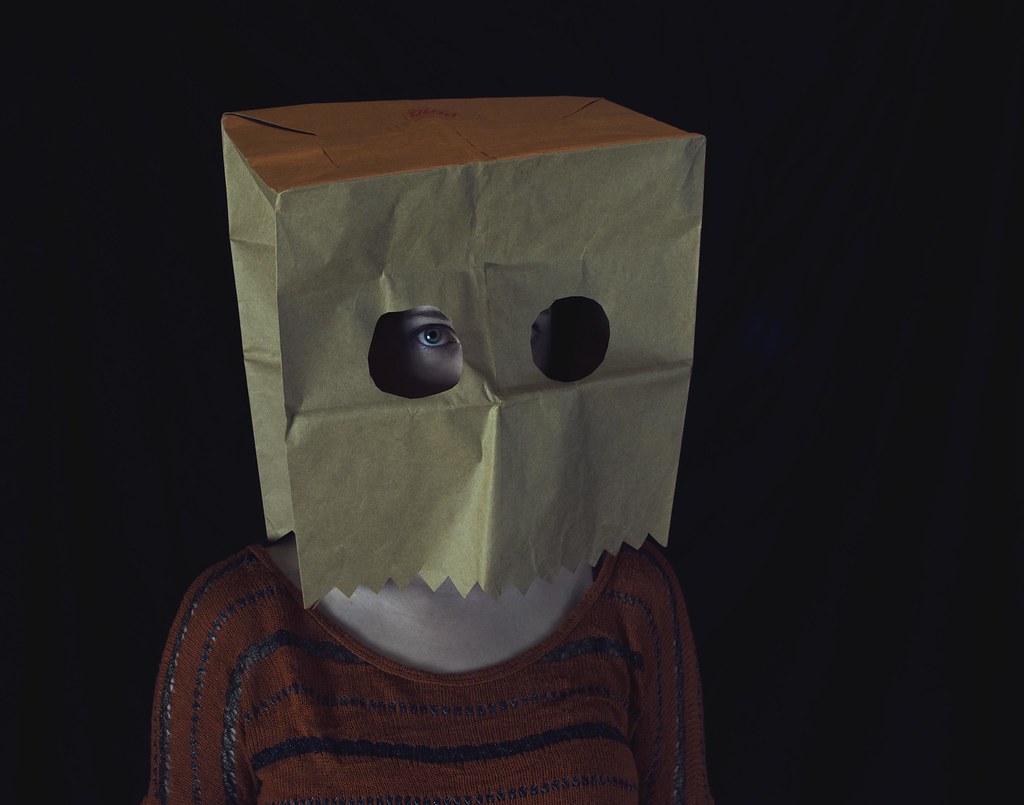
You are already choosing. Right now, without knowing what you are, without having resolved the question of who is making the decision, you are deciding what this sentence means to you, whether it applies, whether to keep reading. That act — unrequested, ungrounded, unavoidable — is the condition Heidegger named thrownness: the fact that you did not choose to exist, did not select your era, your language, your body, and yet here you are, already in motion, already committed to a trajectory you never signed off on. There is no anteroom where the self waits, fully formed, before entering the world. You were dropped mid-sentence into a story already in progress.
What makes this genuinely unbearable — not metaphorically, but in the ordinary Tuesday-morning sense of unbearable — is that the absence of a fixed foundation does not suspend the obligation to act. You cannot wait for certainty before you speak, before you leave, before you stay. Sartre spent over eight hundred pages in Being and Nothingness demonstrating that consciousness is precisely the absence of the solidity it craves: it is nothing, he argued, not as insult but as technical description. The pour-soi, the for-itself, is the entity that is always at a distance from itself, that can never coincide with what it is. Every attempt to be something definitive — a role, a type, a finished character — is bad faith, a performance staged to escape the vertigo of that gap. And the gap does not close.
The clinical world has not always been comfortable with this diagnosis. For most of the twentieth century, psychiatry treated the experience of groundlessness as a symptom — of borderline structure, of dissociation, of incomplete individuation. The implicit promise was restoration: find the trauma, process it, rebuild the cohesive self that was interrupted. But the architecture of that promise assumes the cohesive self existed in the first place, that there is a prior wholeness to return to. The philosopher Charles Taylor, writing in Sources of the Self in 1989, traced how the modern Western subject came to believe it possessed an interior depth that was authentic and original — and showed, with considerable historical patience, that this belief was itself a construction, assembled across centuries of theology, Romanticism, and Enlightenment individualism. The self that feels lost is mourning something it never actually had.
This is not nihilism, though it looks like it from the wrong angle. Recognizing that the foundation is absent does not mean nothing matters; it means that what matters is chosen under conditions of irreducible uncertainty, without the retrospective guarantee that the choice was correct. That is a harder form of seriousness than the kind underwritten by tradition or God or psychological wholeness. It demands that you act while knowing the ground might not hold — not as heroism, but as the simple arithmetic of being alive without a script.
What contemporary discourse keeps trying to short-circuit is precisely this demand. The proliferation of identity frameworks — political, therapeutic, spiritual, algorithmic — functions as a collective negotiation with the void, an attempt to name the self so precisely that the naming substitutes for the grounding. But a label, however accurate, is not a foundation; it is a flag planted in shifting sand, and the wind that moves it is the same wind that was always there. The discomfort that modern men and women identify as an identity crisis is not a malfunction in the system. It is the system working exactly as existence works — which is to say, without a net, without a guarantee, with nothing beneath the act of choosing except the bare fact that you are the one who has to choose, and that this has always been the only honest place from which a life can actually begin.
🪞 The Self in the Labyrinth: Identity, Loss, and Return
Modern man finds himself suspended between the place he left behind and the self he has yet to become. The search for identity in an age of uprooting is one of the deepest wounds of contemporary culture — explored endlessly in literature, philosophy, and cinema. These four articles trace the invisible threads of that journey inward.
Jorge Luis Borges and the Labyrinth of Identity
Borges made the labyrinth not merely a physical structure but the very architecture of the self — a mind that generates corridors only to lose itself within them. His fiction explores identity as an infinite regression, where every mirror reflects another face that may or may not be our own. To read Borges on identity is to understand that the search for the self may be inseparable from the fear of finding it.
GO TO THE SELECTION: Jorge Luis Borges and the Labyrinth of Identity
Pirandello’s One Nobody and One Hundred Thousand: Analysis
Pirandello’s masterwork poses the most unsettling question of modernity: if we are one person to ourselves and a hundred different people to others, which version is real? His protagonist dismantles his own social identity brick by brick, only to discover that beneath the masks lies not a solid core but a terrifying void. This dissolution of the self anticipates every crisis of belonging that defines contemporary experience.
GO TO THE SELECTION: Pirandello’s One Nobody and One Hundred Thousand: Analysis
Social Media and the Loss of Identity
Social media has transformed identity into a performance staged for an invisible audience, fragmenting the self into curated versions that drift further from any authentic core. This article examines how the constant negotiation between online persona and inner life produces a chronic sense of estrangement and uprooting. The digital mirror, unlike Borges’s labyrinthine one, demands not reflection but approval.
GO TO THE SELECTION: Social Media and the Loss of Identity
Emigration and Family Separation
Emigration tears the self from its roots with a violence that is rarely acknowledged in the language of opportunity and movement. Those who leave carry an interior landscape that no new country can fully replace, living in the permanent tension between the culture they left and the one they must adopt. This article explores how family separation and displacement forge an identity that is neither here nor there — and how that in-between space can become either a wound or a creative force.
GO TO THE SELECTION: Emigration and Family Separation
Discover Cinema That Asks Who You Really Are
If these questions about identity, uprooting, and the search for self resonate with you, independent cinema offers some of the most honest and courageous explorations of that inner territory. On Indiecinema you will find films that dare to sit with uncertainty, fragmentation, and the slow work of becoming — stories that the mainstream rarely has the courage to tell. Come explore a cinema that looks inward.
👉 EXPLORE THE CATALOG: Watch Indie Films in Streaming
A vision curated by a filmmaker, not an algorithm
In this video I explain our vision

