The Investigator as a Constructed Identity
You have spent years learning to read other people — their hesitations, their microexpressions, the way guilt pools behind the eyes before the mouth has decided what to do — and somewhere in that training you were never asked to turn the same instrument on yourself. This is not an oversight. It is a design feature.

The figure of the investigator, whether wearing the badge of a criminal profiler, the clinical distance of a forensic psychologist, or the procedural armor of an intelligence analyst, is not a person who has simply mastered a set of tools. It is a socially produced role that demands, as its founding condition, the systematic suppression of the self. To observe human behavior with diagnostic precision, you must first convince yourself that you stand outside the field of observation — a neutral coordinate in a system of moving variables. The illusion is not incidental to the work. It is the work.
William James noted in 1890, in his Principles of Psychology, that the self is not a unified thing but a multiplicity of social selves activated by different audiences. What he could not fully anticipate — because the professionalization of investigative psychology was still decades away — was that institutional training could deliberately flatten this multiplicity into a single, stable persona. The FBI’s Behavioral Science Unit, formalized in the 1970s under agents like Robert Ressler and John Douglas, was not merely developing criminal profiling as a methodology. It was manufacturing a new human type: the person who reads pathology without becoming it, who touches darkness without absorbing it. The model presumed that exposure to the worst of human behavior could be processed analytically, as data, rather than existentially, as experience.
By 1995, research emerging from secondary traumatic stress studies — most notably the clinical work of Charles Figley, whose Compassion Fatigue appeared that year — began to document what the institutional mythology had suppressed: investigators do not remain unchanged by what they study. The psyche absorbs content the way tissue absorbs radiation, invisibly and cumulatively, and the dosimeter is rarely checked until the damage is already systemic. Yet the professional identity built around investigative work carries an internal prohibition against this admission. To acknowledge permeability is to compromise authority. To say the material has entered you is to suggest you can no longer read it from the outside.
This creates a specific and rarely examined trap. The investigator’s identity is premised on asymmetry — I see you, but you do not see me — and this asymmetry must be maintained even internally, even in private, even in the absence of any subject being studied. The self-protective distance that makes professional reading possible begins to operate as a permanent cognitive stance, a way of processing one’s own emotional life through the same analytical grammar used on suspects and patients. The person trained to detect deception begins detecting it in their own relationships. The profiler who maps behavioral patterns begins mapping their own social environment for threats. The clinical psychologist who identifies defense mechanisms begins cataloguing their own with a detachment that is itself a defense mechanism of extraordinary sophistication.
Erik Erikson wrote in 1968, in Identity: Youth and Crisis, that identity is not a possession but a process, something maintained through constant negotiation with the world rather than achieved once and held. What the investigative professions systematically resist is precisely this instability. The role demands a fixed point of observation, and the human being inside the role gradually mistakes the architecture of the role for the structure of themselves. The constructed identity becomes load-bearing. And load-bearing structures are the last ones anyone thinks to inspect for cracks.
Darkness, This Is my Revenge
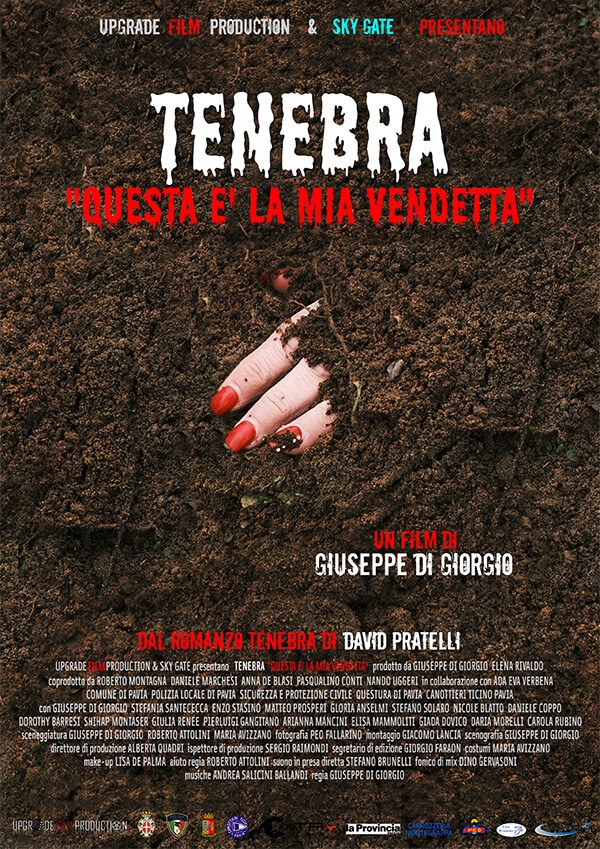
Thriller, by Giuseppe Di Giorgio, Italy, 2022.
The film tells the story of a mysterious killer who begins murdering women, leaving a message behind: "This is my revenge." Commissioner Soavi investigates, but is unable to find any clues that point him in the right direction. One thing that all the victims have in common is that they frequent a gym, but despite interrogating Nico, the gym's manager, and the other trainers, nothing useful emerges. Retired commissioner Taddei, who was involved in an unsolved case twenty years earlier, sees similarities between the two cases and tells Soavi about them. Meanwhile, the killer continues to murder.
The murders are shown in a quick, brutal, and visually effective manner. The film is based on a novel by David Pratelli, and it blends elements of thriller and detective fiction, with psycho-thriller influences in the concluding development. The narrative takes place on two different but interconnected timelines. The film keeps the audience's attention until the discovery of the culprit, and it is a well-made and suspenseful thriller.
LANGUAGE: italian
SUBTITLES: English, Spanish, French, German, Portuguese
The Epistemological Trap of Pattern Recognition

You have spent years learning to read rooms, and now you cannot stop. The folder on your desk contains forty-seven photographs, three witness statements, and a behavioral timeline you assembled across eleven days of cross-referencing. You know what you are looking for before you open it, and that is precisely where the damage begins.
Cognitive frameworks do not develop neutrally. The trained investigator builds what the psychologist Jerome Bruner, writing in Acts of Meaning in 1990, called a narrative schema — a pre-existing story structure into which incoming evidence is sorted, weighted, and placed. Bruner was not writing about detectives, but the architecture he described maps onto investigative cognition with uncomfortable precision. The mind does not receive evidence; it processes it through channels already carved by prior cases, prior training, prior successes. What fits the channel moves forward. What resists it gets reclassified until it fits, or quietly discarded.
Gary Klein’s research on expert decision-making, published in Sources of Power in 1998, documented how experienced professionals in high-stakes fields — firefighters, military commanders, emergency physicians — bypass deliberate analysis in favor of rapid pattern recognition. Klein celebrated this as a feature of expertise. What he was also describing, without fully naming it, is a system optimized for speed at the cost of falsifiability. The pattern-matcher does not ask whether the pattern is correct. The pattern-matcher asks which pattern fits, then moves. In firefighting, the speed is worth the trade-off. In criminal investigation, where the wrong pattern ruins a life, the calculus is different.
The FBI’s Behavioral Science Unit codified criminal profiling as a methodology between 1972 and the mid-1980s, producing a typological framework that divided offenders into organized and disorganized categories. By the time Canadian researchers like Ronald Blackburn began subjecting the framework to empirical scrutiny, the institutional weight of the methodology had already made it nearly immune to revision. A 1993 meta-analysis of profiling accuracy studies found that trained profilers performed only marginally better than college students and significantly worse than forensic psychologists when predicting offender characteristics from crime scene evidence. The profiles were not wrong in every detail — they were wrong in the ways that mattered for narrowing a suspect pool, and right in the ways that could be confirmed after an arrest had already been made on other grounds. The framework was functioning as post-hoc rationalization wearing the clothing of predictive science.
What makes this epistemologically dangerous rather than merely methodologically flawed is the recursive quality of the error. Daniel Kahneman’s work on cognitive ease, developed through decades of research culminating in Thinking, Fast and Slow in 2011, demonstrated that familiarity produces subjective confidence. The more times an investigator has used a framework, the more cognitively fluent it feels, and cognitive fluency is experienced as truth. The investigator who has closed thirty cases using a particular behavioral profile does not experience the profile as a hypothesis; they experience it as a lens. Lenses do not feel like choices. They feel like vision itself.
This is where the professional trap closes completely, because the institutional structures surrounding criminal investigation amplify rather than correct the bias. Clearance rates, commendations, and career advancement attach to case closures, not to epistemological rigor. An investigator who reopens a closed case to question their own earlier profiling judgment risks the entire architecture of their reputation. The system does not reward the person who says the pattern was wrong. It rewards the person who found the suspect that fit the pattern, and the distance between those two things — finding someone who fits and finding the person responsible — is where the machinery of wrongful conviction operates most quietly.

Power, Projection, and the Misreading of Motive
You are certain you understand the man sitting across the table from you. His evasions feel familiar — not because you have studied him, but because some part of you has rehearsed this scene from the inside.
The clinical literature on projection is vast and largely ignored by the institutions that need it most. Freud’s early mapping of the mechanism in his 1911 analysis of the Schreber case established something that forensic psychology has spent the following century selectively forgetting: that the mind does not passively receive the other, it manufactures them. The investigator who is convinced a suspect is hiding shame is often carrying shame that has no other address. The profiler who identifies cold calculation as the signature of a killer may be the most disciplined person in the room, a discipline that costs something, and that cost distorts the lens.
The FBI’s Behavioral Science Unit, founded in the early 1970s and elevated to near-mythological status by the 1986 publication of the Crime Classification Manual, produced profiles that were statistically no more accurate than those generated by laypersons in controlled trials — a finding Robert Hare and later Brent Snook and Richard Cullen documented with uncomfortable precision in peer-reviewed work through the 2000s. What made the profiles feel authoritative was not their accuracy but their narrative coherence. They told a story about a mind that investigators could follow, which is precisely the problem: legibility is not truth, it is comfort. When Paul Holes spent years building a geographic and behavioral profile of the Golden State Killer, the profile was accurate in ways that mattered and wrong in ways that nearly ended the investigation multiple times. The subject did not behave like someone who feared capture. He behaved like someone who was certain he would never be caught — a psychological position that mirrors, almost exactly, the unconscious posture of the investigator who believes his model is complete.
Interrogation practice carries this distortion even further into the body. The Reid Technique, formalized in 1962 by John E. Reid and Fred Inbau in Criminal Interrogation and Confessions, was built on the premise that deception produces measurable physiological and behavioral symptoms — gaze aversion, postural shifts, verbal hedging. Decades of empirical research, including Aldert Vrij’s systematic dismantling of these assumptions in Detecting Lies and Deceit published in 2000, demonstrated that trained interrogators perform only marginally better than chance at detecting lies, while their confidence in their own accuracy increases with experience rather than declining. The mechanism here is not incompetence. It is something more structurally alarming: the interrogator’s certainty is generated from within, not from evidence, and certainty feels identical to perception when you are inside it.
The false confessions extracted from the Central Park Five in 1989 did not emerge from malice alone. They emerged from investigators who had already constructed an inner narrative so complete that the subjects’ actual words became raw material to be shaped rather than testimony to be heard. Each interrogator heard confirmation. The confirmation was a projection with handcuffs on it.
What the history of wrongful convictions shares, across jurisdictions and decades, is not always corrupt intention but something more ordinary and therefore more dangerous: the investigative mind that has stopped distinguishing between what it found and what it brought. Karen Franklin, writing in the International Journal of Forensic Mental Health in 2013, argued that forensic evaluators systematically underestimate the degree to which their conclusions are narrative constructions rather than empirical findings. The subject of investigation, meanwhile, sits inside a story that was finished before it began, trying to speak in a language the room has already decided not to hear.
Institutional Structures That Weaponize the Investigator Against Themselves

You are handed a badge and told it means something. The weight of it in your palm is not metaphorical — it is the first data point in a long experiment being run on you, one whose hypothesis you will never be shown. From that moment, the institution has not employed you. It has begun digesting you.
Erving Goffman’s 1961 analysis of what he called total institutions — asylums, prisons, military barracks — identified a process he named mortification of the self: the systematic stripping of the individual’s prior identity through uniform dress, regulated time, enforced hierarchy, and the gradual replacement of personal judgment with procedural reflex. Goffman was writing about inmates and soldiers, but the mechanism he described does not require locked doors. It requires only a sufficiently immersive structure of meaning — and few structures are more immersive than the investigative vocation, where the work is never finished, the stakes are always mortal, and the identity of the investigator and the mission become, over years, indistinguishable.
What institutions discovered long before organizational psychologists named it is that the most effective form of control is not coercion but devotion. A detective who believes in justice, an intelligence analyst who believes in national security, an academic researcher who believes in truth — each of these figures is already doing the institution’s work before the institution asks anything of them. The sociologist Robert Jackall, in his 1988 ethnography Moral Mazes, documented how large bureaucracies systematically reward loyalty to internal hierarchies over adherence to external ethical standards, producing what he called the bureaucratic ethic: a moral universe in which the right action is whatever protects the organization’s functioning. The investigator who enters such a structure carrying a genuine sense of mission does not abandon that mission — they are encouraged to redirect it inward, to apply their investigative intensity to serving institutional goals while calling it principle.
The specific violence of this substitution is its invisibility. Burnout in high-stakes investigative professions is routinely framed in clinical language — vicarious trauma, compassion fatigue, occupational stress — categories that locate the damage inside the individual and leave the structure intact. Christina Maslach’s burnout research, developed through the late 1970s and formalized in her 1982 work, identified depersonalization and a reduced sense of personal accomplishment as core dimensions of burnout, but the institutional conditions producing those states — impossible caseloads, suppressed findings, hierarchical punishment for whistleblowing — are treated as contextual background rather than cause. The institution trains the investigator to read their own deterioration as personal weakness.
There is a particular cruelty reserved for those who investigate from inside — the internal affairs officer, the inspector general, the in-house researcher tasked with auditing the very structure that houses them. Their mandate is to use the institution’s tools against the institution’s failures, which is architecturally impossible in the same way that a scale cannot weigh itself. The access they are granted is precisely calibrated to produce the appearance of oversight while ensuring that the most structurally threatening findings never achieve the conditions necessary for action. They are not corrupt. They are positioned.
What institutional structures ultimately produce in the investigator is not a broken person but a translated one — someone who has learned to speak the language of the mission so fluently that they no longer notice when the words have changed their referents. Justice still means justice in their mouth, but it now means case closure rates. Truth still means truth, but it now means publishable results that do not threaten funding. The vocabulary of purpose survives long after the substance it once named has been quietly evacuated, and the investigator, fluent in that hollowed language, keeps working — keeps investigating — without registering that the thing they are now protecting most fiercely is the structure that first promised to protect them.
The Unseen Subject: When the Investigation Turns Inward
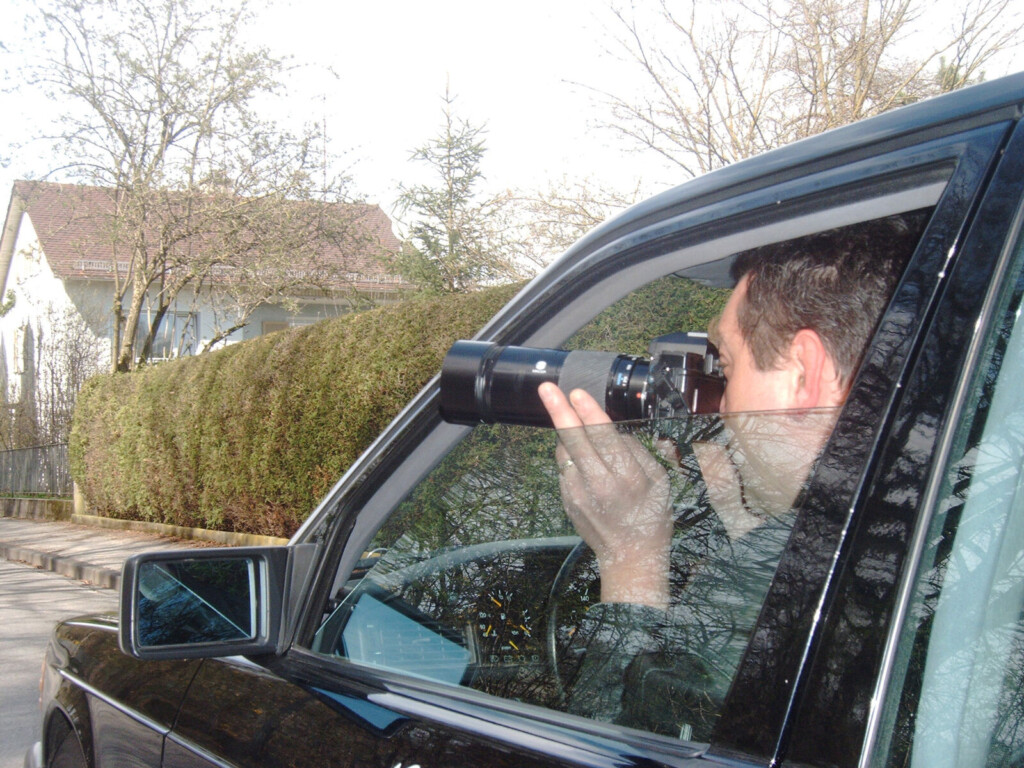
You sit across from someone at dinner — someone you love, someone who has never lied to you about anything that mattered — and you catch yourself reading their microexpressions, timing the latency between question and answer, noting the way their left hand moves when they talk about their weekend. You are not suspicious. You are simply no longer capable of not doing this.
The clinical literature on secondary traumatization, developed with particular rigor by Charles Figley in his 1995 work on compassion fatigue, originally addressed therapists absorbing the trauma narratives of their patients. What investigators experience is structurally different and in some respects more corrosive: they are not absorbing suffering passively but actively constructing models of human deception, rehearsing the architecture of manipulation until it becomes the default lens through which all human behavior is processed. The investigator does not merely witness darkness — they build working replicas of it inside their own cognition, and those replicas do not disassemble when the case closes.
Moral injury, a concept pushed into serious clinical and philosophical discourse largely through Jonathan Shay’s work with Vietnam veterans and later systematized by Brett Litz and colleagues in a 2009 paper in Clinical Psychology Review, describes the damage done when a person acts in ways that violate their own moral code — or witnesses others doing so without the power to intervene. For investigators, the injury arrives from a different angle: prolonged exposure to institutional compromise, to evidence that is strategically buried, to superiors who understand exactly what happened and choose bureaucratic survival over truth, creates a slow contamination of the belief that moral seriousness has any structural support in the world. The investigator does not break. They simply stop expecting the architecture to hold.
Karl Jaspers, writing in the early twentieth century about what he called limit-situations — Grenzsituationen — described the experiences that cannot be resolved, metabolized, or philosophically overcome: death, suffering, struggle, guilt. They are not problems to be solved but conditions to be inhabited. Sustained investigative work deposits its practitioners inside one of these permanently. The investigator who has spent years inside the phenomenology of human predation, of systemic cover-up, of the way ordinary people rationalize extraordinary harm, does not emerge from that space the way one emerges from a difficult project. Something of the boundary between professional perception and intimate life becomes structurally porous, and what leaks through cannot be re-contained by supervision hours or departmental wellness programs designed for a different kind of stress.
There is a specific and rarely named loss that occurs in the relational life of people who have made a profession of seeing through others: the loss of the experience of being surprised by another person’s goodness. Not cynicism exactly — cynicism is still an emotional stance, still a kind of engagement. What erodes instead is the capacity for what Simone Weil called attention in its fullest sense, the radical openness to another person as genuinely other, genuinely not-yet-known. The investigator who has catalogued five hundred versions of the way human beings construct false fronts begins to arrive at every new relationship already holding a taxonomy. The warmth is real. The connection is real. But underneath it runs a continuous low-frequency scan that the person across the table will never see and can never fully reach.
What the profession extracts, in the end, is not courage or health or years of sleep, though it takes those too. It takes the specific vulnerability that makes genuine encounter possible — and it takes it quietly, incrementally, in exchange for the extraordinary competence of knowing exactly who someone is before they have decided to show you.
A vision curated by a filmmaker, not an algorithm
In this video I explain our vision
🔍 When the Hunter Becomes the Hunted
Investigative psychology sits at a dangerous crossroads where the pursuit of truth can consume the pursuer. The articles below explore the psychological, philosophical, and narrative dimensions of those who probe too deep — and find the maze has no exit.
Psychopathy: History and Diagnosis in Contemporary Psychology
Psychopathy is not merely a clinical category but a lens through which investigators themselves must learn to see without being seen. Understanding how psychopathic minds operate forces the examiner into a mirror dynamic, where objectivity becomes the first casualty. This article traces the history of the diagnosis and its unsettling implications for those who study it professionally.
GO TO THE SELECTION: Psychopathy: History and Diagnosis in Contemporary Psychology
The Psychology of Evil: Why People Commit Violent Acts
The psychology of evil asks a question that every investigator eventually confronts: how does one remain uncontaminated by what one studies? Exploring why people commit violent acts reveals not just the mechanisms of transgression, but the fragile boundaries of the observer’s own moral identity. This piece digs into the philosophical and psychological roots of human darkness.
GO TO THE SELECTION: The Psychology of Evil: Why People Commit Violent Acts
Gaslighting: Psychology and Culture
Gaslighting is a form of psychological manipulation that inverts reality, and investigators immersed in deceptive environments can themselves become its unwitting targets. When the subject of an inquiry begins to reframe the narrative, the line between hunter and prey dissolves with terrifying subtlety. This article examines the cultural and psychological architecture of this insidious dynamic.
GO TO THE SELECTION: Gaslighting: Psychology and Culture
Psychological Manipulation: History and Theory
Psychological manipulation has a long theoretical history that illuminates the tools used both by those who deceive and those who seek to unmask deception. For the investigative psychologist, understanding these mechanisms is not merely academic — it is a matter of survival in the field. This article charts the evolution of manipulation as both a subject of study and a lived professional hazard.
GO TO THE SELECTION: Psychological Manipulation: History and Theory
Explore the Darkest Corners of the Human Mind on Indiecinema
If these themes stir something in you, Indiecinema’s streaming platform offers a curated selection of independent films that dive fearlessly into investigative obsession, psychological thrillers, and the moral vertigo of those who seek truth at any cost. Discover cinema that doesn’t flinch — only on Indiecinema.
👉 EXPLORE THE CATALOG: Watch Indie Films in Streaming
👉 Questo articolo fa parte dell'hub Psychology: The Complete Guide to Mind, Behavior, and Human Nature
A vision curated by a filmmaker, not an algorithm
In this video I explain our vision