
The Body Before the Word
You are sitting on a dirt floor, and your hands are moving before your mind has caught up. There is no name for what you are doing. There is no therapist waiting outside, no intake form, no diagnosis code corresponding to your particular shade of grief. There is only the ochre smeared between your fingers and the cave wall, cold and indifferent, receiving something you cannot speak. The image forming under your palm is not decorative. It is not meant for anyone else. It is the only available container for something that would otherwise stay trapped in the body, circling, pressing outward with nowhere to go.

The oldest confirmed examples of human image-making — the handprints and animal outlines discovered in sites like Chauvet in southern France, dated to approximately 36,000 years ago — were produced by people whose lives were saturated with physical danger, loss, and the particular terror of being conscious inside a mortal body. There is no record of what they felt making those images. But the act of pressing a hand against stone and blowing pigment around it — leaving a negative space, an absence defined by presence — is not the gesture of someone decorating a room. It is the gesture of someone insisting they exist, that the body is here, that it has been here, against every force that works to erase it.
Long before Sigmund Freud published “The Interpretation of Dreams” in 1900 and handed Western culture a clinical vocabulary for the unconscious, and long before anyone coined the term art therapy in the mid-twentieth century, human beings were already solving the same problem Freud was trying to name. The problem is this: experience exceeds language. Trauma, grief, ecstasy, dread — these states arrive in the body as sensation before they arrive in the mind as thought, and the body needs somewhere to put them that is outside itself. Aristotle recognized something adjacent to this in the “Poetics” when he described catharsis — the purgation of emotion through witnessing dramatic art — though he was thinking about audiences, not makers, and even his framework assumed a pre-existing structure, a stage, a chorus, a narrative with resolution. The person smearing ochre on stone had none of that scaffolding.
What they had was the basic human discovery that the act of making transforms the interior state. Not explains it, not resolves it — transforms it. The philosopher Susanne Langer, in “Feeling and Form” published in 1953, argued that art is a symbolic expression of human feeling, not a representation of the external world but a presentation of the felt quality of lived experience. The distinction matters more than it first appears. A representation points outward to a thing that already exists. A presentation brings into existence something that had no previous form. When a person makes an object out of pain — scratches it into clay, beats it into metal, sews it into cloth — they are not describing the pain. They are giving it a shape it did not previously have, which means they are also giving themselves a slight, critical distance from it that was not previously possible.
That distance is not relief in the psychological self-help sense of the word. It is something older and more structural: the difference between being entirely inside an experience and being in partial relationship with it. The Lascaux cave paintings, produced roughly 17,000 years ago, include images of animals wounded by spears. Whether these represent hunting magic, narrative record, or some enactment of control over an overwhelming world remains genuinely contested among archaeologists. But something is unmistakable in those images — the urgency of making visible what otherwise only existed as pressure inside a living body, unwitnessed, uncontained.
Irene
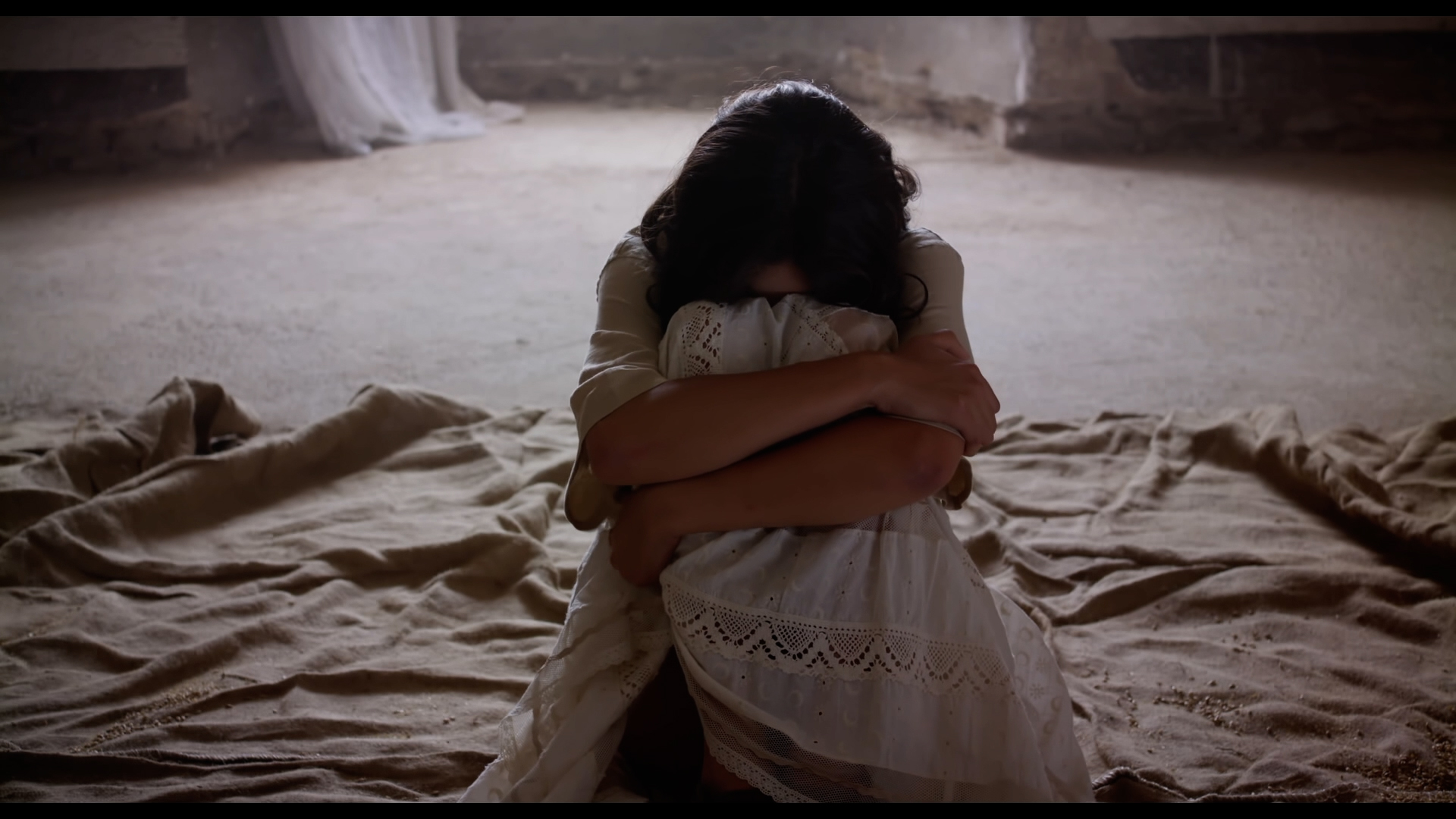
Drama, by Valerio Pampaglini, Italy, 2023.
Irene is trapped within her own unconscious, empty and ruined like an abandoned house. Through broken glass and shady figures dressed in black, a song awakens something long forgotten inside her. The film, written and directed by Valerio Pampaglini, is supported by the Rome Film Academy. It was shot in the summer of 2022 in the province of Perugia, in the municipality of Todi and at the Montenero castle.
LANGUAGE: Italian
SUBTITLES: English
When Healing Became a Profession
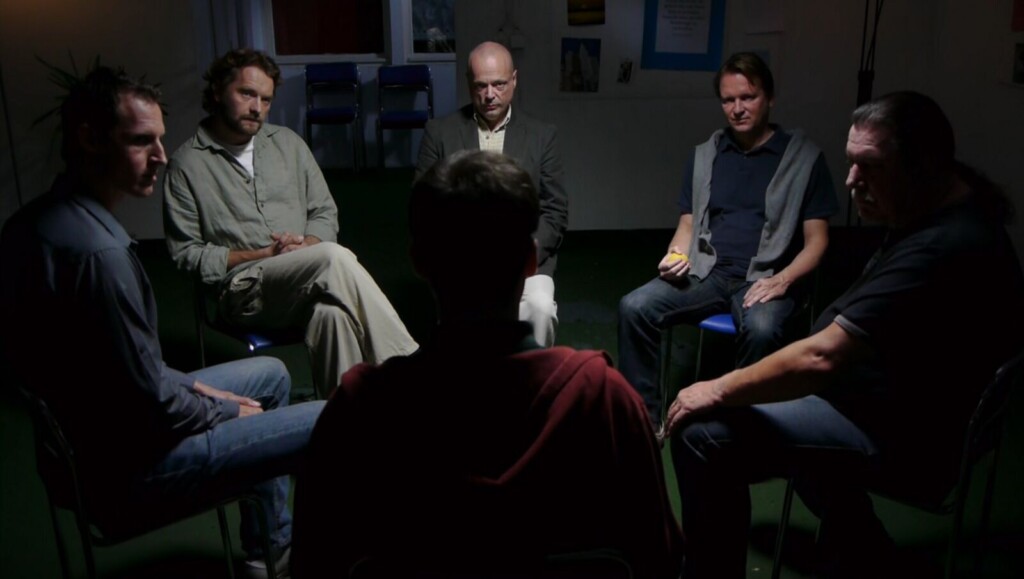
You are handed a piece of paper and a box of charcoal, and the ward around you smells of antiseptic and slow time. Nobody tells you what to draw. Nobody grades the result. The drawing happens the way breathing happens — because the alternative is to simply lie there and let the ceiling become your whole world.
This is approximately what Adrian Hill encountered when he began drawing during his own tuberculosis recovery at King Edward VII Sanatorium in 1942, and what he then offered to other patients confined to the same institutional suspension. His 1945 book Art Versus Illness documented the observation that making things — specifically visual things — seemed to interrupt the psychological deterioration that accompanied prolonged bed rest and medical passivity. Hill did not theorize extensively. He noticed, he offered, he recorded. The impulse was generous and practical in the way that only firsthand suffering can produce.
What followed was considerably more complicated. Margaret Naumburg, working in New York through the 1940s and 1950s, had already been developing a framework that positioned art-making as a form of spontaneous symbolic communication, a visual language the unconscious uses when words become too defended. Her approach drew directly from Freudian and Jungian psychoanalysis — the image as symptom, the drawing as a diagnostic artifact to be interpreted by someone trained in the grammar of the unconscious. Her 1950 work Schizophrenia Art: Its Meaning in Psychotherapy made the argument explicit: the patient produces, the therapist decodes. The creative act becomes evidence in a clinical proceeding.
Edith Kramer, who had trained as a painter under Friedl Dicker-Brandeis in pre-war Vienna and later worked with traumatized children in postwar New York, found this interpretive model deeply problematic. Her 1958 book Art Therapy in a Children’s Community insisted that the healing properties of art-making resided inside the process itself — in what she called the “art as therapy” distinction — not in the subsequent verbal excavation of symbolic content. For Kramer, sublimation in the psychoanalytic sense was not a problem to be corrected but a faculty to be cultivated: the capacity to transform raw emotional material into form was itself the therapeutic event. Interpretation was, at best, secondary; at worst, it colonized the experience the patient had just survived by translating it back into the language of pathology.
The tension between these two positions was never fully resolved, and the institutional machinery that began formalizing art therapy in the 1960s and 1970s did not resolve it so much as absorb it. The American Art Therapy Association, founded in 1969, created credentialing structures, ethical codes, and scope-of-practice definitions that required the field to speak the language of clinical outcomes, billable hours, and measurable therapeutic goals. This was not a corruption — it was a condition of survival inside medical and psychiatric institutions that had their own bureaucratic grammars. But something quiet happened in the translation. The thing Hill had observed in the sanatorium, that raw interruption of despair by making, had to be documented, justified, and reproduced reliably across different patients and different settings. Suffering became a treatment context. The image became data.
What gets amputated in any professionalization is the accidental quality — the fact that the thing worked before anyone understood why, and that the not-understanding was possibly part of how it worked. The patient drawing alone in a tuberculosis ward in 1942 was not operating inside a therapeutic alliance or a treatment modality. The charcoal moved because something in the body demanded movement, and the paper held what the room could not. When you build a profession around that moment, you preserve its outline while evacuating the interior — and the question of what remains inside the protocol, what still pulses there despite the documentation requirements and the credentialing examinations, is not one that institutional structures are designed to answer.

The Theoretical Fault Lines
You sit with a therapist who asks you to paint what you cannot say, and somewhere in the act of mixing colors you feel something release — a pressure you did not know had a name. The therapist calls this healing. What they do not tell you is that they are drawing simultaneously on two theories that cannot both be true, and that the field has never been forced to choose between them because the ambiguity pays.
Aristotle argued in the Poetics that tragedy produces catharsis — a purgation or clarification of the emotions of pity and fear — and for centuries this was taken as a hydraulic claim: excess feeling accumulates, art provides the valve, the organism returns to equilibrium. Josef Breuer and Sigmund Freud, working together in the 1895 Studies on Hysteria, essentially rewrote this in clinical language. Anna O., Emmy von N., and the other women whose bodies spoke in paralysis and cough and blindness were understood to be holding undischarged affect, and the talking cure — or in Breuer’s original method, the hypnotic one — worked by giving that affect an exit. The Aristotelian architecture is unmistakable: blocked energy, expressive release, restoration. When art therapy borrowed this logic in the twentieth century, it borrowed the entire hydraulic metaphor with it — the idea that making something externalizes what was trapped inside, and that externalization itself is the medicine.
Viktor Frankl survived Auschwitz and published Man's Search for Meaning in 1946 with a categorically different claim: that what destroys a human being is not the accumulation of unexpressed feeling but the collapse of interpretive structure, the loss of the sense that one’s suffering points toward anything. His logotherapy insisted that meaning-construction is not a luxury performed after stabilization but the primary act of psychological survival. Susanne Langer had already laid the philosophical groundwork in 1942, arguing in Philosophy in a New Key that art is not expression in the discharge sense at all — it is the creation of symbolic form, a way of giving presentational shape to felt experience that language’s discursive structure cannot reach. On this account, what heals is not the release but the form itself: the canvas or the poem or the improvised melody works because it transforms inchoate experience into something with edges, something that can be perceived and therefore known. These are not compatible claims. One says the wound heals by emptying; the other says it heals by being given a shape that makes it legible.
The art therapy field that consolidated through the mid-twentieth century — through the work of figures like Margaret Naumburg, who trained in psychoanalysis and insisted on unconscious symbolism, and Edith Kramer, who emphasized the formal craft process itself — never resolved this contradiction. It inherited both, used both, and found that clinicians could cite whichever framework the moment seemed to require. A patient who wept during a session confirmed the cathartic model. A patient who described gaining perspective through the act of composition confirmed the meaning-making model. The data never forced a choice because both outcomes are real, both are observable, and the theoretical apparatus producing them remains permanently underdetermined by the evidence.
This is not intellectual laziness. It is institutional strategy. A field that cannot be falsified on its own terms cannot be dismantled by its critics. The ambiguity between discharge and construction functions as a professional immune system — every challenge from empirical psychology can be absorbed by retreating to whichever of the two logics the challenge does not directly address. What looks like theoretical richness is in many cases a refusal of the precision that would make genuine accountability possible, because genuine accountability would require admitting that the mechanism through which art heals — if it heals — remains genuinely unknown.
What the Research Actually Says

You already know the version of this story you have been told: the study found that art therapy reduced PTSD symptoms by a statistically significant margin, the brain lit up differently, the grant was renewed. What you are rarely told is the exact shape of that margin, or what was sitting on the other side of the comparison group, or why the researchers chose that particular outcome measure and not the three others they initially proposed.
The 2016 study by Drass and colleagues, examining art therapy interventions with trauma-affected populations, produced findings that were genuine and carefully gathered — and were immediately extracted from their methodological context and circulated as proof of something far larger than the data supported. The sample sizes in that research were modest by the standards of clinical psychology, the follow-up windows were short, and the authors themselves noted that the mechanisms driving symptom reduction remained opaque. None of that nuance survived the journey into policy documents and funding applications, where the study became a citation rather than an argument, a number rather than a question.
Neuroimaging research on creative engagement has supplied a parallel track of evidence, and it has been similarly flattened in transit. Work on the default mode network — the system of brain regions active during self-referential thought, rumination, and the involuntary rehearsal of past events — shows measurable disruption during sustained creative tasks. When someone is genuinely absorbed in making something, the recursive loops that sustain traumatic intrusion are interrupted at a structural level. This is not metaphor; it is observable in functional MRI data. But observable disruption is not the same as therapeutic resolution, and the gap between those two things is precisely where the honest scientific conversation lives, rarely reaching the brochure.
Meta-analyses present their own layer of distortion. A 2015 review published in the Journal of Affective Disorders pooled findings across art-based interventions for depression and anxiety and reported aggregate effect sizes that looked encouraging until you examined the heterogeneity statistics, which were, in the technical language of the field, severe. Pooling outcomes across wildly different populations, interventions, facilitators, durations, and measurement tools produces a number that is mathematically coherent and practically meaningless. The effect size becomes a kind of averaged fiction. Researchers know this. Funding bodies prefer not to dwell on it, because institutional survival is not served by nuance — it is served by evidence, and evidence in the grant economy means a positive finding with a clean decimal point attached.
The harder question that the numbers systematically avoid is not whether art therapy does something, but what exactly it does, for whom, under what conditions, and through which pathway. These are not rhetorical questions waiting to be dissolved — they are genuinely unanswered, and their non-answering is structurally incentivized. A funding model that rewards demonstrated outcomes produces researchers who demonstrate outcomes. The mechanism question, which would require longer timelines, more expensive neurological tracking, and a willingness to publish null results, remains persistently underfunded. The American Art Therapy Association reported in 2019 that the majority of practicing art therapists operate without standardized assessment protocols, meaning that the gap between what the research measures and what the clinical encounter actually produces is not a gap being actively closed.
What this means in practice is that a trauma survivor sitting in an art therapy session may be experiencing something real and reorganizing — and simultaneously be enrolled in an evidence base that cannot yet describe what is happening to them with any precision. The research and the experience are running in parallel without quite touching, and the institutional language that connects them is doing work that is primarily rhetorical, because the alternative — admitting the depth of what remains unknown — would require a kind of institutional courage that budget cycles rarely permit.
The Social Mirror Inside the Frame
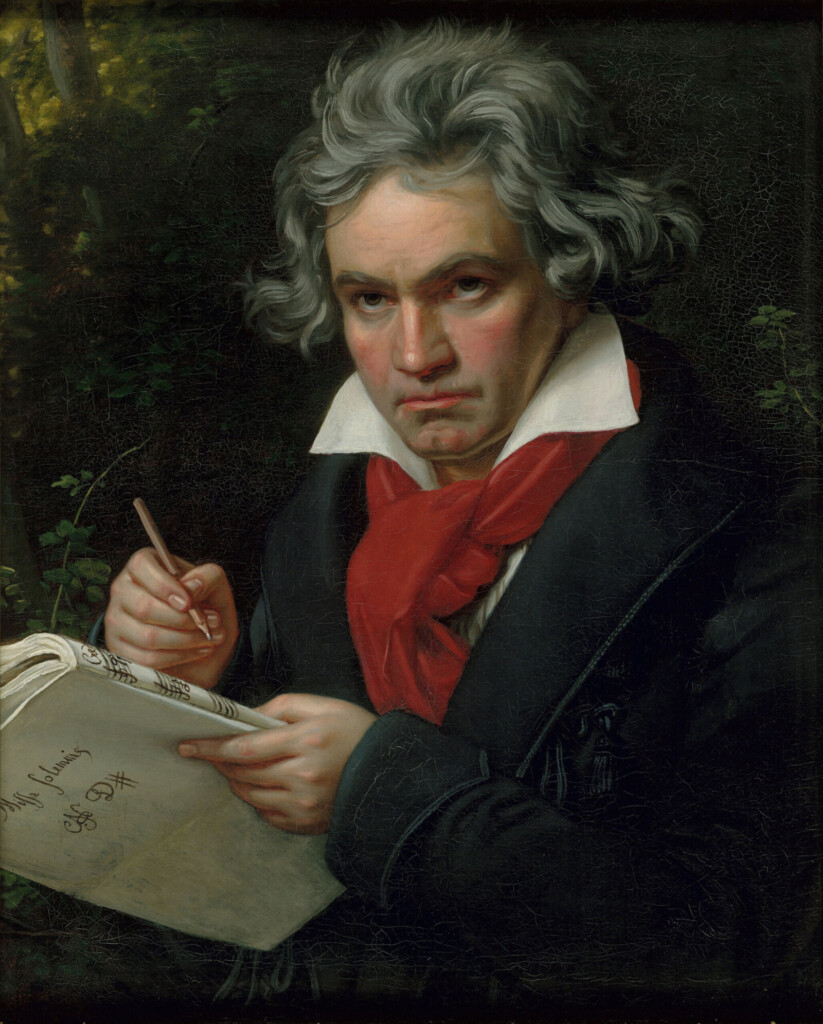
You are sitting in a bright studio with natural light pouring through floor-to-ceiling windows, a therapist beside you who speaks softly about process over product, and the walls are white because white suggests neutrality, because white suggests that what happens here is above the social fray. The art materials are expensive and deliberately so — cold-press watercolor paper, professional-grade pastels — because quality signals seriousness, and seriousness signals that your inner life is worth the investment. Nobody says any of this aloud. The room says it for them.
Pierre Bourdieu spent decades demonstrating that culture is never a neutral field, that the capacity to appreciate, produce, or even approach artistic expression is itself a form of capital distributed as unequally as money or land. In Distinction, published in 1979, he showed that aesthetic preferences function as markers of class position, not individual sensibility — that the person who feels at home in a gallery already carries an inherited ease that cannot be separated from education, income, and the specific texture of a childhood where art was treated as something serious rather than frivolous or suspicious. Art therapy inherits this asymmetry wholesale, without ever naming it. The claim that creative expression transcends language and social status is one of the field’s most repeated articles of faith, and it is precisely that faith that makes the asymmetry invisible.
Prison art programs exist, and they are real, and some of the work produced inside them is extraordinary, but the conditions are not equivalent and the difference is not incidental. In the white-walled studio, pathology is legible as something to be gently unfolded; in the corrections facility, it is legible as something to be managed. The same act of putting paint to surface carries an entirely different institutional weight depending on which side of a gate you perform it. When researchers like William Kornfeld documented arts programming in carceral settings through the 1990s, what emerged was a portrait of a practice valued precisely because it kept people calm and compliant — therapeutic in the administrative sense, not the psychological one. The healing framing was borrowed; the disciplinary function remained primary.
What this reveals is that the therapeutic value attributed to art is never purely intrinsic — it is always assigned by someone with the social authority to assign it, and that authority is not distributed by suffering. The person deemed most eligible for genuine healing through creative practice tends to be the person already closest to the cultural center: educated, financially stable, articulate about their inner states in the vocabulary the therapist recognizes. The research itself reflects this. The landmark studies on art therapy and trauma reduction, including those emerging from Judith Herman’s foundational work on complex trauma in the early 1990s, were disproportionately conducted with populations who already had institutional access to care. The methodology was not corrupt; the sampling was simply the shape of existing power.
This does not mean the experience inside the bright studio is false. People genuinely encounter something in those rooms — something loosened, something named that had no name before. But the encounter happens within a structure that was never designed to be universal, and calling it universal is a way of protecting the structure from scrutiny. When a practice that emerged from early-twentieth-century European psychiatry, refined in mid-century American clinical settings, and professionalized through credentialing bodies that charge significant fees to train and certify practitioners presents itself as a timeless human capacity, it is performing a kind of cultural laundering — taking a specific historical formation and draping it in the language of nature. The white walls do not disappear when you name them; they simply become harder to mistake for the sky.
A vision curated by a filmmaker, not an algorithm
In this video I explain our vision
🎨 When Art Becomes a Path to Wholeness
Art has long served as more than aesthetic pleasure — it is a vessel for transformation, grief, and inner renewal. These articles explore the deep roots of art as a healing and meaning-making practice, from psychology to aesthetics to lived experience.
Herbert Marcuse and Art: The Aesthetic Dimension
Herbert Marcuse argued that art occupies a unique space of resistance against the repressive forces of modern society, offering a dimension of experience that cannot be colonized by utility or profit. His concept of the aesthetic dimension reveals how genuine art preserves the memory of suffering and the promise of liberation. For Marcuse, the healing power of art lies precisely in its refusal to reconcile with a broken world.
GO TO THE SELECTION: Herbert Marcuse and Art: The Aesthetic Dimension
Alexander Lowen’s Bioenergetic Analysis
Alexander Lowen‘s bioenergetic analysis built on the idea that the body holds the history of our emotional wounds, and that movement, expression, and creative release are essential to genuine healing. His therapeutic approach drew heavily on the arts as a means of unlocking repressed energies stored in muscular tension and postural rigidity. Understanding Lowen illuminates why art therapy works not only on the mind but on the living body itself.
GO TO THE SELECTION: Alexander Lowen’s Bioenergetic Analysis
Indian Aesthetics and Rasa: The Taste of Emotions in Art
Indian aesthetics developed one of the most sophisticated theories of art’s emotional and transformative power through the concept of rasa — the refined taste of universal emotions that great art evokes in its audience. Far from mere entertainment, the rasa theory positions art as a spiritual technology capable of dissolving the individual self into shared human feeling. This tradition offers a profound theoretical framework for understanding how art heals by connecting us to what is most essentially human.
GO TO THE SELECTION: Indian Aesthetics and Rasa: The Taste of Emotions in Art
Jungian Individuation and the Great Work
Jung’s concept of individuation — the lifelong process of integrating the unconscious into conscious awareness — finds a striking parallel in the symbolism of the alchemical Great Work. Art, in Jungian thought, functions as the crucible in which psychic transformation occurs, allowing repressed contents to surface through image, symbol, and creative act. This article reveals how the ancient language of alchemy anticipated modern understanding of art as a healing and self-integrating practice.
GO TO THE SELECTION: Jungian Individuation and the Great Work
Discover Cinema That Heals and Transforms on Indiecinema
If these ideas resonate with you, Indiecinema is your destination for films that go beyond entertainment — works that use the cinematic art form to illuminate inner worlds, provoke genuine emotion, and inspire transformation. Explore our curated catalog of independent and art-house cinema, where every film is an invitation to see yourself and the world anew.
👉 EXPLORE THE CATALOG: Watch Indie Films in Streaming
A vision curated by a filmmaker, not an algorithm
In this video I explain our vision

