
The Manufactured Face: Bennett's Studio Transformation from Ingenue to Icon
You are sitting across from a man who runs a studio, and he is looking at your hair the way a butcher looks at a side of beef, and he tells you it is wrong, that the color of your head is costing him money, and you say nothing, because saying nothing is the job. This is not a scene from a script. This is Joan Bennett in 1938, blonde since birth, blonde through a dozen pictures, blonde in the way that meant something specific and limiting in that decade, sitting in front of Walter Wanger, the producer she would soon marry, while he explained that her career had a ceiling and that ceiling had a color, and the color was the one growing out of her scalp.

The decision to dye her hair dark brown for Trade Winds was presented at the time, and has been repeated since in nearly every biographical footnote, as a matter of casting logistics, a director named Tay Garnett needing a brunette for a specific role and Bennett stepping in as a favor, a temporary measure. But temporary measures that permanently alter a public identity are never simply logistical. They are declarations. Within a year Bennett had abandoned blonde entirely, and with it she abandoned an entire category of woman that the studio system had already exhausted on her behalf: the ingenue, the sweetheart, the girl who gets rescued in the third act. What she acquired instead, almost overnight, was access to a different economy of meaning, one where dark hair signaled interiority, danger, knowledge of the world that blondes in the 1930s American imagination were not permitted to possess.
Erving Goffman would not publish The Presentation of Self in Everyday Life until 1959, two decades after Bennett’s transformation, but his central argument retroactively illuminates exactly what happened in that office. Goffman proposed that identity is not an internal essence expressed outward but a performance calibrated for an audience, assembled from props, costume, and controlled gesture, with the self existing primarily as the impression it successfully manages to create. Bennett’s hair was never really about vanity or aesthetics. It was a prop change in the most literal Goffmanian sense, a piece of front-stage equipment swapped out because the old prop had stopped generating the desired impression in the audience it was built to serve. The studio system of the 1930s and 40s did not wait for sociologists to articulate this. It had already built an entire industrial apparatus around the principle, years before anyone gave it a name.
What makes Bennett’s case particularly instructive is the transparency of the mechanism, the fact that the transformation is documented, dated, attributable to a specific man’s specific suggestion in a specific year. Most actresses who underwent similar rebrandings had the process obscured by mythology, presented as organic evolution or personal discovery. Bennett’s shift is instead a rare visible seam in the manufacturing process, a moment where the machinery of image production surfaces above the waterline of publicity and becomes, briefly, legible as machinery. The woman did not change. The wardrobe of selfhood changed, and the industry that owned the wardrobe changed her contracts, her billing, her romantic pairings, and eventually the entire genre in which she would work, all in response to a decision about pigment.
There is something almost clinical about how quickly the new face proved commercially superior to the old one. Bennett moved from the lighter romantic fare of her blonde period toward the moral shadowlands of Fritz Lang‘s The Woman in the Window in 1944 and Scarlet Street in 1945, films where her darkness, now doubled between hair and character, became inseparable from the narrative function she was hired to perform. The industry had not discovered a hidden truth about who Joan Bennett really was. It had discovered which fiction sold better.
Scarlet Street and the Architecture of Female Danger

She sits at the easel that isn’t really hers, painting nails while a man paints her portrait, and the joke of it, the small domestic cruelty, is that Christopher Cross believes the canvas belongs to his own hand. Fritz Lang stages the scene in 1945 with the patience of a man setting a trap he has built before, and Joan Bennett, as Kitty March, lets her voice go soft and stupid in exactly the register that makes soft stupidity into the most calculating instrument in the room. She has learned, by this point in her career, that the femme fatale does not announce herself with a knife. She announces herself with boredom, with a slight delay before laughing at a joke, with the particular economy of a woman who has figured out that her body is the only capital the culture will let her hold and has decided to spend it deliberately.
Scarlet Street arrived a year after Double Indemnity and drew, like that film, on a lineage running back through Weimar cinema and the hard fiction of James M. Cain, but Lang’s picture is meaner about money specifically, more precise about the mechanics of extraction. Kitty and her boyfriend Johnny run a con that depends entirely on Cross’s delusion that an aging cashier can be desired for himself rather than for his embezzled cash, and the entire architecture of the plot is a machine for converting male self-regard into female income. Bennett plays this without any of the theatrical malice that later imitators would bring to the type. She plays it as labor. Kitty is working. That is the transgression the censors and the reviewers of 1945 could feel but not quite name, because a woman working for money outside the sanctioned structures of marriage or wage employment read, to a postwar audience, as something closer to sabotage than to enterprise.
The timing was not incidental. Between 1940 and 1945 nearly nineteen million American women had entered the workforce, many of them into industrial jobs vacated by men now overseas, and the cultural apparatus that had recruited them with posters of a flexed-arm riveter spent the years immediately following in an urgent, almost panicked campaign to walk the whole arrangement back. Betty Friedan would later document the propaganda machinery of the postwar magazines in The Feminine Mystique, published in 1963 but describing exactly this moment, the manufactured nostalgia for domestic containment sold to women who had just spent four years discovering they could run a lathe or manage a payroll. Film noir, made mostly by men who had either fought or stayed home feeling the absence of those who had, absorbed this anxiety and transmuted it into genre. The femme fatale is economic independence wearing lipstick. She is what happens, the films seem to whisper, if a woman keeps the wage-earning confidence and loses the wedding ring.
Sigmund Freud‘s 1927 essay on fetishism, and the broader architecture of castration anxiety he elaborated across his case studies, gave later critics like Laura Mulvey a vocabulary for what Lang’s camera was actually doing when it lingers on Bennett’s face at the moment she realizes she has destroyed a man simply by being visible to him. The woman who looks back, who is not merely looked at, threatens a psychic economy that depends on her passivity, and the film noir femme fatale is punished not because she is evil but because she has stopped performing the fiction that she lacks agency. Kitty March dies for this, stabbed with an ice pick by the very man she has been humiliating, and the film frames her murder with none of the moral vertigo it grants to Cross’s subsequent unraveling. Her death is administrative. His guilt is the actual subject.

The Real Violence Behind the Screen Persona: The Lang Shooting Incident and Public Punishment of Female Transgression
You are standing in a parking lot in Beverly Hills on a December afternoon in 1951, and a man you have laughed with, negotiated with, perhaps even loved in some transactional Hollywood sense, is bleeding from the groin because your husband decided that jealousy required a pistol rather than a lawyer. Jennings Lang survived. Walter Wanger, producer of prestige pictures, veteran of a career built on respectability, served four months at a minimum-security facility for the shooting, and the story that saturated every newspaper in the country was never really about him. It was about Joan Bennett, the woman whose body and reputation became the site where the entire scandal had to be resolved, even though she pulled no trigger, held no weapon, made no public statement that implicated her in anything beyond being married to a man capable of violence.
The press coverage of the Wanger-Lang shooting reveals something about how mid-century American culture metabolized female sexuality when it threatened to become visible outside the sanctioned frame of the screen. Bennett had built her stardom on exactly this kind of transgression contained: as Kitty March in Scarlet Street, released in 1945, she plays a woman whose manipulations destroy Edward G. Robinson‘s character utterly, and audiences paid to watch that destruction because it happened within ninety minutes of narrative punishment, because the femme fatale always suffers a correlative fate, strangled or shot or imprisoned by the film’s final reel. The scandal offered no such structure. There was no script ensuring that transgression and punishment would balance. So the press manufactured one, retroactively, out of insinuation, out of the assumption that a wife whose husband shoots her lover must have done something to deserve the chaos, must have been sleeping with Lang, must have provoked the violence through some feminine excess that reporters felt entitled to speculate about endlessly while Wanger himself received sympathetic profiles describing him as a man driven to the edge.
Michel Foucault, writing in Discipline and Punish in 1975, describes how the eighteenth century’s public execution functioned as a ritual that reasserted sovereign power by making the body of the condemned into a spectacle of suffering visible to the entire community, and how this gave way gradually to subtler mechanisms of discipline that operated through surveillance, through the internalization of norms, through institutions that trained populations to police themselves. Bennett’s post-scandal career demonstrates both regimes operating simultaneously. There was the spectacle: her name in headlines beside words like scandal and shooting for months, her face photographed leaving courthouses, the public appetite for her humiliation treated as legitimate news rather than prurience. And there was the disciplinary aftermath, quieter and more consequential, in which studio executives simply stopped calling. Twentieth Century-Fox let her contract lapse. The parts that had defined her, the calculating women whose sexuality drove men to ruin, evaporated from her offers, not because audiences rejected her but because the industry’s gatekeepers decided that a woman who had generated actual scandal, rather than the manufactured scandal of a screenplay, had crossed from performing danger into embodying it, and embodying it made her unemployable in ways that no trial or sentence ever specified but that functioned with total efficiency nonetheless.
What makes the episode instructive rather than merely sad is how invisible the mechanism remained even to the people enforcing it. No memo exists declaring Joan Bennett blacklisted for her husband’s crime. The punishment operated through absence, through phone calls not returned, through a slow evaporation of opportunity that left her, by the mid-1950s, working steadily in television while the A-list features that had been her domain went to women whose private lives had generated no headlines at all.
The Double Indemnity Paradox: Desire, Complicity, and the Male Gaze in Noir Construction

You watch her light a cigarette in “Scarlet Street” and the gesture already contains its own sentence.. Joan Bennett as Kitty March does not simply smoke; she performs smoking for a man who has not yet realized he is being catalogued, priced, arranged into usefulness. The camera lingers exactly as long as desire requires, no longer, and this timing is not incidental. It is the architecture Laura Mulvey named in 1975, in an essay barely six pages long that nonetheless dismantled four decades’ of cinema’s unspoken contract. Visual pleasure, Mulvey argued, had been built around a split so total it felt natural: woman as image, man as bearer of the look. Bennett’s noir period, almost entirely under Fritz Lang’s direction across “Man Hunt,” “The Woman in the Window,” and “Scarlet Street,” offers something more useful than illustration of that theory. It offers its interrogation from the inside, because Lang kept casting her as the desiring subject who could never quite escape being desired object, and the friction between those two positions generates the genre’s actual content.
Consider the mechanism plainly. In “The Woman in the Window,” released in 1944, Bennett’s Alice Reed exists first as a portrait in a shop window, literally a painted image before she becomes a woman, and Edward G. Robinson’s professor falls for the artwork before he meets its referent. The film cannot resist making Mulvey’s argument for her, decades early, embedding the theory in its own premise. Alice then spends the remaining ninety minutes trying to convert herself from image into agent, orchestrating a cover-up, managing a blackmailer, thinking faster than the men around her. She succeeds at almost everything except surviving the narrative on her own terms. The dream-ending, which reveals the entire plot as the professor’s nightmare, has been read as cowardice, and it is, but it is a very specific cowardice: the film could imagine a woman this competent only by refusing to let the competence have happened.
Punishment in noir rarely arrives as simple moralizing. It arrives disguised as plot mechanics, as the tidy demand that transgression be metabolized by the story’s end. Kitty March in “Scarlet Street,” 1945, manipulates a meek cashier played again by Robinson into embezzlement and ruin, extracting money and paintings he claims as his own work, and her scheme is intelligent, almost admirable in its economy. She dies for it, strangled by the man she humiliated, and then the film performs its final cruelty by having him escape justice entirely while she becomes a ghost he cannot stop hearing. The agency was real. The punishment was proportionally excessive. This is the paradox embedded in the noir moral universe: a woman must be given enough interiority to make her scheming legible and enough intelligence to make her dangerous, because a stupid femme fatale generates no tension, but that same intelligence becomes the evidence used to convict her within the story’s own logic.
Lang’s camera, meanwhile, never stops enjoying her. The lighting that models Bennett’s face in “Scarlet Street,” the deep shadow that turns her apartment into a stage set for seduction, these are not neutral technical choices. They are Mulvey’s apparatus made visible, the look that structures the entire visual field around female presence as spectacle. What complicates the theory rather than merely confirming it is that Bennett’s characters frequently seize the look back, appraising the men appraising them, calculating with open eyes what their beauty can extract. Molly Haskell, writing in 1974 in “From Reverence to Rape,” had already noticed that the 1940s produced women onscreen sharper and more dangerous than anything the following two decades would allow, and Bennett’s noir cycle sits exactly at that pressurized moment, before the production code‘s later relaxations somehow narrowed rather than widened the available roles. The gaze watches her. She watches back. Neither look cancels the other, and the story has to kill someone to settle the account.
Blacklisting, Erasure, and the Cost of Being Unforgiven in Postwar Hollywood
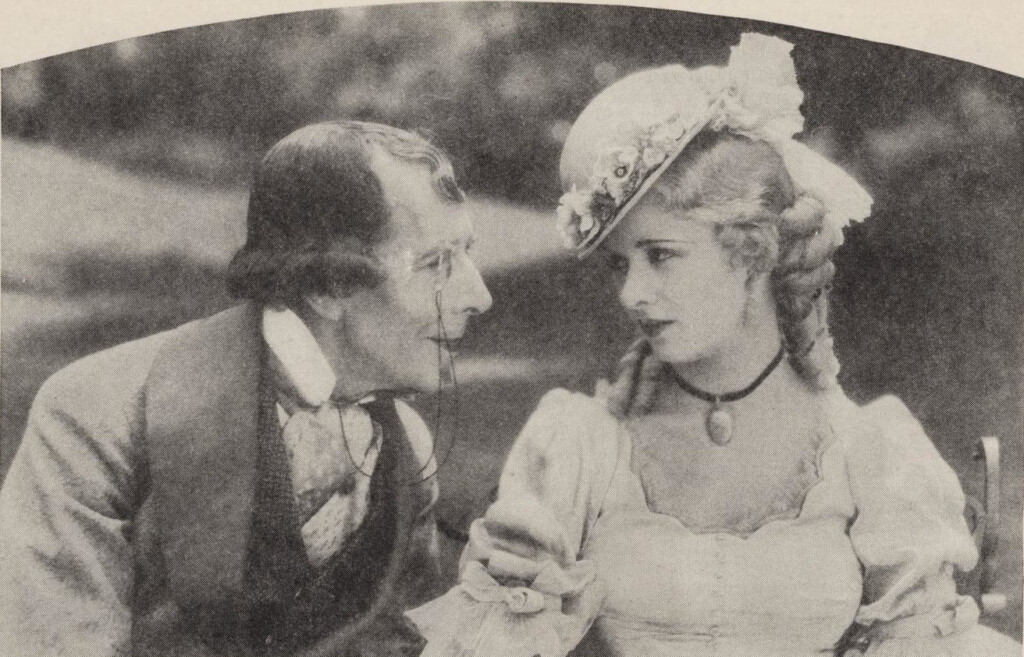
Los Angeles, December 1951. A woman in her early forties sits at a dressing table in a house on Woodland Drive, applying makeup she no longer needs for a role she has not been offered, because the phone has stopped ringing in the particular way phones ring when a career is still alive. Walter Wanger, her husband, has already served his four months for shooting her agent in a parking lot, a jealous rage dressed up in the trades as a crime of passion, and she has already understood, before anyone says it to her face, that the story will attach itself to her name forever, regardless of the fact that she pulled no trigger and asked for no violence on her behalf.
This is the part of the myth that gets skipped over in retrospectives that prefer to linger on cheekbones and shadow: the punishment for scandal in postwar Hollywood was never distributed evenly along the axis of guilt. Wanger, the man who actually committed the act, served his sentence and resumed producing pictures within a few years, his career bruised but structurally intact. Bennett, who had done nothing but be married to him, found herself quietly but comprehensively unbookable, dropped from a Fritz Lang production and sliding out of the A-picture ecosystem she had inhabited since her contract days at Fox in the early thirties. The mechanism at work here is not mysterious once you name it: a man’s transgression is metabolized by the industry as incident, something to be managed and outlived, while a woman standing near that transgression absorbs it as essence, something she now is rather than something that merely happened around her.
Erving Goffman, writing in 1963 in Stigma: Notes on the Management of Spoiled Identity, described exactly this kind of transfer, what he called courtesy stigma, the contamination that spreads to those merely associated with a discredited person, so that the wife of the disgraced man becomes disgraced by proximity, her own conduct rendered irrelevant against the symbolic weight of the connection. Bennett’s career after 1951 reads like a case study assembled decades before the theory existed to explain it: the roles thin out, the budgets shrink, and by the middle of the decade she is doing summer stock in New England and guest spots on anthology television, a woman who had shared the screen with Lang and Ophüls now grateful for a live broadcast slot on some Tuesday night drama nobody would remember.
What makes the erasure so instructive is how little it required in the way of formal mechanism. There was no blacklist committee for wives, no hearing, no document to sign or refuse to sign. The punishment operated entirely through the informal choreography of casting directors quietly deciding, producers quietly deciding, an entire industry arriving independently at the same unspoken verdict without anyone having to write it down, which is precisely how Pierre Bourdieu described the functioning of social capital in fields governed by reputation rather than law, where exclusion needs no decree because it lives in the accumulated small choices of gatekeepers protecting the field’s respectability. Bennett’s face, once the industry’s shorthand for danger you could enjoy from a safe distance, became danger you could no longer profit from at all, and the same features that had made her bankable as a femme fatale on screen now made her illegible as anything but a woman who had been near a gun.
She did eventually find a second life, decades later, playing the matriarch in a gothic television serial that ran into the early seventies, a role that required her to be respectable, maternal, safely contained within a role that asked nothing dangerous of her. It is worth sitting with what that casting represents: an industry willing to use her again only once she had aged out of the specific threat her earlier persona embodied, only once the scandal had faded into something closer to folklore than headline, only once she could be trusted, at last, to do no further harm to anyone’s reputation but her own, already spent.
A vision curated by a filmmaker, not an algorithm
In this video I explain our vision
🕯️ Shadows and Seduction: The World of Noir
Joan Bennett’s transformation from luminous ingénue to one of noir’s most captivating femmes fatales mirrors the genre’s own descent into moral ambiguity and shadow. To understand her legacy, we must look at the collaborators, contemporaries, and cinematic language that shaped this dark, glamorous world.
Delmer Daves and the cinema of American guilt
Delmer Daves crafted some of the era’s most compelling studies in American guilt, a theme deeply intertwined with the noir universe Bennett inhabited. His work, like hers, explored the fissures beneath respectable surfaces, where desire and deception simmered just out of sight. This shared thematic territory makes his filmography essential viewing for anyone drawn to Bennett’s morally complex screen persona.
GO TO THE SELECTION: Delmer Daves and the cinema of American guilt
Edward G. Robinson and classic American cinema
Edward G. Robinson starred alongside Joan Bennett in some of Fritz Lang’s most celebrated noir productions, including ‘Scarlet Street’ and ‘The Woman in the Window’. Their on-screen chemistry became a blueprint for the genre’s exploration of obsession, manipulation, and downfall. Robinson’s transition from gangster archetypes to tormented everymen parallels Bennett’s own reinvention as cinema’s ultimate spider woman.
GO TO THE SELECTION: Edward G. Robinson and classic American cinema
Peter Lorre and the art of the unsettling villain
Peter Lorre embodied the unsettling, morally slippery characters that populated the same shadowy world Bennett so memorably haunted. His unique screen presence, often unnerving and sympathetic in equal measure, helped define the visual and psychological grammar of film noir. Together, actors like Lorre and Bennett gave the genre its enduring atmosphere of paranoia and seduction.
GO TO THE SELECTION: Peter Lorre and the art of the unsettling villain
John Huston and the art of irregular cinema
John Huston‘s mastery of morally ambiguous storytelling and flawed, magnetic characters places him among the essential architects of noir’s golden age. His approach to irregular, shadow-drenched narratives resonates strongly with the world Joan Bennett navigated as an actress. Exploring his filmography offers valuable context for understanding the artistic currents that shaped her most iconic performances.
GO TO THE SELECTION: John Huston and the art of irregular cinema
🎬 Explore More Shadowy Classics
If Joan Bennett’s smoldering allure and the twisting shadows of film noir have captured your imagination, there’s a whole universe of overlooked and independent cinema waiting to be discovered. Dive into Indiecinema’s streaming library for rare gems and bold storytelling that keep the spirit of noir alive today.
👉 EXPLORE THE CATALOG: Watch Indie Films in Streaming
A vision curated by a filmmaker, not an algorithm
In this video I explain our vision

