The Invisible Architecture of Early Absence
You are three years old and you are waiting. Not for anything you could name — you don’t have names yet for the particular texture of this waiting, the way the air in the room feels different when she is gone, heavier somehow, as though absence has a physical weight that presses against the chest. You reach for something — a blanket, a toy, the edge of a crib — and what you are really reaching for is a nervous system that is not yours, a regulating presence that your own biology has not yet learned to replace. The room is not dangerous. Nothing is wrong, technically. And yet every cell in your body is firing the same signal: something is missing that is supposed to be here.

John Bowlby understood this not as sentimentality but as evolutionary fact. In 1951, commissioned by the World Health Organization, he produced a report titled “Maternal Care and Mental Health” that most people have never read and almost everyone has been shaped by. His central argument was not that mothers are important in some warm cultural sense but that the continuous relationship between an infant and a primary caregiver functions as a biological necessity, comparable in its urgency to nutrition and warmth. He was drawing on decades of clinical work with juvenile delinquents and separated children, and on the animal research of figures like Konrad Lorenz, who had already demonstrated in 1935 that attachment behaviors in birds were not learned through reward but were triggered by presence itself, by proximity to a moving, responsive body during a critical window of development. Bowlby applied this structural logic to human infants and arrived somewhere that made the psychiatric establishment deeply uncomfortable: the claim that what happens in the first years of life leaves a material trace on the architecture of the self.
That trace is not metaphorical. By the time developmental neurologists began mapping infant brain development in the 1990s, the mechanisms Bowlby had theorized on behavioral grounds were becoming visible in tissue. Allan Schore’s work, particularly his 1994 book “Affect Regulation and the Origin of the Self,” demonstrated that the right orbitofrontal cortex — the region most responsible for emotional regulation, empathy, and stress response — develops almost entirely in the period between birth and eighteen months, and that its development is directly sculpted by the quality of early caregiver interaction. A child whose caregiver is consistently present, responsive, and emotionally attuned grows different neural circuitry than one whose caregiver is absent, erratic, or emotionally unavailable. The difference is not a matter of memory or psychology in the conventional sense. It is structural. It is the difference between a building with load-bearing walls and one where the supports were never installed.
What makes this difficult to absorb is that the culture surrounding motherhood has always insisted on framing early childhood in terms of love, intention, and moral virtue — whether a mother is devoted or selfish, sacrificing or career-driven. This framing makes the question personal and accusatory, which is precisely how it avoids being scientific. Bowlby was not talking about love. He was talking about presence as a physiological input, a regulatory signal without which a developing organism cannot complete its own wiring. The forty-four juvenile thieves he studied and published about in 1944, nearly all of whom had experienced early separations, were not failed by their mothers’ feelings. They were failed by an architecture of care that had crucial pieces missing before they were conscious enough to register the absence as loss.
The most insidious feature of early deprivation is that it does not announce itself as deprivation to the person who carries it.
The Sands

Science fiction, by Noah Paganotto, Argentina, 2022.
In an undetermined location on planet Earth, in an unknown time, Zoilo lives with his family in a wasteland surrounded by ruins. They live uprooted, without mothers, knowing that pregnancy for women is synonymous with death. For them there is only one collective routine; keep the fire alive. Only Zoilo escapes this logic, observing, intrigued, details that others do not see and therefore do not appreciate. Zoilo's personal search for answers will increase the differences with his relatives, increasingly revealing an empty world of interiority.
Avant-garde film that burns slowly in the first part and then reveals in the second the profound conflicts of a family prisoner of archaic beliefs. It is a dystopian and visionary work, with wonderful photography and images of rare power that allow us to grasp the depth of the story and its poetic potential. The faces of the actors, especially the protagonist boy, are perfect. The Sands metaphorically represents the world we live in: an alienated society, where what keeps us alive is demonized and blamed for death. In opposition to the fast pace of the typical mainstream film, The Sands is a meditative journey into the depths of images. The film was shot in natural environments in the city of Necochea, Buenos Aires province, Argentina.
LANGUAGE: Spanish
SUBTITLES: English, Spanish, French, German, Portuguese
When the State Became the Mother
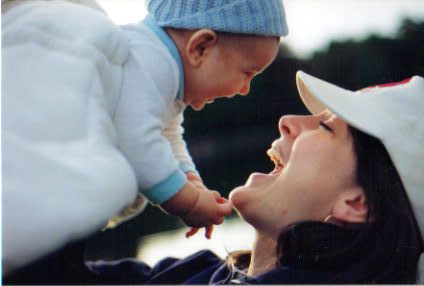
You are handed a child at the door and told to leave. No explanations are requested. The nurse takes the infant without looking at you, turns, and disappears behind a door that closes with the particular softness of an institution that has learned to muffle everything, including grief. You walk back out into the street and tell yourself this is the modern thing to do, the hygienic thing, the safe thing — because that is precisely what they told you before you arrived.
After the Second World War, governments across Europe and North America inherited a catastrophic surplus of parentless children and a medical establishment intoxicated by its own recent victories. Penicillin had just begun reshaping the logic of survival. Infection was the enemy, and the human body — especially a small, vulnerable one — was best protected behind glass, behind procedure, behind the authority of the stethoscope. Foundling hospitals that had existed in various forms since the medieval period were now modernized, rationalized, staffed. They gleamed. They charted temperatures and weighed gains with a precision that felt, to the postwar imagination desperate for order, indistinguishable from care.
René Spitz spent two years between 1945 and 1946 observing infants in two different institutional settings — one a prison nursery where incarcerated mothers had daily contact with their children, the other a foundling home staffed by trained nurses each responsible for seven to twelve infants simultaneously. The conditions in the foundling home were materially superior: more space, better nutrition, more rigorous hygiene. Yet by the end of the observation period, 37 percent of the children in the foundling home had died. Not from infection. Not from malnutrition. From a condition Spitz described in his landmark paper as hospitalism — a progressive deterioration that began with weeping, moved into withdrawal, then into a waxen stillness that the staff interpreted as calm but was in fact the organism beginning its quiet collapse. The children in the prison nursery, held by women the state had already deemed unfit for society, thrived.
What makes this not merely a historical tragedy but an active embarrassment is that Spitz’s findings were not secret. Published in The Psychoanalytic Study of the Child in 1945, they were read, discussed, cited. And the institutions continued. Because the organizational logic that had built them was not primarily medical — it was administrative. A system designed to process bodies at scale cannot restructure itself around the irreducible particularity of a single infant’s need for a single human face it recognizes. The cost of acknowledging Spitz was not intellectual; it was architectural, bureaucratic, financial. And so acknowledgment was deferred, qualified, and eventually buried under the more comfortable language of attachment theory, which arrived just late enough to let the institutions off the historical hook by reframing the damage as a lesson already learned.
John Bowlby’s 1951 report to the World Health Organization, Maternal Care and Mental Health, synthesized the existing evidence with a clarity that should have been devastating to policy. Instead it was absorbed, praised, and largely ignored in institutional practice for another two decades. The British nursery system, the French pouponnières, the American orphanage infrastructure — all continued operating on the premise that professional neutrality was a form of protection rather than a form of abandonment with paperwork. The nurses were not cruel. That is the detail that resists easy interpretation. They followed protocol. They were clean. They changed the linens on schedule. They simply did not, could not, within the structure they inhabited, look at any one child long enough to become necessary to it.
What the institution had accomplished, beneath the language of modernity and public health, was the elimination of the irreplaceable — and the substitution of the adequate, which in the emotional economy of an infant is not a lesser version of love but its precise opposite.

The Cultural Myth of the Replaceable Caregiver
You are sitting across from a pediatrician who has just told you that your child is “adjusting beautifully” to the new daycare arrangement, that children are resilient, that what matters is consistency and warmth from any caring adult. You nod. You want to believe it. The sentence has the shape of a fact even though it is, at its core, a cultural sedative.
The belief that any stable adult presence neutralizes early deprivation is not a clinical finding. It is a convenience masquerading as one. Western industrial societies built their childcare architectures on this assumption long before they had the neuroscience to test it, and when the neuroscience arrived, it was quietly inconvenient. In 1958, Harry Harlow published the results of experiments that should have permanently dismantled the interchangeability thesis. Infant rhesus monkeys, given the choice between a wire surrogate that dispensed milk and a cloth surrogate that offered nothing nutritional but physical texture and warmth, chose the cloth figure with a desperation that bordered on compulsion. They did not need feeding. They needed a body. And the distinction mattered catastrophically: monkeys raised exclusively on wire surrogates developed into socially dysfunctional adults incapable of forming attachments, unable to regulate fear responses, prone to stereotyped self-destructive behaviors. Presence without attunement was not a lesser version of care. It was a different thing entirely.
What Harlow exposed was not emotional preference but biological wiring. The primate nervous system does not merely benefit from specific relational contact during early development — it requires it structurally, the way bones require calcium. The damage from its absence is not a wound that heals with later kindness; it is an architectural deficit, a failure of certain neural circuits to complete their formation during windows that do not reopen. The orbitofrontal cortex, which governs emotional regulation and social cognition, is among the most experience-dependent regions of the human brain, its development contingent on precisely the kind of reciprocal, contingent, attuned interaction that no rotation of well-meaning strangers can reliably reproduce at scale.
The Romanian orphanages opened to Western researchers after 1989 provided the largest and most devastating human confirmation of this. Children who had spent their earliest years in institutions where the ratio of caregivers to infants sometimes reached one to twenty, where touch was functional and eye contact rare, showed measurable cortical thinning, reduced white matter connectivity, and blunted stress-response systems even after adoption into attentive, loving families. A longitudinal study led by Charles Nelson through the Bucharest Early Intervention Project tracked these children for years and found that cognitive deficits, attachment disorders, and elevated psychiatric risk were inversely correlated with one variable above all others: the age at which the child was removed from the institutional setting. Before two years, outcomes improved dramatically. After, the improvements plateaued in ways that no quality of subsequent care could fully reverse. The brain had passed through its period of maximum plasticity still waiting for something that never came.
This is where the cultural myth does its most insidious work, because it locates deprivation’s damage in the emotional register — as sadness, as trauma, as a psychological wound that therapy and love can eventually close — and in doing so keeps the problem legible within a framework of personal healing and individual resilience. But the Romanian data and the neuroimaging it produced are not describing a feeling. They are describing a structure. A child who did not receive consistent, attuned relational contact during the first years of life may grow into an adult who cannot understand why their relationships feel perpetually unstable, why emotional regulation requires effort that seems to cost others nothing, why the ordinary textures of intimacy produce something closer to static than signal.
Deprivation as Inherited Script

She manages everything. The calendar, the mortgage, the pediatric appointments, the quarterly reviews. She is, by any measurable standard, competent beyond reproach. And yet when her three-year-old runs to her with arms raised, something in her body hesitates — not cruelly, not consciously, but as if the circuitry required to receive that small hurtling weight of need had never been fully installed. She picks the child up. She says the right words. But the warmth arrives half a second late, and the child, who cannot articulate what it has noticed, begins to learn that love is something you earn by not asking for too much of it.
This is not a pathology visible on any intake form. It produces no diagnosis, no dramatic rupture, no moment a therapist can easily point to and say: here, this is where it began. What it produces instead is transmission — the quiet inheritance of a particular emotional grammar, passed from body to body across generations the way accent is passed through speech, not through instruction but through sheer repetition of tone.
In 1975, the psychoanalyst Selma Fraiberg published a paper in the Psychoanalytic Study of the Child that introduced language for something clinicians had long sensed but struggled to name. Working with high-risk infant-parent pairs in home settings, she and her colleagues at the University of Michigan observed parents who seemed, against their own apparent intentions, to replicate with their children the very conditions of neglect or emotional unavailability they had suffered. She called what stood between parent and child the “ghosts in the nursery” — unremembered, unprocessed figures from the parent’s own infancy who arrived, uninvited, at every critical moment of caregiving, commandeering the adult’s nervous system before conscious intention could intervene. What made the concept clinically devastating was its precision: it was not trauma that parents remembered and acted out. It was trauma they did not remember, and therefore could not interrogate, that governed the most intimate choreography of their relationships.
The mechanism Fraiberg identified aligns with what developmental neuroscience has since mapped at the structural level. The attachment patterns formed in the first years of life are encoded not as narrative memory — the kind you can retrieve and examine — but as procedural memory, the implicit knowledge of how bodies move toward or away from other bodies, how close is safe, how need is managed. Mary Main’s 1985 Adult Attachment Interview, which assessed parents’ coherence when narrating their own childhoods, found that the single most reliable predictor of a child’s attachment classification was not what the parent had experienced, but how they spoke about it: whether the story held together, whether gaps were acknowledged, whether loss had been metabolized into meaning. Parents who could not tell a coherent story about their own early lives were far more likely to have children who showed disorganized attachment — a category marked not by avoidance or anxiety in their pure form, but by a collapse of strategy altogether, a nervous system that encountered the caregiver simultaneously as source of safety and source of threat.
What this means, stripped of clinical language, is that the most dangerous form of inherited deprivation is the kind that travels without a label. The woman who knows she was neglected can at least position herself in relation to that knowledge. The person who experienced something subtler — a mother who was present but unreachable, attentive but emotionally sealed, loving in performance and absent in register — inherits a wound with no name and therefore no border. They do not identify as someone who lacked maternal warmth. They identify as someone who is simply, constitutionally, not particularly emotional. The ghost does not announce itself.
The Social Uses of the Maternal Wound
You are handed a pamphlet in 1943. It does not ask you to sacrifice your son to the war — that particular demand has already been normalized. It asks you, more quietly and with the language of collective duty, to release your daughter to the state nursery, to trust the trained professional over your own instinct, to understand that attachment itself is a bourgeois sentimentality standing between the child and her properly socialized future.
The historical compression between wartime necessity and ideological convenience is rarely examined with honesty. Soviet collective childcare, British wartime nurseries, and later the Maoist dismantling of family units as counterrevolutionary structures all operated on a shared premise: that the mother-child dyad was a unit of private loyalty that competed with loyalty to something larger. The wound inflicted by early separation was not denied — it was reclassified as the necessary cost of a higher integration. John Bowlby published his landmark World Health Organization report on maternal care and mental health in 1951, demonstrating with clinical precision that children raised without stable maternal figures exhibited measurable deficits in cognitive development, emotional regulation, and the capacity for trust. Governments that had spent a decade dismantling those very bonds absorbed his findings and moved on without revision.
What capitalism did was subtler and more durable. It did not demand separation in the name of the collective — it made separation economically inevitable and then sold the guilt back as a commodity. The working mother of the late twentieth century did not choose to leave her infant in underfunded institutional care; she was priced out of any alternative. What followed was a therapeutic and pharmaceutical market constructed almost entirely around the management of anxiety produced by that enforced distance. Donald Winnicott’s concept of the “good enough mother,” introduced in the 1950s as a humane corrective to perfectionist maternal idealism, was gradually absorbed into a productivity framework that used it to argue that maternal presence was not particularly special — that adequacy could be distributed across multiple caregivers, that the biological mother was one node among many, that her ambition need not be constrained by anything as imprecise as her child’s need for her specifically.
Certain strands of second-wave feminism found themselves in an uncomfortable alliance with this logic without intending to. Shulamith Firestone argued in 1970 in “The Dialectic of Sex” that biological motherhood was itself the root of female oppression, that pregnancy and nursing bound women to a cycle of dependency that precluded full political subjecthood. The insight about structural oppression was real. But the solution — technological reproduction, collective childrearing, the dissolution of the mother-child bond as a site of liberation — inadvertently reproduced the same erasure that factory owners and state planners had always found useful. The wound became invisible not because it was healed but because acknowledging it was politically inconvenient for multiple ideological projects simultaneously.
What emerges from this convergence is not conspiracy but something more troubling: a structural consensus across radically opposed systems that the maternal wound is a private matter, a developmental misfortune, a manageable liability — never a diagnostic finding about the society that produces it at scale. Psychiatrist Bruce Perry’s neurobiological research in the early 2000s demonstrated that early relational trauma alters cortisol response patterns, limbic development, and stress reactivity in ways that persist across decades and interact with every subsequent social structure the child inhabits. The child who grows into a worker, a voter, a consumer, a soldier carries that altered neurobiology into every institution that will then manage, medicate, discipline, or exploit the symptoms without ever naming their origin, because naming the origin would require indicting the arrangements that made the wound not only possible but, for so many competing interests, quietly indispensable.
A vision curated by a filmmaker, not an algorithm
In this video I explain our vision
🧩 Wounds of the First Bond: Motherhood, Absence and the Self
Maternal deprivation leaves traces that cut across psychology, relationships, identity, and the search for meaning. The articles below explore the invisible architecture built — or broken — in early attachment, and how its absence echoes through adult life. Together they form a map of the inner labyrinth shaped by the mother we had, lost, or never knew.
The dilemma of motherhood between choice and destiny
The choice of whether or not to become a mother is never merely biological — it is existential, social, and deeply personal. This article examines how women navigate the tension between cultural expectation and individual desire, revealing how motherhood itself can be both a source of profound meaning and a site of loss. Understanding this dilemma is essential to grasping what is at stake when the maternal bond is absent or damaged.
GO TO THE SELECTION: The dilemma of motherhood between choice and destiny
The Emotional Legacy of Parents: How the Past Shapes Us
The emotional legacies left by parents — present or absent — shape the architecture of the self in ways that often remain invisible for decades. This article explores how unprocessed parental wounds are transmitted across generations, becoming the unconscious scripts we act out in love, work, and identity. Maternal deprivation is one of the most powerful of these legacies, capable of restructuring a person’s entire relational world.
GO TO THE SELECTION: The Emotional Legacy of Parents: How the Past Shapes Us
Regression in Psychology: When the Mind Returns to Childhood
Regression in psychology describes the mind’s tendency to retreat to earlier emotional states when confronted with unbearable stress or unmet needs — a phenomenon deeply linked to early deprivation. This article traces how the absence of adequate maternal care can leave psychological gaps that the adult psyche continues to circle around, seeking what was never given. The connection between maternal loss and regressive patterns illuminates why childhood wounds so rarely stay in the past.
GO TO THE SELECTION: Regression in Psychology: When the Mind Returns to Childhood
Overcoming trauma to live the present
Overcoming trauma is not a linear journey but a spiral into the layers of pain that early deprivation inscribes in the body and memory. This article examines how survivors of childhood wounds — including those rooted in maternal absence — find paths back to the present through awareness, relationships, and meaning-making. It offers both a clinical and a deeply human perspective on what it means to heal from the inside out.
GO TO THE SELECTION: Overcoming trauma to live the present
Discover the Cinema That Dares to Look Within
If these themes resonate with you, Indiecinema is the streaming platform where independent cinema explores the depths of human experience — trauma, attachment, identity, and the long journey toward wholeness. Discover films that mainstream platforms overlook, crafted by directors who believe that cinema can illuminate what words alone cannot reach.
👉 EXPLORE THE CATALOG: Watch Indie Films in Streaming
👉 Questo articolo fa parte dell'hub Psychology: The Complete Guide to Mind, Behavior, and Human Nature
A vision curated by a filmmaker, not an algorithm
In this video I explain our vision