
The Wall That Refuses to Comfort
You are not prepared for it. You walk into the room expecting something monumental in the way that public monuments usually are — large, self-important, designed to make you feel small in the presence of greatness. Instead you feel accused. The figures on the wall are not celebrating anything. They are burning. They are contorted in postures that no heroic sculpture would permit — mouths open not in triumph but in something closer to a scream swallowed midway, bodies that seem to be simultaneously rising and collapsing, as if the painter could not decide, or refused to decide, whether humanity was ascending or being consumed. You step back instinctively, the way you step back from someone who has said something too true too quickly.

This is what José Clemente Orozco does to you. Not what he did — does, present tense, because the murals are still there and they are still working.
He was born in 1883 in Ciudad Guzmán, Jalisco, and he lost his left hand in an adolescent accident with gunpowder, a biographical detail that feels almost too symbolic to be real and yet is simply true. He trained at the Academia de San Carlos in Mexico City, he survived the Mexican Revolution not as a combatant but as a witness, and what he witnessed did not leave him with the conclusions that revolutions prefer their witnesses to reach. While Diego Rivera was constructing a usable past — indigenous, noble, cyclical, reassuring in its suggestion that Mexico’s suffering had always been moving toward liberation — Orozco was painting something that looked more like a recurring catastrophe with no redemptive arc. While David Alfaro Siqueiros was turning political fury into aesthetic grandeur, Orozco was doing something harder to categorize and harder to sell: he was painting against consolation itself.
This is the central difficulty with Orozco, the thing that has made him simultaneously celebrated and persistently misread. He emerged from the same muralismo movement that Rivera and Siqueiros defined, the same post-revolutionary cultural project that the Mexican government institutionalized through the Secretary of Public Education after 1921, the same walls, the same public ambition, the same historical moment. And yet his work refuses the ideological contract that muralismo implicitly signed. Where the movement promised that art could be a vehicle for collective redemption, Orozco painted collective damnation with the same brush strokes. Where his contemporaries offered the masses a mirror in which to see themselves as protagonists of history, Orozco offered something more unsettling: a mirror in which you see yourself as both victim and perpetrator, as the person being crushed and the person doing the crushing, sometimes simultaneously, sometimes indistinguishably.
The philosopher José Vasconcelos, who as Secretary of Education commissioned much of the great Mexican mural work of the 1920s, believed in art as a civilizing and unifying force. His 1925 essay La raza cósmica articulated a vision of Latin American identity as a synthesis that would transcend the racial hierarchies of European modernity. It was a beautiful vision, and Rivera painted it magnificently. Orozco received the same walls and painted something that Vasconcelos found profoundly uncomfortable — figures of priests complicit in conquest, revolutionaries indistinguishable from the tyrants they replaced, the masses not ennobled but trapped.
There is a man in one of those murals who has been painted with his fist raised, and for a moment you read it as defiance, as the gesture of resistance that a century of political imagery has trained you to recognize. Then you look at the faces around him, and at the flames, and you realize the fist might just as easily be the last convulsion of someone falling. Orozco did not correct this ambiguity. He built his entire life’s work inside it.
Don Barry: A Quixotic Exploration
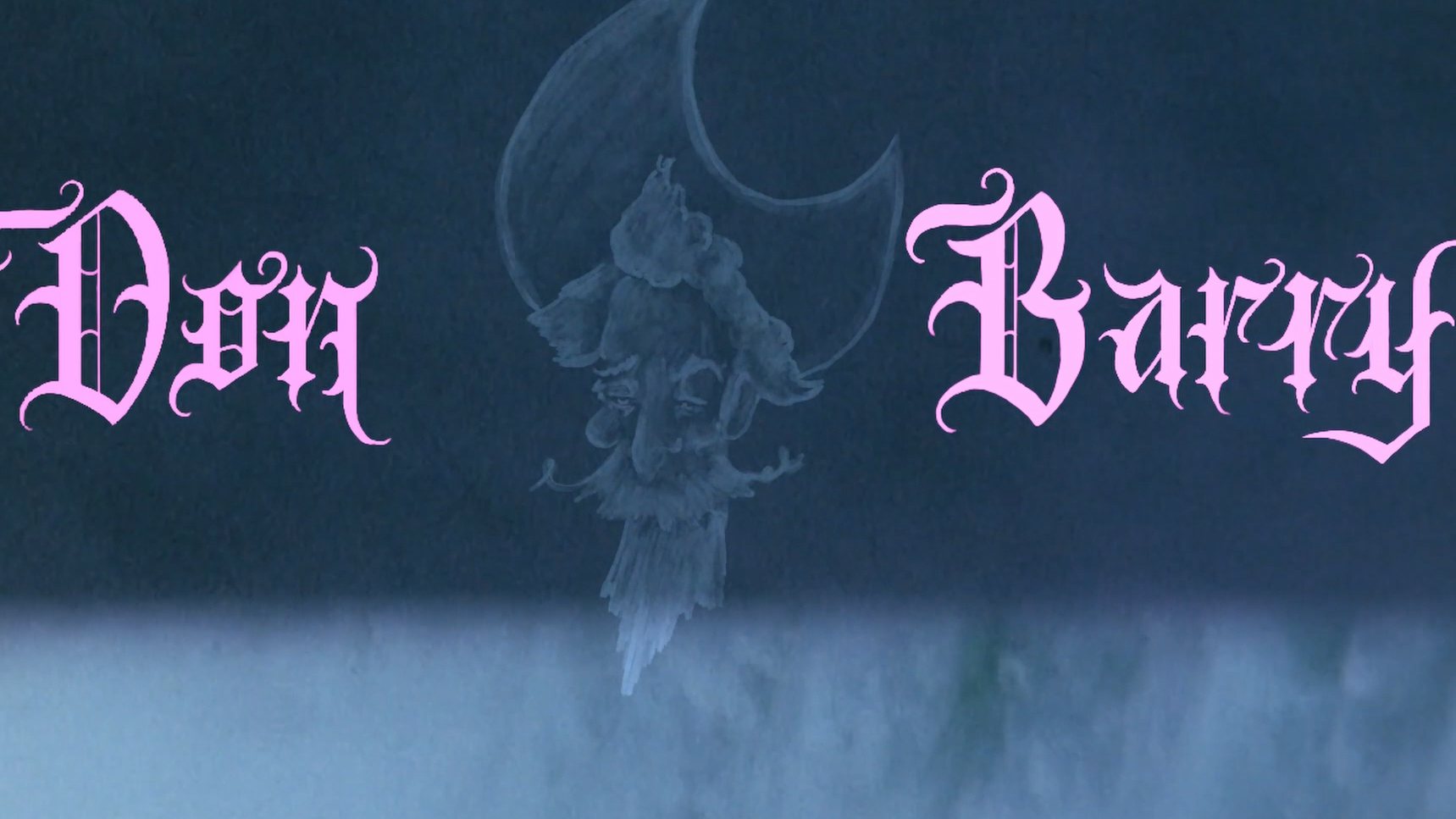
Docufiction, Experimental, by Paul Smart, Mexico, 2026.
Don Barry: A Quixotic Exploration is a debut feature that places the biography of an eighty-year-old experimental filmmaker and artist, Barry Gerson, within the metanarrative of Miguel de Cervantes’ Don Quixote. Don Barry was filmed in the city of Guanajuato during the 51st edition of the Cervantino Festival, as well as during the vibrant Day of the Dead celebrations held in the city’s UNESCO-listed tunnels. The film honors the director’s long friendship with artist Barry Gerson, drawing inspiration from Cervantes’ Don Quixote. Paul Smart’s directorial choices create something new that celebrates life and goes beyond conventional storytelling. A search for magic in our real lives. A moving film about the meaning of life, art, and death. Not to be missed.
Paul Smart is a proud outsider filmmaker with a long history of film screenings. In the 1980s, he emerged in New York’s vibrant youth art scene, working in theater production and later filmmaking, before retreating to rural upstate New York, in the Catskill Mountains, where he made a living writing and screening independent films in old parish halls for rural audiences, many of whom had never seen a film.
LANGUAGE: English
SUBTITLES: Spanish, French, German, Portuguese
Born Into Fire, Educated by Loss
He was born in 1883 in Ciudad Guzmán, in the volcanic western state of Jalisco, a landscape that seems designed by geological accident to produce a particular temperament — terrain scarred by eruption, hardened into something permanent and unyielding. The ground there does not invite sentimentality. Neither, eventually, would he.
As a child his family moved to Mexico City, and it was there, walking past a printshop on his way to school, that something decisive happened to him. Not a revelation in the religious sense, not an epiphany with light coming through clouds, but something more corrosive and lasting: he stopped and watched an old man carve images of dancing skeletons, skulls dressed in bourgeois hats, death wearing the costume of respectable society and grinning back at it. The imagery was not meant to terrify. It was meant to expose. The printmaker, José Guadalupe Posada, worked in a tradition that refused to separate beauty from decomposition, festivity from mortality, the decorative surface from the rotting thing beneath it. The boy who stood watching absorbed something that no formal education could have taught him: that ornament is always a form of concealment, and that the first obligation of an image is to refuse the lie of prettiness.
This is not a minor biographical detail. It is the foundation of an entire visual philosophy, and it preceded by decades everything he would later paint on walls.
Then, at twenty-one, he lost his left hand. The accident involved gunpowder — accounts vary in their specifics, as accounts of violent moments tend to do — and the result was an amputation that ended any conventional future he might have imagined. What it did not end, and what it perhaps paradoxically clarified, was his relationship to making. He was right-handed; he continued to draw. But the body had been permanently altered, and with it something in the cognitive and emotional architecture of the man.
Nietzsche, writing in the late 1880s in the notebooks that would become “The Will to Power,” described the revaluation of values not as a philosophical exercise but as a lived catastrophe — the collapse of a framework that once organized experience, followed by the terrible freedom of having to build another. He was not speaking abstractly. He understood that the person who survives the destruction of what they believed themselves to be is not the same person who existed before, and that this is not a tragedy but a condition. The loss does not produce wisdom automatically. What it produces is an irreversibility: you cannot return to the shape you had. You are forced into a different relationship with your own perception.
What Orozco lost was not just a hand. He lost the comfortable assumption that the body is stable, that the self persists in the form in which it began, that the future resembles the past in its essential contours. He was twenty-one years old, and the world had shown him its indifference with precision. The question was not how to recover from this. The question, which would take decades of painted walls to even begin answering, was what kind of seeing becomes possible once you have stopped expecting protection.
There is a figure in one of his later murals — a man stripped of flesh on one side, fully muscled on the other, caught in the moment between what was and what remains — that carries the unmistakable quality of self-knowledge. Not self-pity. Not heroism in the sanitized sense. Something colder and more honest: the gaze of someone who has already measured the distance between the body’s vulnerability and the image’s permanence, and chosen, without consolation, the image.
Posada had taught him to distrust the beautiful surface. The accident taught him to distrust the surface of the self.

The Mexican Muralist Movement and Its Seductions
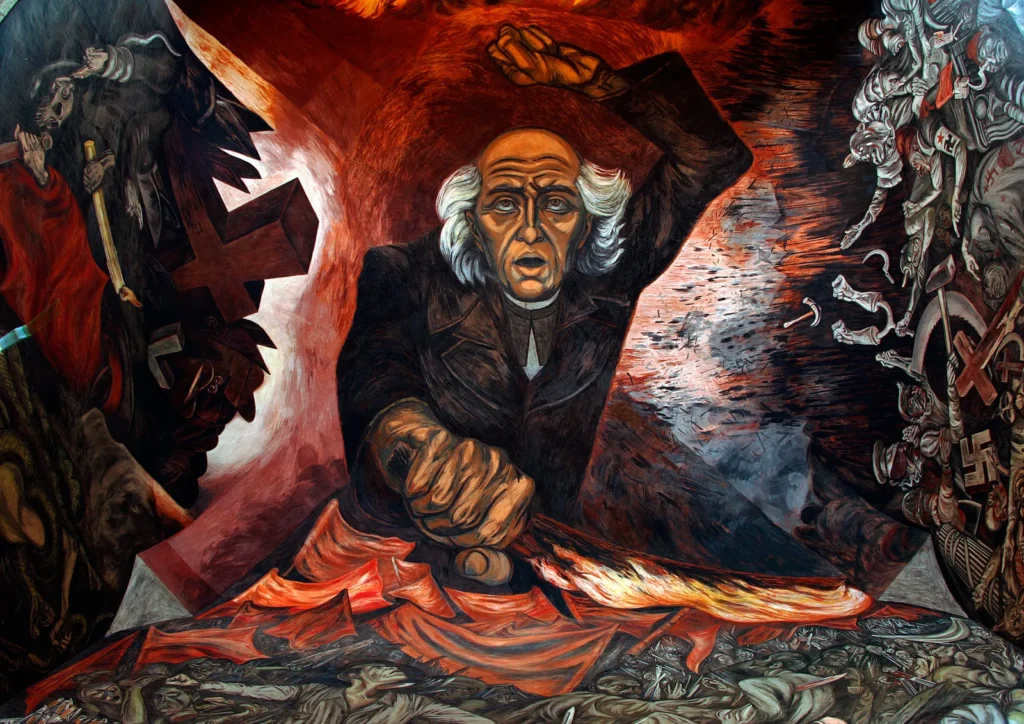
The ministry building is freshly whitewashed, the scaffolding still trembling from the weight of the last artist who climbed down. The government official who commissioned the work stands below, inspecting the preliminary sketches with the satisfied expression of someone who has just discovered that beauty can be useful. This is Mexico City, 1921, and José Vasconcelos, the newly appointed Secretary of Public Education, has understood something that rulers have always understood before their subjects do: that a wall painted with the right images is worth a thousand speeches, because people will look at it even when they are not trying to listen.
Vasconcelos called it the cosmic race, the raza cósmica, a grandiose synthesis of indigenous and Spanish blood that would produce a new civilization superior to all previous ones. He published the theory in 1925, but he had already begun building its visual architecture years earlier, commissioning murals for public buildings, schools, stairwells, corridors — spaces where the ordinary person could not avoid the image. He brought in Diego Rivera, whose enormous panels unfolded like illuminated manuscripts for a secular faith, lush and encyclopedic, transforming pre-Columbian civilization into a golden age and the Revolution into its inevitable fulfillment. He brought in David Alfaro Siqueiros, whose fists were as political as his brushes, who wrote manifestos calling for a monumental public art serving the working class and then painted with the aggressive certainty of someone who has never doubted anything in his life.
Antonio Gramsci, writing from a Fascist prison cell in roughly the same years, was mapping precisely this terrain. Cultural hegemony, as he articulated it across those notebooks that would not be fully published until 1947 and 1948, describes the process by which a dominant group maintains power not primarily through coercion but through the manufacture of consent — by making its own worldview appear as common sense, as natural, as the only possible way of seeing. The genius of Gramsci’s insight is that it applies with equal force to revolutionary governments and conservative ones. The mural, the national epic, the celebration of the people’s struggle: all of these can function as apparatus, as the aesthetic dimension of a new authority establishing itself. Radical iconography does not automatically escape this logic. Sometimes it is the most efficient vehicle for it.
Orozco accepted the walls. He climbed the scaffolding, mixed the plaster, ground the pigments. He was part of the movement in every practical sense. But he refused the gospel with a consistency that must have been maddening to those around him. Where Rivera painted the pre-Columbian world as paradise and the Spaniards as unambiguous destroyers, Orozco painted the Conquest as tragedy without heroes — the conqueror brutal, yes, but the indigenous world itself already caught in cycles of ritual violence and sacrifice. Where Siqueiros painted the proletariat with the clean lines of inevitability, Orozco painted suffering that did not resolve into triumph, figures contorted by forces larger than ideology could name.
His early murals at the National Preparatory School in the early 1920s were attacked, literally — students who expected revolutionary celebration defaced sections of his work because it refused to celebrate. He was too dark, too ambivalent, too unwilling to sort humanity into the categories that a political program requires. The movement needed its images to do work, and Orozco’s images kept doing something else — kept insisting on the complexity that mythology, by definition, must suppress.
This is not the position of a cynic or a reactionary. It is the position of someone who has looked at history long enough to stop believing that changing the uniforms changes the violence underneath, and who cannot bring himself to paint what he does not believe, even when the commission is signed and the wall is ready and everyone else has already begun.
Prometheus Unbound and Unbeautiful
There is a moment in Claremont, California, in the dining hall of a small liberal arts college, where you look up and realize the ceiling is trying to warn you about something. Not inspire you. Not comfort you. Warn you.
The Prometheus that Orozco painted at Pomona College in 1930 — his first major commission in the United States, the first fresco painted in North America by a Mexican muralist — is not the Prometheus you were taught to admire. He is not the noble rebel of Romantic poetry, not the defiant hero chained to his rock with his chin raised toward a just horizon. He is a body in extremis, enormous and contorted, his muscles not celebrating power but describing its cost. His face is not triumphant. It is something closer to a scream that has exhausted itself into a grimace. And the humans gathered below him do not reach upward with gratitude. They shrink. They turn away. Some cover their faces.
This is the detail that most viewers absorb without quite knowing what to do with it. The gift is being refused.
Albert Camus, writing in 1942 in The Myth of Sisyphus, made an observation about the Promethean condition that most classical readings deliberately skirt: that the figure who brings light to human beings does not thereby make them free. He makes them responsible. And responsibility, when it arrives without preparation, without the comfortable scaffolding of inherited belief, registers first not as liberation but as terror. Camus understood revolt as the only honest response to an absurd world, but he never confused revolt with salvation. The fire does not save you. It illuminates what you have been avoiding looking at.
Orozco understood this before he had the philosophical vocabulary for it, or perhaps he understood it precisely because he had lived through a revolution that promised everything and delivered ruin. He had watched the Mexican Revolution consume itself in exactly this way — the liberating gesture transforming into the liberating tyranny, the fire that was meant to warm becoming the fire that burns the house down. By the time he stood in that Pomona dining hall in 1930, mixing his pigments and pressing them into wet plaster, he was painting from inside that knowledge.
Hannah Arendt, in The Human Condition published in 1958, drew a distinction that illuminates what Orozco was doing with this myth. She separated labor, work, and action — the last being the only realm in which genuine human freedom is possible, and also the realm most characterized by irreversibility and unpredictability. To act, for Arendt, is to begin something whose consequences you cannot control. The Promethean gift is precisely this: not a solution, but an initiation into consequences. You receive the fire and immediately you are implicated. You cannot unknow what you now know. You cannot return to the darkness that was, at the very least, familiar.
The grotesque quality of Orozco’s Prometheus is not a stylistic failure or a cultural preference for expressionist distortion. It is a philosophical position rendered in fresco. Beauty, in this context, would be a lie. Beauty would suggest that the gift is clean, that the exchange is worth the cost, that the story has a shape you can live inside comfortably. Orozco refuses that comfort with the same deliberateness with which he mixes his palette away from any color that soothes.
The humans who shrink from the fire are not cowards in the painting. They are honest. They recognize, at some animal level, what is being asked of them. Not worship. Not gratitude. Something far more demanding: the obligation to carry what they are being given, to become the kind of creatures who can bear illumination.
And the Titan above them does not look like he believes they will rise to it.
Dartmouth, the Epic of American Civilization, and the Unmasking of Progress
There is a wall you stand before and feel accused. Not judged in the moral sense, not summoned to repent, but accused in the deeper sense: confronted with something you believed without knowing you believed it, a story you inherited so completely that it never occurred to you to call it a story. The wall at Dartmouth’s Baker Library does this. It runs the full length of the reading room in a sequence of panels that Orozco completed across two years, from 1932 to 1934, and it does not offer you a narrative so much as it dismantles one.
The cycle is called the Epic of American Civilization, and the title is already a trap. You expect epic in its consoling sense: ascent, achievement, the long march from darkness toward light. What you find instead is a systematic autopsy of that march. The ancient world of Mesoamerica appears first, dense with ceremony and agricultural dignity, a civilization operating on terms entirely its own. Then the Spanish arrive. Cortés stands in steel and arrogance, and the continent does not welcome a new chapter — it fractures. What follows is not progress but mutation, a grotesque transformation in which the logic of domination absorbs everything it touches, including the dominated, including the forms of resistance.
The panels depicting the mechanization of labor are among the most physically uncomfortable images in twentieth-century mural painting. Figures are not crushed by machines in some obvious propagandist tableau — they are absorbed into them, their movements synchronized with gears and pistons until the boundary between worker and apparatus dissolves entirely. This is not a scene of oppression from outside. It is the portrait of a system that has already won, that has colonized the gestures and rhythms of the body itself. Orozco understood what the Frankfurt School was beginning to articulate in the same years: that industrial capitalism does not merely exploit labor, it reorganizes the human being from the inside.
But it is the Christ panel that stops you entirely. A colossal figure raises an axe and brings it down on the cross itself, demolishing the instrument of his own mythology. The surrounding pile of debris contains the ruins of every ideological edifice Western civilization has built to sanctify its violence — the church, the state, the idea of sacrifice redeemed by meaning. This is not blasphemy in the cheap sense. It is a philosophical proposition executed in pigment and plaster: that the symbols invented to give suffering meaning have become the most efficient tools for producing more suffering.
Walter Benjamin wrote his Theses on the Philosophy of History in 1940, six years after Orozco finished these panels, but the two men were thinking in the same seismic register. Benjamin’s ninth thesis describes a painting by Paul Klee — an angel with its face turned toward the past, eyes wide, mouth open, wings caught in a storm that blows it backward into the future while the wreckage of history accumulates at its feet. Benjamin calls this storm progress. The angel cannot close its wings, cannot stop, cannot turn around to face what is coming. It can only watch the debris pile higher.
Orozco had painted this angel before Benjamin named it. His entire Dartmouth cycle is a portrait of that terrible backward-facing flight, the accumulation of ruin that the official story calls civilization. The difference is that Orozco’s vision refuses even the elegy Benjamin allows. There is no angel here with a face capable of grief. There are only the gears, the ruins, the axe still mid-swing, and the reader sitting beneath all of it at a library table, presumably surrounded by books that have been explaining for centuries why the storm was worth it.
A vision curated by a filmmaker, not an algorithm
In this video I explain our vision
The Body in Pain as Political Statement

There is a man walking through a corridor of offices, holding a small body wrapped in a blanket. He stops at each desk. He is told to wait, to fill out a form, to return tomorrow. The child in his arms has been dead for hours. The bureaucrats are not cruel — that is the unbearable part. They are simply doing their jobs, processing a world in which his grief is one more item requiring documentation. He keeps walking. Nobody looks at the bundle in his arms for more than a second.
Orozco painted that man. Not that specific man, not that specific corridor — but the moral universe they inhabit is precisely the one his murals refuse to abandon. His bodies do not transcend their suffering. They do not rise toward allegory or dissolve into symbol. They remain stubbornly, grotesquely physical: limbs severed at angles that violate proportion, faces collapsed into expressions that have moved past anguish into something wordless, torsos stripped of everything that culture uses to dignify the human form. This is not expressionist excess, and to read it as such is to miss the epistemological argument buried inside the image.
Elaine Scarry, in The Body in Pain published in 1985, made the claim that physical suffering is the experience that most resists language, that it unmakes the world of the person who endures it while remaining invisible to everyone standing outside it. Pain, she argued, does not share its interior with ideology. You can narrate a revolution. You can mythologize a massacre. You can rewrite the meaning of a war across three successive governments and have schoolchildren memorize all three versions. But the nerve ending does not negotiate with the state. The body in agony is the one site where political language arrives and finds itself useless.
Orozco understood this before Scarry named it. His great cycles — the murals at the Hospicio Cabañas completed between 1938 and 1939, the Dartmouth panels from the early 1930s, the work at the Escuela Nacional Preparatoria — are full of figures whose suffering functions precisely as Scarry describes: as something that cannot be incorporated into any triumphalist narrative, Mexican nationalist or otherwise. Where Diego Rivera found in the indigenous body a vessel for historical meaning, a carrier of collective dignity and revolutionary promise, Orozco found a body that had been used up by history and left without compensation. The difference is not stylistic. It is a disagreement about what painting is for.
A soldier returns to his village after years away. The people there look at him strangely. Not with hostility — with a kind of gentle incomprehension, as though he has become a foreigner in a language he still technically speaks. The village has reorganized itself around his absence. His face does not fit the story anyone is currently telling. He walks through streets that remember him in a way that cannot help him. This is the particular loneliness that Orozco renders: not the loneliness of isolation but the loneliness of being present and unreadable, of carrying an experience that the social world has no grammar to receive.
His figures arrive at the viewer with that same quality. They demand to be looked at without the comfort of meaning. Sociologist Didier Fassin, in his work on humanitarian reason, has described how modern institutions convert suffering into a narrative of victimhood that ultimately serves the institution more than the sufferer — the pain is acknowledged, categorized, and thereby neutralized. Orozco’s painted bodies resist exactly this operation. They are not victims awaiting our compassion. They are evidence. Evidence of what happens when the body is handed over to an idea — any idea, revolutionary or reactionary, sacred or secular — and the idea turns out not to care whether the body survives.
The man with the dead child is still walking down that corridor. Nobody has yet looked at what he is carrying and understood it as a question addressed to them personally.
Guadalajara and the Apocalypse That Doesn’t Resolve
There is a moment when you stand beneath a dome and the ceiling stops being architecture. It becomes pressure. The space above you is no longer empty but weighted, active, falling toward you without moving. That is what happens inside the former orphanage on the edge of Guadalajara’s historic center, in a building that housed abandoned children for over a century before the state decided it deserved to be called a monument. You walk in expecting grandeur. What you get is something closer to vertigo.
The figure at the apex of the cupola is a man on fire. Not burning toward death, not ascending toward salvation. Simply burning, arms spread, the flames his only atmosphere, his body the center of a catastrophe that shows no intention of resolving itself. Orozco completed this in 1939, the year Europe folded into war, the year the Spanish Republic collapsed under the weight of international indifference. He had been working on the Hospicio Cabañas cycle for two years by then, covering nearly twelve hundred square meters of wall and vault with figures that do not tell a story so much as inhabit a condition. The man at the top is not an ending. He is a suspension.
Paul Virilio, writing decades later in The Aesthetics of Disappearance, argued that modern perception is structured around what he called the accident — not the catastrophe as interruption but as revelation, the moment when the underlying logic of a system becomes visible precisely through its failure. Orozco seems to have understood this before the vocabulary existed. The man of fire does not symbolize destruction as punishment or purification. He embodies the state of being inside historical time without the luxury of distance. He cannot see what you see looking up at him. He is in it.
This is the sharpest divergence from the muralist tradition Orozco nominally shared. Rivera’s great cycles at the Palacio Nacional move through time with narrative confidence, the suffering of the pre-Columbian past resolved into the liberatory arc of socialist modernity. History there has a direction. You stand before it as a reader before a story with a known ending. The Hospicio Cabañas offers no such comfort. The figures below the dome — the conquistadors in their iron abstraction, the indigenous forms crushed and resurgent and crushed again, the priests wielding cross and sword with equal bureaucratic efficiency — do not point toward resolution. They circle. They return. They press against each other without synthesis.
György Lukács, in The Theory of the Novel published in 1916, described the novel as the art form of a world abandoned by God — not a tragic world, which would at least have the dignity of coherent doom, but a dissonant one, where meaning is sought without guarantee of being found. The epic hero moved through a world whose totality was given in advance. The modern protagonist moves through a world that withholds its shape. Orozco painted that withheld shape onto a ceiling meant to shelter children who had already been abandoned once. There is nothing accidental about that location. The building’s history is part of the argument.
The murals at the Hospicio Cabañas do not ask you to believe in anything. They do not offer the consolation of ideological faith or the relief of aesthetic beauty held at a safe distance. They put you inside the same uncertainty as the figures populating the walls. You look up at the burning man and you do not know whether what you are witnessing is annihilation or transformation, because Orozco refuses to separate them. He painted from within historical time, not above it, with the same incomplete information available to anyone living through events whose meaning will only become legible, if at all, to someone else, later, elsewhere.
What Orozco Knew That We Keep Forgetting
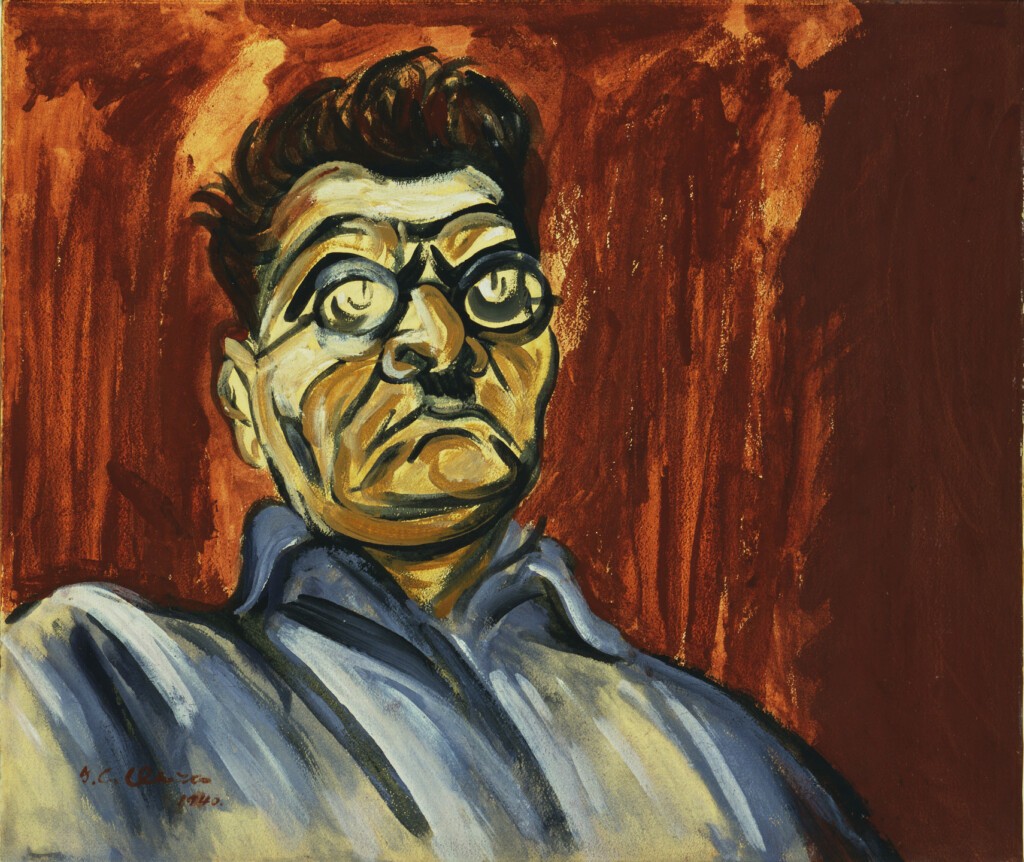
He died in September 1949, in Mexico City, with paint still under his fingernails in the way that only happens when someone has never really stopped working. The murals he had been completing in the Palace of Fine Arts were not finished in the triumphant sense — they were finished in the sense that the man who made them ran out of time, which is a different thing entirely. He was sixty-five years old, and he had spent the last decades of his life covering walls with images that nobody asked for and everybody needed, images that refused to behave like monuments.
The question of why his name sits in a slightly dimmer light than Rivera’s or Siqueiros’s is not simply a matter of taste. Pierre Bourdieu spent much of his career — most systematically in Distinction, published in 1979 — demonstrating that aesthetic preference is never innocent, never merely personal. What we say we love in art is inseparable from what we need art to do for us socially, psychologically, ideologically. We love art that confirms what we already believe about ourselves and our direction of travel. We love art that tells us the story of where we came from in ways that make where we are going feel inevitable and good. Rivera understood this with the instinct of a natural politician. His murals are enormous, gorgeous, pedagogical. They organize history into a procession. They give the viewer a place in the story, a role, a destiny. Standing before them, you feel recruited.
Orozco never recruited anyone. A man watches a line of soldiers march past him in the dark, and there is nothing in his face that resembles pride or hope — only the particular exhaustion of someone who has seen this before and knows how it ends. A figure reaches toward a horizon that the composition itself makes unreachable, the geometry of the wall working against the gesture, the architecture of the painting undoing the ambition it depicts. These are not images designed to make you feel capable of progress. They are images designed to make you feel the full weight of what you are carrying.
This is what makes Orozco difficult to celebrate in the way institutions prefer to celebrate. Bourdieu argued that the sociology of cultural distinction operates precisely through the exclusion of discomfort — we elevate the works that allow us to perform our sophistication without threatening our complacency. Orozco’s work threatens complacency the way a mirror in bad light threatens vanity. You cannot hang a reproduction of his Prometheus on a wall and feel good about your politics. You can only feel seen, and seeing is not always what we wanted when we walked into the room.
The muralists were supposed to be the artists of collective redemption. The Revolution had promised transformation, and the walls of the new Mexican state were supposed to carry that promise upward into image. Rivera delivered. Siqueiros, for all his violence of technique, delivered a version of it too — his forms hurl themselves forward, toward something, even when that something is unclear. Orozco kept asking what the promise was made of, kept pressing his brush into the plaster at the exact point where the collective dream touched the individual body and found them incompatible.
What he knew — and what the walls of the Palace of Fine Arts still hold in the specific silence of painted stone — is that history does not redeem. It repeats, it mutates, it wears new faces over old gestures. He knew that the fire consuming the figure and the fire illuminating the figure are often the same fire. He knew that the most honest thing an artist can do is refuse to look away from that fact, even when the refusal costs him the affection of the people who control which names endure.
Standing before his walls now, you do not feel uplifted. You feel recognized, which is the older and more serious gift.
🎨 Art, Revolution, and the Muralist Vision
José Clemente Orozco painted the walls of history with fire and fury, channeling social upheaval into monumental imagery that challenged power and awakened conscience. His work did not exist in isolation — it drew from deep currents of myth, esoteric symbolism, and the radical reinvention of the self. These related articles illuminate the broader intellectual and artistic world that shaped and echoes Orozco’s revolutionary spirit.
Masterpieces of Rebellion and Counterculture Cinema
Orozco’s murals were themselves acts of rebellion, confronting political elites and colonial legacies with raw visual power. This collection of counterculture cinema shares that same defiant energy, celebrating works that refused to conform to dominant narratives. Like Orozco, these films use their medium as a weapon against complacency and conformity.
GO TO THE SELECTION: Masterpieces of Rebellion and Counterculture Cinema
The Avant-Garde Cinema: Movies to Watch
The avant-garde impulse that drove Orozco to shatter academic conventions in Mexican painting finds a powerful parallel in the history of experimental cinema. This guide explores films that broke the rules of representation, just as Orozco dismantled the comfortable aesthetics of his era. Both movements understood that true art must disturb before it can illuminate.
GO TO THE SELECTION: The Avant-Garde Cinema: Movies to Watch
Universal Consciousness
Orozco’s later murals, particularly his apocalyptic visions at Hospicio Cabañas, resonate deeply with ideas of universal consciousness and collective human destiny. This article explores the philosophical dimensions of a shared spiritual awareness that transcends individual identity. It offers a framework for understanding why Orozco’s imagery continues to feel both personal and cosmically vast.
GO TO THE SELECTION: Universal Consciousness
The Unconscious and its Relationship With Cinema
Orozco populated his murals with archetypal figures — the oppressor, the martyr, the revolutionary — that speak directly to the language of the unconscious mind. This article examines how cinema, like monumental painting, serves as a mirror for the hidden forces that shape human behavior and history. Understanding the unconscious deepens our reading of Orozco’s most haunting and enigmatic compositions.
GO TO THE SELECTION: The Unconscious and its Relationship With Cinema
Discover Independent Cinema on Indiecinema
If the visionary power of Orozco’s art has stirred something in you, Indiecinema streaming is the place to follow that spark. Our curated selection of independent and world cinema brings you films that share his courage, his depth, and his refusal to look away from the human condition. Explore the catalog and let the screen become your wall of murals.
👉 EXPLORE THE CATALOG: Watch Indie Films in Streaming
A vision curated by a filmmaker, not an algorithm
In this video I explain our vision

