
The Family at the Door
You are already inside before you realize the door was never locked. The living room arranges itself around you with the confidence of a stage set: a couch worn soft by years of bodies, framed photographs ascending the staircase wall in that particular American grammar of chronological pride, a smell of something baked not quite recently enough still drifting from the kitchen. The father sits in a chair with the specific posture of a man who has always sat in that chair, who has in some cellular sense become that chair. He turns to look at you, and his smile arrives a half-second after his eyes do.

That delay — unmeasurable, almost nothing, the span of a hummingbird’s wingbeat — is the first crack in the plaster. You don’t name it. You file it somewhere beneath language, in the part of the nervous system that predates speech, the part that has been scanning faces for threat since before your species had a word for threat. The wife brings something to the table. Her movements are correct in every technical detail: the angle of the wrist, the hospitable tilt of the head, the warmth distributed evenly and without remainder across her expression. And yet you find yourself calculating the distance to the door.
This is what American horror has understood, at its most structurally honest, for most of the twentieth century and well into the twenty-first: the family unit is not the refuge from the monster. It is the monster’s preferred architecture. Not because families are inherently malevolent, but because the form itself — the enclosed domestic circle, the hierarchy of care that doubles as a hierarchy of control, the love that carries within it an unspoken demand for loyalty — creates precisely the conditions in which violence becomes invisible. The frame makes the picture. And when the frame is family, we keep reinterpreting the picture long after we should have put it down and walked away.
There is something specific to the American version of this horror that distinguishes it from, say, the Gothic European tradition, with its ruined castles and aristocratic decay, its horrors located safely in the past and the class above. The American haunted house is almost always a ranch home, a colonial revival, a craftsman bungalow — architectural forms that promise modernity, sanity, the forward motion of a nation that does not carry its history on its face. The horror is not in the ruin. It is in the renovation. It is in the family that bought the property at a reasonable price and painted the shutters and cannot understand why nothing feels right, why the children wake screaming, why the father’s hands seem less like his own each morning.
That image of the father’s hands is not incidental. The body that perpetuates domestic violence in American horror is almost always a body that has itself been colonized — by a house, by a lineage, by a history that was never processed and never named, only inherited and passed forward with the silverware and the silence. The horror does not arrive from outside the family. It surfaces from inside the family’s own sediment, from everything the family agreed collectively not to examine. This is why the monster in these stories so often looks like someone you love. Because functionally, structurally, in terms of what it wants from you and what it will take if you don’t give it willingly, it is.
The child in the upstairs bedroom knows this before any adult in the story will admit it. Children in American horror function as the narrative’s truth-telling organ, not because they are innocent in any romantic sense, but because they have not yet learned to perform the not-knowing that adults have spent decades perfecting into an art form so refined it no longer feels like performance at all.
Spider Baby
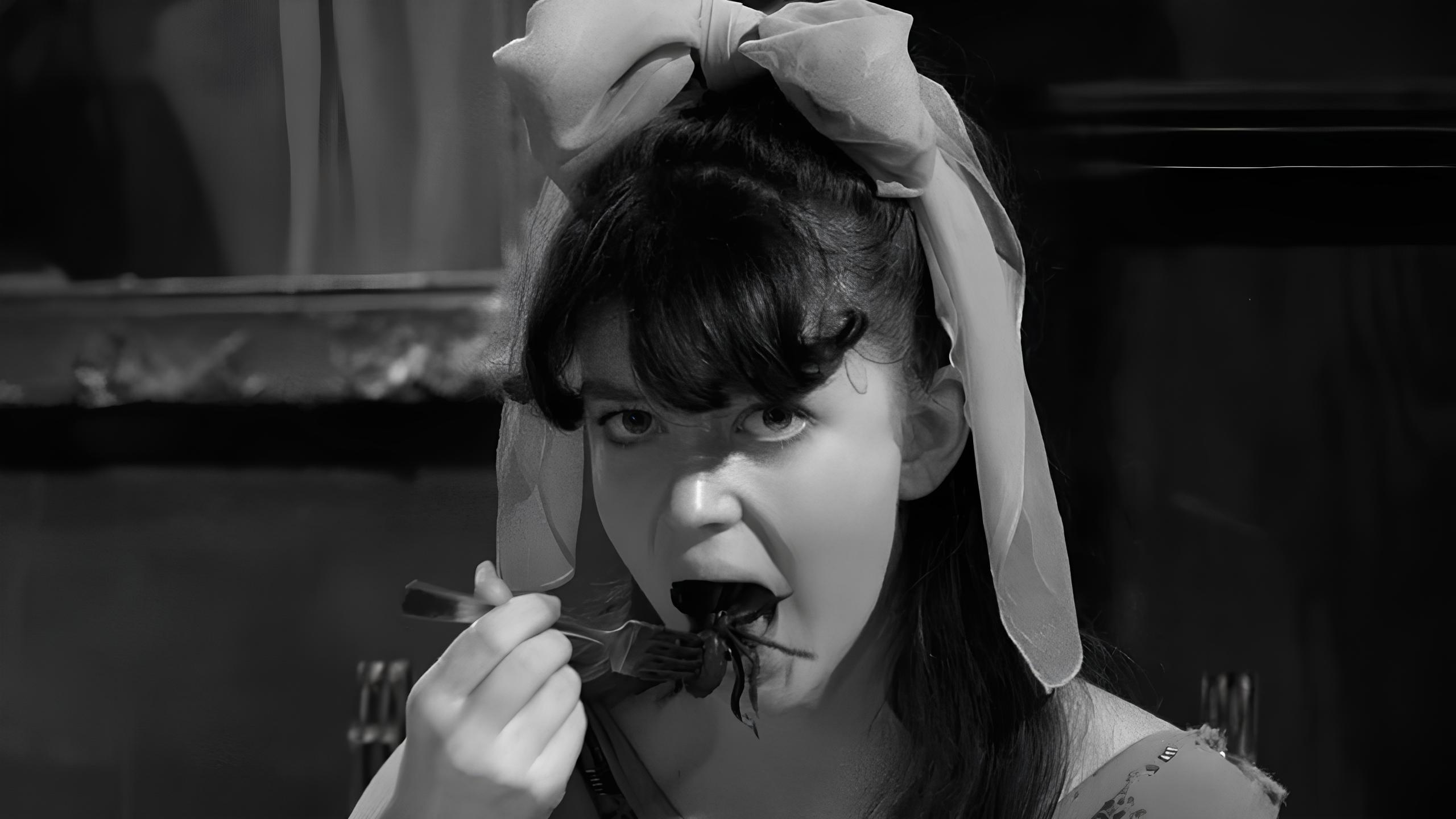
Horror, comedy, by Jack Hill, United States, 1967.
Spider Baby is a grotesque cult horror film that tells the story of the Merrye family, affected by a genetic disease that causes mental regression and feral behavior as they grow older. In an isolated house live Baby, her sisters, and the affectionate caretaker Bruno (Lon Chaney Jr.), who tries to contain their madness when unsuspecting guests arrive. The film mixes a gothic atmosphere, dark humor, and surreal tones, creating a disturbing yet almost fairy-tale world, a bizarre blend between classic horror and morbid comedy. Chaney delivers a surprisingly touching performance, and the direction manages to turn a tiny budget into a unique experience.
Spider Baby is an important cornerstone of American independent cinema: ironic, macabre, melancholic, and unconventional. Spider Baby is an experience that does not rely solely on fear, but plays with the theme of the “monstrous family” to talk about isolation, diversity, and decay, becoming over time a beloved cult title for those who seek a different kind of horror — deformed, grotesque, and unsettling at the same time.
LANGUAGE: English
SUBTITLES: Spanish, French, German, Portuguese
When the Hearth Became a Cage
You are handed a house in 1947. Not metaphorically — literally. The Veterans Administration is offering low-interest mortgages, Levittown is rising out of Long Island potato fields at a rate of thirty houses per day, and the government, the advertisers, and the psychiatrists are all telling you the same thing: this is where safety lives. Inside these walls. With this woman. Raising these children. The lawn is the perimeter. Everything beyond it is the threat.
Elaine Tyler May’s 1988 study Homeward Bound mapped what she called “containment culture” — the domestic ideology that mirrored, with eerie precision, the foreign policy doctrine George Kennan had written into a 1946 cable. The same logic that proposed building walls around Soviet expansion proposed building walls around female sexuality, male anxiety, and the unruly energies of a society that had just watched two atomic bombs erase cities in seconds. The home became the psychological fallout shelter. The family became the unit of national defense. To be properly married, properly housed, and properly reproductive was not merely a lifestyle — it was a geopolitical act.
What this meant in practice was that the American family was loaded with a weight it had never been designed to carry. Sociologist Stephanie Coontz, writing in The Way We Never Were in 1992, documented the statistical reality: the 1950s nuclear family was not a natural arrangement emerging from centuries of tradition but a specific, historically brief, and artificially subsidized experiment — propped up by government spending, suburban infrastructure, and an ideological machinery that needed women out of wartime factories and back into kitchens before men came home to unemployment. The nostalgia that would later canonize this arrangement as the baseline of American normality was mourning something that had existed, at most, for fifteen years and had never been experienced equally across race or class.
The pressure sealed inside that arrangement had nowhere to go. The psychology of the period understood this even while feeding the fantasy — Erik Erikson in 1950 wrote in Childhood and Society about the psychic cost of identity foreclosure, the damage done when a person’s development is arrested by the demand to perform a role rather than become a self. He was describing individuals, but he was also describing a culture. The suburban home was, architecturally and psychically, a container — designed to keep things in as much as to keep things out. And containers, when overfilled, do not release pressure gradually.
Horror understood this before sociology had fully finished naming it. The genre’s gravitational shift in the late 1950s and early 1960s toward domestic spaces was not coincidental — it tracked the precise moment when the ideological cost of containment culture was becoming visible in the rates of suburban alcoholism, in the Miltown prescriptions filling pharmacies at the rate of thirty-six tons consumed in the United States in 1956 alone, in what Betty Friedan would name in 1963 as “the problem that has no name.” The uncanny quality that Freud had defined in 1919 as the frightening return of what should have remained hidden — das Unheimliche, crucially rooted in the German word for home — was not merely a psychoanalytic concept. It was an address. It had a zip code.
What the horror genre grasped instinctively was that the monster does not need to come from outside if you have built the outside into your walls. The family structured by containment culture was already organized around suppression — of women’s autonomy, of male vulnerability, of children’s individuality, of any desire that could not be domesticated into productivity or reproduction. The structure itself was the condition of the haunting. The cage was the hearth.

The Monster as Mirror
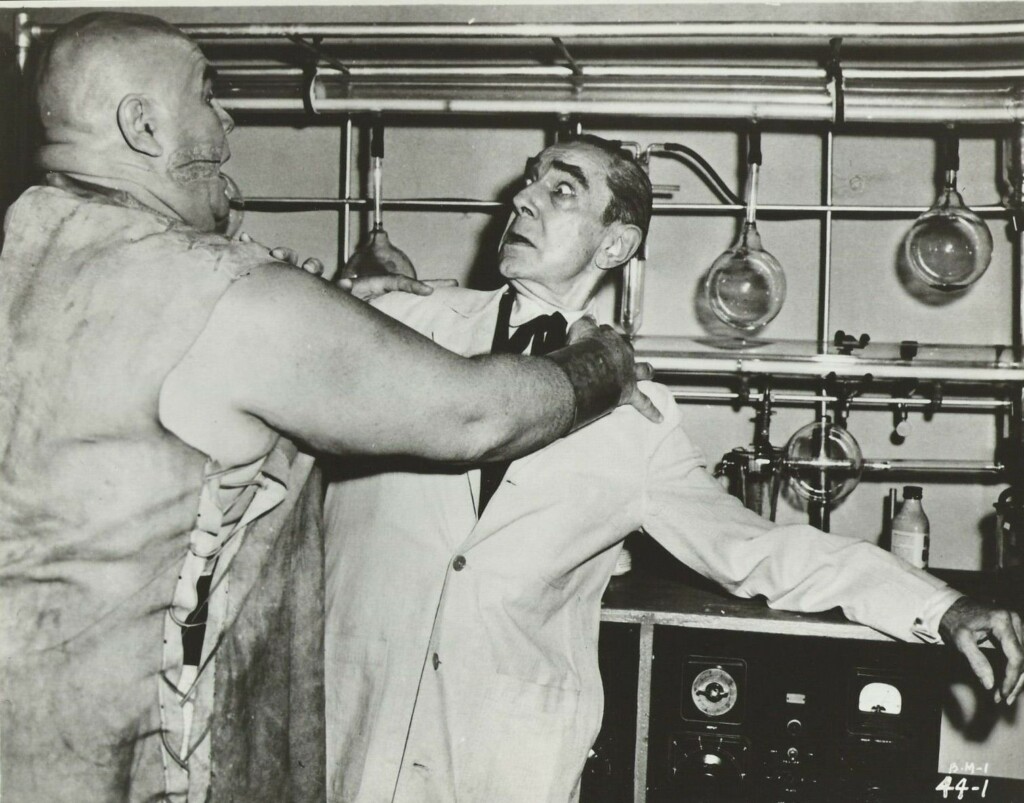
You are sitting at a Thanksgiving table that has been set with the precision of a ritual — the good china, the assigned seats, the unspoken prohibition against certain subjects — and somewhere beneath the performance of warmth you feel something that has no polite name. Not danger, exactly. More like the structural outline of danger, the shape of a thing kept carefully out of view.
Robin Wood published his landmark essay “An Introduction to the American Horror Film” in 1979, as part of the collection “American Nightmare: Essays on the Horror Film,” and what he articulated there was not a theory of monsters but a theory of households. His central argument borrowed from Freudian repression and rerouted it through Herbert Marcuse‘s concept of surplus repression — the excess of instinctual denial that capitalism demands beyond what civilization strictly requires. The monster, in Wood’s framework, is not an intrusion from outside the social order. It is the social order’s own discarded material, returned.
What makes this framework more than academic is the precision with which it maps onto the specific architecture of the normative American family as an institution. The family, in its postwar idealized form, is not simply a site of love. It is a site of hierarchy enforced through affection — where the father’s authority is naturalized as care, where the mother’s labor is framed as devotion, where the child’s obedience is shaped through the threat of emotional withdrawal. The violence in this structure is real, but it operates beneath a vocabulary that makes it invisible. It is disciplinary power wearing the grammar of tenderness.
The monster family in American horror does not invent a new structure. It strips the existing one of its vocabulary. The Firefly family in Rob Zombie‘s work, the Sawyer clan across multiple iterations of the Texas Chainsaw mythology, the Firefly compound where loyalty functions as a closed circuit — these are households organized around the same principles as any suburban unit: role differentiation, internal hierarchy, punishment for deviation, and the absolute primacy of family survival over individual conscience. The difference is that the softening language has been removed. What remains is the skeleton.
This is why the monster family is so consistently more unsettling than the solitary monster. A single creature can be explained as aberration, as the intrusion of the inhuman into the human world. But a family cannot. A family is, by definition, a social form. When it organizes itself around terror and consuming loyalty and enforced silence, it is not negating the idea of family — it is fulfilling a logic that was already latent inside it. The horror is not that the Leatherface family exists outside civilization. The horror is the recognition that the organizational principles are identical.
Georges Duby and Philippe Ariès, in “A History of Private Life,” traced across centuries how the domestic sphere became simultaneously a refuge from public violence and a theater for its private continuation — how enclosure intensified rather than ended the power dynamics it was supposed to shelter people from. The family home was never a neutral space. It was the space where power became personal, which is the most difficult power to name.
What horror cinema does with the monster family is make that naming unavoidable. When silence at the dinner table is enforced by the threat of real violence rather than social disapproval, the mechanism is exposed. When loyalty to kin overrides any external moral claim — not as an emotional reality but as an absolute law — the ideology embedded in phrases like “family comes first” becomes legible in a way it cannot be when the stakes are low enough to be ignored.
Wood understood that the monster returns because repression is never complete. But the more precise claim is that the monster family returns because the normative family never fully buried what it was.
Blood and Deed
You watch a mother press a damp cloth to her daughter’s forehead in a basement room with no windows. The girl has been sick for three days, or perhaps longer — time in that house moves at a different speed than outside it. The mother speaks in low tones, brings broth, adjusts blankets, never leaves. She does not leave because she loves her daughter, and she does not leave because she cannot allow her daughter to leave, and somewhere in the architecture of that basement room, those two reasons have become the same load-bearing wall.
The philosophical tradition has a name for this collapse, though the name rarely makes it into conversations about horror. Georg Wilhelm Friedrich Hegel, in the Phenomenology of Spirit published in 1807, described the master-slave dialectic not as a relationship between enemies but as one born from a specific act of recognition — the need to be seen by another consciousness in order to fully exist as one. What makes the dynamic catastrophic is not cruelty but dependency. The master needs the slave’s recognition to confirm his own reality, which means the master is never free, only more elaborately imprisoned. The monster family operates on precisely this logic. The care is genuine. The captivity is also genuine. Neither cancels the other.
What American horror does with unusual surgical precision is place that dialectic inside the grammar of domesticity, where Western culture has historically hidden its most sanctioned forms of control. The family home was, for most of the nineteenth century, explicitly theorized as a separate sphere — a feminized interior governed by sentiment rather than law, by love rather than contract. Alexis de Tocqueville noted in Democracy in America in 1835 that American domestic life combined remarkable tenderness with remarkable confinement, particularly for women and children, and seemed not to notice the contradiction. Horror notices. It has always noticed. It simply makes the structure visible by pushing it past the point where the culture can maintain its comfortable reading.
The act of care inside a closed system cannot remain innocent because the system itself has already decided who counts as a subject and who counts as a resource. When the mother in that basement room smooths her daughter’s hair, she is transmitting something real — warmth, attention, a form of presence that the daughter’s body registers as safety. She is also, in the same gesture, communicating the terms of belonging: you are cared for here, which means you belong here, which means departure is a kind of ingratitude that rhymes with betrayal. The philosopher Simone Weil wrote in Waiting for God, published posthumously in 1951, that attention is the rarest and purest form of generosity. She meant it as praise. Horror asks what happens when attention becomes surveillance, when the gaze of love and the gaze of ownership operate through identical eye movements.
The monster family survives as a cultural image across generations not because audiences find it exotic but because they find it familiar in a way that disturbs them. The specific horror is not the gore or the mythology. It is the recognition that the family they grew up in, or the family they are building, runs on some of the same fuel — the traded debt of care, the unspoken ledger of sacrifice, the love that arrives already pre-formatted with expectations about what the beloved owes in return. David Cooper, the anti-psychiatrist who published The Death of the Family in 1971, argued that the nuclear family functions as a primary ideological apparatus precisely because it teaches domination through the vocabulary of intimacy before the child has any other vocabulary available.
The daughter in the basement does not scream. She drinks the broth. She lets her mother smooth her hair. She has been taught, through thousands of small kindnesses, that this is what it means to be loved, and she has no older memory to contradict it.
The Sociology of the Threshold
You have rehearsed the ritual so many times it no longer registers as performance: the drive back to your parents’ house for a holiday, the moment the car turns into the familiar street and something in your chest contracts, not with warmth but with a kind of anticipatory bracing, as though the body remembers what the mind has agreed to forget.
Erving Goffman spent years mapping the architecture of that contraction. His 1963 work on stigma described how social identity is constantly managed at thresholds — doorways, introductions, the moment of recognition where one world adjudicates another. But his earlier institutional analysis, developed in “Asylums” in 1961, located something more structurally violent: the total institution, a place that absorbs the self entirely, regulates sleep and hunger and speech, and presents itself as care while functioning as containment. Goffman was writing about psychiatric wards and prisons, but the domestic space he implicitly left alone was already shaped by the same logic. The family home, for millions of Americans, was a total institution that had never been named as one — its rituals of love indistinguishable from its mechanisms of control, its members trained to perform coherence for visitors while the interior grammar remained unspeakable.
Monster family narratives do not emerge randomly across American cultural history. David Skal, whose “The Monster Show” traced horror cycles against economic data with the precision of a forensic accountant, demonstrated that the great waves of monster cinema arrive precisely when the official story of American prosperity collapses loudest. The Universal monster cycle of the early 1930s was not merely a coincidence of studio scheduling — it erupted alongside unemployment figures that reached 25 percent by 1933, when the family as economic unit was being dismembered in real time by foreclosure, migration, and the dissolution of the male breadwinner myth that had organized domestic life for a generation. What the screen offered was not escape from that dismemberment but a coded vocabulary for it: bodies that transform without warning, households where something monstrous has been living undetected, the horror of discovering that the person you trusted with your survival has become something else entirely.
The 1970s reprised the structure with updated materials. The American family had just survived a decade of assassinations, a war that returned men home chemically altered and institutionally abandoned, and an economic contraction — the 1973 oil crisis, stagflation, the collapse of the postwar manufacturing consensus — that gutted the working-class household’s self-image as a site of safety and upward mobility. The films that defined horror in that decade moved the monster inside the house permanently. It was no longer arriving from elsewhere. It had been there, eating at the same table, sleeping in the adjacent room, and the horror was not discovery but confirmation.
Post-2008 horror completed the arc. The foreclosure crisis displaced eight million American households between 2007 and 2016, and the domestic space itself became legally unstable, a site of eviction notices and contested ownership — the home stripped of its metaphysical status as sanctuary and revealed as a financial instrument that could be recalled. The haunted house subgenre surged with a specificity that was almost documentary: families in houses they could no longer afford, trapped by underwater mortgages in spaces that had turned against them, the architecture itself hostile. The monster family narrative in this era didn’t need supernatural amplification because the material conditions had already provided the structure.
What Goffman’s framework adds to Skal’s historical arc is the mechanism of stigma management that keeps the performance alive even under maximum pressure. The family does not only suffer in private — it actively maintains a public face, coordinates its presentation to the outside world, polices the boundary between what can be shown and what must remain interior.
A vision curated by a filmmaker, not an algorithm
In this video I explain our vision
Whiteness, Property, and the Haunted Bloodline

You inherit the house before you inherit anything else. The deed arrives before the grief does, sometimes before the funeral is even arranged, and standing in the doorway of a place that smells of someone else’s life, you feel the full weight of what ownership actually means — not freedom, but obligation, not arrival, but conscription into a history you did not write and cannot fully read.
American horror has always understood this. The haunted house is not a building with a ghost problem. It is a legal document made flesh, a title deed that bleeds. What the genre encodes, with a consistency that goes well beyond accident or convention, is the specific terror of whiteness confronting its own inheritance — the moment a family discovers that what was passed down to them is not just property but the violence required to hold it.
Toni Morrison, writing in Playing in the Dark in 1992, argued that American literature is saturated by what she called an Africanist presence — a structuring darkness against which white identity defines itself, renders itself legible, makes itself feel coherent and real. The white imagination, she observed, requires a shadow to cast itself against. Horror, which Morrison did not address directly but which her framework illuminates with almost surgical precision, takes this logic and literalizes it: the shadow moves on its own now, it climbs the stairs, it knows your name, it was here before you arrived and it will remain after you leave. The haunting is the Africanist presence refusing to stay structural. It becomes actual.
The cursed bloodline functions as horror’s answer to a question American culture has never been willing to ask in daylight: what exactly did we inherit, and from whom was it taken? The family in these narratives is almost always white, almost always propertied, almost always arriving somewhere with papers that say the land is theirs. The supernatural intrusion is nearly always bound to the soil itself — something buried, something sealed in the foundation, something that preceded the family’s arrival and that the family’s arrival disturbed. The genre does not present this as injustice. It presents it as fate. And that displacement — from history into fate — is precisely where ideology does its most efficient work.
Property anxiety in the United States has a specific texture that European gothic simply does not share. In a country where land was expropriated through documented legal mechanisms, where titles were issued over erasures, where inheritance law was explicitly designed for centuries to prevent the accumulation of wealth across certain bloodlines while accelerating it across others, the idea that a house might turn on its owners carries a charge that is not metaphysical but deeply material. The 1862 Homestead Act, celebrated as democratizing, distributed approximately 270 million acres — ten percent of the total land area of the United States — with provisions that systematically excluded Black applicants even after emancipation, encoding dispossession into the very architecture of inheritance. The haunted house sits on that foundation. Not symbolically. Literally.
What makes the monster family so durable as a cultural form is its capacity to let white American audiences experience dispossession as supernatural horror without ever naming the mechanism. The family is threatened not by history — never by history — but by forces described as ancient, evil, inexplicable. The horror becomes a kind of absolution: if what comes for the family is a demon, then the family is not a beneficiary of theft but a victim of darkness. The genre offers terror as innocence.
And yet something in the form refuses full closure. The house always knew. The children were always going to find the room that was locked. The inheritance always carried the wound inside it, wrapped in the deed, the will, the family name passed forward like a debt that was never going to be forgiven because it was never going to be acknowledged.
The Child Who Must Not Speak
You are seven years old and you already know which version of yourself is allowed at the table. Not because anyone told you directly — the instruction came softer than that, embedded in a glance held a half-second too long, in the slight tightening around your mother’s eyes when you reached for the wrong word. You learned the grammar of survival before you learned to read, and you called it love because there was no other name available.
Alice Miller argued in 1979, in what she titled “The Drama of the Gifted Child,” that the most sophisticated damage done to children is not the damage they remember but the damage they perform — the self they construct with extraordinary precision to meet the emotional needs of the parent, the self that functions so fluently it passes for a personality. The child does not disappear. The child becomes a perfect instrument for someone else’s psychic economy, and mistakes this service for identity. Miller was writing about bourgeois families, about therapy patients who had achieved everything and felt nothing, but her mechanism fits the monster household with a clinical exactness that borders on the uncomfortable.
In American horror, the child inside the monstrous family occupies a position that conventional analysis tends to flatten into pure victimhood, which is the first error. These children are frequently the most competent members of the household. They read the room faster than the adults. They manage the emotional temperature, absorb the overflow, regulate the danger. When the family’s violence turns outward, the child is often its most fluent translator, its most reliable gatekeeper. Complicity and victimization are not opposite poles here — they are the same nerve, firing simultaneously, and the child cannot tell the difference because the difference was never offered to them.
What American horror understands, even when it cannot fully articulate it, is that this doubling is not pathological deviation from normal family life. It is an intensified version of an ordinary developmental process. The sociologist Norbert Elias traced, across his two-volume “The Civilizing Process” published in 1939, how the management of internal states — shame, disgust, aggression — was progressively transferred from external enforcement to self-regulation, embedded so early in development that it feels like nature rather than instruction. The monster family simply makes the instruction visible. The child who cannot speak of what happens inside the house is not a horror anomaly. The child who cannot speak of what happens inside the house is the historical norm, dressed in extreme costume.
The specific cruelty of this position is that silence is not imposed from outside like a lock on a door. It is generated from within, which is what makes it so difficult to name later. The child does not lie about the family. The child genuinely does not see it clearly, because the perceptual apparatus itself was built inside the family’s logic. This is precisely what Miller called the “false self” — not a mask worn over a real face, but a structure so foundational that removing it feels less like liberation and more like erasure. Horror films that take children seriously as characters are staging this epistemological crisis in real time: the child who begins to perceive something wrong about the household is not discovering an external fact. They are beginning to perceive themselves for the first time, and the two revelations are indistinguishable and equally terrifying.
What makes the horror-child legible to audiences across generations is not the supernatural pressure they are placed under — it is the recognition of the cognitive labor. The vigilance. The reading of adult faces as survival texts. The way love and fear share the same neurological address so completely that the child cannot locate the border between them, and by the time they are old enough to look for it, they have already taught their own nervous system to stop asking the question.
Inheritance Without Exit
You have been handed a map with no exits marked on it, and you spent years assuming the cartographer simply forgot to draw them.
The horror that refuses rescue is structurally different from horror that merely delays it. When the final girl runs, the genre implicitly endorses a world in which running is possible, in which the road outside the family property leads somewhere, in which institutions — a hospital, a police station, a neighboring town — exist as alternatives to the enclosed nightmare. Remove that possibility entirely, and something far more unsettling than fear emerges: recognition. Erving Goffman’s 1961 study of total institutions, Asylums, described how certain enclosed systems strip the individual of what he called the “presenting culture” they arrive with, replacing it incrementally with the logic of the institution itself. He was writing about psychiatric wards and prisons, but the mechanism he mapped is identical to what the most structurally honest American horror narratives have been depicting about domestic space. The family does not need walls and guards when it controls the formation of desire itself.
Sociologist David Halle, studying working-class households in the 1980s, found that the physical arrangement of domestic interiors encoded hierarchies so naturalized they were invisible to the people living inside them. Nobody chose the arrangement consciously; the arrangement had simply always been that way, which meant questioning it required questioning the legitimacy of one’s own perception. This is the epistemological trap at the center of certain horror lineages where children of monstrous families cannot name what is wrong with them because the vocabulary for naming it was never made available. Language itself belongs to the inheritance.
Orlando Patterson’s concept of “social death,” developed in his 1982 work Slavery and Social Honor, described a condition in which the enslaved person exists without recognized social ties outside the master’s will — no ancestry acknowledged, no posterity guaranteed, no horizontal bonds permitted. Patterson was not writing about horror cinema or the American family, but the concept arrives at the genre’s darkest rooms with alarming precision. The characters trapped inside monster families with no outside are socially dead in exactly this sense: their relationships to the broader world have been severed not by law but by formation, by the slow metabolization of captivity into identity.
What the liberal imagination consistently misreads in these narratives is its own assumption that individual agency precedes social structure rather than emerging from within it. The fantasy insists that a sufficiently determined person could simply leave, could choose differently, could see clearly enough to act. Pierre Bourdieu spent decades demonstrating in works from Outline of a Theory of Practice in 1972 through The Logic of Practice in 1990 that the dispositions which produce action are themselves products of the very fields they appear to act upon — meaning the person most thoroughly formed by a monstrous system is also the person least equipped to recognize it as monstrous. The horror is not the locked door. The horror is not wanting to try the door.
When American horror at its most rigorous refuses to provide a counter-institution, a rescuer, an outside, it is not being nihilistic. It is being sociologically precise in a way that the genre’s more consoling versions cannot afford to be. The monster family in these works is not the aberration that proves the rule of healthy domesticity; it is the concentrated, visible version of something ordinary American life keeps diluted enough to remain deniable. The inheritance moves through bloodlines not because of any mystical curse but because inheritance is precisely what socialization is — the transmission of a structure of feeling so total that it arrives in the next generation feeling like nature, feeling like character, feeling like the self one has always been and could never have been otherwise.
🕯️ Shadows and Symbols: Horror, Fear, and the Monstrous
The monster family in American horror does not emerge from a vacuum — it is woven from centuries of cultural anxiety, literary tradition, and symbolic imagination. To fully understand the archetypes that haunt the genre, one must trace the deeper roots of Gothic fear, the uncanny, and the mythology of terror that has shaped how societies process their darkest impulses.
Arthur Machen: Life and The Great God Pan
Arthur Machen‘s visionary horror fiction established a template for the monstrous as something ancient, hidden beneath the surface of the ordinary world. His novella The Great God Pan introduced a creature-force that defies domestication, a direct ancestor of the hybrid monsters populating American horror’s family structures. Understanding Machen is essential for tracing how terror became biological, hereditary, and deeply unsettling in its intimacy.
GO TO THE SELECTION: Arthur Machen: Life and The Great God Pan
Lovecraft’s Necronomicon and the Cthulhu Mythos
Lovecraft’s Cthulhu Mythos and the legendary Necronomicon gave American horror its most enduring mythology of cosmic, transgenerational dread. The idea that certain families carry cursed bloodlines connecting them to inhuman entities is a cornerstone of Lovecraftian horror, echoing through decades of American genre fiction and film. The monster family as a unit of contamination and inheritance finds one of its most powerful symbolic expressions in this mythos.
GO TO THE SELECTION: Lovecraft’s Necronomicon and the Cthulhu Mythos
Sheridan Le Fanu: Irish Gothic and Domestic Horror
Sheridan Le Fanu pioneered the Gothic tradition of domestic horror, placing terror not in remote castles but within the intimate spaces of home and family. His narratives of vampirism, haunting, and slow psychological corruption directly influenced the American horror tradition’s obsession with the family unit as a site of hidden monstrosity. Le Fanu’s Irish Gothic sensibility revealed how the hearth itself can become the most terrifying space of all.
GO TO THE SELECTION: Sheridan Le Fanu: Irish Gothic and Domestic Horror
The Literary Fantastic: Todorov and the Theory of the Fantastic
Tzvetan Todorov‘s theoretical framework for the literary fantastic provides an indispensable lens through which to analyze the monster family in horror. His concept of hesitation — the reader’s uncertainty between natural and supernatural explanations — maps perfectly onto how American horror uses the family to keep audiences suspended between psychological and literal readings of the monstrous. Todorov’s work helps us understand why the family structure amplifies rather than resolves horror’s deepest ambiguities.
GO TO THE SELECTION: The Literary Fantastic: Todorov and the Theory of the Fantastic
Discover Independent Horror and Dark Cinema on Indiecinema
If these explorations of fear, symbolism, and the monstrous have stirred something in you, Indiecinema is where the journey continues. Our streaming platform is home to independent and auteur films that dare to look deeper into the shadows of the human experience, far beyond mainstream genre conventions. Join us and discover a cinema that takes darkness seriously.
👉 EXPLORE THE CATALOG: Watch Indie Films in Streaming
A vision curated by a filmmaker, not an algorithm
In this video I explain our vision

