
There is something almost paradoxical about cinema attempting to capture the essence of visual art. Film is itself a supremely visual medium, and yet when it turns its lens toward painters, sculptors, and the creative act itself, something extraordinary happens — a kind of mirror held up between two great traditions of human expression. The best films about art do not merely document or dramatize; they interrogate the very nature of creativity, obsession, and the terrifying vulnerability of translating inner vision into tangible form. They ask what it costs a human being to make something beautiful, and whether that cost is ever truly worth paying.

From the grand biographical epics produced by major Hollywood studios — sweeping canvases of tortured genius lit by golden-hour cinematography — to the quietest, most intimate independent films barely seen beyond a handful of festival screens, cinema has approached art with remarkable range and intelligence. The subject invites every register of filmmaking: melodrama and minimalism, surrealism and social realism, hagiography and savage deconstruction. What unites these films across their vast differences is a shared fascination with the gap between the artist’s interior world and the external one, and the almost violent act of bridging that divide.
This guide is built on the conviction that no single cinematic tradition holds a monopoly on insight into the creative life. A lavishly produced portrait of Vincent van Gogh from a major studio and a low-budget Polish film about an unknown ceramicist deserve equal critical attention, because art itself recognizes no such hierarchies. The films gathered here span decades, continents, and wildly different budgets, but each one illuminates something genuine about what it means to devote a life — or at least a significant portion of one’s sanity — to making art. Read them together as a single, sprawling conversation about beauty, suffering, obsession, and the stubborn human need to leave a mark on the world.
Blonde (2022)

Blonde (2022), directed by Andrew Dominik and based on Joyce Carol Oates‘s semi-fictional novel, reimagines the life of Marilyn Monroe not as a biographical document but as a fractured fever dream. The film follows Norma Jeane Mortenson from a traumatic childhood through her metamorphosis into the cultural icon known as Marilyn Monroe, tracing her relationships, her repeated exploitation by powerful men, and her desperate, ultimately fatal search for love and artistic recognition. Ana de Armas delivers a performance of staggering emotional nakedness at the center of this relentless, visually audacious work.
What makes Blonde so provocative in the context of art and artistic identity is its insistence that Marilyn Monroe herself was a creation — a living, breathing artwork fashioned from suffering, longing, and commercial machinery. Dominik frames her existence through a shifting grammar of black-and-white and color cinematography, aspect ratio changes, and dreamlike visual distortions that deliberately blur the boundary between reality and myth. The film interrogates how society consumes female genius, stripping away the performer’s humanity to preserve the icon. In doing so, Blonde becomes a devastating meditation on the cost of being art rather than making it, a distinction that haunts every agonizing frame.
The Lost Poet
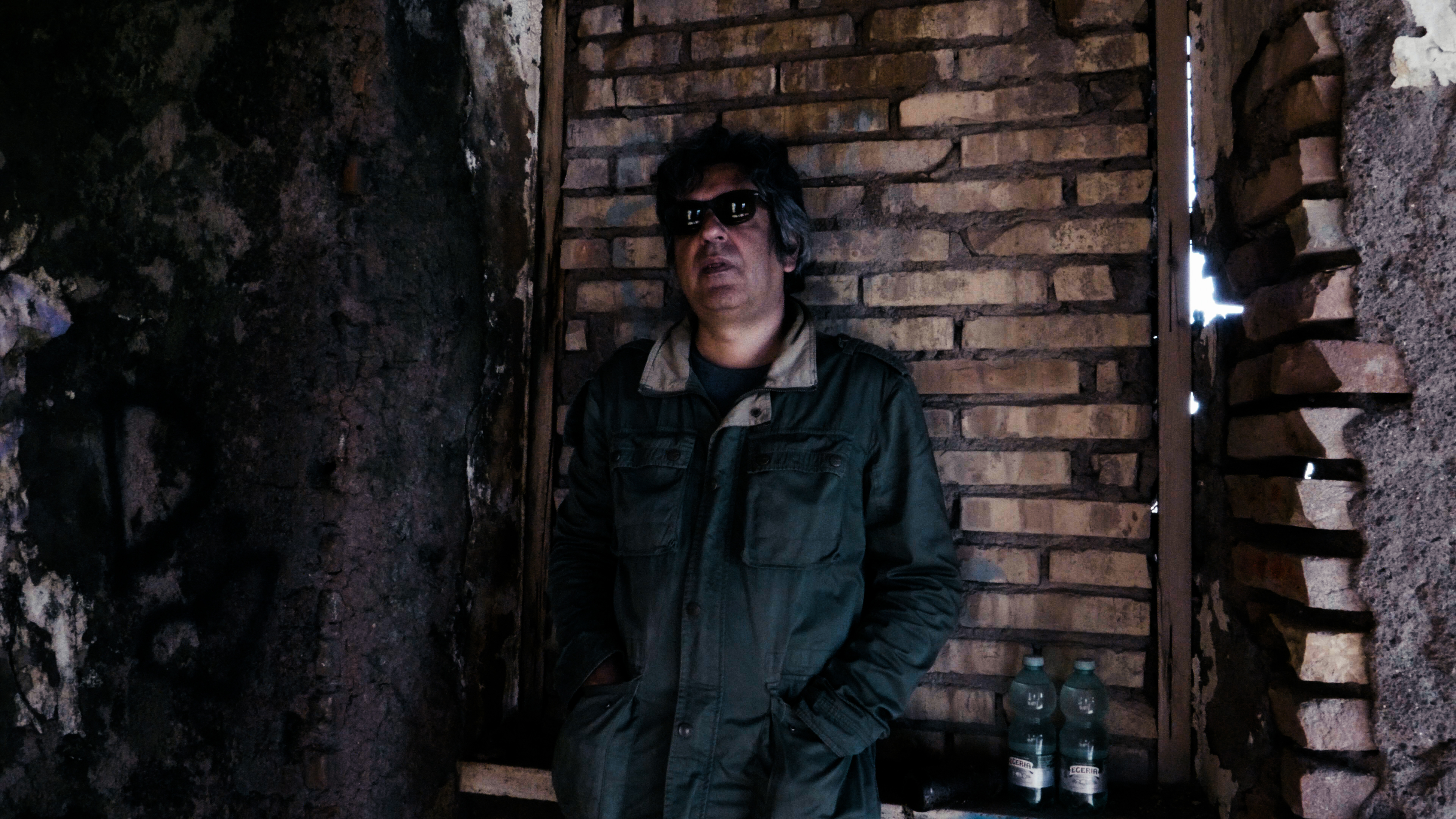
Drama, by Fabio Del Greco, Italy, 2024.
Dante Mezzadri wants to see an old friend, nicknamed the Iguana, whom he has lost sight of for many years, and who has managed to turn their shared youthful passion for poetry into a job, becoming a famous writer and poet. The man escapes from his bourgeois life and his wife to live homeless on the Roman coast, printing and trying to sell his poetry collections. At night he sleeps in a park of old carnival floats, inside a papier-mâché tank, and waits for the opportunity to meet his old friend, who however never shows up for appointments in the places they frequented when they were young, now in ruins. Dante's poetry books do not interest anyone and to support himself he is forced to "change product": he starts selling the infamous "cannibal pill" on behalf of young drug dealers, a new drug that sells like hot cakes and causes sensory and consumerist ecstasy. However, he realizes that this powerful drug is very dangerous for those who take it, he comes into conflict with his ethical conscience and throws all the pills into the sea. However, the dealers want to collect their money.
Shot over a period of 2 years, the film is a reflection on the cultural and artistic rubble of the society in which the protagonist lives, in an increasingly mechanized, consumerist and arid world. Dante Mezzadri is yet another human being who has renounced his inspiration and his creativity, but unlike many he is not willing to give his life to a system that distances him from his true identity. The physical world around him, however, seems constructed in such a way that it seems impossible to escape from this "invisible cage". The enthusiasm of the people he meets is ignited only by sensory gratification, by unreal visions of personal affirmation and success, by "metaverses" that offer an escape into an illusory and destructive reality. The poet's house on the coast, where he met with his friends as a young man, is just a pile of abandoned rubble. What happened to all those who wanted to become poets and ended up becoming something else? Are there internal forces with which that house can be "rebuilt"?
LANGUAGE: Italian
SUBTITLES: English, Spanish, French, German, Portuguese
Cyrano (2021)

Directed by Joe Wright and adapted from Erica Schmidt‘s stage musical, Cyrano (2021) reimagines Edmond Rostand‘s immortal romantic drama with Peter Dinklage in the title role — a man of extraordinary poetic genius whose physical stature, rather than an oversized nose, becomes the source of his consuming self-doubt. Set against sumptuous period backdrops and elevated by Aaron and Bryce Dessner‘s original songs, the film follows Cyrano de Bergerac as he ghostwrites passionate love letters for the dimwitted but handsome Christian, all while hiding his own devastating love for Roxanne. The tragedy is not merely romantic but fundamentally artistic: the greatest words of love ever spoken belong to a man who cannot claim them.
What makes Cyrano genuinely essential to any conversation about art in cinema is its unflinching interrogation of authorship, voice, and creative self-erasure. Wright frames Cyrano’s letters not as romantic gestures but as supreme artistic acts — each sentence a small masterpiece born from anguish. The film argues that true artistry often flourishes precisely in the space of denial and concealment, that the most transcendent creative work can emerge when the artist removes themselves entirely from the equation. Compared to similarly themed works like Whiplash (2014) or Amadeus (1984), Cyrano is unique in positioning the act of writing itself as both salvation and sacrifice, making it one of cinema’s most quietly devastating meditations on what it costs a soul to create beauty for a world that will never know its origin.

Billie Eilish: The World’s a Little Blurry (2021)

R.J. Cutler’s documentary Billie Eilish: The World’s a Little Blurry (2021) offers an extraordinarily intimate portrait of a teenage artist navigating the volcanic collision between adolescence and global superstardom. The film follows Billie Eilish across the creation and release of her debut album When We All Fall Asleep, Where Do We Go?, capturing rehearsals, breakdowns, breakthroughs, and the relentless machinery of the music industry pressing against the fragile, still-forming edges of a genuinely singular creative vision. Cutler’s access is remarkable, his camera present for moments that feel almost too private to witness.
What elevates this documentary beyond conventional pop hagiography is its unflinching commitment to portraying the creative process as something simultaneously sacred and bruising. Eilish is shown not merely performing artistry but wrestling with it, negotiating her musical instincts against commercial pressures, physical pain, and emotional exhaustion. The film becomes a meditation on artistic authenticity in an age of algorithmic consumption, asking quietly but persistently whether genuine expression can survive the industrial scale of contemporary fame. As a document of art being born under extraordinary pressure, it stands alongside the finest creative process films in the documentary canon.
Hillbilly Elegy (2020)

Ron Howard‘s adaptation of J.D. Vance’s memoir arrives as a deeply personal excavation of class, family trauma, and the American myth of self-reinvention. Set between the rust-belt hollows of Appalachian Kentucky and the gleaming corridors of Yale Law School, the film follows Vance as he navigates a crisis involving his volatile, addiction-scarred mother Bev, played with ferocious commitment by Glenn Close, while grappling with the generational wounds that shaped him. Amy Adams delivers an equally raw performance, stripping away glamour to inhabit a woman consumed by cycles she cannot break.
Where Hillbilly Elegy connects to the art of cinematic storytelling is precisely in its unflinching portraiture — Howard treats his characters not as sociological symbols but as living canvases of contradiction. The film’s visual grammar, oscillating between warm childhood memory and harsh present-tense urgency, functions as a kind of painterly confession. It is cinema as testimony, arguing that the act of bearing honest witness to one’s origins is itself a profound creative act, no less demanding than any formal artistic discipline.
Loving Vincent (2017)

Loving Vincent (Loving Vincent, 2017), directed by Dorota Kobiela and Hugh Welchman, stands as one of the most audacious formal experiments in contemporary cinema. The film tells the story of Armand Roulin, son of Vincent van Gogh’s postman, who travels through Provence to deliver the painter’s final letter after his death. Along the way, Armand interviews figures from Van Gogh’s life, gradually uncovering the ambiguities surrounding his final days. Constructed entirely from approximately 65,000 oil paintings executed by a team of over one hundred trained artists, every single frame breathes with the texture and movement of Van Gogh’s own brushwork, transforming the medium of animation into something genuinely unprecedented.
What elevates Loving Vincent beyond novelty is its insistence on treating form as meaning. The swirling impasto surfaces do not merely illustrate Van Gogh’s world — they embody his psychological turbulence, his luminous perception of ordinary life, and the unbearable tenderness with which he regarded human suffering. Where other biographical films about artists risk reducing their subjects to tragic mythology, this film inverts the approach entirely, placing Van Gogh’s visual language at the center of the narrative rather than at its margins. The detective-story structure, borrowing from films like Citizen Kane, serves a deeper philosophical purpose: reminding us that genius, in the end, remains irreducibly mysterious.
A vision curated by a filmmaker, not an algorithm
In this video I explain our vision
Big Eyes (2014)

Directed by Tim Burton, Big Eyes (2014) tells the true story of Margaret Keane, a painter whose haunting portraits of wide-eyed children became a cultural phenomenon in 1960s America, only for her manipulative husband Walter to claim full credit for her work. Amy Adams delivers a performance of quiet, suffocating anguish as Margaret, while Christoph Waltz embraces Walter’s brazen fraudulence with gleeful theatrical menace. The film charts their marriage, the explosion of kitsch popularity surrounding the paintings, and Margaret’s long, painful road toward reclaiming her identity and artistic legacy in a dramatic courtroom confrontation.
What makes Big Eyes particularly vital within any serious conversation about art in cinema is its unflinching examination of authorship, gender, and the marketplace’s willingness to erase the actual creator when commerce demands a more convenient narrative. Burton, whose own visual sensibility has always bordered on the ornamental, finds unexpected restraint here, allowing the thematic weight to carry the film rather than his signature aesthetic excess. The Keane paintings themselves become a lens through which the film interrogates what society values in art and who gets to be called an artist, questions that remain painfully unresolved even today.
Mr. Turner (2014)

Directed by Mike Leigh, Mr. Turner follows the final decades in the life of J.M.W. Turner, the visionary and wildly eccentric British landscape painter. Timothy Spall delivers a towering, largely wordless performance as the artist — grunting, lurching, and communing with the natural world with an almost animal intensity. The film chronicles Turner’s relationships, his peculiar domestic arrangements, his rivalries within the Royal Academy, and his relentless pursuit of light itself as a painterly subject.
What makes Mr. Turner an essential entry in any serious conversation about cinema and art is Leigh’s radical insistence on depicting creativity as something unglamorous, ungainly, and deeply physical. Dick Pope‘s cinematography consciously mirrors Turner’s own canvases, dissolving figures into luminous fog and golden coastal haze. The film refuses the romantic myth of the suffering genius, offering instead a portrait of disciplined, obsessive practice rooted in the mundane. Art here emerges not from divine inspiration but from decades of stubborn, embodied labor — a truth far more extraordinary than any legend.
Tim’s Vermeer (2013)

Directed by Teller — the silent half of the legendary Penn & Teller duo — this documentary follows Tim Jenison, a Texas-based inventor and technology entrepreneur, on an obsessive multi-year quest to unravel one of art history’s most seductive mysteries: how did Johannes Vermeer achieve his breathtaking photorealistic paintings in seventeenth-century Holland? Jenison’s hypothesis centers on the use of a comparator mirror, a simple optical device that may have allowed Vermeer to translate light directly onto canvas with mechanical precision. The film documents Jenison’s painstaking reconstruction of The Music Lesson, from building a period-accurate room to grinding his own lenses.
What makes Tim’s Vermeer genuinely extraordinary as a film about art is its philosophical audacity. It refuses to separate technical ingenuity from creative genius, forcing viewers to reconsider the very definition of artistic mastery. Where a conventional art documentary might worship at the altar of innate talent, this film asks something more radical: does understanding how a masterpiece was made diminish its beauty, or deepen it? Jenison’s journey mirrors the obsessive dedication of the artists he studies, and Teller frames that parallel with quiet, devastating irony. The film ultimately argues that curiosity itself is a profound artistic act.
Words and Pictures (2013)

Words and Pictures (2013), directed by Fred Schepisi, stages an intellectual duel between two teachers at a prestigious prep school. Jack Marcus, a once-celebrated poet now drowning in alcoholism and creative stagnation, locks horns with Dina Delsanto, a fiercely talented painter whose rheumatoid arthritis threatens to rob her of the very gift that defines her identity. Their rivalry — words versus images, language versus visual expression — ignites a school-wide debate that becomes both a love story and a meditation on the nature of artistic creation itself.
What makes Schepisi’s film genuinely compelling within the broader conversation about art is its refusal to crown a winner. The central debate is a philosophical provocation rather than a competition, forcing the audience to interrogate how meaning is made and communicated. Clive Owen and Juliette Binoche bring raw, wounded intelligence to their roles, embodying the terror of artistic loss with uncommon honesty. The film wisely treats creativity not as romantic inspiration but as discipline, suffering, and survival — a vision closer to the lived reality of artists than most mainstream cinema dares to acknowledge.
The Best Offer (2013)

Giuseppe Tornatore‘s The Best Offer is a film that wears the skin of an art-world thriller while concealing a far more devastating meditation on authenticity, obsession, and emotional fraud. Virgil Oldman, the reclusive auctioneer played with immaculate precision by Geoffrey Rush, is a man who has dedicated his life to detecting forgeries — yet remains catastrophically blind to the counterfeit nature of his own desires. The film’s most brilliant structural irony is that its protagonist, a self-proclaimed expert in distinguishing the genuine from the fake, becomes the ultimate victim of his own expertise-bred arrogance. Tornatore frames the auction house as a theater of human vanity, where art is simultaneously worshipped and weaponized.
The film’s visual language deserves serious attention. Every canvas that fills Oldman’s secret gallery represents not a collection but a confession — portraits of women he can possess only as objects, never as living presences. This hoarding of beauty becomes Tornatore’s sharpest metaphor for a particular kind of artistic love: sterile, controlling, and ultimately self-destructive. The Best Offer argues, with genuine philosophical weight, that the deepest tragedy in the art world is not forgery itself, but the forger within the collector — the self-deception that transforms connoisseurship into a prison cell lined with masterpieces.
Quartet (2012)

Dustin Hoffman‘s directorial debut, Quartet (2012), unfolds within the elegant walls of Beecham House, a retirement home for musicians, where three aging opera performers — Reginald, Cecily, and Wilf — are preparing for an annual gala concert honoring Verdi’s birthday. Their carefully constructed emotional equilibrium is shattered when Jean, Reginald’s estranged ex-wife and once-celebrated soprano, arrives as a new resident. The film becomes a tender, bittersweet meditation on aging, pride, artistic legacy, and the irreversible passage of time, anchored by extraordinary performances from Tom Courtenay, Pauline Collins, Billy Connolly, and Maggie Smith.
What distinguishes Quartet as a genuine entry into the canon of films about art is its unflinching honesty about the cruelty time inflicts upon artists whose identities are inseparable from their craft. The film asks a devastatingly simple question: who are you when your art can no longer fully express itself through your aging body? Hoffman, himself a performer of legendary stature, brings remarkable empathy to this dilemma, allowing the camera to linger on faces that carry entire careers within their expressions. The film celebrates artistic passion not despite its fragility, but precisely because of it, insisting that the love of art outlasts even the capacity to perform it.
Midnight in Paris (2011)

Midnight in Paris (2011), directed by Woody Allen, follows Gil Pender, a romantically disillusioned Hollywood screenwriter vacationing in Paris with his fiancée. Dissatisfied with his conventional life, Gil begins experiencing a nightly miracle: at the stroke of midnight, a vintage car transports him back to 1920s Paris, where he mingles with Hemingway, Fitzgerald, Picasso, and Dalí. The film becomes a tender meditation on nostalgia, creative longing, and the seductive illusion that another era might have nourished one’s artistic soul more generously than the present ever could.
What makes Allen’s film genuinely profound in the context of art cinema is its willingness to interrogate the mythology artists construct around the past. Gil does not simply romanticize the Lost Generation — he becomes a cautionary mirror reflecting how nostalgia can paralyze creative ambition rather than fuel it. Allen understands, with characteristic wit and melancholy, that artistic authenticity demands confrontation with the present tense. The film’s visual language — Emmanuel Lubezki‘s golden-hour cinematography bathing Paris in an almost painterly luminescence — transforms the city itself into a living canvas, reinforcing the idea that art is inseparable from the emotional landscape of its creator’s lived experience.
My Kid Could Paint That (2007)

Amir Bar-Lev’s documentary follows the story of Marla Olmstead, a four-year-old girl from Binghamton, New York, whose abstract paintings began selling for thousands of dollars, sparking a fierce international debate about the nature of artistic genius, authenticity, and the art market’s appetite for compelling narratives. The film captures the family’s rapid ascent into the spotlight and the equally swift collapse of their credibility after a 60 Minutes segment raised troubling questions about whether Marla’s father might have guided her work, leaving viewers in a state of genuine, unresolved uncertainty.
What makes this documentary so intellectually devastating is its refusal to deliver a verdict. Bar-Lev turns the camera on himself, implicating the documentary form — and by extension, the viewer — in the very machinery of exploitation it critiques. The film becomes a meditation on how we construct artistic myths, how institutions validate or destroy them, and how easily the language of authenticity collapses under scrutiny. Like Exit Through the Gift Shop (2010), it asks not what art is, but who decides — and at what human cost that decision is made.
The Diving Bell and the Butterfly (2007)

Le Scaphandre et le Papillon (The Diving Bell and the Butterfly, 2007), directed by Julian Schnabel, tells the true story of Jean-Dominique Bauby, the former editor-in-chief of French Elle, who suffered a massive stroke that left him with locked-in syndrome — completely paralyzed except for his left eyelid. Through that single blinking eye, Bauby dictated his memoir letter by letter to a devoted transcriber, constructing a testament of extraordinary imaginative will. The film places the audience entirely inside his immobilized body, transforming radical physical confinement into an act of radical creative liberation.
Schnabel, himself a celebrated painter, approaches this story not merely as biography but as a philosophical meditation on what art truly is — the irreducible capacity of the human mind to generate beauty when all else has been stripped away. The film’s visual language, crafted through Janusz Kaminski‘s restless, blurred, and luminously subjective cinematography, mirrors the very act of artistic creation: fragmentary, deeply personal, struggling against limitation toward transcendence. In this sense, The Diving Bell and the Butterfly stands alongside Pollock (2000) and Basquiat (1996) — Schnabel’s own earlier portrait — as one of cinema’s most visceral arguments that art is not a luxury but a form of survival, an insistence on inner life against the silence the world would impose.
The Fountain (2006)

Darren Aronofsky‘s The Fountain (2006) is one of cinema’s most audacious meditations on creation, mortality, and the agonizing cost of artistic obsession. The film follows three parallel narratives — a conquistador, a modern scientist, and a future astronaut — all embodied by the same soul, all desperately fighting against the inevitability of death and loss. At its emotional core lies a manuscript, a story within the story, written by a dying woman and completed by her grieving husband. That act of finishing another’s creative work becomes the film’s most profound dramatic engine, transforming grief into art and art into a form of transcendence.
What distinguishes The Fountain within any serious conversation about films depicting artistic creation is its formal radicalism. Aronofsky, working alongside cinematographer Matthew Libatique, constructs images of extraordinary visual poetry, using macro photography of chemical reactions in place of conventional special effects. The film argues, quietly but insistently, that art is humanity’s only genuine weapon against oblivion. Like Andrei Rublev (1966) or Synecdoche, New York (2008), it refuses to romanticize the creative process cheaply, insisting instead that making something meaningful demands total surrender of the self.
Girl with a Pearl Earring (2003)

Girl with a Pearl Earring (2003), directed by Peter Webber and adapted from Tracy Chevalier’s novel, imagines the untold story behind Johannes Vermeer’s most enigmatic painting. Griet, a young servant girl played by Scarlett Johansson, enters the Vermeer household and gradually becomes both muse and silent collaborator to the master painter, portrayed with brooding restraint by Colin Firth. The film unfolds as a study in longing, class tension, and unspoken artistic communion, culminating in the creation of the iconic portrait that would outlast every character within its story.
What elevates this film beyond conventional biographical drama is its rigorous commitment to Vermeer’s visual grammar. Cinematographer Eduardo Serra bathes every frame in that characteristically Dutch chiaroscuro — cool northern light carving faces from shadow — transforming the screen itself into a living canvas. The film understands that great art emerges not from grand gestures but from charged silences, stolen glances, and the dangerous intimacy between creator and subject. Like Camille Claudel (1988) before it, the film interrogates the erasure of women from art history, insisting that the muse possesses her own interior world, her own aesthetic hunger, every bit as vital as the artist she inspires.
Frida (2002)

Julie Taymor‘s Frida (2002) chronicles the turbulent life of Mexican painter Frida Kahlo, from her devastating bus accident at eighteen through her passionate, destructive marriage to muralist Diego Rivera, her communist politics, her affairs, and her relentless physical suffering. Salma Hayek, who also produced the film, embodies Kahlo with ferocious authenticity, capturing both the volcanic sensuality and the quiet devastation of a woman who transformed bodily anguish into visual poetry. The narrative moves through Mexico City, New York, and Detroit, tracing an artist forged entirely by contradiction.
What elevates Frida beyond conventional biography is Taymor’s audacious decision to let Kahlo’s paintings breathe cinematically, dissolving the boundary between canvas and lived experience. Sequences blur into tableaux vivants where the painted world materializes around characters, honoring the surrealist logic of Kahlo’s art rather than simply illustrating it. Unlike the flat reverence that cripples many artist biopics, this film treats painting as psychological language, understanding that Kahlo did not document suffering but actively metabolized it into iconography. Elliot Goldenthal‘s score amplifies this fusion beautifully, grounding the visual spectacle in something genuinely felt.
Moulin Rouge! (2001)

Baz Luhrmann‘s Moulin Rouge! (2001) arrives as an operatic fever dream set in the bohemian underworld of fin-de-siècle Paris, where a penniless English writer named Christian falls catastrophically in love with Satine, the Moulin Rouge’s most luminous courtesan. Their romance unfolds against a backdrop of spectacular musical numbers, theatrical excess, and the looming specter of a fatal illness. The film reimagines the cabaret as a cathedral of desire and creative longing, where artists, poets, and dreamers congregate to worship at the altar of Beauty, Freedom, Truth, and Love.
What makes Moulin Rouge! genuinely radical as a statement about art is its refusal to separate creative expression from emotional devastation. Luhrmann treats anachronistic pop songs — Nirvana, Madonna, David Bowie — not as gimmicks but as declarations of the universality of artistic yearning across time. The film argues, with breathtaking conviction, that art is never merely aesthetic; it is survival, rebellion, and the desperate human need to transform suffering into something transcendent. Christian’s story is ultimately every artist’s story: the terrible cost of making beauty in a world that commodifies it without mercy.
Pollock (2000)
![Pollock [2000] Trailer](https://blog.indiecinema.co/wp-content/plugins/wp-youtube-lyte/lyteCache.php?origThumbUrl=https%3A%2F%2Fi.ytimg.com%2Fvi%2Fz0xiovbDML0%2F0.jpg)
Directed by and starring Ed Harris, Pollock (2000) chronicles the turbulent life of abstract expressionist painter Jackson Pollock, from his early struggles for recognition in New York’s art world through his explosive creative breakthrough and his ultimately self-destructive decline. Harris portrays Pollock as a volcanic, wounded man perpetually at war with himself, while Marcia Gay Harden delivers an Oscar-winning performance as Lee Krasner, the artist and partner who simultaneously sustains and suffers under his genius. The film captures the mid-century Manhattan art scene with striking authenticity, grounding its biographical drama in the physical, almost violent act of creation.
What distinguishes Pollock from conventional biopics is its insistence on showing art-making as a bodily, instinctual process rather than an intellectual one. Harris stages the legendary drip-painting sequences with documentary rawness, placing the camera at floor level so the viewer genuinely feels the canvas as a battlefield. The film wrestles honestly with a central paradox that haunts every portrait of artistic greatness: that the same uncontrollable force producing transcendent work also dismantles the human being behind it. Rather than romanticizing self-destruction, Harris holds both truths in uncomfortable tension, making Pollock one of the most psychologically honest films about what it costs a person to make something genuinely new.
Cradle Will Rock (1999)

Tim Robbins‘s Cradle Will Rock (1999) reconstructs one of the most electrically charged nights in American cultural history: the 1937 federal government’s attempt to shut down Marc Blitzstein‘s pro-union musical on opening night, only to watch cast and audience march defiantly to another theater and perform it anyway. The film weaves this central story with parallel narratives involving Diego Rivera, Nelson Rockefeller, Orson Welles, and a cast of Depression-era idealists, opportunists, and true believers, painting a sprawling, almost operatic portrait of art colliding violently with political power.
What makes this film an indispensable entry in any serious conversation about art on screen is its refusal to romanticize creativity without also interrogating its compromises. Robbins understands that art is never made in a vacuum — it is funded, suppressed, weaponized, and occasionally liberated. The ensemble structure mirrors the collective nature of artistic production itself, while the film’s theatrical energy recalls the work of Reds (1981) in its passionate insistence that artistic commitment and political conviction are, at their finest moments, one and the same thing.
Surviving Picasso (1996)

James Ivory‘s Surviving Picasso (1996) charts the turbulent, emotionally devastating relationship between the legendary Spanish painter Pablo Picasso and Françoise Gilot, the young French artist who dared to leave him. Spanning roughly a decade of their volatile affair, the film unfolds as both a period romance and a psychological portrait of genius weaponized as cruelty. Anthony Hopkins embodies Picasso not as a mythologized master but as a magnetic, monstrous force of nature — charming, manipulative, and utterly consuming of everyone who orbits his extraordinary life.
Where many biopics genuflect before their subjects, Ivory’s film takes the sharper, more honest path of viewing artistic greatness through the wounds it inflicts. The film’s real tension lies not in the paintings themselves but in the power struggle between creative dominance and individual identity. Françoise, rendered with quiet defiance by Natascha McElhone, becomes the moral and emotional center — a reminder that surviving genius sometimes demands the same courage as possessing it. The film stands as one of cinema’s most unflinching explorations of how art, ego, and intimacy collide.
Basquiat (1996)

Directed by Julian Schnabel — himself a celebrated painter navigating the art world’s treacherous currents — Basquiat tells the story of Jean-Michel Basquiat‘s meteoric rise from Brooklyn street artist to international art sensation during the feverish New York scene of the 1980s. Jeffrey Wright delivers a luminous, deeply physical performance, capturing a young Black man simultaneously celebrated and exploited by the very institutions hungry for his genius. The film charts his friendships, his turbulent relationship with Andy Warhol played with eerie stillness by David Bowie, and his devastating descent into addiction as commercial success hollows out creative authenticity.
What elevates Basquiat beyond standard biography is Schnabel’s refusal to sentimentalize the art world’s machinery. The film functions as a ruthless autopsy of how creative genius gets commodified, consumed, and ultimately discarded. Schnabel frames canvases not as triumphant monuments but as evidence of a man thinking desperately in public, racing against his own erasure. The painted surfaces breathe with urgency throughout the cinematography, and the film’s aesthetic raggedness — its deliberate looseness — mirrors Basquiat’s own compositional philosophy. It stands alongside Pollock as essential cinema about the unbearable cost of authentic artistic vision.
Ed Wood (1994)

Directed by Tim Burton and shot in luminous black-and-white by cinematographer Stefan Czapsky, Ed Wood is a deeply affectionate portrait of Edward D. Wood Jr., widely regarded as the worst filmmaker in Hollywood history. The film follows Wood’s feverish pursuit of cinematic glory through a string of catastrophically received productions, his unlikely friendship with fading horror icon Bela Lugosi, and his unwavering belief that he is destined for greatness. Johnny Depp plays Wood with infectious, almost manic optimism, transforming a figure of ridicule into a genuine emblem of creative devotion.
What makes Ed Wood so extraordinary as a film about art is its radical argument that passion and sincerity can exist entirely independent of talent or recognition. Burton, himself a Hollywood outsider of sorts, finds profound dignity in Wood’s delusions, suggesting that the compulsion to create is its own justification. The film quietly challenges every conventional metric of artistic success, positioning Wood not as a cautionary tale but as a kind of secular saint of pure, uncompromising creative belief. In doing so, it becomes one of cinema’s most honest and tender meditations on why people make art at all.
Vincent & Theo (1990)

Robert Altman‘s Vincent & Theo (1990) traces the turbulent, symbiotic relationship between Vincent van Gogh and his devoted brother Theo, a Paris art dealer who financially and emotionally sustained the painter throughout his most productive and tormented years. The film moves between the brothers’ correspondence and their physical encounters, charting Vincent’s restless migration across Drenthe, Arles, and Saint-Rémy while Theo navigates the suffocating commercial demands of the bourgeois Parisian art world. It is less a conventional biopic than a meditation on dependency, sacrifice, and the brutal indifference society reserves for visionary artists.
What distinguishes Altman’s approach from the romantic mythologizing of earlier portraits — most notably Vincente Minnelli‘s Lust for Life (1956) — is his insistence on institutional and economic context. Art here is not born from divine madness alone but from a grinding material struggle, with Theo’s psychological collapse mirroring Vincent’s own disintegration. Cinematographer Jean Lépine bathes scenes in natural, almost painterly light that evokes the canvases themselves without descending into imitation, while Tim Roth‘s ferociously physical performance refuses sentimentality entirely. Altman frames genius as a transaction, messy and mutual, leaving the viewer profoundly unsettled.
New York Stories (1989)

New York Stories (1989) is an anthology film comprising three short works directed by Martin Scorsese, Francis Ford Coppola, and Woody Allen, each set against the vivid backdrop of New York City. Scorsese’s segment, “Life Lessons,” follows a turbulent abstract expressionist painter named Lionel Dobie, played with raw intensity by Nick Nolte, who channels his obsessive, unrequited love for his young assistant into monumental canvases. The other segments shift tone dramatically, offering contrasting portraits of urban creativity, domestic dysfunction, and middle-class anxiety, all held together by the city’s relentless, electric pulse.
What makes New York Stories genuinely essential viewing within any serious exploration of art on screen is Scorsese’s “Life Lessons,” which stands as one of cinema’s most psychologically honest examinations of the creative process. The segment refuses to romanticize artistic genius, instead exposing it as something predatory, compulsive, and deeply entangled with emotional manipulation. Nolte’s Dobie paints to the thunderous pulse of the Procol Harum and Bob Dylan recordings that Scorsese layers with masterly precision, making the act of painting feel visceral and almost violent. The camera moves across the canvas with the same desperate energy as the brushstrokes themselves, collapsing the boundary between filmmaker and painter, between cinematic rhythm and artistic impulse.
Camille Claudel (1988)

Directed by Bruno Nuytten and featuring an incandescent performance by Isabelle Adjani, Camille Claudel (1988) tells the harrowing true story of the French sculptor Camille Claudel, a visionary artist who studied and collaborated — and fell desperately in love — with Auguste Rodin. The film traces her journey from prodigious young talent to institutionalized prisoner, charting how a patriarchal artistic establishment systematically denied her genius, reducing her to satellite, muse, and ultimately madwoman. Adjani’s physical and emotional commitment is staggering, earning her a César Award and an Academy Award nomination in equal measure.
What makes this film an essential entry in any serious discussion about art on screen is its unflinching interrogation of who gets to be called an artist and at what cost. Nuytten frames Claudel’s clay-covered hands with the same reverence typically reserved for brushstrokes or piano keys, insisting that sculpture is corporeal, violent, and intimate. The film refuses romantic mythology, presenting creativity as inseparable from exploitation, obsession, and institutional cruelty. Where many biopics celebrate artistic triumph, Camille Claudel mourns its suppression — making it one of the most politically charged and emotionally devastating films ever made about the creative life.
Sunday in the Country (1984)

Un dimanche à la campagne (Sunday in the Country, 1984), directed by Bertrand Tavernier, unfolds over a single autumn day in the French countryside as Monsieur Ladmiral, an aging Impressionist painter, receives his dutiful son and beloved daughter at his rural estate. The film is less concerned with dramatic incident than with the quiet accumulation of feeling — conversations that trail into silence, gestures that carry the weight of decades, and the particular melancholy of a man who has lived honorably yet suspects he never dared enough. It is cinema of exquisite restraint.
What makes Tavernier’s film an essential entry in any serious conversation about art and cinema is its refusal to romanticize the creative life. Ladmiral is accomplished, respected, and deeply unfulfilled — haunted by painters like Cézanne who broke every rule he upheld. The film argues, with devastating gentleness, that technical mastery without artistic courage is its own form of tragedy. Shot by Bruno de Keyzer in luminous, Impressionist-inflected light that mirrors the very paintings on Ladmiral’s walls, Sunday in the Country becomes a meditation on the chasm between competence and transcendence, asking whether a life devoted to beauty is enough if that beauty never truly risks itself.
Andrei Rublev (1966)

Andrej Rublev (Андрей Рублёв), 1966, directed by Andrei Tarkovsky, unfolds across medieval Russia as a series of loosely connected episodes tracing the life of the legendary icon painter Andrei Rublev. The film charts his spiritual crises, his witness to brutal Tatar raids, his voluntary silence, and ultimately his redemptive return to creation. Less a conventional biography than a meditation on faith, violence, and the human compulsion to make something beautiful in a world consumed by suffering, it culminates in a breathtaking final sequence of Rublev’s actual icons rendered in color.
Tarkovsky constructs his masterpiece not as an argument about art but as a lived, visceral experience of what art costs. Every frame is itself a kind of icon, shot in austere, luminous black and white by cinematographer Vadim Yusov, demanding the viewer’s patience and full moral attention. Where a film like 8½ turns inward to explore creative anxiety as psychological comedy, Andrei Rublev externalizes artistic struggle onto a vast historical canvas, insisting that creation is inseparable from collective suffering. The painter’s long silence becomes the film’s most radical statement: that sometimes the only honest response to atrocity is mute witness, and that the return to art is not triumph but something quieter, more trembling, more true.
The Agony and the Ecstasy (1965)

Directed by Carol Reed and based on Irving Stone‘s biographical novel, The Agony and the Ecstasy (1965) chronicles the volcanic creative conflict between Michelangelo Buonarroti and Pope Julius II during the years-long commission to paint the Sistine Chapel ceiling. Charlton Heston portrays the sculptor-turned-reluctant-painter as a man perpetually at war with himself, with his patron, and with the sheer physical brutality of his task. Rex Harrison‘s Julius II is no mere antagonist but a force of nature equally matched in ambition and ego, making every confrontation between the two men a crackling battle of wills. The film captures the Renaissance not as a postcard fantasy but as a sweaty, dangerous, deeply human struggle for transcendence.
What makes Carol Reed’s film genuinely remarkable as a meditation on artistic creation is its unflinching insistence that great art costs something almost unbearable. Heston’s Michelangelo abandons comfort, relationships, and even his identity as a sculptor to answer a calling that feels less like inspiration and more like divine coercion. Reed visualizes the act of painting as physical suffering — craned necks, paint-stained eyes, scaffolding that seems almost coffin-like — transforming the Sistine Chapel into a monument built from accumulated private anguish. Few Hollywood productions of its era dared to suggest that genius is not a gift but a wound, and on that count, this overlooked epic deserves serious critical reassessment alongside more celebrated art-world dramas like Lust for Life (1956).
Lust for Life (1956)

Lust for Life (1956), directed by Vincente Minnelli and produced by MGM, follows the turbulent and transcendent life of Vincent van Gogh, portrayed with volcanic intensity by Kirk Douglas. The film traces the Dutch painter’s journey from his early failures as a preacher and missionary in Belgium to his luminous yet tormented years in Arles and Saint-Rémy, culminating in the tragic final chapter at Auvers-sur-Oise. Anthony Quinn delivers a career-defining performance as Paul Gauguin, whose volatile friendship with Van Gogh ignites some of the film’s most electrifying dramatic moments.
What elevates Lust for Life far beyond the conventional biographical picture is Minnelli’s radical decision to treat the CinemaScope frame as a living canvas. Cinematographer F.A. Young and art director Cedric Gibbons construct each sequence in direct dialogue with Van Gogh’s actual paintings, staging scenes in the very landscapes that inspired the originals, bathing interiors in those furious yellows and churning blues that defined the painter’s psychological universe. The film understands something profound about artistic creation: that the work and the suffering are inseparable, that every impasto stroke carries the weight of a man perpetually at war with his own perception. Douglas doesn’t merely portray Van Gogh — he inhabits the compulsion itself.
🎨 Where Art Meets the Moving Image
Cinema and art have always shared a profound dialogue, with films about painters, sculptors, and creative obsession revealing the turbulent inner lives behind masterpieces. If your fascination with art on screen runs deep, these related explorations will sharpen your cinematic eye and take you further into the world of artistic vision.
The Films About Poetry
Like films about visual artists, movies about poetry plunge us into the creative mind wrestling with beauty, language, and the ineffable. This carefully curated guide explores cinema that treats words as brushstrokes, revealing how the poetic impulse shapes both life and screen. A natural companion to any deep dive into art-themed films.
👉 GO TO THE SELECTION: The Films About Poetry
What Are Arthouse Films? 100 Movies Not to Be Missed
Arthouse cinema is the natural home of films about art, where form and content become inseparable and directors themselves behave like painters before a canvas. This essential guide to 100 must-see arthouse titles provides the broader cultural and aesthetic context that surrounds great movies about creative expression. Discovering these films means understanding why art-on-screen resonates so powerfully.
👉 GO TO THE SELECTION: What Are Arthouse Films? 100 Movies Not to Be Missed
Biographical Films: Which Biopics to Watch
Many of cinema’s greatest portraits of artists take the form of the biographical film, tracing the turbulent lives of creators from Caravaggio to Pollock. This comprehensive guide to biopics explores how filmmakers reconstruct real lives with dramatic intensity and visual imagination. If art movies move you, the biopic tradition offers some of the genre’s most electrifying entries.
👉 GO TO THE SELECTION: Biographical Films: Which Biopics to Watch
Surrealist Cinema: the Unconscious in Films
Surrealist cinema is perhaps the most direct collision between the visual arts and the moving image, born directly from the painting and poetry movements of the early twentieth century. Films by Buñuel, Dalí, and their heirs treat the screen as a canvas for the unconscious, mirroring the same impulses that drove the great modern artists. Exploring surrealism on film deepens any appreciation of art’s wildest, most liberating possibilities.
👉 GO TO THE SELECTION: Surrealist Cinema: the Unconscious in Films
Discover Art, Beauty, and Vision on Indiecinema
Indiecinema streaming is your dedicated space for films that dare to look at the world differently — including the finest independent and arthouse movies about art, creativity, and the artists who risk everything to make something lasting. Explore our full catalog and let cinema transform the way you see.
👉 EXPLORE THE CATALOG: Watch Indie Films in Streaming
Conclusion
What unites every film explored in this guide — from the gilded studios of Hollywood to the grainy textures of European and Asian independent cinema — is the understanding that art is never merely decoration. It is confession, confrontation, and occasionally, transformation. The greatest films about art do not simply depict the act of creation; they force the viewer into an uncomfortable intimacy with it, demanding that we examine why we make things, what we sacrifice in the making, and whether the finished work ever truly justifies the wreckage left behind.
Cinema, of all the arts, is uniquely positioned to interrogate its siblings. It can hold a painting still and let silence do the work of a thousand critical essays. It can show us the trembling hand before the brushstroke, the sculptor’s fury, the photographer’s obsession, and locate within those gestures something profoundly and universally human. The films on this list, taken together, form not a museum but a living argument — a conversation across decades and continents about what creativity costs and what it gives back, never arriving at a comfortable answer.
The future of films about art lies, almost certainly, in further fracture and expansion. As new generations of filmmakers emerge from traditions long ignored by Western critical canon, we can expect stories about creation that challenge every assumption this genre has inherited. The solitary male genius brooding in a Parisian garret is giving way to more plural, more honest, more urgent visions of what it means to make something and send it into the world. That shift is not a loss. It is the most thrilling kind of creative inheritance — the kind that demands we look again, look harder, and refuse to look away.
A vision curated by a filmmaker, not an algorithm
In this video I explain our vision

