
The Séance Room as Laboratory
You are sitting in a room that smells of beeswax candles and something older, something the wallpaper has absorbed over decades — coal smoke, perhaps, or the particular grief of a house that has witnessed too many deaths too quickly. It is 1872, or 1874, or any of those years in which England was still tallying its losses from cholera, from India, from the arithmetic of industrial machinery, and the people around the table with you are not credulous fools. They are Fellows of learned societies. One of them has corresponded with Darwin. Another has published in the Proceedings of the Royal Institution. They have come here tonight not because they believe, exactly, but because they cannot yet afford to disbelieve — because the evidence, whatever it turns out to be, refuses to stay comfortably categorized on either side of the ledger they were trained to keep.

This is the actual founding condition of psychical research: not gullibility, but a specific kind of epistemic crisis produced by the collision between Victorian scientific confidence and Victorian rates of death. By 1882, when the Society for Psychical Research was formally constituted in London, its founding membership included Henry Sidgwick, then the most respected moral philosopher in Britain, Frederic Myers, a Cambridge classicist who would coin the term “telepathy” in 1882 to replace the cruder “thought-transference,” and Edmund Gurney, whose 1886 compendium Phantasms of the Living collected over seven hundred firsthand accounts of apparitions with a methodological rigor that would not embarrass a present-day qualitative sociologist. These were not men standing outside science. They were men who believed that science had not yet finished arriving.
What they were actually doing — and this is the thing that their critics then and now have consistently misread — was applying the logic of the newly codified scientific method to a class of phenomena that the method itself had never been designed to address. William James, who served as president of the American branch of the SPR and spent twenty years investigating the medium Leonora Piper, understood this distinction with painful clarity. His 1897 lecture “The Will to Believe” is often cited as a defense of faith, but it is more precisely a diagnosis of the way that scientific consensus can calcify into a second kind of dogma, one that refuses data not because the data fails standards but because the data threatens the standards’ authority. James watched Piper produce information that he could not explain and refused to do either of the two comfortable things: explain it away, or convert. He sat with the discomfort, which is perhaps the rarest scientific act available to a human being.
The séance room was, in this precise sense, a laboratory with a problem it could not solve from the inside: its primary instrument of measurement was also its primary source of contamination. The medium, the sensitive, the percipient — whatever the investigator chose to call the human being at the center of the experiment — was simultaneously the apparatus and the variable. This is not a problem unique to psychical research. It is the foundational problem of any psychology that takes consciousness seriously as both object and subject of inquiry. What made the séance room distinctive was that it rendered this problem visible and unavoidable in a way that the emerging discipline of experimental psychology was, at exactly the same historical moment, working very hard to paper over. Wilhelm Wundt opened his Leipzig laboratory in 1879 and immediately moved to expel introspection as a primary method, replacing the witnessing self with controlled conditions and replicable stimuli. The SPR, three years later, moved in precisely the opposite direction — toward the witnessing self, toward testimony, toward the irreducibly singular experience as data rather than noise.
What neither institution yet had language for was the possibility that both instincts were correct, and that the territory between them was not empty.
Cathnafola - A Paranormal Investigation
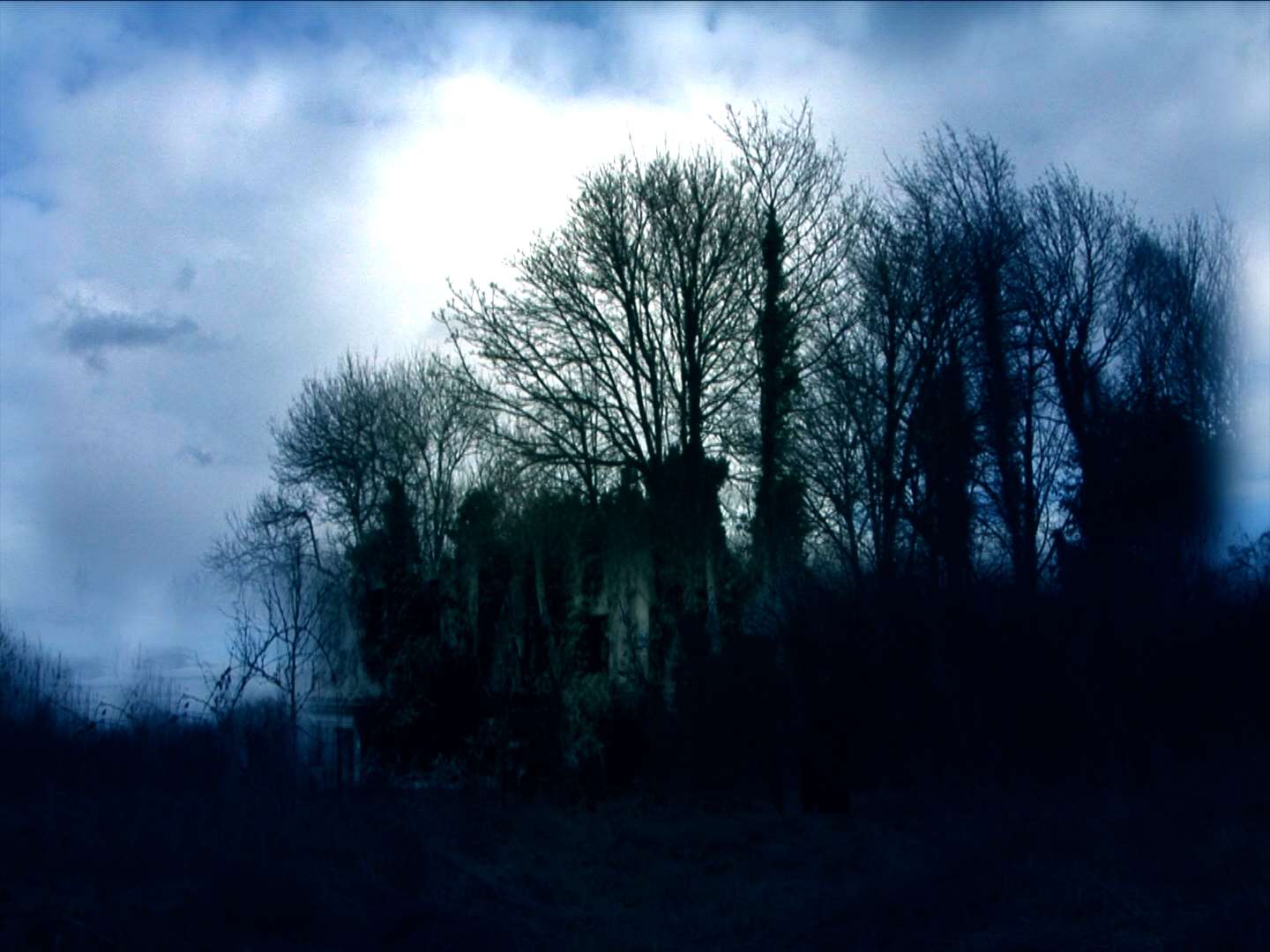
Documentary, horror, by Jason Figgis, USA, 2014.
In "Cathnafola", everything begins when renowned paranormal investigator Chris Halton of Haunted Earth UK receives footage filmed by three teenagers at the ruins of Cathnafola House in Ireland. Determined to unearth the truth behind the location’s bloody past, Halton embarks on a nighttime exploration of the infamous ruins—and soon uncovers terrifying and disturbing revelations.
LANGUAGE: English
SUBTITLES: Spanish, French, German, Portuguese
How a Science Names Itself Into Existence
You are sitting in a meeting where someone proposes a new department name, and you watch the room shift — not because the phenomenon they are describing has changed, but because the name has arrived. Something that was previously discussable only in whispers or with apologetic qualifications has now been given a container, and the container changes what can be said inside it.
Max Dessoir coined the word “parapsychology” in 1889, publishing it in a German journal called Sphinx, and the choice of prefix was not innocent. Para means beside, adjacent to, hovering at the edge of — and attaching it to psychology did something precise and double-edged: it acknowledged a neighborhood while refusing full residency. The phenomena Dessoir wanted to name — hypnotic suggestion at a distance, spontaneous visions, the apparent transmission of thought between persons who shared no sensory channel — were real enough to demand a word, but dangerous enough that the word needed to keep them at arm’s length from the respectable body of experimental science that Wilhelm Wundt had been constructing since 1879 in Leipzig. Naming is never neutral. It is a border negotiation.
Seven years before Dessoir’s coinage, a group of Cambridge scholars, philosophers, and scientists had already attempted a different solution to the same problem. The Society for Psychical Research was founded in London in 1882, with Henry Sidgwick as its first president, and its founding document is one of the stranger artifacts in the history of science — a declaration of rigorous empirical intent applied to phenomena that most of its contemporaries considered either fraud or superstition. Sidgwick himself had spent years trying to reconcile utilitarian ethics with the question of whether consciousness survives death, a question he found philosophically urgent precisely because he could not dismiss it. The SPR attracted figures like Frederic Myers, whose 1903 posthumous work Human Personality and Its Survival of Bodily Death ran to nearly 1,400 pages and attempted something almost unprecedented: a systematic taxonomy of the subliminal self derived from case studies of automatism, trance, and apparition. Myers was not a credulous man. He was the man who introduced the word “telepathy” into the English language in 1882, and he did so with the same logic Dessoir would apply to parapsychology — give the thing a clinical name and it becomes, at least partially, a clinical problem.
What neither man could fully control was the way institutional naming functions as a quarantine. By declaring that these phenomena constituted a distinct field, the SPR and Dessoir’s coinage simultaneously marked them as objects of inquiry and as objects apart from normal inquiry. The boundary they drew to protect psychical research from dismissal became the same boundary that protected mainstream science from contamination. Ian Hacking’s concept of “making up people” — articulated in his 1983 essay “Making Up People” — applies with strange precision here: when you create a category, you reshape what falls inside it. The phenomena studied by the SPR did not change between 1881 and 1883, but the people studying them became a different kind of person after the institution existed. They became psychical researchers, which meant they were no longer simply physicists or philosophers who had noticed something odd. They were specialists in the odd, which is another way of saying they were specialists in the marginal.
The deeper mechanism is one that Thomas Kuhn gestured toward in The Structure of Scientific Revolutions in 1962, though he was writing about something else entirely: normal science does not absorb anomalies, it manages them. Creating a dedicated field to study anomalies is one of the most elegant management strategies available, because it produces the appearance of engagement while preserving the integrity of the dominant framework. The SPR’s rigorous methodology — its committees, its census of hallucinations involving over 17,000 respondents collected through the 1880s — generated enormous quantities of data that mainstream psychology then had a perfectly institutional reason to ignore.

The Experimental Turn and Its Discontents

You sit across a table from a stranger who holds a card you cannot see, and you are asked to name the symbol printed on its face. A circle. A star. A cross. Wavy lines. A square. Five options, pure chance at twenty percent, and yet something in the room feels heavier than probability — or so the experimenters noted, again and again, in a basement laboratory at Duke University, beginning in 1930.
J.B. Rhine arrived at Duke not as a mystic but as a botanist, trained in rigorous empirical method, and what he brought to the study of extrasensory perception was precisely the language science claimed to respect: controlled conditions, blind protocols, statistical analysis, replication across thousands of trials. His collaborator Karl Zener had designed the now-iconic symbol deck specifically to eliminate the ambiguities of earlier card tests. Rhine’s 1934 monograph, Extra-Sensory Perception, published through the Boston Society for Psychical Research, reported that certain subjects — most famously Hubert Pearce, a divinity student — scored so far above chance across so many trials that the odds against random explanation ran into the billions to one. Rhine was not asking anyone to believe in telepathy. He was presenting a statistical anomaly and asking science to account for it.
The accounting that followed was instructive in ways that had nothing to do with parapsychology. The psychologist C.E.M. Hansel devoted years to reconstructing how Pearce might have cheated — peeking through doorways, bribing assistants, exploiting gaps in the experimental design — without ever producing a single piece of direct evidence that any cheating occurred. His 1966 book ESP: A Scientific Evaluation treated elaborate speculative fraud scenarios as methodologically superior to Rhine’s documented data, on the grounds that fraud, however unproven, was more philosophically acceptable than the alternative. This is not skepticism. This is a prior commitment to a conclusion dressed in the language of rigor.
What Rhine’s critics exposed, without intending to, was the asymmetry embedded in the burden of proof when an entire discipline’s metaphysical commitments are at stake. The statistician R.A. Fisher, who had personally advised Rhine on experimental design in the early 1930s, later distanced himself — not because Rhine’s mathematics were wrong, but because the results were inconvenient for a materialist framework that Fisher, like most of his colleagues, had never formally defended but always assumed. The philosopher of science Imre Lakatos described this dynamic in 1978 in The Methodology of Scientific Research Programmes: a discipline’s hard core — its foundational assumptions — is shielded from falsification by a protective belt of auxiliary hypotheses. Any result that threatens the hard core is absorbed, reinterpreted, or dismissed, never allowed to touch the core itself.
Rhine himself made genuine errors. His laboratory eventually confirmed that early experiments had procedural weaknesses: incomplete shuffling, inadequate sensory shielding, the possibility of unconscious cueing. He corrected them. The scores dropped. He reported this too. What science rarely acknowledges about Rhine is that his willingness to tighten protocols and publish declining results is precisely what normal science is supposed to look like — and that even the corrected, tightened experiments continued to produce results statistically above chance, which the mainstream simply stopped citing.
By the time the Parapsychological Association was admitted to the American Association for the Advancement of Science in 1969 — a membership that physicists and biologists quietly resented — the conversation had already calcified. The admission changed nothing institutionally. Grant funding remained virtually inaccessible. Journal referees applied standards of replication to parapsychology studies that they routinely waived for social psychology, nutrition science, or pharmaceutical research, disciplines whose replication crises in the 2000s and 2010s dwarfed anything Rhine’s critics had ever catalogued. The double standard was not a conspiracy. It was something more durable and less conscious than that — a shared intuition about what counts as real before the data arrives.
What Fraud Explains and What It Cannot
You are sitting across from someone who has just confessed to lying, and you realize, with a start, that nothing they told you before the confession has actually been disproven. This is the uncomfortable position that the history of parapsychological fraud forces onto anyone willing to think carefully. The lie does not retroactively contaminate everything; it only reveals how desperately we needed the lie to be the answer.
Eusapia Palladino was caught cheating. This is not disputed. The Italian medium, who drew scientists from Cesare Lombroso to Charles Richet into her orbit between the 1880s and the early 1900s, was observed on multiple occasions slipping a hand free from the control grip of investigators to manipulate objects she claimed were being moved by spirits. The 1895 Cambridge sittings produced a damning record of substitution and misdirection. And yet the investigators who caught her cheating were the same investigators who, on other occasions, reported phenomena they could not explain even after accounting for her known methods. Richard Hodgson, who exposed her, did not conclude that everything was therefore fraudulent. He concluded that the question had become more complicated. That complication was immediately forgotten by people who wanted a simpler story.
The epistemological structure of debunking relies on a contagion model: one demonstrated fraud spreads backward and forward through a subject’s entire output, sterilizing it. This model works well for criminal testimony but very badly for empirical investigation, because it mistakes moral character for methodological necessity. A fraudulent witness in a trial poisons the well because their credibility is the entire evidentiary basis. A physical phenomenon, if it occurs, occurs independently of whether the person associated with it is honest. The sleight of hand does not make levitation impossible; it only makes this particular claim of levitation untrustworthy. These are not the same proposition.
Uri Geller understood something about the theater of disbelief that his critics never quite acknowledged. When James Randi spent decades dismantling Geller’s spoon-bending performances through stage magic replications, he demonstrated something genuinely important: that the human perceptual apparatus is catastrophically bad at detecting deception under conditions of emotional and social investment. But the controlled laboratory trials at Stanford Research Institute in 1972 and 1973, conducted by Russell Targ and Hal Puthoff and published in Nature in 1974, were not spoon-bending performances. They were remote viewing protocols. The methodology was imperfect, the controls were later criticized, but the specific objection raised against Geller the showman does not transfer automatically to Geller the experimental subject unless one has already decided that the category of phenomenon is impossible. That decision precedes the evidence.
What fraud actually reveals is the extraordinary demand that anomalous experience places on credulity, and therefore the extraordinary temptation to manufacture what one cannot produce on command. This is a psychological finding of real weight. It tells us that the pressure to perform, to confirm, to deliver the miracle on schedule, produces deception as a nearly predictable outcome in any context where the anomalous is expected and the consequences of failure are social humiliation. Parapsychology creates that context with unusual intensity. The fraud is almost always downstream of the expectation, not upstream of it.
Mainstream science has its own version of this problem. The replication crisis that erupted publicly around 2011, documented through work by Brian Nosek and the Open Science Collaboration, showed that a significant fraction of published psychological findings could not be reproduced under controlled conditions. Fraud was not always the explanation. Selection bias, p-hacking, publication pressure, and motivated reasoning produced systematic distortion without anyone necessarily lying. Parapsychology is routinely dismissed for methodological failures that, measured against this baseline, begin to look considerably less exceptional than the dismissal requires them to be.
The question that survives all the fraud, all the exposure, all the theater of revelation, is not whether Palladino cheated or whether Geller performs. It is whether the instruments mainstream science currently deploys are adequate to detect something that, if real, would require entirely new instruments to detect at all.
The Physics Problem Nobody Wanted
You are sitting in a seminar room in 1982, watching a physicist describe two particles that have never met behaving as though they share a nervous system. The audience is composed largely of people who chose physics precisely because it promised escape from the murky vocabulary of mind and meaning, and now here is the mathematics telling them something that sounds uncomfortably like telepathy. Nobody says that word. The discomfort is managed through notation.
The experiment being described has its roots in John Bell‘s 1964 theorem, which demonstrated that no local hidden variable theory could account for the correlations predicted by quantum mechanics and subsequently confirmed in Alain Aspect’s landmark 1982 tests at the Institut d’Optique in Paris. What Bell and Aspect together established was not mysticism but something structurally stranger: that the universe contains correlations that cannot be explained by any signal traveling between the correlated parties. The physicists called this non-locality and then immediately constructed a wall around it, insisting that because no usable information could be transmitted through entanglement, it posed no threat to causality and could not be recruited for anomalous purposes. The wall was logically sound. It was also built with suspicious speed.
David Bohm had been living outside that wall for decades. His 1952 hidden variable interpretation of quantum mechanics, later developed into the ontological interpretation with Basil Hiley in their 1993 work “The Undivided Universe,” proposed a quantum potential that operated across the entirety of space without diminishing with distance, a field in which information about the whole was enfolded into every part. Bohm called this the implicate order, a term precise enough to be philosophical and vague enough to be dangerous. What made physicists uncomfortable was not that Bohm was wrong — his mathematics was impeccable — but that his framework had the structural shape of a universe in which the boundary between individual minds and the larger physical field was not absolute. He never claimed this. He didn’t have to.
In 1979, Robert Jahn, dean of Princeton’s School of Engineering, established the Princeton Engineering Anomalies Research laboratory, known as PEAR, an acronym that carried its own faint absurdity. Over the following twenty-eight years, Jahn and his colleague Brenda Dunne ran thousands of trials in which human operators attempted to influence the output of random event generators — devices producing binary data through quantum tunneling processes, meaning their randomness was underwritten by the same mechanics that had produced Aspect’s results. The effect sizes PEAR reported were tiny: a deviation of roughly 0.1 bits per trial from expected chance. But the consistency across millions of trials produced a cumulative Z-score that statisticians found difficult to dismiss on grounds of noise alone. What they found easier to dismiss were the researchers, the institution, and eventually the entire research program, which Princeton quietly closed in 2007 without public explanation.
What the PEAR data never provided was a mechanism. Jahn and Dunne proposed, in their 1987 book “Margins of Reality,” that consciousness interacted with physical systems through a resonance process analogous to quantum entanglement, but the analogy was not a derivation. They were gesturing toward Bohm’s implicate order without the mathematical architecture to connect the gesture to a prediction. This is the precise location where parapsychological theory has always stalled: the distance between a physical framework that permits anomaly in principle and an experimental result that requires anomaly in fact is not bridged by metaphor, however sophisticated the metaphor becomes.
The door that quantum mechanics opened in 1982 was real. Non-locality is not a fringe position; it is the confirmed structure of nature at the quantum scale. What remains genuinely unresolved is whether that structure has any bearing on the scale at which human cognition operates, or whether the wall the physicists built so quickly is not a logical necessity but a professional one, erected less to protect science than to protect scientists from a question whose answer they could not control.
A vision curated by a filmmaker, not an algorithm
In this video I explain our vision
Memory, Trauma, and the Persistence of Experience

You are seven years old and you know the name of a woman you have never met, the layout of a house in a village three hundred kilometers away, and the specific cause of death of a man who died before you were born. You do not experience this as strange. You experience it as memory.
Ian Stevenson spent forty years collecting exactly these cases, systematically, across India, Lebanon, Turkey, Sri Lanka, and West Africa, eventually publishing his landmark findings in “Twenty Cases Suggestive of Reincarnation” in 1966. What distinguished his methodology from the usual dismissals was its almost bureaucratic rigor: he interviewed children before any adult confirmation was possible, documented the specific verifiable claims — names, addresses, physical injuries corresponding to claimed wounds from a previous life — and then checked them independently. In roughly two thousand cases accumulated over his career at the University of Virginia, he found a statistically uncomfortable number of accurate correspondences that resisted conventional explanation. The discomfort is the data.
What Stevenson’s work actually exposes, before any metaphysical conclusion is drawn, is a structural fact about how cultures license certain forms of experience and criminalize others. In the Druze communities of Lebanon and Syria, past-life memory is not a psychiatric symptom — it is a theological given, and children who report such memories are listened to, interviewed seriously, taken to the claimed previous location. The memories consequently surface in detail, are tested, sometimes confirmed. In mainstream Western clinical settings, a child reporting the same content receives a referral and a diagnosis. The memory does not disappear; it is reclassified. Stevenson was not naive about this asymmetry. He noted explicitly that the cultural frame does not manufacture the memory but it determines whether the memory is permitted to remain coherent long enough to be examined.
This is the deeper problem that neither the skeptical nor the credulous position wants to sit with: the methodology of elimination. Western empiricism since Francis Bacon has operated on the principle that proper procedure neutralizes the observer’s contamination. But Stevenson’s cross-cultural data suggests that the observer — or rather, the entire social architecture surrounding the observer — is itself a variable that cannot be controlled away. When a society decides in advance that a category of experience is impossible, it does not thereby make that experience impossible; it makes it systematically illegible, then invisible, then forgotten. The result looks like absence of evidence. It is not.
The neurological literature on trauma offers an unexpected angle here. Bessel van der Kolk’s research, consolidated in “The Body Keeps the Score” published in 2014, established that traumatic memory does not behave like ordinary autobiographical memory. It does not narrate itself sequentially. It encodes somatically, surfacing as sensation, involuntary physical response, a sudden knowledge of spatial layout or danger that the conscious mind cannot account for. The overlap with what Stevenson’s children described — birthmarks corresponding to wounds, visceral fear of specific objects, knowledge of places never visited — is not a proof of anything. But it complicates the clean boundary between memory that is yours and memory that arrives from somewhere else.
Stevenson himself was cautious enough to title his landmark work “suggestive of reincarnation” rather than demonstrative of it. That word, suggestive, carries the entire methodological weight. It marks the place where the evidence accumulates past coincidence but stops short of mechanism — where the phenomenon is real enough to demand explanation but refuses to supply one. Most science is not actually comfortable at that threshold. It prefers the phenomenon to either evaporate under scrutiny or yield a clean causal chain. Stevenson’s cases did neither. They remained, stubbornly, in the interval between what can be dismissed and what can be understood, which is perhaps the most honest place any inquiry into the edges of human experience has ever managed to occupy.
The Institutional Immune System
You submit the paper and wait. Not anxiously, not with doubt — you have run the statistics three times, the effect size is real, the methodology is tighter than half the cognitive psychology that will appear in the same journal that month. The rejection arrives in eleven days, which is itself a kind of answer, because eleven days is not enough time for serious review. The editorial note says the topic falls outside the journal’s scope. The topic. Not the method, not the data, not the reasoning. The topic.
Harry Collins spent decades watching exactly this happen in domains far less radioactive than parapsychology, and what he identified in his 1985 work Changing Order was not fraud or conspiracy but something more structurally elegant and more difficult to dismantle: the formation of what he called a core set, the small cluster of recognized experts whose agreement effectively constitutes the social definition of a valid result. In mature sciences this mechanism is mostly invisible because it mostly works — the core set agrees with what the instruments say, and the instruments say what most people expected. But in contested domains, the core set’s primary function shifts from evaluation to boundary maintenance. The question being asked is no longer “is this result replicable” but “is this person one of us,” and the answer to the second question determines whether the first will ever be seriously posed.
The practical architecture of this exclusion is bureaucratic rather than conspiratorial, which makes it nearly impossible to challenge. Funding bodies like the National Institutes of Health and the major private foundations operate through peer review panels whose composition reflects the established consensus of each field. A parapsychology grant proposal passes through reviewers who have staked professional careers on the non-existence of the phenomena being studied. This is not a conflict of interest in any legal sense — it is simply the ordinary operation of expert evaluation. But the result is that between 1970 and 2000, despite the existence of university-based laboratories at Edinburgh, Princeton, and Amsterdam conducting methodologically rigorous work, the aggregate public and private funding allocated to parapsychological research in the United States remained well below one million dollars annually — a figure dwarfed by what a single mid-tier pharmaceutical trial might consume in a month. Scarcity of funding produces scarcity of researchers, which produces scarcity of replication, which then becomes the primary evidentiary argument against the field.
What makes this circular structure particularly resistant to analysis is that it presents itself as the neutral application of scientific standards. Marcello Truzzi, the sociologist who coined the phrase “extraordinary claims require extraordinary evidence” before watching it weaponized far beyond his intentions, spent the last decade of his life documenting how the burden of proof in contested science is never symmetrically distributed. The skeptic who dismisses a positive result as methodological artifact is not required to demonstrate which artifact, or to produce a competing account of the data. The demand for extraordinary evidence applies only in one direction, and the definition of what counts as extraordinary is controlled by the same core set that determines who reviews, who publishes, and who gets funded.
The deeper philosophical trap embedded in this arrangement is that replication — science’s foundational mechanism for establishing truth — cannot function as intended when access to the experimental domain is itself gated. Dean Radin at the Institute of Noetic Sciences calculated in his 2006 meta-analysis of presentiment studies that the cumulative effect size across published experiments reached statistical thresholds that would be considered conclusive in pharmacological research. The response from mainstream critics was not to conduct replications but to contest the meta-analytic methodology — a technically permissible move that nonetheless revealed something about where the real resistance was located, which was not in the numbers at all but in the institutional grammar that decides whose numbers are allowed to mean anything.
Consciousness as the Unresolved Variable
You are sitting with someone you love, watching them sleep, and you realize with a sudden and vertiginous clarity that you have absolutely no access to what is happening inside that skull — not the texture of their dreams, not the private color of their fear, not the felt quality of being them rather than you. The gap between two nervous systems is not a technical problem awaiting a better scanner. It is something closer to an abyss that no instrument has ever crossed, because the instrument and the observer are always on the same side of it.
David Chalmers named this with surgical precision in his 1995 paper “Facing Up to the Problem of Consciousness,” published in the Journal of Consciousness Studies, distinguishing between what he called the easy problems — explaining attention, memory, behavioral integration, all the functional architecture of mind — and the hard problem, which is simply this: why does any of it feel like anything at all? Why is there something it is like to see red, to grieve, to be startled by a sound at three in the morning? Chalmers was not being poetic. He was pointing at a logical gap that no amount of neuroscientific mapping has since closed, because explaining how neurons fire does not, even in principle, explain why firing neurons produce experience rather than just process information in the dark.
This is not a fringe position. Francis Crick and Christof Koch spent decades pursuing the neural correlates of consciousness, publishing their foundational framework in 1990 in Seminars in the Neurosciences, and Koch himself eventually acknowledged that identifying which neural patterns accompany conscious states is not the same as explaining why those patterns are accompanied by anything subjective at all. The correlation is reproducible. The explanation is absent. And that absence is not a gap that more funding or better MRI resolution will necessarily fill, because the problem is conceptual before it is empirical.
What this means, practically, is that the dominant materialist framework of contemporary neuroscience operates with a foundational assumption it cannot fully justify: that consciousness is entirely generated by, and therefore reducible to, physical brain processes. This is a reasonable working hypothesis. It has produced extraordinary knowledge about cognition, perception, and pathology. But it remains a hypothesis, and the hard problem is precisely what makes it a hypothesis rather than a settled conclusion.
Into that conceptual gap, parapsychology falls — not by invitation, not always by good reasoning, but by structural inevitability. If subjective experience is not fully explained by classical brain function, then the question of whether consciousness can interact with the world in ways that bypass ordinary sensorimotor channels cannot be dismissed on purely a priori grounds. It becomes, at minimum, an open empirical question wearing embarrassing clothes. The embarrassment is cultural as much as scientific. By the time Rhine’s laboratory at Duke was generating its most contested data in the 1930s and 1940s, the cultural boundary between legitimate inquiry and occult credulity had already been drawn with the kind of confidence that tends to precede revision.
The philosopher Thomas Nagel argued in his 1974 essay “What Is It Like to Be a Bat?” that subjective experience resists third-person description not because we lack information but because the very structure of objective science is built to exclude the first-person perspective. Parapsychology, whatever its failures of rigor, has always been fundamentally about first-person reports that refuse assimilation into third-person frameworks — the woman who knew before the phone rang, the child who described a room he had never entered, the moment of knowing that arrives before any channel for knowing has opened. Science has not explained these away. It has, mostly, declined to look directly at them, which is not the same thing, and the hard problem of consciousness is precisely why that distinction still matters.
🔮 Beyond the Veil: Mind, Mystery and the Unseen
Parapsychology stands at the crossroads of psychology, philosophy, and the inexplicable — a field that dares to ask whether human consciousness extends beyond the boundaries of the known. These related articles explore the deep territories of the mind, the history of esoteric thought, and the scientific and cultural frameworks that have sought to map what lies beyond ordinary perception.
The Theosophical Society: History, Principles and Influence on Western Culture
The Theosophical Society represents one of the most influential attempts in modern Western history to build a systematic framework for understanding the invisible dimensions of reality. Founded in 1875, it drew on Eastern philosophy, occultism, and emerging scientific thought to challenge the materialist consensus of its era. Its influence on parapsychology, psychology, and New Age spirituality remains profound and far-reaching.
GO TO THE SELECTION: The Theosophical Society: History, Principles and Influence on Western Culture
Psychopathy: History and Diagnosis in Contemporary Psychology
Psychopathy as a clinical concept shares with parapsychology a contested history at the margins of mainstream science, where rigorous diagnosis meets cultural fascination. The study of psychopathic behavior has forced psychology to confront the limits of empathy, moral agency, and the architecture of the human mind. Understanding this history illuminates how psychology itself constructs and revises its boundaries of the normal and the aberrant.
GO TO THE SELECTION: Psychopathy: History and Diagnosis in Contemporary Psychology
Autobiographical Memory in Psychology: History and Meaning
Autobiographical memory sits at the heart of many parapsychological questions about identity, past-life recall, and the nature of consciousness persisting through time. Psychologists have long studied how personal memory is reconstructed rather than simply retrieved, raising profound questions about the reliability of testimonies central to parapsychological research. This tension between subjective experience and scientific verification is one of the defining challenges of the field.
GO TO THE SELECTION: Autobiographical Memory in Psychology: History and Meaning
Universal Consciousness
The concept of universal consciousness provides one of the philosophical pillars upon which parapsychology has historically built its theoretical models. From telepathy to remote viewing, many parapsychological phenomena presuppose a non-local dimension of mind that transcends individual brains and connects all sentient beings. Exploring this idea opens a dialogue between ancient mystical traditions, modern quantum physics, and contemporary consciousness studies.
GO TO THE SELECTION: Universal Consciousness
Discover the Cinema That Asks the Big Questions
If these explorations of the hidden dimensions of mind and reality have stirred your curiosity, Indiecinema streaming is the place to continue the journey. Our catalog of independent and auteur films ventures fearlessly into the territories of consciousness, the uncanny, and the inexplicable — stories that mainstream cinema rarely dares to tell. Join us and discover a cinema that thinks, feels, and questions.
👉 EXPLORE THE CATALOG: Watch Indie Films in Streaming
A vision curated by a filmmaker, not an algorithm
In this video I explain our vision

