
The Glass Room You Already Live In
You wake up and the phone is already warm in your hand before your eyes have fully adjusted to the light. You check the time, then the weather, then something you barely remember wanting to know — a half-formed question from the night before about a film, a symptom, a name you couldn’t place. The search takes four seconds. You put the phone down and go make coffee. Nothing happened, you think. You were barely even awake.

But something did happen. In those four seconds, a string of data moved from your hand to a server farm somewhere in the high desert of Oregon or the flat industrial outskirts of Dublin, passed through layers of classification systems that tagged your query against your location, your device history, your previous searches, your age bracket, your likely income range, and the twelve other things you looked up in the past seventy-two hours. Before the coffee finished brewing, that data had already been bundled into a behavioral profile update and made available for purchase to parties you will never meet, for purposes you will never be told, inside a legal framework you technically agreed to in 2019 when you scrolled past eight hundred words of terms and conditions and tapped Accept.
This is not surveillance in the way the word once felt — no officer at a desk, no file with your name on it, no sense of being watched by a human eye with human intention. The architecture is stranger than that and in some ways more total. It does not need to watch you the way a guard watches a prisoner. It simply processes you. The distinction matters because watching implies that somewhere there is a watcher who could choose to look away. Processing has no such possibility. You are not observed; you are ingested.
By the time you sit down with your coffee, your phone has already logged that you moved from the bedroom to the kitchen, inferred from the change in ambient sound and the slight shift in your Wi-Fi signal. Your grocery app noted that you opened it briefly, didn’t buy anything, and closed it — a behavior pattern associated with price-checking before a shopping trip, which will adjust the promotional offers you see in the next forty-eight hours. The map application running quietly in the background has registered that you left home at 8:14 on a Tuesday, consistent with your behavioral baseline, and this consistency itself is data, the kind that makes your profile more valuable, more legible, more actionable.
There is a quality to this that resists the language we inherited for talking about privacy violations. The old vocabulary — intrusion, exposure, breach — assumes a before and after, a moment of crossing, a door being forced open. What you live inside now has no such dramatic structure. There was no intrusion because you were never fully enclosed to begin with. The room was glass before you moved in, and the lease was signed in the fine print of modernity itself, in the slow accumulation of conveniences you accepted one by one over two decades until the architecture around you had been quietly replaced without your noticing.
You scroll through a social platform during lunch and pause — not click, just pause — on a video about a political candidate you find vaguely irritating. Three seconds of hesitation. You move on. But that pause was longer than your average dwell time on neutral content, and the system has recorded it as a signal of engagement, of emotional activation, of a micro-interest worth nurturing or exploiting depending on who is buying the inventory that afternoon. You did not consent to having your ambivalence monetized. You did not know your ambivalence was visible. And yet it was, in the same way that everything is visible now — not because someone is watching, but because the room you are standing in has been engineered, from its very foundation, to see.
Mystery of an Employee

Drama, thriller, by Fabio Del Greco, Italy, 2019.
Someone wants to control the life of the employee Giuseppe Russo: the products he buys, his political and religious faith, his private life, even his dreams. But he will do anything to escape control and find his true self. Giuseppe is a man of around 45, married, with a stable job and a home of his own. His life flows seemingly peacefully when he meets a mysterious tramp who gives him some old VHS video cassettes. Giuseppe begins to see video tapes in which he is filmed in some moments of his life since he was a child, then as a teenager and as a young man. Who shot those videos that he remembers nothing about? Giuseppe has the strange sensation of being constantly observed and begins to investigate what is happening. Through his investigation of him, he begins to rediscover his true identity and become aware of who he truly is.
Employee's Mystery is a film that highlights the danger of social control and shows a society where everyone is constantly monitored and conditioned in their deepest selves. The film is also an analysis of human nature and identity. Fabio Del Greco, who plays Giuseppe, gives an engaging performance. Equally good is Chiara Pavoni, in the role of Giada Rubin and Roberto Pensa in the role of the tramp. Employee's Mystery is a film that addresses important themes in an original way, a psychological thriller that keeps the viewer glued to the screen until the end: a metaphor for contemporary society, in which people are increasingly monitored and conditioned by the media and technologies . It is a courageous and provocative work, which addresses important themes in an original way.
LANGUAGE: Italian
SUBTITLES: English, Spanish, French, German, Portuguese
Privacy Was Never a Natural Right
You are sitting at a table in a café, and someone you have never met photographs you through the window. You feel it immediately — a violation, a claim made on you without your consent, a theft of something you cannot quite name. The feeling seems ancient, instinctive, as if it were wired into the species alongside hunger and grief. That feeling is lying to you.
The sensation of violated privacy is real. The idea that it corresponds to a timeless human right is a historical confection, assembled at a specific moment, by specific people, for reasons that had nothing to do with eternal moral truth and everything to do with the anxieties of a particular class in a particular city at the end of the nineteenth century. In 1890, Samuel Warren and Louis Brandeis published “The Right to Privacy” in the Harvard Law Review, and this is, without exaggeration, the document from which the modern philosophical concept is largely descended. Warren was reportedly furious about the Boston press publishing gossip about his family’s social gatherings. The tabloids were intruding. The cameras — then newly portable, newly affordable, newly present in the streets — were catching people unposed. And so two Boston lawyers constructed a legal and moral architecture to defend something they called “the right to be let alone,” a phrase they borrowed from Judge Thomas Cooley’s 1888 treatise on torts. The genealogy of your deepest intuitions about personal space runs directly through a rich man’s irritation with journalists.
What makes this genealogy so difficult to accept is that the feeling arrived before the language, which made it easy to assume the language was simply catching up with something that had always existed. But the historical record refuses this comfort. In the communal sleeping arrangements of medieval European households, where servants and family members and occasional strangers shared beds without anxiety, or in the longhouse cultures of the Haudenosaunee Confederacy, where architectural design assumed constant collective presence, privacy as a protected interior space was not suppressed — it was simply not a structuring category of social life. The philosopher Barrington Moore Jr., in his 1984 work Privacy: Studies in Social and Cultural History, documented precisely this variation across cultures and centuries, concluding that the conditions for privacy as a moral claim require a specific material and economic threshold — a room of one's own, in both the literal and metaphorical sense, which only becomes a right once it becomes a possibility.
When the possibility appeared, it appeared unevenly. The domestic interiors that Victorian and Edwardian reformers celebrated as sanctuaries of private selfhood were accessible to those who could afford to build walls between themselves and others. The factory worker in a Manchester tenement in 1880 was not asserting a natural right to interiority; she was surviving in conditions that made such assertion meaningless. The legal right Warren and Brandeis imagined was constructed on the assumption of a subject who already had space, reputation, and the social standing to be humiliated by exposure. Privacy was never described from below.
This matters because the philosophical tradition that followed — running through the liberal frameworks that treat privacy as foundational to human dignity — inherited that exclusion without acknowledging it. When Charles Fried argued in his 1970 essay “Privacy” that intimate relationships require informational control to exist at all, he was describing something true about a particular kind of self, constructed under particular conditions, in particular societies. The universality was assumed, never demonstrated. And when that assumption became doctrine, it also became invisible, which is how assumptions do their most effective work — not by persuading anyone but by ceasing to require persuasion at all.
The photograph through the café window still feels like a violation. Nothing in this history cancels that feeling. But the feeling is evidence of what you have been trained to protect, not evidence of what you were born to possess.

The Liberal Subject and Its Convenient Walls
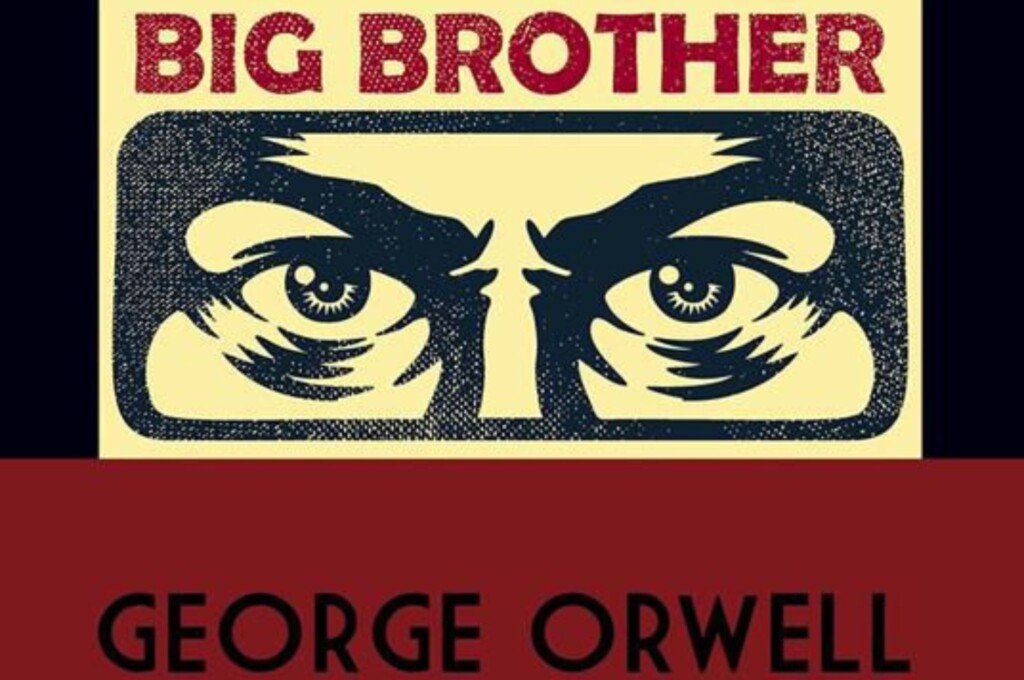
You are standing at the edge of a room you have been told belongs to you — your thoughts, your body, your threshold — and the certainty of that ownership feels so natural it barely registers as a claim at all. That feeling is not ancient. It was engineered.
John Locke‘s Second Treatise of Government, published in 1689, did not merely describe political arrangements. It produced a new kind of person: a being who owns himself before he owns anything else, whose interiority is sealed like a deed, whose rights precede society rather than emerge from it. The self as property — this was not metaphor. It was the foundational grammar of a political order in which the capacity to hold private space depended first on the capacity to hold private land. Locke’s laboring man mixed himself with the earth and thereby separated both from the commons. Privacy, in this architecture, was not shelter from power. It was power dressed in the language of withdrawal.
What gets obscured by treating this as universal philosophy is the precision of its exclusions. Carol Pateman’s 1988 work The Sexual Contract demonstrated with surgical clarity that the social contract Locke and his contemporaries theorized rested on a prior, silent arrangement: the subordination of women within the private sphere that the contract never touched. The domestic space was simultaneously idealized as sanctuary and quarantined from legal scrutiny. A man’s home was his castle precisely because the violence that could occur inside it was not the state’s business. Privacy, rendered as a masculine enclosure, became the structural condition under which domestic domination was rendered invisible — not by accident, but by design.
Kant sharpened this architecture rather than dismantling it. His autonomous rational agent — the being capable of self-legislation, of acting from pure practical reason rather than inclination — required a particular kind of interiority: undisturbed, bounded, sovereign over its own deliberative process. By the time the Groundwork for the Metaphysics of Morals appeared in 1785, the philosophical scaffolding was complete. The private sphere was not simply where one retreated from public obligation; it was where moral personhood was constituted. But rationality, in the eighteenth-century European context, was not distributed equally. Women, colonized peoples, and the laboring poor were systematically coded as beings governed by inclination, necessity, or instinct — categories that, within Kantian logic, disqualified them from full moral agency and therefore from the rights that agency underwrote, including the right to a protected private self.
The genius of this construction was its capacity to present itself as neutral. When philosophers spoke of “the individual,” they were describing a remarkably specific figure — propertied, literate, male, and European — while deploying language capacious enough to feel universal. This is what Charles Mills identified in The Racial Contract in 1997: the epistemological trick by which a particular social arrangement naturalizes itself as abstract principle. Privacy was not extended to enslaved people whose bodies were legally property. It was not extended to colonized subjects whose homes could be searched or seized under emergency provisions that never seemed to expire. The walls of the liberal subject were thick only for those who had already been recognized as subjects.
A woman working in a textile mill in Manchester in 1840 had no private sphere in any philosophically meaningful sense. Her body was subject to factory discipline for fourteen hours; her wages were legally her husband’s; her correspondence, if she had any, could be opened by those with authority over her household. The philosophical vocabulary of her era insisted she existed within the domestic domain that privacy was meant to protect. But protection requires a subject capable of invoking it, and that capacity had been quietly reserved for the person on the other side of the threshold — the one whose ownership of the space made the space, in law and in theory, genuinely his own.
Surveillance Before the Algorithm
You are already being watched in the only way that has ever mattered: not by a camera, but by the internalized certainty that you could be. The apparatus precedes the act of observation. The guard does not need to stand at the window. You have already moved to the center of the cell, away from the wall, into full visibility, because somewhere in the architecture of your life, you learned that being seen was safer than being caught hiding.
Jeremy Bentham designed the Panopticon in 1787 as a literal building proposal — a circular prison with a central inspection tower around which all cells faced inward, permanently exposed to potential scrutiny. When Michel Foucault excavated this structure in Surveiller et punir in 1975, he was not reaching for a metaphor. He was identifying a mechanism, already fully operational in the schools, hospitals, barracks, and factories of the nineteenth century, institutions that shared an architectural grammar of visibility long before they shared a network. The point was not that power watched. The point was that power no longer needed to watch in order to function. The watched subject had learned to watch themselves.
What the industrial era actually produced was not the assembly line or the steam engine as its primary invention — it was the disciplined body. The factory floor required workers who arrived on schedule, maintained posture, repeated motion without deviation, and accepted that their output was measurable and their presence accountable at every moment. This was not coercion in the traditional sense. There was no soldier with a bayonet. There was instead the time sheet, the supervisor’s periodic walk, the performance ledger — systems that made the body legible to institutional authority while simultaneously convincing the worker that legibility was simply the condition of adult participation in modern life. To resist it was to be, by definition, unreliable, ungovernable, unwell.
The hospital codified this further. The clinical gaze that began organizing medical practice in France during the late eighteenth century, which Foucault had already traced in Naissance de la clinique in 1963, produced patients who learned to present their bodies as objects of examination — to speak the language of symptoms, to position themselves correctly on the examination table, to become cooperative material for a knowledge system that produced diagnoses, classifications, and, inevitably, norms. Whoever failed to conform to those norms became a case. And a case, once named, becomes visible in a new and permanent way: filed, indexed, retrievable.
The school performed the same operation on childhood. The monitorial system developed by Andrew Bell and Joseph Lancaster in the early nineteenth century placed hundreds of students under simultaneous observation through a hierarchy of pupil-monitors — an early distributed surveillance network that required no single omniscient authority because it built oversight into the social structure itself. Children watched children, reported to teachers who reported to administrators who reported to the state, and by 1833 the British government had begun systematically funding elementary education not out of moral generosity but out of the need to produce populations that could be governed at scale.
What changed in the twenty-first century was not the logic but the resolution. Digital infrastructure did not invent the watched self; it eliminated the gaps that once allowed a kind of friction, a delay between behavior and record, between action and consequence, between the person you were in private and the file that followed you. The nineteenth-century factory worker could, in theory, lie about yesterday. The contemporary subject cannot misremember what their phone already knows.
When Exposure Became Intimacy
She has done this before — the confession that arrives pre-packaged, the tears timed to the third minute of the interview, the revelation of something “private” that lands with the precision of a press release. You watch her and feel the uncomfortable shimmer of not knowing whether she is suffering or performing suffering, and then you realize that for her, at some point years ago, the distinction may have quietly ceased to exist. The boundary did not collapse in a single dramatic moment. It eroded the way a coastline does — incrementally, unremarkably, until one morning the land that used to be there simply is not.
This is not a failure of authenticity in the moral sense. It is something more structurally unsettling. Erving Goffman argued in The Presentation of Self in Everyday Life, published in 1959, that the self is not a fixed entity that social life either expresses or distorts — it is a dramaturgical construction, assembled differently in each context, dependent on the presence of an audience to give it shape. What Goffman called the “front stage” was not a mask worn over a truer face; it was one of two regions that together constituted the full architecture of social identity. The backstage was its necessary counterpart — the space where the performer rests between scenes, drops the script, rehearses, contradicts themselves in private. Not because that contradiction is more real, but because without it the front-stage performance loses its internal coherence. Privacy, in this framework, is not where you go to be yourself. It is where the performance is maintained.
What happens, then, when the backstage is colonized by the performance itself? When the private admission becomes a genre, the vulnerable moment a content category, the breakdown a form of brand management? The machinery does not stop — it simply swallows the room it previously needed to function. And this is where the cultural logic of contemporary exposure becomes genuinely strange, because it presents itself as radical transparency while producing something closer to its opposite: a self so thoroughly performed that the audience can no longer locate the seams, and neither can the performer.
Goffman was writing about the 1950s American middle class, about dinner parties and professional encounters and the minor theatre of everyday civility. He could not have anticipated the infrastructural scale at which his insights would eventually apply — platforms designed explicitly to reward front-stage behaviour with attention, to monetize disclosure, to make the backstage not just visible but valuable. By 2023, the influencer economy in the United States alone was estimated at over twenty-one billion dollars, a figure built almost entirely on the simulation of access to private life. The product being sold is not content. It is the sensation of proximity to an interior that may no longer exist as such.
What this produces in the audience is something philosophers of recognition have been circling for decades without quite naming it directly. There is a specific form of loneliness generated not by isolation but by the experience of watching interiority become merchandise. You feel seen by someone who is not seeing you. You feel intimate with someone who is performing intimacy as a professional competency. The transaction mimics the structure of genuine disclosure — vulnerability, trust, the lowering of defenses — while remaining entirely asymmetrical and entirely mediated. And because the form is so convincing, the absence of the substance registers not as fraud but as a private inadequacy on your part, a failure of your own capacity for connection.
A vision curated by a filmmaker, not an algorithm
In this video I explain our vision
The Commodification Turn and Its Philosophers

You are filling out a form online — not a legal document, not a financial application, just a preference survey for a streaming platform — and somewhere between clicking “strongly agree” and “somewhat disagree,” you realize you have no memory of deciding to do this. The form appeared. You responded. The data moved somewhere you will never see, toward purposes you were never told, to feed a system that already knew more about what you would click next than you did at the moment you clicked it.
Shoshana Zuboff spent years building the vocabulary to describe what just happened to you. In The Age of Surveillance Capitalism, published in 2019, she introduces the concept of behavioral surplus — the excess data generated by human activity online, beyond what is technically necessary to provide a service, harvested and converted into predictive products that are then sold to markets you do not participate in and cannot observe. You are not the customer. You are not even the product in the crude formulation that circulated through the 2010s. You are the raw material, and the factory is invisible.
What makes Zuboff’s argument philosophically significant rather than merely journalistic is her insistence that this represents a new logic of accumulation, not an extension of familiar capitalism. Previous economic formations expropriated land, then labor, then attention. What surveillance capitalism expropriates is the interior structure of human experience itself — the hesitations, the reversals, the private associations between concepts that never become actions. The behavioral data that carries the highest predictive value is not what you bought but what you almost bought. Not what you said but the pause before you said it. The raw material of the new economy is the unfinished thought.
Marx understood alienation as the worker’s estrangement from the product of their labor — the object leaves your hands and becomes foreign to you, circulates in a world governed by exchange value rather than human need. By 1844, in the Economic and Philosophic Manuscripts, he had pushed further: alienation was not only from the product but from the activity itself, from the capacity to work as a specifically human expression of being. What surveillance capitalism completes is a third displacement that Marx could not have anticipated, because it operates on territory he never theorized — the displacement of the person from their own experience as it is occurring. The behavioral surplus is extracted not after you act but during the act, in the milliseconds of your engagement with a screen, which means the expropriation happens inside the temporal boundary of lived experience rather than at its edge.
This is not metaphor. The algorithmic architecture that governs what appears on your feed has been tuned to maximize what the engineers call engagement, a neutral word carrying enormous violence. Engagement means affective capture — keeping the nervous system activated, oscillating, unresolved. The 2021 internal research circulated within one major platform confirmed what was already being theorized from outside: the system had identified that certain emotional states in users produced longer sessions and higher interaction rates, and the feed was calibrated accordingly. The emotional states that produced the highest engagement were, predictably, anxiety and outrage. The platform was not a tool you used. It was an apparatus that used you to generate the conditions of its own expansion.
Georg Simmel wrote in 1903, in The Metropolis and Mental Life, about the blasé attitude as a psychic defense mechanism developed by urban dwellers against the overwhelming stimulation of city life — a kind of affective withdrawal, a deliberate dulling of responsiveness, chosen by the nervous system to survive an environment that exceeded its capacity. What Simmel described as a pathology of modernity has become, in the surveillance economy, a feature that the system works actively to prevent. The blasé subject stops generating surplus. The numbed person does not click. And so the architecture is engineered not to overwhelm you into withdrawal but to keep you perpetually on the threshold of overwhelm, perpetually responsive, perpetually yielding data — never fully captured, never fully free.
Feminist Critiques and the Politics of the Private
You are standing in a kitchen in 1974, and the man across the table has just broken your jaw. No one is coming. Not because they do not know — the neighbors heard everything — but because what happens inside a home is, legally and culturally, nobody’s business. The police, if called, will refer to it as a domestic matter. The word “domestic” does the work of a wall.
This is not an accident of enforcement. Catharine MacKinnon, in her 1989 book Toward a Feminist Theory of the State, argued that the public/private divide was never a neutral organizing principle of liberal democracy — it was a jurisdictional technology that placed women’s most intimate suffering beyond the reach of law precisely by calling it private. The right to privacy, in this reading, did not protect women inside the home. It protected the home from women’s claims against it. The sphere that liberal theory had celebrated as the refuge from state power was, for millions of women, the site of the most unmediated state-sanctioned violence imaginable, violence that the state simply declined to name.
What makes MacKinnon’s intervention genuinely destabilizing is that it does not merely critique the application of privacy norms — it targets the architecture. The Griswold v. Connecticut decision of 1965, which established a constitutional right to marital privacy in the United States and is typically celebrated as a landmark of personal freedom, is precisely the kind of precedent she indicts. The marital bedroom protected by that ruling was a space occupied by two people with structurally unequal power, and the privacy that shielded them from state intrusion shielded one person’s autonomy and one person’s captivity under identical legal cover. Privacy did not distinguish between them.
Patricia Williams, writing in The Alchemy of Race and Rights in 1991, pressed this analysis into a different historical wound. Williams, a Black legal scholar, traced how the entire architecture of personhood underlying privacy rights had been constructed around a subject who was implicitly white, implicitly propertied, implicitly male. The enslaved person’s body was, by legal definition, property — and property cannot hold privacy claims because privacy is predicated on self-ownership. The Fourteenth Amendment attempted to repair this, but Williams was precise about what legal inclusion actually delivers: formal recognition within a structure that was built without you, whose foundational categories still carry the shape of your exclusion. To be granted privacy rights in 1868, or in 1965, or now, is not to receive what those rights originally promised to someone else. It is to receive the word, inside a grammar that was never written in your register.
This bifurcation — privacy as experienced privilege versus privacy as declared universality — runs through contemporary feminist and critical race theory like a fault line. Anita Allen, whose work on privacy spans decades from Unenforced Norms to Unpopular Privacy, has documented how Black women in particular occupy a paradoxical position: historically denied the bodily privacy that white women were granted even under patriarchal law, while simultaneously stereotyped as naturally less private, less modest, less in need of the protections that privacy was meant to confer. This is not a contradiction the theory accidentally produced. It is one the theory required, because the private subject at its center needed a contrast class — bodies that were, by nature or by law, public.
The Self That Disappears Under Total Visibility
You are standing in a glass-walled office, observed from every corridor, and you notice — not immediately, but slowly, the way a temperature drop registers before you name it cold — that you have begun editing your gestures. Not performing them. Editing them. The coffee cup lifted with a certain deliberateness. The pause before answering a question held a half-second longer than thought requires. You are not lying. You are not pretending. You are simply becoming, under the pressure of continuous visibility, someone slightly different from who you were before anyone was watching.
Byung-Chul Han, writing in The Transparency Society in 2012, identified something that most digital optimists had structurally refused to see: transparency does not reveal truth — it destroys the conditions under which truth can form. His argument is not nostalgic, not a lament for lost privacy as comfort or secrecy as privilege. It is ontological. The self, Han insists, requires negativity — resistance, withdrawal, hiddenness, the refusal to be immediately legible — in order to cohere at all. A society that eliminates opacity in the name of accountability does not produce more authentic subjects. It produces subjects who have lost the interior friction necessary to become anything other than their own display.
This is not a metaphor for digital surveillance alone. Hannah Arendt had already mapped the structural distinction in The Human Condition in 1958 between the public realm, where one appears and is judged, and the private realm, which she described not as the space of shame but as the space of depth — the place where the roots of public identity are nourished in darkness. Without that darkness, she wrote, the public self withers into performance. What Han added, half a century later, was the empirical condition that makes Arendt’s structural warning feel suddenly urgent: the technological collapse of the boundary between those two realms, not through force but through desire.
The sociology of Erving Goffman had already demonstrated in The Presentation of Self in Everyday Life in 1959 that identity is always partly performed, that we manage impressions in every social encounter. But Goffman’s social actor still had a backstage — a region of preparation, error, rehearsal, authentic disarray, the face before the face is put on. What the contemporary condition has accomplished is the colonization of the backstage itself, not by an external authority but by internalized visibility, the permanent anticipation of being seen that restructures behavior even in the absence of an actual observer. Michel Foucault had named this mechanism in Discipline and Punish in 1975: the Panopticon’s real achievement was never the guard in the tower. It was the prisoner who learned to guard himself.
What remains unexamined, even by the most rigorous critics of transparency, is whether the self that forms in hiddenness is actually more real than the self that forms under observation — or whether this entire argument depends on a romantic premise about interiority that the history of psychology has repeatedly failed to verify. William James, in The Principles of Psychology in 1890, described the self as plural, situational, a different person to different audiences, with no single authentic core underneath the performances. If James is correct, then privacy does not protect a true self. It protects the fiction of one. And the fiction, perhaps, is not trivial — perhaps the fiction of a coherent inner life is precisely what makes sustained ethical agency possible, what allows a person to refuse, to disappoint, to remain opaque enough to surprise even themselves.
The question, then, is not whether we have lost privacy, but whether the self that privacy was supposedly sheltering ever existed outside the sheltering conditions themselves — and if those conditions are gone, whether what continues to live under total visibility is still, in any meaningful sense, a self at all.
🔍 The Gaze, the Self, and the Right to Be Unseen
Privacy is not merely a legal concept but a philosophical battlefield where questions of identity, power, and freedom converge. From surveillance capitalism to political philosophy, the articles below trace the intellectual landscape that surrounds and informs contemporary debates on privacy.
The Surveillance Society: History and Theory
The surveillance society did not emerge overnight but developed through decades of institutional, technological, and ideological transformations. This article provides an essential historical and theoretical framework for understanding how the monitoring of individuals became normalized in modern life. It is an indispensable companion to any serious engagement with the philosophy of privacy.
GO TO THE SELECTION: The Surveillance Society: History and Theory
Shoshana Zuboff: Surveillance Capitalism
Shoshana Zuboff‘s concept of surveillance capitalism reveals how digital platforms extract behavioral data as a raw material for profit, fundamentally reshaping the boundaries of private life. Her analysis exposes the asymmetry of power between corporations and individuals in the information age. Understanding Zuboff is crucial for grasping why privacy has become one of the most urgent philosophical and political issues of our time.
GO TO THE SELECTION: Shoshana Zuboff: Surveillance Capitalism
Mill’s On Liberty: Analysis
Mill’s On Liberty remains one of the foundational texts for thinking about the limits of social and political power over the individual. Its defense of personal autonomy and the private sphere anticipates many of the tensions that contemporary privacy debates attempt to resolve. Revisiting Mill through a modern lens opens a productive dialogue between classical liberalism and today’s digital realities.
GO TO THE SELECTION: Mill’s On Liberty: Analysis
Edward Snowden and Mass Surveillance
Edward Snowden’s revelations transformed abstract debates about surveillance into a concrete global reckoning with state power and individual rights. His disclosures forced philosophers, jurists, and citizens alike to confront the practical stakes of privacy in a networked world. This article examines how Snowden’s actions reshaped the political and ethical conversation around secrecy, transparency, and freedom.
GO TO THE SELECTION: Edward Snowden and Mass Surveillance
Cinema That Dares to Question Power and the Private Self
If these reflections on privacy, surveillance, and freedom have stirred something in you, Indiecinema offers a curated streaming catalog of independent and auteur films that explore the same questions through the power of moving images. Discover voices that mainstream platforms silence, and find cinema that thinks as deeply as it moves you.
👉 EXPLORE THE CATALOG: Watch Indie Films in Streaming
A vision curated by a filmmaker, not an algorithm
In this video I explain our vision

