
The Supermarket as Cathedral
You walk into the supermarket with a list. Three items, maybe four. You have already decided what you need, or so you believe, and this belief is the first trap. The fluorescent light above you is calibrated to a specific kelvin temperature — not cold enough to feel clinical, not warm enough to feel intimate — designed to keep you in a state of mild alertness without anxiety, a metabolic sweet spot where the hand reaches more readily for things it did not come to find. The bread is at the back. It has always been at the back. You have to walk past everything else to reach it, and this is not an accident of architecture. It is a sentence, and you are reading it with your body.

Vance Packard published The Hidden Persuaders in 1957, and the book sold more than a million copies in its first year, which tells you something not about Packard but about the public — about how many people already suspected, somewhere below conscious articulation, that their desires were not entirely their own. Packard had spent months embedded with the practitioners of what was then called motivational research, the postwar industry built on the application of psychoanalytic theory to consumer behavior. What he found was not a conspiracy in the dramatic sense, but something more unsettling: a systematic, institutional effort to locate the unconscious triggers of human behavior and engineer the environment to pull them. Ernest Dichter, the Viennese psychologist who had emigrated to New York and essentially invented the field, believed that people almost never bought what they thought they were buying. A woman purchasing a cake mix, Dichter argued, was not purchasing convenience. She was purchasing permission to perform nurturing, which is why early mixes that required only water failed commercially while those requiring an egg — one act of contribution, one trace of the self — succeeded. The egg was not an ingredient. It was a psychological valve.
What makes this history difficult to absorb is not its cynicism but its precision. The motivational researchers were not guessing. They were conducting depth interviews, projective tests, focus groups — methodologies borrowed directly from clinical psychology — and the findings were then handed to designers, copywriters, shelf planners, and store architects. The supermarket as it exists today is not a neutral distribution system. It is the accumulated result of decades of applied behavioral science, a built environment shaped by the documented irrationalities of the human mind. The average American supermarket in 2023 carries between 30,000 and 50,000 distinct products. The average shopper purchases roughly 300 of them per year. The ratio of presence to purchase is the operating logic of the entire space: overwhelm, then channel. Abundance is the manipulation. The excess of choice creates a specific cognitive state — Barry Schwartz would later call it the paradox of choice in his 2004 work of the same name — in which the exhausted mind defaults to familiarity, to color, to position, to what is at eye level, which is precisely where manufacturers pay a premium to place their products.
You do not feel manipulated in a supermarket because the manipulation has been engineered to feel like preference. This is the fundamental achievement that Packard was trying to name, and naming it was harder than it sounds, because the vocabulary of individual freedom was already so deeply embedded in postwar American identity that any suggestion of its compromise felt like an accusation of weakness. To say you were being steered was to say you were steerable. And who wants to believe that. The shopping cart itself, introduced widely in the late 1930s by Sylvan Goldman, was initially rejected by customers — men found it emasculating, women found it reminiscent of a pram — until Goldman hired models to push them around his stores to normalize the behavior. The desire to use a cart was manufactured before the cart was used.
Crazy World

Drama, thriller, by Fabio Del Greco, Italy, 2010.
Luca is poor and works, precariously, as a waiter. He lives a problematic relationship with his girlfriend, and his life is full of doubts. One day Luca meets Chiara, a friend who had studied philosophy with him at university. She has realized her dream of opening a night and is now well-off. Luca leaves everything behind and starts a relationship with Chiara. He manages the nightclub with her and, thanks to the cocaine and call girls sold to politicians, he gets out of his hard economic situation. But Chiara does not manage to obtain the contract for an old furnace, so she blackmails Saverio, a member of the Parliament. Chiara owns a video in which Saverio has sexual intercourse with a transsexual.
LANGUAGE: Italian
SUBTITLES: English, French, Spanish, German, Dutch, Portuguese.
Packard’s Uncomfortable Mirror
You are standing in a supermarket in 1957, and you do not know why you reached for that particular brand of soap. The packaging is yellow. You have no memory of deciding anything. Your hand moved before your mind caught up, and somewhere in a mahogany-paneled office in Croton-on-Hudson, New York, a man named Ernest Dichter is already writing the report that explains exactly why.
Vance Packard published The Hidden Persuaders that same year, and the book became an immediate cultural detonation, selling over a million copies within months and landing on bestseller lists with the kind of velocity that embarrassed the advertising industry it was exposing. Packard was not an academic. He was a journalist, trained to watch surfaces carefully enough to see what moved beneath them, and what he saw in postwar America was a consumer economy that had quietly outgrown the idea that people bought things for rational reasons. The war had ended. The factories that had produced bombers and ammunition were pivoting toward refrigerators and automobiles and television sets. Between 1945 and 1956, American consumer spending had expanded at a rate that economists found both thrilling and slightly difficult to explain through conventional models of utility and preference. The market was flooded with nearly identical products competing for the same wallets, and the old methods of advertising — describe the product, state the price, repeat the name — were beginning to feel inadequate to the psychological complexity of the buyer standing in the aisle.
Dichter’s Institute for Motivational Research, founded in 1946, was the laboratory where that inadequacy was being systematically exploited. Dichter had arrived in America from Vienna in 1938, carrying with him a particular intellectual inheritance: he had trained under Paul Lazarsfeld and absorbed the psychoanalytic atmosphere of a city that had spent decades arguing about the unconscious. What he brought to American corporations was the proposition that consumers did not know why they wanted what they wanted, and that this ignorance was not a problem to be corrected but a lever to be pulled. His methodology involved depth interviews, projective tests, and the kind of slow, circling conversation designed to bypass the rational defenses of a respondent and reach something rawer underneath. He told Chrysler that men unconsciously perceived convertibles as mistresses and sedans as wives — which is why they bought the sedan but stopped to look at the convertible in the showroom. He told soap manufacturers that the act of washing carried latent meanings about guilt and ritual purification that had nothing to do with hygiene. He charged significant fees for these conclusions, and corporations paid them, because the conclusions worked.
What Packard understood, and what made his book more than a piece of investigative journalism, was that the architecture of manipulation he was describing was not a conspiracy in the conventional sense. Nobody in a smoke-filled room had decided to degrade the autonomy of the American consumer. The process was diffuse, incremental, and entirely logical from the perspective of every individual actor within it. Advertisers needed to sell products in saturated markets. Researchers needed clients. Corporations needed growth. Each step was defensible. The collective outcome — a public being systematically studied, segmented, and addressed at the level of its buried fears and wishes without its knowledge or consent — was the result not of malice but of rational self-interest operating without friction. This is the specific discomfort Packard forced onto his readers, and why the book produced the particular unease it did: it was not describing villains. It was describing a system that required no villains to function.
The year 1957 also saw the launch of Sputnik, and American culture was already saturated with anxieties about invisible forces operating above the visible world. Packard gave that anxiety a domestic address — not the sky, but the supermarket, not foreign technology, but the interior of the ordinary American mind, already mapped and already occupied.

The Architecture of Manufactured Want
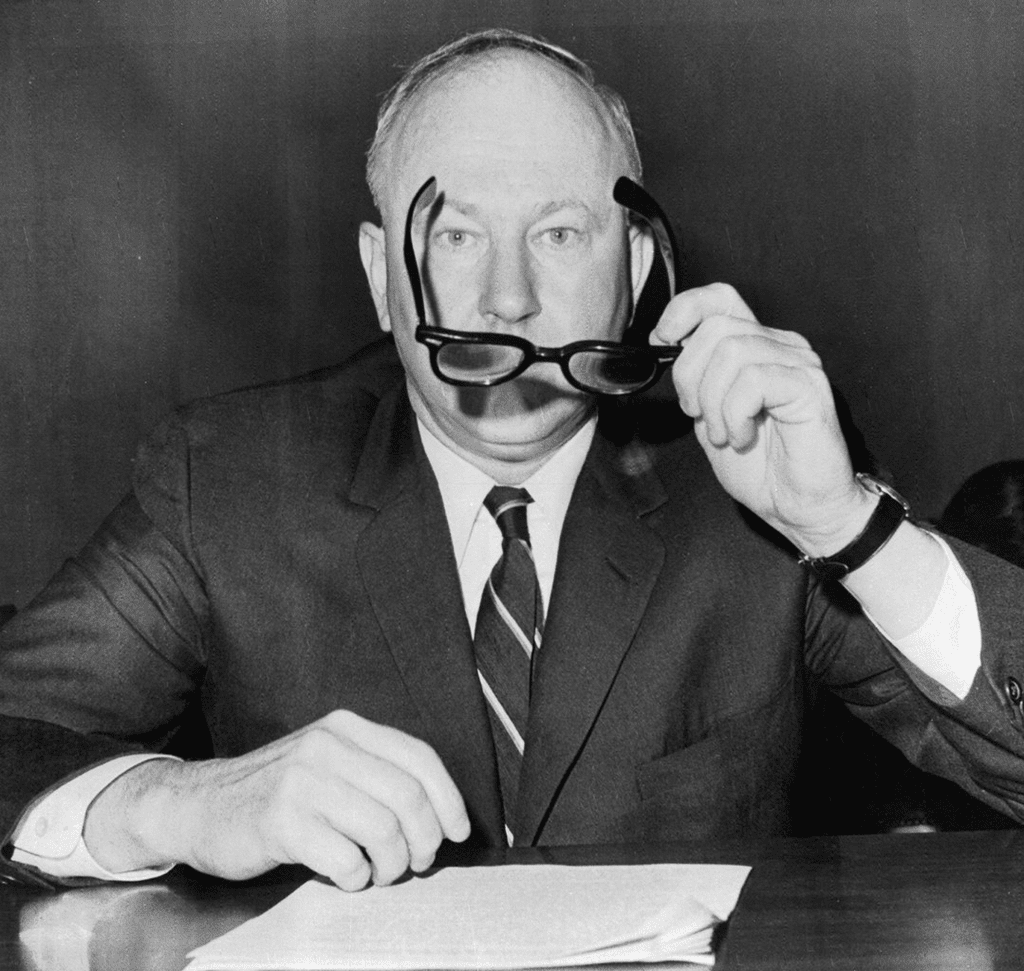
You are standing in a supermarket aisle in 1956, reaching for a box of cake mix you did not intend to buy. Nothing about the moment feels coerced. The color of the packaging, the particular warmth of the photograph on the front, the way the product sits at precisely the height of your relaxed gaze — none of it registers as design. It registers as appetite.
Ernest Dichter knew exactly what was happening in that aisle, and he had sold the knowledge to the company that made the box. A Viennese-trained psychologist who had emigrated to the United States in 1938 and founded his Institute for Motivational Research in Croton-on-Hudson, New York, Dichter operated on a simple and devastating premise: that consumers rarely know why they buy what they buy, and that this ignorance is not an obstacle to selling but the very engine of it. His 1960 book The Strategy of Desire made the argument openly, but by then the work had already been applied for nearly two decades. Packard was documenting a practice that had quietly matured inside American commerce long before anyone thought to name it publicly.
What Dichter industrialized was not Freudian theory in any rigorous sense — it was Freudian vocabulary, stripped of its clinical ambivalence and retooled as diagnostic infrastructure. The concept of the id, in Freud’s 1923 structural model, described a reservoir of drives that the ego could only partially manage and never fully know. Dichter took that unruliness and converted it into a research problem. If the unconscious could be mapped through clinical interview, through projective tests, through the controlled elicitation of free association, then its contents could be anticipated, and products could be designed to speak directly to what the consumer could not consciously articulate. The unconscious stopped being a site of conflict and became a site of addressable demand.
The cake mix case Packard describes is almost too neat, but its neatness is precisely the point. Sales of boxed cake mixes were stagnant in the early 1950s despite the product’s obvious convenience. Research commissioned from Dichter’s institute concluded that housewives felt vaguely guilty about the product’s completeness — that removing them entirely from the baking process threatened something in their sense of domestic contribution. The proposed solution was to remove the powdered egg from the mix and require the buyer to add a fresh one. The gesture was nutritionally insignificant. Psychologically, it was a confession. It acknowledged that the product was not selling a cake but a particular relationship between the woman and her household, and that this relationship required the performance of labor even when labor had been rendered unnecessary. One egg returned to the buyer what convenience had taken from her: the feeling of having made something.
This was the architecture Packard was trying to expose — not manipulation in the crude sense of false advertising, but something far more intimate. The market had learned to speak the language of interior life. Dichter’s researchers conducted thousands of depth interviews throughout the 1950s, producing what he called “motivational portraits” of products — psychological biographies of objects, mapping the anxieties, aspirations, and unspoken hungers that consumers attached to them without knowing it. A convertible automobile was not transportation; it was, in his analysis, a mistress — a symbol of freedom and irresponsibility that married men purchased in fantasy and in fact. A house, by contrast, was a mother. These were not metaphors offered as ornamentation. They were operational blueprints.
What made the whole apparatus genuinely unsettling was not that it was cynical but that it was, in a narrow sense, accurate. Dichter’s interviews kept producing the same results because the psychological patterns were real. People did attach symbolic weight to objects. They did make purchasing decisions for reasons they could not name. The error was not in the diagnosis but in what was done with it — the moment a clinical finding became a targeting coordinate, something had crossed a threshold that the language of commerce had no interest in marking.
When Selling Became a Science of the Self
You are standing in a department store in 1955, not buying a refrigerator. You are buying the kind of person who owns that refrigerator — the kind of person whose kitchen gleams, whose family is safe, whose choices confirm something essential about who she is and who her neighbors believe her to be. The object is almost incidental. What is being transacted is a self.
This was not an accident of consumer culture. It was an engineered pivot, and Vance Packard saw it happening in real time. What he diagnosed in the late 1950s was not merely aggressive salesmanship but a categorical transformation in what advertising claimed to be selling. The product had become a vehicle for something far more intimate and far more profitable: a mirror in which the buyer could recognize a flattering version of themselves. Motivation researchers working for major agencies had discovered that people did not want to be told what a product did. They wanted to be told what owning it meant — about their intelligence, their taste, their standing, their desires. The functional claim gave way to the existential one.
C. Wright Mills had already mapped the psychological terrain that made this possible. In White Collar, published in 1951, he described the emergence of a new American middle class defined not by what it produced but by what it performed — a class of salespeople, clerks, managers, and administrators whose identity had become inseparable from their social presentation. Mills argued that the personality itself had been converted into an instrument of exchange, something to be groomed, projected, and sold in every daily transaction. The self, in this framework, was no longer a private interiority but a public asset, perpetually audited by the social environment. What advertising understood, and what Mills foresaw with uncomfortable precision, was that a population already practicing the continuous performance of selfhood would be extraordinarily receptive to any product that promised to improve that performance.
The tobacco industry did not sell cigarettes in the early 1950s. It sold composure, virility, rebellion, or sophistication — depending on the brand and the target demographic. Leo Burnett’s work for Marlboro, beginning in 1954, did not argue for the quality of the tobacco. It constructed an archetype of autonomous masculinity and then suggested that the act of smoking was how you inhabited it. The product was the costume. The cowboy was the proposition. By 1963 Marlboro had climbed from a minor filtered cigarette associated with women to the best-selling cigarette brand in the United States — a transformation achieved almost entirely through identity architecture rather than product information.
What made this shift so structurally durable was its exploitation of genuine psychological need. The postwar expansion had produced prosperity without producing meaning. Millions of Americans had more purchasing power than their parents and far less certainty about what that purchasing power was supposed to confirm. Into that vacuum, the new advertising moved with surgical precision, offering not just goods but taxonomies of the self — you are the kind of person who drives this car, who wears this cologne, who serves this brand of coffee to guests. Each purchase was a small act of self-definition, and each act of self-definition created the anxiety of revision, which required another purchase. The loop was not incidental. It was the mechanism.
What Packard grasped, and what most of his contemporary critics underestimated, was that this mechanism did not require deception in any simple sense. The consumer was not lied to about the refrigerator’s temperature settings. They were offered something they actually wanted — a coherent story about who they were — and the price of that story was paid in currency that never appeared on any receipt. The transaction was always completed before anyone reached the register, in the moment the advertisement succeeded in making the buyer feel, however briefly, that they had already become someone worth becoming.
The Voter as Consumer, the Citizen as Brand
You are standing in a voting booth in November 1952, and you believe, with complete sincerity, that what you are about to do is the most sovereign act available to a citizen in a democracy. The curtain closes behind you. The lever waits. And somewhere in a midtown Manhattan office, a man named Rosser Reeves has already decided what you think.
Packard devoted considerable attention to what he called the most disturbing frontier opened by motivational research: its migration from the supermarket into the polling station. He was writing in real time, documenting something that had just happened and that most Americans had not yet processed as a rupture. The 1952 presidential campaign — the one that placed Dwight Eisenhower in the White House — was the first in American history to be run explicitly on advertising principles, with a commercial agency, Batten, Barton, Durstine and Osborn, managing a candidate the way it managed a soap account. Reeves, the architect of the hard-sell television spot, took forty seconds of airtime and produced what became known as the “Eisenhower Answers America” series: short, punchy, emotionally direct fragments in which ordinary citizens posed anxious questions and the general answered with paternal calm. They aired during breaks in popular programs, lodged between entertainment and normality, designed not to argue but to deposit a feeling.
What Reeves understood, and what Packard was among the first to name publicly, was that the voter responds to exactly the same psychological architecture as the consumer. Both are reached most efficiently below the threshold of deliberate reasoning. Ernest Dichter, whose motivational research Packard had already examined in the consumer context, argued explicitly in the early 1950s that political candidates should be analyzed like products: identify the latent anxieties in the electorate, match the candidate’s presentation to those anxieties at an unconscious register, and bypass the rational faculty entirely. The goal was not persuasion in the Enlightenment sense — the marshaling of evidence, the weighing of arguments — but something closer to inoculation. You inject the association before the skepticism can form.
This represents a structural betrayal of the democratic premise as it was theorized from Locke through Jefferson: that political legitimacy derives from the informed consent of reasoning individuals. What the 1952 campaign operationalized, quietly and without public debate, was the substitution of managed affect for informed judgment. The citizen was reclassified, functionally if not legally, as a consumer demographic. Precincts became market segments. Swing voters became undecided buyers. The language of need satisfaction, brand loyalty, and product differentiation colonized a domain that had previously been, at least in theory, governed by argument.
The scale of what followed is not speculative. By the 1960 Nixon-Kennedy contest, image management had become so central that a candidate’s performance under studio lighting was understood to be as decisive as his position on Berlin or the economy. By 1968, a campaign team was openly organized around the production of controlled media environments designed to prevent unscripted contact between the candidate and the actual citizenry — a strategy documented in granular detail by the journalists who covered it. The forty-second spot Reeves built in 1952 had, within fifteen years, become the invisible grammar of democratic participation itself.
Packard’s unease was not nostalgic. He was not mourning some golden age of civic rationality that may never have existed. His alarm was structural: once the apparatus of consumer manipulation is applied to political life, the citizen loses the one domain in which their interiority was supposed to be sovereign. In the marketplace, you can refuse to buy. The damage is limited, personal, reversible. In the voting booth, the manipulation of desire becomes the manufacture of collective reality, and no individual act of refusal can undo what has already been decided before you walked in.
A vision curated by a filmmaker, not an algorithm
In this video I explain our vision
Resistance That Was Always Already Sold

You buy the record because it sounds like a fist through a wall. The year is 1977, the city is London, and the music genuinely frightens department store managers, television producers, parents eating dinner. For approximately eighteen months, something exists that has not yet been priced. Then the clothing companies arrive.
Thomas Frank, in his 1997 study of American advertising and the counterculture, documented something that the participants of the 1960s rebellion almost universally refused to see: the machinery of consumer capitalism did not resist the counterculture, did not suppress it, did not wait for it to exhaust itself. It recruited it. Frank’s research into the internal trade journals and creative briefs of Madison Avenue agencies revealed that by 1965, senior copywriters were not wringing their hands about the youth rebellion — they were ecstatic. The rebellion handed them exactly what two decades of postwar conformity marketing had failed to manufacture: the appearance of authenticity. Volkswagen’s “Think Small” campaign, Doyle Dane Bernbach’s entire aesthetic grammar, the sudden explosion of self-deprecating, ironic, anti-authoritarian advertising — none of this was a reluctant concession to cultural pressure. It was an aggressive forward movement by an industry that understood, faster than the rebels themselves, that dissent was a product category waiting to be filled.
What makes this structurally remarkable is not the cynicism of the advertisers — cynicism is pedestrian — but the speed at which absorption occurred and the degree to which it was invisible to its subjects. The young man who grew his hair long in 1966 to signal his refusal of corporate America was, within three years, being photographed by that same corporate America for shampoo advertisements. He did not experience this as defeat. He experienced it as recognition. This is the mechanism Packard’s framework could not fully anticipate: not manipulation through hidden channels but manipulation through the granting of visibility, the offering of a mirror that flatters the rebel by showing him his own rebellion at scale.
Punk’s trajectory compressed this process into a grotesque acceleration. What took the 1960s counterculture nearly a decade to fully monetize took punk roughly two years. Malcolm McLaren understood this not as a tragedy but as the joke embedded in the entire enterprise — which is why the Sex Pistols were, from their first rehearsal, simultaneously a band and a retail concept for a Kings Road boutique. The subversion was genuine and manufactured at the same time, which is not a contradiction but a description of how late capitalism processes opposition: it does not eliminate the edge, it sells the edge, and in selling it, the edge remains sharp enough to feel real while pointing in no particular direction.
The contemporary anti-branding movement — the consumer who ostentatiously buys unbranded goods, patches over logos, performs indifference to labels — operates inside the same closed circuit. Naomi Klein‘s No Logo, published in 1999, became within five years a marketing concept. The aesthetic of refusal was absorbed into premium minimalism: the luxury of the unprinted garment, the status of conspicuous non-consumption. Apple’s entire design philosophy from the early 2000s onward was a masterpiece of anti-branding sold at maximum brand premium — the white earbuds were a logo that denied being a logo.
The Neurological Turn and the Disappearing Subject
You are sitting in a room that looks nothing like a laboratory. The chair is comfortable, the lighting is warm, the person across from you speaks in a measured, friendly register. Somewhere behind your left ear, a sensor cluster the size of a postage stamp is reading the electrical signature of your attention. You have agreed to this, technically. You signed something. But the room is designed to make you forget that what is being measured is not your opinion — it is the 40 milliseconds before your opinion forms, the gap where you are still pure animal response, before language arrives to dress the event in dignity.
Vance Packard wrote in 1957 about the unconscious as a territory to be colonized by inference and symbol. What he could not have anticipated was the moment the inferential step would be eliminated entirely. The Nielsen Consumer Neuroscience labs, operating across dozens of markets by the early 2010s, built commercial methodology around electroencephalography, galvanic skin response, and eye-tracking arrays precise enough to isolate not what a consumer preferred but which frame of a six-second advertisement produced measurable neural engagement before conscious evaluation could intervene. The subject was no longer being read through their behavior; they were being read before behavior, at the threshold where the brain allocates attention as a biological resource. The gap between stimulus and response, which every tradition from Stoicism to cognitive behavioral therapy had identified as the space of human freedom, was now the primary commercial target.
Dan Ariely’s work, consolidated in Predictably Irrational published in 2008, had already performed a more philosophically unsettling operation. His experiments demonstrated, with controlled rigor, that human beings do not deviate from rationality randomly or occasionally — they deviate in patterns, systematically, reproducibly, across cultures and income brackets and education levels. The anchoring effect, the relativity of value perception, the way a decoy option reshapes what the brain registers as reasonable — these are not glitches in an otherwise functional decision-making apparatus. They are the apparatus. The implication that most economists quietly absorbed and most policy makers did not is that there is no stable, rational subject underneath the distortion waiting to be liberated by better information. The distortion is constitutive. To map it is to possess a functional blueprint of the self.
What shifts in this landscape is not the ambition of persuasion but its grammar. The earlier advertising model still required the construction of meaning — a symbol, a narrative, an emotional association built over time. It needed the subject to cooperate at some level, to receive and internalize. Neuromarketing dispenses with meaning as the operative category. It works instead at the level of salience, arousal, and neural prediction error — the brain’s reaction when an expectation is violated or confirmed in the precise register that triggers memory encoding. A package redesign tested against EEG data in 2014 by a major fast-moving consumer goods company was not asking what consumers thought of the new design. It was asking which design produced the deepest encoding trace, because encoding depth predicts purchase probability better than stated preference by a factor the company’s own researchers described as clinically significant.
The subject, in this framework, has not been deceived in any sense that would satisfy a legal definition. They have simply become irrelevant as an epistemic agent. Their self-report is noise; their neural substrate is signal. And here is the particular vertigo this produces: if the self that speaks, evaluates, prefers, and narrates is the layer being bypassed, then the question of who is being persuaded becomes genuinely difficult to answer. Not in a rhetorical sense. In a structural one. The purchasing decision arrives at the level of consciousness already largely concluded, surfacing as a feeling of wanting that consciousness then rationalizes into reasons, which the person will defend with complete sincerity if asked, having no access to the process that produced the outcome.
What Remains When the Persuader Is Invisible
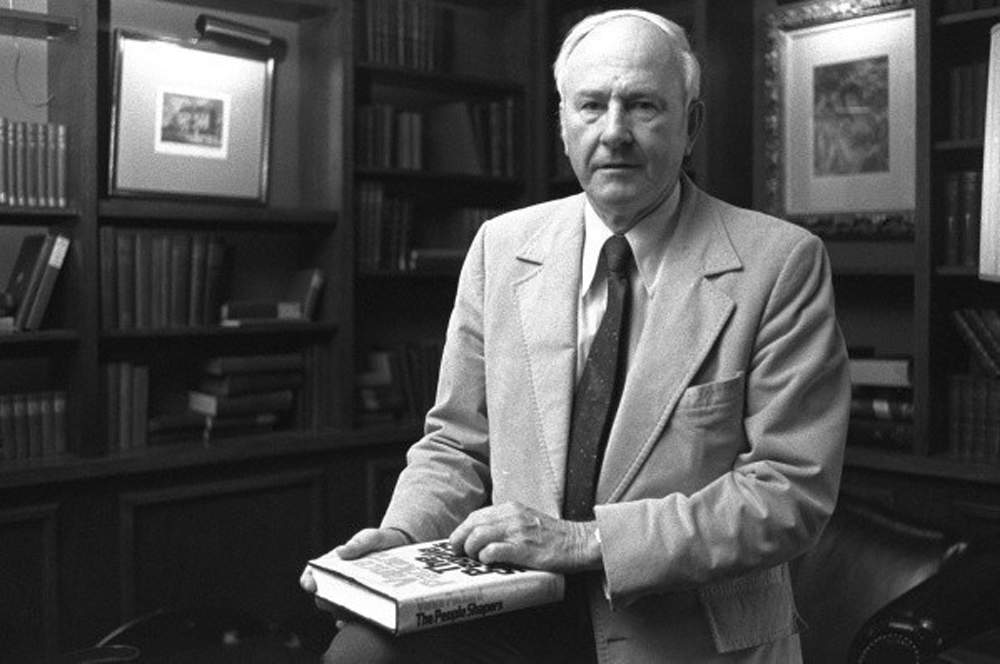
You are standing in a supermarket, not choosing. The word “choosing” implies a moment of deliberation, a small theater of preference, but what is happening is closer to being moved through a space — the lighting a particular warmth, the music calibrated to a tempo researchers in the 1980s correlated with slower walking speeds and higher basket totals, the bread smell pumped from a vent that has nothing to do with a bakery. You are, in the vocabulary of behavioral economists, being “nudged,” though that word makes it sound gentle and lateral, like a friend correcting your direction. It is not gentle. It is total. The environment itself has become the argument.
Vance Packard, writing in 1957, was alarmed by symbols — the imagery of cigarette ads, the Freudian undertow of automotive design, the way a brand name could be loaded with class aspiration until it weighed more than the product itself. His alarm was essentially semiotic: he feared the manipulation of meaning. But the architecture of influence has since migrated below the level of meaning entirely. Richard Thaler and Cass Sunstein, in their 2008 work Nudge, documented how the physical sequencing of food in a cafeteria line — not the messaging about the food, not the branding, simply the order of placement — altered consumption patterns dramatically. There is no symbol to decode here, no hidden message to expose. There is only position. Geometry as persuasion.
This is where the philosophical difficulty becomes acute. The tradition of critique — from the Frankfurt School’s analysis of the culture industry to Packard’s own journalistic exposé — depended on the assumption that power leaves traces, that manipulation encodes itself in images, narratives, and desires that a sufficiently awake subject could, in principle, read against the grain. Herbert Marcuse, in One-Dimensional Man published in 1964, argued that advanced industrial society flattened the space of negation, but he still located the mechanism in language, in the administered word, in the colonization of discourse. Language can be contested. Geometry cannot be argued with.
When the nudge operates through friction — when the unhealthy option requires one extra click and the healthy default requires none — there is no rhetoric to resist, no image to see through, no unconscious appeal to surface and examine. The subject is not being addressed at all. Something is being done to the probability distribution of their behavior, and they remain, technically, free to deviate. This is the contemporary refinement: control that does not need to hide because it never presents itself as control. It presents itself as convenience.
What this dissolves is not freedom in the crude libertarian sense, but something more intimate — the very category of the self that is being persuaded. Persuasion, in its classical sense from Aristotle’s Rhetoric forward, requires a subject with logos, a being capable of following an argument, being moved by it, accepting or rejecting it. The hidden persuaders Packard described were still, in some degraded sense, making arguments — to your insecurity, to your desire for status, to your fear of exclusion. They were speaking to someone. The environmental, algorithmic, and architectural interventions of the present are not speaking to anyone. They are adjusting the conditions under which someone acts, without that someone being present as an addressee.
The question this raises cannot be answered by more transparency, more disclosure, more labeling. Those are responses to a persuader who is hidden. They do not address a persuader who is absent — whose work is done before you arrive, in the design of the room, in the weight of the door, in the default that was set by someone whose name you will never know. Packard believed that exposing the mechanism was the first step toward freedom. He was not wrong about exposure. He was wrong about the mechanism having an inside that could be turned outward and made visible, a secret that, once told, would lose its power.
🧠 The Hidden Architecture of Minds and Masses
Vance Packard‘s The Hidden Persuaders exposed the covert mechanisms by which advertising and media manipulate human desire below the threshold of conscious awareness. To fully grasp this revelation, one must explore the broader landscape of surveillance, social control, and the engineering of consent that defines modern life. The following articles trace the intellectual genealogy of these ideas across sociology, philosophy, and cultural criticism.
Shoshana Zuboff: Surveillance Capitalism
Shoshana Zuboff‘s concept of surveillance capitalism represents the most advanced evolution of the hidden persuasion Packard feared, where behavioral data extracted from everyday life is transformed into predictive products sold to advertisers. Zuboff argues that this system does not merely observe human behavior but actively modifies it, creating feedback loops of manufactured desire. Her work is an indispensable companion to Packard’s, updating his warnings for the age of platform monopolies and algorithmic targeting.
GO TO THE SELECTION: Shoshana Zuboff: Surveillance Capitalism
Orwell’s 1984: Big Brother and Total Surveillance
Orwell’s 1984 remains the canonical literary exploration of how power sustains itself through the manipulation of language, image, and perceived reality — the very mechanisms Packard documented in the advertising industry. Big Brother’s regime does not govern through brute force alone but through the engineering of desire, loyalty, and fear, anticipating the psychological techniques Packard would later dissect. Reading the two works together reveals a chilling continuity between political totalitarianism and consumer culture’s soft coercion.
GO TO THE SELECTION: Orwell’s 1984: Big Brother and Total Surveillance
Mass Social Homologation Today
Mass social homologation is the cultural consequence that Packard’s hidden persuaders ultimately produce: a society in which individuality is flattened by the relentless pressure of standardized desires and manufactured consensus. This article examines how advertising, media, and consumer culture work in concert to dissolve critical autonomy and replace it with conformist behavior. It offers a contemporary sociological lens through which Packard’s mid-century diagnosis can be reassessed and extended.
GO TO THE SELECTION: Mass Social Homologation Today
Postman’s Amusing Ourselves to Death: Analysis
Neil Postman‘s Amusing Ourselves to Death delivers a devastating critique of how television transformed public discourse into entertainment, rendering citizens passive consumers of spectacle rather than active participants in democratic life. Postman’s argument runs parallel to Packard’s: both thinkers identified media as the primary instrument through which critical consciousness is eroded and desire is redirected toward trivial satisfactions. Together, their analyses form a foundational indictment of the culture industry’s assault on autonomous thought.
GO TO THE SELECTION: Postman’s Amusing Ourselves to Death: Analysis
Discover the Cinema That Resists Manipulation
If these ideas about hidden persuasion, media control, and the engineering of consciousness intrigue you, Indiecinema’s streaming catalog offers a curated selection of independent and documentary films that dare to question the systems shaping our desires. From investigative documentaries on advertising to avant-garde features that challenge narrative conformity, there is a world of cinema here that thinks for itself — and invites you to do the same. Explore it now on Indiecinema.
👉 EXPLORE THE CATALOG: Watch Indie Films in Streaming
A vision curated by a filmmaker, not an algorithm
In this video I explain our vision

