
The Stone That Remembers What You Have Forgotten
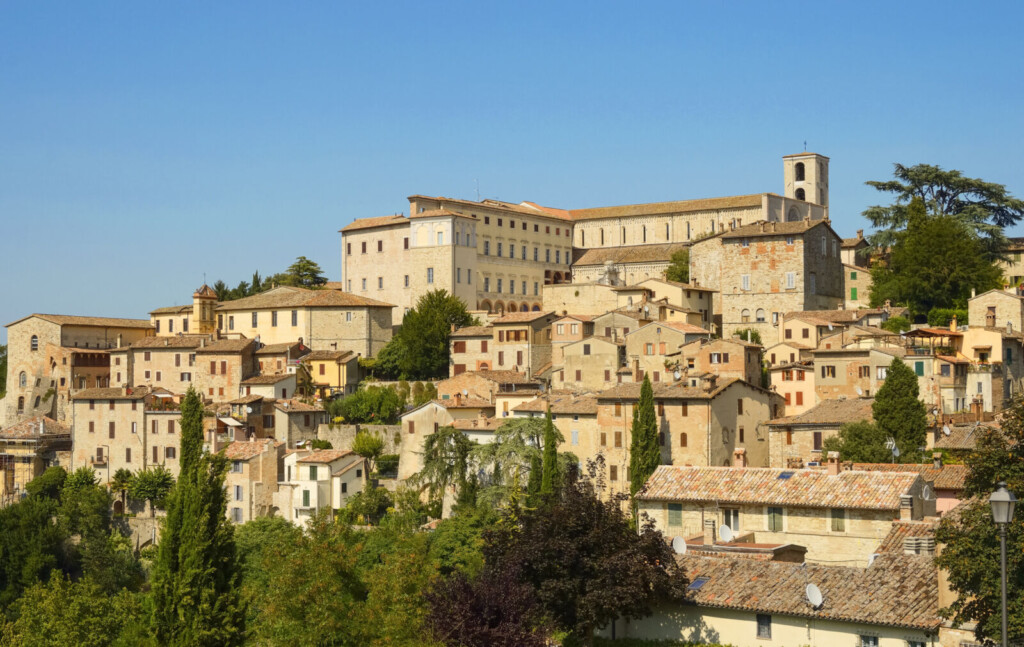
You arrive and your body knows before your mind does. The hill does not welcome you — it receives you, the way a court receives a petitioner, with a silence that contains a verdict already rendered. The streets of Todi do not meander the way romantic travelers expect medieval streets to meander. They compress. They angle. They force you upward through increasingly narrow channels until the Piazza del Popolo opens in front of you like a held breath released, and you stop, and you feel — without being able to name it immediately — that something has been done to you architecturally.

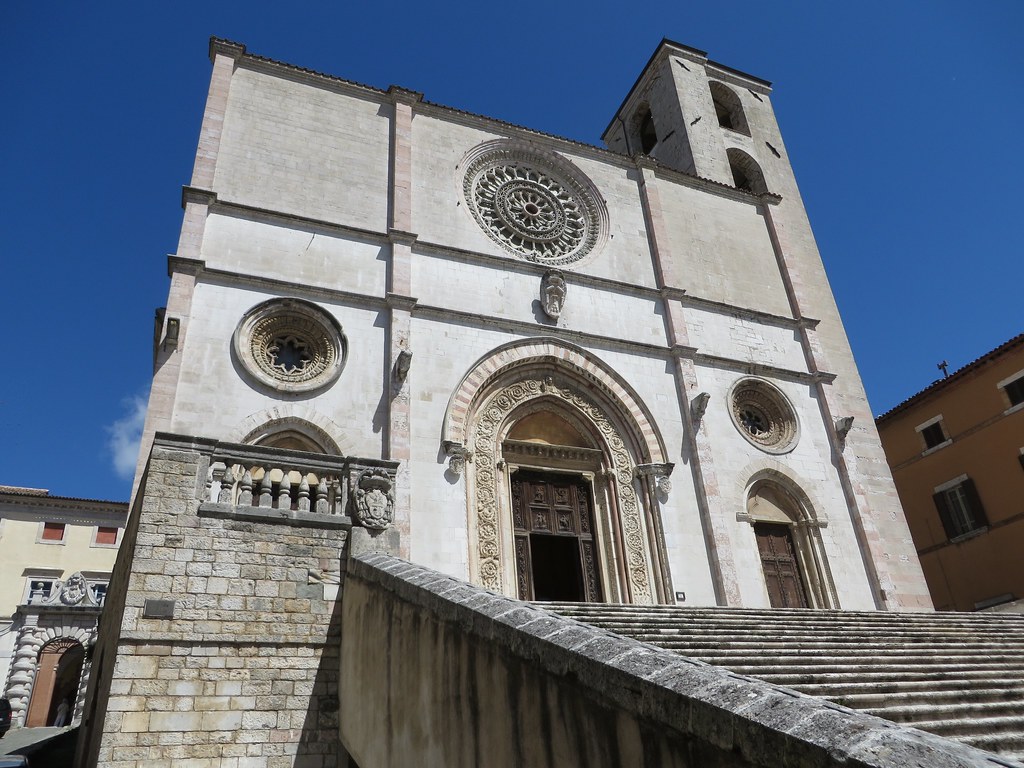
That feeling is not accidental. It is the residue of a precise intention, one that dates to the late twelfth and early thirteenth centuries when the communes of central Italy began understanding civic space not as neutral ground but as an instrument. What the builders of Todi encoded into stone was a complete theory of social order, and they encoded it spatially because space reaches the nervous system before language does. The Palazzo dei Priori, begun around 1293, does not simply face the Duomo across that piazza — it confronts it. The secular and the sacred are placed in permanent, unresolved tension, close enough to collaborate, far enough apart to remind every citizen standing between them exactly which authorities were competing for the governance of his soul and his grain supply simultaneously.
The medieval urban theorist and jurist Brunetto Latini, writing in his encyclopedic Livres dou Tresor around 1266, articulated what practitioners were already building: that the good city was one whose form educated its inhabitants in virtue through daily physical experience. This was not metaphor. The proportions of a communal piazza, the height differential between a civic palace and a church facade, the placement of fountains and the routing of processional paths — each carried normative weight, each told the body moving through it something about hierarchy, obligation, and what kind of person it was expected to become. Todi’s Piazza del Popolo is roughly 64 meters long and 35 meters wide, dimensions that produce a specific phenomenological compression: large enough to assemble a population for judgment or proclamation, narrow enough to ensure no one in that assembly could feel anonymous.
Social surveillance in medieval Umbrian towns was not the byproduct of small-scale living. It was engineered. The loggia, that recurring architectural feature running beneath the civic palaces of Todi, served simultaneously as a sheltered marketplace, a site of official announcements, and a threshold where a man’s presence or absence at the right moment could be noted by the wrong eyes. Michel Foucault located the birth of disciplinary space in the seventeenth-century institutions of confinement, but the grammar he described — the arrangement of bodies in space to produce legibility, accountability, the internalized gaze — had been practiced in hilltop piazzas for four centuries before anyone built a panopticon. The commune watched itself. It had to. The alternative was faction, and faction in thirteenth-century Umbria was not a political abstraction but a demonstrated capacity for burning the houses of your neighbors and salting their wells.
What survives in Todi is not a ruin in the archaeological sense. The stones are not awaiting interpretation — they are still performing their original function on anyone willing to be honest about the sensation of walking through them. The weight you feel ascending toward the piazza is not nostalgia and it is not aesthetic pleasure. It is the echo of a system designed to make you feel small in exactly the right place, at exactly the right moment, so that the institutions waiting at the top of the hill would appear, by contrast, as the only possible source of order in a world that had just reminded you of your own physical insignificance.
Jacopone da Todi and the Heresy of Feeling
You are standing in a narrow Umbrian street in the 1260s, and a man is rolling in the mud outside a church, howling. The townspeople step around him. He had been, until recently, a notary — a man whose entire professional existence depended on the precision of language, on Latin documents, on the institutional authority encoded in script. His wife had recently died in a building collapse, and when they removed her clothing to prepare the body, they found a hair shirt beneath her dress. She had been suffering privately, devoutly, invisibly, while he moved through the world as a respectable man of letters. Jacopo de’ Benedetti did not recover from this discovery. What emerged from that rupture was Jacopone da Todi, and what he brought into the world was something the Church had not entirely prepared for: a theology written in the body, in the vernacular, in the grammar of wounds.
The Laudi, composed across the final decades of the thirteenth century, are not hymns in any liturgical sense recognizable to Rome. They are confrontations. Jacopone writes in Umbrian dialect at a moment when Latin still functioned as the exclusive medium of theological authority — not merely by tradition but by design, because controlling the language of doctrine meant controlling who could participate in its interpretation. Erich Auerbach, in his 1944 study Mimesis, developed the concept of figura to describe how medieval European writing operated through layered historical and spiritual correspondence, where the concrete event always pointed beyond itself to a higher fulfillment. Jacopone inverts this architecture. In his hands, the figure is not a vessel pointing upward toward transcendence; it is the flesh itself, unmediated, insisting on its own weight. Suffering does not signify something else. It simply is.
This is where the linguistic rebellion becomes at its sharpest. When Jacopone writes “O iubelo del core” — the jubilation of the heart — he is not offering a folk simplification of Scholastic mysticism. He is committing an act of appropriation, taking the interior vocabulary of contemplative theology and removing it from the Latin enclosure in which Bernard of Clairvaux had written it, in which Thomas Aquinas would systematize it, and returning it to the mouth of someone who has no institutional credentials to speak it. The vernacular is not naivety. It is a claim about who owns the language of God, and by extension, who owns the account of human suffering.
The Stabat Mater, attributed to Jacopone with reasonable scholarly consensus despite centuries of contested authorship, extends this further. Mary standing at the foot of the cross is not a doctrinal figure here — she is a mother watching her child die, and the poem refuses to metabolize that grief into anything redemptive within the frame of the text itself. The Latin of the Stabat Mater is often cited as evidence against Jacopone’s authorship, as though a man who chose vernacular could not also command the imperial tongue when he needed it to cut. But that misreads the nature of the choice entirely. Jacopone knew Latin. He chose Umbrian. That choice, in the thirteenth century, was not a concession to limitation but a declaration about where truth resided — not in the authorized script of the powerful, but in the spoken grief of those for whom no institutional category existed.
What the Church could not absorb, it eventually imprisoned. Jacopone allied himself with the Colonna cardinals against Boniface VIII, was excommunicated in 1298, and spent years in a cell. The man who had made suffering legible to ordinary people was himself made invisible by the institution whose interior life he had tried to democratize, which suggests that the real heresy was never theological at all.

Roman Bones Beneath the Medieval Skin
You walk the main street of Todi on a Tuesday morning and the geometry feels wrong in the best possible way — too straight for a medieval town, too deliberate, cutting through the hill with a Roman surveyor’s confidence that no amount of subsequent centuries managed to fully disguise.
What lies underfoot is not metaphor. Todi was Tudér before it was anything else, an Umbrian settlement that Rome folded into its administrative grid sometime in the third century BCE, and the absorption was so thorough that the original street plan — the cardo and decumanus of Roman urban logic — still organizes pedestrian movement today. People walk Roman lines without knowing it. The Chiesa di San Fortunato sits where a temple almost certainly stood, not because medieval builders were sentimental about pagan worship but because the foundations were already there, the orientation already solved, the stone already cut. Repurposing was not laziness. It was engineering rationality operating across a thousand-year gap.
Giorgio Agamben, in his 2009 collection “Nudities” and more rigorously in his earlier “Homo Sacer” project, developed the concept of the “signature” — the invisible mark that persists inside an institution long after its original context has dissolved, shaping behavior and form without ever announcing its presence. The Roman civic wall that girdles Todi is a three-layer document: pre-Roman polygonal stone at the base, Roman ashlar above it, medieval reinforcement crowning it, each generation believing it was building something new while being constrained at every course by the decisions of the dead. The wall is not a metaphor for cultural continuity. It is cultural continuity made physically unavoidable, measurable in meters, datable by the angle of the cut stone.
Medieval European culture has been systematically misread as a rupture — as the dark interval between two bright classical moments. The misreading serves a particular vanity, the one that places the Renaissance as a recovery of something lost, which then flatters the present as the inheritor of recovered wisdom. But Todi’s stratigraphy makes this narrative impossible to maintain. The Roman amphitheater whose stones were systematically harvested for the Palazzo del Popolo in the late thirteenth century was not being erased — it was being metabolized. The builders of 1293 did not have a theory of cultural cannibalism. They had carts, a quarry that happened to be a ruin, and a political commission that needed to impress a commune asserting its independence. The result is a civic building whose walls contain, invisibly, the curved geometry of entertainment architecture repurposed as the geometry of government.
What makes Todi strange — genuinely strange, not merely old — is that the violence of this metabolization is still readable in the seams. Run your hand along the lower courses of the Palazzo del Popolo’s exterior wall and you will touch stone that was last shaped by someone living under Augustus. The hand that dressed it, the political world it served, the gods it honored have been gone for two millennia, and yet the stone remembers the chisel’s angle. History as a discipline tends to organize this kind of persistence into comfortable periodization: ancient, late antique, medieval, early modern. Todi refuses the taxonomy. Its layers are not sequential arguments in a textbook. They are simultaneous pressures, each exerting force on what was built above it, each being slowly altered by the weight of what came after.
The Franciscan presence that reshaped so much of Todi’s thirteenth-century urban fabric — San Fortunato begun in 1292, Jacopone da Todi himself born here around 1230 — arrived into a city whose spiritual topography was already dense with the residue of temples, civic altars, and the particular Roman habit of treating public space as a theater of power.
The Commune, the Guild, and the Architecture of Controlled Participation

You are handed a key to a building you helped pay for but are not allowed to enter. The doors of Todi’s Palazzo dei Priori, whose construction stretched across four decades from 1293 to 1337, were precisely that kind of key — ornate, legitimate-looking, and functionally useless to the majority of the people whose labor and taxation underwrote its stone.
The commune, as a political form, has been romanticized by centuries of retrospective longing. Medieval Italian civic life gets cast as a proto-democratic experiment, a breath of republican air before the suffocation of Renaissance principates. What that narrative requires is a very careful not-looking at the actual membership rolls. The Palazzo dei Priori was not the house of the city. It was the house of the guilds, and guild membership in Todi, as across the Umbrian communes, was a credentialed status — masculine, propertied, and structurally closed to the artisan who could not afford the matriculation fee, the woman whose labor sustained the household economy without generating her any legal standing inside it, and the rural laborer who fed the city from beyond its walls but held no voice within them.
Silvia Federici, working through the long arc of what medieval commons promised and what they actually delivered in Caliban and the Witch published in 2004, identified something that architectural historians tend to aestheticize away: the commune’s rhetoric of horizontal solidarity operated simultaneously with a machinery of dispossession that rendered entire categories of people legally outside the commons while extracting from them the surplus that made the commons function. The Palazzo dei Priori is beautiful in the way that all successful ideological instruments are beautiful — it turns power into proportion, exclusion into elevation, and the interests of a guild oligarchy into the silhouette of collective civic aspiration against an Umbrian sky.
The building’s Gothic windows facing the Piazza del Popolo were not windows onto popular sovereignty. They were windows that the popolo could look up at. There is a difference between a civic symbol that represents a people and one that is displayed to them, and the architectural grammar of the communal palazzo consistently performed the latter while claiming the former. The priors who deliberated inside were drawn from the Arti Maggiori — the major guilds of notaries, merchants, and wealthy tradesmen — and the deliberative rituals enacted within those walls were ceremonies of legitimation for decisions that the guild structure had already pre-shaped before any vote was cast.
What makes this particularly worth sitting with is that Todi’s commune was not unusually corrupt or unusually oligarchic by the standards of its moment. It was normal. The Statutes of Todi from the late thirteenth century, like those documented across Umbrian and Tuscan communes, encoded in law the sliding scale of civic personhood that determined who could bring a legal claim, who could hold office, who could bear witness in a dispute. Women appear in these statutes largely as subjects of regulation rather than agents of participation. The poor appear as objects of charity or suspicion. The commune’s legal architecture and its built architecture were two expressions of the same organizational logic.
And yet people gathered in that piazza. They still do. There is something that happens in a shared public space that exceeds the intentions of whoever commissioned the stones — a residue of actual collective life that persists despite the structure designed to manage it. Whether that residue constitutes a vindication of the form or simply demonstrates human beings’ persistent capacity to inhabit and partially subvert the containers built to constrain them is a question the piazza itself refuses to answer cleanly.
What the Cathedral of Santa Maria Annunziata Does Not Tell You
You stand inside it on a Tuesday morning when there are no tourists, only the smell of old stone and candle wax, and the silence has a specific weight that feels earned rather than empty. The nave pulls your eye upward and forward in a movement so choreographed it barely registers as design. That is precisely the point.
The cathedral that rises above Todi’s main piazza was not built in a single act of faith. Its restructuring unfolded across roughly four centuries, from Romanesque foundations in the twelfth century through Gothic elaborations and Renaissance adjustments that stretched into the sixteenth, each campaign of construction responding not to theological refinement but to crisis: the Black Death that halved central Italian populations after 1348, the violent oscillations between Guelph and Ghibelline factions that turned Umbrian communes into laboratories of controlled instability, and the slow transfer of wealth from merchant wool guilds to landed oligarchies whose interests required different kinds of celestial endorsement. The building does not announce any of this. It absorbs it, sanctifies it, and presents the result as timeless.
Émile Mâle spent decades inside French and Italian medieval churches cataloguing what he called the great encyclopedic ambition of sacred imagery, and his 1898 study of thirteenth-century religious art in France demonstrated something that has never been comfortably absorbed into popular understanding of these spaces: the iconographic programs covering walls, capitals, and tympana were not simplifications of doctrine for the benefit of those who could not read. The peasant who entered a cathedral was not receiving catechesis. He was receiving instructions about the structure of reality — who was elevated, who was prostrate, which suffering was redemptive and which was merely punishment — delivered in a visual language so emotionally saturated that critical distance became architecturally impossible. The body was managed before the mind had any opportunity to object.
Grief moves differently in a vaulted space than it does in the open air. Medieval builders understood this with a precision that modern acoustic engineers have only recently begun to quantify. The reverberation times in Romanesque naves, typically between four and eight seconds, transform individual voices into something that sounds collective, anonymous, transpersonal. When a congregation responded to a liturgy inside such a space, the sound returning to their own ears was not their sound anymore — it was the room’s sound, God’s sound, the sound of an order that preceded them and would outlast them. The emotional conviction this produced was not fraudulent. It was real. What was engineered was not the feeling but the conclusion the feeling was supposed to authorize.
In Todi’s case, those conclusions were explicitly economic as much as spiritual. The families who funded the cathedral’s successive renovations — the Atti, the Chiaravalle connections, the networks tied to papal administration throughout the Avignon period and its aftermath — did not commission altarpieces and votive chapels out of piety alone. Each donation purchased a spatial claim, a permanent visibility inside the most trafficked building in the city, an association between a particular lineage and the sacred geometry of the apse. What looks like devotion from the nave reads, from the archive, as real estate. Sacred space was never neutral ground held in common. It was the most densely contested territory in the medieval city, and the contest left its marks in stone, in pigment, in the calculated positioning of light falling through windows onto specific chapels at specific hours of the liturgical day.
What the building still does, standing there on its Tuesday morning with its candle smoke and its ancient silence, is make all of that feel permanent, natural, and beyond question — which was always the most sophisticated thing it was ever designed to do.
A vision curated by a filmmaker, not an algorithm
In this video I explain our vision
🏛️ Stones, Spirits, and the Medieval Soul
Todi, perched above the Umbrian hills, is more than a well-preserved medieval town — it is a living archive of art, faith, and communal memory. To understand Todi is to understand the wider world of Italian medieval culture: its communes, its mysticism, its architecture, and its spiritual geography. These articles open the doors to that deeper reading.
Italian Medieval Communes: History and Culture
The Italian medieval communes were extraordinary experiments in collective self-governance, and Todi stands as one of their finest monuments. Understanding how these city-states organized political life, built their piazzas, and expressed civic identity through art and architecture is essential to reading any Umbrian hill town. This article traces the history and culture of that foundational chapter in Italian civilization.
GO TO THE SELECTION: Italian Medieval Communes: History and Culture
Umbria in Italian Culture and Literature
Umbria has long held a singular place in Italian culture and literature, its green hills and ancient towns functioning almost as a spiritual landscape for writers and thinkers across the centuries. Todi, with its Roman origins, medieval walls, and Renaissance piazza, is one of the region’s most emblematic presences. This article explores how Umbria has been imagined, written, and mythologized in the Italian cultural tradition.
GO TO THE SELECTION: Umbria in Italian Culture and Literature
Medieval Mysticism: History and Main Figures
Medieval mysticism was not confined to monasteries — it permeated the streets, the churches, and the very stones of towns like Todi, home to the Franciscan poet Jacopone da Todi. This article traces the major figures and movements of Christian mystical thought that gave medieval Italian culture much of its interior depth and spiritual intensity. Reading it alongside Todi’s history reveals the invisible life beneath the visible city.
GO TO THE SELECTION: Medieval Mysticism: History and Main Figures
Medieval Art: History and Meaning
Medieval art was never merely decorative — it was a theological and philosophical language spoken in stone, fresco, and gold leaf, and Todi’s churches and civic buildings are rich with that vocabulary. This article provides a comprehensive guide to the history and meaning of medieval art, explaining the iconographic systems and spiritual ambitions that shaped every arch and painted figure. It is an indispensable key for anyone who wants to truly see what they are looking at in a town like Todi.
GO TO THE SELECTION: Medieval Art: History and Meaning
Discover the Cinema That Asks the Same Questions
If these layers of history, art, and medieval spirit have stirred something in you, Indiecinema is the streaming platform where independent cinema continues that conversation — films that explore place, memory, and the depth of human culture with the same seriousness. Step inside and let independent cinema be your next journey.
👉 EXPLORE THE CATALOG: Watch Indie Films in Streaming
A vision curated by a filmmaker, not an algorithm
In this video I explain our vision

