
The Headset and the Door
You lift the headset from the table and for a moment you hold it in both hands like something fragile, something that might break before it does what you need it to do. The weight is real — more than you expect every time, as though the physical mass of it is part of the agreement, part of what makes the departure feel earned. You press it against your face. The seal around your eyes closes out the lamp, the window, the particular quality of afternoon light that has been bothering you without your quite knowing it. There is a click, or sometimes just a soft electronic breath, and then the room you were standing in ceases to exist. Not metaphorically. Not in the way that reading a book or watching a film makes you forget the room. The room is structurally abolished. The coordinates of your body are reassigned. You are somewhere else, and the somewhere else has edges and depth and a sky.

What happens in that moment is not technological. Or rather, it is technological only the way a door is technological — it is the latest material solution to one of the oldest human imperatives: to leave the world as it has been handed to you and enter a world you have chosen. The headset is heavy because the act it performs is heavy. People have always understood, at some level below articulation, that the boundary between the given and the chosen is the most significant line a person can cross in a single day. Every civilization has built doors to that crossing and charged a different price for passing through them.
The anthropologist Victor Turner spent decades mapping what he called liminal space — the threshold condition, the betwixt-and-between state that ritual tears open inside ordinary time. In his 1969 work “The Ritual Process” he described how every significant human transition requires a physical passage, a moment of symbolic death to one state before rebirth into another. The person in the threshold is stripped of their social position, their name, their coordinates. They are, briefly, no one. Turner was writing about initiation rites and religious ceremony, but the structure he identified is exact and it is sitting on your face right now. The headset is a liminal machine. It manufactures the threshold on demand, without the village, without the elder, without the three days of fasting. It does it in eleven seconds and it costs the price of a mid-range appliance.
This should feel trivial. It does not feel trivial. The reason it does not feel trivial is that the desire it services is genuinely ancient and genuinely serious, and ancient serious desires do not become less serious because their instruments become cheap or portable. The desire to step outside the given world is not a symptom of dysfunction or weakness. It has driven every mystical tradition, every narrative art form, every architecture of play that human beings have ever constructed. Johan Huizinga argued in 1938, in “Homo Ludens,” that the magic circle — the bounded space set apart from ordinary consequence — is not a decoration on human culture but one of its generative engines. Civilization, he wrote, arises in play and as play. The space where ordinary rules are suspended is the space where new forms of meaning become possible. The headset draws that circle around your skull.
And yet something has changed, something specific to this moment and this device that is not accounted for by Turner or Huizinga or any of the long tradition of thinkers who mapped humanity’s relationship with its own exits. The change is not in the desire. The change is in the availability. The door is always open now. The threshold never closes. And when a liminal space becomes permanent, when the departure can happen at any hour without cost or ceremony, the question of what you are departing from begins to press differently against the glass.
The Lost Poet
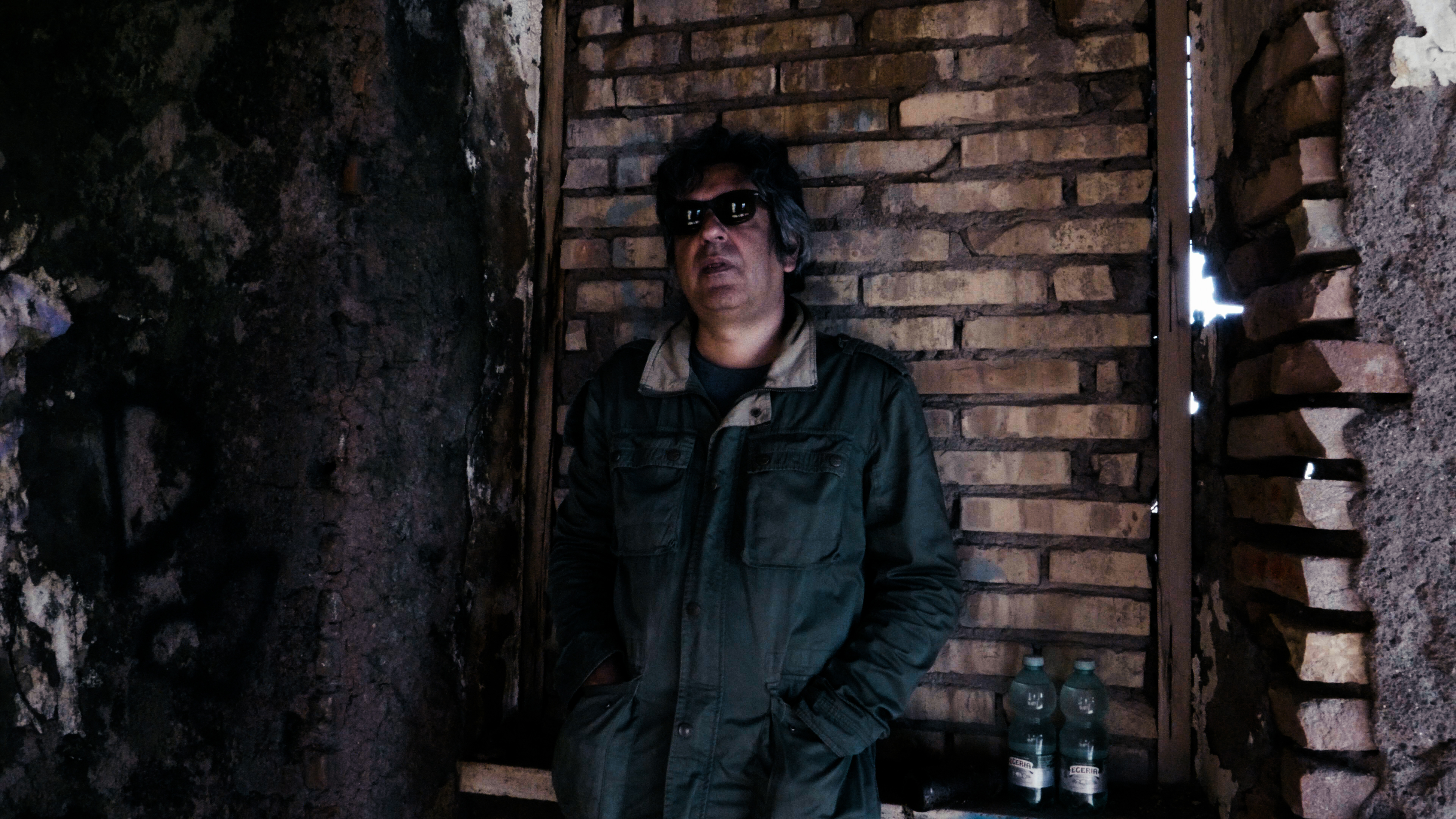
Drama, by Fabio Del Greco, Italy, 2024.
Dante Mezzadri wants to see an old friend, nicknamed the Iguana, whom he has lost sight of for many years, and who has managed to turn their shared youthful passion for poetry into a job, becoming a famous writer and poet. The man escapes from his bourgeois life and his wife to live homeless on the Roman coast, printing and trying to sell his poetry collections. At night he sleeps in a park of old carnival floats, inside a papier-mâché tank, and waits for the opportunity to meet his old friend, who however never shows up for appointments in the places they frequented when they were young, now in ruins. Dante's poetry books do not interest anyone and to support himself he is forced to "change product": he starts selling the infamous "cannibal pill" on behalf of young drug dealers, a new drug that sells like hot cakes and causes sensory and consumerist ecstasy. However, he realizes that this powerful drug is very dangerous for those who take it, he comes into conflict with his ethical conscience and throws all the pills into the sea. However, the dealers want to collect their money.
Shot over a period of 2 years, the film is a reflection on the cultural and artistic rubble of the society in which the protagonist lives, in an increasingly mechanized, consumerist and arid world. Dante Mezzadri is yet another human being who has renounced his inspiration and his creativity, but unlike many he is not willing to give his life to a system that distances him from his true identity. The physical world around him, however, seems constructed in such a way that it seems impossible to escape from this "invisible cage". The enthusiasm of the people he meets is ignited only by sensory gratification, by unreal visions of personal affirmation and success, by "metaverses" that offer an escape into an illusory and destructive reality. The poet's house on the coast, where he met with his friends as a young man, is just a pile of abandoned rubble. What happened to all those who wanted to become poets and ended up becoming something else? Are there internal forces with which that house can be "rebuilt"?
LANGUAGE: Italian
SUBTITLES: English, Spanish, French, German, Portuguese
Escape Has Always Been the Serious Business
There is a particular kind of embarrassment that settles over adults when they are caught doing something childish — lost in a game, absorbed in a fantasy, temporarily unreachable by the demands of the real. You know that feeling. The slight defensiveness when someone asks what you have been doing all afternoon. The instinct to minimize, to frame the hours spent elsewhere as rest, as recovery, as something instrumental and therefore justifiable. As if pure absorption in an invented world required an alibi.
This embarrassment is modern, and it is not innocent. It carries inside it a long history of suspicion directed at pleasure that does not produce anything, at attention that wanders from the factual and the obligatory. But what gets called escapism — with that slightly curled lip — is in fact one of the oldest and most structurally necessary behaviors of conscious beings. Johan Huizinga, writing in 1938 in Homo Ludens, argued that play is not a byproduct of culture but its precondition. Before the law, before the ritual, before the myth, there is the capacity to bracket ordinary reality and agree, collectively, that something else is true for now. He called this the magic circle, the temporary and voluntary enclosure within which different rules apply. The circle is not a retreat from seriousness. It is the space where seriousness can be rehearsed, tested, survived.
Donald Winnicott arrived at something adjacent from a completely different direction. Working as a pediatrician and psychoanalyst in mid-twentieth century London, watching children with their objects and their games, he identified what he called transitional space — the intermediate territory between subjective experience and external reality where the most essential psychological work happens. It is neither pure fantasy nor brute fact. It is the space where the self negotiates with the world, tries on interpretations, builds the capacity to tolerate both. For Winnicott, this space was not something you outgrew. It was something that, in healthy adults, expanded into art, religion, culture itself. The desire to enter an alternative frame is not regression. It is the sign that the psyche is still doing its deepest work.
What the contempt for escapism actually polices, then, is not laziness or weakness. It is something closer to unauthorized perception — the refusal to accept that consensus reality is the only reality worth inhabiting. Every civilization has understood this need and found institutional forms to contain and direct it. The ancient Greeks built theaters into hillsides and made attendance at tragedy a civic duty. Medieval Europe organized its calendar around feast days and carnival seasons, periods of licensed inversion where the normal order temporarily dissolved. Indigenous cultures across every continent have developed ritual practices specifically designed to move participants into altered states of perception — not to confuse them about reality, but to give them a vantage point outside ordinary consciousness from which that reality could be seen more clearly upon return.
The interesting thing about these institutions is not that they were permitted. It is that they were considered necessary. Societies that failed to provide them did not produce populations of pure, productive rationalists. They produced people who found their exits in less sanctioned places, through substances, through violence, through the quiet private dissociation that leaves no visible trace.
There is a scene that surfaces sometimes in memory — someone sitting alone in a dim room, fully present somewhere else, their face wearing an expression you rarely see in waking life: total attention without anxiety, the look of a person who has, for once, stopped monitoring themselves. The room around them is ordinary, slightly cluttered, undeniably real. But they are not suffering from being absent from it. They are, in some sense, more fully alive in that moment than the version of themselves who moves through the day performing presence.
What exactly, you have to ask, would it mean to call that an escape from something real?

The Rooms We Built Before Screens
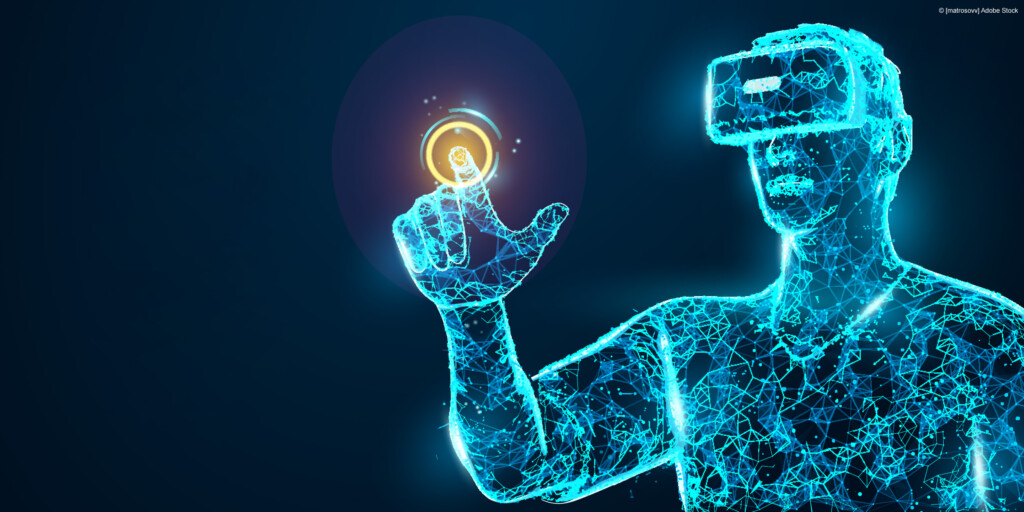
You have been here before. Not in this room, not with this headset, not with these polygons assembling themselves into the semblance of a coastline you have never visited — but in the essential posture of it. The body slightly forward, the breath held, the eyes doing something the brain has not yet authorized. You have been in this posture for two hundred and thirty years, at least.
In the 1790s, a painter named Robert Barker built a cylindrical structure in Leicester Square and filled its interior curved walls with a painted panorama of London. Visitors paid to enter through a darkened corridor — the darkness was deliberate, calculated to strip away the memory of the outside world — and emerged into a rotunda where the painted city surrounded them at three hundred and sixty degrees. Contemporary accounts describe people reaching out to touch buildings that were not there. They describe vertigo. One visitor wrote in a letter that she could not find the edge of the painting, and for a moment she was not looking at London, she was inside it. Barker had not invented entertainment. He had invented the breach.
The panorama craze swept Europe with the speed and enthusiasm of a fever that no one wanted to cure. Jonathan Crary, in his 1990 study Techniques of the Observer, traces how the nineteenth century systematically reorganized the relationship between the human eye and the real, building institutions and devices whose purpose was to make vision itself a manageable, purchasable, controllable experience. The panorama was one instrument in this reorganization. The stereoscope, which arrived in the 1850s, was another, smaller and more intimate: a handheld device that fused two slightly offset images into a single three-dimensional illusion. Oliver Wendell Holmes, writing in The Atlantic in 1859, described it as a means of separating form from matter, of possessing the visual substance of a place without the inconvenience of going there. He meant it as praise.
A man sits alone in a darkened room, holding two photographs of a garden he has never entered, and for a moment — for just long enough to matter — the garden is real. His hands are in his lap, not in the soil. The light is artificial. But something in the architecture of his perception has been satisfied, the way a thirst is satisfied, and the satisfaction is not diminished by knowing its mechanism.
When the Lumière brothers screened their footage of an arriving train at the Grand Café in Paris in December 1895, the legend says the audience fled. Historians have largely debunked the mass hysteria story — Tom Gunning’s influential 1989 essay “An Aesthetic of Astonishment” argues that early cinema audiences were sophisticated fairground-goers who knew perfectly well they were watching projected light — but the legend persists because it contains a truth more important than the fact. The truth is that something in the human nervous system reaches toward constructed images with the same reflexes it uses for the real world, and no amount of sophistication fully suppresses that reaching. You know the train is not coming. Your body does not entirely believe you.
This is the continuity that gets erased when we treat virtual reality as a technological novelty. Each of these rooms — Barker’s rotunda, Holmes’s stereoscope cabinet, Lumière’s darkened café, and every headset shipped since the mid-2010s — is built on the same anthropological fact: that the perceptual apparatus which kept your ancestors alive on the savanna cannot reliably distinguish between a threat painted on a curved wall and a threat standing in front of them. The brain evolved to respond, not to audit. And every entertainment industry since the Enlightenment has quietly made its fortune on exactly that failure to audit.
The rooms were always there. The screens just made them portable.
Morton Heilig’s Sensorama and the Body They Forgot
There is a moment when your stomach drops before you understand why. The image tilts, the ground shifts beneath the frame, and your body has already responded — tightened, braced, reached for something solid — before your mind has had time to form the sentence “this is not real.” That gap, that sliver of pure physiological betrayal, is where Morton Heilig spent his entire career.
In 1962, Heilig patented a machine he called the Sensorama, a hulking arcade cabinet that you pressed your face into like a confessional booth. It delivered stereoscopic film, stereo sound, wind generated by actual fans, aromas released through chemical dispensers, and vibrations conducted through the seat. Heilig was not trying to make cinema more spectacular. He was trying to correct what he saw as cinema’s foundational error: the assumption that human experience was primarily visual, that perception happened behind the eyes rather than through the entire surface and interior of a living body. His 1955 essay “Cinema of the Future” made the argument with the ferocity of someone who had been watching an obvious mistake repeat itself for decades. The eye, he wrote, is not a camera. The human being is not an audience.
Merleau-Ponty had arrived at the same conclusion from the direction of philosophy rather than engineering. In the Phenomenology of Perception, published in 1945, he dismantled the Cartesian premise that the body is merely the vessel through which a disembodied mind receives the world. Perception, he argued, is always already bodily. We do not see a hot stove and then decide to feel danger. The flesh is intelligent before cognition arrives. The body schema — his term for the lived, pre-reflective awareness of one’s own physical presence — is constantly negotiating with the environment at a level that reason never touches. When you flinch before you think, Merleau-Ponty would say you are not malfunctioning. You are perceiving correctly, in the only way a body can.
Heilig understood this without having read him, or perhaps having read him without knowing it through the grammar of his own hands and eyes. The Sensorama’s vibrating handlebars were not a gimmick. They were a theoretical proposition rendered in metal and rubber: that to be inside an experience, you must feel it pressing back.
Think of the sequence where a man sits in a darkened screening room watching footage of a motorcycle ride through Manhattan. The handlebars vibrate in his grip, exhaust fumes reach him through a vent, the wind hits his face. His knuckles whiten. He leans slightly into a curve he knows is not there. He does not decide to lean. The lean happens first, and then comes the embarrassed awareness of having been caught by his own nervous system doing something involuntary. What has failed him is not credulity or naivety. What has happened is that the machine correctly addressed the body in its own language, bypassing the editorial layer where disbelief is usually maintained.
This is precisely what every subsequent VR pioneer either inherited or rediscovered. The body is not fooled by images. It is addressed by stimuli, and when those stimuli arrive through enough channels simultaneously — motion, sound, scent, tactile pressure — the body responds as it was built to respond, not as an intellectual exercise but as a survival system doing its oldest work.
The tragedy of Heilig’s legacy is that it was remembered as a curiosity rather than a correction. When digital VR emerged decades later, it arrived almost entirely through visual dominance — screens, headsets, pixels per inch — as if the lesson of the Sensorama had been stored in a filing cabinet no one opened. The body they forgot in 1895, when cinema first flattened human experience into a rectangle of light, was still waiting in 1962. It is still waiting now, patient in the way that only flesh can be patient, registering what the mind has not yet admitted.
The Military Invented Your Playground
There is a room you have never been allowed to enter. It exists on every military base that has ever trained a pilot, and it looks, from the outside, like nothing at all — a grey box, bolted to a hydraulic platform, cables running beneath the floor like roots. Inside, a man sits in a seat that is not quite a seat, gripping controls that respond to nothing real, watching a screen that shows him weather he will never feel. He is learning to kill more efficiently. He is also, without knowing it, inventing your leisure.
The hydraulic flight simulator that DARPA funded through the 1960s was not built for entertainment. It was built because real aircraft were expensive and real deaths were inconvenient. The logic was pure military economy: immersion as a cheaper substitute for consequence. If you could make a man believe he was somewhere he was not, you could break him and rebuild him without spending the fuel or the funeral. The technology of convincing presence — the core technical problem of what we now call virtual reality — was solved first in the service of that calculus. Not by dreamers. By procurement officers.
In 1968, a computer scientist named Ivan Sutherland hung a device from the ceiling of a laboratory at Harvard and called it, with the kind of casual menace that only engineers achieve, the Sword of Damocles. It was the first head-mounted display capable of rendering a crude three-dimensional wireframe world that moved as the user’s head moved. The name was not accidental. Sutherland understood, at some level, what he was suspending above the human skull: not a gift but a threat held in place by a single thread. The device was funded partly through ARPA, the same agency that would later give the world the internet, and the same agency whose entire institutional purpose was to ensure American military dominance through technological acceleration. The playground had a landlord, and the landlord wore a uniform.
By the 1980s, Jaron Lanier had coined the phrase “virtual reality” and founded VPL Research, which produced the first commercially available VR headsets and datagloves. The imagery around Lanier was psychedelic, countercultural, almost aggressively utopian — he spoke of virtual reality as a new language, a shared hallucination that could democratize experience and dissolve the tyranny of the body. He was, in many ways, sincere. But sincerity does not change the genealogy. The hardware Lanier was iterating on was born in weapons labs. The interface paradigms — first-person perspective, spatial tracking, the collapsing of distance between the user’s body and the simulated environment — had been refined to train soldiers to shoot without hesitation.
Michel Foucault wrote, in Discipline and Punish, that modern power works not through spectacular violence but through the arrangement of bodies in space — through architecture, surveillance, and the training of perception itself. The flight simulator is a Foucauldian machine in its purest form. It does not coerce. It convinces. It produces a subject who responds correctly, automatically, without the friction of uncertainty. The VR headset that a teenager puts on in their bedroom in 2024 is the direct descendant of that machine. The genealogy is not metaphorical. The patents connect. The funding connects. The bodies, positioned in space, trained to respond — they connect too.
What is harder to hold is the simultaneity. The same structure that trained men to drop bombs over Vietnam was also, genuinely, a technology that would eventually allow a person with a paralyzed body to walk through a virtual forest. Both things are true. Herbert Marcuse argued in One-Dimensional Man that advanced industrial society absorbs its own opposition, neutralizes critique by incorporating it into commodity form. The counterculture did not capture the military’s tools. The military’s tools captured the counterculture, dressed them in neon, and sold them back as freedom.
A vision curated by a filmmaker, not an algorithm
In this video I explain our vision
The Matrix Was a Documentary About Now

There is a moment when the seams show. Not dramatically, not with the sky peeling back like wallpaper. Just a flicker — a stranger’s face behaving one half-second out of sync with their words, a street corner you have walked a hundred times suddenly feeling like a stage set, the uncanny sensation that the room you are sitting in is being projected rather than inhabited. You blink. It passes. You decide it was fatigue. But the doubt does not entirely dissolve; it sediments somewhere below the threshold of daily thought, and you carry it forward without knowing you are carrying it.
A man follows a white rabbit because his world has already been misbehaving at the edges. A woman runs her fingers along the underside of a table and realizes, with a nausea that reads more like relief, that the grain is too perfect — not faked, but completed, filled in by a process that had no interest in the parts no one was supposed to touch. The surface held. The depth was always optional. This is not the horror of deception. It is the horror of discovering that the deception was structural, that it preceded any deceiver, that there is no villain you can confront because the architecture itself is the villain, and you helped build it every morning by agreeing to believe.
Jean Baudrillard published Simulacra and Simulation in 1981, and the book was not prophecy so much as diagnosis delivered slightly ahead of the fever’s peak. His argument was precise and still resists easy domestication: we do not live in a world where signs represent reality; we live in a world where signs have replaced it, where the map precedes the territory, where the copy circulates without an original to authorize it. Hyperreality is not an intensification of the real — it is its substitution, and the substitution is so total that the question of what the real was becomes unanswerable, not because the real is hidden but because the category has become inoperative. Disneyland exists, Baudrillard argued, not to offer an escape from reality but to make America appear real by contrast — to locate the artificial somewhere defined and manageable so that everything outside it can maintain the fiction of authenticity. The logic is circular, load-bearing, and invisible precisely because it holds everything up.
Virtual reality does not crack this system. It reveals that the system was always already cracked. When you put on a headset and find yourself genuinely startled by a ledge that does not exist, when your palms sweat and your legs refuse the step, your nervous system is not being fooled — it is behaving exactly as it behaves in the world outside the headset, because the processes by which you construct experience were never about contact with an unmediated real. They were always about the management of sensory data into livable coherence. VR does not simulate reality. It makes the simulation process legible.
A researcher sits inside a room she has visited a thousand times in the system and suddenly notices she is not verifying its existence — she is maintaining it, actively, through the continued investment of belief. Strip the belief and the room does not vanish; something worse happens: it becomes arbitrary. And the walk home after, through streets and sounds and social contracts, feels different. Not less real. Just equally constructed, equally dependent on collective agreement to hold.
The discomfort people report after extended VR sessions is rarely described accurately. It gets labeled as disorientation, as the body needing to recalibrate. But disorientation implies a stable orientation to return to. What people are actually experiencing is the brief, awful lucidity of Baudrillard’s argument made somatic — the moment between one managed consensus and the next, the gap where the real was supposed to be and isn’t, and never was.
Who Profits From Your Need to Leave
Someone designed the exact texture of the void you feel at 11pm. Not metaphorically — literally. There are teams of behavioral engineers, UX researchers, and neuroscientists whose working hours are spent calibrating the precise weight of dissatisfaction that makes you reach for the headset rather than sit with the discomfort long enough to understand it. The forty-billion-dollar virtual reality industry did not emerge from a neutral technological evolution. It was built on a map. And the map is you — your restlessness, your fatigue, your half-articulated sense that the life you are living is somehow adjacent to the life you were supposed to have.
Byung-Chul Han, writing in The Transparency Society in 2012, identified something that has only sharpened in the decade since: the society of positivity does not repress desire, it exhausts it. The new unfreedom does not look like a cage. It looks like an infinite menu. The VR headset is perhaps the most elegant embodiment of this logic ever manufactured — a device that translates your need for genuine otherness into a purchasable experience, then sells you the next version when the first one stops working. What Han calls the “achievement subject” — the person who has internalized the command to perform, optimize, and produce — does not rebel against this system. He collapses inside it, and then buys a recovery product designed by the same system that collapsed him.
Mark Fisher saw the same mechanism operating at the level of culture. Capitalist realism, as he described it in his 2009 book, is not merely the dominance of capitalism as an economic system. It is the erasure of the cognitive capacity to imagine anything outside it. The famous formulation — that it is easier to imagine the end of the world than the end of capitalism — was not hyperbole. It was a precise clinical observation about what happens to a mind that has been thoroughly colonized. And what virtual reality sells, under the language of escape and freedom and infinite possibility, is precisely a simulation of exit that never crosses the threshold. You feel as though you have left. You have not moved an inch.
There is a scene that stays with you: a man sits in a sparse apartment, surrounded by the wreckage of a life that did not work out the way he planned, and he puts on a headset. Inside it, he is somewhere luminous and frictionless, a world that responds to his presence with perfect accommodation. When he removes it, the apartment is exactly as he left it. The genius of the product is that it did not promise to change the apartment. It promised to make you forget it. For twenty minutes, it delivered. And that is enough — enough to ensure he comes back tomorrow, enough to keep the subscription active, enough to prevent the longer, harder, less monetizable process of asking why the apartment looks the way it does.
This is what Fisher meant by the foreclosure of the real. The escape route is built into the system not as an oversight but as a feature. Genuine dissatisfaction, allowed to sit and deepen and turn into something articulate, becomes politically dangerous. It asks questions about working hours, about housing, about the structure of ambition itself. Managed dissatisfaction — dissatisfaction that has a product attached to it — asks nothing. It simply renews.
The philosopher Herbert Marcuse wrote in 1964, in One-Dimensional Man, about “repressive desublimation” — the process by which a system neutralizes opposition by satisfying its surface form while destroying its substance. He was writing about television and advertising. The mechanism he identified has not changed. Only the resolution has improved.
Presence Without a Self
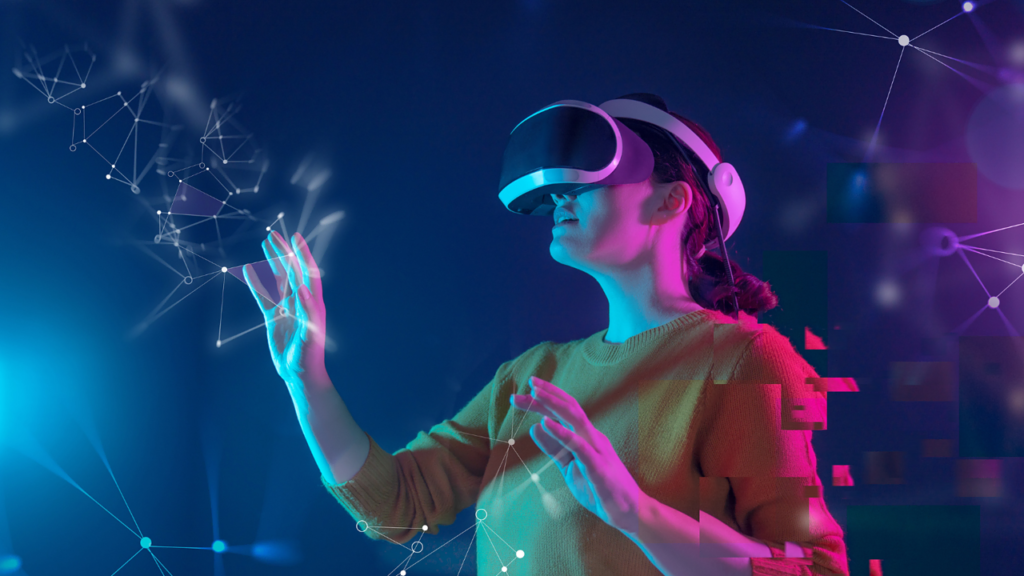
There is a moment, documented across dozens of immersion studies and described in almost identical language by subjects who have never met each other, when the hand you are watching move is no longer a proxy but simply your hand. The peripheral frame of the headset disappears from consciousness. The room you are standing in, with its carpet and its cable and its faint smell of someone else’s coffee, ceases to exist as a competing signal. Researchers call what happens next presence, and they measure it on validated scales — the Witmer-Singer Presence Questionnaire, the ITC-Sense of Presence Inventory — assigning numerical values to the sensation of being somewhere you are categorically not. What they measure with such clinical precision is, when you hold it up to the light, one of the stranger facts about human consciousness ever submitted to empirical study: that the self can be made to forget the conditions of its own existence.
The philosopher Thomas Metzinger spent decades working toward what he called the self-model theory of subjectivity, arguing in “Being No One” published in 2003 that the self is not a thing but a process, a representational model the brain runs continuously and mistakes for an entity. What VR presence research keeps rediscovering, in laboratory conditions, is exactly this: that the model is more fragile, more provisional, more willing to update its own parameters than any folk theory of personal identity would suggest. When presence occurs, something about the ordinary self-model is suspended. Not destroyed. Suspended. And that distinction is where the deepest unease begins.
There is a scene that stays with you, the kind that surfaces weeks after you encountered it. A man has lived inside a constructed reality long enough that the relationships he formed there, the losses he accumulated there, the version of himself he became there, feel more continuous with who he is than anything waiting for him outside. When he is finally forced to examine what the constructed world actually was, the machinery behind it, the decisions made by others that shaped what he was allowed to experience and who he was permitted to become, he does not react with relief at having seen through an illusion. He reacts with something closer to vertigo, because the self that was supposedly deceived was itself a construction, assembled from choices he did not consciously make, from a history that predated his awareness of it. Seeing through the constructed world does not return him to solid ground. It returns him to the question of whether solid ground was ever the right metaphor.
This is the thing the presence literature almost never confronts directly. For presence to be achieved, the technical literature agrees, there must be a suspension of disbelief so thorough that competing signals from the physical environment are suppressed. But suppressed by what, exactly, and on behalf of what? The self that experiences presence is not the self that sat down and put the headset on. It is a self that has already begun to dissolve its own borders, to loan its sense of location to the system, to allow another geometry to claim jurisdiction over its body. Metzinger’s framework would suggest that what is happening is a controlled update of the self-model, a temporary override. But temporary is doing enormous philosophical work in that sentence.
Because the person who removes the headset is not simply the same person who put it on, retrieved unchanged from storage. They are someone who has just discovered, in the most visceral possible way, that the feeling of being somewhere, of being a someone who is somewhere, is a signal that can be interrupted, redirected, and convincingly replaced. Whatever it was that escaped into the virtual world, it carried no proof of its own origins. And the world it left behind was already, in every way that matters, waiting to make the same offer.
🌀 Escape, Simulation & the Labyrinth of Consciousness
Virtual Reality as Escape is not merely a technological phenomenon — it is a philosophical gesture with deep historical roots, reaching back to theories of consciousness, simulation, and the desire to dissolve the boundaries of the self. These articles trace the intellectual corridors that lead into the Infinite Maze, exploring how art, psychology, and thought have always sought alternative worlds.
Universal Consciousness
Universal Consciousness is one of the foundational concepts underpinning the appeal of virtual reality as an escape from the isolated self. This article examines how diverse philosophical and spiritual traditions have conceived of a shared, expanded awareness that transcends individual experience. Understanding this concept illuminates why immersive technologies feel, for many users, like a return to something primordial rather than a flight into the artificial.
GO TO THE SELECTION: Universal Consciousness
The Unconscious and its Relationship With Cinema
The relationship between cinema and the unconscious offers a crucial theoretical lens for understanding why immersive virtual environments feel so emotionally overwhelming and symbolically charged. This article explores how moving images have long functioned as a mirror of inner psychic processes, bypassing rational defenses to speak directly to hidden layers of the mind. Virtual reality can be seen as the logical continuation of this cinematic dialogue with the unconscious.
GO TO THE SELECTION: The Unconscious and its Relationship With Cinema
Psychedelic Movies for One-Way Trips
Psychedelic cinema has historically served as one of the most radical attempts to simulate altered states of consciousness through audiovisual means, anticipating many of the perceptual strategies later adopted by VR designers. This article surveys films that dissolve narrative logic and replace it with pure sensory experience, creating a temporary escape from ordinary reality. The parallels with virtual reality’s ambitions are striking and deeply revealing.
GO TO THE SELECTION: Psychedelic Movies for One-Way Trips
Deep Movies that Make You Think
Deep cinema that provokes genuine thought shares with virtual reality a fundamental aspiration: to extract the viewer from passive consumption and deposit them inside a transformative perceptual and existential experience. This article presents films that challenge the boundaries between the screen and the self, between fiction and lived reality. These works form an essential cultural genealogy for anyone seeking to understand VR as an art form and philosophical instrument.
GO TO THE SELECTION: Deep Movies that Make You Think
Discover the Infinite Maze on Indiecinema
If these reflections on escape, consciousness, and virtual worlds have opened a door in your mind, Indiecinema invites you to step through it. Our streaming platform is home to independent and visionary films that dare to question reality, explore altered states, and reimagine what cinema — and experience itself — can be. Enter the maze and let independent cinema be your guide.
👉 EXPLORE THE CATALOG: Watch Indie Films in Streaming
A vision curated by a filmmaker, not an algorithm
In this video I explain our vision

