
The Clerk Who Invented Magic
You are sitting across from a man who tells you he has unlocked the secret language of the universe, and you believe him — not because of what he says, but because of how completely he seems to believe it himself. That absolute self-conviction is doing all the work. It always has been.

Alphonse Louis Constant was born in Paris in 1810, the son of a cobbler, and was educated at the expense of the Catholic Church, which saw in the bright and pious child from the Faubourg Saint-Honoré a candidate for the priesthood. The seminary of Saint-Sulpice trained him well — Latin, theology, the elaborate architecture of Christian metaphysics — and then he refused to take his vows. The reasons were personal and theological in equal measure: he had fallen in love, he had grown doubtful, he had begun writing pamphlets about the poor that struck his superiors as dangerously close to socialist agitation. By his early thirties he had been imprisoned twice for his political writings, married a sculptor seventeen years his junior who would leave him within a few years, and watched a daughter die in infancy. He was a man built from wreckage by the time he reinvented himself.
The transformation was not sudden, but its logic was precise. In 1854, Constant published the first volume of what he titled Dogme et Rituel de la Haute Magie, signing it with the Hebrew rendering of his own name: Eliphas Lévi Zahed. The gesture was itself a kind of manifesto. To translate oneself into a sacred language is to claim that one’s ideas belong to a tradition older than one’s biography, older than one’s failures, older than the historical moment that produced them. It is a move of extraordinary audacity dressed as scholarship.
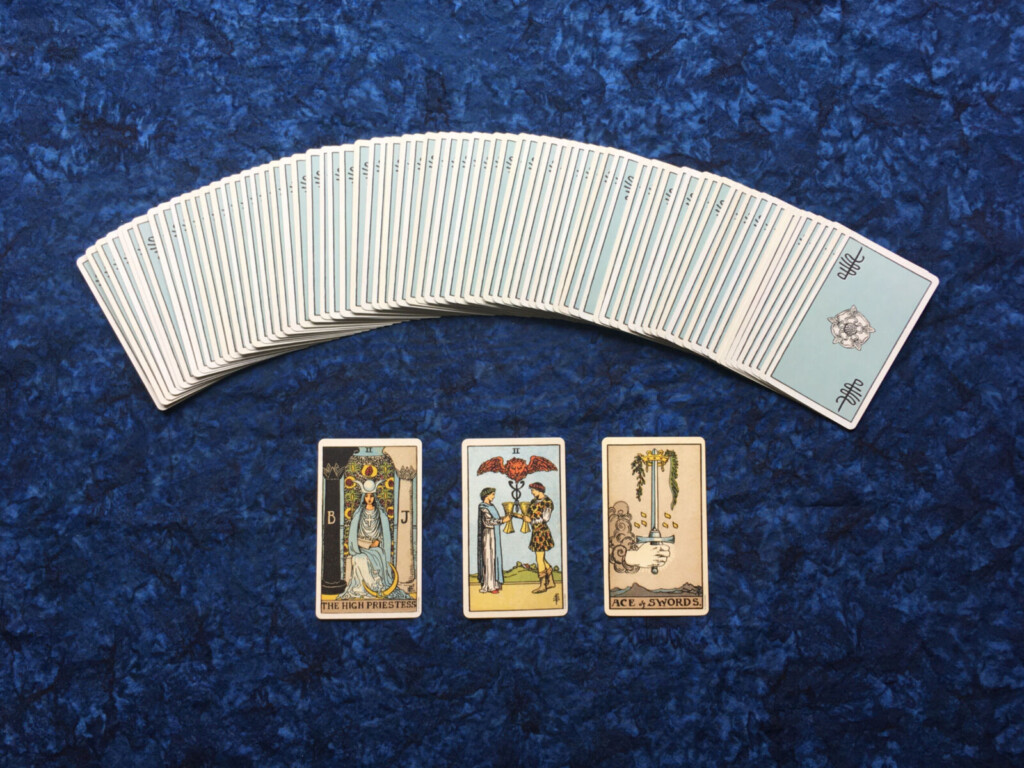
What Lévi actually produced in that book, completed with its second volume in 1856, was a synthesis of sources that were themselves synthetic: Kabbalah filtered through Renaissance Christian mysticism, Neoplatonism absorbed through Enlightenment-era secret societies, tarot cards that had only recently been misidentified as ancient Egyptian wisdom by the French occultist Antoine Court de Gébelin in 1781. Lévi took these accumulated misreadings and wove them into something that felt, on the page, like a coherent metaphysical system. The feeling of coherence was the invention. The scholar Wouter Hanegraaff, in his 1996 study New Age Religion and Western Culture, identified Lévi as one of the central architects of what he called “rejected knowledge” — the tradition-that-was-never-a-tradition, assembled from the margins of official intellectual life and presented as its hidden foundation.
This is not a minor biographical footnote. It is the structural fact around which everything else about Western occultism in the modern period rotates. The Hermetic Order of the Golden Dawn, founded in London in 1888, drew its ritual framework substantially from Lévi’s system. Aleister Crowley, born the year the Golden Dawn was established, claimed to be Lévi reincarnated and spent decades elaborating on ideas whose genealogy ran directly through those two volumes published by a failed French seminarian in the 1850s. The Tarot as a spiritual instrument rather than a card game, the concept of the Astral Light as a universal magical medium, the association of the Hebrew alphabet with cosmic correspondences — these are all Lévi’s constructions, or his reframings of existing confusions presented as ancient certainties.
What makes this genuinely strange is that Lévi knew he was constructing. His letters show a man of considerable intellectual sophistication who understood the historical contingency of the traditions he was assembling. He had, after all, been trained by some of the finest theological minds in France. He knew the difference between ancient transmission and recent invention. The question his entire career forces open is whether he believed that distinction finally mattered — or whether he had concluded, from the ruins of his earlier life, that all authority is performed.
The Choice to Stay

Documentary, by Mattia Mura, Italy, 2020.
Damanhur is a community of spiritual seekers located in Valchiusella, Piedmont. The people of Damanhur, who live in the largest ecovillage in Italy, consider themselves to belong to a micronation, although it is not recognized by the Italian state. The community, active since the mid-seventies, secretly built an underground temple recognized today by the Guinness Book of Records as the largest underground religious structure in the world. Through the eyes of Celastrina, a Swedish girl who arrived in the community to shoot a documentary and who instead chose to stay and live inside, the film tells the story of lights and shadows of the spiritual community, amidst the accusation of being a sect and the creation of a possible alternative society.
Damanhur constantly appears to the director in a series of coincidences, as if there were a calling, a mission. So Mattia Mura proposed the project to Fabrica who rejected it because it was "not in line with his editorial choice". But Mattia believes in his intuition and manages to carry out the project on his own, independently. It was a long journey, but the documentary was finally made.
LANGUAGE: Italian, English
SUBTITLES: English, Spanish, French, German, Portuguese
Dogme et Rituel and the Architecture of a Canon
You find the book in a secondhand shop somewhere in the kind of city that still has secondhand shops, and the spine is cracked at the midpoint the way spines crack when someone read it obsessively at one particular passage and never moved on. You open it and the prose hits you with the full weight of revealed truth — hierarchies of angels, the secret grammar of the universe, the Tarot card as cosmological map — and you feel, without being able to explain why, that you are recovering something rather than encountering something new. That sensation is not accidental. It was engineered.
When Alphonse-Louis Constant, writing as Éliphas Lévi, published Dogme et Rituel de la Haute Magie in two volumes across 1854 and 1856, he did something no serious historian of the period can pretend was a straightforward act of transmission. He assembled Kabbalah drawn largely from Christian Kabbalistic sources — filtered through Pico della Mirandola and the seventeenth-century syntheses rather than any direct lineage of Jewish mystical practice — alongside Hermetic philosophy, ceremonial magic from the grimoire tradition, and a reading of the Tarot so audacious in its claims that Antoine Court de Gébelin’s earlier eighteenth-century fantasy of Egyptian Tarot origins looks restrained by comparison. None of these systems had ever been formally unified. What Lévi produced was not a recovery but an invention wearing the costume of antiquity.
The mechanism he used to hold the structure together was the concept of the Astral Light — a universal fluid, permeating everything, the medium through which magical will operates and through which symbols communicate across time and tradition. This is not a concept he unearthed from any coherent ancient source. It is a philosophical binder, a rhetorical solvent that allows incompatible things to coexist inside the same architecture. The Kabbalah and the Tarot do not naturally speak to each other. The attribution of Hebrew letters to Tarot trumps, which Lévi either invented outright or adapted from a very narrow contemporary Parisian occultist circle, has no demonstrable precedent before him. Yet by anchoring both inside the Astral Light, he created the impression that they had always been two faces of one thing, and that he was simply the man perceptive enough to finally read the palimpsest correctly.
What makes this historically remarkable is not that Lévi fabricated — intellectual fabrication in the service of system-building is older than Plato — but that his fabrication was so structurally convincing that it became the foundation on which others built without questioning the ground beneath them. The Hermetic Order of the Golden Dawn, founded in 1888, took Lévi’s Tarot-Kabbalah synthesis as essentially given and expanded it into an enormously elaborate initiatory curriculum. MacGregor Mathers, translating and systematizing the Kabbalah Denudata of Knorr von Rosenroth, worked within a framework of correspondences that Lévi had largely normalized. By the time Arthur Edward Waite was writing The Pictorial Key to the Tarot in 1911 and overseeing the design of what became the dominant Tarot deck of the twentieth century, the synthetic architecture Lévi had built was so thoroughly inhabited that questioning its origins required an act of scholarly will almost nobody was willing to perform.
This is the specific gravity of a well-made canon: it retroactively naturalizes itself. Lévi wrote with the authority of a man transcribing, not composing, and readers responded to that authority by treating the text as a window rather than a mirror. The distinction between these two things — recovering a tradition and manufacturing the tradition you claim to be recovering — collapses whenever the manufactured object achieves sufficient cultural mass. The Tarot is not an ancient Egyptian initiatory document. It is a fifteenth-century Italian card game onto which a nineteenth-century French ex-seminarian projected a cosmological grammar so persuasively that the projection has now outlasted every competing account of what those images were originally for.

The Baphomet Problem and the Politics of Symbol
You have seen the image before even if you have never opened a single page of occult literature. The horned figure seated on a throne of stone, winged, androgynous, one hand pointing upward and one pointing downward, a torch between its horns, a caduceus rising from its lap, a pentagram on its forehead, human breasts merging into goat haunches, two serpents coiled at its base. It appears on album covers, in courtroom battles over religious liberty, in the sculptural installations of Satanic Temple press conferences. It feels ancient in the way that certain symbols feel ancient — as though they arrived fully formed from somewhere older than writing. Eliphas Lévi drew it in 1856.
The drawing appeared in Dogme et Rituel de la Haute Magie, published that year in Paris, and Lévi himself named it the Baphomet of Mendes, deliberately invoking the Knights Templar heresy charges of 1307, in which Philip IV of France and Pope Clement V accused the order of worshipping an idol called Baphomet — an accusation that modern historians including Malcolm Barber, in his 1994 study The New Knighthood, have largely treated as a fabrication of political persecution rather than evidence of any actual practice. Lévi took a name from a torture chamber and gave it a body assembled from everywhere simultaneously. The winged posture borrowed from the visual grammar of Hermes Trismegistus. The torch referenced Lucifer in its original etymological sense, the light-bearer, not the fallen angel. The androgynous body drew from alchemical illustrations of the Rebis, the unified masculine-feminine principle reproduced in texts like the Rosarium Philosophorum of 1550. The caduceus came directly from classical Mercury. The upward and downward pointing hands restated the Hermetic axiom “as above, so below” that Lévi had already been using as a rhetorical anchor throughout his theoretical writing.
What Lévi accomplished was not documentation but compilation — and the distinction collapses the moment readers stop looking at it. A compiled image, assembled with deliberate philosophical intention from borrowed fragments, produces an object that looks like it was found rather than made. This is not deception in any simple sense. Lévi was operating inside a tradition of esoteric synthesis that considered the recombination of ancient materials a legitimate form of revelation, the idea that a skilled operator could distill hidden essences across traditions into a single coherent form. The problem arrives in the next generation, when that form circulates without its genealogy.
By the time Arthur Edward Waite was writing his Critical History of Magic and Ceremonial Magic in 1913, the Baphomet drawing was already being treated as a recovered artifact, as though Lévi had illustrated something that existed before him rather than invented something that would exist after him. The image had entered a citational economy in which each new occult author who reproduced it, referenced it, or theorized from it was simultaneously lending it the authority of accumulated reference. This is how visual symbols achieve the appearance of antiquity in the modern period — not through age but through density of citation, through the compounding interest of repeated invocation. By 1969, when Anton LaVey incorporated a modified version of the image into the Sigil of Baphomet that became the official symbol of the Church of Satan, the Templar accusation, the 1856 drawing, and the alchemical visual grammar had fused into something that felt genuinely pre-modern even in its newest iteration.
The mechanism at work here is not unique to occultism, though occultism performs it with unusual transparency. Every tradition that wishes to present itself as ancient rather than constructed faces the same problem: authority requires depth, depth requires history, and when the history is thin or absent, the image must do the work that the archive cannot. Lévi’s Baphomet solved this problem so completely that it erased the problem itself from view, leaving a symbol that had apparently always been waiting to be found, with no visible fingerprints from the man who made it at his desk in Paris in the middle of the nineteenth century.
Correspondence as Epistemology
You are sitting with a book open in your lap, a diagram of interlocking symbols spread across two pages, and you feel, for the first time in a long while, that everything connects. The planets correspond to metals, the metals to temperaments, the temperaments to days of the week, the days to angels, the angels to Hebrew letters, the letters to tarot cards, and the tarot cards back to the planets. The wheel closes. Nothing is arbitrary. Nothing is orphaned. The sensation is not quite religious and not quite intellectual — it sits somewhere between the two, warm and total, and you mistake that warmth for truth.
Lévi inherited this architecture from Renaissance Neoplatonism, most directly from the tradition running through Marsilio Ficino’s Theologia Platonica of 1482 and the Hermetic corpus that Ficino translated for Cosimo de’ Medici, texts which the Renaissance believed to be ancient Egyptian wisdom and which Isaac Casaubon demonstrated in 1614 to be Greek compositions from the second and third centuries CE. The correspondence system survived the exposure of its false antiquity without embarrassment, because the doctrine of universal analogy had never actually depended on historical authority — it depended on the human nervous system’s inability to tolerate the experience of randomness. Lévi understood this intuitively, even if he could not have articulated it in those terms, and in his Dogme et Rituel de la Haute Magie, published in two volumes in 1854 and 1856, he systematized correspondences not as inherited lore but as a positive epistemological claim: that the visible world is a legible text, and that the trained magus reads it the way a philologist reads an inscription.
The epistemological problem is precise. A system of correspondences generates meaning the way a language generates sentences — indefinitely, in any direction, for any purpose. When every element of reality is assigned a symbolic equivalent in multiple registers simultaneously, the interpreter never encounters a fact that the system cannot absorb. Saturn corresponds to lead, to Saturday, to the color black, to melancholy, to restriction, to wisdom, to death, to the number three, and to the letter Gimel. If your life is going badly, Saturn is afflicting you. If your life is going well, you have mastered Saturn’s lessons. The correspondence system cannot be wrong about you because it has reserved a position for every possible outcome in advance. Karl Popper’s criterion, developed in Conjectures and Refutations in 1963, holds that a claim earns the status of knowledge only if it specifies in advance what would count as its refutation. The correspondence doctrine, by design, specifies nothing of the kind.
What makes Lévi’s version particularly durable is that he explicitly framed this interpretive omnivore as a feature rather than a defect. The Astral Light — his term for the medium through which correspondences operate — is not a hypothesis about nature but a postulated substrate that explains why analogy works everywhere: because everything is already, at the level of this invisible medium, the same substance in different configurations. The claim is unfalsifiable not by accident but by construction. Lévi was not an incompetent thinker; he was a strategically brilliant one. He had spent years as a Catholic seminarian before losing his vocation, and he understood better than most how a doctrinal system maintains coherence not by accumulating evidence but by redefining the territory in which evidence is permitted to speak.
The practical consequence is visible in every tradition that descends from his work. When the Golden Dawn adepts of the 1890s began constructing their elaborate initiatory curricula, they did not test the correspondence tables against independent criteria — they extended them, added columns, increased the resolution of the map. Arthur Edward Waite, Samuel Liddell Mathers, and later Aleister Crowley in his 777, published in 1909, produced correspondence tables of extraordinary complexity, each addition making the system feel more rigorous while making it structurally more closed.
The British Transmission and Institutional Alchemy
You are sitting across from someone who has just handed you a document full of symbols you cannot read, told you that decipherment requires years of initiation, and asked you to sign an oath of secrecy before the teaching begins. The demand feels ancient, almost sacred. It also ensures, with elegant efficiency, that you will never be in a position to ask whether the person handing you the document actually understands it either.
When Eliphas Lévi’s ideas crossed the English Channel in the 1880s, they did not travel as books travel — openly, arguably, available to refutation. They traveled as secrets, which is an entirely different epistemological mode. The Hermetic Order of the Golden Dawn, founded in London in 1888 by William Wynn Westcott, Samuel Liddell MacGregor Mathers, and William Robert Woodman, absorbed Lévi’s synthesis of Kabbalah, tarot, and ceremonial magic and immediately encased it in a graded initiation system borrowed partly from Freemasonry, partly from the cipher manuscripts whose provenance Westcott himself almost certainly fabricated. The institution was built on a foundation that its founders knew, or should have known, was invented. Whatever Lévi had achieved through genuine philological labor — his cross-referencing of Hermetic texts, his construction of a unified symbolic grammar — was now presented as immemorial secret tradition, handed down through lineages that did not exist.
What institutional translation does to an intellectual project is not simply a matter of dishonesty. It restructures the relationship between knowledge and power in ways that permanently distort both. Lévi wrote for readers. He argued, he cited, he made claims that could be challenged by anyone willing to read the same sources. The Golden Dawn wrote rituals for initiates, and the distinction matters enormously: a reader can contradict you, but an initiate, bound by oath and invested in the reality of what they have undergone, has powerful psychological incentives not to. The American sociologist Randall Collins, in his 2004 work on interaction ritual chains, observed that collective ceremonies generate emotional energy that becomes attached to the symbols used in the ceremony, making those symbols feel objectively charged rather than collectively constructed. Every Golden Dawn initiation was, in this sense, a machine for producing the subjective experience of contact with genuine esoteric authority.
Mathers translated Lévi’s specific interpretive move — the correspondence between the twenty-two letters of the Hebrew alphabet and the twenty-two trump cards of the tarot — into the structural spine of the Golden Dawn’s entire magical curriculum, connecting it to the ten sephiroth of the Kabbalistic Tree of Life in an elaborate diagram called the Tree of Life attribution system. What had been, in Lévi’s hands, a suggestive hermeneutic hypothesis became, in the Golden Dawn’s instructional documents, revealed cosmology. The difference between a hypothesis and a revelation is not logical but social: it is produced by the institutional context in which the claim is made and received.
The cost showed up almost immediately, not in the quality of the symbolism, which retained much of Lévi’s genuine synthetic intelligence, but in the quality of the thinking that surrounded it. Members who might have been capable philosophers became guardians of grades, defenders of attributions, competitors for authority within a hierarchy whose legitimacy rested on not being examined. Arthur Machen, Aleister Crowley, W. B. Yeats — all passed through the Golden Dawn carrying real intellectual gifts that the institution partly activated and partly calcified. Yeats spent decades in ceremonial magical practice and produced, in 1925, A Vision, an elaborate symbolic cosmology that is either a work of profound poetic intelligence or an extended demonstration of what happens when a brilliant mind mistakes its own mythological constructions for discovered metaphysical structure. Possibly both are true simultaneously, and that irresolution is precisely what the institution trained its members to be comfortable inhabiting without resolving.
A vision curated by a filmmaker, not an algorithm
In this video I explain our vision
Crowley, Lévi, and the Anxiety of Influence

You are standing in a London flat sometime around 1910, watching a man write his own name into history by erasing someone else’s. The notebooks are everywhere. The marginal annotations grow more aggressive as the pages turn — not corrections, exactly, but acquisitions, hostile takeovers performed in ink.
Aleister Crowley claimed, with a sincerity that is genuinely difficult to calibrate, that he was the reincarnation of Eliphas Lévi. The timing was convenient: Lévi died in 1875, Crowley was born in 1875, and Crowley treated this coincidence the way a lawyer treats a loophole — as a structural feature of the universe rather than an accident of the calendar. What makes this claim philosophically interesting is not its absurdity but its function. Harold Bloom, writing in The Anxiety of Influence in 1973, described how strong poets secure their originality by performing what he called a “clinamen” — a deliberate swerve away from the precursor that simultaneously acknowledges the debt and conceals it. Crowley did not merely swerve. He performed a total identification and then a total usurpation, collapsing the distance between influence and inheritance by declaring them biologically, spiritually identical. If you are the same person reborn, you cannot be accused of borrowing.
The textual evidence is unambiguous. Crowley’s treatment of the Tarot, elaborated through the decades of his productive chaos and eventually crystallized in The Book of Thoth published in 1944, rests almost entirely on the framework Lévi constructed in Dogme et Rituel de la Haute Magie between 1854 and 1856 — specifically Lévi’s revolutionary claim that the twenty-two Major Arcana corresponded to the twenty-two letters of the Hebrew alphabet and thus to the kabbalistic structure of the Tree of Life. Lévi had never himself designed a complete Tarot deck; he theorized the system and left it architecturally open. Crowley stepped into that opening and furnished it, then rearranged the furniture so thoroughly that many of his own readers never noticed the house was inherited. He swapped the positions of the Justice and Strength cards, renaming them Adjustment and Lust, and presented these changes not as corrections to Lévi but as revelations from an independent transmission — the reception of Liber AL vel Legis in Cairo in 1904, which Crowley always positioned as a break with all prior occult authority, including precisely the authority he was most systematically redeploying.
This is the structural logic of esoteric lineage, and it is far older than either man. Traditions sustain themselves not through transparent transmission but through what the historian of religion Wouter Hanegraaff, in Esotericism and the Academy published in 2012, identifies as a continuous process of “creative misreading” — each generation receiving a body of material and immediately transforming it under the pressure of new cultural anxieties, new aesthetic needs, new power arrangements, while maintaining the fiction of faithful preservation. The fiction is not incidental. It is load-bearing. Crowley needed Lévi’s architecture precisely because the Western esoteric tradition had, by 1900, accumulated enough institutional weight that a figure without roots in it would have had no platform from which to declare those roots irrelevant.
What Crowley added to Lévi’s framework was a tone — a particular register of transgression and virility and cosmic self-importance that Lévi, the defrocked priest who wrote with the grave sincerity of a man trying to reconcile the Church with the Hermetic tradition, would have found both alien and recognizable. Lévi had positioned magic as a science of the will. Crowley kept the word “will” and built an entire theology around it — Thelema, the Greek term for will, and its central law, “Do what thou wilt shall be the whole of the Law” — but stripped away every one of Lévi’s careful qualifications about moral order and the discipline of desire. The sentence looks like a continuation. It is an amputation.
Secularization's Shadow Market
You are standing in a bookshop in Paris in 1891, and the shelves around you carry titles that would have been unthinkable thirty years earlier — grimoires reprinted in affordable editions, treatises on Kabbalah aimed at bourgeois readers, journals dedicated to the systematic study of phenomena that universities refused to classify. No one in the shop looks like a fanatic. Several of them look like doctors.
This is the paradox that sociologists of religion consistently underestimate: the explosion of occult publishing and organized esotericism in the last two decades of the nineteenth century did not happen despite the advance of secular rationalism — it happened because of it. When Max Weber delivered his lectures that would become “Science as a Vocation” in 1917, he named the condition precisely: Entzauberung, the disenchantment of the world, the process by which modernity systematically strips existence of immanent meaning and replaces it with calculable cause and effect. What Weber diagnosed as a completed transformation was, in Lévi’s lifetime, still a violent rupture in process, and the wound it opened was not filled by scientific positivism — it was filled by whatever arrived first.
Auguste Comte had been supremely confident. His positivist hierarchy of sciences, elaborated across the six volumes of the “Cours de philosophie positive” published between 1830 and 1842, promised that sociology would eventually do for human meaning what physics had done for motion: render it transparent, predictable, governable. What Comte did not account for was the lag — the decades-long interval between the delegitimization of old explanatory frameworks and the social absorption of new ones. In that interval, between the recession of one certainty and the consolidation of another, human beings do not simply suspend their need for coherence. They shop.
Esotericism in the 1880s and 1890s did not position itself against science. It positioned itself as science’s more ambitious cousin, willing to go where the universities would not. The Theosophical Society, founded in New York in 1875 by Helena Petrovna Blavatsky and Henry Steel Olcott, explicitly adopted the vocabulary of investigation, comparison, and evidence. Its stated objectives included “the study of unexplained laws of Nature and the powers latent in man” — the phrasing of a research institution, not a church. Lévi’s own methodology, elaborated in “Dogme et Rituel de la Haute Magie,” presented itself as an act of recovery and systematization, not of faith. He was offering, in his own framing, a unified field theory of symbolic systems, a grammar beneath religions, a logic beneath myth.
The sociologist Émile Durkheim, working through the 1890s on what would become “Les Formes élémentaires de la vie religieuse” in 1912, argued that religion functions primarily as a mechanism for social cohesion — that the sacred is whatever a community collectively cordons off from the profane. The implication, which Durkheim drew carefully and his readers often missed, is that the need being met is structural, not epistemological. Secularization does not eliminate the demand; it relocates the supply. The occult revival answered that structural demand with a product engineered to feel both modern and transgressive — it spoke the language of initiation while wearing the clothes of inquiry.
What made Lévi’s synthesis peculiarly suited to this market was its intellectual respectability without institutional accountability. A reader could engage with his reconstruction of the Tarot as a universal symbolic alphabet, his interpretation of the Kabbalah as a mathematical theology, his theory of the Astral Light as a medium connecting individual will to universal force — and do so with the satisfying sensation of rigor, of having followed an argument rather than accepted a dogma. The absence of a church to enforce orthodoxy was not a weakness of the system. It was its primary selling point to a generation that had already learned to distrust institutions while remaining desperately hungry for the architecture of meaning that institutions once provided.
The Living Inheritance and Its Unexamined Costs
You are probably sitting with some version of it right now — the quiet conviction that the universe responds to intention, that energy follows thought, that alignment between inner state and outer circumstance is not superstition but a kind of literacy. This belief feels self-evident, almost biological, the way a deeply internalized assumption always does. It does not feel inherited. It does not feel like theology. But Éliphas Lévi wrote its first systematic grammar in 1856, in the Dogme et Rituel de la Haute Magie, and what he called the Astral Light — that universal plastic medium through which will impresses itself on matter — is the direct ancestor of every contemporary claim about vibration, manifestation, and energetic resonance that currently generates billions of dollars annually in retreats, supplements, coaching certifications, and self-optimization content.
The concealment required no conspiracy. It required only time and the ordinary human tendency to mistake familiarity for truth. When Helena Blavatsky systematized Lévi’s intuitions into the Theosophical architecture of the 1870s and 1880s, she gave them institutional form; when New Thought writers like William Walker Atkinson and Ralph Waldo Trine translated that architecture into American popular idiom at the turn of the twentieth century, they stripped the ceremonial apparatus while preserving the metaphysical skeleton. By the time Napoleon Hill published Think and Grow Rich in 1937 — a book that has sold over 100 million copies — the Hermetic doctrine that consciousness shapes external reality had been laundered so thoroughly through secular success rhetoric that its esoteric origins were invisible even to its author, who sincerely believed he was describing psychology rather than magic.
What makes this genealogy more than antiquarian curiosity is what it reveals about the hidden load-bearing walls inside contemporary therapeutic culture. The assumption that unresolved emotional material persists as blocked energy in the body, that trauma stores itself somatically as a kind of density awaiting release, that healing involves clearing, opening, or raising one’s vibrational state — these propositions circulate freely in clinical-adjacent wellness spaces as though they were empirically neutral descriptions of physiological processes. They are not. They are translations of Lévi’s Astral Light into the vocabulary of nervous system regulation, and the translation was performed largely unconsciously, through layered cultural inheritance rather than deliberate borrowing.
Wilhelm Reich‘s orgone energy theory, developed through the 1930s and 1940s, serves as the visible hinge in this transmission, the moment when occult energy doctrine attempted to put on a laboratory coat. Reich genuinely believed he had detected and measured a universal biosexual energy, and while mainstream science rejected his claims entirely, his conceptual influence on bodywork traditions, breathwork practices, and somatic therapy was enormous and lasting. Concepts that entered those traditions through Reich arrived carrying Lévi’s original metaphysical commitments — the universe as a medium of living force, the body as a site of energetic accumulation and discharge, the practitioner as one who facilitates flow — but the Reichian intermediate step had already performed one laundering, making the occult inheritance invisible inside what felt like biological language.
The tradition’s most remarkable achievement, then, was not that it survived persecution or institutional resistance. Religious and esoteric movements survive those pressures routinely. Its achievement was that it dissolved so completely into secular common sense that the people most thoroughly shaped by it would be the first to deny any supernatural belief. A person who tracks their daily energy levels, practices breathwork to clear stagnant emotion, sets intentions during new moon cycles, and selects crystals based on their vibrational properties may identify as a rational, science-adjacent individual with no particular interest in the occult — and may be entirely correct that they have never read a word Lévi wrote, never encountered the Hermetic corpus directly, never stood inside a ceremonial lodge. The tradition does not require conscious transmission to persist. It requires only that its deepest assumptions become the water in which a culture swims, indistinguishable from reality itself, which is precisely what Lévi, in his most ambitious moments, believed those assumptions always were.
🔮 Shadows of the Invisible: Occult Traditions and Hidden Knowledge
Eliphas Lévi stands at the crossroads of Western esotericism, bridging medieval magic, Kabbalah, and the emerging occult revival of the nineteenth century. His work did not emerge in isolation but belongs to a vast current of hidden knowledge that shaped mystics, magicians, and visionaries across centuries. Explore the figures and movements that form the deeper constellation of modern occultism.
Helena Blavatsky and Theosophy: the Woman Who Revolutionized Esoteric Thought
Helena Blavatsky founded the Theosophical Society in 1875, drawing heavily on the same currents of Hermeticism, Kabbalah, and ceremonial magic that Eliphas Lévi had systematized just decades earlier. Her synthesis of Eastern and Western esoteric thought transformed the occult landscape and made Lévi’s ideas accessible to a global audience of seekers. Understanding Blavatsky is essential to understanding how Lévi’s legacy was transmitted and transformed across the modern world.
GO TO THE SELECTION: Helena Blavatsky and Theosophy: the Woman Who Revolutionized Esoteric Thought
Aleister Crowley: the Great Beast and the Religion of Will
Aleister Crowley explicitly acknowledged Eliphas Lévi as one of his greatest precursors, even claiming in his later years to be Lévi’s reincarnation. His system of Thelema built upon Lévi’s ceremonial magic while pushing it toward far more transgressive and theologically radical territory. Crowley represents the most dramatic and controversial flowering of the tradition that Lévi helped to plant in nineteenth-century France.
GO TO THE SELECTION: Aleister Crowley: the Great Beast and the Religion of Will
Giordano Bruno and the Hermetic Tradition
Giordano Bruno was one of the Renaissance Hermetic thinkers whose rediscovery in the nineteenth century deeply influenced Lévi’s reconstruction of Western magic. Bruno’s art of memory, his pantheistic cosmology, and his synthesis of Neoplatonism and Hermeticism provided crucial building blocks for the occult revival that Lévi would champion. Their shared devotion to the hidden unity behind all things makes Bruno an indispensable ancestor of modern occultism.
GO TO THE SELECTION: Giordano Bruno and the Hermetic Tradition
Yeats and the Occult: Golden Dawn and Visions
W.B. Yeats was a devoted student of the occult tradition that Eliphas Lévi had helped to revive, joining the Hermetic Order of the Golden Dawn — an organization whose rituals and symbolism drew directly from Lévi’s writings. Yeats believed that magic, symbol, and visionary experience were inseparable from poetic creation, a conviction that Lévi would have recognized and shared. His esoteric notebooks and mystical system A Vision reveal a mind shaped by the same intellectual currents that animated Lévi’s entire project.
GO TO THE SELECTION: Yeats and the Occult: Golden Dawn and Visions
Discover the Cinema of the Invisible on Indiecinema
The hidden traditions explored in these articles have inspired some of the most daring and visionary works in independent cinema. On Indiecinema, you will find films that dare to look beyond the visible surface of reality, exploring myth, esotericism, and the depths of human consciousness with the courage that only independent cinema can offer. Join us and discover a world of films that illuminate the shadows.
👉 EXPLORE THE CATALOG: Watch Indie Films in Streaming
A vision curated by a filmmaker, not an algorithm
In this video I explain our vision

