
The Morning You Forgot Why You Got Up
You wake up and the ceiling is just a ceiling. Not threatening, not beautiful, not anything in particular. The alarm has already been silenced, the coffee is brewing in the other room, the day is arranged in front of you like a series of tasks that will be completed, checked, forgotten. You are not sad. You are not ill. There is no diagnosable reason for what is happening in your chest right now, which is precisely what makes it so difficult to name and so impossible to argue away. It is not pain exactly. It is more like the absence of something you cannot quite identify, a hollow note where a note should be, a room that echoes because the furniture has been removed while you were sleeping.

You get up anyway. This is what people do. You shower, you dress, you perform the morning rituals that anchor you to a version of yourself that functions. And by mid-morning you have forgotten the feeling entirely, buried it under schedules and conversations and the particular busyness that modern life has perfected as an anaesthetic. But it was there. It is there most mornings, if you are honest. Not always this loudly, but always present, like a frequency just below hearing.
Viktor Frankl called this the existential vacuum, and he arrived at that name not from a comfortable academic distance but from the interior of something almost unsurvivable. Before he became one of the foundational voices of twentieth-century psychiatry, before he published Man's Search for Meaning in 1946 and watched it become one of the most widely read books in the history of human self-examination, he survived Auschwitz, Dachau, and two other Nazi concentration camps. He lost his wife, his brother, his parents. He entered those camps already a trained neurologist and psychiatrist with a developing theory about the primacy of meaning in human life, and what he found there either destroyed that theory or forged it into something unbreakable. It did the second thing.
But the existential vacuum he described was not a symptom of catastrophe. That is the part that catches you. He was not writing about the emptiness that follows trauma or loss or the collapse of a life. He was writing about Sunday afternoons. He was writing about the particular depression that descends when there is nothing wrong, when the week has been managed, the obligations met, the leisure hours arrived at last, and yet something deflates rather than expands. He called this the Sunday neurosis, this creeping sense of meaninglessness that surfaces precisely when external distraction withdraws. The busyness had been holding something at bay, and in the quiet, whatever it was holding returns.
This is not a modern invention, though modernity has made it epidemic. Erich Fromm was describing the same territory in 1941 in Escape from Freedom, arguing that the liberation of the individual from traditional structures had produced not joy but a vertiginous anxiety, a freedom that felt less like emancipation than exposure. The sociologist Émile Durkheim had already mapped the edges of this terrain in 1897 in his study of suicide, where he identified anomie, the condition of normlessness, the collapse of the social frameworks that once told people who they were and why it mattered. What Frankl added, and what no one else had quite said with this precision, was that the suffering was not neurological, not social, not even psychological in the conventional sense. It was noological. It belonged to the dimension of meaning itself.
You have felt this. Not as a theory, not as a concept encountered in a book, but as a Tuesday morning, or a successful evening that left you inexplicably flat, or a relationship that gave you everything you had asked for and still did not fill the thing that needed filling.
The ceiling is just a ceiling. And something in you already knows that no amount of renovation will change that.
Don Barry: A Quixotic Exploration

Docufiction, Experimental, by Paul Smart, Mexico, 2026.
Don Barry: A Quixotic Exploration is a debut feature that places the biography of an eighty-year-old experimental filmmaker and artist, Barry Gerson, within the metanarrative of Miguel de Cervantes’ Don Quixote. Don Barry was filmed in the city of Guanajuato during the 51st edition of the Cervantino Festival, as well as during the vibrant Day of the Dead celebrations held in the city’s UNESCO-listed tunnels. The film honors the director’s long friendship with artist Barry Gerson, drawing inspiration from Cervantes’ Don Quixote. Paul Smart’s directorial choices create something new that celebrates life and goes beyond conventional storytelling. A search for magic in our real lives. A moving film about the meaning of life, art, and death. Not to be missed.
Paul Smart is a proud outsider filmmaker with a long history of film screenings. In the 1980s, he emerged in New York’s vibrant youth art scene, working in theater production and later filmmaking, before retreating to rural upstate New York, in the Catskill Mountains, where he made a living writing and screening independent films in old parish halls for rural audiences, many of whom had never seen a film.
LANGUAGE: English
SUBTITLES: Spanish, French, German, Portuguese
A Man Stripped to Nothing
There is a particular kind of loss that does not announce itself all at once. It arrives in installments, each one convincing you that you have now touched the floor, that surely this is the bottom, until the next removal proves you wrong again. Viktor Frankl knew this stripping process not as metaphor but as a sequence of dated events, each one precise and irreversible.
By the late 1930s he had built something real in Vienna. He was working at the Rothschild Hospital, heading the neurology ward, and had spent years developing a clinical approach he called logotherapy — from the Greek logos, meaning meaning — which positioned the human search for purpose as the primary motivational force in life, distinct from and prior to Freud’s pleasure principle or Adler’s will to power. He had a manuscript. He had a wife, Tilly, whom he had married in 1941. He had the specific texture of a life constructed with care.
The manuscript was the first thing. When the deportation orders came in September 1942, he had been trying for months to smuggle his written work into safety. He had even sewn the pages into the lining of his coat. They were found and destroyed. You can imagine the particular desolation of that moment — not the coat, not the pages, but the years of thought that existed nowhere else in the world, erased before it had been read by anyone. What remains of a mind when the record of its work is burned?
Then came the camps themselves, beginning with Theresienstadt and moving through a progression that the word “degradation” fails entirely to capture. Auschwitz. Kaufering. Türkheim, a satellite of Dachau. In each place the logic was the same: systematic removal of everything that had previously constituted a person. The clothes were taken, the name replaced by a number, the body reduced to its purely functional dimensions, the future rendered unthinkable. His father died at Theresienstadt. His mother was killed at Auschwitz. Tilly died at Bergen-Belsen in 1945, shortly before liberation.
What happened inside Frankl during those years was not heroic in any comfortable sense. He was not immune to despair. He was cold, starving, sick with typhoid, forced into labor that was designed to kill through exhaustion. What he observed, in himself and in others, was not the triumph of the human spirit as a poster might declare it. He observed something more disturbing: that the people who survived longest were often not the physically strongest. They were the ones who had found, or maintained, or discovered for the first time, some fragment of reason to continue. A person to return to. A task left unfinished. A question still unanswered. The question of meaning, which in Vienna had been an intellectual project, had become in Auschwitz a purely biological one. It was the difference between a body that woke up again and one that quietly stopped.
This is precisely what William James had gestured toward in 1902 when he wrote about the will to believe, the idea that certain convictions are not luxuries but structural necessities for human functioning. But James wrote from his armchair in Cambridge. Frankl tested the same hypothesis at minus twenty degrees Celsius with a guard’s rifle at his back. The gap between those two conditions is the entire distance between theory and truth.
He was thirty-five years old when he was arrested. He was forty when he was liberated. In those five years, everything that had been assembled — professionally, personally, materially, familially — had been taken. Not metaphorically stripped. Actually taken, one object and one person at a time, until what remained was a body that still breathed and a mind still stubbornly asking why it should continue to do so.

What the Camps Taught That Freud Could Not
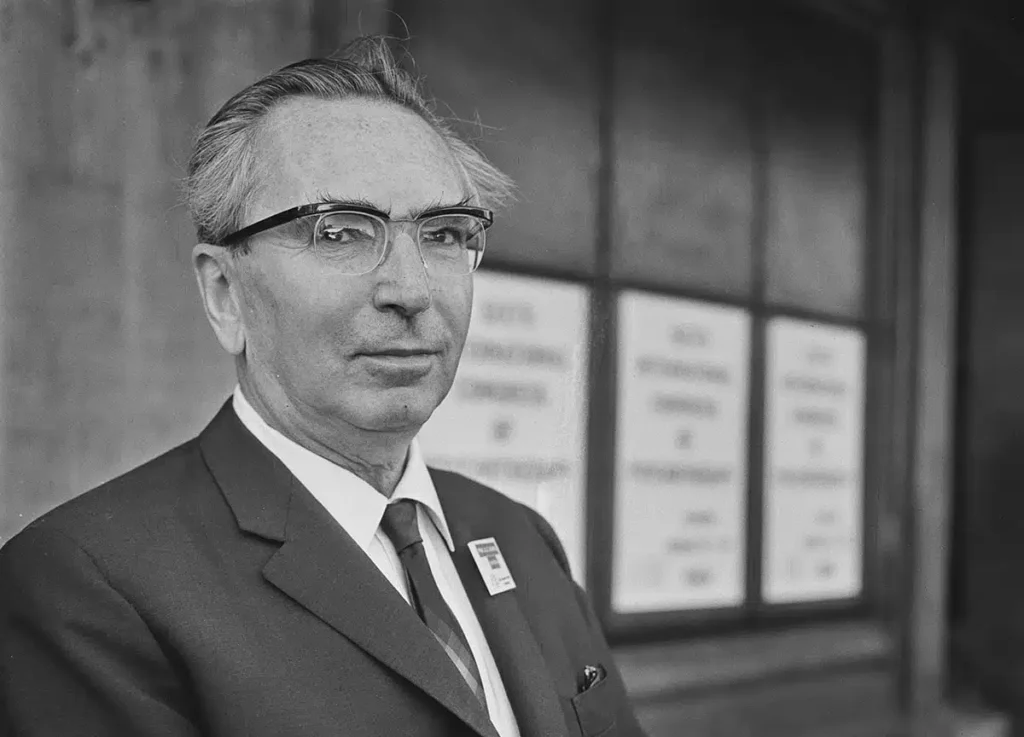
There is a moment when a man watches another man die and realizes, with a clarity that feels almost obscene in its precision, that something other than physical condition determined who survived the night. Not age. Not prior health. Not the arbitrary mercy of a guard. The man watching had spent years inside systems of thought that explained human behavior through drives, repressions, compensation mechanisms — elegant architectures built in Viennese consulting rooms, calibrated against neurotic suffering, never against this. And what he was seeing refused to fit.
Freud had given the twentieth century a powerful grammar for the interior life, but it was fundamentally a grammar of pressure and release, of instincts dammed up and redirected, of a self perpetually at war with itself and with civilization. The pleasure principle as the engine of everything. Adler had corrected him sideways — not pleasure, but power, the drive to overcome inferiority, to assert, to dominate one’s own weakness. Both systems shared a hidden assumption: that humans are primarily pushed from behind, determined by what they lack, by what was done to them, by biological and social forces that precede conscious choice. This assumption worked tolerably well in a world where the patient could leave the consulting room and return to their life. It collapsed completely in a place where the floor of the barracks was frozen and men were dying of dysentery next to men who were somehow, inexplicably, still capable of offering their last piece of bread to someone else.
What Frankl observed, and could not stop observing despite everything, was that the differentiating variable between those who disintegrated and those who endured was not measurable by any prior psychological model. It was not intelligence. It was not physical resilience, which followed its own brutal randomness. It was not even what he would later call temperament. It was the presence or absence of a reason — a specific, personal, irreplaceable reason — to go on. A manuscript waiting to be finished. A child somewhere. A face. A question left unanswered. Something that pointed beyond the present horror toward a future that still, at least in the imagination, existed.
This is not optimism. Optimism is a disposition, a way of weighting probabilities toward the favorable. What he was identifying was something structural, a feature of how meaning functions in the architecture of endurance. Nietzsche had come close with the formula that he who has a why to live can bear almost any how, but Nietzsche was writing as a philosopher constructing a vision, not as a physician watching men die at irregular intervals and trying to understand the pattern. Frankl was doing both simultaneously, which is what made his eventual account so difficult to classify and so impossible to dismiss.
When he finally wrote it down, in 1946, the text came out in nine days. The original German title named him directly — a psychologist experiences the concentration camp — and the nakedness of that framing was intentional. This was not theory applied to evidence. It was a man reporting what he had witnessed, including what he had witnessed in himself. Translated eventually into twenty-four languages and passed between hands more than twelve million times, the book became one of those rare documents that people describe not as having read but as having survived reading. It did not comfort. It demanded something.
What it demanded was a reckoning with the possibility that Freudian determinism, for all its explanatory power, had described a smaller human than actually existed. That the psyche under maximum pressure does not simply regress to its most primitive drives — though it can, and often does — but that some portion of human beings, under those same conditions, reached for something that no drive theory had predicted and no conditioning had installed.
The Lost Poet
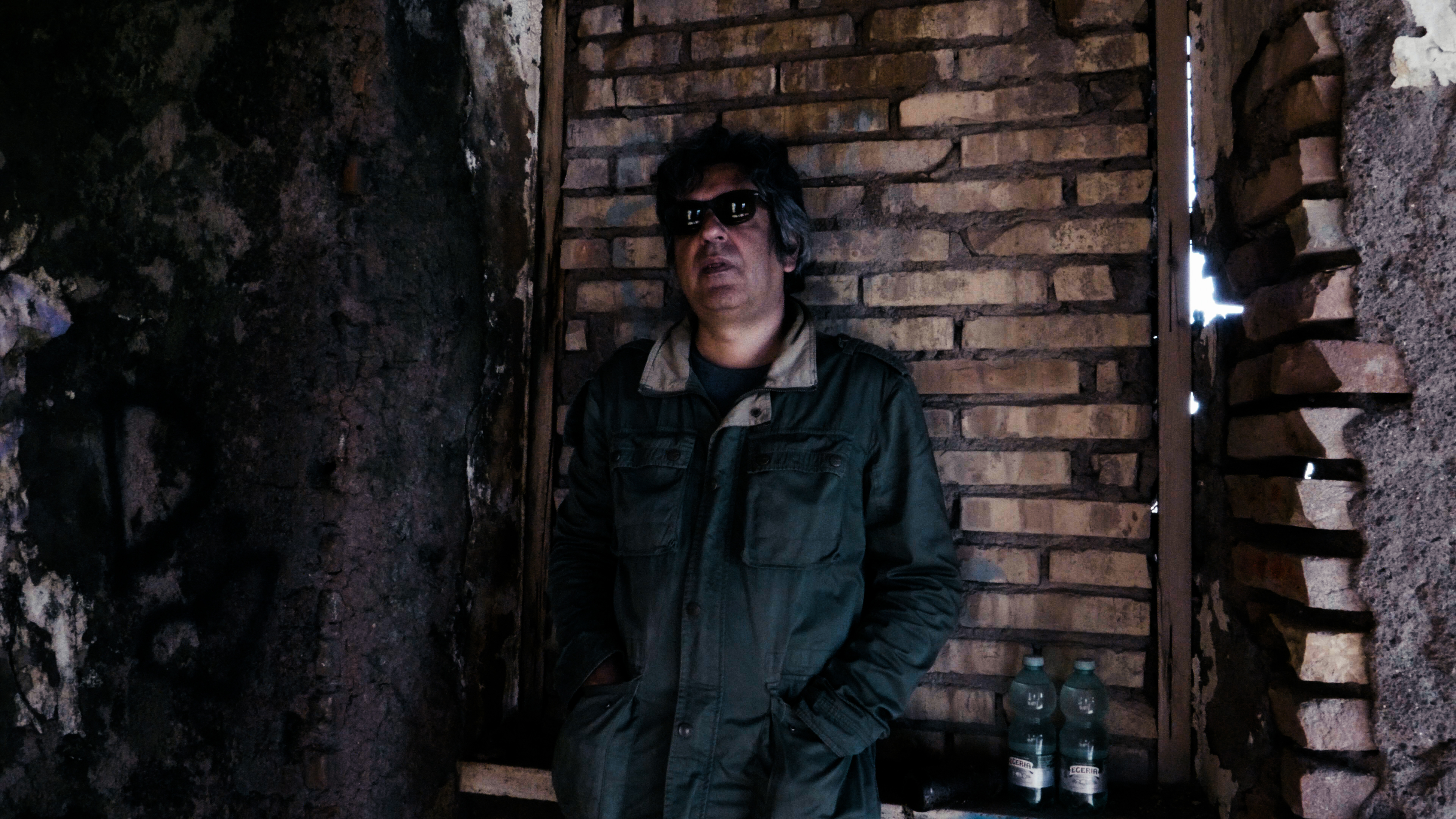
Drama, by Fabio Del Greco, Italy, 2024.
Dante Mezzadri wants to see an old friend, nicknamed the Iguana, whom he has lost sight of for many years, and who has managed to turn their shared youthful passion for poetry into a job, becoming a famous writer and poet. The man escapes from his bourgeois life and his wife to live homeless on the Roman coast, printing and trying to sell his poetry collections. At night he sleeps in a park of old carnival floats, inside a papier-mâché tank, and waits for the opportunity to meet his old friend, who however never shows up for appointments in the places they frequented when they were young, now in ruins. Dante's poetry books do not interest anyone and to support himself he is forced to "change product": he starts selling the infamous "cannibal pill" on behalf of young drug dealers, a new drug that sells like hot cakes and causes sensory and consumerist ecstasy. However, he realizes that this powerful drug is very dangerous for those who take it, he comes into conflict with his ethical conscience and throws all the pills into the sea. However, the dealers want to collect their money.
Shot over a period of 2 years, the film is a reflection on the cultural and artistic rubble of the society in which the protagonist lives, in an increasingly mechanized, consumerist and arid world. Dante Mezzadri is yet another human being who has renounced his inspiration and his creativity, but unlike many he is not willing to give his life to a system that distances him from his true identity. The physical world around him, however, seems constructed in such a way that it seems impossible to escape from this "invisible cage". The enthusiasm of the people he meets is ignited only by sensory gratification, by unreal visions of personal affirmation and success, by "metaverses" that offer an escape into an illusory and destructive reality. The poet's house on the coast, where he met with his friends as a young man, is just a pile of abandoned rubble. What happened to all those who wanted to become poets and ended up becoming something else? Are there internal forces with which that house can be "rebuilt"?
LANGUAGE: Italian
SUBTITLES: English, Spanish, French, German, Portuguese
The Will to Meaning Against the Will to Pleasure
There is a moment when a man stops eating. Not because he lacks hunger — the hunger is absolute, a physical fact that has colonized every thought — but because he has made a calculation that no economist would recognize as rational. He slides the bread toward another hand. Not from generosity in any sentimental sense. From architecture. From the structural need to make his dying mean something rather than nothing, to die as a subject rather than dissolve as an object. The distinction sounds philosophical until you understand that it is the only thing keeping him vertical.
Frankl watched this happen. He did not romanticize it. He catalogued it with the cold precision of a clinician who had also been a prisoner, and what he concluded was not that humans are noble but that they are meaning-seeking in the way that lungs are oxygen-seeking. It is not a virtue. It is a design specification.
This is where logotherapy departs from both of the giants Frankl had trained under and then, carefully but irreversibly, left behind. Freud had built his entire architecture on the pleasure principle — the reduction of tension, the return to homeostasis, the organism seeking relief. The will to pleasure. Adler had corrected this by shifting the axis: what moves human beings is not the search for comfort but the drive toward superiority, the compensation for felt inferiority, the will to power in its social and psychological expression. Both frameworks are partial truths. Both, Frankl argued, describe what humans pursue when the primary pursuit has been blocked or abandoned. Pleasure and power are not motivations so much as substitutes — what the psyche reaches for when meaning has gone missing.
The philosopher who had actually seen this most clearly was not a clinician at all. Nietzsche had written the sentence that Frankl would quote throughout his life with an almost obsessive frequency: he who has a why to live can bear almost any how. Frankl did not treat this as an aphorism. He treated it as an empirical observation, a data point extracted from the most extreme human laboratory imaginable. He had tested it. He had watched it hold and watched it fail, and in watching the failure — in watching the men who had no why, who had been stripped of every future projection, every person they were returning to, every task awaiting their hands — he had watched the how destroy them within days.
What Nietzsche understood, and what Frankl formalized into a clinical system, is that meaning is not a luxury appended to survival. It is a precondition of survival at a level deeper than calories. This is not optimism. Optimism would say that things will improve, that the suffering has an end. What Frankl was claiming is harder and colder than that: even if things do not improve, even if the suffering has no end visible from here, the human animal can endure it provided it can locate a meaning within it. The suffering itself can be the content of the meaning. This is not consolation. It is mechanics.
The prisoner who refuses the last piece of bread has made a decision about what kind of entity he is. He has asserted, against every biological instruction his body is screaming, that he is not reducible to his hunger. That there is something in him that stands outside the causal chain of stimulus and response, need and satisfaction. Frankl called this the defiant power of the human spirit, and he was careful to strip the phrase of its inspirational resonance. It was not defiance in the heroic sense. It was defiance as a structural fact, the way a load-bearing wall is structural — not dramatic, not chosen, simply constitutive of what the thing is.
Freud’s patient lies on a couch and excavates the past. Frankl’s prisoner stands in the cold and decides what the future means.
The Existential Vacuum and the Noise We Fill It With

There is a specific hour of Sunday afternoon that no productivity system has ever been able to colonize. You have done everything correctly — the week was full, the obligations met, the social appearances maintained — and yet here it is again, that hollow pressure behind the sternum, that vague unease that feels less like sadness than like the absence of something whose name you cannot quite remember. You do not reach for your phone because you need information. You reach for it because silence has become structurally intolerable.
Frankl called this the existential vacuum, and he was precise about its mechanics. It was not depression in the clinical sense, not anxiety in the diagnostic sense. It was the experience of inner emptiness that results when the drives and instincts that once oriented animal life have been culturally suppressed, and when the traditions and inherited meanings that once replaced them have collapsed. The human being, uniquely among living creatures, can act without knowing why — and this freedom, when it finds no content to fill it, becomes its own form of suffering. Frankl first articulated this concept systematically in the 1950s and developed it most fully in “The Will to Meaning” in 1969, identifying it as what he called the mass neurosis of the twentieth century. The century has since changed its number, and the neurosis has only refined its camouflage.
Émile Durkheim had already seen the outline of this condition from a sociological angle. In his 1897 study of suicide, he introduced the concept of anomie — the state in which social norms disintegrate or become contradictory, leaving the individual without a stable framework of expectation and value. Anomie, for Durkheim, was not merely personal confusion but a structural condition produced by societies that modernize faster than they can produce new forms of cohesion. Frankl took this diagnosis and pushed it inward, arguing that the vacuum was not just the product of social disintegration but of something more fundamental: the failure to confront the question of meaning at all. You can live inside a perfectly functioning society and still be hollow at the center. The noise is not caused by the absence of structure. The noise is how we avoid noticing that structure was never the same thing as meaning.
Consider a man at the end of a distinguished life, riding through the landscape of his past accomplishments, past marriages, past certainties — and realizing, somewhere between one milestone and the next, that he cannot remember having truly inhabited any of it. Not because the life was bad. Because it was performed. He had moved through decades of external success with the fluency of someone who had learned every gesture of living without ever once stopping to ask what the gesture was for. The recognition does not arrive as drama. It arrives as a quiet, devastating subtraction.
Or consider another figure: a man who has built everything — family, property, purpose — and who one morning makes a radical, almost incomprehensible act of destruction aimed at nothing less than the future itself, as if the only honest response to a world emptied of transcendence is to refuse to continue its reproduction. The existential vacuum, in its extreme manifestations, does not produce passivity. It produces acts of strange, displaced urgency — hyperactivity dressed as meaning, sacrifice performed for an audience of no one.
This is what Frankl meant when he wrote that people today have the means to live but no meaning to live for. The hyperactivity, the compulsive consumption, the calendar packed to its margins — these are not signs of vitality. They are the behavioral signature of someone running from a room they are afraid to enter. The vacuum does not announce itself. It waits in the Sunday afternoon, in the moment after the last notification, in the silence that arrives precisely when you have run out of things to do with your hands.
A vision curated by a filmmaker, not an algorithm
In this video I explain our vision
Three Doors: Creation, Experience, and Suffering
There is a man who spends thirty years building something — a school, a company, a garden, a body of translated poetry — and when he finishes, or when it is taken from him, he discovers that the meaning was never stored in the object. It was in the act of making. Frankl called this the first pathway: what we give to the world, what we create or contribute, the work of hands and mind that leaves something behind. Not as monument. As trace. The baker who has fed the same neighborhood for four decades is not less meaningful than the architect whose building stands for centuries. The measure is not scale. It is the investment of self into something outside the self.
The second pathway is quieter and often overlooked precisely because it requires nothing of you except the capacity to receive. You stand in front of a painting and something opens in your chest. You hear a piece of music and recognize, without words, something you have always known. You look at another human being and understand that their existence changes what the world means to you. Frankl, who had loved deeply before everything was taken, wrote about this with the precision of someone who had tested it in conditions most people will never face. Love, he argued, is not merely an emotion. It is a form of perception. It allows you to see the person as they could be, as they most fully are. And that seeing — even in memory, even when the person is gone — constitutes a meaning that no external event can retroactively erase. Something happened. It cannot unhappen. The experience of beauty, of truth, of love, is already complete the moment it occurs. This is not sentiment. It is ontology.
But the third pathway is where Frankl goes somewhere almost unbearable to follow. Because the first two are available only when circumstances cooperate. You need health to create, or at least some residual capacity. You need the world to offer you something worth receiving. What happens when both are foreclosed? When you are ill, imprisoned, stripped, diminished? When no creation is possible and nothing beautiful reaches you?
This is where he refuses to offer comfort. What remains, he says, is the freedom to choose your attitude toward what cannot be changed. Not optimism. Not stoic indifference. Not the performance of dignity for an audience. The actual, internal, private orientation you take toward a suffering you cannot escape. A woman who will not recover from a diagnosis, who knows the shape of what is coming, who sits in that knowledge every morning when she opens her eyes — she can still decide what that suffering means. Whether it breaks her into bitterness or whether it becomes, in some way she never asked for and never wanted, the final expression of who she is.
This is the most radical thing Frankl ever wrote, and it is also the most easily misread. It is not an instruction to suffer gracefully. It is not a suggestion that pain has silver linings. It is not the kind of thought that can be put on a motivational poster without becoming its own lie. What he is describing is something far more austere: that the capacity to choose one’s stance toward inescapable suffering is the last territory of human freedom that no external force can occupy. Even in the camps, he observed men who gave their last piece of bread to others. Not because they had stopped suffering. Because they had decided, in the face of everything, who they were going to be.
That is not consolation. It is the most demanding ask ever placed before a human being. And it is offered not as hope, but as a description of what some people actually did, and what that doing revealed about the structure of human freedom when everything else had been removed.
Freedom as the Last Millimeter
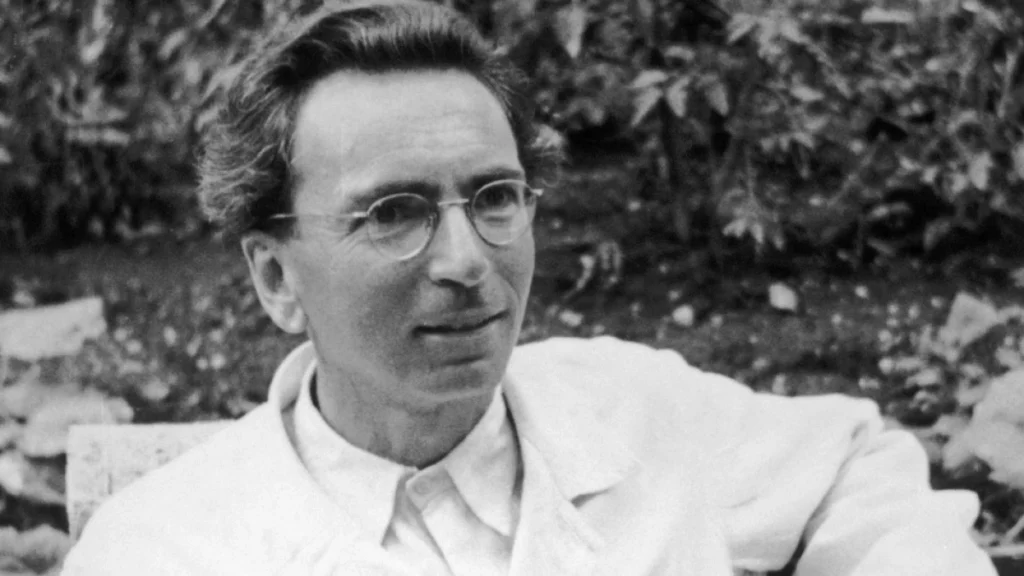
There is a man in the dark, pressed against other bodies, breathing air that smells of fear and human waste, and the train has not stopped for two days. He does not know where he is going. He knows enough to suspect. His hands are cold and he cannot feel his feet and somewhere to his left a woman is crying in a way that has gone beyond sound into something more like breathing. And inside this — inside the sealed wagon, inside the cold, inside the not-knowing — something is happening that no guard ordered and no cattle car could prevent. He is deciding what his fear means.
Not whether he is afraid. He is afraid. That question was never open. The question that remains open, the only one that remains open, is what he will do inside the fear. Whether it will become contempt for the woman crying, or whether it will become a kind of rough and wordless solidarity. Whether it will collapse into hatred or hold itself, somehow, as witness. That space — between the stimulus that cannot be refused and the response that has not yet been chosen — is so small it barely has dimensions. Frankl called it, in effect, the last millimeter of human freedom. And he insisted, with the precision of someone who had measured it with his life, that it cannot be confiscated.
This is where logotherapy reaches its philosophical center, and where it enters into a conversation with Sartre that is more quarrel than agreement. Sartre, writing in 1943 in Being and Nothingness, argued that human beings are condemned to freedom — that there is no escape from choice, no nature to hide behind, no God to delegate the decision to. The weight of freedom in Sartre is vertiginous, almost punitive. It arrives as nausea, as the seasickness of a creature with no fixed ground. You are free, he says, and the word lands like a sentence.
Frankl does not disagree that freedom is inescapable. He diverges on what it feels like and what it is for. For Frankl, freedom is not the abyss into which you fall without anchor. It is the one thing that orients you when everything else has been stripped. It is not infinite — he is too honest for that — but it is inalienable. You cannot be made unfree at the level that matters most, which is the level of meaning-making. The guards can take the shoes. They cannot take the choosing. This is not optimism in the casual sense. It is something far more structural, more anatomical almost, a description of what the human being actually is at its irreducible minimum.
In the postscript he added to Man's Search for Meaning in 1984, Frankl introduced the phrase tragic optimism to name this exactly, and to distinguish it with some urgency from its cheaper imitation. Positive thinking looks away. It requires a certain blindness to function, a managed ignorance of how bad things actually are. Tragic optimism looks directly at the worst — the pain that will not stop, the guilt that cannot be undone, the death that is coming and cannot be bargained with — and does not flinch, and does not pretend, and does not perform cheerfulness over the wreckage. It says: yes, this is real. And then it asks what can still be made of it.
The man in the cattle wagon is not being asked to feel better. He is not being offered comfort. He is being asked — and this is almost unbearably demanding — to remain the author of something, even here, even now, even in this dark where the only thing he owns is the next millimeter of interior space between what is happening to him and who he will be because of it.
That millimeter is not nothing. It may be everything.
The Question That Turns Around
There is a moment — and you may have lived it, or you may be living it now without recognizing it — when the question you have been carrying for years reveals itself to be facing the wrong direction. You have spent a long time asking whether your life has meaning, whether it deserves to continue, whether the weight of existing is justified by something you cannot quite locate. The question feels like a wound you keep reopening, a courtroom in which you are simultaneously the accused and the judge. And then, without ceremony, without the illumination you imagined would accompany such a shift, you understand that the question was never yours to ask in the first place.
Frankl arrived at this inversion not through philosophy but through extremity. In “Man's Search for Meaning,” published in 1946 and translated into more than forty languages — eventually selling over twelve million copies — he described how in the camps he watched men surrender not to cold or hunger but to the absence of a reason to survive. What distinguished those who endured was not physical strength but something more elusive: a sense that something still awaited them, that life had not finished requiring something of them. He drew from this the most destabilizing claim in his entire system — that the question of meaning runs in the opposite direction from the one we assume. Life is not a passive provider of significance we must extract through sufficient suffering or sufficient pleasure. Life interrogates us. We are the ones who must answer.
This is not a metaphor. Frankl was rigorous about it. He borrowed from Tolstoy the image of a man on his deathbed reviewing whether he lived correctly, and he inverted it: the question is not whether you judged life correctly, but whether you responded to what it asked of you in each particular moment. The philosophical lineage here reaches back to Kierkegaard’s insistence that subjectivity is not a problem to be solved but a task to be inhabited, and forward to Emmanuel Levinas, who argued that responsibility precedes freedom — that we are called before we choose. Frankl’s contribution was to make this unbearably concrete, to strip it of its theoretical comfort and place it inside a barrack in Auschwitz, inside a hospital room, inside an ordinary Wednesday afternoon when nothing is happening and everything, somehow, is at stake.
The reversal is not liberation. This is what makes it genuinely difficult to hold. If meaning were something you discovered — a treasure buried in your particular history, waiting for the right moment of excavation — then you could, in principle, find it and rest. But if meaning is a response, then it demands something from you continuously, in conditions you did not choose and cannot renegotiate. A person who has spent decades asking whether their life is worth living, upon encountering this inversion, does not feel freed. They feel the question turn around and look at them with an expectation that cannot be dismissed. The court does not dissolve. The roles simply reassign.
Frankl called this the Copernican revolution of existential thought, and the comparison holds precisely because of what the original revolution cost. It removed the earth from the center not to comfort anyone but because the evidence required it. Similarly, this inversion removes the self from the position of passive sufferer awaiting justification and places it inside a structure of accountability that does not yield to fatigue or despair or the entirely reasonable wish to be left alone. You are not waiting for life to make its case to you. Life has already spoken. The only remaining question — the one that cannot be delegated, postponed, or philosophized away — is what, exactly, you intend to say back.
🧭 Meaning, Existence, and the Search for the Self
Viktor Frankl’s logotherapy invites us to confront the deepest questions of human existence: why we suffer, what we live for, and how meaning can be forged even in the darkest circumstances. The thinkers and works gathered here share that same restless impulse — a refusal to accept a life without direction or depth. Each article opens a different door into the labyrinth of the self.
Hannah Arendt: the Philosopher Who Unmasked the Banality of Evil
Hannah Arendt spent her life dissecting the conditions under which human beings lose — or reclaim — their moral agency. Like Frankl, she believed that thought and responsibility are the last refuges of freedom, even inside totalitarian systems. Her analysis of the ‘banality of evil‘ resonates powerfully with Frankl’s own experience inside the Nazi concentration camps.
GO TO THE SELECTION: Hannah Arendt: the Philosopher Who Unmasked the Banality of Evil
Jiddu Krishnamurti: the Man Who Refused to Be God
Jiddu Krishnamurti dedicated his life to dismantling every external authority that prevents human beings from achieving genuine self-knowledge. His radical philosophy — that no teacher, doctrine, or tradition can grant liberation — echoes Frankl’s insistence that meaning cannot be given but only discovered from within. Together, they form a striking dialogue between Eastern and Western paths to inner freedom.
GO TO THE SELECTION: Jiddu Krishnamurti: the Man Who Refused to Be God
Must-See Movies About the Meaning of Life
Cinema has long served as a mirror for the most urgent existential questions: why are we here, what makes a life worth living, and how do we face death with dignity. This curated selection of films explores themes that run parallel to Frankl’s logotherapy, turning the screen into a space of philosophical confrontation. Each film invites the viewer to measure their own existence against the characters’ choices.
GO TO THE SELECTION: Must-See Movies About the Meaning of Life
Deep Movies that Make You Think
Some films do not entertain — they disturb, challenge, and ultimately transform the way we perceive reality and our place within it. This collection gathers cinema that demands active thinking, refusing easy answers in the same spirit that Frankl refused easy comfort. Watching these films is an exercise in what logotherapy calls the ‘will to meaning.’
GO TO THE SELECTION: Deep Movies that Make You Think
Discover Cinema That Asks the Questions That Matter
If Viktor Frankl’s search for meaning has stirred something in you, Indiecinema streaming is the place to continue that journey. Our catalog gathers independent and auteur films that dare to confront existence honestly — films that, like logotherapy itself, believe the examined life is worth living. Join us and let cinema become your companion in the infinite maze.
👉 EXPLORE THE CATALOG: Watch Indie Films in Streaming
A vision curated by a filmmaker, not an algorithm
In this video I explain our vision

