
The Beetle and the Abyss
You know this feeling. You are twelve, or maybe thirty-two, and you have arranged something — stamps, stones, bottle caps, receipts from cities you barely remember — into rows on a flat surface, and there is a specific satisfaction in it that you cannot fully explain to anyone without sounding slightly unwell. The satisfaction is not in the having. It is in the sorting. In the act of placing one thing next to another thing and noticing, for the first time, that they are not the same. That the difference matters. That the difference is, in fact, everything.

Charles Darwin at seventeen was doing something structurally identical, except his surface was the countryside around Shrewsbury and his objects were beetles. Not metaphorically beetles. Literally beetles, in their hundreds, in their impossible variety — the violet ground beetle, the bombardier, the stag, the dung — collected with a fervency that his friends found eccentric and his family found somewhere between amusing and alarming. He would peel back bark. He would wade into ditches. He would carry specimens home in his mouth when he had run out of hands, which is either dedication or madness depending on where you are standing. He was not yet thinking about evolution. He was not thinking about natural selection or the origin of species or any of the large luminous ideas that would eventually make his name permanent. He was thinking about this beetle, right here, and whether it was the same as the one he had found last Tuesday, and why it wasn’t.
This distinction matters enormously and almost no one makes it. We have a habit, when we tell the stories of great minds, of reaching for the lightning bolt. The apple falling, the bath overflowing, the dream of a snake eating its own tail. We want genius to arrive fully formed, because fully formed genius is clean and it is narrative and it lets us off the hook — if understanding requires a flash of divine intervention, then our own failure to understand is simply a matter of not having been struck. What Darwin’s life refuses to offer you is this consolation. His was not a mind that was struck. It was a mind that accumulated. That catalogued. That noticed, and kept noticing, and went on noticing long after a less committed attention would have satisfied itself and gone home.
The philosopher of science Karl Popper spent much of his career, particularly in The Logic of Scientific Discovery published in 1934, arguing that science advances through falsification rather than accumulation — that what matters is not how much you gather but what you are willing to discard. Darwin is a more complicated case than Popper’s framework easily handles, because Darwin did both. He gathered obsessively and he discarded ruthlessly, but the discarding was only possible because the gathering had been so thorough. You cannot eliminate a hypothesis you have never taken seriously enough to test. You cannot see what doesn’t fit until you have stared long enough at what does.
There is a scene that belongs to anyone who has ever worked with their hands long before they worked with their mind. A young man stands at the edge of a field at dusk, turning over a stone, not because he expects to find anything revelatory beneath it, but because turning over stones is what he does, because the habit of attention has become indistinguishable from the self. The stone is heavy and slightly damp and beneath it there is something small and dark and fast that he cannot immediately name. He reaches for it anyway. This is not the moment of discovery. This is the practice that makes discovery structurally inevitable, eventually, given enough time and enough stones. Darwin’s genius, if we are honest about what that word means, began precisely here — not in the Galapagos, not on the Beagle, but in this earlier, quieter, slightly obsessive turning of things over to see what lived underneath.
Eve of the Irises
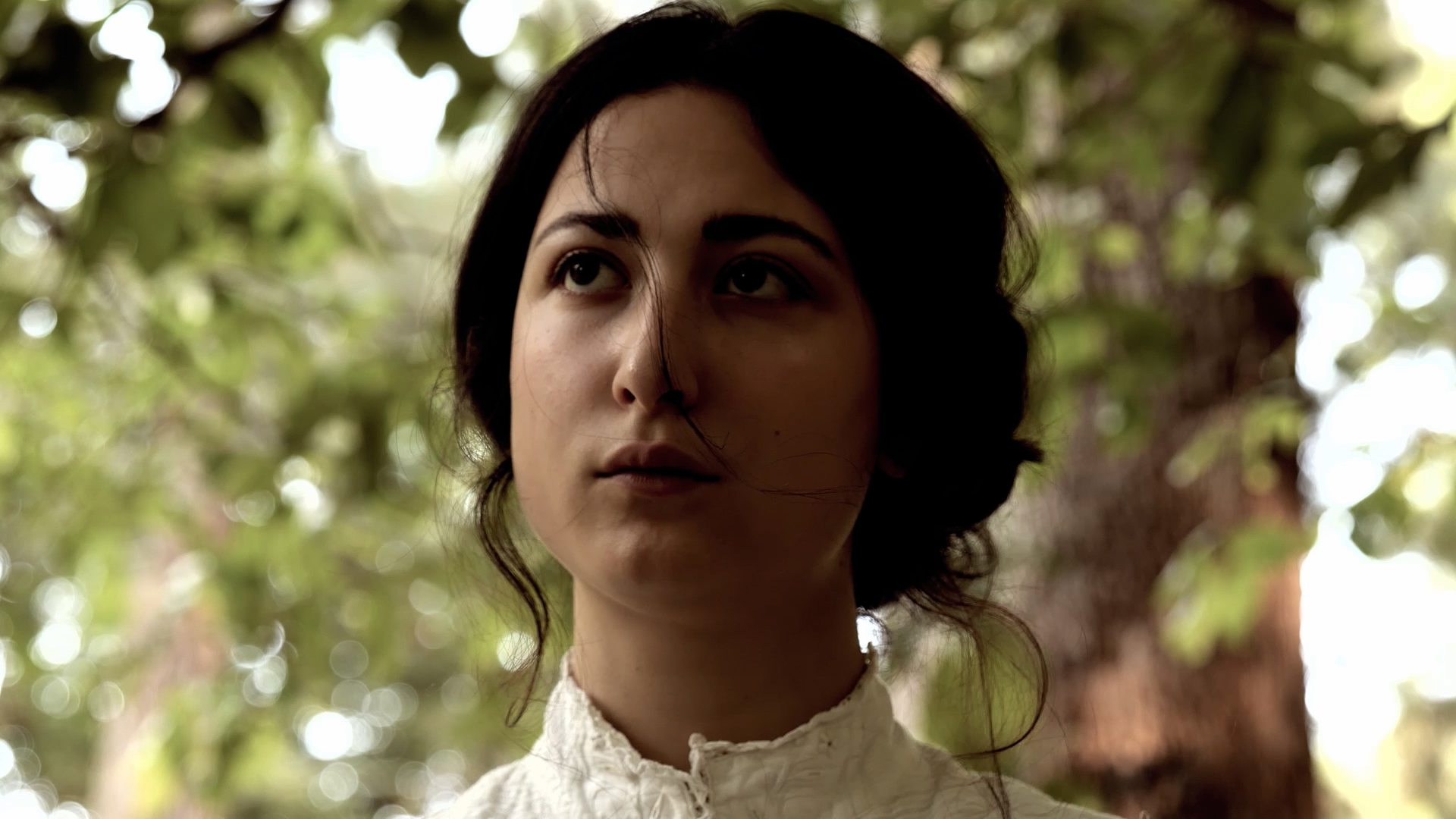
Documentary, by Isabel Russinova, Rodolfo Martinelli Carraresi, Italy, 2026
Eva of the Irises is a historical biographical docu-film about the scientist Eva Mameli Calvino, a botanist and pioneer of environmentalism in Italy, mother of the writer Italo, born in Sassari in 1886. The film, based on a multidisciplinary approach that combines several genres—such as theatre, documentary, cinema, and research—moves between memories, reflections on life, as well as the goals and missions the scholar still wished to achieve.
The multifaceted artistic sensibility of Isabel Russinova is expressed across many fields, from writing to acting, from directing to civic engagement, and finds one of its highest expressions in the docu-film Eva of the Irises, created with Rodolfo Martinelli Carraresi. The film blends scientific rigor and poetic refinement to portray the extraordinary figure of the botanist Eva Mameli Calvino, mother of Italo Calvino but above all an independent protagonist of 20th-century scientific culture. It is told through a combination of archival materials, interviews, and evocative staging capable of elegantly and profoundly conveying her intense human and professional story.
LANGUAGE: Italian
SUBTITLES: English, Spanish, French, Portuguese
A Gentleman Sent to Forget Himself
There is a particular kind of pressure that does not announce itself as pressure. It arrives as opportunity, as family tradition, as the reasonable expectation of people who love you and know, they are absolutely certain they know, what kind of life suits a man of your station. Charles Darwin felt this pressure before he had language for it, before he could have recognized it as anything other than the natural shape of the world.
He was born in 1809 into a family architecture of considerable weight. His father, Robert Darwin, was a physician of commanding presence and substantial wealth. His grandfather, Erasmus Darwin, had been a celebrated naturalist and poet, a man of ideas who moved through the Enlightenment with the confidence of someone the century was waiting for. The expectation embedded in this lineage was not spoken as a command. It did not need to be. It was structural, ambient, the way gravity is not experienced as a force until you try to rise against it.
Edinburgh came first, in 1825, when Darwin was sixteen. His father sent him to study medicine, and for two years he sat through lectures that deadened something in him with each passing hour. He watched surgeries performed without anesthesia and felt, not the clinical detachment medicine demands, but a nausea that never fully resolved into professional distance. He abandoned the operating theater permanently after witnessing a procedure on a child that he could not afterwards drive from his memory. This was not weakness. It was something more interesting: a refusal of the self-erasure that professional formation requires of the men it admits.
What Edinburgh did give him, almost accidentally, was Robert Grant, a zoologist who introduced him to marine invertebrates and to the seditious idea that species might not be fixed. Darwin collected, observed, and presented a small paper to the student Plinian Society in 1827. The institution barely noticed. He was still, officially, a medical student who was failing at medicine.
Cambridge followed, from 1828 to 1831, and the plan was now theology. A clergyman’s life was considered entirely respectable for a gentleman naturalist of modest ambition — comfortable, stable, compatible with country walks and beetle collecting. Darwin himself wrote later that the plan did not seem repugnant to him at the time. This is perhaps the most unsettling detail in his early biography. Not that he resisted the clerical path, but that he did not. He studied William Paley‘s Natural Theology with genuine attention, finding the argument from design — that the complexity of organisms implies a designing intelligence — genuinely compelling. He could have stayed there. The machinery of his class was well-designed to absorb young men of good family and curious minds, to give them just enough intellectual room to feel free while ensuring they never moved far from where they began.
Michel Foucault argued, across several decades of work culminating in Discipline and Punish in 1975, that institutions do not primarily constrain through direct prohibition. They shape subjects — they produce a kind of person. Edinburgh was producing doctors. Cambridge was producing clergymen. Both were producing gentlemen who understood, without being told, which questions were appropriate to their station and which were not. Darwin was inside this production process, and he was good at it. He passed his examinations. He made friends. He collected beetles with an obsessiveness that his contemporaries found endearing and slightly eccentric but not alarming.
What saved him — if salvation is the right word — was not rebellion. He did not storm out of Cambridge with a manifesto. He simply encountered, through the botanist John Stevens Henslow, a different kind of attention: the attention of someone who watched natural things as if the watching itself mattered, independent of what it would produce or confirm. And then, through Henslow, came an offer that seemed almost beside the point, a brief voyage, really just a detour before settling into the life everyone had already imagined for him.

The Ship That Unmade Him
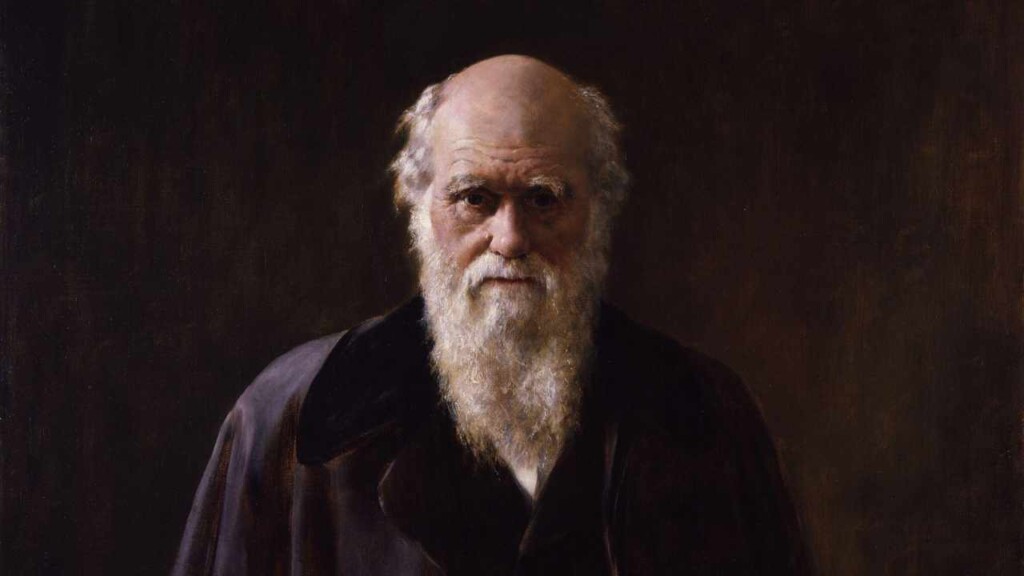
He was twenty-two years old when the HMS Beagle left Plymouth Sound on the 27th of December, 1831, and he spent the first weeks of the voyage vomiting. Not the romantic seasickness of literature, not a brief inconvenience before the horizon opens and the hero finds his sea legs. He was genuinely, persistently, wretchedly ill for months at a stretch, lying in his hammock in the cramped chart room, unable to eat, unable to read, the ship’s timber groaning around him like a living complaint. This detail matters because it strips the mythology bare before it can form. The voyage was not an adventure in the sense that adventure is sold. It was an ordeal that happened to produce one of the most consequential ideas in the history of human thought.
Think about what five years actually means when you are young and have never left England. It means that the person you were when you departed will be unrecoverable when you return. Not transformed in the way people speak of transformation as though it were a gentle metamorphosis, but dissolved and incompletely reconstituted, with pieces missing and new pieces that do not quite fit the frame. Darwin boarded that ship a Cambridge graduate who collected beetles, who admired the natural theology of William Paley with something close to reverence, who genuinely believed that the orderly beauty of a living thing was evidence of a designing mind. He had read Paley’s Natural Theology, published in 1802, and found its argument from design persuasive in the way that elegant arguments are persuasive to young men who have not yet been made to pay for them with reality.
The Andes unmade that first. Standing at altitude on rock formations that had clearly once been seabed, finding marine fossils embedded in stone thousands of meters above the ocean, his mind had to perform a calculation that the theology of his upbringing had never prepared him for. The earth was not a stage set. It had a history measured not in biblical generations but in scales of time that made human civilization vanish into an afternoon. Charles Lyell’s Principles of Geology, which Darwin had brought aboard and read obsessively during the first leg of the voyage, gave him a conceptual language for what he was seeing, but the language and the seeing are different things. You can understand intellectually that strata form over millions of years. But standing inside it, your hands on rock that was once ocean floor, is a different kind of knowledge entirely. It enters through the body.
What the psychological literature on radical belief revision understands, and what Darwin’s own notebooks suggest without quite naming, is that this kind of geological vertigo is not intellectually comfortable even when it is intellectually exciting. Leon Festinger’s work on cognitive dissonance, developed more than a century later, describes with clinical precision the distress that accompanies holding two irreconcilable beliefs simultaneously. Darwin held them for years. The evidence accumulating in his notebooks and specimen crates was pointing insistently in a direction that his education, his social formation, his family’s expectations, and his own emotional attachments were not ready to follow. He did not leap. He was dragged, slowly, by the weight of what he was seeing.
He returned to England in October 1836 and found that Shrewsbury looked exactly as he had left it. His father’s house, the same garden, the same English autumn. But he was returning from the interior of a continent that had shown him time operating at a scale that made the Book of Genesis a beautiful story with no particular claim on geology. He was home. He was also, in every way that mattered, somewhere his family and friends had never been and could not follow. The ground had not moved. He had.
What the Finches Did Not Say
You return from a long journey carrying bags full of things you barely looked at when you picked them up. A shell, a stone, a dried leaf. You are certain the important things are already sorted in your head. They are not.
Darwin came back from the Beagle voyage in October 1836 with thousands of specimens, meticulous notebooks, and a collection of birds from the Galápagos that he had labeled so carelessly he could barely remember which island each one came from. The finches — those creatures that would later anchor the entire myth of his awakening — were bundled together without the systematic notation that any serious naturalist of the period would have considered elementary. He had not understood what he was looking at. More precisely, he had not understood that there was anything specific to look at. He thought some of them were wrens, some blackbirds, some actual finches. The categories were wrong. The story was not yet there to be told.
It took John Gould, the ornithologist at the Zoological Society of London, to sit down with Darwin’s disordered collection in January 1837 and explain what had actually been collected. Gould identified thirteen distinct species — not varieties, not regional quirks, but separate species — all clearly related, all adapted with structural precision to radically different food sources across different islands. Darwin had walked among them, held them, packed them, sailed them across an ocean, and still had not seen this. The epiphany, that bright legendary moment on the Galápagos shore where a man looked at beaks and understood the history of life, never happened. It happened in a room in London, months later, mediated by another man’s expertise, in the cold light of institutional taxonomy.
This is not a detail. It is the architecture of how knowledge actually moves.
The philosopher of science Thomas Kuhn argued in his 1962 Structure of Scientific Revolutions that paradigm shifts are never clean breaks, never solitary moments of genius descending from a clear sky. They are slow, collaborative, often confused processes in which the old frame of seeing persists long after the evidence against it has accumulated. The mind, Kuhn observed, does not abandon its categories simply because new data arrives. It reassigns the data to familiar bins. Darwin reassigned the finches. He put them in the wrong drawers. It took Gould to open the right ones.
What we have done since — what every biography, every documentary, every school lesson has done — is read the conclusion back into the beginning. We know that Darwin eventually formulated natural selection, and so we return to the Galápagos and find there the seed of everything, inevitable and shining. This is not history. It is narrative architecture, built to make a man’s life feel like a proof rather than a stumble. The historian of science Frank Sulloway spent years documenting this exact distortion, showing in his detailed 1982 analysis of Darwin’s ornithological notes that the legendary insight was constructed retrospectively, assembled from fragments that carried no such meaning at the time they were gathered.
There is a man who sits for hours beside a woman he will later call the love of his life, and does not notice her. There is a conversation that changes everything in retrospect, though neither person felt it changing in the room. Memory performs the surgery afterward, and what comes out on the table looks like destiny.
This is not a flaw in Darwin’s character. It is a precise description of how understanding works in a mind that is actually alive, actually moving through time, without the advantage of knowing where it is going. The finches did not speak. Gould translated. And then, slowly, Darwin began to understand what he had been carrying all along, without knowing he was carrying it.
Twenty Years of Silence
You know the feeling of holding something back at the dinner table. The conversation turns, someone says something confidently wrong, and you have the information that would collapse the entire premise of what they just said. You feel it sitting in your chest, the weight of it, the almost physical pressure of knowledge that has nowhere to go. You say nothing. You reach for your glass. You let the moment pass. Now imagine carrying that for twenty years.
In 1838, Darwin filled his private notebooks with the outlines of a mechanism that would rearrange the furniture of Western thought permanently. Natural selection. The idea was already there, already coherent, already devastating in its implications. He was twenty-nine years old. He would not publish for another two decades. What happened in those years is one of the strangest and most psychologically revealing episodes in the history of science — not a story of a man waiting for more evidence, but of a man who knew, who had known, and who could not yet bear the weight of being known to know.
The delay was strategic, yes. Darwin was meticulous about accumulating verification, about barnacles and pigeons and the ten thousand counter-arguments he prepared against critics who had not yet spoken. But there was something else happening in his body that the notebooks cannot fully account for. From the early 1840s onward, Darwin suffered chronically and mysteriously: violent nausea, heart palpitations, extreme fatigue, eczema, trembling. Physicians across a century and a half have proposed Chagas disease, lupus, arsenic poisoning from the medications of the time. None of the diagnoses have ever fully settled. What is harder to dismiss is the pattern — the symptoms intensified when Darwin was under intellectual pressure, when he was asked to present his ideas, when the theory pressed against the boundaries of its containment. The body spoke what the mind had chosen to silence.
Adam Phillips, writing about inhibition and psychic cost in the tradition that traces back through Freud’s 1926 work “Inhibitions, Symptoms and Anxiety,” observed that what we cannot say often finds another register in which to make itself heard. The body becomes the archive of suppressed urgency. Darwin’s illness was real — the suffering was not performance. But real suffering and psychosomatic origin are not mutually exclusive categories. They never were. The body does not lie about the price of sustained concealment.
Meanwhile, he watched the world from Down House, the country estate in Kent where he retreated in 1842 and rarely left for the rest of his life. He became, almost deliberately, invisible — the country gentleman, the careful naturalist, the man of barnacles and breeding records. He published nothing that announced him as dangerous. He wrote letters, built his case, corresponded with Asa Gray in America, with Lyell, with Hooker, with the network of men who would eventually form the scaffold of reception for what he was about to release. He was, in the language of military strategy, preparing the ground before the advance. But preparation of that duration begins to look less like strategy and more like dread.
There is a man who sits for years at a desk he built himself in the apartment where he lives alone, writing something he knows he will never send. The manuscript grows longer. The handwriting becomes more careful. He revises sentences no one will read. This is not a metaphor for Darwin — Darwin sent his work, eventually, explosively. But the psychology of the holding pattern, the refinement that becomes its own substitute for release, is the same architecture. You perfect the thing to delay the moment of exposure. The perfection is the avoidance. At some point the question is no longer whether the world is ready but whether you are.
By 1856, Lyell urged Darwin directly to publish before someone else arrived at the same conclusions. Darwin resisted. Then, in June 1858, a letter arrived from Alfred Russel Wallace.
A vision curated by a filmmaker, not an algorithm
In this video I explain our vision
The Scandal of the Ordinary

The real wound was never theological. You can replace God with a watchmaker, a prime mover, a cosmic architect of sufficient abstraction, and most people will sleep perfectly well. Theologians have been doing exactly that since 1859, accommodating natural selection into doctrines of divine creation with the practiced flexibility of institutions that have survived far worse. The church did not collapse. Belief did not evaporate. What happened was something quieter and more corrosive: the idea that you, specifically, are not special in any way that the universe has bothered to ratify.
Darwin published On the Origin of Species in November 1859, and the first edition of 1,250 copies sold out the same day. The speed of that consumption says something about the hunger for what the book contained, even if most readers could not yet name what disturbed them. By 1871, when The Descent of Man arrived and applied the same logic explicitly to human beings, the disturbance had a sharper edge. It was no longer possible to maintain the comfortable position that natural selection governed everything except the part that mattered most. Darwin wrote it plainly: man bears in his bodily structure the indelible stamp of his lowly origin. Indelible. Not provisional, not metaphorical, not subject to spiritual amendment.
What natural selection actually proposed was continuity, and continuity is the thing human consciousness finds most difficult to tolerate. Ernest Becker, writing in The Denial of Death in 1973, argued that the entire architecture of human culture is a defense against the knowledge of our own animal nature, a system of symbolic immortality projects designed to convince us that we are more than meat arranged temporarily into thought. Darwin did not invent mortality. He did something more unsettling: he removed the categorical boundary between the creature that fears death and the creatures that simply die without knowing it. The barnacle filters seawater. The pigeon navigates by magnetic field. You write novels and compose symphonies and still you are subject to the same blind pressure of differential reproductive success, the same indifferent arithmetic of variation and selection, the same geological patience that does not notice whether what survives is beautiful or monstrous.
There is a scene that stays with you, the kind that happens in ordinary kitchens at ordinary hours. Someone is standing at a window watching birds at a feeder, and the thought arrives unbidden: those creatures are not simpler versions of something. They are not failed attempts at consciousness. They are complete solutions to problems of survival, arrived at through the same process that produced the hand holding the coffee cup. The recognition is not comforting. It does not produce kinship so much as vertigo.
Simone de Beauvoir understood this vertigo without naming Darwin directly. Her 1949 analysis in The Second Sex of how human beings construct hierarchies of being, always placing themselves at the summit, always finding biological justification for whatever arrangement of power already exists, reads as a precise account of what Darwinian continuity threatens. If the boundary between human and animal is not categorical but gradient, then every hierarchy built on that boundary becomes structurally suspect. Not just the hierarchy of species, but the hierarchies nested inside the human: of race, of sex, of class, all the arrangements that naturalized themselves by appealing to something deeper than history.
The violence of Darwin’s two great books is that they made ordinariness inescapable at the species level while offering no compensation. Previous cosmologies always included a mechanism for exception: the soul, the divine image, the rational faculty that placed the human outside nature even while inhabiting it. Natural selection offers no such exit. The pressure is the same. The blindness is the same. What you call your inner life is what the process produced when inner lives turned out to be useful, for a while, under specific conditions, on one particular planet.
The Mourning and the Method
You know what grief looks like before you understand what it means. You have seen someone sit very still in a room where there is too much light, not crying, not speaking, simply occupying space differently than before, as though the body has renegotiated its relationship with the air around it. That stillness is not absence. It is the presence of something that has no vocabulary yet.
Annie Darwin died on April 23, 1851, at the age of ten, in Malvern, while her father remained at a distance he would never forgive himself for. She had gone there for a water cure, one of those Victorian remedies that dressed helplessness in the language of science. Charles had stayed home. The letters he received described her decline in careful, loving, devastating detail, and when it was over he wrote a private memorial for her, a document he never intended for publication, that reads less like an obituary than like a man trying to hold the shape of a person in words before the shape dissolves entirely. He described her habits, her gestures, her particular way of showing affection. He wrote with the precision of a naturalist and the terror of a father who already knew that precision changes nothing.
What died with Annie was not simply his daughter. It was the last structural possibility of a providential universe. Darwin had been moving toward this conclusion for years, but grief accelerated what argument had only suggested. The philosopher of science John Dewey argued, in his 1910 essay on the influence of Darwinism, that the shift Darwin inaugurated was not merely biological but metaphysical — a dismantling of the fixed, the teleological, the purposefully arranged. But Dewey was writing from a safe academic distance. For Darwin himself, that metaphysical dismantling had a face. It had a name. It had a particular laugh he would never hear again.
What he did afterward is one of the stranger transmutations in the history of thought. He turned toward the body. Not toward meaning, not toward consolation, not toward theology or its secular substitutes — toward the physical grammar of feeling itself. The work that emerged more than two decades later, in 1872, is his most intimate book precisely because it never announces itself as such. It catalogs the facial expressions of grief, the muscular contractions around the eyes and mouth that appear across species and cultures without being taught, the way an infant’s face assembles itself into sorrow through mechanisms that predate language by millions of years. He observed children weeping. He observed patients in asylums. He circulated photographs of electrically stimulated facial muscles to correspondents across the world, asking them to identify which emotion was being expressed. He was rigorous, comparative, empirical to the point of obsession.
But what you feel reading it now, if you have ever sat with grief that could not be explained or argued away, is that the obsession is not detachment. It is the opposite. Someone spent twenty years learning to look at suffering with a steadiness he had never possessed when it mattered most, when he was not in the room, when the letters arrived, when the stillness settled in. William James, writing in 1884 about the relationship between physiological states and emotion, observed that we do not tremble because we are afraid — we are afraid because we tremble. The body precedes the interpretation. Darwin knew this before he theorized it. He had felt the body’s knowledge outrun his capacity to make sense of it, and so he went back to the body, the animal body, the body that has been expressing what it cannot say since long before anyone thought to ask why.
The Expression of the Emotions is a book about the universality of suffering. It is also a book written by someone for whom suffering had become, permanently, the ground on which every other question rested.
What We Inherited Without Being Asked

You did not choose to be born into a world already organized by the idea that existence is competition. Nobody asked you. The framework arrived before you did, embedded in the language of markets, in the metaphors of survival that slip into boardroom memos and parenting advice with equal ease, in the casual cruelty of phrases like “only the strong survive” spoken by people who have never opened a page of the actual work they believe they are quoting. This is the strange inheritance Darwin left behind — not the theory itself, which is precise and disciplined and humble in ways its popularizers have never been, but the cultural sediment that formed around it, hardening into something almost unrecognizable from its origin.
The weaponization happened fast. Herbert Spencer coined “survival of the fittest” in 1864, five years after the publication of On the Origin of Species, and Darwin — with a cautiousness he would later regret — allowed the phrase into later editions of his work. Spencer meant something Darwin did not. Spencer meant justification. He meant that poverty was natural selection in action, that the suffering of the poor was biology doing its necessary work, that to interfere with it was to corrupt the species. This is what became known as Social Darwinism, and it had nothing to do with Darwin’s actual argument except the borrowed vocabulary. Darwin described a mechanism. Spencer built a moral universe out of it. The distance between those two operations is the distance between a scalpel and a weapon.
And then came eugenics — the word coined by Darwin’s own cousin, Francis Galton, in 1883 — which industrialized the distortion into policy, into forced sterilizations, into the architecture of racial hierarchies dressed in the white coat of science. By the time the twentieth century had finished with it, the word “Darwinian” carried a smell that the man himself, dead since 1882, could not answer for. There is something almost vertiginous about this: a theory of radical contingency, which said that nothing in nature was designed or intended, that every organism was the provisional result of pressures it did not choose, became the ideological foundation for some of the most catastrophic acts of deliberate design in human history.
The misreading runs in softer directions too. Evolution entered self-help culture as a story of progress, of the organism striving upward, of life moving toward complexity and improvement. But Darwin described no such arc. Natural selection has no direction. It is not trying to produce anything. The eye did not evolve because seeing was a goal. It evolved because organisms with slightly better light sensitivity left slightly more descendants, over millions of generations, without plan or intention or narrative. The philosopher Daniel Dennett spent much of Darwin’s Dangerous Idea, published in 1995, trying to articulate just how genuinely radical this is — that the algorithm of natural selection is, in his phrase, a process that generates design without a designer, meaning without a meaning-giver, complexity without an architect. Most people, even those who accept evolution intellectually, have not fully absorbed what this costs.
What it costs is the story. Not morality, not love, not the texture of a life worth living — but the story that you were placed here for something, that the universe registered your arrival, that there is a correspondence between your longing and the structure of reality. Darwin’s work does not take those things away. It simply declines to confirm them. And perhaps what feels like devastation in that silence is actually something older than Darwin, something the human animal has always known in the moments before language reassembles itself — that to exist without a guarantee is not the same as existing without meaning, and that what we build in the absence of design may be the only thing that was ever genuinely, irreducibly ours.
🔬 Science, Nature, and the Long Arc of Thought
Charles Darwin’s revolutionary vision of life did not emerge in isolation — it grew from a deep tradition of philosophical inquiry, patient observation, and intellectual courage. These articles explore thinkers and creators who, like Darwin, spent their lives wrestling with the fundamental questions of existence, meaning, and the forces that shape the world.
Epicurus: Life and Philosophy
Epicurus built a philosophy around the careful study of nature and the pursuit of a life free from unnecessary fear — including the fear of death. Like Darwin, he believed that understanding the natural world on its own terms, without recourse to supernatural intervention, was the highest form of human wisdom. His atomistic view of reality prefigures, in a surprising way, the materialist logic that would underpin evolutionary theory centuries later.
GO TO THE SELECTION: Epicurus: Life and Philosophy
Paracelsus: Life and Alchemical Thought
Paracelsus was one of the first thinkers to insist that the secrets of life could only be unlocked through direct observation and experimentation, challenging the inherited dogmas of medieval medicine. His restless curiosity and willingness to overturn established authority make him a fascinating forerunner of the scientific spirit Darwin would later embody. Exploring his alchemical thought reveals how the boundary between proto-science and nature philosophy was far more fluid than we often assume.
GO TO THE SELECTION: Paracelsus: Life and Alchemical Thought
Martin Heidegger: Life and Philosophical Thought
Martin Heidegger‘s profound meditation on being, time, and the nature of existence offers a philosophical counterpoint to Darwin’s biological portrait of life. Where Darwin mapped the external history of species, Heidegger turned inward to ask what it means for a living being to find itself thrown into a world it did not choose. Together, these two thinkers illuminate the full depth of what it means to be alive and mortal.
GO TO THE SELECTION: Martin Heidegger: Life and Philosophical Thought
Albert Camus: Life and Philosophical Thought
Albert Camus confronted the same brutal facts of nature and contingency that Darwin’s theory had laid bare — a world without inherent purpose, governed by indifferent forces — and turned them into the raw material of his absurdist philosophy. His life and thought remind us that accepting the truth of our biological condition need not lead to despair, but can become the foundation of a fierce and lucid affirmation of life. Reading Camus alongside Darwin transforms both thinkers into companions in the search for meaning in a world that offers none by default.
GO TO THE SELECTION: Albert Camus: Life and Philosophical Thought
Discover More on Indiecinema
If the life of Darwin and the questions it raises have stirred something in you, Indiecinema is the place to keep exploring. Our streaming platform gathers independent and auteur cinema that dares to look at science, nature, and the human condition with the same honesty and wonder Darwin brought to his work. Join us and let the films continue the conversation.
👉 EXPLORE THE CATALOG: Watch Indie Films in Streaming
A vision curated by a filmmaker, not an algorithm
In this video I explain our vision

