The Shared Lie at the Heart of Intimacy
You are standing in a kitchen at 11 p.m., and your partner says something ordinary — something about the dishes, or tomorrow’s schedule, or a film they half-watched — and you look at them, and they look at you, and for a fraction of a second something passes between you that neither of you will name. Not hostility. Not indifference. Something more like a silent, mutual acknowledgment that there is a room inside each of you that the other will never enter, and that the entire architecture of your life together has been built, brick by brick, around the decision never to try.

Most people call this intimacy. They are not entirely wrong, but they are describing the symptom rather than the structure underneath it.
The philosopher Stanley Cavell spent much of his career — particularly in his 1979 work The Claim of Reason — arguing that skepticism about other minds is not a philosophical puzzle to be solved but a permanent condition to be inhabited. We do not merely fail to know other people; we choose, at some level, not to pursue knowledge to its most destabilizing depths. Cavell was writing about epistemology, but he was also, without quite saying so, writing about marriage. The domestic couple is perhaps the most elaborate institutional response humanity has constructed to the problem of other-person opacity — not a solution to it but a ritualized agreement to live beside it without flinching.
What makes this agreement function is precisely its unspoken quality. The moment it is spoken, it collapses. You cannot say to another human being: I have decided not to know the full truth of who you are, and I am asking you to extend me the same courtesy. And yet this is, with extraordinary consistency across cultures and centuries, what the long-term couple actually does. The anthropologist David Schneider, in his 1980 study American Kinship, documented how the symbolic system of domestic life — shared surnames, shared beds, shared financial accounts — operates less as a mechanism of fusion and more as a mechanism of selective vision. The couple does not become one. It becomes two people who have negotiated, with remarkable precision, exactly how much of the other they are willing to perceive.
This is not cynicism. It is closer to tragedy in the classical sense: a structure that is both necessary and costly, and that cannot be dismantled without destroying the thing it sustains. A couple that pursued total transparency would not achieve intimacy — it would achieve something more like a deposition, an unending cross-examination in which every desire, every resentment, every quiet attraction to another person, every private fantasy of escape was laid on the table and made to answer for itself. No domesticity survives that. The bed, the shared lease, the accumulated years — these things require a certain productive darkness to remain livable.
What is genuinely unsettling is not that couples lie to each other. It is that the lie is not really between them at all. It is the very medium through which they relate. Erving Goffman, writing in The Presentation of Self in Everyday Life in 1959, described social interaction as a continuous theatrical performance in which individuals manage the impressions others form of them. In the couple, this performance does not diminish with familiarity — it specializes. Each partner becomes the world’s foremost expert in performing a particular, curated version of themselves for the one audience that theoretically requires no performance at all. The longer the relationship, the more refined the performance, and the more invisible, because both performers have also become expert at not noticing the stagecraft of the other.
What gets buried in that mutual not-noticing is not nothing.
Redemption

Drama, by Maria Martinelli, Italy, 2023.
Hanna meets her lover in an isolated place, a refuge in the mountains. The present and the past intertwine in search of a possible redemption, while the choices to be made, such as that of a child on the way, can no longer wait. In that place, together and isolated, shreds of their past life appear in the room and seem to dance with their present life. An enigmatic mirror of their lives lived with other people, at other ages. In those fragments we see missed appointments, broken hopes, pieces of life like a cell phone ringing and no one answering and like in a puzzle, which slowly comes together, we sense something that unites their lives.
Is there a truth that we tell ourselves to others? Redemption is the story of a woman, of the complex life that she finds herself facing, of the moral choices that follow one another in her life. In romantic encounters we don't always talk about our experiences and perhaps loving each other refers exactly to this instinctive peculiarity, to the attempt to reconstruct an existence beyond our own past, which sometimes we even hide ourselves. But the past is often a threshold that we must cross if we want to start living in the present again.
LANGUAGE: Italian
SUBTITLES: English, Spanish, French, German, Portuguese
Desire as Destabilizing Force That Couples Must Ritually Suppress
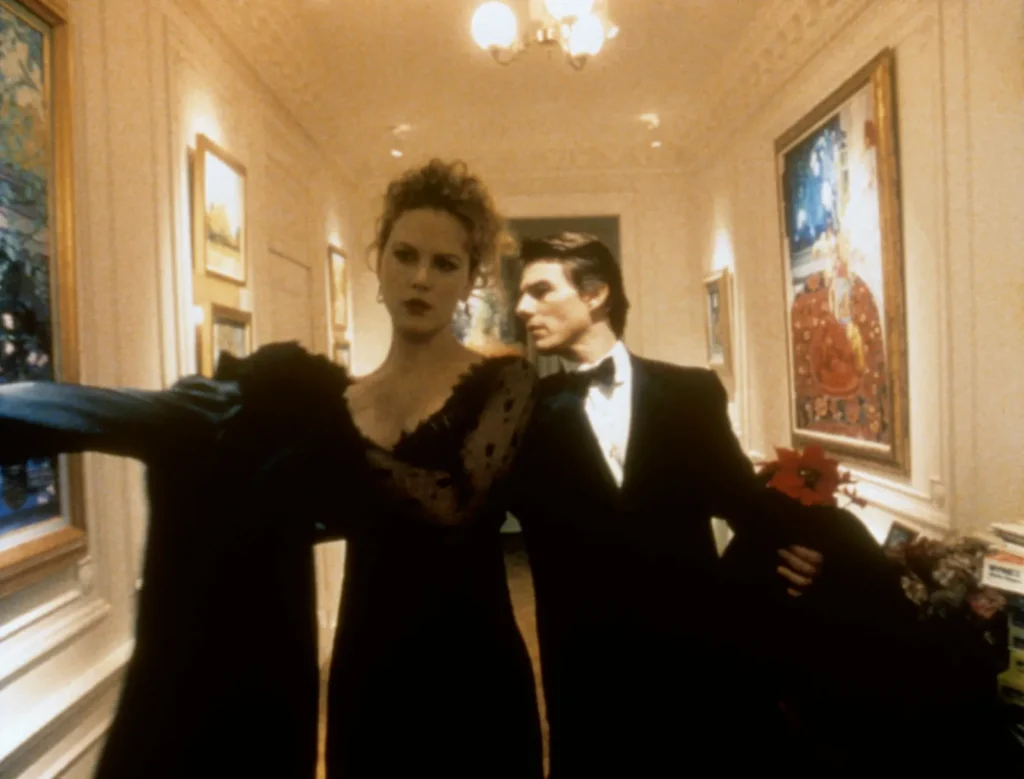
You are lying in bed next to the person you have chosen, the person you have publicly claimed, and somewhere in the architecture of that ordinary night a thought crosses your mind that you will never speak aloud. Not because it would destroy everything — though it might — but because the thought itself contradicts the story you have agreed to tell together. That agreement is older than your relationship. It is older than you.
Freud noticed something in 1912 that no one has successfully explained away since. In his essay “On the Universal Tendency to Debasement in the Sphere of Love,” he observed that the conditions required to produce sexual excitement are frequently incompatible with the conditions required to sustain tender attachment. The person we love with full emotional commitment tends, over time, to become precisely the person we cannot fully desire — not because something has gone wrong, but because the psychic mechanism of desire itself requires a certain distance, a resistance, an element that cannot be possessed. The more thoroughly you inhabit a life with someone, the more that distance collapses, and with it, the very friction that arousal feeds on. Freud was not describing neurosis. He was describing structure.
What Lacan added seventy years later cuts even deeper. Desire, in his framework, is never simply between two people. It is always triangulated — always produced through the mediation of an Other, always constituted in relation to what someone else wants or has or represents. This means that the couple form, by contracting the field of relational visibility down to one recognized dyad, performs a structural suppression of the very condition under which desire operates. The couple does not satisfy desire. It brackets it. It creates a protected zone where desire is placed under administrative control — acknowledged in principle, managed in practice, and periodically sacrificed to preserve the container that is supposed to express it.
The data from longitudinal relationship research is unambiguous in a way that rarely makes it into popular discourse. Studies conducted across populations in the United States, Germany, and Scandinavia over periods of ten to twenty years consistently show that self-reported relational satisfaction and privately disclosed fantasy content diverge sharply within the first three to five years of cohabitation. Participants who score highly on standard measures of relationship quality simultaneously report fantasy lives oriented almost entirely toward people outside the relationship, toward scenarios that would violate its implicit codes, toward versions of themselves that the relationship structurally cannot accommodate. This divergence does not predict dissolution. In most cases, it predicts stability. The fantasy remains private precisely because the relationship remains intact — not in spite of that secrecy, but through it.
This is the ritual structure no one names as a ritual. Every stable long-term couple has developed, without ever discussing it, a set of unspoken protocols for managing the return of desire in its undomesticated form. A look held a fraction of a second too long at a party, quickly neutralized. A dream confessed in the morning with enough humor to defuse it. A conversation about attraction to a film actor that both parties understand is a controlled release valve, a confession within safe parameters. The domestication is not a failure. It is the product of enormous, continuous, unconscious labor — the kind of labor that leaves no visible trace and receives no recognition because acknowledging it would require acknowledging what it is managing.
Georges Bataille wrote in 1957, in Erotism, that human sexuality becomes properly erotic only when it brushes against prohibition. The couple institutionalizes its own interior prohibition — the zone of desire that must not be spoken, acted upon, or fully acknowledged — and in doing so, generates the very transgressive charge that occasionally resurfaces as intensity, as jealousy, as the sudden inexplicable return of wanting the person you already have.

Bourgeois Privacy and the Architecture of the Unconfessable
You close the bedroom door and something ancient activates — not intimacy, not refuge, but a protocol. The door has a history older than your relationship, older than your desire, older than the story you tell yourself about why you chose this person. It was designed, in the most literal architectural and social sense, to produce a particular kind of subject: one who believes that what happens inside is sovereign, private, self-generated, and therefore true.
Philippe Ariès, in the monumental five-volume work he co-edited with Georges Duby, A History of Private Life, traced a transformation that most people experience as nature: the gradual and deliberate enclosure of domestic space that occurred across Western Europe between roughly the sixteenth and nineteenth centuries. Before this enclosure, sleeping, eating, procreating, and grieving happened in shared, semi-public spaces — not out of poverty alone, but because the boundary between self and community had not yet been architecturally enforced. The bedroom as a sealed, exclusive space emerged alongside the bourgeois family as its ideological twin. What appeared to be the discovery of intimacy was actually the construction of a new kind of privacy that required secrets the way a vault requires something to lock inside.
Norbert Elias mapped the psychological cost of this enclosure in The Civilizing Process, published in two volumes in 1939, largely ignored until its French translation in 1973 brought it to the audience it deserved. His argument was precise and uncomfortable: the increasing regulation of bodily functions, emotional displays, and sexual behavior that marked the rise of courtly and then bourgeois society did not simply suppress impulses — it moved them underground, rendering them shameful, then unspoken, then unspeakable. The threshold of embarrassment rose with each generation. What a medieval noble did publicly — ate without utensils, expressed violence directly, acknowledged desire without ceremony — the nineteenth-century bourgeois could only do behind closed doors or not at all. The couple became the only licensed container for what civilization had declared too raw to exist in the open.
This matters because the couple did not inherit love when it inherited privacy. It inherited a structure of concealment that love was then asked to justify. The romantic ideal of the nineteenth century — that marriage should be founded on mutual feeling rather than economic alliance — arrived precisely at the moment when the domestic space had become maximally enclosed and the interior life maximally pressured to remain hidden. The two forces met and produced something unstable: an institution that demanded total transparency between partners while also providing the architecture for total opacity. You were supposed to know each other completely. The walls ensured you never would.
What gets buried in that contradiction is not simply infidelity or fantasy — it is the entire register of experience that cannot survive confession without destroying the equilibrium the couple depends on. Sociologist Erving Goffman, in The Presentation of Self in Everyday Life published in 1959, described domestic space as a backstage region where people drop their social performances. But the couple complicates this: the backstage of marriage is not a zone of authentic disclosure so much as a second performance, more intimate in register but no less constructed, governed by its own rules about what can be said, what must be withheld, what would cost too much to name. The bedroom is not where the mask comes off. It is where a more expensive mask is worn.
The institution absorbed this tension not by resolving it but by making silence prestigious. Discretion became a virtue. The couple that did not discuss certain things was not repressed — it was civilized. And civilization, as Elias understood it, is not the opposite of violence but its most elegant displacement, a system in which the force required to maintain order is made invisible by transferring it inward, where it becomes what we call character, restraint, dignity, love.
Hope in Vein
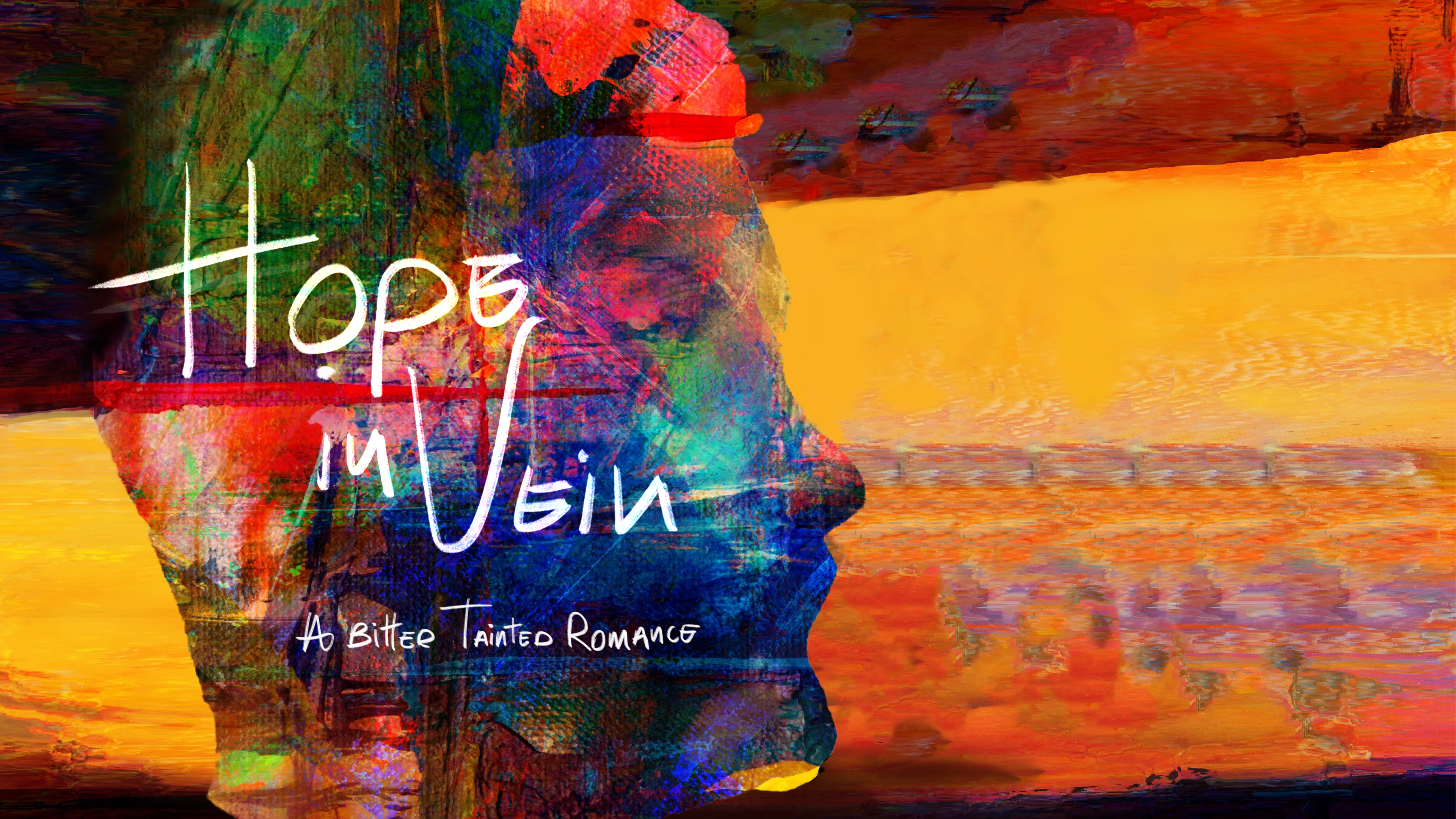
Drama, romantic, by Marc-Antoine Turcotte, Canada, 2022.
The film follows the journey of Matt Davis (Joshua Bilbao), a young man dealing with the profound stigma associated with living with HIV after contracting the virus from his longtime partner. “Hope in Vein” delves into the layers of emotions and challenges that emerge following Matt's diagnosis, highlighting the social and physical repercussions he encounters as he navigates his new condition. Seamlessly weaving together the complexities of Matt's experiences, the film offers viewers an intimate and touching perspective.
“I had heard about it; distant stories of anguish. It seemed that medical discoveries had faded the discussion. You will soon find that stigma continues to affect progress. Every experience is different, yet we can all feel the same contamination," says director Turcotte. "I approached this film with the desire to open up the conversation and lighten it up a little." Through the disparate obstacles that constantly remind Matt of stigma she faces, Hope in Vein explores the theme of forgiveness as a powerful channel for rekindling hope. With a talented cast and a heartfelt script, the film presents a compelling narrative that will leave audiences captivated and inspired.
LANGUAGE: English
SUBTITLES: Spanish, French, German, Portuguese
The Ritual of Confession That Is Never Completed

You sit across from someone you have shared a bed with for years, and a trained professional asks you both to speak the truth, and the room fills with a silence that is not empty but load-bearing..
The couples therapy session — that peculiarly late-twentieth-century institution that managed to make vulnerability into a scheduled appointment — operates on a founding premise that deserves more scrutiny than it receives: that what damages intimacy is concealment, and that what heals it is disclosure. The radical honesty movement, popularized by Brad Blanton’s 1994 book “Radical Honesty,” pushed this logic to its extreme, arguing that virtually all human suffering originates in the gap between what we experience and what we communicate. Tell everything. Spare nothing. The relationship that can survive total transparency is the only one worth having. What this framework fails to account for is that the demand for transparency does not dissolve the unconfessable — it redesigns it, giving it a new shape that is smaller, denser, and harder to locate.
Eve Kosofsky Sedgwick, in her 1990 work “Epistemology of the Closet,” built an argument about the structure of knowing and not-knowing that most readers have confined to the history of sexuality. But her insight operates at a far wider register. Sedgwick demonstrated that the closet is not merely a hiding place — it is a relational architecture, a set of agreements maintained between two parties about what will and will not be made explicit. The person who does not ask is not passive. They are performing half of the structure. When she wrote that ignorance is as potent and as multiple as knowledge, she was describing something that every long-term couple enacts daily without naming it: the mutual production of a shared blind spot, sustained by both people simultaneously, neither of whom could dissolve it alone even if they wanted to.
This is what makes the therapeutic demand for full disclosure structurally paradoxical. The more insistently a culture frames confession as the path to relational health, the more precisely couples learn to identify which truths cannot be absorbed by the relationship without destroying it — and the more carefully those truths are archived rather than spoken. The unconfessable is not simply what one person hides from another. It is what both people have tacitly agreed to protect each other from knowing, often with a tenderness that is indistinguishable from love. The couple is not a unit of transparency. It is a unit of managed opacity, and the management is collaborative.
What contemporary relationship culture misreads as a failure of communication is frequently a success of a different kind of knowledge — the knowledge of exactly how much truth a specific shared life can metabolize. Anthropologist Arlie Hochschild,, tracing the emotional labor that sustains domestic arrangements in “The Managed Heart,” published in 1983, observed that the work of maintaining a relationship includes the labor of regulating emotional expression, deciding in real time what to surface and what to suppress. She was writing about service workers performing feelings for wages, but the mechanism is identical in intimacy. Every couple is running a continuous calculation about the cost of disclosure against the cost of silence, and the calculation is never finished and never made explicit.
The confession that therapy promises as its destination is often the confession that would confirm what neither person wants confirmed — not because the truth is catastrophic, but because naming it would retroactively reveal that both people already knew it, and chose, together, not to speak. The real exposure would not be the secret itself but the proof of the collaboration, the evidence that the silence was not accidental but architectural, built by two people who looked at each other and understood without words that certain things would go unsaid.
Symmetry, Complicity, and the Violence of Being Truly Seen

You are lying next to someone who has memorized the exact sound your breathing makes when you are pretending to sleep, and you both know it, and neither of you will say so.
This is not a failure of intimacy. It is intimacy’s most refined product — a shared expertise in the precise borders of what can be acknowledged without detonating the structure you have both agreed to inhabit. The terror that lives inside long relationships is not, as popular psychology has insisted since Carl Rogers codified the language of authentic communication in the 1960s, the terror of being misunderstood. It is the terror of being understood completely, and the quiet, continuous labor that goes into preventing it.
Erving Goffman mapped this territory without sentimentalizing it. In his 1959 work on the presentation of self, he demonstrated that all social interaction is performance management, but couples occupy a peculiar position in this architecture: they are simultaneously audience and collaborator, the one person whose backstage access is most dangerous precisely because it is most intimate. What Goffman could not fully account for is the specific violence that occurs when the performance collapses not through exposure but through mutual recognition — when both performers see that they are both performing, and the agreed fiction that one of them is the authentic self shudders under its own weight.
The psychoanalytic tradition, particularly in the post-Lacanian elaboration of Slavoj Zizek around the nature of desire in everyday ideology, pushes further into this wound. The partner who knows your secrets is not threatening because they possess information. They are threatening because their knowledge transforms you into an object in someone else’s perception — a thing that can be held, assessed, and seen from outside the subjective fortress you have spent your entire life defending. Desire, in this framework, requires a gap. The fantasy of the other sustains itself only as long as the other remains partially illegible. Full transparency between two people is not the achievement of love — it is the condition under which love loses the opaque surface against which it can press itself.
Jean-Paul Sartre touched this nerve with a different vocabulary in 1943 when he wrote that the gaze of the other fixes us, turns us from subject into object, and that love is an attempt to possess the other’s freedom without extinguishing it — a project he called condemned to failure. What no one discusses with adequate seriousness is that this failure is not a tragedy couples stumble into. It is the operating system they quietly install together, because the alternative — two people genuinely transparent to each other — would require both of them to witness their own contingency reflected back without distortion, and most human psychologies are not constructed to survive that encounter intact.
So the choreography continues. A detail withheld here. A reaction slightly performed there. A silence that both people interpret differently and neither seeks to resolve, because the ambiguity is load-bearing. This is not cynicism about love. It is a description of the cognitive and emotional architecture that makes long cohabitation possible at all — the mutual agreement, never stated aloud, to be known only to the depth the other can tolerate, which is also the depth you can tolerate being known.
What couples protect each other from, in the end, is not the knowledge of what the other has done or desired or secretly believed. It is the knowledge of what each of them, fully illuminated by someone who loves them, would have to conclude about themselves — and the profound, unspoken mercy that exists in the decision, made nightly and without ceremony, not to deliver that verdict.
A vision curated by a filmmaker, not an algorithm
In this video I explain our vision
🎭 The Secret Lives We Share With No One
Eyes Wide Shut is not merely a film about desire — it is an autopsy of the couple as a social and psychological institution. Beneath its dreamy surfaces lie the unspoken agreements, buried fantasies, and carefully maintained masks that sustain long-term intimacy. These articles explore the hidden architectures of identity, secrecy, and power that Kubrick’s final masterpiece so hauntingly dissects.
Arthur Schnitzler: When the Double Reveals Who We Really Are
Arthur Schnitzler‘s novella ‘Dream Story’ is the literary source from which Eyes Wide Shut was directly adapted, and exploring Schnitzler’s work is essential to understanding Kubrick’s vision. Schnitzler was a master of the double life, revealing how civilized personas conceal turbulent inner worlds of longing, jealousy, and shame. His writing maps the same psychological terrain as the film: the fragile coexistence of love and desire within the institution of marriage.
GO TO THE SELECTION: Arthur Schnitzler: When the Double Reveals Who We Really Are
Jung and the Persona: The Mask That Becomes a Face
Jung’s concept of the Persona — the social mask we present to the world — is central to understanding why Bill and Alice Harford’s crisis in Eyes Wide Shut feels so universal and so devastating. The Persona is not a lie, but it is never the whole truth, and the film dramatizes what happens when the mask slips at the worst possible moment. This article examines how the constructed self maintains its coherence and what threatens its collapse.
GO TO THE SELECTION: Jung and the Persona: The Mask That Becomes a Face
Social Hypocrisy: The Double Face of Respectability
Social hypocrisy and the cult of respectability are the invisible walls inside which the Harfords’ marriage is imprisoned throughout Eyes Wide Shut. Kubrick’s upper-class New York is a world of appearances maintained at enormous psychological cost, where transgression is ritually performed behind closed doors precisely to preserve the façade of propriety. This article traces the cultural mechanisms by which societies enforce a double standard between public virtue and private desire.
GO TO THE SELECTION: Social Hypocrisy: The Double Face of Respectability
Impossible Desire: Adultery as Rebellion
Adultery in literature and cinema has long functioned as a form of rebellion against the social contract of marriage, and Eyes Wide Shut transforms this theme into a near-metaphysical investigation. The impossible desire at the heart of the film — consummated in imagination but not in body — raises the question of whether fantasy itself constitutes betrayal. This article examines how impossible desire operates as a site of resistance and self-discovery in narrative art.
GO TO THE SELECTION: Impossible Desire: Adultery as Rebellion
Discover Cinema That Dares to Look Beneath the Surface
If Eyes Wide Shut awakened something in you — a hunger for cinema that refuses easy answers and dares to explore the shadow side of intimacy — then Indiecinema is where your next discovery awaits. Our streaming platform is dedicated to independent and auteur films that challenge, disturb, and illuminate. Come and explore a world of cinema that sees what polite society prefers to leave unseen.
👉 EXPLORE THE CATALOG: Watch Indie Films in Streaming
👉 Questo articolo fa parte dell'hub Psychology: The Complete Guide to Mind, Behavior, and Human Nature
A vision curated by a filmmaker, not an algorithm
In this video I explain our vision