
The Body Before the Voice
You are watching a man walk into a room, and before he opens his mouth, something in the atmosphere has already changed. It is not the way he moves, exactly — the shoulders slightly forward, the hat brim cutting a shadow across his eyes — and it is not the music swelling beneath the scene. It is something that happens at the cellular level of attention, a realignment of your perception that you did not choose and cannot explain. You lean forward almost imperceptibly. The room on screen becomes the room you are in.

This is what separates a performer from a presence. Technique can be taught, charisma can be cultivated, timing can be rehearsed until it feels spontaneous — but whatever Frank Sinatra carried into a frame in 1953, when he stepped onto a Hawaiian base in a role that every studio executive believed would destroy him, could not be reverse-engineered. He had begged Harry Cohn at Columbia for the part of Angelo Maggio in From Here to Eternity, reportedly offering to work for next to nothing — some accounts say $8,000 against his usual $150,000 — and the desperation was real, his career in genuine collapse, Capitol Records not yet a second act but only a rumor. What emerged on screen was not an actor drawing on craft. It was a man pulling something up from below the floor of his own biography.
There is a theory, articulated by the philosopher Maurice Merleau-Ponty in his 1945 Phenomenology of Perception, that the body is not an instrument the self uses to move through the world — it is the very form through which experience becomes possible. Perception, intention, expression: all of it is already physical before it becomes conscious. When applied to performance, this collapses the convenient fiction that acting is primarily a mental exercise, a matter of imagination and emotional recall. What the camera registers first, and what the audience receives before any cognitive processing begins, is a body that either knows something or doesn’t. Sinatra’s body, whatever it had lived through by 1953 — the humiliations of the early fifties, the collapse of his voice, the implosion of his marriage to Nancy Barbato, the Ava Gardner years that were as much damage as desire — knew things that no acting coach could have installed.
This is not romanticism about suffering producing art. That particular myth does a great deal of damage, conflating pain with depth and confusing biography with talent. What matters here is something more specific: that certain kinds of lived experience leave a physiological residue, a pattern of tension and release in the body that becomes readable by other bodies in a theater, even when neither party could articulate what is being exchanged. The British director and theater theorist Peter Brook, in his 1968 work The Empty Space, described the difference between what he called deadly theater and living theater as precisely this — whether the body of the performer carries real stakes or only the simulation of them. On a Broadway stage this is already legible. Through a camera lens, which strips away the communion of shared space and replaces it with pure optics, it becomes almost brutally transparent.
Sinatra had been photographed obsessively since his early twenties, which means there is a documented record of what the camera did with him before and after the rupture of those early years. The difference is not cosmetic aging. The face that arrives in The Man with the Golden Arm in 1955, playing Frankie Machine’s heroin addiction with a trembling physical specificity that Otto Preminger had not been certain he could sustain across a full shoot, is a face that has reorganized itself around something irrevocable. The eyes had stopped performing watchfulness and started actually watching.
Hollywood's Transactional Logic and the Manufactured Star
You have seen this transaction before, even if you have never set foot inside a studio office. A man walks in carrying something the market has already priced — a voice, a name, a face that sells tickets — and the people behind the desk are not interested in what else he might be. They are interested in protecting the asset.
When MGM signed Frank Sinatra in 1943, the contract was not an artistic proposition. It was an insurance policy taken out on a phenomenon that radio and the recording industry had already proven profitable. The studio’s logic was straightforward and brutal: the bobby-soxers who collapsed in the aisles at the Paramount Theatre in October of that same year were not responding to a dramatic range or a screen presence — they were responding to a sound. MGM’s task was to build a celluloid container for that sound without disturbing the mechanism that produced it. The result was a series of vehicles — Higher and Higher, Anchors Aweigh, Till the Clouds Roll By — that placed Sinatra in scenarios engineered to deliver songs, not performances. He appeared in these films less as a character than as a recurring proof of concept, a demonstration that the voice could survive the translation from phonograph to projector.
The studio system of the 1940s operated on what the historian Thomas Schatz, in The Genius of the System published in 1988, called “institutional authorship” — the idea that the controlling intelligence behind a Hollywood film was not the director but the organizational apparatus itself: producers, contract players, genre formulas, and the vertical integration that made studios simultaneously manufacturers and distributors of their own product. A performer under contract at MGM, Columbia, or Paramount was, in Schatz’s framing, a component in a production line, their distinctiveness carefully managed to remain distinctive enough to sell tickets but standardized enough to slot into the next project without friction. Sinatra’s early Columbia Pictures deal, renegotiated in 1944, reflected exactly this calculus: his image, his likeness, and crucially his singing were contractually separable from any claim to creative agency over the films themselves. He was, in legal terms, a voice with attached body.
What the system could not account for was the growing asymmetry between what the voice communicated emotionally and what the roles asked of the face. Sinatra’s phrasing — that devastating capacity to make a lyric arrive late, to hold a word past its expected moment and then release it into silence — carried an interior life that the musical vehicles simply had no use for. Audiences heard melancholy in the timbre and watched cheerful sailor routines on screen, and if the dissonance registered, it registered as charm rather than contradiction. The machinery absorbed the friction.
What is worth sitting with is how thoroughly this arrangement shaped the critical reception of Sinatra as an actor for a decade. When reviewers in the late 1940s dismissed his dramatic potential, they were not making an aesthetic judgment — they were accurately reporting what the studio had decided to show them. Harry Cohn at Columbia was not in the business of discovering hidden depths in contract players; he was in the business of yield. The star-making apparatus produced a specific, monetizable version of Sinatra and then offered that version to critics as evidence of the whole man. The trap was elegant: the system manufactured the limitation, and then the limitation became the reputation, and the reputation became the cage.
What no contract clause could anticipate was what happens to a manufactured star when the machinery breaks down — when the bobby-soxers grow up, the record sales collapse, and the studio drops the contract entirely. By 1950, Columbia had released him. By 1952, his RCA Victor deal was gone. The asset had depreciated, and the transaction was over, which meant, for the first time, that something else might begin.

The Humiliation That Unlocked the Instrument
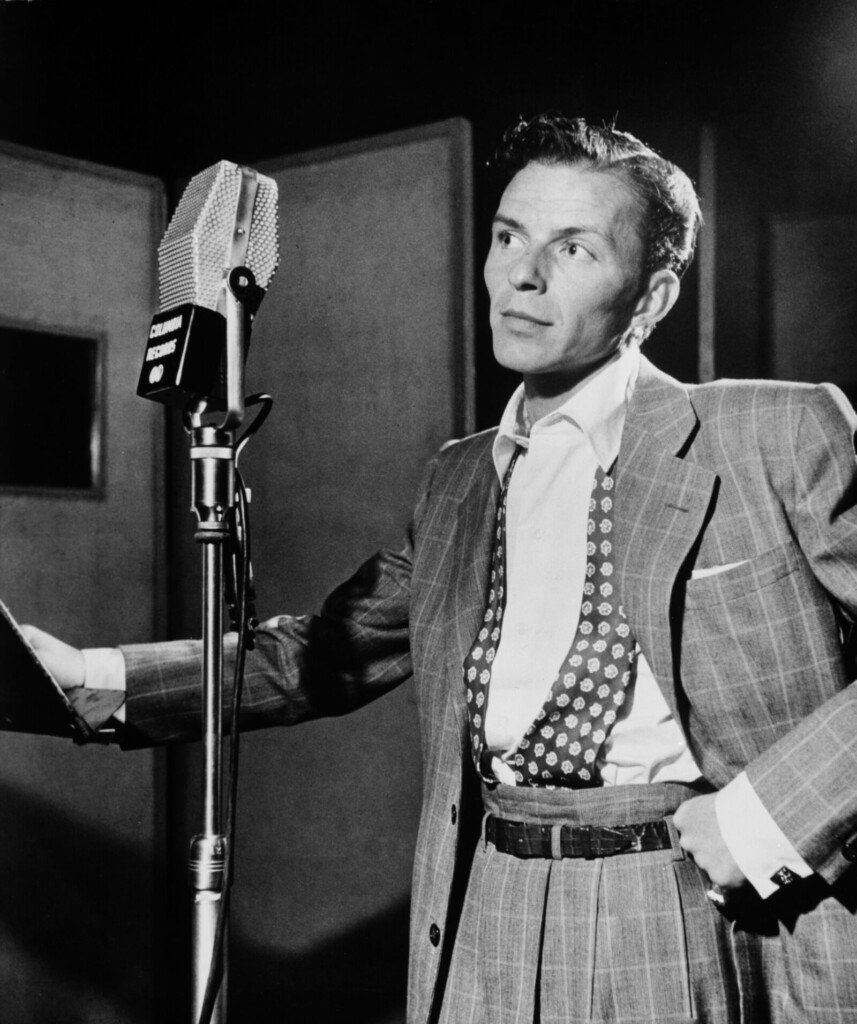
You are standing in a room where the lights have gone down and the applause has stopped, and you realize — with a specific, physical clarity — that the crowd did not leave angry. They simply left.
By 1950, Frank Sinatra had accumulated enough public indifference to constitute a kind of cultural verdict. Columbia Records dropped him. His television variety program collapsed under ratings so poor they functioned less as failure than as erasure. MCA, the agency that had managed his ascent through the bobby-soxer years, terminated their representation. The voice itself, that instrument built on a paradox of vulnerability and control, hemorrhaged on stage in May 1950 at the Copacabana — a submucosal bleeding of the vocal cords that left him mute for a period medical reports described as potentially permanent. He was thirty-four years old and had already been announced, by the culture that made him, as finished.
Erving Goffman, writing in Stigma: Notes on the Management of Spoiled Identity in 1963, described a mechanism that had already been enacted on Sinatra’s body more than a decade earlier. Goffman argued that stigma does not simply damage a person’s standing — it restructures the entire grammar of their social performance. Once a visible attribute or public failure marks someone as fundamentally discredited, they no longer have access to the ordinary negotiations of likability. The performance of acceptability, the micro-adjustments and legible warmth that allow a person to move through social space without friction — all of that becomes unavailable, because the audience has already rendered its judgment. The stigmatized individual is paradoxically freed from the exhausting labor of managing impression, not because the burden is lifted, but because it has been declared irrelevant.
What Goffman mapped sociologically, Sinatra inhabited with a precision that bordered on physical law. The frantic charisma of his early career — the swoon-inducing tremolo, the practiced vulnerability of songs like “All or Nothing at All,” the way he seemed to offer himself to an audience as material for their own longing — that entire apparatus had been built around the obligation to be loved in real time, to convert attention into approval at the moment of contact. The collapse did not strip him of technique. It stripped him of the need to deploy technique in service of likability. What remained was something more dangerous: a performer who no longer needed the room.
There is a sociological literature on what happens to public figures after catastrophic falls — the disgraced politician, the bankrupt financier, the artist declared irrelevant — and the pattern that emerges is not primarily about resilience or reinvention. It is about the recalibration of what the self is for. The historian Richard Sennett, in The Fall of Public Man published in 1977, traced how the twentieth century progressively collapsed the distinction between the performed public self and the private interior, demanding that public figures deliver not competence but intimacy, not skill but the appearance of unmediated feeling. Sinatra before 1950 had been the apotheosis of that demand: a voice engineered to sound like confession. After the hemorrhage, after the silence, after the contracts that did not renew, something in the calibration shifted permanently.
He tested for the role of Angelo Maggio in From Here to Eternity in 1953 without a fee, or nearly without one — the figure most commonly cited is one thousand dollars against the salaries his co-stars commanded. The screen test documents a man performing without the protective layer of professional expectation. Maggio is not a character built for sympathy in the conventional sense — he is irritating, reckless, fatally loyal to something he cannot articulate. Sinatra played him not by asking the audience to approve but by making the character’s specific gravity so dense that approval became beside the point, a consideration that arrived too late to matter.
From Here to Eternity and the Ontology of Vulnerability
You are sitting in a movie theater in the autumn of 1953, and the man you expect to see commanding the screen — broad-shouldered, composed, the kind of man cinema had been building for two decades — is instead small, wiry, and frightened in a way that looks embarrassingly real. Angelo Maggio does not arrive. He simply appears, already inside the frame, already losing.
The casting of Sinatra in Fred Zinnemann‘s production was, at the level of cultural grammar, a minor scandal that the industry dressed up as a comeback story. The official narrative — desperate phone calls, a screen test, a fee of eight thousand dollars against the hundred fifty thousand Columbia paid Burt Lancaster — became mythology almost immediately, because mythology was the only container the culture had for what was actually happening. What was happening was that a man who had been publicly humiliated, whose career had collapsed in full view, was being asked to play a man about to be destroyed in full view, and the performance arrived with no protective distance between the two facts.
Simone de Beauvoir, writing in The Ethics of Ambiguity in 1947, made a distinction that most of her readers applied to grand political choices and never to something as apparently trivial as a film performance. She argued that authenticity is not a state but a disclosure — the moment when a human being stops treating their own freedom as a problem to be managed and allows it to appear as the irreducible condition of their situation. What Sinatra gave to Maggio was precisely this: a man who cannot convert his vulnerability into strategy, who has no conversion mechanism at all. The masculine screen presence Hollywood had normalized since the early sound era was fundamentally a management system — the management of exposure, of emotional cost, of how much the audience was permitted to see. Clark Gable‘s invulnerability, John Wayne‘s granite stillness, even Humphrey Bogart‘s cynicism — these were all sophisticated apparatuses for controlling what leaked through.
Maggio leaks everything. He is drunk before he earns the right to drink, defiant before he has accumulated the authority to back defiance, loyal in a way that looks less like virtue and more like an inability to calculate exits. When Ernest Borgnine’s Fatso Judson beats him in the stockade, the scene does not offer the choreographed dignity of screen suffering. There is nothing redemptive in the staging, no swelling score calibrated to tell the audience how to transform pain into meaning. The body just takes the damage and then stops.
This is the rupture. Not the violence itself, but its ontological register. Cinema until that moment had been largely committed to what the philosopher Stanley Cavell would later describe in The World Viewed — published in 1971 but diagnosing something latent in the medium from its origins — as the screen’s promise of a world that exists for our viewing, shaped to produce significance from suffering. Maggio’s death breaks this tacit contract. He dies having accomplished nothing that the narrative required of him, having changed no outcome, having served no arc. His absence at the end of the film does not create a meaningful hole; it creates an arbitrary one, which is considerably more disturbing.
What Sinatra understood, at some level below intention, was that the character’s smallness was not a limitation to be overcome through technical craft but the material itself. The eight-inch height disadvantage against Lancaster, the hollowed cheeks from the weight he had lost during the career collapse, the eyes that had learned in front of live audiences to read a room’s emotional temperature and adjust — all of this fed directly into a performance that could not have been manufactured by an actor in good professional standing, because an actor in good professional standing would have tried to make Maggio survivable.
The Rat Pack as Collective Mythology and Its Ideological Costs
You are sitting at a corner table in a Vegas casino, circa 1960, and the men on stage are not performing for you — they are performing for each other, and you are merely permitted to watch.
That permission, carefully curated and never fully granted, was the precise mechanism by which the Rat Pack manufactured desire. The apparent looseness of those Sands Hotel performances — the spilled drinks, the overlapping jokes, the sense that you had stumbled into a private party among giants — was not spontaneity. It was a choreography of exclusion dressed as inclusion, a theatrical document of belonging designed to make the audience feel adjacent to a world they could never actually enter. Christopher Lasch, writing in “The Culture of Narcissism” in 1979, identified this structure with forensic precision: the new American personality type did not seek genuine intimacy but the performance of it, constructing a social self whose warmth was entirely instrumental. What Lasch diagnosed as a cultural pathology, the Rat Pack had already perfected as entertainment.
The group that cohered around Frank Sinatra, Dean Martin, Sammy Davis Jr., Peter Lawford, and Joey Bishop between roughly 1958 and 1965 was sold to the American public as a democracy of cool — five men who had transcended the usual hierarchies through sheer talent and mutual affection. The reality embedded in that fiction was considerably more complex. Lawford’s access derived almost entirely from his marriage into the Kennedy family, a political adjacency that Sinatra coveted with an intensity verging on obsession. Bishop functioned as a kind of court jester, his value measured by how well he could make the others seem funnier by contrast. The group’s apparent horizontality concealed a vertical structure with Sinatra at its apex, and every joke, every staged insult, every moment of performed brotherhood confirmed rather than dissolved that hierarchy.
Sammy Davis Jr. occupied a position within this mythology that revealed its deepest contradictions. He was simultaneously central and parenthetical — the most technically gifted performer in the group by several objective measures, a man who could sing, dance, act, and do impressions at a level none of the others approached, and yet he absorbed racial humiliations from the stage itself, often from Sinatra, with a smiling equanimity that the audience read as easy friendship. When Sinatra called Davis “Smokey” or made jokes calibrated to diminish, Davis laughed, because the alternative was to exit a structure that offered him the only mainstream legitimacy available to a Black entertainer of that era. The price of admission was public self-erasure, and he paid it nightly, in front of thousands, while the world called it camaraderie.
The women who orbited this mythology were not members of it. They were accessories with varying degrees of narrative significance — present enough to signal heterosexual vitality, absent enough to leave the fraternal bond undisturbed at its center. This was not coincidental. The entire ideological project of the Rat Pack depended on constructing masculinity as a self-sufficient aesthetic system, a world in which women were desired but not needed, which is precisely the formulation that sociologist R.W. Connell, in “Masculinities” published in 1995, identified as the operational core of hegemonic masculine identity: dominance maintained not through direct coercion but through the naturalization of a social order that renders alternatives invisible.
What the Rat Pack bequeathed to subsequent decades was not a set of behaviors but a template — the idea that a group of men performing relaxed mastery constituted the highest form of social life, that aspiration should take the shape of a barstool at the right table, that access itself was the achievement. Every subsequent iteration of performed male effortlessness, from the boardroom to the film set to the podcast studio, carries the structural DNA of those Sands performances, the same promise that belonging to the right circle exempts you from the ordinary terms of human vulnerability.
A vision curated by a filmmaker, not an algorithm
In this video I explain our vision
When Sinatra Acted Without Singing, and What That Reveals About Sound

You are watching a man sit across a table from another man, neither of them speaking. The camera holds. There is no music. The silence is so loaded it might snap, and the figure on the left — still, controlled, eyes doing something the jaw refuses to confirm — generates a kind of acoustic pressure in the room even though his lips are sealed. That pressure is not metaphorical. It is what happens when an audience has spent years saturating a performer with sound until his image itself begins to resonate.
Roland Barthes, writing in 1972 in his essay “The Grain of the Voice,” described something he called the geno-song: the irreducible bodily remainder in a voice, the friction of the body against language that no technical training can eliminate or fully refine. He was writing about singers and the physicality they carry into their phrasing, but his argument had a secondary charge that he left largely unexplored. If a voice carries a body, then a body — seen often enough in conjunction with that voice — begins to carry the voice back. The two become mutually haunting. By the mid-1950s, Sinatra’s body had been so thoroughly colonized by his recorded and performed voice that watching him stand silent in a doorframe was already a kind of listening.
The 1955 film The Man with the Golden Arm gave the culture a version of Sinatra that deliberately stripped away the musical persona and replaced it with withdrawal, convulsion, the grammar of addiction. What critics noticed and largely celebrated was his physical courage in the role — the shaking, the drenched helplessness of the detox scenes. What they were slower to name was the structural strangeness of the casting decision itself: the silence of that performance was not neutral silence. It was silence carved out of an extraordinarily specific sonic identity, which meant it registered as absence rather than emptiness. Absence and emptiness are not the same thing. Emptiness has no shape. Absence is defined entirely by what is missing.
This is what separates certain performers from others when they cross between registers. When a comedian plays tragedy, the audience grieves not only for the character but for the comedy they are not receiving. The emotional surplus is doubled, and the doubling comes from the gap between expectation and delivery. Sinatra in dramatic silence operated inside that same logic of disappointed expectation, except the disappointment was never uncomfortable — it was generative. The audience leaned in precisely because they knew what they were not hearing.
Elia Kazan, who spent much of his career developing actors trained to externalize interior states through physical behavior rather than language, once observed in his notebooks — collected and published as A Life in 1988 — that the most dangerous thing a director can allow is an actor who has already been given a mythology by the audience before the camera rolls. The mythology competes with the character. Sinatra was that actor for several directors, and the remarkable thing is that in his best dramatic work, he never tried to dissolve the mythology or hide behind a character. He let the mythology and the character occupy the same frame simultaneously, creating a kind of dramatic double exposure.
By the time he appeared in The Manchurian Candidate in 1962, directed by John Frankenheimer, his silences had acquired a calibrated unease that no amount of craft alone could generate. His face in the nightmare sequences holds the precise expression of a man who knows something is wrong but cannot locate the wrongness inside himself — which is, incidentally, an exact description of what it feels like to hear your own voice played back on a recording and find it foreign. The externalization of self as unrecognizable object.
There is a specific kind of uncanny that only fame produces, and Sinatra had been living inside it long enough that the uncanny had become his primary dramatic instrument.
The Detective as Cultural Symptom
You are sitting across from a man who has just told you the truth, and something in you still does not believe him. Not because he is lying, but because the frame he occupies — the desk, the badge, the measured authority of his posture — has already done the work of credibility before he opened his mouth. The institution speaks first. The man arrives later, if at all.
This is the precise mechanism Frank Sinatra exploited, consciously or not, across a series of films in the 1960s in which he played detectives, federal agents, and moral arbiters of civic order. The roles accumulated: the cool investigator in a trench coat, the man who knows which questions to ask and which silences to hold. What the audience was being sold was not a character but a function — the function of legitimacy transferred onto a body that, outside the frame, operated by entirely different rules.
Michel Foucault, writing in Discipline and Punish in 1975, traced how modern Western societies constructed the figure of the surveilling authority not as a natural emanation of justice but as a technology of power — a way of organizing bodies, gazes, and moral hierarchies into a system that reproduces itself by making its own logic seem inevitable. The detective in popular culture is exactly this figure rendered seductive: he sees without being seen, judges without being judged, and his transgressions are retroactively authorized by the correctness of his conclusions. He is the panopticon with a cigarette.
Sinatra’s actual life in this period was a sustained demonstration of everything that figure was supposed to contain. His documented associations with Sam Giancana and the Chicago Outfit were not peripheral gossip but structural features of how he operated professionally and socially. The Nevada Gaming Control Board revoked his gambling license in 1963 precisely because of his relationship with Giancana, a man the FBI had under active surveillance as a top-tier organized crime figure. The surveillance apparatus that Foucault describes as the instrument of social discipline was, in Sinatra’s case, pointed directly at the man the cinema was simultaneously asking audiences to trust as its representative.
The cultural work being performed here is not hypocrisy in any simple moral sense. It is something more architecturally interesting: the cinema was using the disciplinary form — the investigator role, the procedural authority — to launder a figure whose actual social position was illegible within that form. Every time Sinatra put on the badge, the screen was performing a kind of symbolic laundering, not for the audience’s benefit alone, but for a broader cultural negotiation about where power actually lives and who gets to hold it without consequence.
What makes this negotiation visible is precisely the gap it tries to close. Legitimate authority in postwar American cinema required a certain performed austerity — the detective who does not take bribes, the federal agent who operates within the law even when the law is slow. Sinatra could not embody this cleanly because his entire charisma was built on the suggestion that he operated above or beside institutional rules, that his access to power was personal and untranslatable. The roles tried to square this circle by making his authority seem intuitive rather than institutional — he solves the case not because the system works but because he, specifically, is exceptional. The exceptionalism becomes the alibi.
This is a very old substitution in the grammar of American self-mythology: the idea that the right man, outside the law’s ordinary reach, can deliver justice more cleanly than the law itself. It precedes Sinatra by centuries in the Western literary tradition, but the 1960s gave it a specific texture — the gray suit, the federal clearance, the sense that the Cold War had created a class of men whose moral accounting could not be done in public without endangering something larger.
The Irreversibility of a Certain Kind of Presence
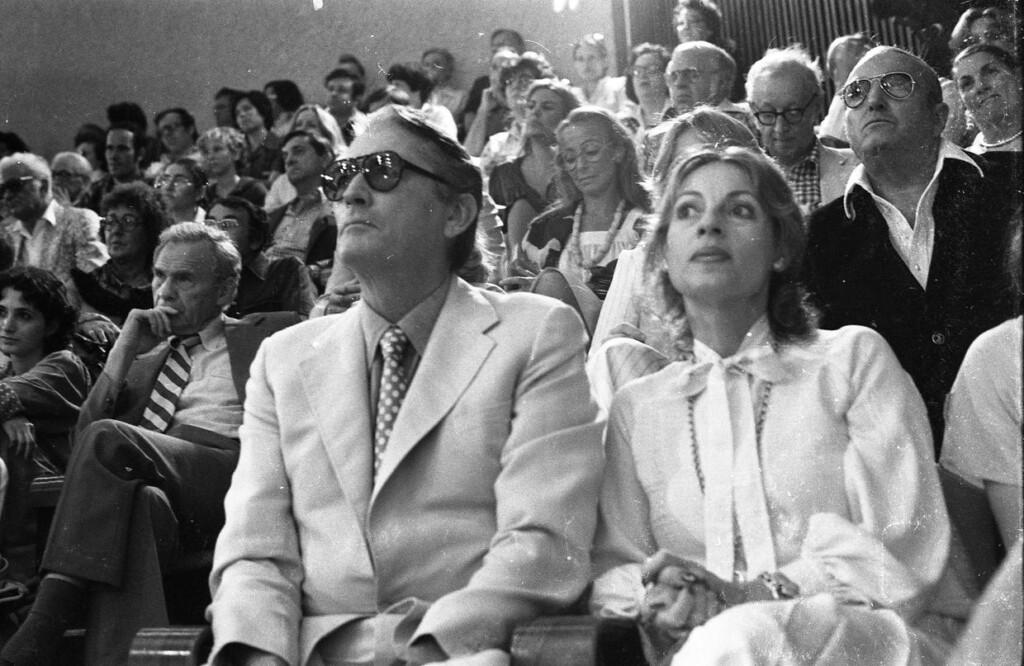
You are watching a man on screen who does not appear to be performing, and that is the most unsettling thing about him.
There is a specific economy at work in what Sinatra left behind in cinema, and it has nothing to do with technique in the transferable sense. No actor who came after him could simply study the footage and extract a method. What he transmitted was something closer to a ratio — the precise proportion of emotional exposure to emotional withholding that makes a human being on screen feel dangerous rather than decorative. Tony Rome, the gambler in The Manchurian Candidate, even the boyish sailor in Anchors Aweigh — they all operate under the same internal arithmetic. Give the audience just enough to feel they are seeing something real, then pull back before the performance becomes confession. The tension between those two poles is not a technique. It is a temperament, and temperaments do not travel across generations through instruction.
Walter Benjamin, writing in 1935 in “The Work of Art in the Age of Mechanical Reproduction,” argued that what withers in the age of the copy is the aura — that singular, unrepeatable presence of a thing in the moment and place of its original existence. He was writing about paintings, about the difference between standing before the Mona Lisa and owning a postcard of it, but the logic cuts deeper into performance than Benjamin himself fully explored. Every time a film is screened, it is technically identical to its previous screening. The emulsion does not age the way a human face does. The cells do not die. And yet something evacuates from the recorded performance over time — not because the image degrades, but because the cultural atmosphere that once charged it with meaning has itself dissolved. A Sinatra performance from 1962 was watched by audiences who had heard him in nightclubs, who had read about the Rat Pack in newspapers, who carried with them a living body of association that amplified every silence he held on screen. That context is now archaeology.
What survives, then, is the gesture without its original gravity. The famous stillness reads as cool rather than as controlled grief. The refusal to oversell an emotion appears, to eyes trained on contemporary performance styles, as underplaying rather than as a man who has already exhausted his supply of easy feeling. Sinatra’s cinema does not diminish — it migrates into a different register of meaning, one that the original audiences would not have recognized and might have found impoverished. The aura has not vanished so much as it has changed addresses, and the new address is nostalgia rather than presence.
This migration tells us something brutal about what we mean when we say an artist’s work endures. Endurance is not preservation. A performance that endures does so by becoming available for reinterpretation, which means it becomes available for misreading. The specific emotional risk Sinatra took — the risk of appearing insufficient, of letting the camera find him in a moment of actual uncertainty rather than performed uncertainty — survives only as a visual fact, stripped of the existential weight that made it a risk in the first place. What we see now is the evidence of courage without the cost, the scar without the wound.
What cinema actually captured in Sinatra was not a performance style but a specific historical moment in which a certain kind of American masculinity was still permitted to be fragile without naming itself as fragility. That permission has since been renegotiated in every direction — overclaimed, pathologized, aestheticized, weaponized — and so the footage now floats in a kind of orphaned legibility, recognizable in its formal qualities and yet subtly alien in the emotional grammar it assumes the viewer still speaks.
🎭 When the Voice Becomes the Body: Actors Beyond the Stage
Frank Sinatra proved that a voice shaped by music can carve just as deep an impression on screen. This selection explores the intersection of performance, persona, and cinematic identity across classic American cinema and beyond.
Edward G. Robinson and classic American cinema
Edward G. Robinson built one of Hollywood’s most enduring screen presences through an instinctive understanding of how physicality and voice could merge into something larger than performance. His work across gangster films and noirs demonstrates how classic American cinema rewarded actors who carried an entire world within their bearing. Like Sinatra, Robinson understood that charisma is not performed — it is inhabited.
GO TO THE SELECTION: Edward G. Robinson and classic American cinema
Humphrey Bogart and the face of American cinema
Humphrey Bogart transformed a distinctive voice and a face marked by experience into the definitive image of American cinema’s moral ambiguity. His performances showed that acting could be a form of restraint, where what is withheld communicates more than what is expressed. Bogart and Sinatra share this economy of means — both men made stillness as powerful as movement.
GO TO THE SELECTION: Humphrey Bogart and the face of American cinema
John Huston and the art of irregular cinema
John Huston directed some of the most memorable actor-driven films in Hollywood history, building narratives around the specific gravity of his performers rather than bending them to abstract concepts. His cinema is one of character revealed under pressure, where voice, gesture, and silence all carry equal dramatic weight. Understanding Huston is essential to understanding the environment in which Sinatra’s acting career flourished.
GO TO THE SELECTION: John Huston and the art of irregular cinema
Roland Barthes and Listening: The Grain of the Voice
Roland Barthes’s concept of the ‘grain of the voice’ offers one of the most compelling theoretical frameworks for understanding what makes Sinatra’s screen presence so irreducible and compelling. Barthes argued that the voice carries a bodily truth that transcends mere technical skill, touching the listener at a level beneath conscious interpretation. Applied to Sinatra, this idea illuminates why his acting always felt like an extension of singing — both were expressions of the same irreducible self.
GO TO THE SELECTION: Roland Barthes and Listening: The Grain of the Voice
Discover Independent Cinema on Indiecinema
If these connections between voice, identity, and screen performance have sparked your curiosity, Indiecinema is the streaming destination where cinema is taken seriously. Explore a curated catalog of independent and author-driven films that challenge, move, and provoke — the way great cinema always has.
👉 EXPLORE THE CATALOG: Watch Indie Films in Streaming
A vision curated by a filmmaker, not an algorithm
In this video I explain our vision

