
The Economics of Shadow: Poverty Row and the Invention of Necessity
You are standing on a soundstage on Gower Street in 1947, and the electrician has just told you there is money for six lamps, not sixty. Somewhere across town, at MGM, a cinematographer is bathing Lana Turner in eleven separate sources of key, fill, and hair light, each one metered to the tenth of a foot-candle, each one billed to a budget that assumes prestige is a physical quantity measurable in wattage. You do not have that option. You have six lamps, a night shoot, and a producer who wants the picture finished in eleven days. What you do next will be called style. It is actually arithmetic.

John Alton did not invent darkness because he loved it in the abstract. He inherited darkness the way a carpenter inherits a warped plank, and he built with what would not lie flat. At Eagle-Lion, the Poverty Row outfit where he shot T-Men in 1947 and Raw Deal the following year, the entire operating philosophy of the studio was scarcity dressed up as economy. Eagle-Lion had emerged from the wreckage of PRC, Producers Releasing Corporation, a studio so thoroughly associated with threadbare production values that its initials were said, unkindly, to stand for Pretty Rotten Crap. When Alton walked onto those stages, he was not walking into a laboratory of artistic freedom. He was walking into a balance sheet.
The postwar American film industry was undergoing its own contraction, and this matters more than any individual anecdote about a stingy producer. The Paramount consent decrees, which began moving through the courts in the mid-1940s and would culminate in the 1948 Supreme Court decision forcing the major studios to divest their theater chains, were already reshaping how money moved through Hollywood before the ink was dry. Exhibition profits that had once flowed upward to subsidize lavish A-picture lighting setups were drying up, and the B-picture units, the second features, the programmers grinding out product for the bottom half of double bills, absorbed the shock first and hardest. Alton’s genius was not that he ignored this economic weather. It was that he metabolized it into technique.
Consider what six lamps actually force a cinematographer to decide. You cannot light an entire room evenly. You cannot afford the luxury of illuminating every corner so the actor may walk freely through space while the camera simply records a pre-decided, fully-lit world. Instead you must choose, brutally, what the audience is permitted to see, and by implication, everything else becomes absence. Alton wrote, in his 1949 manual Painting with Light, that most cinematographers used too much illumination, that they were, in his words, afraid of the dark. This was not a mystical pronouncement. It was a production note disguised as a manifesto, born from a man who had spent years proving that a single hard source, properly placed, could suggest an entire architecture of menace that would have cost four times as much to build and light conventionally.
The financial logic of underlighting bled directly into the moral logic of the noir universe itself. A shadow costs nothing. A set built only halfway, its edges swallowed in blackness, costs half of what a fully dressed and fully lit set costs, and Alton understood that the audience’s imagination would complete the architecture for free. Poverty Row did not merely tolerate this deception. It depended on it, the way a magician depends on the limits of peripheral vision. What began as an accountant’s mandate calcified, within a few years, into something taught in film schools as an aesthetic doctrine, as though the shadows had always been a choice rather than a bill nobody could pay, and this reversal, this laundering of necessity into philosophy, is where the story actually begins.
Painting with Light: The Technical Grammar of ‘Painting with Light’
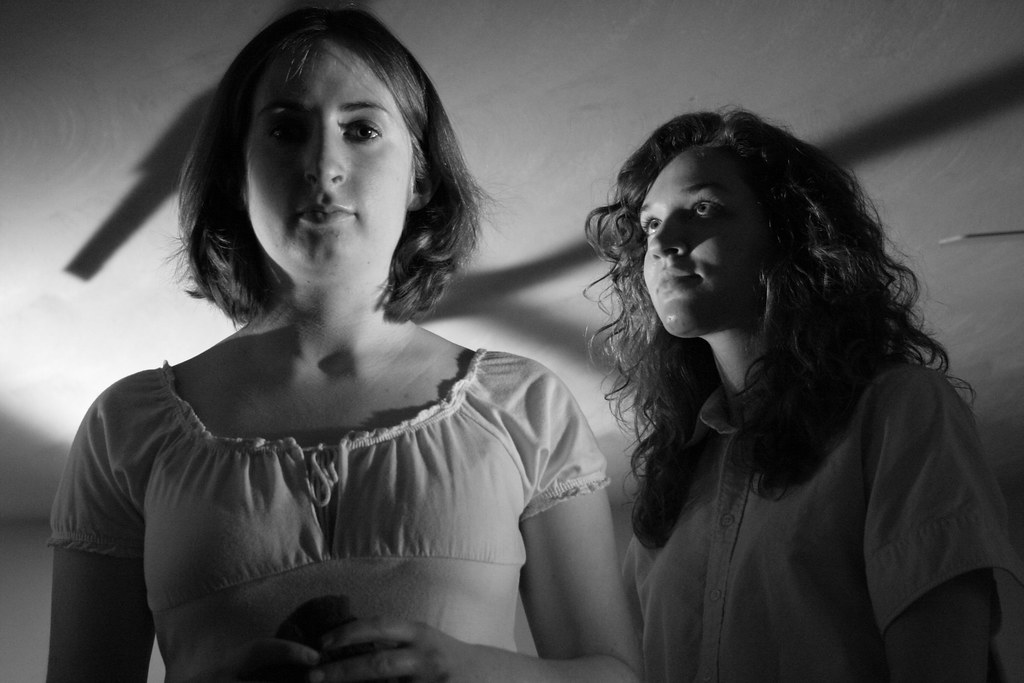
You open the book expecting a manual and find something closer to a manifesto disguised as a trade paperback. Alton published it in 1949, at the exact moment his own career was cresting, having just shot a run of pictures for Eagle-Lion that made shadow itself into a kind of currency. The prose is plain, almost aggressively unpretentious, full of diagrams and lighting ratios that read like recipes, but underneath the plainness sits a quiet insurrection against everything the major studios had spent two decades codifying as correct.
The orthodoxy Alton was writing against had a name, more or less: high-key lighting, the three-point system taught and enforced through departments like MGM’s, where cinematographers such as Karl Freund and later a generation trained under the American Society of Cinematographers treated illumination as a problem to be solved rather than an argument to be made. Key light, fill light, backlight, balanced to keep every actor’s face legible, every corner of the frame accounted for, shadows tolerated only as accent, never as substance. This was the house style of glamour, the technique that made Garbo luminous and kept blemishes invisible, and it carried inside it an assumption so total nobody bothered to state it: that the audience deserved to see everything, that visibility was a form of respect owed to the star system itself.
Alton’s chapters dismantle that assumption one formula at a time. He describes what he calls Rembrandt lighting not as homage but as economics, a single hard source placed to carve one side of a face while surrendering the other entirely to blackness, and he gives you the actual math, ratios of ten to one, sometimes higher, where conventional Hollywood practice rarely pushed past three or four to one. He writes about “the villain’s side of the face” as a technical category, not a metaphor, instructing readers on where to place a lamp so that darkness reads as psychology rather than accident. There is a chapter on how to light a night exterior with almost no light at all, using a single spotlight to suggest a streetlamp and letting ninety percent of the frame dissolve into unlit void, a technique that would have gotten a cinematographer fired at Metro a decade earlier for failing to expose the negative properly.
What makes the book an ideological document rather than a mere technical one is the way Alton keeps insisting that this is not deprivation but abundance, that darkness holds more information than light, that a shadow can characterize a room, a marriage, a crime, faster than any amount of illuminated detail. He was, without ever using the word, arguing for an aesthetics of withholding in an industry built on an aesthetics of display, and he was doing it from inside a poverty-row structure, since Eagle-Lion and Republic could not afford the crews, the wattage, or the schedule of a prestige picture at Warner or Metro. Single-source setups were faster to light, cheaper to power, easier to move; the book reads at times like an efficiency guide before it reads like a philosophy, and that collapse of economic necessity into visual doctrine is itself the most honest thing about it.
There’s a strange humility in how Alton frames his own inventions, refusing the language of art in favor of the language of trick, of gimmick, of shortcut, even as the images he was describing were being absorbed by critics decades later as some of the most sophisticated visual grammar American cinema ever produced. He never once uses a word like existentialism or alienation, yet his instructions for lighting a face half in shadow, half exposed, produce exactly the moral bifurcation that postwar American culture was groping toward in every other medium simultaneously, from hardboiled fiction to the returning veteran narratives quietly reshaping the domestic melodrama next door on the same studio lots.

Darkness as Moral Architecture: Noir Visual Style and Postwar Anxiety
You are watching a man walk down a corridor in T-Men, and the corridor is not really a corridor anymore. It has become a throat, a chute, a place where the walls press so much shadow against the little available light that the human figure seems to be negotiating for its own visibility. He is a federal agent. He is, by every civic definition available in 1947, one of the good guys. And yet John Alton has lit him exactly as he would light a killer, a grifter, a man about to be shot in the back by his own partner. This is not an accident of style. It is the entire argument of the film compressed into a single visual decision, and it is the argument of an era that had just finished watching its official heroes do unofficial, unspeakable things in the name of victory.
The Enlightenment inheritance that American institutional life still performed in its public rhetoric, the idea that law, government, and rational bureaucracy could illuminate human affairs the way electric light had illuminated the physical world, was already exhausted by 1947, and Alton’s camera knew it before the scripts did. Theodore Adorno and Max Horkheimer had published Dialectic of Enlightenment in 1944, arguing that the same rational instruments that promised liberation from myth had produced Auschwitz and the administered society, that reason unmoored from ethical restraint curdles into its own barbarism. Alton never read Adorno, almost certainly, but his lighting diagrams say the same thing with photons instead of paragraphs. When the federal agents in T-Men become indistinguishable in silhouette from the counterfeiters they are hunting, when Dennis O’Keefe’s face dissolves into the same charcoal murk that swallows every gangster in the picture, the film is not making a clumsy visual mistake. It is refusing the fiction that state power occupies a morally separate zone of illumination.
Raw Deal pushes this further, and with even less patience for institutional comfort. Here the story is narrated by a woman, Pat, whose voice-over drifts over images that consistently exceed and contradict what she is saying, so that the audience receives two incompatible testimonies simultaneously, one verbal and reassuring, one visual and merciless. Alton shoots interiors so that furniture, doorframes, and staircase railings slice across faces in bars of shadow, turning domestic space itself into something carceral. A living room becomes a cell. A love scene occurs in near total blackout, two voices in the dark negotiating trust they cannot verify because they cannot see each other, which is as precise a metaphor for postwar intimacy as American cinema produced in that decade. Marriages made hastily before deployment, reunions between people who had each spent years becoming someone the other had never met, all of it conducted in a kind of epistemic dark that Alton simply externalizes onto the screen.
This visual logic runs parallel to what Jean-Paul Sartre was formalizing in Being and Nothingness in 1943 and what Albert Camus would dramatize in The Stranger the following year, the sense that meaning does not arrive pre-installed in the world or guaranteed by institutions, that a man is condemned to construct value in a universe that offers no illumination in return. Noir did not require its practitioners to have read a page of continental philosophy. The condition was simply in the air breathed by anyone who had returned from the Pacific or from Normandy to find that medals and gratitude did not restore the moral clarity they had been promised. Alton’s low-key ratios, sometimes pushing contrast so extreme that faces read as pure white plaster against total black, gave that condition a grammar. Light in his films is never trustworthy illumination, revealing truth the way a courtroom or a newspaper promises to. Light is a resource, rationed, weaponized, capable of exposing a man to death as easily as it exposes him to recognition, and in that asymmetry lies the whole disillusioned inheritance of a country that had just finished telling itself a war story about darkness being defeated by force.
The Eye as Instrument of Power: Vision, Surveillance, and Control in Composition

You are watching a man light a cigarette in a room that should not exist. The blinds are drawn, but the streetlamp outside cuts through them anyway, laying five bars of light across his face, and for a moment you cannot tell if he is the one being watched or the one doing the watching. This is the trick Alton perfected, and it is not a trick of taste. It is a trick of power, executed with gels and flags and a few hundred watts of tungsten, and it asks a question the rest of the film may never articulate aloud: who, exactly, is allowed to see clearly, and who is condemned to be seen.
The venetian blind shadow is the most reproduced signature of the period, appearing in dozens of films between 1944 and 1953, but its ubiquity has flattened its meaning into decoration, a wallpaper pattern mistaken for a statement. Look again. The blind slats do not simply create atmosphere. They fragment the human body into strips, denying the viewer a whole face, a whole gesture, a whole intention. Alton is not hiding his actors for the sake of mood. He is staging the condition of being surveilled, of being partially legible to an authority that need not reveal itself. The camera, in these compositions, does not merely observe the scene. It occupies the position of the watcher, and it implicates the audience in that position, seated in the dark, gazing at a man who cannot gaze back with equal clarity.
Michel Foucault, writing in 1975 in Discipline and Punish, described the architectural principle of the panopticon, Jeremy Bentham‘s late eighteenth-century design for a prison in which a single unseen observer could watch all inmates without ever being watched himself, producing in the incarcerated a permanent, internalized sense of exposure. Foucault’s argument was that modern power no longer needs the spectacle of punishment; it needs only the possibility of being watched at any moment, and that possibility disciplines the body more efficiently than any whip. Alton’s compositions, made in a Los Angeles indifferent to French philosophy, arrive at the same architecture by other means. His characters live inside a visual panopticon built from window blinds, stair railings, and hat brims, lit so that the audience always has more information than the character on screen, who moves through a world he cannot fully read while we, from our seats, read it for him, complicit in a surveillance he never consented to.
Consider the oblique angle, the canted frame that tilts a hallway or a stairwell just enough to unsettle the eye without announcing itself as stylization. This is not merely German Expressionism transplanted to Los Angeles, though the debt to Robert Wiene and F.W. Murnau is real and Alton never disguised it. The tilt does something specific to the geometry of authority. A level frame implies a stable, trustworthy vantage, the position of a narrator who can be believed. A canted frame implies that the very ground on which power stands has already shifted, that the institutions meant to protect the character, the police precinct, the detective’s office, the courtroom, are no longer level with justice. Alton shot interrogation scenes so that the questioner loomed at an angle that made the questioned look perpetually on the verge of falling, an effect he achieved by lowering the camera and tilting it upward, a technique borrowed from portraiture but repurposed as an instrument of psychological coercion.
The obscured face carries the same argument to its most literal conclusion. In half a dozen key films, most notably T-Men, made in 1947 with Anthony Mann, Alton lit interrogators, informants, and enforcers so that their eyes disappeared into shadow while their mouths remained lit, turning speech into an act detached from a legible interior. The viewer hears the voice of authority but cannot read its intention, because intention lives in the eyes, and the eyes have been withheld. This is surveillance inverted: the one who watches you refuses to be watched in return, and Alton renders that refusal as pure geometry, a triangle of light on a cheekbone, a void where a gaze should be.
Erasure and Reappraisal: The Historiography of an Uncredited Craft
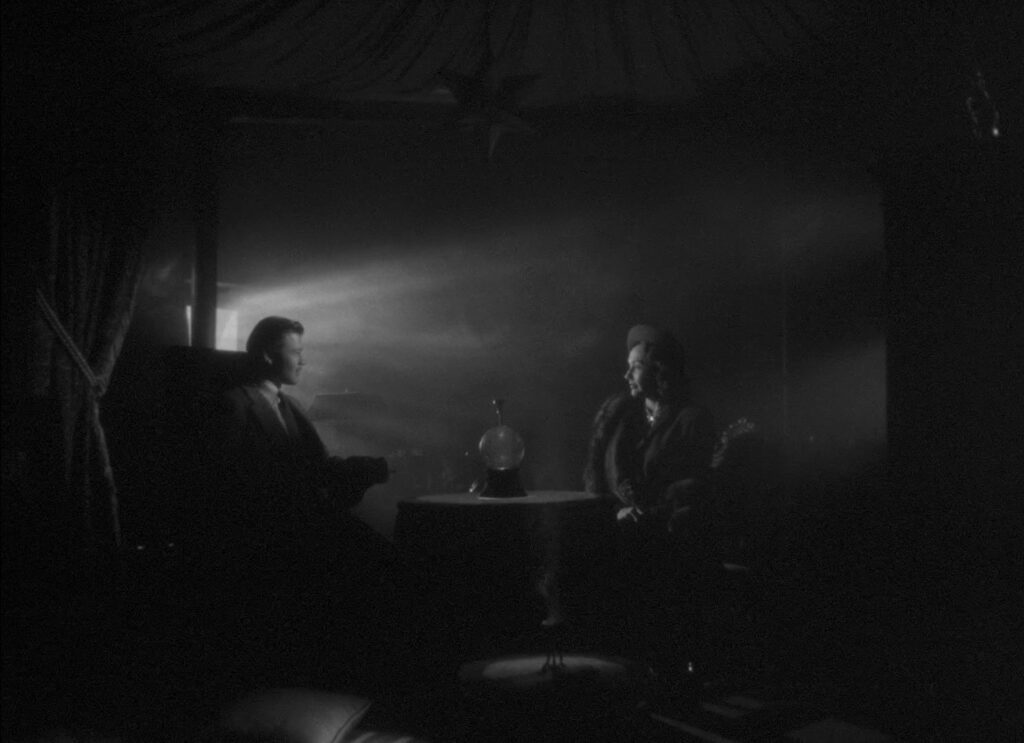
You will not find John Alton’s name on the AFI’s list of the hundred greatest American films, nor did any academy ever hand him a trophy for the films now taught as the visual grammar of an entire genre. He shot “T-Men” in 1947, “Raw Deal” in 1948, “He Walked by Night” in 1948, and “The Big Combo” in 1955, and for decades those titles circulated among collectors and repertory programmers as curiosities credited, in the public imagination, to their directors — Anthony Mann above all, a name that absorbed the shadows Alton built for him. This is not a minor accounting error. It is the structural condition of how cinema history got written in English-language criticism through most of the twentieth century, a discipline that inherited its vocabulary from literary studies and therefore needed an author, singular and namable, onto whom meaning could be pinned.
The auteur theory, formalized by François Truffaut in his 1954 essay “Une certaine tendance du cinéma français” and later imported into American criticism by Andrew Sarris in “The American Cinema” of 1968, did enormous service in rescuing directors from the anonymity of studio-system credits, but it did so by constructing a hierarchy that pushed everyone else in the frame back into shadow, appropriately enough for a man who worked in shadow professionally. Sarris ranked directors by pantheon; cinematographers appeared, when they appeared at all, as footnotes explaining how a director “achieved” an effect, as if light bent itself to serve a vision rather than being calculated, exposed, and printed by a separate set of hands holding a light meter and a stopwatch.
Alton did not help his own case. He was commercially minded, unashamedly so, and in 1949 published “Painting with Light,” a technical manual so plainspoken about tricks of the trade — how to fake a moonlit street with a single arc lamp, how to light a face from below to suggest guilt before a script had said a word — that it read to some peers as a betrayal of guild secrecy. Cinematographers, unlike directors, belonged to a craft culture built on trade knowledge, and trade knowledge is memory-resistant by design: it lives in bodies and habits passed on set to set, not in essays that later scholars can cite. When Alton left Hollywood abruptly in the late 1950s, reportedly disillusioned after conflicts during the production of “Elmer Gantry,” he did not leave behind interviews, retrospectives, or a paper trail of self-mythologizing of the kind that sustains a director’s afterlife.
His recovery began not through American academia but through French cinephilia, the same culture that had elevated Hitchcock and Hawks decades earlier, and through the noir revival of the 1970s and 1980s when scholars like Paul Schrader, in his 1972 essay “Notes on Film Noir,” started reading visual style itself as authorial signature rather than mere execution of directorial intent. The American Society of Cinematographers gave Alton its highest honor only in 1994, two years before his death in 1996 at age ninety-four, having outlived nearly everyone who could have testified to what he actually did on set.
This delay is not particular to Alton. Deborah Nadoolman Landis has documented similar erasure for costume designers, whose contributions to characterization routinely disappear into descriptions of an actor’s “presence.” Gaffers, colorists, editors — the entire infrastructure of collaborative filmmaking — suffer the same fate, because cultural memory prefers a single face to credit, a biography to narrate, an interview subject who can explain intention in language critics already know how to parse. Technical labor resists that narrative economy because it speaks in apertures and filter densities rather than motive and theme.
What Alton’s case exposes, finally, is not simply an oversight correctable by a better index or a more thorough textbook, but the underlying machinery of how any culture decides whose work counts as thought and whose counts as service — a distinction that has never been about the work itself, only about who gets asked to explain it afterward.
A vision curated by a filmmaker, not an algorithm
In this video I explain our vision
🎬 Shadows, Light and the Noir Masters
John Alton’s revolutionary use of shadow and light didn’t exist in a vacuum—it was part of a broader constellation of directors, actors, and craftsmen who defined the noir sensibility. Explore the collaborators, rivals, and thematic cousins who shaped this shadowy cinematic universe.
Chandler’s The Big Sleep: Analysis
Raymond Chandler‘s hardboiled prose gave noir cinematography its narrative soul, and ‘The Big Sleep’ remains a touchstone for the genre’s fusion of moral ambiguity and visual style. Understanding Chandler’s labyrinthine plotting illuminates why cinematographers like Alton needed shadows to hide as much as they revealed. This analysis unpacks the DNA shared between hardboiled fiction and noir’s visual grammar.
GO TO THE SELECTION: Chandler’s The Big Sleep: Analysis
John Huston and the art of irregular cinema
John Huston stood among the directors who most brilliantly exploited the chiaroscuro techniques Alton helped pioneer, crafting morally complex thrillers steeped in darkness. His irregular, uncompromising approach to genre filmmaking parallels Alton’s own refusal to follow conventional lighting rules. Together they represent the rebellious spirit at noir’s technical and narrative core.
GO TO THE SELECTION: John Huston and the art of irregular cinema
Delmer Daves and the cinema of American guilt
Delmer Daves explored American guilt through the same shadow-drenched aesthetic that Alton helped codify, using darkness as a moral landscape rather than mere style. His films demonstrate how noir cinematography became inseparable from questions of conscience and culpability. This piece traces the collaboration between visual technique and thematic weight in classic American film.
GO TO THE SELECTION: Delmer Daves and the cinema of American guilt
Light and Shadow in Cinema: From Chiaroscuro to Expressionism
Long before Alton perfected his low-key lighting style, German Expressionism established the chiaroscuro traditions that would migrate to Hollywood and birth film noir. This article traces that visual lineage, showing how shadow became a narrative device rather than simple atmosphere. It’s essential context for understanding where Alton’s innovations actually originated.
GO TO THE SELECTION: Light and Shadow in Cinema: From Chiaroscuro to Expressionism
🌓 Step Into the Shadows of Independent Cinema
If Alton’s masterful manipulation of light and darkness has stirred your appreciation for visual storytelling, Indiecinema offers a curated selection of independent films that continue this tradition of bold cinematographic risk-taking. Discover hidden gems where shadow and shape still speak louder than dialogue.
👉 EXPLORE THE CATALOG: Watch Indie Films in Streaming
A vision curated by a filmmaker, not an algorithm
In this video I explain our vision

