
The Page as a Machine That Breathes
You are reading and then, at some precise and unremarkable moment, you realize the text is reading you back. Not in the flattering sense people mean when they say a book understands them, not in the warm recognition of finding your private grief named on a page. Something colder happens. The sentence you just followed begins to fold back on itself, and you cannot locate the subject, and the verb has migrated somewhere it was never supposed to go, and what you are holding feels less like a book than like a device designed to make your habitual movements fail. You flip back a page. You flip forward. You wonder if the printing is defective. It is not defective. It is precise beyond anything you are prepared for.

This is the specific threshold at which Nanni Balestrini becomes necessary to understand. Born in Milan in 1935, he arrived at the literary and political convulsions of postwar Italy not as a bystander but as someone who seemed, from the very beginning, constitutionally incapable of treating language as a neutral instrument for delivering meaning. Where other writers of his generation wrestled with what to say about a world that had survived fascism and was now being absorbed into consumer capitalism, Balestrini asked a prior and more destabilizing question: whether the structures of language itself, the inherited architectures of Italian literary prose, the syntactic conventions that made sentences feel natural and inevitable, were already complicit in the domestication they appeared merely to describe. The question was not rhetorical. He spent the next six decades constructing an answer that never fully resolved, because resolution was precisely what he refused.
In 1961, Balestrini submitted to the first Festival of New Music in Palermo a text composed by a computer, a work he called Tape Mark I, in which an IBM 7070 was fed fragments drawn from a Vedic hymn, Michihiko Hachiya’s account of surviving Hiroshima, and Paul Goldwin’s writings on mathematics, and then instructed to generate combinatory sequences according to rules Balestrini had programmed. The year matters enormously. It precedes by more than a decade the moment when the broader culture began associating computational processes with the arts, and it positions Balestrini not as a technologist infatuated with machinery but as a writer who had already diagnosed the problem he was trying to solve: that language, as it is normally used, pretends to be the transparent medium of a sovereign human subject, and that this pretense is itself a form of ideology. By feeding the machine heterogeneous sources, none of which shared a linguistic world, and by forcing their collision through combinatorial logic rather than authorial intention, he was not abandoning authorship so much as exploding its claims from within.
The philosopher and semiotician Roland Barthes would articulate something adjacent in 1967 with the essay collected and published in Image, Music, Text, the death he described for the author as a theological figure whose disappearance liberates the text for the reader’s production of meaning. Balestrini had already performed that death practically, instrumentally, before it became a theoretical proposition. But where Barthes remained, for all his elegance, within the university, within the essay form, within a discourse that could still be assigned and discussed in seminars, Balestrini was making objects that could not be safely assigned, that resisted the seminar, that made the very act of sitting quietly and absorbing meaning feel like a collaboration with something you had not consented to examine.
What he understood, and what the defective-seeming page in your hands confirms, is that reading in its ordinary form is not a neutral act. It is a trained compliance. It is the daily rehearsal of a particular relationship to authority, to sequence, to the idea that meaning flows in one direction from a source to a receiver, and that the receiver’s job is to be adequate to the message. Balestrini wanted to know what happened when the message refused to arrive in a form the training had prepared you for.
The Smartphone Woman

Drama, thriller, dark comedy, by Fabio Del Greco, Italy 2020.
On a bridge over the Tiber River, an elderly and severely ill man has decided to end his life, but an unusual discovery changes his mind: he comes across a lost smartphone. Intrigued, he decides to return home and watch the videos contained within it. On the screen, a series of videos unfold, telling the story of a woman who has emigrated from southern Italy to Rome to work as a teacher in schools and her struggles with integration in a social reality she cannot fully grasp.
"The Smartphone Woman" is a realistic tale of a woman's life and her complex relationship with an "infernal" city. It portrays the challenges she faces, her connection to her origins, the social discomfort she discovers in the outskirts, and the eerie presence of the ghosts of ancient Roman empire. Fabio Del Greco employs a fragmented style, using pieces of "real life" shot with the smartphone, to construct a narrative that ambiguously oscillates between fiction and truth. This creates a captivating exploration of the discomfort and alienation within the bustling city, contrasting with the peaceful village life from which the protagonist hails. The film is constructed with a variety of heterogeneous characters and situations, an emotional kaleidoscope, weaving between evenings of exploration in the Eternal City and daily struggles. Realistic smartphone-shot videos are alternated with a narrative thread reminiscent of film noir and, ultimately, surrealism in the finale. On screen, a succession of grotesque characters unfolds, representing the director's vision of a tumultuous humanity. The film's potency lies in the emotion it manages to convey and in the protagonist's naive perspective. "The Smartphone Woman" is a must-see for enthusiasts of independent and experimental cinema.
LANGUAGE: italian
SUBTITLES: English, French, German, Portuguese, Spanish
A Milan That No Longer Exists
There is a photograph that does not exist but should: Milan, sometime in the mid-1950s, a young man walking through a city that is rebuilding itself out of rubble and ambition in equal measure, the air still carrying the particular electricity of a country that has survived fascism and is not yet sure what it wants to become. The reconstruction was literal — cranes and scaffolding on every block — but it was also cultural, a wholesale renegotiation of what Italian art, literature, and thought were permitted to say and how they were permitted to say it. Nanni Balestrini was born into this city in 1935, and the fact of that birth year matters more than it might initially appear. He came of age precisely at the hinge point between one world collapsing and another not yet formed, which means he belonged to neither, and that condition of structural displacement would become the engine of everything he made.
His formation was not academic in any comfortable sense. The postwar Italian avant-garde was not a university curriculum; it was a series of arguments conducted in cafés, little magazines, and small press publications that circulated in editions of a few hundred copies among people who read them as if their lives depended on it, because in a certain sense they did. The dominant literary culture of the time was still anchored in neorealism, that earnest and politically necessary attempt to document the human cost of war and poverty with photographic fidelity. Balestrini understood its moral urgency and rejected its formal assumptions almost simultaneously. Realism, he sensed, was not a neutral window onto reality; it was itself an ideology, a particular way of organizing experience that quietly confirmed the reader’s existing sense of how the world cohered. To disturb that sense was not mere aesthetic provocation. It was a political act.
What distinguished him even within that already radical context was his insistence on treating language as raw material rather than as a transparent medium. Where others in Gruppo 63 were intellectually committed to the idea of the open text, Balestrini was already enacting something stranger and more unsettling: the text that does not originate in a single authorial consciousness at all. His early collage poems drew on newspaper headlines, advertising copy, scientific manuals, and found speech, assembled according to procedures that displaced the lyric subject entirely. This was not surrealist chance in the old romantic sense. It was something colder and more methodical, closer to what Roland Barthes would describe in 1967 as the death of the author, though Balestrini had been performing that death in practice for years before Barthes gave it a name.
The Milan he moved through during these years was a city in violent transformation, the so-called economic miracle reshaping its streets and its social fabric with a speed that made ordinary perception unreliable. The factories were expanding. The internal migration from the south was bringing hundreds of thousands of workers into a city that was not prepared to receive them with anything resembling dignity. Balestrini was watching all of this, and he was already asking a question that his later work would make impossible to ignore: if the language of that transformation was itself administered, controlled, circulated to produce consent, then what does a writer do with language at all?

The Algorithm Before the Algorithm

There is a moment, familiar to anyone who has ever stared at a blank page long enough, when the question shifts from what to write to who is actually doing the writing. The hand moves, the words appear, and somewhere between intention and execution a fiction solidifies: that the marks on the page belong to a singular mind, that language is private property, that the poem is a confession signed in blood. Nanni Balestrini did not argue against this fiction. He simply ran it through a machine.
This was not, as it has sometimes been lazily described, a celebration of technology or a futurist love letter to the machine. The gesture was structurally critical. By delegating the combinatorial logic to a system incapable of intention, Balestrini was making visible what Roland Barthes would articulate more theoretically seven years later in The Death of the Author: that the author was never the origin of meaning but its retroactive attribution. What the IBM 7090 produced was not meaningless. It was, in fact, disturbingly readable, disturbingly coherent in places, and this coherence was the scandal. The reader kept finding the author. The author was not there. The reader was manufacturing him in real time, projecting intentionality onto an operation that had none, proving that the literary contract is less about what the writer does than about what the reader needs.
Ferdinand de Saussure had already established in his Cours de linguisterie générale, published posthumously in 1916, that language is a system of differences with no positive terms, that meaning is relational rather than substantial. Balestrini took this seriously in a way that most literary culture refused to. If signs are not owned, if meaning emerges from the gap between elements rather than from the depth of a speaking subject, then the poem is always already a combinatorial event. What the computer made explicit was what had always been structurally true of language: it recombines, it permutates, it produces effects that exceed and precede any individual consciousness. The machine did not simulate poetry. It revealed the mechanics poetry had been concealing.
What made Balestrini’s move philosophically precise rather than merely provocative was his choice of source material. The fragments he fed into the IBM 7090 were drawn from three distinct and heterogeneous texts: a passage from the Tao Te Ching, a section from Michihiko Hachiya’s Hiroshima Diary written in 1945 by a physician who survived the atomic bomb, and lines from Paul Goldwin’s science fiction writing. The collision of these registers, the ancient philosophical, the documentary traumatic, the speculative technological, was not arbitrary. It pointed toward a conception of language as historical sediment, as a field where catastrophe and contemplation and projection coexist without resolution. No single author could have produced that adjacency with full consciousness. The machine made the unconscious of the archive legible.
The question this opened, and which Balestrini would spend the next six decades refusing to close, was not whether human creativity was obsolete. It was something colder and more precise: whether the boundaries we draw around individual expression, the legal, the aesthetic, the psychological boundaries that make a text mine and not yours, reflect something real about how language works, or whether they reflect something real only about how power works.
Vogliamo Tutto and the Body on the Factory Floor
There is a moment, somewhere in the middle of Vogliamo Tutto, where the prose stops being about a worker and becomes the worker — not metaphorically, not through identification, but structurally, at the level of the sentence itself. The rhythm of the line accelerates and flattens simultaneously, stripping syntax of its ornamental connective tissue, so that what remains is the forward push of a body through repetitive motion, the same gesture performed six hundred times before lunch, the same noise, the same foreman’s face at the same angle. Balestrini published the novel in 1971, and what he had built was something that didn’t cleanly belong to any existing category: it was testimony assembled into art, or art that refused to stop being testimony.
The raw material came directly from extended conversations with Alfonso Natella, a real migrant worker who had moved from the impoverished south of Italy to Turin, drawn by the wages Fiat offered and the mythology of northern modernity. Balestrini took that oral account and subjected it to the same montage logic he had applied to found text in his earlier experimental work, cutting and reordering, compressing duration, letting repetition carry ideological weight rather than decorative rhythm. The result was a narrator who is never quite an individual and never quite a type — he is something more uncomfortable than either: a subject produced by the factory itself, whose consciousness bears the exact shape of the labor it has been forced to perform. Alfredo, the novel’s protagonist, does not reflect on his alienation. He moves through it with the precise, accelerating awareness of someone who has finally stopped tolerating what he once merely endured.
This was 1969. The Hot Autumn — autunno caldo — was the name Italians gave to that season of wildcat strikes, factory occupations, and coordinated worker uprisings that tore through the industrial north and fundamentally unsettled the social contract between Italian capital and the postwar labor movement. At Fiat’s Mirafiori plant in Turin alone, strikes and slowdowns had by October of that year cost the company millions of hours of lost production. What was remarkable about the movement was that much of its energy came not from established union structures, which many workers regarded as complicit with management, but from the shop floor itself — spontaneous, horizontal, and furious. Balestrini was not documenting this from the outside. He was already deeply embedded in the political formations, connected to the Potere Operaio group and its theoretical insistence, drawn from Mario Tronti’s 1966 book Operai e Capitale, that the working class was not a passive victim of capital but its most dangerous antagonist, capable of using the factory as a weapon turned against its owners.
What Vogliamo Tutto does to literature is harder to name than what it does to politics. The boundary between documentary and fiction is not blurred here so much as it is declared irrelevant. Balestrini understood, and this is where his practice goes further than most political novelists of his era, that the formal question and the political question were the same question. A novel that represents worker experience from a comfortable narrative distance — with irony, with authorial sympathy, with psychological interiority — reproduces the very hierarchy it claims to critique. The author looks down at the subject. The reader identifies at a safe remove. Nothing is touched. By contrast, the montage structure of Vogliamo Tutto refuses that distance: the reader is not invited to understand Alfredo, they are placed inside the cadence of his perception, inside the specific boredom and rage and physical exhaustion that constitute his days.
This is what Walter Benjamin meant, in his 1934 essay “The Author as Producer,” when he argued that a politically committed writer must transform not just the content of literature but its apparatus of production — and Balestrini had read Benjamin closely enough to understand that the apparatus included the sentence.
Fugitive, Plural, Uncontainable
There is a particular kind of silence that descends on a country when it decides to prosecute its own imagination. Italy in 1979 was in the grip of that silence — not the silence of absence, but the silence of erasure, of names struck from rosters, of apartments emptied overnight, of writers and theorists and organizers who became, by juridical decree, enemies of the state. Balestrini was among them. Following the arrest of Autonomia Operaia figures in April of that year — a wave of repression orchestrated under the legal architecture of Article 270 of the Italian Penal Code, which criminalized the mere association with subversive movements — he was indicted on charges that carried the weight of an entire political era. The accusation was not simply of illegal conduct. It was, in the logic of the moment, of being. Of having been present, continuously and without apology, at the intersection of language and revolt.
He had been there, without question. His involvement with Potere Operaio, the radical organization that operated through much of the late 1960s and early 1970s as a concentrated node of workerist theory and direct action, was not a peripheral affiliation. It was a commitment that shaped the very texture of his literary choices — the refusal of authorial sovereignty, the insistence that the text belonged to the collective body of its production, the deployment of found language as a form of political appropriation. When Potere Operaio dissolved in 1973, many of its members dispersed into the broader currents of what became the Autonomia movement, a diffuse and decentralized terrain of resistance that the Italian state would spend the remainder of the decade attempting to map, name, and destroy. Balestrini moved within that terrain not as a peripheral fellow traveler but as someone whose work was inseparable from its political energy.
The indictment forced him across the border. He arrived in France carrying the specific gravity of Italian exile — a tradition with its own long memory, from the nineteenth-century refugees of the Risorgimento to the anti-fascists who had preceded him by forty years. Paris in the 1980s offered him something that Italy had revoked: the condition of working without institutional threat. What the biographical rupture did not do, and this is the point that most comfortable narratives about political persecution tend to obscure, was interrupt the work. It accelerated it. The years of exile produced some of his most formally ambitious writing, including the novel Sandokan, published in 1980, in which the voices of imprisoned Camorra members were assembled into a collective monologue that stripped individual identity down to the bare fact of incarceration, of waiting, of the body held by institutional force. The book did not require Balestrini to have been imprisoned himself. It required him to understand, from the inside of a lived political experience, what it meant for language to be the only territory that remained ungoverned.
The philosopher Giorgio Agamben, writing on the figure of the refugee in the mid-1990s, described statelessness not as an exceptional condition but as the point at which the modern nation-state reveals its true architecture — that belonging was always a precarious grant, never a natural right. Balestrini’s exile enacted this revelation in literary form before Agamben named it in philosophical terms. To write from outside the juridical claim of one’s own country, without documents that affirm one’s legitimacy, is to write from a position that the state has declared should produce nothing. The administrative assumption of exile is silence. The biographical fact of Balestrini’s exile is an entire decade of production — poems, novels, visual work, political writing — that accumulated precisely because the demand for his silence had clarified, with unusual sharpness, why speech was the only thing worth doing. Fugitivity, in his case, was not a condition imposed on the work. It became the work’s deepest formal principle, the reason his texts refused containment the same way his person refused the border that had been drawn around him.
A vision curated by a filmmaker, not an algorithm
In this video I explain our vision
The Violence of the Cut

There is a moment when you are reading something and you realize the text is not going to explain itself to you. The sentence breaks. The image cuts. Another sentence begins that has no grammatical obligation to the one before it, and yet something — not meaning exactly, but the pressure that precedes meaning — passes between them like a current through a gap. You feel slightly offended, then slightly afraid, and then, if you stay with it, you feel something closer to recognition: that this is how experience actually arrives, not as narrative but as collision.
This is the formal wager Balestrini made explicit in the 1970s, and it was never merely an aesthetic choice. La violenza illustrata, published in 1976, assembles fragments of newspaper reports, courtroom transcripts, political communiqués, and street testimonies into a text that refuses to cohere into a single explanatory account of the violence tearing through Italy at that moment. The book does not tell you what happened. It places you inside the simultaneity of competing versions, the way a body placed at the center of a riot cannot access the bird’s-eye view that retrospective history always grants. The cut here is ethical before it is formal: to smooth this material into narrative would be to perform the very ideological operation Balestrini was exposing — the transformation of live, unresolved social conflict into digestible story, into something that can be filed away and forgotten.
Walter Benjamin, in the theses he wrote in 1940 in the shadow of his own approaching death, argued that historicism’s great lie was the lie of continuity — the idea that events connect to one another through a thread of progress, that the present is the natural heir of the past, that history flows. Against this he proposed the concept of the Jetztzeit, the now-time, in which fragments of the past explode into the present with full force, not as context but as shock. The dialectical image, for Benjamin, was precisely this: two fragments placed in proximity so that their collision produces a flash of recognition that no linear account could generate. Balestrini had arrived at an almost identical structural conviction through a completely different route — through Italian neo-avant-garde practice, through the Gruppo 63, through his own early experiments with algorithmic permutation — but the ethical stakes were the same. You do not let history settle. You keep its wounds open on the page.
The Tristano series carries this further into a territory that is almost vertiginous. The novel, first published in 1966 and then reissued in 2007 in an edition of ten thousand unique copies, each one assembled by algorithm in a different permutational sequence, is technically the same book and practically a different experience for every reader who holds it. The love story at its core — violent, tender, politically saturated — never resolves because resolution is structurally impossible: the chapters exist in a combinatorial field, not a fixed order, so no reader can claim to have read the definitive version. This is not a game or a gimmick. It is a philosophical position about the nature of events. Every life, Balestrini seems to insist, is a permutation of forces that could have been arranged otherwise. The tragedy is not that things went wrong. The tragedy is that we keep telling ourselves they could only ever have gone the way they did.
The cut, in this sense, is an instrument of political honesty. It refuses the consolation of form. It refuses the authority of the narrator who knows how things turned out and therefore organizes all prior details to make that outcome feel inevitable. Every collage Balestrini made, every severed sentence, every fragment placed against another fragment without the suture of transition, performs the same act: it insists that the seam is visible, that the joining is a choice, that someone decided this piece goes here and not there — and that this decision carries consequences the reader must inhabit rather than observe from a safe distance.
Invisibile, the Collective, and the Death of the Author Before Barthes Was Fashionable
There is a moment, somewhere in the middle of reading a text, when you stop and ask yourself who is speaking. Not in the abstract sense that literary theory encourages, but in the animal, almost territorial sense — who put these words here, who stands behind them, and what do they want from me. Balestrini understood that this question was not innocent. It was, in fact, one of the central mechanisms through which power organizes the production of meaning: by anchoring language to a name, to a body that can be held responsible, rewarded, punished, or silenced.
His novel Vogliamo tutto, published in 1971, bore his name and nearly destroyed him legally. The Italian state was not interested in the theory of the author-function; it was very interested in the particular function Balestrini was performing. When he went underground and eventually into exile in Paris in 1979, following the mass arrests connected to Autonomia Operaia and the catastrophic political repression that followed the Moro affair, the question of authorship became existential rather than academic. A name attached to a text was a point of capture. Anonymity was not an aesthetic gesture; it was a survival structure.
It was in this context that the magazine Almanacco Specchio and the novel Sandokan, published in 1980 under collective and deliberately obscured conditions, need to be understood. Sandokan — the name borrowed from Emilio Salgari’s nineteenth-century pirate adventurer, himself a figure of anti-colonial resistance operating outside legal jurisdiction — circulated without stable authorial attribution, part of a broader practice of political counter-publishing that refused the logic of intellectual property precisely because that logic was one of the instruments being used to dismantle the movements Balestrini had spent a decade documenting. The text did not belong to anyone. It could not be confiscated from a single body. It lived in circulation, in reproduction, in the hands of people who passed it around in ways that the archive could not fully track.
What Balestrini was enacting here goes deeper than either Barthes or Foucault allowed themselves to go, because both of them were writing from positions of institutional security — from within the academy, from within the logic of the named intellectual whose anonymity is always reversible, always a stylistic choice rather than a legal necessity. Balestrini’s collective authorship was not reversible. It was constitutive of a political reality in which the ownership of meaning was understood to be inseparable from the ownership of production, of labor, of the street. Walter Benjamin, writing in 1934 in “The Author as Producer,” had argued that the progressive intellectual must not supply the apparatus of cultural production but must work to transform it. Balestrini took this further: he dissolved the apparatus at the level of the signature itself, refusing the commodity form of the authored text at precisely the moment when the state was using that form as a tool of criminalization.
The archive, then, becomes a site of violence as much as a site of memory. When a state decides which texts are dangerous and which authors must disappear, it is also deciding what future readers will be able to find, what versions of resistance will survive, and whose voice
What the Text Refuses to Forgive
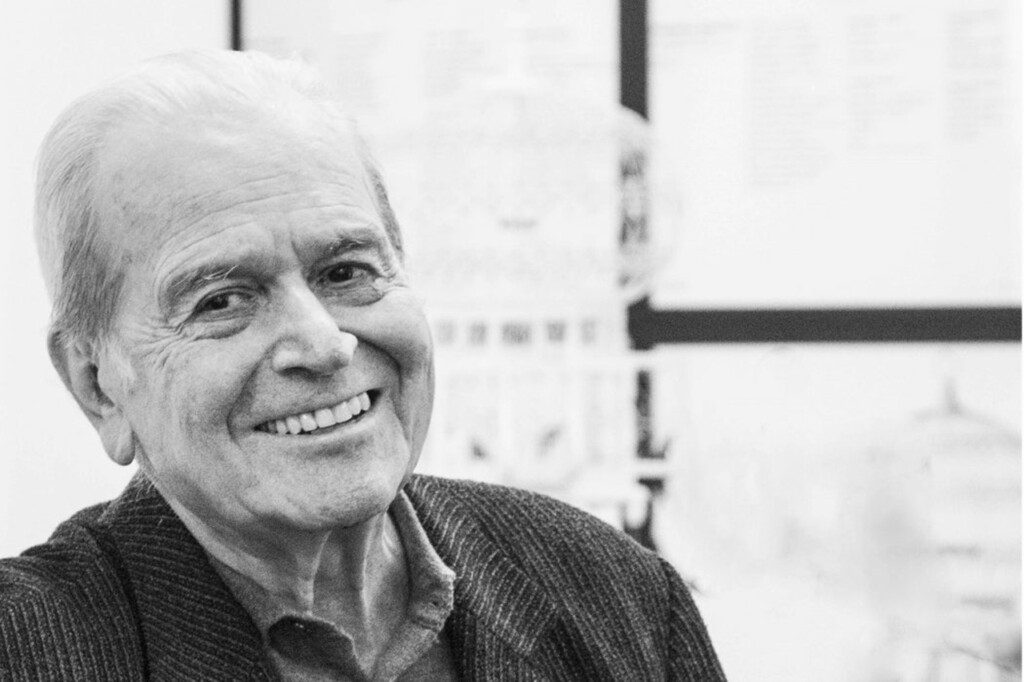
There is a particular cruelty in being proven right by the wrong people. Balestrini spent decades insisting that language was not a transparent medium but a field of force, a system already saturated with the violence of whoever controlled its syntax. He built machines to demonstrate this, let algorithms scatter meaning across the page, produced novels that could not be owned because they could not be fixed. He was, in the vocabulary of the 1960s and 1970s, a radical. What he could not have fully anticipated was that the logic he wielded as critique would become, fifty years later, the operating principle of an entire civilization.
The platforms that now organize most human communication do exactly what Balestrini did, minus the political intention and minus the discomfort. They recombine, they fragment, they generate content at a scale no single human consciousness could produce or absorb. The difference is not technical. It is directional. When Balestrini fed newspaper headlines and found poetry and political slogans into the Olivetti Elea 9003 in 1961 to produce Tape Mark I, he was exposing the arbitrariness of authoritative language, showing that the voice of power was itself a collage pretending to be a revelation. When a content farm or a large language model does the same today, it is not exposing anything. It is simply filling space, and the filling of space is itself the point, because attention held is attention monetized.
Walter Benjamin, writing in 1936 in “The Work of Art in the Age of Mechanical Reproduction,” worried about what happened to the aura of an artwork when it could be infinitely copied. Balestrini answered that question by making the absence of aura the artwork itself. What he did not, could not, foresee was that Benjamin’s anxiety would eventually become quaint, because the destruction of aura would stop being a philosophical provocation and become a business model. Guy Debord argued in “The Society of the Spectacle” in 1967 that lived experience was being replaced by its representation, that authentic social life had withdrawn into an accumulation of spectacles. Balestrini was working in parallel with that diagnosis, using recombinant form to short-circuit the spectacle’s syntax. But the spectacle, it turns out, is extraordinarily good at metabolizing its critics. It absorbed Dadaism. It absorbed situationism. It absorbed the entire avant-garde tradition, repackaged it as aesthetic brand identity, and sold it back.
What makes Balestrini’s project resistant, if anything does, is not the method but the refusal embedded in the method. Tristano in its 1966 form, and again in its infinite 2007 iterations published by DeriveApprodi, does not offer the reader a comfortable randomness. It offers them a text that insists on being read as a text, that carries the weight of political violence, of the militant body, of the wounded specific, even as its structure denies them the stability of a single authoritative version. The fragmentation is not decorative. It is the content. In the age of the feed, fragmentation is the container, and what is contained is almost always nothing that asks anything of you. Balestrini’s fragmentation asked everything: it asked you to reassemble, to hold contradiction, to resist the consolation of narrative closure. The algorithm asks only that you scroll.
The question that his body of work leaves open is genuinely unanswerable, and it deserves to remain that way. If the formal strategies of the avant-garde, including procedural generation, combinatorial logic, and the dismantling of authorial voice, have been thoroughly adopted by the systems of power they were designed to destabilize, then the question is not whether Balestrini was prescient. He was. The question is whether a critique that gets absorbed by what it critiques was ever really a critique at all, or whether it was always also a rehearsal, a proof of concept, a gift to the future that the future would spend in ways its giver could neither authorize nor forgive.
🌀 Language, Power, and the Italian Avant-Garde
Nanni Balestrini stands at the intersection of experimental literature, political radicalism, and the deconstruction of language as a tool of power. These related articles explore the intellectual and literary landscape that shaped and surrounded his work, from the neo-avant-garde to the broader tradition of critical Italian writing.
Carlo Emilio Gadda: Life and Works
Carlo Emilio Gadda shares with Balestrini a radical approach to language as a site of formal experimentation and ideological tension. His fractured, layered prose anticipated many of the concerns that would drive the Italian neo-avant-garde of the 1960s. Exploring Gadda’s work illuminates the literary tradition from which Balestrini’s provocations emerged.
GO TO THE SELECTION: Carlo Emilio Gadda: Life and Works
Pier Paolo Pasolini and the Roman Suburbs
Pier Paolo Pasolini‘s engagement with the Roman suburbs reflects a shared obsession with the margins of capitalist society and the violence it produces, themes central to Balestrini’s political poetry and prose. Both writers used literature as a weapon against the homogenizing forces of postwar Italian modernity. Their divergent yet parallel paths define a crucial chapter in twentieth-century Italian culture.
GO TO THE SELECTION: Pier Paolo Pasolini and the Roman Suburbs
Umberto Eco: Life and Works
Umberto Eco was a fellow traveler of the Italian neo-avant-garde movement, and his theoretical reflections on the open work and the limits of interpretation directly intersect with Balestrini’s combinatory and aleatory writing practices. Eco provided much of the intellectual scaffolding for understanding experimental literature as a form of structured freedom. Reading Eco alongside Balestrini reveals the deep theoretical roots of postwar Italian literary experimentation.
GO TO THE SELECTION: Umberto Eco: Life and Works
Karl Marx and Alienation: Economic and Philosophical Manuscripts
Karl Marx’s concept of alienation runs through Balestrini’s entire literary and political project, from his collage poems to his militant novels about the Italian factory workers of the 1970s. The dehumanizing logic of industrial capitalism is not merely a backdrop in Balestrini’s work but its central subject and target. This article on Marx’s early manuscripts provides essential philosophical grounding for understanding the stakes of Balestrini’s radical poetics.
GO TO THE SELECTION: Karl Marx and Alienation: Economic and Philosophical Manuscripts
Discover Independent Cinema on Indiecinema
If the spirit of Balestrini’s radical experimentation and political vision resonates with you, Indiecinema streaming is the place to continue that journey through moving images. Discover a curated selection of avant-garde, independent, and politically engaged films that refuse easy answers and challenge the boundaries of form. Stream now and find cinema that thinks as fiercely as it feels.
👉 EXPLORE THE CATALOG: Watch Indie Films in Streaming
A vision curated by a filmmaker, not an algorithm
In this video I explain our vision

