
The Man Who Spoke From a Throne
You are sitting cross-legged on a marble floor in Pune, and the heat is the kind that does not ask permission. Around you, hundreds of bodies press into stillness — Western seekers in orange robes, Indian intellectuals in white kurtas, the odd journalist who came to debunk and stayed longer than intended. The room smells of sandalwood and human attention. At the front, a man in white sits on an elaborately carved wooden chair that functions unmistakably as a throne, and he is looking at nothing in particular with the total confidence of someone who has already seen everything in the room, including the parts of you that you came here specifically to hide. He has not yet spoken. The silence is not peaceful. It is the silence of being read.

When he does speak, the voice arrives slowly, each word placed with the deliberateness of a man who has no intention of competing with your thoughts — who simply waits for them to exhaust themselves and then fills the vacuum. Rajneesh Chandra Mohan Jain, born December 11, 1931, in Kuchwada, a small village in Madhya Pradesh, speaks for hours. He speaks about Heraclitus and Lao Tzu in the same breath, about desire and the futility of suppressing it, about God as a word that has been so abused it might need to be burned entirely before it can be useful again. He does not raise his voice. He does not need to. The peculiar trap of charisma is that it makes you feel, inexplicably, that the message was constructed for you alone, that the hundreds of other bodies dissolved somewhere around the third sentence.
What most histories of Osho fail to account for is the degree to which his formation was not mystical but rigorously academic. He studied philosophy at D.N. Jain College in Jabalpur and later at Sagar University, where he was, by multiple accounts, an exceptionally combative debater — the kind of student who embarrassed professors not through insolence but through precision. His early lectures in the 1960s, delivered across India to audiences of businessmen, farmers, and Congress party workers, were not spiritual retreats. They were polemics. He attacked Mahatma Gandhi’s glorification of poverty with a directness that scandalized audiences who had made Gandhi into a secular saint barely a decade after his assassination. He told Indians that their spiritual pride was a sophisticated form of escapism, that the renunciation they celebrated was a psychological defense dressed in the language of transcendence.
This is the fracture that most people who romanticize or demonize him in equal measure refuse to sit with: the man was a philosopher before he became a guru, and the philosophical instinct never left. It simply learned to wear silk robes and operate from a throne. Friedrich Nietzsche‘s critique of slave morality — the argument laid out across Beyond Good and Evil and The Genealogy of Morality — runs like a buried wire through almost everything Osho said about guilt, religion, and the psychological violence of organized spiritual systems. He never credited this debt cleanly. He absorbed it, metabolized it, and delivered it back to audiences who would never have tolerated Nietzsche but found themselves nodding at the same conclusions wrapped in the language of liberation.
There is something almost clinical in how effectively he understood the Western seeker of the 1970s — a demographic arriving in India spiritually hungry but intellectually defended, suspicious of dogma, allergic to authority yet desperately wanting to submit to something that felt earned. He gave them paradox as permission. He told them their confusion was enlightenment in progress, that the very restlessness that had brought them across continents was itself the teaching. Whether this was profound or masterfully convenient depends entirely on what you needed it to be when you heard it.
I Am Nothing
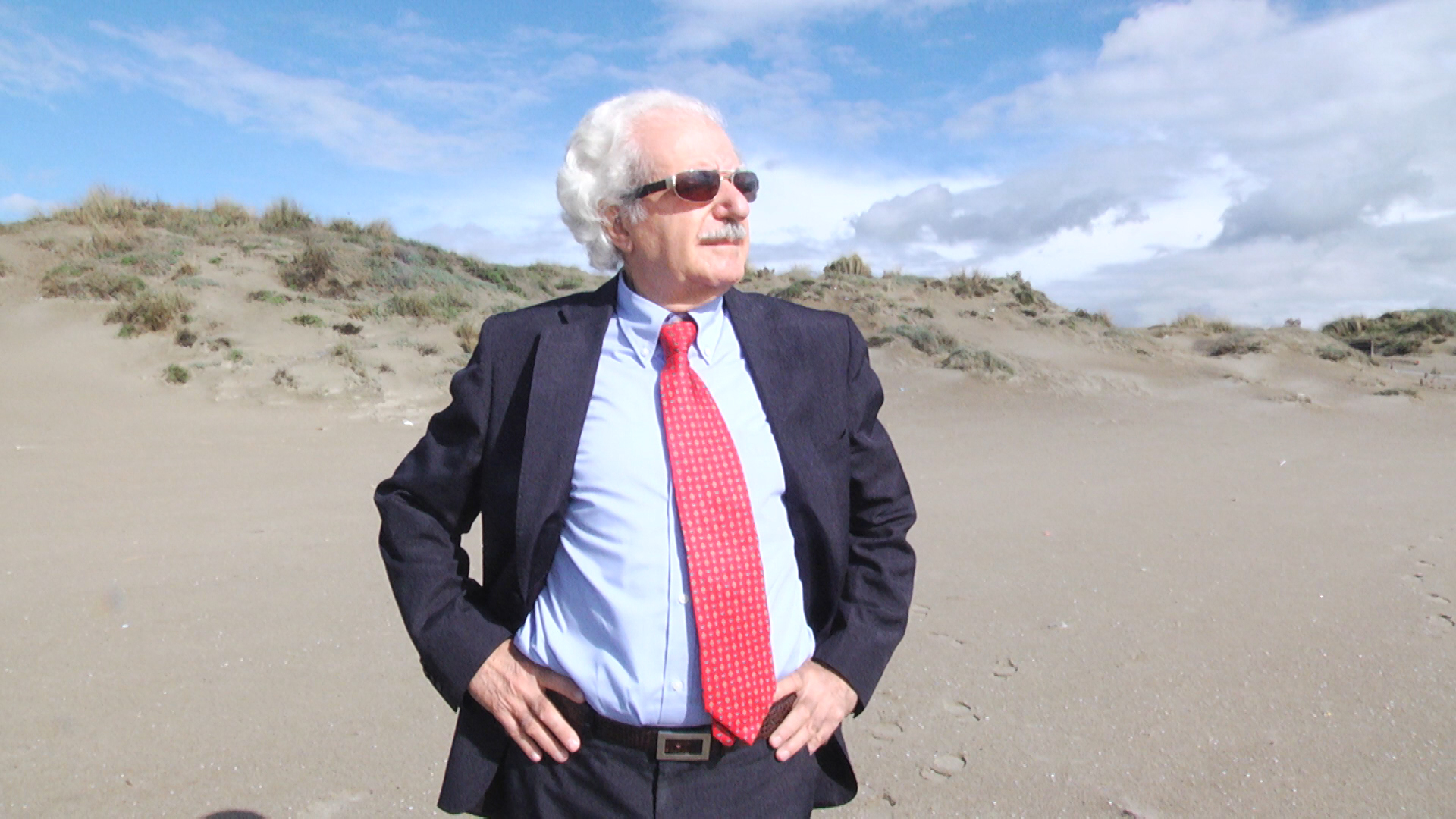
Drama, thriller, by Fabio Del Greco, Italy, 2015.
The story revolves around Vasco, a Roman builder who, at the age of 74, enjoys a life of absolute comfort. His human parable takes a dramatic turn when a mysterious encounter leads him to an ambush. Having survived, but marked by a long coma, Vasco wakes up with a new sensitivity, developing an intimate and poetic bond with nature. This new relationship with the world around him leads him to deeply explore himself, in an internal and external journey. through Italy, the United States and India, in search of a higher meaning and a cure. In parallel, the threat of a planetary cataclysm adds an epic dimension to the story.
I Am Nothing explores universal themes such as time, memory, oblivion and the connection with nature. Fabio Del Greco creates an existential drama full of food for thought. The director skillfully combines different visual materials, mixing archive images with nature photographs and dreamlike visions. This visual experimentation translates into an editing that captures the viewer's attention, guiding him through a cycle of creation and destruction. The sequences that alternate the buildings, Vasco's pride, with Indian landfills and natural landscapes create a hypnotic rhythm, underlining the beauty and fragility of life. Vasco's existential journey is a hymn to transformation and rebirth. The evolution of the protagonist, from unbridled luxury to the rediscovery of purity, represents a powerful metaphor on the meaning of life and the need to reconnect with authentic values. Io sono nulla stands out for its ability to combine introspection and visual experimentation, offering a suggestive and engaging narration. It is a film that invites us to reflect on the human condition, on our relationship with power and nature, and on the possibility of finding ourselves through change. A work that leaves its mark and lends itself to multiple readings.
LANGUAGE: Italian
SUBTITLES: English, Spanish, French, German, Portuguese
Born Into Contradiction
You are eleven years old and your grandfather has just died, and instead of weeping you are asking the village elders why they are performing rituals that even they cannot explain. Not defiance for its own sake — something colder than that, more surgical. A genuine need to watch the mechanism fail under pressure.
Rajneesh Chandra Mohan Jain was born on December 11, 1931, in Kuchwada, a small town in Madhya Pradesh, into a Jain merchant family where renunciation was doctrine and commerce was daily life, and the contradiction between these two things was simply never named. Jainism gave him the vocabulary of non-attachment while the family’s economic existence depended entirely on attachment — to profit, to reputation, to the social architecture of caste and belonging. Most children absorb this kind of structural hypocrisy and carry it forward, unremarked, into adulthood. He did not. What he did instead, from an age when most children are still learning to navigate the desires of adults around them, was to interrogate every inherited framework until it either justified itself or collapsed. It almost always collapsed.
The intellectual ferocity he demonstrated as a young man was not the romanticism of a rebel. It was the precision of someone who had identified that certainty itself is the primary social drug — that what holds communities together is not shared truth but shared refusal to look too closely. Erik Erikson wrote in 1968 in Identity: Youth and Crisis that adolescence is the period in which the self tests its inherited identities against reality and either capitulates or differentiates. What Erikson described as a developmental phase, Rajneesh appeared to have compressed into a permanent method, a standing epistemological challenge he would direct at every structure he encountered for the rest of his life.
His time at D.N. Jain College and later at Saugar University, where he studied philosophy and graduated in 1955, was less an education than an extended argument with the institution of education itself. He was known for being ungovernable inside academic environments not because he lacked discipline but because he had more of it than his professors — he followed ideas to conclusions that institutions are designed to prevent. At Jabalpur, where he later taught at the University of Jabalpur for nine years beginning in 1958, his lectures were events in the literal sense: students reported feeling not taught but destabilized, relieved of positions they had not known they were defending. He was not transmitting a philosophy. He was demonstrating that philosophy, as practiced inside universities, had become a sophisticated form of not-thinking.
This is the part that most biographical accounts soften without realizing they are doing it. The degree in philosophy was not the foundation of his thought — it was the first thing he dismantled after acquiring it. He understood, perhaps from reading Bertrand Russell‘s assault on the pretensions of academic metaphysics or from absorbing the pragmatist critique that William James had leveled at all systems that cannot account for lived experience, that formal philosophical training produces people who are extraordinarily skilled at discussing truth without ever encountering it. The credential gave him the institutional authority to say this to people who would otherwise have dismissed him. He used it precisely once and then set it on fire.
What his early years reveal, if you resist the temptation to read them backward from the commune in Oregon or the rolls of Rolls-Royces, is not the emergence of a guru but the formation of a particular kind of intelligence — one that derived its energy not from building systems but from finding the load-bearing wall in someone else’s and pressing until the structure moved. Whether this constitutes wisdom or a pathology of restlessness is a question his own teachers could never answer, partly because he never gave them time to finish the sentence.

The Professor Who Burned the Classroom
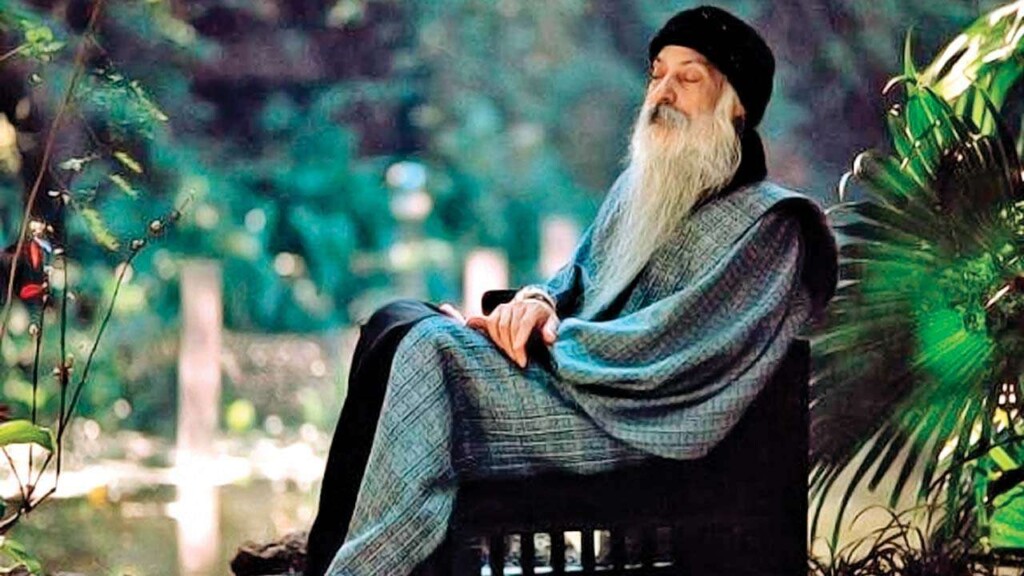
You are sitting in a lecture hall in Jabalpur, sometime in 1963, and the man at the front of the room is not teaching you philosophy — he is dismantling the floor beneath your feet. Rajneesh Chandra Mohan, appointed lecturer and then professor of philosophy at Hitkarini College and later at the University of Jabalpur, had by this point already accumulated a reputation that made university administrators nervous in the particular way that competent institutions become nervous: not because they doubt the man’s intelligence, but because they cannot predict where it will land next.
His lectures were not performances of scholarship. They were acts of demolition carried out with the precision of someone who had read everything and trusted almost none of it. He assigned his students Marx and then told them, in the same breath, that Marxism was a theology wearing the costume of economics — that the promise of a classless future was structurally identical to the promise of heaven, a deferred meaning that justified present suffering without ever arriving. This was not contrarianism for its own sake. It was a diagnosis: that any system which places liberation at the end of a historical process has already made peace with the unfreedom of the present, and that this peace is the system’s actual function, not its failure.
Gandhi presented a different kind of target, and Rajneesh approached it with proportional seriousness. He understood that Gandhi’s hold on the Indian imagination was not merely political but quasi-theological, a mythology of sacrifice and moral purity that had calcified into something almost impossible to question in public. He questioned it in public. He argued that asceticism as a political instrument was a form of manipulation — that the performance of suffering, however sincere, exerts a coercive pressure on others that no honest political philosophy should deploy. The body punished in public becomes a demand. He did not deny Gandhi’s courage. He questioned the architecture of the demand.
What made this more than provocation was a specific idea Rajneesh was developing about the nature of the teacher itself. The Sanskrit term acharya designates not simply an instructor but one whose conduct and presence constitute the teaching — a figure whose life is inseparable from what is transmitted. Rajneesh inverted this deliberately. The acharya, as he practiced the role, was someone whose primary function was to prevent the student from settling into any comfortable certainty, including the certainty that the teacher himself represented. The true teacher, in this conception, is not a source of answers but a sustained disruption of the student’s relationship to questions. Comfort in the classroom was a sign that learning had already stopped.
Organized religion received no softer treatment. He told audiences throughout the early 1960s that the church, the temple, and the mosque shared a single structural purpose: to stand between the individual and whatever genuine experience of the sacred might otherwise occur. Religion as institution was, in his framing, the most sophisticated form of spiritual inoculation ever invented — it gave people just enough of the experience to prevent them from needing the real thing.
By 1966, the arrangement had become untenable for everyone, and Rajneesh resigned his professorship. The official framing was that he wished to pursue his spiritual work independently. The underlying logic was more radical: that the university had ceased to be the site of any genuine inquiry the moment it became an employer, and that institutionalized thought is defined precisely by what it cannot afford to hear said aloud. He had been saying those things aloud for nearly a decade, and the institution had listened with the particular patience of something waiting for the disturbance to stop. When it did not stop, the relationship ended.
What he stepped into afterward was not freedom in any comfortable sense. It was exposure — the condition of a man who has publicly made institutional thought his declared enemy and must now justify that declaration with everything he does next.
Neo-Sannyas and the Machinery of Surrender
You are handed a new name. Someone you have never met looks at you and decides, in the span of a breath, that you are no longer who you were — that the person who walked through the door carrying thirty years of accumulated identity will leave as someone else entirely, dressed in the color of fire, a string of beads around the neck, a Sanskrit syllable where a surname used to be. This is not metaphor. In Bombay in 1970, thousands of people underwent precisely this transaction, and most of them wept with gratitude.
What Rajneesh constructed with the founding of the Neo-Sannyas movement was architecturally paradoxical in a way that his critics consistently misread as hypocrisy and his followers consistently misread as enlightenment. The traditional sannyasin in Hindu culture renounced the world — property, family, desire, social role — and retreated into an austerity that functioned as a kind of spiritual subtraction. Rajneesh inverted the entire structure. His sannyasins kept their jobs, their lovers, their appetites. The robes and the mala and the new name were not symbols of renunciation; they were, he insisted, instruments of awareness. You wear the orange so that you cannot forget, even for a moment, that you are supposedly in the middle of a transformation. The ceremony was designed to make ceremony impossible to ignore, and therefore impossible to sleepwalk through.
This is where the philosophical provocation genuinely bites. Krishnamurti, whose influence on Rajneesh was substantial even when unacknowledged, spent decades arguing that any organized path to liberation was by definition a contradiction — that the moment you join a movement toward freedom, you have accepted a new cage with better interior decorating. Rajneesh knew this argument. He had read it, taught it, quoted it. And yet he built a movement anyway, complete with uniforms and initiation rites and a centralized figure of authority. The question is whether this was intellectual inconsistency or a deliberate wager: that most human beings cannot begin to loosen their grip on structure until they are given a more compelling structure to grip first.
The sociologist Erving Goffman, writing in the early 1960s in Asylums, documented how total institutions reshape identity through precisely these mechanisms — the removal of old markers, the imposition of new ones, the creation of an in-group language and aesthetic that separates the initiated from the outside world. Goffman was describing prisons and psychiatric hospitals, but the machinery is recognizable. What Rajneesh understood, and what makes the Neo-Sannyas experiment genuinely interesting rather than merely culpable, is that he was using the same institutional grammar in the explicit service of its own undoing — or claimed to be. The robe was supposed to burn away the need for the robe. The name was supposed to dissolve the attachment to names. Whether the tool ever successfully dismantled itself is the question the movement never answered cleanly.
What the historical record shows instead is that the ritual persisted long after it was supposed to have served its purpose. By the mid-1970s, the orange wave had become a recognizable global subculture with its own hierarchies, its own economy of prestige, its own martyrdom narratives. The ceremony had not dismantled religiosity; it had simply produced a new religion that was allergic to being called one. This is not unique to Rajneesh. The entire twentieth century is littered with liberation movements that calcified into the structures they set out to dissolve — psychoanalysis becoming an orthodoxy, Zen becoming an aesthetic brand, countercultural refusal becoming a consumer identity. The human appetite for belonging is so ferocious that it will colonize even the idea of leaving everything behind, turn rootlessness into a tribe, make a uniform out of the rejection of uniforms.
What no one in orange asked loudly enough was whether the hunger being fed by the new name was the same hunger that had always been there, simply wearing different colors.
Pune, Tantra, and the Western Hunger
You arrive at the ashram with a backpack, a sunburn, and the vague sense that something in your previous life was performing itself rather than living. You don’t know yet what you’re looking for, only that the word “therapy” has started to feel like a very expensive form of postponement, and that the man whose photograph is everywhere in this compound in Koregaon Park has eyes that seem to refuse your carefully constructed version of yourself.
By 1974, when Rajneesh established the Shree Rajneesh Ashram on the leafy edge of Pune, the Western seekers arriving there were not naive. Many were trained psychologists, academics, artists, and former activists who had passed through encounter groups, had read their Laing and their Marcuse, had marched and theorized and burned out on theory. They came carrying the specific exhaustion of a culture that had tried to liberate itself through politics and then through pharmaceuticals and had found neither route to the interior. What Pune offered was not a retreat from the world but a laboratory designed to make the world’s repressions visible in the body before the mind could explain them away.
The integration of Wilhelm Reich‘s work was not incidental to this project. Reich, whose 1933 Character Analysis argued that neurosis is not merely psychological but armored into musculature itself, had spent his life trying to prove that the body was the site of political domination. His ideas had been systematically discredited and his books actually burned by the FDA in 1956, the same year he died in a Pennsylvania prison. Rajneesh took what institutional psychology had buried and made it the hinge of an entire therapeutic culture. The ashram’s encounter groups, primal therapies, and bodywork sessions were Reich without his sanitarium, Reich without the state’s permission, Reich administered not as cure but as confrontation.
Alongside Reich ran the ghost of George Gurdjieff, whose concept of the “waking sleep” — the idea that ordinary human beings operate as automatons driven by mechanical habit — was translated at Pune into theatrical disruption. Gurdjieff had used music, dance, sudden reversals, and deliberate disorientation to break the trance of personality, what he called in his 1950 publication Beelzebub’s Tales to His Grandson the “terror of the situation.” Rajneesh imported this logic of productive shock, structuring the ashram’s rhythms so that comfort was never quite permitted to solidify. The meditations were physically exhausting, the groups deliberately destabilizing, the darshans — evening encounters with Rajneesh himself — unpredictable in tone.
What Europe was actually carrying when it disembarked in Pune was not spiritual curiosity in any simple sense. The postwar generation had grown up in rebuilt cities whose reconstruction was also a kind of enforced amnesia. Germany had performed its economic miracle over a silence. France had nationalized its collaboration into footnotes. Britain had wrapped its imperial dismantling in a rhetoric of dignified retreat. Survivors had not processed survival — they had simply agreed, collectively, to move forward, and their children had inherited the forward motion without the knowledge of what lay beneath it. What looked like a hunger for enlightenment was partly a hunger for permission to stop moving, to locate the exact body memory where the performance had begun.
This is why the encounter groups at Pune could turn violent, why participants wept for reasons they could not name, why so many wrote afterward that what happened there felt less like spiritual instruction than like surgery performed without the courtesy of anesthesia. The ashram was functioning as a pressure chamber for a grief that had been made socially uninhabitable elsewhere. And Rajneesh, whatever else he was or would become, understood that the West’s spiritual hunger was inseparable from its inability to mourn — that the seeker and the traumatized survivor were, in most of the cases arriving at his door, the same person wearing different clothing.
A vision curated by a filmmaker, not an algorithm
In this video I explain our vision
Oregon and the Collapse of Utopia

You are standing in a dining hall in The Dalles, Oregon, in the autumn of 1984, reaching for a salad bar that has been quietly, methodically contaminated with salmonella typhimurium. You do not know this. You are eating lunch. Seven hundred and fifty-one people in Wasco County will fall ill in the weeks that follow, in what federal investigators will later confirm as the first large-scale bioterrorist attack on American soil — not carried out by a foreign government, not by ideological extremists in the conventional sense, but by the inner circle of a spiritual commune devoted, at least in its stated philosophy, to the dissolution of ego, the rejection of power, and the liberation of the individual from all institutional control.
The land itself had seemed like proof of concept. In 1981, followers of Bhagwan Shree Rajneesh purchased the Big Muddy Ranch, 64,000 acres of high desert in Oregon, and began constructing what they called Rajneeshpuram — a city, legally incorporated, with its own postal address, its own fire department, its own public transportation system, its own airport runway capable of receiving private jets. At its height it housed roughly seven thousand residents. They built it fast, with genuine collective labor and genuine collective belief, and the photographs from those years show faces that are luminous with purpose. That luminosity was real. It does not cancel what came after, and what came after does not cancel it — both things existed simultaneously, which is precisely what makes the collapse so philosophically unbearable.
The woman who orchestrated the poisoning was Ma Anand Sheela, Rajneesh’s personal secretary and the effective administrator of the commune’s internal governance. She was not a peripheral figure acting against the commune’s logic — she was its operational center. And this is the point that tends to get lost in the spectacle of the crime itself: Rajneeshpuram had no functioning accountability structure, because accountability structures were understood, within the commune’s intellectual framework, as relics of the conditioned mind, mechanisms of social repression dressed up as ethics. Rajneesh had spent decades dismantling the moral architecture that conventional society used to govern behavior, arguing in thousands of discourses — compiled across more than six hundred volumes — that guilt, shame, and institutional authority were instruments of spiritual suppression. What he did not build, in their place, was any mechanism for checking the behavior of those closest to him.
The sociologist Max Weber wrote in Wirtschaft und Gesellschaft, published posthumously in 1922, about the routinization of charisma — the process by which the magnetic authority of a single exceptional figure inevitably crystallizes into institutional structure, and how that structure, precisely because it derives its legitimacy from the original charismatic source rather than from transparent rule, becomes extraordinarily vulnerable to abuse. Rajneeshpuram was not an aberration within Weber’s framework. It was a textbook case, accelerated by the commune’s own ideology into something grotesque. The rejection of external authority did not produce freedom from authority — it produced authority that was invisible, uncontested, and answerable to no one except the man sitting in his chair dispensing daily silence.
What the Oregon experiment revealed is that anti-institutional architecture does not eliminate hierarchy. It conceals hierarchy beneath the language of liberation, which makes it more dangerous than the hierarchies it claims to replace, because those at least announce themselves. When Sheela’s group also plotted the assassination of Rajneesh’s personal physician, wiretapped the entire commune including Rajneesh’s own quarters, and attempted to murder the United States Attorney for Oregon, these were not betrayals of the commune’s founding vision — they were its logical extension. Power without accountability does not wait for bad actors to find it. It produces them, selects for them, and then watches them operate behind the vocabulary of awakening.
The Rolls-Royces Were the Point
You are standing in a field in Oregon watching a man in white robes glide past you in a vehicle that costs more than your father earned in a decade, and something in you clenches — not with envy exactly, but with a specific moral nausea that you have been trained since childhood to call righteousness.
That nausea is the subject. Not the car.
Rajneesh accumulated ninety-three Rolls-Royces between 1981 and 1985, and his stated intention was never comfort. The vehicle was chosen because it was the most legible symbol available in American visual culture for the proposition he wanted to make explicit: that the marriage of poverty and holiness is a lie, and a dangerous one. He wanted the discomfort to be impossible to ignore, impossible to aestheticize, impossible to metabolize into the soft admiration people reserve for monks in thin robes walking barefoot through winter. The Rolls-Royce could not be made picturesque. It refused the frame entirely.
His most sustained attack on that frame was directed at Gandhi, and it was vicious in its precision. In several recorded discourses compiled and published under various titles through the Rajneesh Foundation, he argued that Gandhi had turned suffering into a brand, that the loincloth and the spinning wheel were not expressions of solidarity with the poor but a performance of austerity that made the poor feel their deprivation was spiritually dignified rather than politically produced. To aestheticize scarcity, Rajneesh insisted, is to defend it. The saint who renounces wealth does not threaten the system that creates poverty — he sanctifies it by suggesting that the proper response to material injustice is inner detachment rather than structural transformation. Gandhi’s image, he said, gave colonialism’s aftermath a saint to admire instead of a system to dismantle. This is not a comfortable argument. It was not meant to be.
What Western observers consistently misread as hypocrisy — a spiritual teacher hoarding luxury while speaking of liberation — was actually a refusal to participate in the unspoken contract that Western audiences bring to the consumption of Eastern spirituality. That contract reads roughly as follows: we will take your wisdom seriously in proportion to how thoroughly you have renounced the things we secretly wish we could renounce but cannot. The guru must be poor so that the student can feel the teachings cost something without having to pay. Renunciation becomes a currency, and the teacher’s poverty is what purchases the student’s sense of spiritual seriousness. Rajneesh declined to be paid in that currency, which is why the reaction to his wealth felt personal in a way that mere financial scandal never does. He had broken the bargain.
Thorstein Veblen, writing in The Theory of the Leisure Class in 1899, described how abstention from consumption can itself become a status display — what he called conspicuous abstinence — practiced most visibly by those whose social position is secure enough that deprivation becomes a form of distinction. Rajneesh, who had read widely in Western economics and sociology, understood that the spiritual teacher’s poverty operated by precisely this mechanism. The renunciant’s threadbare robe is not the opposite of the Rolls-Royce; it is the same signal sent through a different channel, both announcing a relation to wealth that the audience is meant to register and interpret. He chose to make that register undeniable rather than mystified.
What the ninety-three cars actually produced in the people watching them pass was a confrontation with their own investment in the economy of sacred poverty — the assumption, absorbed so deeply it no longer felt like an assumption, that transcendence must be purchased with deprivation, that the body’s pleasures and the spirit’s depth exist in inverse proportion. That assumption is not ancient wisdom. It has a history, a political function, and a list of people it has served very well for a very long time, none of whom were sitting in the field watching the cars go by.
What Remains When the Scandal Burns Away
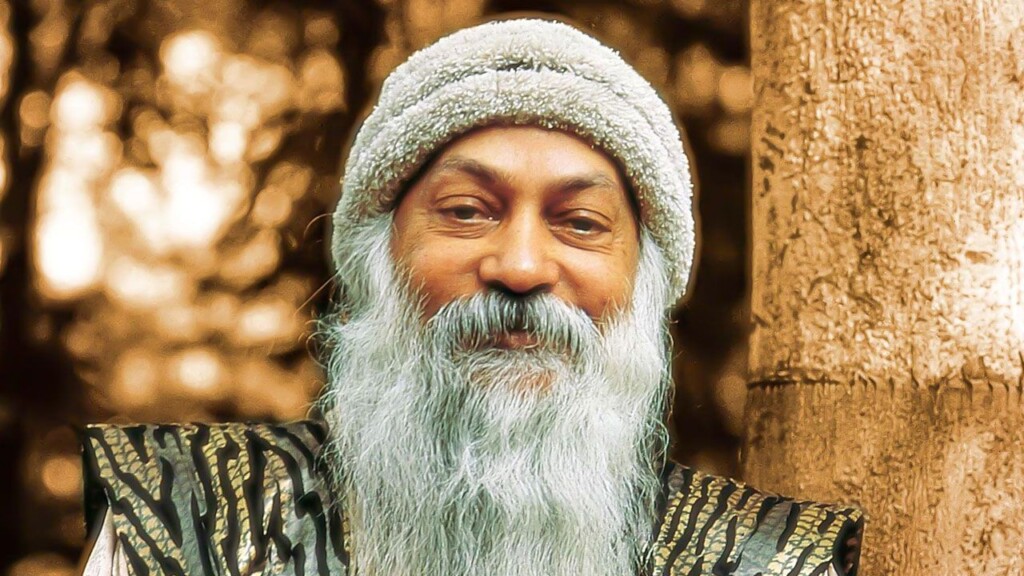
He returned to Pune in 1987, and by 1989 had shed the name Rajneesh entirely, becoming simply Osho — a word borrowed partly from William James‘s term “oceanic,” pointing toward dissolution rather than arrival. The renaming was not merely cosmetic. It was the gesture of a man who had watched his own mythology curdle and was attempting, in the time remaining to him, to strip the enterprise down to whatever could not be taken away by federal indictment or journalistic contempt. He would die in January 1990, officially of heart failure, though his own people claimed the American government had poisoned him during his detention — a claim that cannot be verified and perhaps does not need to be, because what matters is not the manner of his dying but what he left behind once the noise finally stopped.
What remained was, among other things, a body of commentary on the Vigyan Bhairav Tantra, the ancient Shaivite text containing 112 meditation techniques, which Osho had expanded across thousands of pages under the title The Book of Secrets. The original Sanskrit text is perhaps twelve centuries old, attributed to the dialogue between Shiva and Devi, and it operates on the assumption that the ordinary mind is not a vessel for truth but an obstacle to it. Osho’s commentary does not domesticate this assumption — it radicalizes it. He is not interested in making the reader comfortable with the techniques. He is interested in making the reader uncomfortable with themselves, in exposing how thoroughly the act of seeking spiritual experience has already been colonized by the ego doing the seeking. This is philosophically serious. It echoes what Krishnamurti spent sixty years saying, what certain strands of Zen Buddhism encoded in the koan tradition, what Wittgenstein gestured at when he wrote that the difficulty in philosophy is not to find the answer but to recognize the question as the trap.
The unresolved tension, though, never disappeared. It only became more visible as the infrastructure fell away. Because Osho’s central insight — that consciousness cannot be transmitted, cannot be handed down, can only be encountered in a moment of ambush that no institution can organize — existed in permanent contradiction with the fact that he spent his life building institutions to deliver it. The ashram, the robes, the Rolls-Royces, the darshan queues, the hierarchy of initiated disciples: all of it was architecture erected around an insight that the architecture itself kept obscuring. He knew this. He said, explicitly and repeatedly, that the master’s function is to make himself unnecessary, that the guru who creates dependency has failed. And yet the dependency was manufactured with extraordinary efficiency, by a man of extraordinary intelligence, which makes it impossible to dismiss as simple hypocrisy and equally impossible to excuse as innocent paradox.
There is a kind of thinker who sees further than the structures available to them and is therefore doomed to betray their own vision in the act of transmitting it. The vision requires silence and singularity; transmission requires repetition and audience. Paul of Tarsus understood something about the Christ-event that the institution he helped build would spend two millennia misrepresenting. Nietzsche saw the arrival of nihilism with a clarity that the twentieth century would systematically weaponize. The insight and its vehicle are not the same thing, and history tends to remember the vehicle while the insight bleeds out somewhere in the gap between what was meant and what was received.
What Osho leaves behind, then, is not a teaching in any stable sense. It is a series of collisions — between presence and performance, between liberation and control, between a man who genuinely seemed to touch something real and the elaborate theater he built around the touching. The fracture at the center of his life and work was never healed, and that may be precisely what makes it still worth examining.
🕉️ Paths of Awakening: Mystics, Rebels, and Inner Truth
Osho’s life and spiritual thought cannot be fully understood in isolation — it emerges from a vast landscape of seekers, mystics, and thinkers who challenged the boundaries of consciousness, tradition, and self. These related articles trace the threads that connect Osho’s vision to other transformative figures and movements that reshaped how humanity understands the inner life.
Jiddu Krishnamurti: the Man Who Refused to Be God
Jiddu Krishnamurti, like Osho, was a spiritual teacher who radically refused the role of guru and dismantled every form of organized religion and doctrinal authority. His insistence that truth is a pathless land and that liberation cannot be transmitted through any institution places him in direct philosophical dialogue with Osho’s own critique of conditioning and borrowed knowledge. Exploring Krishnamurti’s life and refusals offers a compelling mirror through which Osho’s own provocations become sharper and more meaningful.
GO TO THE SELECTION: Jiddu Krishnamurti: the Man Who Refused to Be God
Ramana Maharshi: Life and Teachings
Ramana Maharshi stands as one of the most revered sages of modern India, and his teaching of self-inquiry — the relentless question ‘Who am I?’ — deeply influenced the spiritual atmosphere in which Osho himself was immersed and responded to. Unlike Osho’s dynamic and discursive style, Maharshi embodied a silent, absorbed presence, yet both pointed toward the same dissolution of the ego-self as the gateway to liberation. Understanding Maharshi’s life and teachings enriches any exploration of the Indian mystical tradition that shaped and surrounded Osho’s thought.
GO TO THE SELECTION: Ramana Maharshi: Life and Teachings
Meister Eckhart: Life and Mystical Philosophy
Meister Eckhart, the medieval Christian mystic, articulated a vision of inner emptiness and unity with the divine that resonates strikingly with many of Osho’s teachings on meditation, ego-dissolution, and the ground of being. Osho himself frequently quoted and celebrated Eckhart as one of the rare Western voices to have touched the same depths that Eastern traditions had long explored. Reading Eckhart alongside Osho reveals that the mystical experience transcends cultural and religious boundaries in ways that remain profoundly radical.
GO TO THE SELECTION: Meister Eckhart: Life and Mystical Philosophy
Buddhism and 3 Documentaries to Understand it
Buddhism and its core teachings on impermanence, non-attachment, and the nature of mind formed one of the most important tributaries flowing into Osho’s eclectic spiritual vision. Osho drew extensively from Buddhist thought, especially Zen, reinterpreting its insights for a modern audience hungry for direct experience rather than doctrine. This documentary introduction to Buddhism provides essential context for understanding how ancient Buddhist wisdom was absorbed, transformed, and transmitted anew through Osho’s own unique voice.
GO TO THE SELECTION: Buddhism and 3 Documentaries to Understand it
Discover the Cinema of Inner Transformation on Indiecinema
If these paths of spiritual inquiry have stirred something in you, Indiecinema invites you to continue the journey through film. On our streaming platform you will find a curated selection of independent and documentary cinema exploring consciousness, mysticism, and the radical search for meaning — stories that dare to ask the questions no algorithm will ever suggest to you.
👉 EXPLORE THE CATALOG: Watch Indie Films in Streaming
A vision curated by a filmmaker, not an algorithm
In this video I explain our vision

