
The Unremarkable Morning That Contains Everything
You wake before the alarm, which means the anxiety got there first. The coffee maker runs its small domestic ritual while you stand in the kitchen in yesterday’s clothes, phone already in hand, scrolling through a feed that delivers the world’s disasters in the same visual register as advertisements for mattresses. Nothing requires a response. Nothing permits indifference. You drink the coffee without tasting it, and somewhere in the space between the first sip and the second, the day has already claimed you — not dramatically, not through any crisis you could name, but through the slow capillary action of habit, obligation, and the low-frequency hum of things left unexamined. By the time you sit down to whatever the morning demands, you have already forgotten that you once read something that was supposed to change how you live.

This is not a failure of intelligence or attention. It is something more structurally interesting: the gap between philosophical understanding and philosophical existence, a fissure so normalized it has become invisible. Pierre Hadot, the French historian of ancient philosophy whose 1981 work Exercices spirituels et philosophie antique reoriented an entire field, spent decades arguing that this gap was not a minor inconvenience but the central catastrophe of how the Western tradition had received, transmitted, and ultimately domesticated its own wisdom. The ancient schools — Stoic, Epicurean, Skeptic, Neoplatonist — did not produce texts for readers. They produced practices for practitioners. The discourse was never the destination; it was the preparation for a transformation that had to happen in the body, in attention, in the quality of a single waking hour.
What Hadot identified with quiet precision was that somewhere between antiquity and modernity, philosophy underwent a decisive mutation. It became a discipline of commentary rather than a discipline of self. The medieval university absorbed ancient texts into a curriculum organized around argument and theological synthesis. The modern research university took this further, producing scholars whose expertise in Epictetus bore no necessary relationship to their capacity for equanimity. A person could write a dissertation on the Stoic doctrine of the present moment while being entirely consumed by resentment about a colleague’s promotion. This is not hypocrisy in any interesting sense. It is simply what happens when a technology of transformation is mistaken for a body of content.
The Stoics called their practices askesis — not in the punishing, self-denying sense the word later acquired, but as a form of deliberate exercise, analogous to athletic training. Marcus Aurelius, writing his Meditations in the second century not for an audience but as a daily instrument of self-correction, returned again and again to the same fundamental moves: the delimitation of what lies within one’s power, the dissolution of imagined futures into the irreducible fact of the present moment, the conscious recollection of one’s place within a larger whole. These were not conclusions he had reached. They were exercises he performed, every morning, against the gravitational pull of exactly the kind of distracted, reactive consciousness that now begins your day with a phone screen.
What makes Hadot’s intervention unsettling rather than merely scholarly is the implication it carries for everyone who has ever found a philosophical idea genuinely true and genuinely useless. You can recognize the validity of the Stoic argument for the complete adequacy of the present moment while living in a sustained condition of anticipatory anxiety. You can understand Epicurus’s demonstration that the fear of death is conceptually incoherent while lying awake at three in the morning in the specific grip of that fear. Understanding has purchased you nothing. And this is not because philosophy failed — it is because you received it as content rather than as exercise, as something to know rather than something to do, repeatedly, against resistance, in the unremarkable minutes that constitute an actual life.
Crazy World

Drama, thriller, by Fabio Del Greco, Italy, 2010.
Luca is poor and works, precariously, as a waiter. He lives a problematic relationship with his girlfriend, and his life is full of doubts. One day Luca meets Chiara, a friend who had studied philosophy with him at university. She has realized her dream of opening a night and is now well-off. Luca leaves everything behind and starts a relationship with Chiara. He manages the nightclub with her and, thanks to the cocaine and call girls sold to politicians, he gets out of his hard economic situation. But Chiara does not manage to obtain the contract for an old furnace, so she blackmails Saverio, a member of the Parliament. Chiara owns a video in which Saverio has sexual intercourse with a transsexual.
LANGUAGE: Italian
SUBTITLES: English, French, Spanish, German, Dutch, Portuguese.
What the Academy Buried
You sit in a lecture hall in 1987, somewhere between Frankfurt and Edinburgh, and a professor recites Stoic propositions with the same vocal register he would use to read a train schedule. The students take notes. Nobody breathes differently. Nobody leaves changed. This is the ritual, and everyone in the room has accepted it as normal — the transmission of ancient thought as archaeological inventory, handled with gloves, never touched with skin.
Pierre Hadot had spent decades inside that same institution, and what he published in 1981 as Exercices spirituels et philosophie antique was not a polite academic correction. It was a forensic report on a burial that most of its attendees had never noticed. His central finding was structurally simple and historically devastating: what the ancient Greeks and Romans called philosophy was not a set of propositions to be debated but a set of practices to be performed — daily, repeatedly, physically — and that somewhere between late antiquity and the modern research university, this core had been extracted and discarded while the shell was preserved and called scholarship.
The machinery of that extraction had identifiable gears. When Christian theology absorbed Greek philosophical frameworks in the patristic period — figures like Origen and Augustine integrating Platonic cosmology into doctrinal architecture — it retained the intellectual content while relocating the transformative practice into liturgical and monastic life. Philosophy became a servant discipline, a supplier of concepts, stripped of its autonomy as a form of living. Then the medieval university inherited a philosophy already gutted, already reduced to commentary and disputation, a sophisticated exercise in textual fidelity with no obligation to the practitioner’s interior life. By the time Kant was writing the Critique of Pure Reason in 1781, the divorce was so complete that it had become invisible — a philosopher was defined by the rigor of his argumentation, not by whether his argumentation had altered the way he woke up each morning.
Hadot’s scholarship showed that for the Epicureans, the Stoics, the Platonists, the Skeptics, and the Cynics, the relationship was inverted. The doctrines existed to support the exercises, not the other way around. Marcus Aurelius did not write the Meditations to communicate a philosophical system; he wrote them as a technology for maintaining psychological stability under imperial pressure, a private notebook of self-correction never intended for publication. Epictetus taught not to produce learned graduates but to produce people who could face death, illness, and humiliation without collapse. The Epicurean communities at Athens functioned less like seminars and more like therapeutic communities organized around specific daily disciplines — dietary simplicity, controlled friendship, the deliberate rehearsal of gratitude. When Hadot examined these figures through the lens of spiritual exercise rather than doctrinal analysis, the texts changed character entirely. Passages that had seemed repetitive or philosophically thin suddenly revealed themselves as intentional repetition — the repetition being the point, training the mind through reiteration the way a musician trains the hand.
The academic response to Hadot was revealing in its discomfort. Some classicists questioned his use of the term “spiritual” as anachronistic, as importing Christian connotations into pagan material. Hadot acknowledged the problem openly in later interviews, including conversations with Arnold Davidson published in 1995, and defended the term anyway on the grounds that no other word captured what he meant: exercises aimed at transforming the self, not at producing knowledge about the self. The objection was technically valid and practically evasive — a discipline protecting its methodology by challenging vocabulary rather than confronting the implication that two thousand years of professional philosophy had been studying the map while insisting the territory did not exist.
What makes this more than an internal academic dispute is what it says about the reader sitting in any chair, in any room, who has ever read Marcus Aurelius and felt something move — then returned the book to the shelf and continued living exactly as before, satisfied that they had understood it.

The Stoic Alarm Clock

You set the alarm for six in the morning not because you want to wake up but because you know, from long experience, that the self which exists at six in the morning is not the same self that made the promise the night before. The earlier self was capable of discipline. The morning self will negotiate. This gap — between intention and execution, between the person who decides and the person who acts — is precisely where ancient philosophy planted its most precise instruments.
Epictetus, a former slave who dictated his teachings from a school in Nicopolis in the late first century, understood something that modern productivity culture has monetized into uselessness: attention is not a natural state. It is an achievement. His concept of prosoche — the sustained, deliberate return of awareness to the present moment and to the operations of one’s own will — was not a meditative practice in any soft sense. It was a continuous interruption of the automatic. Epictetus did not ask his students to feel calmer. He asked them to notice, at every instant, what was genuinely in their power and what was not, and to refuse the emotional grammar that treated the two as equivalent. This is extraordinarily difficult because the entire architecture of ordinary social life is built on that confusion. We suffer over outcomes we cannot control with the same intensity we should reserve for choices we actually own. Prosoche was the practice of breaking that architecture, brick by brick, every hour.
Pierre Hadot, writing in Exercices spirituels et philosophie antique in 1981, was among the first modern scholars to insist that this was not a philosophical position to be evaluated for its logical coherence. It was a technology of perception, and it needed to be practiced the way a musician practices scales — not to understand music theoretically but to change what the hands do without thinking. The Stoic did not argue their way into a different relationship with loss or fear. They trained themselves into it, through repetition so consistent that the transformation eventually operated below the level of conscious effort.
Marcus Aurelius wrote the Meditations — never intended for publication, a document addressed entirely to himself — as hypomnemata, personal memoranda for daily recalibration. He had read the Stoic doctrine many times over. He did not need to be convinced. What he needed was to be reminded, at a granular level, before each day produced its inevitable provocations. The entries read less like philosophy and more like warmup drills: return to the principle, test it against what just happened, correct the deviation, prepare for tomorrow. A Roman emperor, commanding the largest military apparatus in the world, sitting down each night to ask himself whether he behaved like a rational animal today. The repetition is not evidence of failure. It is the method.
The Pythagorean communities of the sixth and fifth centuries BCE formalized this even further with an evening examination in which the practitioner reviewed the entire preceding day three times — first recalling the sequence of events, then asking where one had failed, then imagining how one should have acted. This is not self-punishment. It is rehearsal in the opposite direction: using memory as a practice ground for future behavior, bending the past into a resource for rewiring response patterns before they become fixed character. Aristotle would later build his entire ethics on the concept of hexis — the durable disposition formed by repeated action — because he understood that virtue is not a conclusion one arrives at but a groove one carves into oneself over thousands of small repetitions.
What this reveals is that the ancient schools operated closer to a gymnasium than a seminar room. The philosopher was not primarily a producer of arguments but a trainer of human animals who had been deformed by habit, fear, and the ambient noise of social convention, and who needed, above everything else, not better ideas but better practices.
How Modernity Manufactured the Spectator-Self
You are reading this sentence from a distance. Not a physical one — you are close enough to the page, close enough to the screen — but a distance that has been built into the very act of reading, into the very posture your mind assumes when it encounters an idea. You receive the thought. You evaluate it. You do not, by default, expect it to change how you move through the world before noon tomorrow. That gap between knowing and inhabiting is not a personal failure. It was manufactured.
The universities that emerged in Bologna, Paris, and Oxford between the eleventh and thirteenth centuries were not neutral containers for inquiry. They were institutional instruments shaped by a theological imperative: the project of making Christian doctrine intellectually defensible against the recovered logic of Aristotle. Philosophy entered those walls already subordinated. It was granted a home on the condition that it serve a master. The trivium and quadrivium organized knowledge into transmissible content, into material that could be taught, examined, certified, and ranked. What could not be examined could not, by that logic, truly count as knowledge. The inner transformation that the Stoics had called askesis, the daily exercise by which Marcus Aurelius rehearsed his own mortality in the pre-dawn hours of his campaigns, was not gradeable. It left no manuscript. It produced no disputatio. The universities did not ban it. They simply had no room for it in their architecture.
What replaced it was something more tractable: commentary. The medieval university ran on the exegesis of authoritative texts, and the philosopher’s role crystallized into that of the interpreter who stands before a body of doctrine and renders it more precise, more organized, more defensible. Peter Abelard’s Sic et Non, compiled around 1120, is a perfect artifact of this shift — a catalogue of contradictions drawn from patristic sources, arranged not to destabilize faith but to make it more rigorous through dialectical resolution. The brilliance of the method is undeniable. So is its structural consequence: the knower is now definitively outside the known. The self who reads, argues, and concludes is not the object of the inquiry. Truth is something you locate, not something you become.
This produced a figure that modernity would eventually celebrate as its epistemic ideal: the detached observer. René Descartes in 1637 did not invent the separation of subject from world — he formalized it, gave it a method, made it heroic. The cogito requires a self that stands apart from everything it thinks, including its own body, its habits, its history. Knowing becomes a kind of withdrawal. The more successfully you bracket your desires, your fears, your embeddedness in time and place, the more reliable your knowledge. By the eighteenth century this figure had migrated from philosophy into science, into law, into economics, into every domain that wanted to claim rigor. Objectivity became synonymous with distance. Involvement became synonymous with bias.
The irony that no one was asked to examine is that this detached subject is not a neutral epistemic achievement. It is a specific historical product with a specific social function. When knowledge is defined as something a credentialed professional produces and a passive audience receives, when understanding is certified by institutions rather than demonstrated through the texture of a life, then philosophy becomes a spectator sport with unusually demanding reading lists. You can spend four years studying ethics without once being asked whether your behavior changed. You can write a dissertation on courage without the question of your own cowardice ever entering the room. The structure does not demand that it enter. The structure was designed, across eight centuries of slow institutional sediment, to keep it out.
The person sitting with Epictetus in the second century and the person sitting with a commentary on Epictetus in a seminar room today are not engaged in the same activity with different tools. They are engaged in categorically different relationships to what a human life is for.
The Therapist Who Charges by the Hour
You are sitting in a waiting room with pale walls and a small succulent on the windowsill, filling out a form that asks you to rate your anxiety on a scale from one to ten. The form has a logo at the top. There is a font choice involved. Someone, somewhere, made a branding decision about the color of the paper on which you are being asked to quantify your suffering, and that decision was made with a target demographic in mind.
What has happened between the Stoic gymnasium and this waiting room is not simply a loss of depth — it is a structural transformation in what inner work is understood to be for. Pierre Hadot spent decades excavating the ancient conception of philosophy as askesis, a set of daily practices — the examination of conscience, the meditation on death, the deliberate redirection of attention toward the present moment — that were never designed to make the practitioner more functional within their existing life. They were designed to rupture the existing life entirely, to reorient the self toward what Marcus Aurelius, in the Meditations written between 170 and 180 CE, called the commanding faculty, the hegemonikon, the part of the human being capable of consenting to or refusing the impressions the world imposes. The goal was not symptom reduction. The goal was a different relationship to existence itself.
Contemporary wellness culture has performed a remarkably clean extraction. It has taken the formal shell of these practices — breathwork, journaling, the deliberate pause before reacting, the cultivation of gratitude — and evacuated them of their cosmological ambition, their metaphysical weight, their demand for total reorientation. What remains is a toolkit. What is sold is not transformation but optimization. The language shifted somewhere around the mid-2000s, when the neuroscience of mindfulness began providing secular legitimacy for practices whose original context was frankly religious, and when the corporate world discovered that a calmer employee is a more productive employee. Jon Kabat-Zinn had developed Mindfulness-Based Stress Reduction at the University of Massachusetts Medical School as early as 1979, and his clinical intentions were serious and carefully bounded. What followed him culturally was not.
The philosopher Charles Taylor, writing in Sources of the Self in 1989, identified what he called the malaise of immanence — the peculiar modern condition in which transcendence has been foreclosed not through argument but through institutional exhaustion, leaving individuals with a hunger for meaning that the market is structurally obligated to answer without ever fully satisfying. The wellness industry is the most lucrative response to that hunger in human history, projected to exceed four trillion dollars globally by the mid-2020s. It does not resolve the malaise. It monetizes it. It offers the feeling of progress without requiring the one thing ancient spiritual exercise actually demanded: the renunciation of the self’s current story about itself.
This is the distinction that tends to disappear in translation. Epictetus, who had been a slave and taught in Nicopolis in the early second century CE, was not offering his students coping strategies. He was asking them to perform what he called the discipline of desire — a radical surgery on what they allowed themselves to want in the first place. The Discourses are full of a severity that no wellness app would survive as a product. He tells his students that they are currently sick people who do not know they are sick, which is a worse condition than knowing you are sick and seeking treatment. The waiting room with the succulent and the branded intake form presupposes that you know you are sick, that you have correctly identified the problem, that professional guidance will now incrementally reduce the distance between who you are and who you want to be. Epictetus presupposes the opposite: that the very framework through which you have understood yourself — your goals, your relationships, your sense of what constitutes a good outcome — is the illness, and that no amount of managed self-improvement will reach it.
A vision curated by a filmmaker, not an algorithm
In this video I explain our vision
Physics as Lived Vertigo

You are standing in a room you have furnished across years — the specific coffee cup, the window angle you chose, the books arranged in an order that means something only to you — and for one unguarded moment you see it from outside, from some impossible elevation, and the room is simply a box containing objects with no particular claim on the universe. The moment passes. You re-enter. But something in you noticed the exit.
Pierre Hadot spent decades arguing that this vertigo was not an accident but a method. The Stoics called it the view from above, and Marcus Aurelius practiced it with a discipline that bordered on the obsessive — in the Meditations, written between roughly 170 and 180 CE, he returns again and again to the exercise of perceiving human affairs from the vantage of astronomical distance, watching cities burn and emperors rot with identical indifference. Hadot’s critical move, developed at length in The Inner Citadel published in 1992, was to insist that this was not poetic decoration or rhetorical humility. It was a structured cognitive exercise, practiced repeatedly, intended to produce a specific and verifiable alteration in the practitioner’s perceptual relationship to the self. The aim was not calm. The aim was disorientation so thorough that the ordinary ego — the one convinced of its unique suffering, its unique importance, its unique claim on time — could no longer sustain its own fiction.
The exercise had technical precision. You were to situate yourself within cosmic time, not as metaphor but as literal imaginative placement: to feel the four billion years before your birth and the equivalent duration after your death as actual coordinates surrounding the present moment. Plato had laid the groundwork in the Timaeus, describing the cosmos as a living organism with its own rational soul, and the Stoics inherited this framework and made it physiologically urgent — the pneuma, the tensile fire-breath threading through all things, connected your body to the body of the whole. To practice the view from above was to temporarily suspend the membrane that maintained the illusion of discrete selfhood. Marcus used the word “amputation” for the mistake of believing oneself separate from the rational whole of nature. The practice was the surgical reversal of that amputation.
What makes this irrecoverable for contemporary wellness culture is precisely what makes it effective: it does not end in affirmation. Every modern appropriation of Stoic thought — and there are hundreds, filling airport bookshops with their clean sans-serif spines — quietly amputates the cosmology and keeps only the emotional regulation. The cognitive science of reframing, the therapeutic invitation to “zoom out,” the mindfulness instruction to observe thoughts without attachment: all of these borrow the formal gesture while removing the load-bearing terror. Because the genuine exercise, followed to its actual conclusion, does not produce a calmer, more productive self. It produces a self that has briefly experienced its own nonexistence as a cosmic fact, and that experience is not integrable into a performance review or a morning routine.
The philosopher Blaise Pascal, writing in the 1650s, described the same abyss from a different angle: “the eternal silence of these infinite spaces frightens me.” He was not frightened because he lacked coping skills. He was frightened because he was honest about what genuine cosmic situating actually delivers. Hadot would not have disagreed with the diagnosis, only with the retreat. The Stoic practice was to enter that silence deliberately, repeatedly, until the ego’s insistence on its own significance began to feel like a local and somewhat provincial habit — one you could set down and pick up, rather than a metaphysical fact requiring constant defense.
What the exercise produces, at the far end of sustained practice, is not a person who cares less. It is a person whose caring has shifted its center of gravity somewhere that is no longer exactly inside the self, and who has no very tidy language for where it has gone instead.
What Foucault Heard and Couldn’t Keep
You are standing in a lecture hall in 1982, somewhere in the hiss and fluorescence of late academic Paris, and a man who has spent his career mapping power as an architecture of bodies is suddenly talking about the ancient Greeks as if they might rescue him from something he cannot name directly.
Michel Foucault‘s pivot in his final years was not a minor adjustment. The second and third volumes of The History of Sexuality, published in 1984 — the year of his death — represent a near-total displacement of his earlier concerns. Where he had once traced how sexuality became an instrument of surveillance and normalization, he now asked how ancient subjects cultivated a relationship to themselves through what he called “care of the self,” a practice he located in Greco-Roman texts from Plato through Marcus Aurelius. The shift disturbed his readers. It looked, to some, like retreat. To others, it looked like the beginning of something that death interrupted.
Pierre Hadot read those volumes carefully and responded with a critique that was generous in tone and devastating in implication. He acknowledged the seriousness of Foucault’s engagement with ancient sources, the real philological labor involved. But he argued that Foucault had fundamentally misread the direction of ancient self-cultivation. For Foucault, the practices of the self were primarily aesthetic — a way of styling one’s existence, of making life into a work of art. This framing, Hadot insisted, reversed the actual movement of ancient philosophy. The Stoics, the Epicureans, the Neoplatonists — none of them were interested in beautifying the individual self. They were interested in dissolving its grip. The exercises Hadot had spent decades documenting were not techniques for self-enhancement but techniques for self-transcendence, practices designed to loosen the ego’s claim on experience and reorient attention toward something larger: the whole, the cosmos, the shared rational structure of existence. Seneca writing his letters to Lucilius was not crafting a personal aesthetic. He was rehearsing his own disappearance into something impersonal.
What makes this disagreement more than an academic border dispute is what each position demands of the person who holds it. Foucault’s aesthetics of existence is ultimately affirmative of the individual as author. The self becomes the site of creative work, a kind of living sculpture. There is something genuinely appealing about this, and it is not accidental that it resonated in an intellectual culture already saturated with post-structuralist suspicion of universal norms. If there is no universal human nature, then self-creation under one’s own aesthetic authority becomes a form of freedom. But Hadot saw in this a subtle re-inscription of exactly the ego-centeredness that ancient practice was designed to overcome. The Stoic meditating on the view from above — imagining their city, their country, their continent shrinking to a point as perspective expands — was not refining a personal style. They were practicing the cognitive and emotional labor of becoming less particular, less insistently themselves.
The fault line here is not merely philosophical. It maps onto a recognizable human experience: the difference between working on yourself to become more fully yourself, and working on yourself to stop needing yourself to be anything in particular. These are not the same project. They produce different people, or rather, the second one gradually dismantles the stable category of “person” that the first one treats as a destination. Foucault — ill, brilliant, racing to finish books he suspected would be his last — may have needed the first project more urgently than the second. There is something poignant in a thinker who spent years showing how the subject is constituted by power turning, at the end, to ancient texts in search of a subject worth inhabiting. Whether he found one, or whether the texts were quietly trying to tell him that inhabiting is precisely the wrong verb,
The Practice That Has No Practitioner
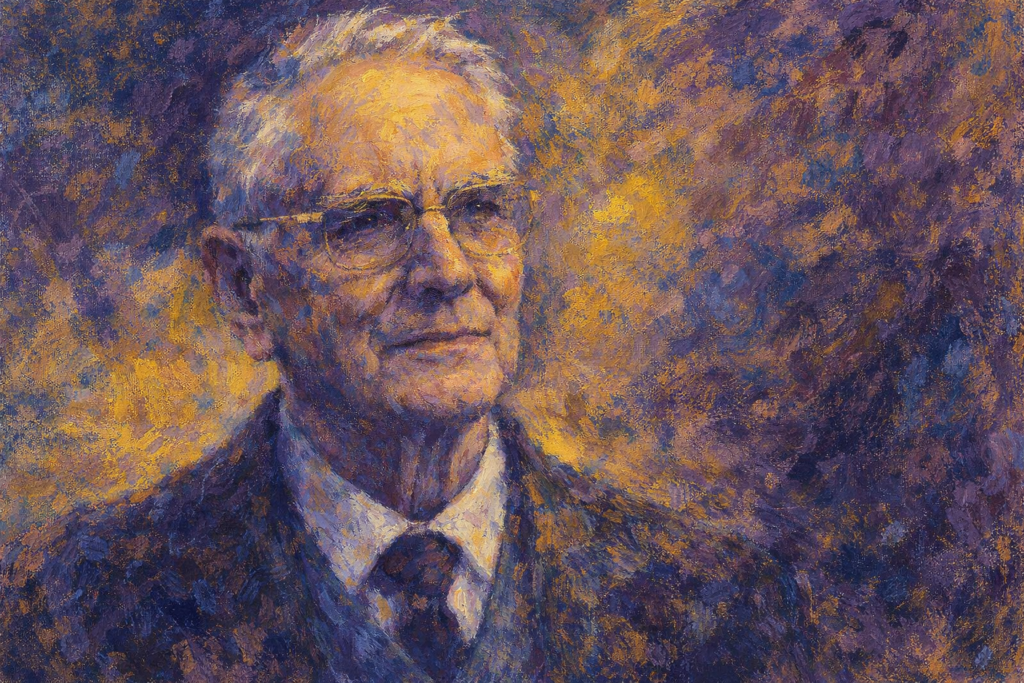
You have been doing the exercises correctly. Every morning, the journal open, the Stoic reminder written in clean lines: what is in my control, what is not. The breath before the difficult meeting. The deliberate pause before reacting. You have been consistent, even disciplined, and you have noticed results — a certain steadiness, a reduction in what used to destabilize you. What you have built, quietly and with some pride, is a more resilient self. This is precisely the problem.
Pierre Hadot spent decades reconstructing the ancient philosophical schools not as systems of thought but as communities of practice, and what he recovered — most fully in Philosophy as a Way of Life (1995) and The Inner Citadel (1992) — was not a self-improvement technology but something almost structurally opposite. The Stoic prosoche, the attention to the present moment, was not designed to make Marcus Aurelius a more effective emperor. The Platonic exercises in detachment were not tools for performing better under pressure. These practices were instruments of dissolution — carefully engineered methods for loosening the grip of what the ancients called the individual soul’s conviction that it was the center and measure of things.
Marcus, in the Meditations, returns obsessively to a single gesture: the widening of the frame until the self becomes difficult to locate. He places his own decisions against the lifespan of empires, his own grief against geological time, his own name against the list of emperors who were famous and are now entirely forgotten. This is not humility as a social performance. It is a technical operation aimed at making the boundary between “Marcus” and “the whole” increasingly hard to maintain. Epictetus, born a slave around 50 CE and teaching from a position of radical material dispossession, understood this with unusual clarity: the exercises were not about constructing inner freedom as a possession but about recognizing that the self doing the possessing was the primary illusion under examination.
The Platonic tradition runs even deeper into this dissolution. In the Symposium, the ascent described by Diotima does not end with a wiser Socrates — it ends with Socrates rendered irrelevant, the individual philosopher absorbed into the contemplation of Beauty itself, which is by definition impersonal and has no use for the person who reaches it. Plotinus, writing in the third century CE, described the highest state of the Enneads as a moment in which the distinction between the one who sees and what is seen simply collapses. There is no enlightened individual at the summit of the Neoplatonic ladder. The ladder removes the climber.
This is what the contemporary wellness industry, and much of what calls itself modern Stoicism, has systematically reversed. The exercises have been extracted from their cosmological context — from the Stoic doctrine of the logos that runs through all things, from the Platonic metaphysics that made the individual soul a fragment straining toward reunion — and reinserted into a framework where the self is not the problem to be dissolved but the project to be completed. Journaling practices, cognitive reframing, negative visualization as a rehearsal for resilience: all of these retain the surface behavior of ancient exercise while inverting its direction entirely. They are building the very structure that Epictetus and Plotinus were systematically dismantling.
Hadot was not naive about this danger. He noted that the history of philosophy is largely the history of ancient exercises being converted into theoretical doctrines, stripped of their existential function, made safe for institutions. What he perhaps did not fully reckon with is that the second conversion — from doctrine back into practice — does not restore the original. It produces something new and almost perfectly inverted: a practice in service of the self’s expansion, dressed in the vocabulary of the self’s transcendence, convincing precisely because it uses the right words while quietly ensuring that the one who needs to disappear remains, fortified and intact, at the center.
🧭 Philosophy as Practice: Paths Toward Inner Transformation
Pierre Hadot‘s vision of philosophy as a way of life resonates deeply with a tradition that sees thought not as abstract theory but as lived spiritual exercise. The articles below trace kindred paths through Stoicism, mysticism, existential searching, and the ancient art of self-cultivation, illuminating the same core question Hadot posed: how does one truly live one’s philosophy?
The Hero’s Journey as Inner Transformation
The Hero’s Journey as Inner Transformation explores how mythic narrative structures map onto the individual’s psychological and spiritual growth, echoing Hadot’s insistence that philosophy must be lived rather than merely studied. The hero’s trials are reframed here as stages of self-overcoming, where each threshold crossed corresponds to a deeper appropriation of one’s own existence. This inner reading of the monomyth connects directly to ancient practices of the self that Hadot recovered from Stoic and Platonic sources.
GO TO THE SELECTION: The Hero’s Journey as Inner Transformation
Epicurus: Life and Philosophy
Epicurus: Life and Philosophy presents one of the ancient schools Hadot most admired as a living laboratory of philosophical practice, where the Garden community embodied a collective spiritual exercise oriented toward tranquility and friendship. Epicurean philosophy was never a set of doctrines to be memorized but a daily regimen of attention, gratitude, and the disciplined reduction of unnecessary desire. Reading Epicurus alongside Hadot reveals how ancient schools functioned as genuine communities of transformation rather than mere academies.
GO TO THE SELECTION: Epicurus: Life and Philosophy
Viktor Frankl: Life and Logotherapy
Viktor Frankl: Life and Logotherapy offers a modern parallel to Hadot’s project by grounding philosophical practice in the irreducible human need to find meaning even amid suffering. Frankl's logotherapy, born in the extremity of the concentration camps, insists that the attitude one takes toward unavoidable fate is itself a form of spiritual exercise, a resonance that Hadot would have recognized in the Stoic practice of amor fati. Both thinkers restore to philosophy its ancient therapeutic vocation, placing the examined life at the center of human healing.
GO TO THE SELECTION: Viktor Frankl: Life and Logotherapy
Meister Eckhart: Life and Mystical Philosophy
Meister Eckhart: Life and Mystical Philosophy illuminates the Christian contemplative tradition’s own version of philosophy as transformative practice, where detachment, inner silence, and the union of the soul with the divine ground constitute an entire way of being rather than a speculative system. Eckhart’s Gelassenheit, the letting-go of the self, mirrors the Stoic and Platonic exercises Hadot described as the philosophical life’s essential movement. Exploring Eckhart alongside Hadot reveals how spiritual exercises cut across confessional boundaries, forming a common grammar of inner work.
GO TO THE SELECTION: Meister Eckhart: Life and Mystical Philosophy
Discover Films That Ask the Same Questions Philosophy Poses
If these philosophical reflections on how to live have stirred something in you, Indiecinema’s streaming catalog offers films that pursue the same questions through image and story. From meditative documentaries to visionary independent features, Indiecinema curates cinema that treats the screen as its own form of spiritual exercise. Explore the catalog and let film become, like philosophy, a way of life.
👉 EXPLORE THE CATALOG: Watch Indie Films in Streaming
A vision curated by a filmmaker, not an algorithm
In this video I explain our vision

