
The Weight of a Name You Did Not Choose
You are standing at the edge of a room you did not choose, surrounded by people who love you in a language you never asked to learn. It might be a kitchen that smells of something slow-cooked and ancestral, or a funeral where you are expected to grieve in a particular posture, at a particular volume, according to rules nobody wrote down but everyone enforces. You feel it before you understand it — that pressure behind the sternum, that specific weight that is not quite guilt and not quite obligation but contains both, the way granite contains the history of every force that shaped it. Someone calls your name from across the room and you respond not because you want to but because that name was decided before you arrived, and somewhere along the way you agreed to carry it without ever being asked.

This is where Grazia Deledda begins. Not in abstraction, not in literary theory, but in that exact pressure — the kind that has no single source and therefore no single exit. Her Sardinia is not a picturesque island of folklore and light. It is a place where the dead do not stay dead because the living will not permit it, where family is not a unit of comfort but an architecture of binding obligations, where the self is less a discovery than an inheritance, and inheritance arrives already mortgaged. When she published Canne al vento in 1913, the novel that would anchor her Nobel Prize in Literature in 1926 — the first awarded to an Italian woman — she was not writing regional fiction in the quaint, ethnographic sense that her contemporaries often reduced her to. She was excavating something structurally human: the way a name, a bloodline, a history of wrongdoing or righteousness passed down through generations can constitute the entire architecture of a person’s possibilities.
The novel turns on a debt. Not a financial one, though it wears that disguise for a while. The Pintor sisters — Ester, Ruth, and Noemi — are three women living in diminished circumstances in the village of Ortacesus, descendants of a once-proud family whose decline has left them with the ruins of prestige and none of its material support. Their lives orbit around the memory of what their family was, which is another way of saying they orbit around what they can never fully become. Into this constellation arrives Efix, a servant man who has carried for years a secret that implicates him in the death of the sisters’ father. His entire existence has become a sustained act of expiation — labor as penance, devotion as the only grammar available to a man who cannot speak his guilt aloud.
Erik Erikson, writing in Identity: Youth and Crisis in 1968, described what he called the “identity crisis” as a fundamental rupture between who a person is told they must be and who they feel themselves to be in the unscripted moments of their own interior life. But Deledda’s characters do not experience this rupture as crisis in any modern therapeutic sense. They experience it as weather — something one does not argue with, something that simply determines the conditions under which everything else must occur. The self is not a project here. It is a given, and the given is heavy.
What the novel understands, and what takes time to feel rather than comprehend, is that duty in this world is not a moral position one adopts. It is a physical fact of existence, as inarguable as the wind that gives the novel its title — the reed-bending, constant, invisible force that moves everything and originates nowhere you can point. You bend or you break, and even bending is not freedom. It is simply a more elegant form of submission to something that was already there when you opened your eyes.
Eve of the Irises
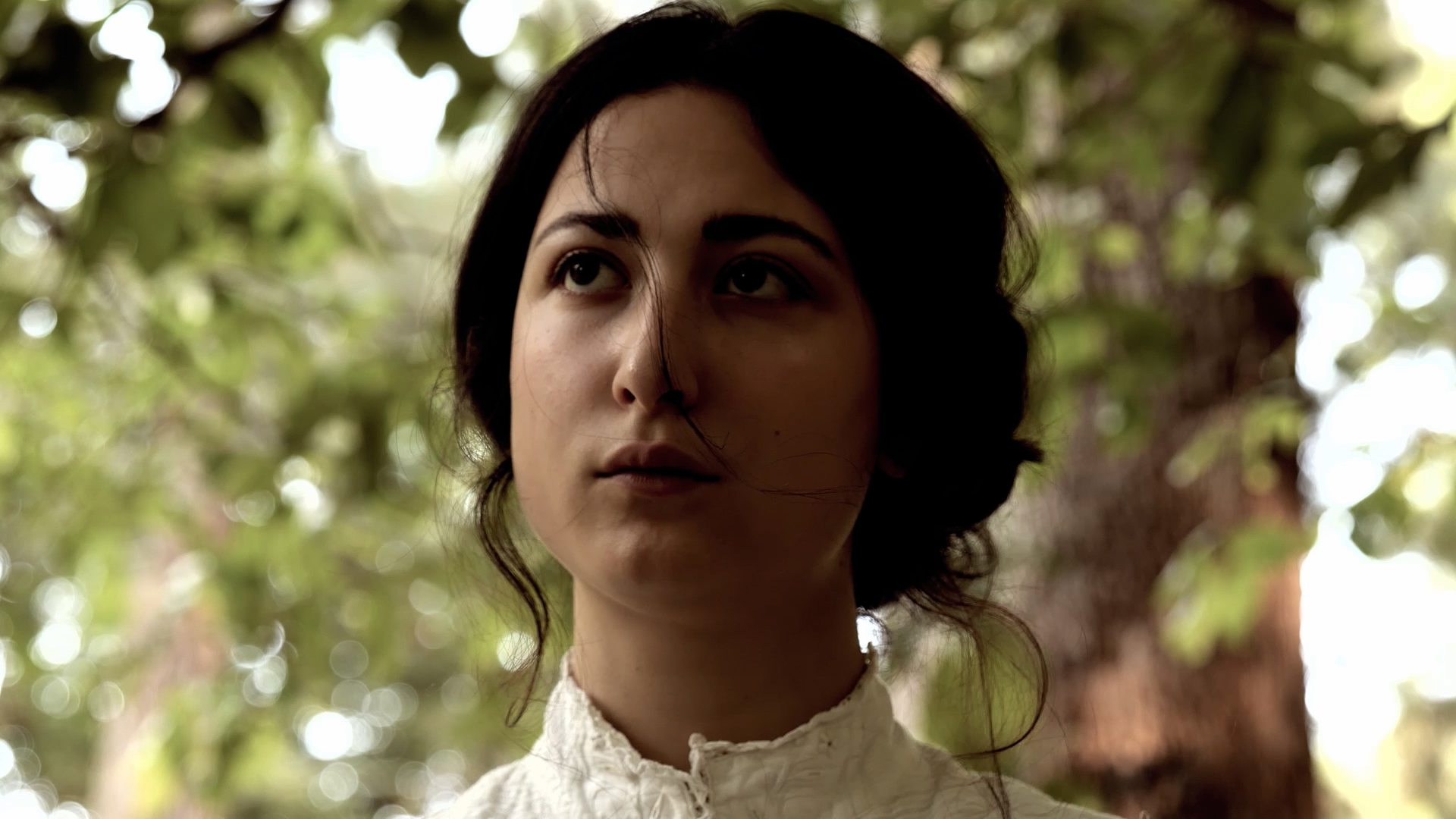
Documentary, by Isabel Russinova, Rodolfo Martinelli Carraresi, Italy, 2026
Eva of the Irises is a historical biographical docu-film about the scientist Eva Mameli Calvino, a botanist and pioneer of environmentalism in Italy, mother of the writer Italo, born in Sassari in 1886. The film, based on a multidisciplinary approach that combines several genres—such as theatre, documentary, cinema, and research—moves between memories, reflections on life, as well as the goals and missions the scholar still wished to achieve.
The multifaceted artistic sensibility of Isabel Russinova is expressed across many fields, from writing to acting, from directing to civic engagement, and finds one of its highest expressions in the docu-film Eva of the Irises, created with Rodolfo Martinelli Carraresi. The film blends scientific rigor and poetic refinement to portray the extraordinary figure of the botanist Eva Mameli Calvino, mother of Italo Calvino but above all an independent protagonist of 20th-century scientific culture. It is told through a combination of archival materials, interviews, and evocative staging capable of elegantly and profoundly conveying her intense human and professional story.
LANGUAGE: Italian
SUBTITLES: English, Spanish, French, Portuguese
Sardinia as a Living Character, Not a Backdrop
You know the feeling of a place that refuses to let you leave — not because it holds you with affection but because it has decided, long before you were born, what kind of person you will become. The roads out are real roads, paved and walkable, but something in the air makes them feel provisional, like corridors in a dream that extend without arriving anywhere. That is precisely the sensation Deledda builds from the first pages of Reeds in the Wind, and it is not a literary device. It is a precise anthropological report on a specific geography at a specific historical moment.
Sardinia at the turn of the twentieth century was not picturesque poverty. It was structural isolation codified over centuries. When Deledda published the novel in 1913, the island’s interior — the Barbagia, the Nuoro plateau, the villages clinging to the flanks of the Gennargentu — was operating on a social logic largely unchanged since the Spanish domination of the sixteenth century. Feudal land tenure had been formally abolished by the Piedmontese edicts of 1836 and 1840, but the abolition of communal grazing rights, the so-called “ademprivi,” had catastrophically dislocated the pastoral economy without replacing it with anything viable. By 1901, internal Sardinian provinces registered among the lowest per-capita incomes in the unified Italian state, with illiteracy rates in rural Nuoro exceeding seventy percent. The demographic pressure on subsistence was not metaphor — it was the daily arithmetic of survival.
Into this arithmetic Deledda places the Pintor sisters and their servant Efix, and the landscape around them is not decorative. Gaston Bachelard, in The Poetics of Space published in 1958, argued that inhabited space is never neutral, that the house, the corner, the threshold carry what he called a “topophilic” charge — they are soaked through with the psychic life of those who dwell in them, and they in turn shape the psychic possibilities of anyone who enters. But Bachelard was writing about interior spaces, intimate geometries. Deledda does something more violent. She extends this logic outward, to wind and reed and the dry riverbeds of the Campidano plain, and she makes the exterior landscape perform the same imprisoning function as Bachelard’s cellar — the space that holds the unconscious, that stores what cannot be spoken.
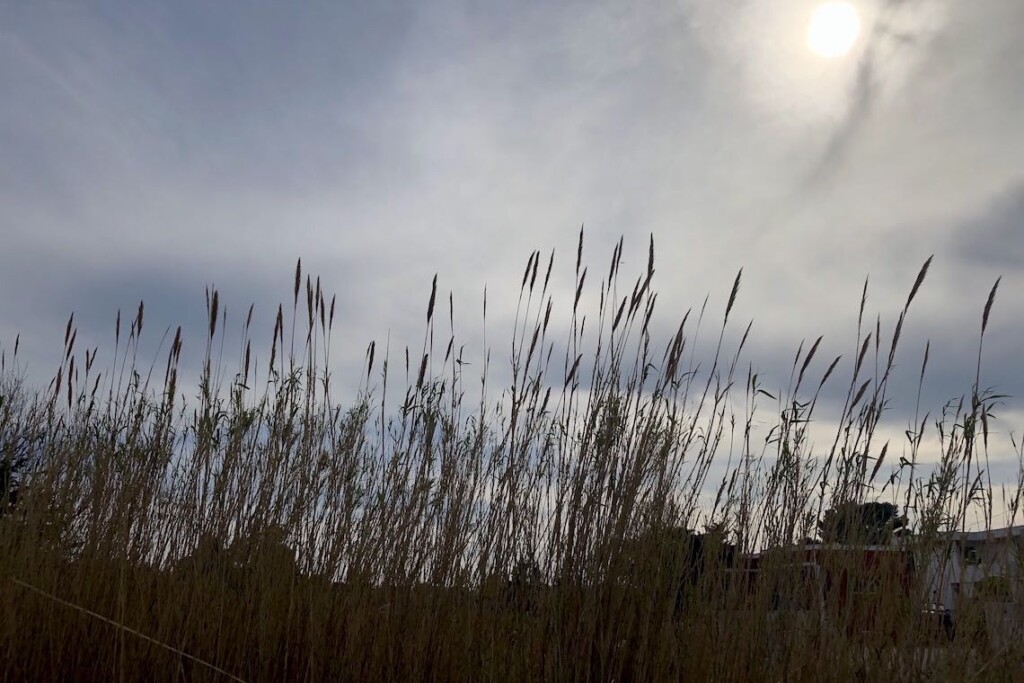
The wind in the title is not weather. It is a social force with a memory. A man walks through the reed beds and the reeds bend, and in that bending is registered every debt his family has accumulated across three generations, every unpaid obligation, every boundary crossed without restitution. The Sardinian concept of “onore” — honor — was not a personal virtue in this context. It was a collective ledger, maintained by the entire community and enforced by a landscape that seemed to watch. Antonio Pigliaru, the Sardinian jurist and philosopher, analyzed this in his 1959 study of the bandit code, La vendetta barbaricina come ordinamento giuridico, arguing that in the absence of effective state structures, communities developed autonomous legal systems grounded in reciprocity and territorial belonging. The land was not backdrop. The land was jurisdiction.
Efix moves through this jurisdiction with the posture of someone who understands, at a cellular level, that the ground beneath him is not indifferent. He works the land of the Pintor family not merely for economic reasons but as a form of expiation, as if the soil itself were a confessional that required physical labor instead of words. There is a scene — a man returning at dusk across a field he has tended for decades, pausing at the edge of a dried stream, looking back at the house where the windows have gone dark — and the stillness in that moment is not peaceful. It is the stillness of a verdict already rendered, a sentence already begun, the landscape having already decided what this life will cost and when it will be collected.

The Pintor Sisters and the Mythology of Decline
You have seen this family before. Not in a book, not on a screen — in a dining room where the silverware was polished to a shine that had nothing to do with appetite and everything to do with proof. The tablecloth ironed with a severity that bordered on theology. The conversation carefully steered away from any mention of what things cost, what had been sold, what no longer existed except as a name repeated with a frequency that betrayed its fragility. You have sat at that table, or you have watched someone sit there, upright in a chair that was worth more than the bank account behind it.
The Pintor sisters of Grazia Deledda‘s novel are that family. Not a literary invention but a recognition. Ester and Ruth inhabit a house that functions as a reliquary — a container for what has ceased to exist materially but must be maintained symbolically at any price. The elder sister guards the family’s dignity with the ferocity of someone who understands, without ever saying so aloud, that dignity is the last currency they possess. The younger drifts toward desire, toward the living world, toward a man who represents not love so much as escape from the suffocating weight of a legacy that produces nothing except obligation.
Pierre Bourdieu spent years documenting exactly this mechanism, naming it with the clinical precision of someone who had watched it destroy real people. In his analysis of how social fields operate, he identified symbolic capital as the accumulated honor, prestige, and recognition a family or individual commands — entirely real in its social effects, entirely divorced from material production. The crucial and brutal point Bourdieu made, developed across his major works including Distinction in 1979 and The Logic of Practice, is that symbolic capital does not simply fade when economic capital vanishes. It persists, it demands maintenance, it extracts labor. The family that has lost its land must work harder to behave as though it has not. The performance of belonging to a certain order costs more, not less, as the material foundation crumbles beneath it.
There is a woman in a decaying estate who dresses each morning with the same elaborate care she has practiced for forty years, moving through rooms where the furniture stands under dustcovers, where the garden has grown beyond any management, where the staff has reduced to a single loyal remnant who stays not for wages but for a loyalty that is itself a form of imprisonment. She is not performing for an audience. The audience has gone. She is performing for the structure itself, for the symbolic architecture that requires her to remain who she has always been or watch the entire edifice collapse into the admission that everything was already over before she was born into it. This is not madness. This is rational behavior within a system that has made the maintenance of appearances its only remaining economy.
Deledda’s Sardinia understood this economy viscerally because it was organized around it. The island’s social fabric, particularly in the internal communities far from the commercial ports, ran on reputation, inheritance, and the weight of ancestral gesture. A family name was not merely identification — it was a contract with the dead, a set of behavioral obligations that extended forward into every living generation whether or not those generations had chosen to sign. Ruth Pintor’s transgression is not simply moral. It is structural. She breaks a contract she never wrote and cannot renegotiate.
What makes the sisters devastating rather than merely tragic is that neither is wrong within her own logic. Ester defends a world that was real and is now symbolic. Ruth pursues a world that is real but carries the cost of destroying the symbol. Between them stands the entire modern drama of what it means to inherit something that cannot be spent, only honored — or abandoned.
Efix’s Servitude and the Theology of Guilt
There is a man who wakes before dawn every day to work land that does not belong to him, and he does this not because he is forced to, not because hunger drives him, but because something inside him requires it. He tends the fields, repairs the fences, carries water, and bends his back under the sun with a devotion that looks, from the outside, indistinguishable from love. But it is not love. It is debt. The land is the body of his guilt, and every hour of labor is a payment he makes toward a sum he has never calculated and cannot calculate, because the accounting was never meant to balance.
This is Efix, the servant of Grazie Deledda’s Reeds in the Wind, and the theological precision with which she constructs him is devastating. He is guilty of a real act — a death, a sin that the novel withholds and then delivers like a stone — and he has organized his entire existence around atoning for it. Not through confession, not through restitution, but through the slow erosion of the self via labor. He works the Pintor sisters’ ruined estate not as a servant in any contractual sense, but as a penitent. The land is his altar.
Dostoevsky understood this architecture of the soul with an intimacy that bordered on clinical. In his notes and letters, particularly those surrounding the composition of The Brothers Karamazov, he returned obsessively to the idea that voluntary suffering is not a pathology but a theology — that certain people do not want their guilt removed but want it honored, want it to be real enough to justify the weight they carry. The suffering becomes proof of the sin, and the sin becomes proof of the self. To be forgiven too easily would be a kind of annihilation.
Simone Weil, writing in her notebooks collected in Gravity and Grace, described affliction as something qualitatively different from ordinary pain. Affliction, she argued, attacks the soul at its root, destroying the capacity to imagine being loved. But she also observed, with her characteristic willingness to follow a thought into discomfort, that affliction can become a mode of attention — that the person who suffers completely sometimes reaches a clarity unavailable to those who remain comfortable. Efix does not suffer carelessly. He suffers with an almost liturgical precision, and in doing so he watches the world around him with a quality of attention that the Pintor sisters, anchored in their aristocratic illusions, simply cannot access.
There is something here that goes beyond one man in one Sardinian landscape. You have seen this person. Perhaps you have been this person. The one who volunteers for the hardest tasks, who refuses rest, who cannot accept comfort without immediately finding a way to offset it with effort. The labor is not productivity. The labor is architecture — a structure built to house an unbearable feeling and give it the dignity of form.
In a cell where a man systematically dismantles his own body through relentless, joyless physical routine, completing movements in the dark with the same expression a priest wears at mass, the pattern is unmistakable. He is not training. He is confessing. The distinction matters enormously and is never made visible to anyone around him, because to make it visible would require admitting that the suffering is chosen, and to admit that is to confront why.
The deeper question Deledda embeds in Efix is not whether guilt can be expiated through work, but whether certain people need their suffering to have meaning more than they need it to end. Because meaning, unlike relief, gives you something to hold. And some wounds are the only solid thing left.
Reeds in the Wind: The Physics of Bending Without Breaking
There is a woman who has learned to make herself necessary. She wakes before everyone else, knows where every object in the house is kept, absorbs the friction of every relationship around her before it becomes open conflict. She does not bend dramatically in the storm — she simply never stops bending, so gradually and continuously that no one notices the bending anymore, least of all herself. This is what survival looks like when it has been practiced long enough to become invisible.
Grazia Deledda‘s central metaphor in the novel is not about trees, which can resist, but about reeds — plants with no structural rigidity, no capacity to stand against force. The reed survives because it has surrendered the idea of standing upright as a value. It has reorganized its entire biology around the principle of yielding. And Deledda offers this not as a triumph but as a fact, with the cool neutrality of someone who has watched it happen too many times to mistake it for freedom.
Judith Butler, in Precarious Life published in 2004, argues that vulnerability is not a weakness to be overcome but a fundamental condition of being a body in a world shared with others. What Deledda understood a century earlier, from inside the lived reality Butler would later theorize, is that some people are assigned vulnerability as their permanent social position — not as a passing condition but as an identity, a role, an expectation. In early twentieth-century Sardinia, where the legal status of women was structurally closer to that of minors than to full citizens, bending was not a choice among alternatives. It was the grammar of survival, and like all grammar, it eventually became invisible as grammar — it became simply the way sentences were made.
The Pintor sisters in the novel do not choose flexibility. They inherit a ruined name, a collapsed estate, the accumulated debts of a patriarchal lineage that spent itself into dust. What remains for them is the art of making themselves essential to others, of weaving themselves so deeply into the fabric of whoever still has resources and standing that their disappearance would cost something. This is the strategy Lia von Koch describes when she studies female poverty not as deprivation of things but as deprivation of the right to take up space — to be an inconvenience, to demand, to fail without consequence.
A woman moves through a large estate, not her own, adjusting her presence constantly to what each room requires of her. She is brilliant at this. She knows exactly how much intelligence to show and when to conceal it, how to make a decision feel like someone else’s idea, how to be the solution to a problem before anyone has named the problem aloud. She survives. She endures. She becomes, in time, genuinely indispensable. And in becoming indispensable she has made herself into infrastructure — present everywhere, noticed nowhere, credited for nothing, impossible to remove but impossible also to actually see.
Butler also writes, in Frames of War from 2009, about the conditions under which a life becomes grievable — recognized as something that, if lost, would constitute a loss. The reeds that bend in the wind are not grievable lives. They are useful lives, functional lives, lives organized around their capacity to absorb pressure. Their value is entirely relational, entirely instrumental. The moment they stop bending — the moment they crack, or refuse, or go rigid with exhaustion — they become not tragic but simply inconvenient.
Deledda knew this topology from the inside. She was Sardinian, female, and writing at the precise historical moment when the Italian state had formalized the legal nonexistence of women in civic life. The reed metaphor is not a consolation offered to women who survive. It is a diagnosis of what surviving has required them to become.
A vision curated by a filmmaker, not an algorithm
In this video I explain our vision
Deledda’s Nobel and the Politics of Recognition

There is a particular kind of visibility that functions like a glass case in a museum: you are displayed, illuminated, admired, and completely unable to move. When the Swedish Academy awarded Grazia Deledda the Nobel Prize in Literature in 1926, the citation praised her for “her idealistically inspired writings which with plastic clarity picture the life on her native island and with depth and sympathy deal with human problems in general.” Read it again slowly. The life on her native island. The phrase does the work of containment before the sentence even reaches universality. She was recognized precisely as what Italian literary culture had always dismissed her as being: a woman from somewhere else, somewhere ancient and untranslatable, somewhere that could be consumed as atmosphere.
Edward Said‘s argument in Orientalism, published in 1978, operates at the scale of empires and continents, but its mechanism is disturbingly portable. The Orient he describes is not a geography but a projection, a set of fantasies that the dominant culture requires in order to define itself by contrast — timeless where Europe is historical, passionate where the West is rational, mythic where modernity is secular. What Said called the “battery of desires, repressions, investments, and projections” that construct the colonized object applies with uncomfortable precision to how Sardinia functioned in the Italian cultural imagination, and how Deledda herself was processed by the very recognition that was supposed to honor her. Internal Orientalism — the exoticization of peripheral cultures within a single nation-state — operates by the same logic, only with less geographic distance and more plausible deniability.
Italian critics had spent decades either ignoring Deledda or filing her under folklore. Benedetto Croce, the towering arbiter of Italian literary taste in the early twentieth century, delivered his verdict with the kind of elegant condescension that only the supremely confident can manage: he acknowledged her narrative instinct while denying her any real artistic intelligence, as if the stories had somehow written themselves through her rather than being crafted by her. The implication was consistent — she was a conduit for primitive material, not a thinking author who shaped it. When Stockholm disagreed, the response from Rome and Milan was not revision but repositioning. The Nobel did not make Deledda Italian in any meaningful critical sense. It made her internationally Sardinian, which is a different thing entirely, and in some ways a more permanent cage.
What Stockholm saw in Reeds in the Wind and her broader body of work was universal myth — the struggle between duty and desire, the weight of ancestral guilt, the individual crushed and redeemed by forces larger than any single life. What Italian criticism had seen was local color. The difference is not in the text. The text did not change between 1913, when the novel appeared, and 1926, when the prize arrived. What changed was the institutional frame, and with it the question of who had the authority to say what the work meant. This is precisely Said’s point: meaning is not extracted from a text, it is assigned by a reading institution that carries its own investments. Stockholm’s investment was in the universal; Rome’s investment was in the provincial. Deledda’s Sardinia served both projects without being asked.
The particular cruelty of this double reading is that it leaves the recognized writer without a stable ground to stand on. To be seen and misread simultaneously is not a minor discomfort. It is a specific epistemic condition, one that Frantz Fanon described at the level of the body in Black Skin, White Masks — the experience of being made into a symbol that has nothing to do with what you actually are. Deledda won the prize. She also became the prize, the trophy of a European institution’s appetite for the mythically peripheral. Whether she understood this, and whether understanding it would have changed anything at all, is a question her silence on the matter refuses to answer.
The Trap of Tradition and Those Who Guard the Cage
There is a particular kind of cruelty that wears the face of love. You have seen it — the aunt who corrects your posture at the table not because she despises you but because she genuinely fears what will happen if you are seen slouching. The neighbor who repeats the village’s verdict on a fallen woman not because she is malicious but because she has paid her own dues to respectability, sacrificed her own desires on the same altar, and cannot now afford to watch someone else refuse the offering. This is the machinery Grazia Deledda understood with the precision of a surgeon and the grief of someone who had lived inside it.
In Reeds in the Wind, the enforcers of the social code are not monsters. That is precisely what makes them so devastating. They are believers. They have so thoroughly absorbed the rules of their Sardinian world — the codes of honor, debt, family obligation, feminine submission — that violating those rules does not feel like disobedience. It feels like annihilation. Hannah Arendt, writing in the wake of a century that had demonstrated how ordinary minds could sustain extraordinary systems of harm, identified the mechanism precisely: the banality is not in the evil itself but in the thoughtlessness, the radical absence of reflection that allows a person to enforce norms they have never once interrogated. The danger, she argued in The Origins of Totalitarianism and later in Eichmann in Jerusalem, is not the ideological fanatic but the administrator, the neighbor, the aunt — the one who simply does what has always been done.
Foucault saw the same structure from a different angle. In Discipline and Punish, published in 1975, he traced how modern communities internalize surveillance so completely that the external authority becomes redundant. The panopticon does not need a guard in every tower. It needs only the possibility of a guard, and the watched will watch themselves, then one another. Sardinian village life in Deledda’s era — and in the novel’s late nineteenth-century setting — operated by this logic without ever requiring its name. The gaze was everywhere because it lived inside the people themselves.
Think of a woman observed through a window — not by police or priests but by her own kin — catalogued, reported, contained. Think of a community that closes around one of its members the way a hand closes around a struggling bird: not to kill it, exactly, but to keep it still, to prevent the embarrassment of flight. There is a scene — a kitchen, a low fire, two women speaking in the clipped language of those who mean much more than they say — where what looks like concern is actually enforcement, where the softest voices carry the hardest verdicts. This is not exceptional behavior. It is the pattern, repeated across cultures, across centuries, with the same grammar of care wielded as control.
Deledda’s Pintor sisters exist inside this mechanism and, crucially, they help sustain it even as it destroys them. They are not simply victims. They are co-administrators of their own cage. The code that diminishes them is also the code they invoke when judging others, and this is where the novel refuses the comfort of easy moral sorting. The believers are the most effective guards precisely because they do not think of themselves as guards at all. They think of themselves as the community itself — its memory, its dignity, its continuity.
What Deledda understood, and what makes the novel unbearable in the best sense, is that tradition does not require villains to survive. It requires only people who love it more than they love themselves, people who have confused the cage for the self so completely that opening the door feels not like freedom but like disappearing entirely.
What the Wind Actually Takes

You bend once, early enough that you do not register the bending as a choice. The wind comes — a parent’s silence, a community’s verdict, a poverty that closes doors before you understand what doors are — and you lean into it because leaning is survival. The reed does not break. Everyone calls this resilience. What no one tells you is that tissue held under sustained pressure reorganizes itself. It does not simply spring back when the wind stops. It has learned a new geometry, and that geometry becomes, over time, the only geometry it knows.
Wilhelm Reich called this character armor, and he meant it with a precision that the metaphor earns. Writing in the 1930s, in “Character Analysis,” he described how chronic muscular tension — the held jaw, the compressed chest, the shoulders drawn inward — is not merely a symptom of psychological defense but its physical instantiation. The body does not store anxiety abstractly. It stores it structurally, in the way it holds itself upright, or fails to. The armor that protects the child becomes the prison of the adult, not because the threat persists but because the body no longer distinguishes between past threat and present safety. It has made adaptation permanent.
Jon Elster, in “Sour Grapes” published in 1983, named the social equivalent of this process adaptive preference formation — the mechanism by which people come to want what is available to them, and to stop wanting what is not. The fox decides the grapes are sour because reaching them has proven impossible. But Elster’s point, sharper than the fable, is that this is not mere rationalization. The preference genuinely shifts. The person genuinely no longer desires the grapes. They have bent toward what the wind allowed and have come to experience that bent position as natural inclination, as character, as self.
There is a man who has spent forty years maintaining a silence inside his own house. Not hostile silence — careful silence, the silence of someone who learned young that speech brings consequences. You watch him at a family table and you understand that he is not withholding. He has simply, across decades, forgotten what he would say if saying were safe. The absence has filled in. What was once a strategy has become a texture.
There is a woman who has structured her entire existence around not needing anything from anyone. She is extraordinarily competent. She is also, in some foundational way, unreachable — not because she refuses connection but because the part of her that would receive it has been so long unused that it no longer functions with any reliability. She does not experience this as loss. She experiences it as strength. Reich would recognize the armor. Elster would recognize the preference that adapted until it became indistinguishable from desire.
Deledda’s reeds bend in a wind that is Sardinian, specific, historical — but the bending itself is universal. What the wind actually takes is not always what you can name in the moment of loss. It takes the capacity to stand without bracing. It takes the reflex of openness before the habit of protection calcifies over it. It takes, sometimes, the ability to know what upright would even feel like, because you bent before you were old enough to have stood fully once.
The question that remains — and it does not resolve cleanly into either tragedy or liberation — is whether seeing the shape of the deformation constitutes any kind of freedom, or whether consciousness of the cage is simply captivity with better lighting, a more articulate suffering, the armor now worn with self-awareness but worn nonetheless, its weight distributed across a mind that understands exactly why it cannot set the thing down.
🌾 Roots, Wind, and the Soul of Literature
Grazia Deledda‘s Reeds in the Wind draws from the deep soil of Sardinian identity, weaving together nature, fate, and human fragility into a timeless narrative. These related articles explore similar themes of landscape, memory, and literary meaning across different traditions and voices.
Calvino’s The Baron in the Trees: Meaning and Analysis
Calvino’s The Baron in the Trees follows a young Sardinian-born Italian nobleman who chooses to live his entire life among the branches, never touching the ground again. Like Deledda, Calvino uses the natural world as a mirror for the human condition, exploring freedom, isolation, and the weight of ancestral duty. This novel resonates deeply with Reeds in the Wind’s meditation on rootedness and escape.
GO TO THE SELECTION: Calvino’s The Baron in the Trees: Meaning and Analysis
Calvino’s Invisible Cities: Meaning and Analysis
Invisible Cities is one of Calvino’s most celebrated works, a dreamlike dialogue between Marco Polo and Kublai Khan in which imaginary cities become metaphors for memory, loss, and desire. The poetic structure and symbolic density of this text invite comparisons with Deledda’s lyrical prose and her use of Sardinian landscapes as emotional and spiritual maps. Both works dissolve the boundary between the real and the mythical.
GO TO THE SELECTION: Calvino’s Invisible Cities: Meaning and Analysis
Thoreau’s Walden: Meaning and Analysis
Thoreau’s Walden is a foundational meditation on solitude, nature, and the search for essential truth in life, written during the author’s voluntary retreat to the woods of Concord. Much like Deledda’s characters who are bound to the land and its unspoken laws, Thoreau sees the natural environment as a teacher of profound moral lessons. The two works, though distant in culture and century, share a reverence for the elemental forces shaping human existence.
GO TO THE SELECTION: Thoreau’s Walden: Meaning and Analysis
Juan Rulfo’s Pedro Páramo: Meaning and Analysis
Juan Rulfo‘s Pedro Páramo is a masterpiece of Latin American literature in which the dead speak and the living are haunted by an inescapable past, set against a decaying rural landscape. Like Reeds in the Wind, this novel explores how the weight of tradition, guilt, and fate imprisons entire communities across generations. Both texts transform their respective regional worlds into universal symbols of human bondage and longing for redemption.
GO TO THE SELECTION: Juan Rulfo’s Pedro Páramo: Meaning and Analysis
Discover More on Indiecinema
If these literary journeys have stirred something in you, Indiecinema streaming is your next destination. Explore a curated selection of independent films that carry the same depth, poetry, and emotional truth found in the works of Deledda, Calvino, and Rulfo. Let the stories continue moving you, frame by frame.
👉 EXPLORE THE CATALOG: Watch Indie Films in Streaming
A vision curated by a filmmaker, not an algorithm
In this video I explain our vision

