
The Threshold No One Names
You are standing in a room full of people who know something you don’t, and the terrible part is not the exclusion — it’s that no one will confirm the room exists. Maybe it was the first week at a new job, when everyone around you seemed to share a private grammar of glances and silences you hadn’t yet learned to read. Maybe it was adolescence itself, that brutal corridor between one self and another, where the body changed faster than the story you told about it and no adult offered anything more useful than embarrassment. You were crossing something. No one named it. The crossing happened anyway.

This is the wound that modernity inflicted most quietly and most thoroughly: not the removal of meaning, but the removal of the container for meaning. The anthropologist Arnold van Gennep, writing in 1909 in his foundational work “Les Rites de Passage,” identified a tripartite structure running beneath every human initiation across recorded cultures — separation, liminality, incorporation. What he was mapping was not superstition but architecture. Cultures that practiced formal initiation weren’t manufacturing drama; they were acknowledging that certain transitions in a human life carry a force that, if left unstructured, does not dissipate. It accumulates.
The liminal phase, the middle term of van Gennep’s structure, is the most dangerous and the most consequential. Victor Turner, extending this work in “The Ritual Process” in 1969, described the liminal subject as “betwixt and between” — stripped of former status, not yet arrived at the new one, suspended in a social and psychological no-man’s-land. Turner’s insight was sociological on the surface but psychologically devastating in its implications: the person in liminality is not simply transitioning. They are, for a period, nobody. The dissolution is real. Cultures that understood this built ritual precisely to hold that dissolution, to give it a name, a duration, a community of witnesses, and an endpoint. The initiate knew they would survive the unbeing because others had survived it before them and were standing on the other side, waiting.
Contemporary Western society dissolved the rite and kept the unbeing. The adolescent still passes through the neurological and hormonal upheaval that brain scientists now understand reshapes the prefrontal cortex well into the mid-twenties — a finding documented extensively in Sarah-Jayne Blakemore’s research on the social brain in adolescence. The person losing their first long relationship still experiences what amounts to a grief structurally identical to bereavement, a dissolution of self that psychologists like Paul Bloom have noted disrupts identity at its deepest registers. The professional who is fired, the parent whose last child leaves, the body that begins its slow negotiation with age — all of these are initiatory events in every functional sense. They impose severance, they enforce liminality, they demand a new self on the other side. The culture offers a therapist, at best. Sometimes a self-help book. Sometimes nothing but the private suspicion that you are handling it badly because it feels this catastrophic.
Carl Jung understood this catastrophe as something more than a social policy failure. In “The Archetypes and the Collective Unconscious,” he described transformation not as a linear progress toward improvement but as a genuine death of a psychic configuration — what he called the dissolution of the persona, that structured presentation of self that allows social functioning but also calcifies over time into a prison the ego mistakes for an identity. When the persona cracks, it does not crack gently. Jung was precise about this: the contents of the unconscious that surge through the fracture are not metaphorical. They arrive as moods that feel like weather, as dreams that refuse to stay in the night, as irrational attractions and terrors that the rational mind cannot account for and therefore tends to pathologize.
What ritual did, in every culture that practiced it with any seriousness, was meet those contents before they arrived without invitation.
Arte
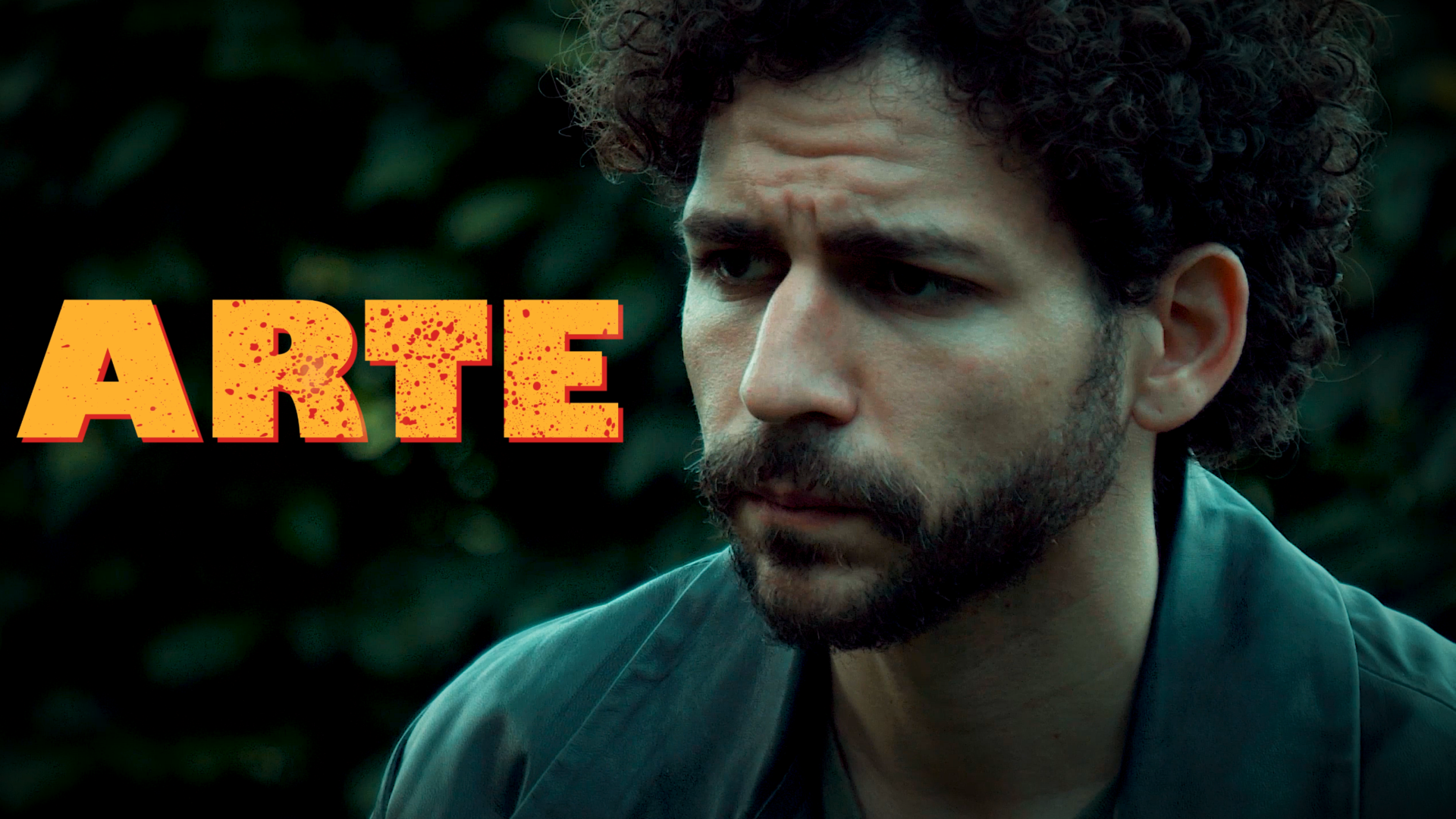
Drama, thriller, by Stefano Scala, Simone Arcidiacono, Italy, 2023.
In a secret and fascinating world, four people meet every week at the mysterious "The Circle" for a gripping game, knowing nothing about each other. However, fate has a different plan for them. As the game progresses, their lives begin to intertwine in unpredictable ways. The boundaries between the game and reality start to blur, revealing buried secrets and creating unthinkable connections. In the heart of "The Circle," the masks fall, and the players' lives will be forever changed.
LANGUAGE: Italian
SUBTITLES: English, Spanish, French, German Portuguese
Jung, 1912, and the Cost of the Descent
You are sitting in a room that has slowly become a cell. Not through any single decision you can name, but through the accumulated logic of becoming respectable, functional, legible to others. The furniture is familiar. The vocabulary you use to describe yourself fits neatly. And then something begins pulling from below the floorboards, and you have no professional category for what is happening to you.
Carl Jung knew this room. By 1912, he had been Freud’s designated heir, the crown prince of a movement still young enough to believe it had discovered something final. The break that followed was not a polite intellectual disagreement. Freud read Jung’s Transformations and Symbols of the Libido and understood immediately that the younger man had stopped treating the unconscious as a reservoir of repressed biography and started treating it as something older, stranger, mythologically structured. The letters between them turned cold, then stopped. What came for Jung afterward was not liberation. It was a six-year descent into material he could barely hold — voices, visions, figures who spoke back when addressed, a confrontation with contents that the clinical language of 1913 had no syntax for.
The Red Book, which Jung refused to publish during his lifetime and which did not reach public hands until 2009, is the record of that descent. It is not a theoretical text. It is closer to what a medieval monk might have produced if the monastery had been replaced by a bourgeois Zurich household and the desert fathers by figures named Philemon and Elijah who appeared unbidden and insisted on being treated as real. Jung spent over sixteen years writing and illuminating it, and the resulting object — handwritten in Gothic script, illustrated with mandalas and serpents and figures that collapse the boundary between psychological image and mythological archetype — is among the most disorienting documents in the history of European thought. What it records is a man systematically dismantling the coherence of his own ego by refusing to look away from what the unconscious was producing.
This is precisely what every serious initiatory structure across cultures has demanded of its candidates. The Eleusinian Mysteries, practiced annually at Eleusis from roughly the fifteenth century BCE until their suppression in 392 CE, required initiates to undergo a symbolic death and encounter with Persephone in the underworld before any reemergence was possible. The Mandaean gnosis demanded ritual immersion not once but repeatedly, each submersion a rehearsal for dissolution. What these structures shared was the insistence that the candidate’s current self was not the endpoint but the obstacle. The initiation did not improve you. It killed the version of you that had arrived.
Western modernity performed a quiet substitution here. It kept the language of growth and transformation while surgically removing the requirement of genuine dissolution. Self-help became the dominant idiom, and self-help is structurally incapable of demanding what initiation demands, because the self that purchases the book is the self that must survive the reading. The ego cannot sponsor its own dismemberment. This is why William James, writing in The Varieties of Religious Experience in 1902, distinguished carefully between what he called the healthy-minded religious temperament and the sick soul — not as a moral judgment but as a phenomenological observation. The sick soul, in James’s taxonomy, is the one whose transformation requires a prior collapse, whose new life is only possible through the death of the first one. James was more honest about this than almost anyone who followed him.
When the DSM pathologizes psychotic episodes, it is doing something diagnostically accurate and simultaneously culturally symptomatic. It is classifying as malfunction the very phenomenology that initiation rituals were designed to contain, structure, and make survivable. Jung’s breakdown was not an interruption of his work. It was the work, conducted without a container, in a culture that had forgotten what containers were for.

What Anthropology Burned Before Psychology Could Claim It
You are somewhere between who you were and who you have not yet become, and there is no ceremony for it. No elder marks your forehead, no threshold separates the old name from the new one, no community waits on the other side to receive you transformed. You simply wake up one morning and the old life no longer fits, and the culture hands you a productivity app and suggests you journal about it.
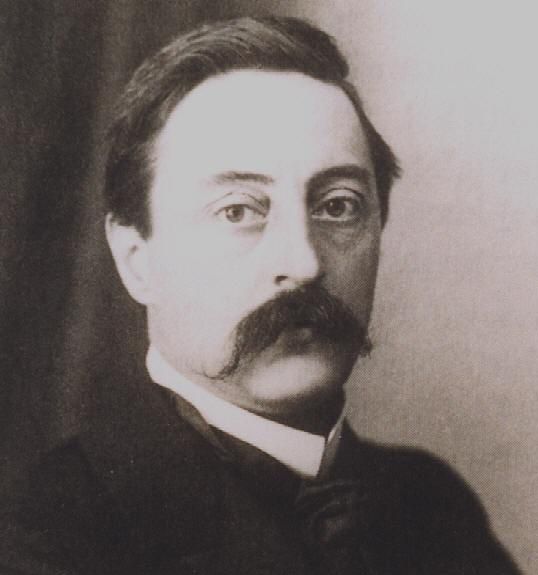
Arnold van Gennep published his “Rites of Passage” in 1909, and what he documented across dozens of pre-modern cultures was not folklore or superstition but a precise structural technology. Every genuine initiation he catalogued moved through three phases with the inevitability of a controlled chemical reaction: separation from the previous social identity, a liminal period of dissolution, and reaggregation into the community as a remade person. The genius was not the symbolism. The genius was that the structure was imposed from outside the individual, which meant the individual could not negotiate their way around the worst of it. The community held the container so the initiate could fall apart inside it safely.
Victor Turner, working in Zambia with the Ndembu people in the 1950s and publishing “The Ritual Process” in 1969, pressed deeper into that middle phase and found something that troubled comfortable sociological categories. The liminal subject — the person suspended between identities — existed in a condition Turner called “betwixt and between,” stripped of rank, name, property, sometimes clothing, sometimes fed only what the earth directly offered. This was not poverty. It was an engineered encounter with the self beneath all social scaffolding, a forced confrontation with what remained when everything performed and accumulated was taken away. Turner noticed that this stripping produced an experience he called “communitas” — a raw, unmediated bond between those undergoing it together, a form of human solidarity that hierarchical social life could never manufacture because hierarchy depended on precisely the distinctions that liminality destroyed.
What the twentieth century did was not ignore this knowledge. It actively built institutions that made it impossible. The consolidation of industrial schooling after 1870 in Europe and North America replaced the village elder with the credentialed professional, replaced duration-in-the-wilderness with grade-point accumulation, and replaced the community’s recognition of your transformation with a document attesting to your utility. The church, which had once held genuine initiatory rites, progressively aestheticized them — confirmation becoming a family photograph rather than a death rehearsal, baptism becoming an occasion for catering. Military conscription in the two World Wars briefly reactivated the structure by accident: separation from civilian life, an annihilating liminal period in the trenches or the training camp, a return that the receiving society was entirely unprepared to honor. The veterans who came back from Vietnam in 1968 and 1969 were not reintegrated by any community ritual. They landed at commercial airports in uniform and walked alone through crowds that looked away.
When a culture removes the formal container without removing the psychological need it served, the need does not disappear. It finds its own vessel, and the vessel it finds is almost never safe. Addiction researchers like Gabor Maté have documented in clinical detail how heroin, alcohol, and methamphetamine create in the user something functionally identical to the initiatory sequence: a radical severance from ordinary life, an annihilation of the previous self’s concerns and hierarchies, a chemically enforced liminality in which normal time and identity dissolve. The drug does not accidentally replicate the structure of the rite. The structure is why it works, and why it is so difficult to simply stop, because stopping means returning to an unremarkable self that was never formally put to rest and was never formally reborn as anything else.
War produces the same dynamic at a collective scale. Combat is a threshold that changes the person irrevocably and then delivers them to a world that shares none of the knowledge of what the threshold cost.
The Shadow the Ceremony Was Designed to Meet
You are handed a story you did not choose — the nervous system receives it before the mind has a chance to refuse. In every culture that has preserved its initiatory architecture intact, the moment of greatest danger in the rite is not the physical ordeal. It is the encounter with a figure who appears from within: not a god exactly, not a monster exactly, but something that wears your face and knows what you have been hiding from yourself. The initiate does not fight this figure. The initiate is required to recognize it.
Marie-Louise von Franz spent decades excavating this structure in the unconscious logic of fairy tales, and her findings — collected with forensic patience in works like Shadow and Evil in Fairy Tales, published in 1974 — make plain that the dark figure is not a narrative convenience or a moral warning dressed in costume. It is a psychic function. In tale after tale across radically different cultures, the protagonist must eventually stand before a double: a twin gone wrong, a shadow-self who has accumulated everything the hero refused to carry. Von Franz argued that this figure carries the rejected, undeveloped, morally uncomfortable material that conscious identity cannot afford to acknowledge. What makes her analysis structurally precise rather than merely poetic is that the fairy tale never permits the hero to destroy this figure without consequence. Killing the shadow-double without integrating it produces a story that collapses into repetition — the same trials return, the same blockage reasserts itself. The narrative cannot advance. The psyche cannot advance.
This is not metaphor operating at a safe literary distance. When Erik Erikson charted the developmental crises of the human lifespan in Identity and the Life Cycle in 1959, he identified adolescence as the critical rupture point where the unintegrated self-material begins to organize itself into what he called identity diffusion — a psychological condition in which the person cannot hold a coherent sense of who they are precisely because what they have suppressed is exerting equal and opposite pressure from beneath. The cultures that designed initiation ceremonies were not theorizing this dynamic. They were solving it. The rite created a bounded, supervised, culturally authorized space in which the initiate would be deliberately destabilized — stripped of social markers, isolated, subjected to conditions that dismantled ordinary defenses — precisely so that what lived beneath the persona would surface under controlled conditions, witnessed by elders who had already encountered the same material in themselves.
The structural function of that witnessing is catastrophically underestimated in contemporary psychological frameworks. A shadow figure that surfaces in a ceremonial container, in the presence of initiated guides who can name what they are seeing, becomes material for transformation. The same content surfacing in an uncontained suburban bedroom at three in the morning, with no framework, no witness, no cultural vocabulary, becomes a crisis. The content is identical. The container is everything.
James Hollis, drawing on decades of clinical practice in works like The Middle Passage from 1993, observed that the psychological crises arriving in his consulting room in the second half of life were structurally indistinguishable from initiatory ordeals — the same figures, the same confrontations, the same demand for a reckoning with what had been denied — but arriving without any cultural scaffolding to make them legible. The shadow, which ceremony was designed to introduce the initiate to at a psychologically appropriate moment, under appropriate supervision, does not simply wait indefinitely. It accumulates. It draws energy from every act of suppression, every performance of adequacy, every decade spent adding another layer of persona over what was never met. The mathematics of this accumulation are not metaphorical. They are clinical. They show up in the statistics of midlife psychological breakdown, in the demographics of addiction relapse, in the precise age distributions of what gets quietly classified as a late-onset crisis of identity.
Masculinity, Mythology, and the Uninitiated Elder
You are sitting across from a man in his fifties who holds real power — organizational, financial, maybe political — and something about him is off in a way you cannot immediately name. He speaks with authority but flinches from accountability. He commands rooms but cannot survive silence. He has accumulated every external marker of mature masculinity and yet, watching him, you sense the presence of someone who has never actually arrived anywhere, who has been performing arrival for thirty years.
Robert Bly published Iron John in 1990 and sold over half a million copies in the first year, a fact that embarrassed the literary establishment precisely because it revealed a hunger they preferred not to acknowledge. Critics dismissed the mythopoetic men’s movement as weekend drumming and bourgeois primitivism, which was the easiest way to avoid what Bly was actually diagnosing: that Western industrial culture had systematically dismantled every mechanism by which a young male psyche might be broken open and reconstructed at a deeper register. What filled the vacuum was not liberation but prolongation — the indefinite extension of adolescent psychological structure into bodies that aged without transforming.
The Iron John narrative, drawn from a Grimm tale, operates as a map of symbolic initiation rather than a manual for behavior. The wild man at the bottom of the lake is not an instruction to become feral; he is the image of instinctual energy that has been caged, usually by the mother’s key hidden under the pillow — a detail Bly reads as the psychological capture of masculine depth by the need for approval, comfort, and the avoidance of rupture. What initiation historically demanded was precisely that rupture: a sanctioned, witnessed, irreversible crossing out of the mother’s world into a form of selfhood that could bear weight without collapsing into resentment.
Joseph Campbell‘s 1949 The Hero with a Thousand Faces had already mapped the monomyth across cultures as a structure that civilizations instinctively reproduced because something essential depended on it. What neither Campbell nor Bly could fully name, but what the anthropological record makes visible, is that the rite was never primarily about the individual being transformed. It was about the community’s survival — because uninitiated men in positions of power do not lead, they perform leadership while actually managing their own unresolved terror. The institutional damage this produces is not metaphorical. It manifests in organizations that punish honesty, in political systems that reward theatrical aggression over disciplined thought, in domestic structures where a man’s emotional unavailability is experienced by his children as a kind of ambient abandonment.
Jungian analysts working in clinical settings have documented a particular pattern: men entering midlife crisis not as a developmental stage but as the first serious confrontation with initiation’s absence. James Hollis, in The Middle Passage published in 1993, describes what he calls the provisional life — the life organized entirely around external validation, role performance, and the avoidance of the inner confrontation that initiation would have forced decades earlier. The midlife eruption — the affair, the impulsive career destruction, the sudden rage at a life that feels like a costume — is not pathology in the ordinary sense. It is delayed initiation hammering at the gate with the blunt instrument of crisis because no culture provided the door.
What makes this structurally different from ordinary unhappiness is that it scales. A single uninitiated man’s suffering is private. The same psychological configuration installed across thousands of men who reach institutional power simultaneously produces a civilization that cannot distinguish strength from dominance, cannot tolerate grief without converting it to aggression, and interprets any demand for genuine self-examination as an attack on identity rather than an invitation into it. The mythopoetic movement was mocked for its sentimentality, but sentimentality was never its actual problem — the problem was that it named something true in a culture that had made the naming socially costly.
A vision curated by a filmmaker, not an algorithm
In this video I explain our vision
The Feminine Initiation That Was Criminalized

You are standing in a field at night, and you know — without being told, without having read it anywhere — that something is about to be taken from you. Not stolen. Taken in the older sense: received by the earth itself, drawn down, claimed by a darkness that has been waiting longer than your name has existed. Every woman who participated in the Eleusinian Mysteries between roughly 1500 BCE and 392 CE stood in some version of that field. The rites at Eleusis, celebrated for nearly two millennia outside Athens, were not allegory. They were technology — a structured descent into psychic dismemberment followed by genuine reconstitution, modeled on Persephone’s abduction into Hades and her return carrying knowledge that the living world above could not generate on its own.
What made the Eleusinian rites threatening was not their secrecy but their precision. Initiates drank the kykeon, a grain-based preparation likely containing ergot compounds with psychoactive properties — a hypothesis developed seriously by R. Gordon Wasson, Albert Hofmann, and Carl Ruck in their 1978 study “The Road to Eleusis.” The biochemical dimension mattered because it forced the descent to be real, not metaphorical. You could not intellectualize your way through it. The psyche was reorganized from beneath, not redirected from above. And crucially, women were not auxiliary participants in these rites. They were the primary carriers of the tradition, the initiating bodies, the ones who understood that transformation required a willingness to be undone before being remade.
Institutional Christianity did not simply replace this architecture. It inverted it. The descent became damnation. The uninstructed darkness became sin. The figure of the woman who knew how to go down and return — the one who held botanical knowledge, who tended the liminal spaces between birth and death, who could sit with madness without pathologizing it — became, between roughly 1450 and 1750, the witch. The Malleus Maleficarum, published in 1487 by Heinrich Kramer, is often read as superstition hardened into law. It is more precisely the documentation of an anxious institution attempting to seize control of an initiatory function it never possessed. Somewhere between 40,000 and 100,000 people were executed across Europe during that period, the majority of them women, and the charges clustered obsessively around exactly the capacities that initiatory traditions had once trained and honored: herbalism, midwifery, dream knowledge, relationship with altered states, comfort with death.
The Enlightenment did not correct this. It rebranded it. When the overtly theological machinery of persecution became socially embarrassing, the management of uninitiated feminine depth passed to medicine. Jean-Martin Charcot’s public demonstrations at the Salpêtrière hospital in Paris during the 1870s and 1880s presented women in states of genuine psychic extremity as spectacle for male medical audiences. The diagnosis of hysteria — from the Greek hystera, meaning uterus, because the ancients themselves had already gendered the disorder — was applied to any woman whose inner life exceeded the container offered to her. Sigmund Freud inherited this clinical theater and, whatever his other contributions, never fully escaped the assumption embedded in it: that the depths women descended into were symptoms requiring management rather than initiatory movements requiring witness.
James Hillman, writing in “Re-Visioning Psychology” in 1975, argued that the soul is inherently polytheistic and that its movements resist the monotheistic demand for a single upward trajectory. The feminine initiatory traditions understood this before Hillman named it. Descent is not regression. The Persephone who returns from Hades is not the same figure who was taken. She carries the pomegranate seeds inside her — not as contamination, but as the permanent mark of someone who has eaten at the table of the dead and survived it, which means she now knows something about living that cannot be taught any other way.
Transformation Sold Back as Product
You pay a deposit of two thousand dollars, and the itinerary arrives in your inbox with the word “transformation” in the subject line. There is a preparation call, a curated playlist, a trained facilitator with a certificate issued after a weekend course, and a follow-up integration session scheduled forty-eight hours after you return home. The structure is precise, the container is held, and by Sunday afternoon you are weeping on a yoga mat in the Oaxacan mountains convinced that something irreversible has just happened to you.
The global wellness industry crossed the five-trillion-dollar threshold in 2019, according to the Global Wellness Institute’s own published figures, and the psychedelic retreat economy alone was projected to exceed ten billion dollars by 2027. These are not incidental numbers. They are the precise financial signature of a civilization that identified a structural human need, traced its ancient architecture, and then sold the facade back at a premium. What the market understood — before the buyers did — is that the initiatory structure identified by Arnold van Gennep in his 1909 “Rites of Passage” is portable. Separation, liminality, reincorporation: three stages that can be simulated in a long weekend without touching the thing that made the original sequence lethal and therefore real.
The danger was never incidental to the transformation. In the Mandan Okipa ceremony documented by the painter George Catlin in the 1830s, young men were suspended from lodge poles by hooks driven through their chest flesh, spinning until unconscious, brought to the edge of physiological dissolution. The Hopi, the Ndembu, the Australian Aranda all designed their rites so that there existed a genuine possibility the initiate would not return — not metaphorically, but as a matter of biological fact. The irreversibility of the transformation depended entirely on the irreversibility of the risk. You could not have the new self without genuinely gambling the old one.
Joseph Campbell published “The Hero with a Thousand Faces” in 1949, and the book was a work of comparative mythology before it became a manual for screenwriters and then a framework for executive retreats. By the time Christopher Vogler condensed Campbell’s monomyth into a twelve-point memo circulating through Hollywood studios in 1985, the hero’s journey had been converted from a description of psychological death and rebirth into a narrative template, a story shape that could be applied without undergoing anything. The corporate coaching industry completed the extraction: the hero’s journey as self-improvement arc, the descent into the underworld rebranded as “getting out of your comfort zone,” the dragon confronted in a two-day leadership seminar with catered lunch.
What was sold was not transformation but its phenomenology — the emotional sequence that accompanies transformation, harvested and administered without the underlying structural change. Psilocybin retreats frequently produce genuine neurological effects; the Johns Hopkins research published in 2020 in “JAMA Psychiatry” documented measurable decreases in depression severity. But the mystical experience and the initiatory transformation are not the same event. The first is a state; the second is a permanent alteration in social ontology, in who you are recognized to be by the community that received you back. The ancient rite worked not because the individual felt changed but because the community treated the returnee as a fundamentally different category of person. There was no community at the yoga mat in Oaxaca. There was a WhatsApp group.
The genius of the commodification was not cynical — it was structural. The wellness industry did not lie about transformation; it simply removed the one element that transformation cannot survive without: the community that refuses to recognize your former self. When you return home from the retreat, your employer still expects the same deliverables, your family still calls you by the same childhood nickname, and the mortgage exists in the same name it did before the ceremony. The container was held, but the world held nothing at all.
The Irreversible Moment and What It Demands

You are standing at the edge of something you cannot name, and you know — not intellectually, but in the body, in the specific gravity of your stomach — that stepping forward will cost you the person you currently are. Not improve him. Not refine her. Erase.
Every genuine initiatory structure across recorded human culture has been built around this single non-negotiable hinge: the moment that cannot be undone. Mircea Eliade documented it obsessively across his comparative work, from the Australian Aboriginal ceremonies of the Arunta to the mystery rites at Eleusis — what unites them is not symbolism, not mythology, not even suffering, but the deliberate engineering of a threshold past which the previous self becomes structurally inaccessible. The initiate does not return transformed. The initiate does not return at all. A different person walks back into the village wearing his face.
This is what makes the modern substitute feel hollow in a way that defies easy articulation. Contemporary culture has become extraordinarily skilled at producing experiences that resemble transformation while preserving the option to retreat. The wellness retreat offers breakthrough; the refund policy is on the back of the registration form. The therapeutic contract promises to dismantle defenses while tacitly guaranteeing that the client retains sovereignty over how far dismantlement proceeds. Even the most rigorous psychoanalytic treatment unfolds within a frame the patient can terminate. This is not a criticism of therapy — it is an observation about what therapy structurally cannot be. No experience that includes an exit clause can replicate what the initiatory threshold demands, because what it demands is precisely the surrender of the option to leave as yourself.
Carl Jung understood this through the concept of the transcendent function — the psychic capacity that emerges not when opposites are balanced, but when the tension between them is held past the point of tolerance until something genuinely third appears. The critical phrase is past the point of tolerance. Modern psychological culture, shaped by a deep and understandable aversion to harm, has optimized almost exclusively for the management of tension, not for its radical intensification. But the initiatory traditions were not managing anything. They were applying pressure until the vessel cracked and a different kind of container became necessary.
What makes this genuinely terrifying — not metaphorically but existentially — is that genuine irreversibility requires the death of the narrative self, the story you have been telling about who you are and why. Paul Ricoeur spent the better part of his philosophical career, most densely in the three volumes of Time and Narrative published between 1984 and 1988, arguing that identity is not a property but a story — specifically, it is the coherence between what has happened and what one projects forward. Initiatory rupture does not edit that story. It invalidates it. The initiated person cannot make the new experience cohere with the previous narrative because the previous narrative was authored by someone who no longer exists to vouch for it.
Contemporary culture is not merely indifferent to this kind of rupture. It is architecturally opposed to it. The attention economy requires a continuous, predictable self capable of forming stable preferences, responding to targeted inputs, and generating behavioral data across time. An identity that has been structurally broken and rebuilt is an anomaly the system cannot efficiently process. The deepest terror that initiatory traditions forced their members to face was not pain, not isolation, not even death in the symbolic sense — it was the specific horror of discovering that the self they had been protecting so carefully was never the stable thing they believed it to be, that it was always a temporary arrangement, a functional fiction maintained by habit and social confirmation, and that what lay on the other side of its dissolution was not nothingness but an encounter with something far older and far less manageable than any self-concept could contain.
What every genuine tradition knew, and what the modern world has quietly agreed never to say aloud, is that the most dangerous journey a human being can take is not outward but inward — and that the price of arrival is the permanent inability to pretend you never went.
🌀 Labyrinths of the Soul: Myth, Symbol and Inner Transformation
Initiation is never simply a rite of passage — it is a descent into the unknown and a return transformed. From Jungian psychology to ancient myth, from alchemical symbolism to the hero’s archetypal journey, these articles explore the deepest structures of human becoming. Each path through the maze leads ultimately to the self.
Jungian Individuation and the Great Work
Jungian individuation — the lifelong process of becoming who one truly is — finds its most vivid metaphor in the alchemical Great Work. Jung recognized in the stages of nigredo, albedo, and rubedo a precise map of psychological transformation, where the dissolution of the old self precedes the emergence of the integrated whole. This article explores the profound correspondence between inner alchemy and the Jungian path toward selfhood.
GO TO THE SELECTION: Jungian Individuation and the Great Work
The Hero’s Journey as Inner Transformation
Joseph Campbell’s concept of the Hero’s Journey encodes in mythological form the same initiatory structure that Jungian psychology finds in dreams and individuation. The departure from the known world, the ordeal in the underworld, and the return bearing a gift are not merely narrative conventions — they are archetypal templates of psychic transformation. This article examines how the hero’s path functions as a universal symbol of inner death and rebirth.
GO TO THE SELECTION: The Hero’s Journey as Inner Transformation
Jungian Alchemy: Jung and Alchemical Psychology
Jung’s encounter with alchemy was one of the most decisive turning points in the history of depth psychology, revealing that the alchemists were unconsciously projecting the drama of individuation onto matter. By interpreting alchemical imagery through the lens of the unconscious, Jung constructed a new understanding of symbols, transformation, and the integration of the shadow. This article offers a comprehensive introduction to Jungian alchemy as a living psychological language.
GO TO THE SELECTION: Jungian Alchemy: Jung and Alchemical Psychology
Eliade’s The Sacred and the Profane: Analysis
Mircea Eliade‘s foundational work on the sacred and the profane provides essential context for understanding initiation rites as encounters with a wholly different order of reality. For Eliade, the initiatory ordeal always implies a symbolic death — a rupture with the profane world — followed by a rebirth into a sacred dimension of existence. This article illuminates how the structure of religious experience mirrors the Jungian descent into the unconscious and the transformative rite of passage.
GO TO THE SELECTION: Eliade’s The Sacred and the Profane: Analysis
Discover the Cinema of Transformation on Indiecinema
If these themes of initiation, inner descent, and symbolic rebirth resonate with you, Indiecinema is the streaming platform where cinema becomes a genuine rite of passage. From psychedelic explorations to mystical narratives and esoteric journeys, our curated catalog accompanies every stage of the soul’s transformation. Begin your own initiatory journey — one film at a time.
👉 EXPLORE THE CATALOG: Watch Indie Films in Streaming
A vision curated by a filmmaker, not an algorithm
In this video I explain our vision

