
The Man Who Watched Himself from the Outside
You are at a dinner table you have sat at a hundred times, surrounded by people whose names you have known your whole life, and something shifts — not dramatically, not with any warning — and suddenly you are watching yourself from slightly above and to the left, watching your own mouth move, watching your hands reach for the bread, watching the performance of yourself being yourself, and the horror of it is not that you feel like a stranger but that you realize, with a cold and absolute clarity, that this is the only way you have ever existed. The person at that table is not the real one. But there is no real one waiting backstage.

Luigi Pirandello was born on June 28, 1867, in a farmhouse near Agrigento, in the sulfurous interior of Sicily, into a family whose wealth came from the earth’s most poisonous labor. His father, Stefano Pirandello, ran sulfur mines — an industry built on the bodies of children, on carusi, small boys sold to mine operators by desperate families under contracts that amounted to bondage, boys who dragged ore through tunnels too narrow for adults in air that burned the lungs and blackened the teeth. This was not background detail in the young Pirandello’s life. This was the material substrate of every meal, every book, every gesture toward education and refinement. The family’s cultivated life was financed by suffering so proximate it had its own smell. Growing up inside that contradiction — elegance purchased with brutality, performance sustained by invisible violence — left a philosophical wound that no amount of literary success would ever fully close.
What that wound produced was not resentment in the conventional sense, nor guilt in the bourgeois sense, but something stranger and more disorienting: a permanent suspicion of the face. Pirandello grew up watching adults perform their social identities with a fluency that struck him, even as a child, as deeply artificial. His mother, Caterina Ricci Gramitto, came from a family of Sicilian patriots who had fought alongside Garibaldi — which meant the household carried not just class performance but also the performance of historical heroism, the posture of those who had been on the right side of history and needed everyone to know it. Identity in the Pirandello home was layered, contested, and theatrical long before he ever wrote a single line of dialogue.
He studied in Palermo, then Rome, then — crucially — Bonn, where he enrolled at the university in 1889 and completed a doctorate in philology with a thesis on the dialect of Agrigento. That philological training mattered more than it might seem. To study the history of a dialect is to understand that language is not a transparent medium through which truth travels but a historical artifact, shaped by conquest and forgetting, carrying meanings that speakers themselves cannot fully access. A word does not mean what you think it means. It means what it has survived meaning. Pirandello absorbed this lesson at the level of grammar before he applied it to the level of the self.
He returned to Italy and spent years writing in relative obscurity — short stories, novels, poetry — while supporting himself by teaching Italian literature at a girls’ school in Rome. His 1904 novel Il Fu Mattia Pascal, the story of a man who fakes his own death and discovers that freedom from identity is not liberation but annihilation, arrived before most of his theatrical work and announced the central problem that would consume the next three decades of his writing life. Not who am I, which is the romantic question. But what happens when the structures that told you who you were collapse entirely, and you find yourself standing in the wreckage, holding a face that no longer belongs to any story.
Arte
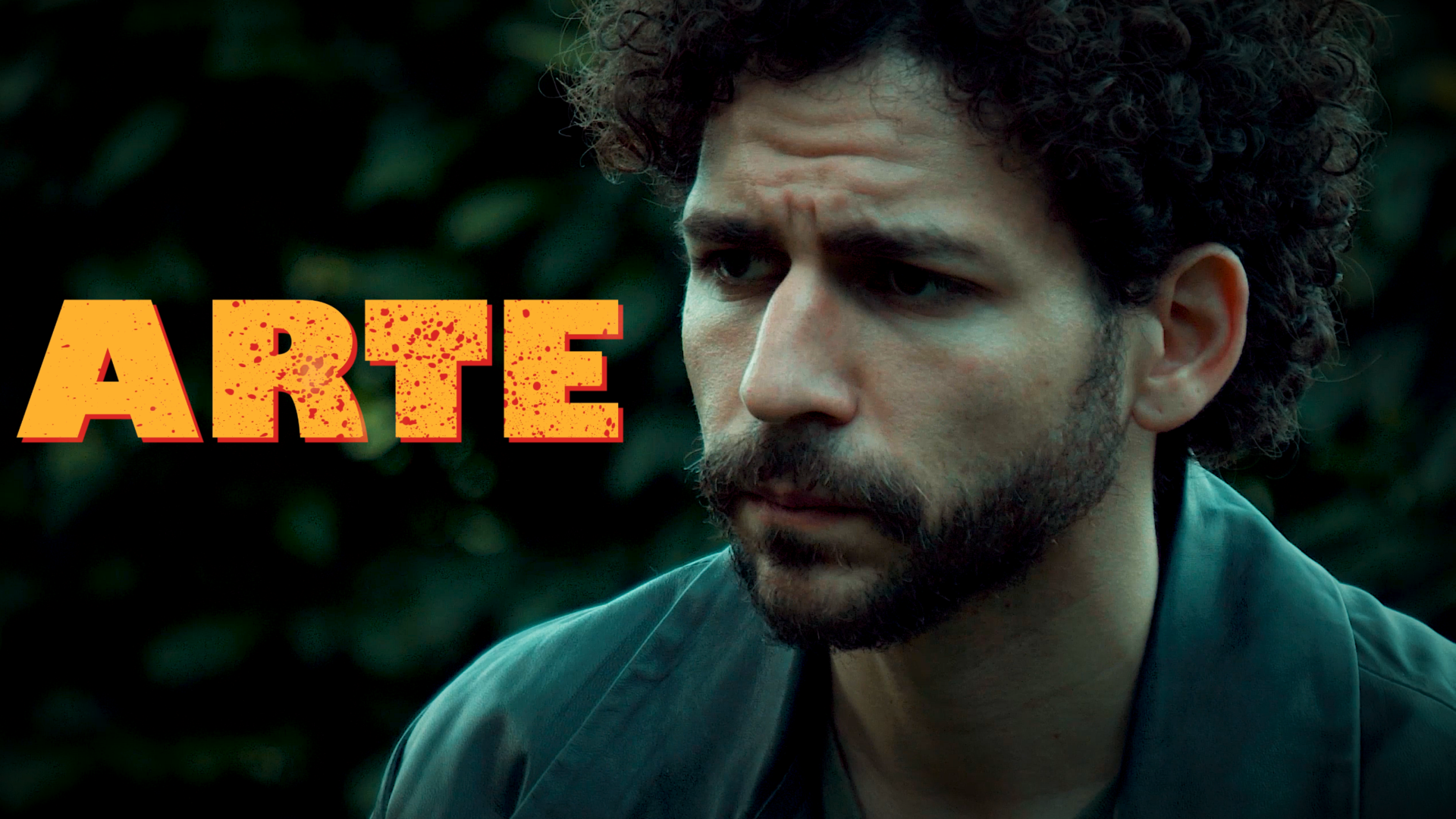
Drama, thriller, by Stefano Scala, Simone Arcidiacono, Italy, 2023.
In a secret and fascinating world, four people meet every week at the mysterious "The Circle" for a gripping game, knowing nothing about each other. However, fate has a different plan for them. As the game progresses, their lives begin to intertwine in unpredictable ways. The boundaries between the game and reality start to blur, revealing buried secrets and creating unthinkable connections. In the heart of "The Circle," the masks fall, and the players' lives will be forever changed.
LANGUAGE: Italian
SUBTITLES: English, Spanish, French, German Portuguese
Sicily as Epistemology
You grow up in a place where the map says one thing and the land says another. The Kingdom of Italy was declared in 1861, and Sicily was absorbed into it like a territory annexed rather than liberated — the Bourbon administrative structures dissolving not into civic equality but into the hands of northern industrialists and southern landlords who had simply changed their letterhead. By the time Luigi Pirandello was born in Agrigento in 1867, the Risorgimento had already curdled into something the textbooks preferred not to examine too closely. The peasants who had briefly believed that unification meant land reform discovered instead that the new draft laws pulled their sons into wars they had no stake in, while the latifondo system — vast feudal estates managed by absentee owners and their violent intermediaries — continued with barely a structural adjustment. This was not a region that could afford political innocence. It was a place that taught you, from the ground up, that official narratives and lived experience occupied entirely different registers of truth.
What this produces philosophically is not cynicism — that is too comfortable a word, too easily worn. It produces something more radical: a trained suspicion toward the stable referent. When the guarantor of meaning — the state, the law, the landowner, the church — demonstrates consistently that its language serves its interests rather than describes the world, the child who grows up watching this does not simply distrust authority. He begins to distrust the very machinery of representation itself. Pirandello spent years in Rome and then in Bonn, where he completed his doctorate in philology in 1891, but the epistemological wound was Sicilian. His early fiction, from the stories collected in Novelle per un anno — a project he built across decades toward one story for every day of the year — is saturated with characters whose inner life is systematically misread by everyone around them, not because of individual malice but because the social codes available for interpretation are structurally inadequate to the person being read.
The mass emigration that stripped western Sicily of nearly a third of its population between 1880 and 1914 added another layer to this philosophical formation. When approximately 1.5 million Sicilians left for the Americas in that period, they did not simply relocate — they underwent a violent multiplication of identity. A man who had been a specific person in a specific village, known by his gestures and his debts and his family name, arrived in a foreign city as a category: Italian, Mediterranean, other. The self that had felt coherent because it was embedded in a web of social recognition suddenly discovered it had no existence independent of that web. Pirandello watched this happen around him and understood it not as a social tragedy requiring political remedy but as a revelation about the nature of personal identity under all conditions, everywhere, always. The emigrant’s crisis was merely the legible version of a crisis that was permanent and universal, ordinarily hidden by the stability of familiar contexts.
There is a specific quality of theatrical consciousness that forms in societies where authority has always been visibly performed rather than quietly assumed. Northern European institutions could afford to naturalize their power — to make it seem like the neutral background of social life. In Sicily, the performance was rarely subtle enough to disappear into the scenery. The gabellotto, the estate manager who mediated between absentee landowners and terrified peasants, was obviously playing a role, and everyone knew it, and no one said so publicly, and this collective silence about a shared perception became itself a model for how reality functions. What people agree to see and what exists are not the same question. Pirandello did not import this idea from German idealism or French symbolism — he absorbed it from the political texture of the ground he walked on before he ever opened a philosophy text.

The Collapse That Built a Writer
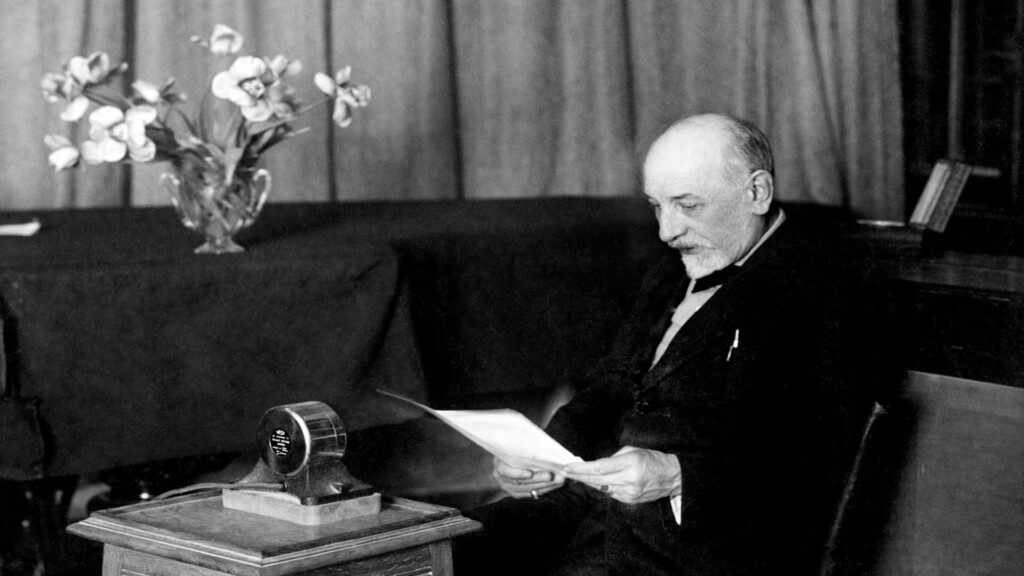
You are sitting at a desk in a Rome apartment that has become a kind of cell, and the woman in the next room believes you are sleeping with your own daughters. You know this is not true. You know this in the way you know your name, the color of the walls, the weight of a pen. And yet the certainty does nothing for you, because the version of you that exists inside her mind is as real as you are — more real, perhaps, because her version never rests, never stops watching, never requires evidence.
The flooding of the Aragona sulfur mine in 1903 was not a metaphor. It was water and rock and the ruin of two families at once — the Pirandellos and the Portulanos, whose interlocked capital vanished in a single geological event. Antonietta’s dowry was gone. The income that had allowed Luigi to write in relative comfort evaporated. He took on students, piled lessons into every available hour, and watched his wife move from grief into something else entirely. What began as nervous collapse became, over the following years, a fixed delusional system centered on him. She became convinced he was unfaithful. Then that the infidelity was incestuous. Then that the walls of their home were instruments of his conspiracy against her.
What makes this period philosophically significant is not the suffering itself but the specific structure it imposed. Pirandello could not leave. Divorce was functionally unavailable in early twentieth-century Catholic Italy, and institutionalization — which came eventually, in 1919 — required a severity that took years to reach. He lived inside the gaze of someone who had constructed an alternative version of him and refused to release it. Every gesture he made was reinterpreted through her system. Every word was evidence. He existed simultaneously as himself and as the monster she had decided he was, and no action could collapse those two figures into one. Erving Goffman would later describe in The Presentation of Self in Everyday Life, published in 1959, the way social life requires constant performance before audiences who hold power over our identity — but Pirandello had been living that argument in a single apartment for fifteen years before Goffman had a theoretical vocabulary for it.
The plays that emerged from this period do not depict madness as spectacle. They depict it as epistemology. In Henry IV, written in 1922, a man who may or may not have chosen to remain inside a historical delusion forces everyone around him to confront the question of which version of a person is the true one — and whether that question even survives contact with real life. The answer the play refuses to give is the answer the audience arrives desperate to receive. This is not theatrical cruelty for its own sake. It is the product of a man who had spent years in a domestic situation where the question of who he actually was had become literally unanswerable, because answer and questioner were structurally incompatible.
There is something almost clinical in how Pirandello converted this into theory. In his 1908 essay Umorismo he distinguished between the feeling of the opposite — what makes us laugh at a disguised old woman — and the sense of the opposite, the deeper discomfort that arrives when we understand her situation completely and can no longer locate the clean border between comedy and tragedy. The distinction is usually taught as an aesthetic category. It was also a survival mechanism. A man who cannot mourn and cannot escape learns to theorize the condition instead, to find in the impossibility of resolution a structure precise enough to build a life around.
What the flooding took was financial security and a stable domestic world. What it left behind was a writer who had no remaining interest in the consolations of coherent identity, because he had watched coherence dissolve in real time and understood, with the precision of someone who had no other choice, that it had probably never been as solid as anyone claimed.
The Kempinsky Method

Drama, by Federico Salsano, Italy 2020.
The introspective imaginary road movie of a man in the maze of his own mind, his memories of his youth, his never dormant passions and contradictory truths. The road is made of water, the destination is falsely unknown. His traveling companions are three mysterious men, projections of his imagination and of different aspects of his personality: the perennial melancholy, the crazy creative, the introverted child. He is also followed by a female presence that tells the umpteenth human story. At a certain point of the crossing he decides to abandon the boat and his ghosts of him diving into the sea and arrives swimming on a deserted beach, naked, with a small Pinocchio puppet closed by a padlock.
In this splendid film life is like a long sea voyage and the human being is a small creature confronting immensity. Sometimes the ocean is calm, other times there are terrible storms. Sometimes we are captains of a boat with a well-defined route, other times we are shipwrecked in search of a land in which to save ourselves. But despite the long journey and the movement in physical space, there are other questions that resonate in the mind: who are these men I travel with? What is the mystery of this immense mass of water that seems to be made of my memories? You can circumnavigate the whole world but the main question always remains the same: who am I really?
LANGUAGE: italian
SUBTITLES: english, spanish, portuguese, german, french
One, No One, and One Hundred Thousand Selves
You look in the mirror one morning and notice, for the first time, that your nose tilts slightly to the right. Your wife mentioned it the night before, casually, the way people mention things they have always known and assumed you knew too. And in that instant, the face you have lived in for decades becomes a stranger’s face — not distorted, not changed, but suddenly visible in a way it never was before, which amounts to the same catastrophe.
This is where Vitangelo Moscarda begins in Pirandello’s 1926 novel, and the observation his wife makes about his nose is not a comic misunderstanding but a philosophical detonation. The realization that spreads from that moment is not merely that others see us differently than we see ourselves — that much had been understood since at least the Stoics — but that the self we believe we possess, the continuous, interior, sovereign self, is a fiction assembled from the outside in. Every person who has ever looked at Moscarda has built a “Moscarda” that Moscarda himself has never met. He does not have one identity fractured into many perceptions. He has no identity at all beneath the hundred thousand versions that others carry around in his name.
William James, writing in his Principles of Psychology in 1890, came close to this territory when he argued that a person has as many social selves as there are individuals who recognize him, and that we show a different side of ourselves to each. But James still believed there was a selecting, organizing self doing the showing — a core that chose its masks. Pirandello’s Moscarda destroys that remainder. The selector is itself selected, the chooser is itself chosen, constructed by the accumulated pressure of how others have named and filed and needed him to be. What James described as a psychological richness, Pirandello experienced as annihilation.
Émile Durkheim, whose work on collective representations had been reshaping French sociology since the 1890s, was building a rigorous structural case that individual consciousness is largely a precipitate of social life — that the categories through which we even think ourselves are inherited from the group, not generated from within. Durkheim reached this conclusion through statistics and institutional analysis, through suicide rates and religious ritual and the mechanics of collective effervescence. Pirandello reached the same abyss through a man standing in front of a mirror, through the unbearable comedy of a husband who cannot find himself in his wife’s description, through the slow, methodical project of dismantling every social role — banker, son, husband, neighbor — until nothing remains that can be called a self at all.
The novel performs its own thesis. Its prose refuses stable interiority. Moscarda’s narration keeps slipping, keeps catching itself in the act of assuming a center that the text has already taken away. The form is the argument. And that formal choice — fiction as epistemology, not illustration — is what separates Pirandello from the sociologists and psychologists working in adjacent territory. He does not describe the social construction of identity from the outside, as a scholar examining a phenomenon. He forces the reader to experience the vertigo from inside, to feel the floor give way beneath the word “I.”
This matters beyond literary history. The man who fired Moscarda’s crisis by telling him how his nose sits is not a villain. He is simply the ordinary mechanism of sociality — the way recognition always involves misrecognition, the way to be known is always to be pinned down wrong. Every stable identity rests on a quiet agreement among others to maintain a shared hallucination about you. Moscarda simply refuses to participate, and what follows is not liberation but a kind of serene, terrifying erasure — a man who decides to exist without the architecture others built around his name, and discovers that outside that architecture
The Stage as Epistemological Trap
You are sitting in the Teatro Valle in Rome on the evening of May 10, 1921, and something is going wrong. Not with the production — with the contract. The unspoken agreement you made when you bought the ticket, the one that says the stage is over there and you are over here, that what suffers under the lights is safely fictional and what sits in the velvet seat is safely real — that agreement is being torn up in front of you. The audience that night did not riot because the play was confusing. They rioted because it was precise.
Six characters walk onto a rehearsal stage and demand to be given their story. They have no author. They have only their situation, which is fixed, immutable, and more permanent than anything the living actors around them possess. The mother will always be the mother. The step-daughter will always carry her particular wound into that particular room. They cannot forget, cannot improvise, cannot choose to be otherwise — and Pirandello presents this not as their tragedy but as their superiority. The human beings on that stage, the director and the company, are fluid, inconsistent, perpetually revising themselves, and therefore perpetually less real. What the bourgeois audience recognized, before they had the language for it, was that they were the fluid ones. They were the ones who could not be trusted to be the same person twice.
Henri Bergson had argued in Matter and Memory in 1896 that consciousness is not a recording device but a selective, interest-driven filter — that we do not perceive reality but construct a version of it useful to our survival. Pirandello had read widely in the psychological literature of his era, and his theater was in some ways the dramatic stage that Bergson’s epistemology logically required: if every perceiving subject constructs its own version of the real, then a room containing six people contains six incompatible rooms, and the one who suffers most clearly, most consistently, most without the option of distraction, perceives most. The step-daughter does not forget the room in Madame Pace’s establishment. The spectator does. That asymmetry is the knife.
What made the form of the play so unbearable was that it did not argue this thesis — it demonstrated it structurally. The characters interrupt the actors who try to represent them, correcting their interpretations, insisting on the irreducible specificity of their pain. This is not a theatrical device for irony. It is a claim that representation always diminishes, that any human attempt to render experience into communicable form loses the very thing that made the experience matter. Luigi Pirandello was writing in the same cultural moment that saw Ferdinand de Saussure’s lectures on linguistics circulating in the early 1910s, when the gap between signifier and signified was becoming visible as a structural wound in language itself — and he was staging that wound as flesh.
The riot makes complete sense once you understand what the middle-class theater audience of 1921 had staked on the stage remaining a safe container. The theater in bourgeois Europe was not entertainment in the passive sense — it was a machine for confirming the coherent self. You watched characters undergo crisis and resolution, you left intact, you had witnessed without being implicated. Pirandello dismantled the resolution. He left the crisis uncontained, the mother’s grief unredeemed, the step-daughter walking out of the frame entirely. The form refused to metabolize the suffering it had introduced, and the audience felt it as a physical insult because it was one. The play had looked at them and said: you came here to feel safely separate from this. You are not separate. The characters are more themselves than you will ever be, and you know it, which is why you are standing up and shouting at the stage rather than sitting quietly with what you’ve just understood.
A vision curated by a filmmaker, not an algorithm
In this video I explain our vision
Masks, Fascism, and the Uses of Ambiguity

You already know the version of Pirandello you are supposed to admire: the fearless dismantler of fixed identity, the man who proved that the self is a costume, that truth is plural, that whoever claims certainty is the most deceived person in the room. That version is real. It is also incomplete in a way that should genuinely disturb you.
In 1924, the same year Giacomo Matteotti was abducted from a Rome street and murdered by Fascist thugs after denouncing electoral fraud in the Chamber of Deputies, Pirandello signed his membership card for the National Fascist Party. He did not do it quietly or under duress. He wrote to Mussolini directly, requesting enrollment as a deliberate public act. He was fifty-seven years old, not a frightened young man swept up in ambient enthusiasm. He was already the most celebrated Italian playwright alive. The choice was fully formed.
Eleven years later, in 1935, when Italy invaded Ethiopia in a colonial assault that killed hundreds of thousands and was condemned internationally, Pirandello donated his Nobel Prize medal — received the previous year — to the Fascist regime’s gold collection drive. The Nobel committee had awarded him the prize in part for dramatizing the impossibility of stable truth. He melted that prize into Mussolini’s war chest.
The temptation, at this point, is to reach for either absolution or denunciation, to say he was confused, or to say he was always secretly authoritarian and his philosophy retroactively proves it. Both moves are too easy and both are wrong. What is actually worth sitting with is something more structurally troubling: that a philosophy built on the dissolution of fixed identity is not inherently emancipatory. It can just as easily become the intellectual instrument of a system that wants you to stop believing in stable ground, stop trusting your own perception, stop expecting coherence from power.
Hannah Arendt, writing in The Origins of Totalitarianism in 1951, identified something that cuts directly across this moment: totalitarian movements do not primarily demand belief in their ideology. They demand the abandonment of the capacity to distinguish truth from fiction at all. A population trained to see all identity as performance, all truth as relative, all stable ground as naive delusion, is not a population armed against propaganda. It is a population already softened for it. Pirandello did not intend this. Intent is almost beside the point.
What matters is that the philosophical tools he forged in plays like Sei personaggi in cerca d’autore, first staged in Rome in 1921, were genuinely double-edged. The six characters who invade a rehearsal and insist on the irreducibility of their own suffering — who cannot be fixed, translated, or adequately performed by anyone else — carry in them both a radical claim to subjective truth and a logic that, taken differently, empties every external standard of judgment. You can use that emptiness to resist oppressive categories. You can also use it to make atrocity philosophically slippery.
Pirandello never theorized Fascism with his drama. There is no play in which Mussolini is allegorized or the march on Rome celebrated. The relationship was more uncomfortable than that: a man whose entire theatrical output was devoted to the impossibility of wearing one face found it possible, in his public life, to wear the black shirt without apparent crisis. Perhaps that is the most Pirandellian thing about him — not the plays, but the biography. A life that refused to resolve into a single coherent figure, not as triumph but as failure, not as philosophy enacted but as philosophy accidentally exposed.
The question that does not close is whether the mask, once you have spent a lifetime insisting it is all there is, eventually stops being a critical tool and starts being a permission
The Nobel and the Silence of History
You are sitting in a room where everyone is applauding, and you understand suddenly that the applause is not for what you said but for what they decided you meant. The 1934 Nobel Prize in Literature arrived for Luigi Pirandello like that kind of ovation — enormous, prestigious, and surgically selective. The Swedish Academy’s citation spoke of his “bold and brilliant renovation of the drama and the stage,” a phrase so carefully calibrated that it managed to honor him entirely without touching him. Renovation. The word itself performs the operation: it implies improvement within an existing structure, a talented craftsman who updated the furniture of Western theatre without questioning whether the house should stand at all.
What the citation omitted was not incidental detail. Pirandello’s philosophical core — the proposition that identity is not a possession but a wound, that the self is a fiction imposed by others and then mistaken for truth — is not a theatrical innovation. It is a destabilizing claim about the nature of social existence itself. When he wrote “Uno, nessuno e centomila” in 1926, after more than a decade of revisions, the novel was not a psychological curiosity. It was an assault on the presumption that a person has an interior life stable enough to be called a self. The protagonist Vitangelo Moscarda discovers, through the trivial observation that his nose tilts slightly to the right, that no one perceives him as he perceives himself — and this discovery does not produce sadness but dissolution, a methodical unraveling of everything he had believed constituted him. Institutions cannot canonize that. They can describe the theatrical technique that carries it.
The Nobel committee was doing something with a long genealogy. Georg Lukács, writing in the early 1920s in “The Theory of the Novel,” had already mapped the mechanism by which bourgeois culture absorbs its most dangerous critics: it elevates them to the status of classics, frames their critique as aesthetic achievement, and thereby defuses the social charge entirely. A writer who exposes the violence of meaning-making becomes, through the alchemy of institutional recognition, a writer who enriched the tradition of meaning-making. The prize does not celebrate Pirandello despite his threat; it neutralizes him through celebration.
There is also something more specifically painful in what 1934 meant as a historical moment. Pirandello had joined the Italian Fascist Party in 1924, a fact that his admirers have always handled with the discomfort of people trying to lift something sharp. His relationship with Mussolini’s regime was neither simple collaboration nor simple resistance — it was the tortured ambivalence of a man who had spent his entire creative life arguing that no position, no ideology, no collective mask could contain a human being, yet who put on the most catastrophic mask of his century. The Nobel committee, by concentrating exclusively on the formal and theatrical dimensions of his work, was able to honor the playwright while bypassing entirely the question of what it meant to give the world’s most prominent literary prize, in 1934, to a registered member of the party that had become the template for European fascism.
This is how history’s institutions perform their most reliable function: not suppression but selection. They do not destroy the threatening elements of a thinker’s legacy — that would require acknowledging those elements first. They simply choose a frame so specific, so technical, so apparently celebratory that the dangerous remainder falls outside the picture without anyone having to explain why it was excluded. Pirandello received his prize in a tuxedo, in Stockholm, applauded for renovating the stage, while the work that actually mattered — the argument that every social self is a kind of agreed-upon hallucination enforced by the people around you — was quietly left in the room outside, the door politely closed.
What Dies When a Character Dies
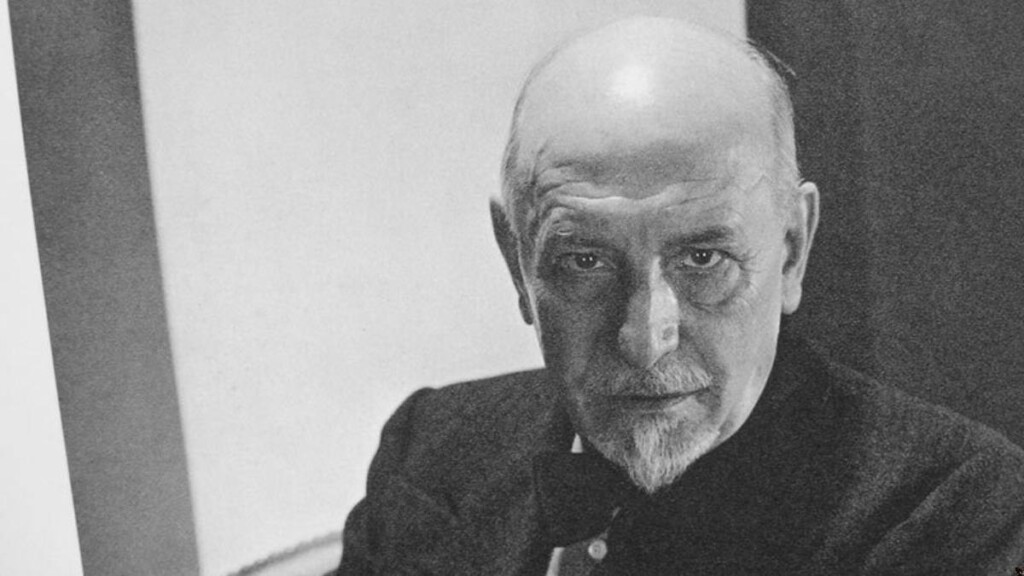
You are sitting alone with the book open, maybe late at night, and you hit a line where a character insists with absolute fury that he is not who the others say he is — and for a fraction of a second, before your rational mind reassembles itself, you feel it too. Not sympathy. Something colder. A sudden uncertainty about whether the self you carried into that room, the one that chose the chair and the lamp angle and the particular mood you decided was yours tonight, is any less constructed than his. The line does not explain this feeling. It produces it, the way a tuning fork does not describe a frequency but becomes it.
Pirandello understood that the most dangerous philosophical proposition is not one you argue against but one you accidentally inhabit. His entire theatrical and novelistic architecture was built to trigger that involuntary inhabitation, to make the reader or the spectator briefly lose purchase on the performed coherence they call a self. In “One, No One, and One Hundred Thousand,” published in 1926 after nearly fifteen years of intermittent composition, Vitangelo Moscarda’s unraveling begins not with tragedy but with the observation that his nose leans slightly to the right — a detail his wife mentions casually, which detonates the entire structure of his self-certainty. The catastrophe is not existential in the grand romantic sense. It is administrative. The self turns out to be a filing error, maintained by collective inattention.
What made this more than literary provocation was that Pirandello was drawing on a tradition of psychological thought that had begun to formalize the instability he was dramatizing. William James had written in 1890, in “The Principles of Psychology,” that a man has as many social selves as there are individuals who recognize him — a claim that sounds sociological until you realize it strips the self of any private sovereign territory. Luigi Pirandello did not cite James, but he arrived at the same devastation through different means, and the means mattered: fiction forces you to feel the vertigo that philosophy only describes from a safe analytical distance.
He died in Rome on December 10, 1936, having refused a state funeral and requested that his body be cremated without ceremony. He wanted no monument, no procession, no institutionalized grief. The ashes were eventually placed in a stone urn at his birthplace in Agrigento, but the journey there was chaotic, delayed, entangled in bureaucratic absurdity that he would have recognized as his own material. Even in death, the self he had spent a lifetime dismantling refused to dissolve cleanly. The fascist regime he had uncomfortably orbited attempted to claim him posthumously, the way institutions always try to freeze what was fluid, to assign a final, stable identity to someone who had made instability his only honest position.
The Nobel Prize he received in 1934 did not resolve anything. Recognition at that scale tends to function as a kind of social lamination, a protective coating applied to the work to keep it from scratching too hard. What it could not do was answer the question his work kept opening: if every identity is performed for an audience, and every performance eventually becomes the only version anyone believes, at what point does the actor disappear entirely inside the role? Pirandello never answered this. He was constitutionally incapable of answering it, not because he lacked the intelligence but because answering it would have required standing somewhere stable, and he had long since demolished the ground.
What dies when a character dies is not a person but a temporary consensus — the agreement, held between writer and reader and the character himself, that this particular arrangement of gestures and memories and desires constitutes a someone. Pirandello knew this, lived it, wrote it into over forty plays and seven novels, and it cost him the one thing it tends to cost people who see too clearly: the ordinary comfort of not knowing.
🎭 The Theater of Identity and Illusion
Luigi Pirandello’s work revolves around the fragility of identity, the masks we wear, and the blurred boundary between reality and fiction. These themes echo across literature, theater, and philosophy in ways that feel urgently contemporary. The following articles explore worlds that share Pirandello’s restless interrogation of the self and its contradictions.
Friedrich Dürrenmatt: Life and Works
Friedrich Dürrenmatt, like Pirandello, used theater as a moral laboratory where identity and guilt are perpetually destabilized. His dark comedies force characters—and audiences—into impossible ethical situations that expose the absurdity of social roles. Reading Dürrenmatt alongside Pirandello reveals how twentieth-century European drama turned the stage into a mirror of existential crisis.
GO TO THE SELECTION: Friedrich Dürrenmatt: Life and Works
Bertolt Brecht: Life and Works
Bertolt Brecht reimagined theater as a space of critical estrangement, challenging audiences to see beyond the illusions of character and narrative. Much like Pirandello’s metatheatrical experiments, Brecht dismantled the fourth wall and questioned the very nature of theatrical representation. Together, these two dramatists redefined what it means to perform, to watch, and to believe.
GO TO THE SELECTION: Bertolt Brecht: Life and Works
Kafka and Bureaucracy: The Trial and The Castle
Kafka’s novels The Trial and The Castle explore the labyrinthine structures of bureaucracy through characters who struggle to understand the rules of a world that refuses to explain itself—a deeply Pirandellian predicament. The sense of a self trapped within systems it cannot master or even fully perceive is central to both authors. This article unpacks how Kafka turned modern alienation into narrative architecture.
GO TO THE SELECTION: Kafka and Bureaucracy: The Trial and The Castle
Eco’s The Name of the Rose: Meaning and Analysis
Umberto Eco‘s The Name of the Rose is a labyrinthine novel in which truth is always deferred, signs point endlessly to other signs, and identity is constructed through interpretation. Eco’s intellectual playfulness owes a debt to the modernist tradition that Pirandello helped inaugurate, particularly in its questioning of fixed meaning and stable authorship. This analysis guides readers through Eco’s multilayered fictional world.
GO TO THE SELECTION: Eco’s The Name of the Rose: Meaning and Analysis
Discover More on Indiecinema
If Pirandello’s universe of shifting masks and fractured identities speaks to you, Indiecinema streaming is the place to continue the journey. Our curated selection of independent and auteur films explores the same questions of selfhood, illusion, and the theater of everyday life. Visit Indiecinema and let the screen become your stage.
👉 EXPLORE THE CATALOG: Watch Indie Films in Streaming
A vision curated by a filmmaker, not an algorithm
In this video I explain our vision

