
The Morning You Threw Everything Away
There is a specific kind of morning — you have probably had one — where you wake up and everything that made sense the day before has quietly stopped making sense. Not through catastrophe. Not through the slow erosion of a bad season. Something simply shifted in the night, the way a riverbed shifts without the river itself announcing it, and by the time the light came through the window you already knew. You knew before you reached for your phone, before the first thought fully formed, before you had language for any of it. You knew the way you know you are about to be sick — in the body first, then in the mind.

Maybe you got up and started putting things in boxes. Maybe you sat across from someone you had loved for years and heard yourself speaking in a tone so calm it frightened both of you. Maybe you pulled a notebook from the shelf — the one full of five years of plans and systems and carefully constructed evidence of who you were supposed to become — and tore it in half. Not in rage. With a strange, almost surgical precision. The same hands that had written those pages now undoing them, and the two actions feeling equally necessary, equally right.
This is what dissolution looks like from the inside. Not collapse. Not failure. Not a cry for help dressed up as decision. Something closer to what the alchemists called the first operation — the breaking apart of a substance before it can become anything new. Solve. Dissolve. Separate what has been compacted by time and habit and the slow accumulation of other people’s expectations until you can no longer find yourself inside it.
The cultural story we inherit tells us that moments like these are symptoms. That a person who dismantles their life with clarity rather than hysteria is either in denial or in danger. We have an entire diagnostic vocabulary for the impulse to start over — midlife crisis, burnout, dissociative episode, avoidant attachment activated. And there is always someone nearby, someone who loves you or needs you to remain legible, who reaches for one of these explanations the moment you start moving the furniture of your identity. Because your dissolution is, necessarily, a disruption to their coherence. Your decision to become unreadable is experienced by others as a kind of abandonment.
Erik Erikson, writing in the 1950s about what he called the psychosocial stages of human development, described identity not as a thing you construct once and carry forward but as something perpetually renegotiated against the pressure of lived experience. Identity, for Erikson, was always in tension — between what you had made of yourself and what life was now demanding of you. The moments of apparent crisis, he argued, were often the necessary threshold between one coherent self and the next. The word he used was moratorium — a deliberate suspension of forward motion in order to allow something beneath the surface to reorganize. The problem is that moratoriums look, from the outside, exactly like falling apart.
What no one tells you — what the diagnostic vocabulary actively obscures — is that the person throwing things in boxes at six in the morning may be the sanest person in the building. May be the one who has finally stopped performing the version of their life that everyone else could understand, and stepped into the terrifying, necessary space of not yet knowing what comes next. The dissolution is real. The discomfort is real. The people who love you and worry about you are real. But so is the quiet, unshakeable certainty that the thing being taken apart needed to come apart. That something was compacted that now must be separated. That the first step toward any real transformation is always, without exception, this one.
Katabasis
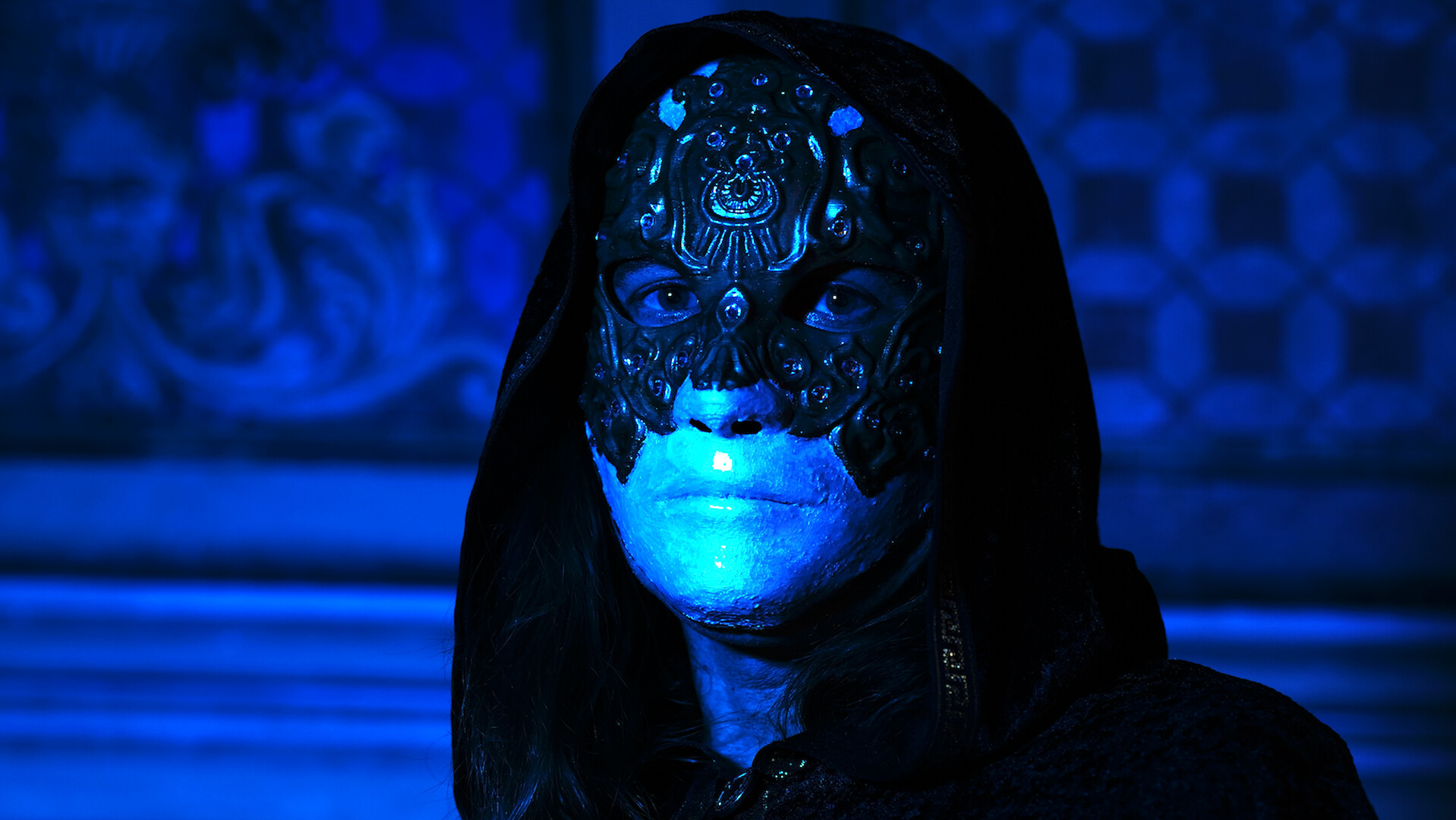
Drama, Mystery, by Samantha Casella, Italy, 2025.
“Katabasis” is a journey into the underworld. Nora experienced that dark realm as a child, when she suffered abuse. This marked her, shaping her into an ambiguous and manipulative woman, dangerous in her inscrutability, constantly seeking disturbing situations to relive the only condition she has profoundly internalized: pain. And the love story between Nora and Aron is tormented, strictly secret. Aron is a young orphan oppressed by the star system which, orchestrated by Jacob, a cynical manager, made him a star and imposes another façade of life on him. In fact, only the people who revolve around the house-prison where the couple lives are aware of Nora's existence. That majestic villa is the stage for secrets, lies, deceit, as well as unsettling episodes, since Nora is able to communicate with the souls from the beyond.
Director Biography – Samantha Casella
Samantha Casella studied various aspects of cinema, including screenwriting, directing, cinematography, and acting, across Turin, Florence, Rome, and Los Angeles. Her directing thesis, the short film "Juliette," won 19 awards, including the "European Massimo Troisi Award." She continued her path directing surreal short films including "Silenzio Interrotto," "Memoria all'Isola dei Morti," and "Agape." In 2019, she directed "I Am Banksy." At the charismatic TCL Chinese Theater in Los Angeles, at the Golden State Film Festival, she won the award for Best International Short Film. In 2020, she directed the short film "A un Dio Sconosciuto." "Santa Guerra" is her feature film debut.
LANGUAGE: Italian
SUBTITLES: English, Spanish, French, German, Portuguese
What the Alchemists Were Actually Doing
There is a man in a cellar, surrounded by crucibles and retorts, spending years of his life watching metals heat and cool, recording observations that no one will fully understand for centuries. He is not a fool. He is not a mystic lost in fantasy, and he is not, despite what the textbooks suggest, a failed scientist who simply lacked the right equations. He is doing something far stranger and more human than either of those descriptions allow.
The caricature has been useful, of course. It flatters the present by making the past seem confused. We inherit a story in which alchemy was simply chemistry before chemistry knew what it was doing — a confused groping toward the periodic table, earnest but wrong, eventually superseded by people who finally got their measurements right. The other version, equally dismissive, casts the alchemist as a robed eccentric communing with angels, speaking in deliberate nonsense to protect secret knowledge from the uninitiated. Both portraits share the same condescension. Both miss the point entirely.
Mircea Eliade, writing in 1956 in what remains one of the most quietly devastating works of comparative religion ever produced, argued something that still unsettles specialists when they encounter it honestly. In his reading of alchemical traditions across India, China, and medieval Europe, he found not a primitive science but a sacred technology of transformation — a practice rooted in the belief that the natural world was incomplete, that matter itself was suffering toward a higher state, and that the human being working with metals was participating in a cosmic process of maturation. The smith, the miner, the alchemist — all were midwives to a transformation that the earth was already, slowly, attempting on its own. They simply accelerated it. They collaborated with time.
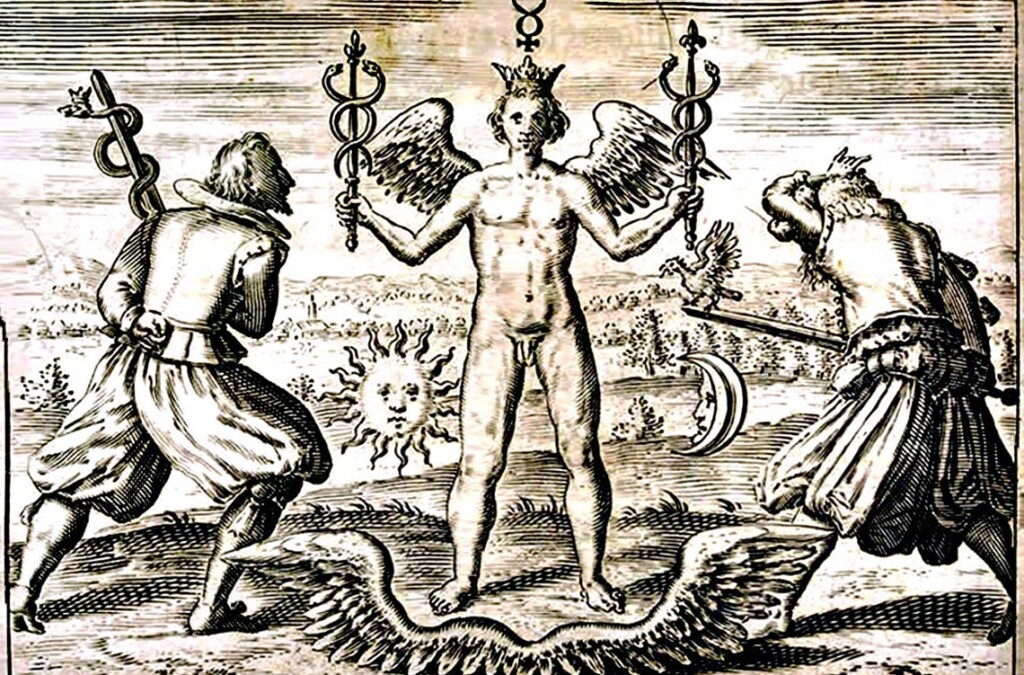
This reframes everything. The laboratory was not a place where a man tried and failed to make gold. It was a theater in which the experimenter himself was the primary material under examination. Carl Jung understood this with unusual precision. His 1944 study of alchemical imagery — built across decades of clinical practice and textual analysis — argued that the alchemical opus was a projected drama of the psyche. The symbols scattered across medieval manuscripts, the kings dissolving in baths, the hermaphrodite emerging from the union of opposites, the black earth of the prima materia giving way to the white and then the red — these were not encoded chemistry. They were the unconscious mind’s attempt to picture what it feels like to change at a fundamental level. The alchemists, Jung insisted, were doing real psychological work without the vocabulary to name it as such. They were conducting genuine inner transformation while believing, or half-believing, they were transforming matter.
And at the center of this entire project, preceding its Latin formulation by centuries in practice if not in name, sat the principle that would eventually be condensed into two words: dissolve, and then coagulate. Solve et Coagula. Take what is solid, break it apart, reduce it to its components, allow the unessential to fall away, and then — only then — allow something new to consolidate around what remains. The sequence is not metaphor. It is not even primarily a philosophical idea. It is a description of what actually happens when a living system undergoes genuine change. Not growth in the simple sense of accumulation, but transformation in the demanding sense of discontinuity — the necessary destruction that precedes any real reconstitution.
Human beings have always lived this structure without naming it. Every grief that eventually resolves, every belief system that collapses under its own contradictions, every relationship that must be unmade before it can become something honest — all of it follows the same logic. The alchemists simply had the audacity to perform it deliberately, to descend into the cellar and apply heat.

Dissolution Is Not Destruction
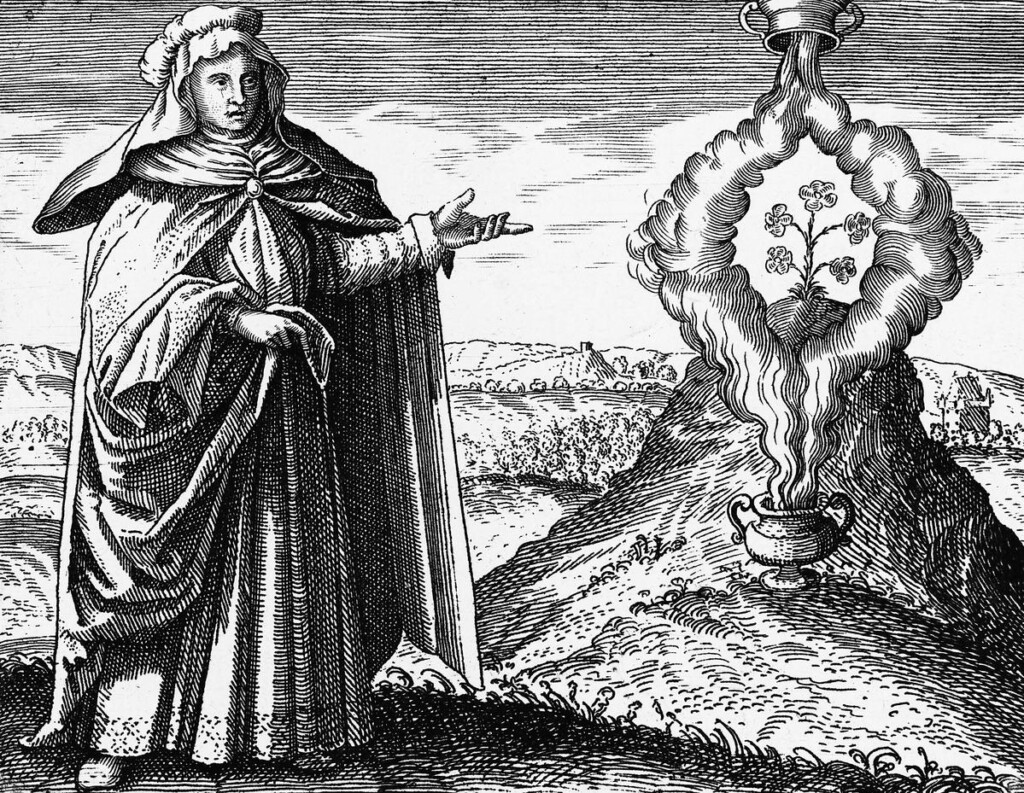
He sits on the floor of an apartment that used to mean something. The furniture is mostly gone — not stolen, just redistributed into a life that no longer includes him. A coffee table remains, a single chair, boxes he has not opened because opening them would require deciding what he still is. His phone has notifications he cannot answer. People want to know how he is doing, and he has no language for it, because the words that used to describe him — the job title, the role, the husband, the provider, the man who had a plan — have all been quietly revoked. He is not grieving exactly. Grief has an object. This is something more vertiginous: he is sitting in the wreckage of a self that turned out to be a construction, and the construction has come down, and there is nothing underneath it yet.
This is the moment most people flee. They fill it immediately — with new work, new relationships, new certainties, new noise. The terror of that empty apartment is not really about loneliness or financial precarity, though both are present. It is about the sudden and undeniable confrontation with the question of who remains when the scaffolding is removed. And because that question has no quick answer, because it requires sitting in genuine unknowing, almost every cultural mechanism available conspires to help you avoid it.
James Hollis, in his 2004 work on the unlived life, describes the phenomenon with a precision that lands like a cold hand on the shoulder: most of us are not living our own lives. We are living the accumulated instructions of our family systems, our cultural scripts, our early wounds repackaged as personality. The collapse of a social identity — the career that ends, the marriage that dissolves, the body that fails — is experienced as catastrophe precisely because we had mistaken the scaffolding for the building. When Hollis writes about the unlived life, he is not being poetic. He is describing a structural condition in which the authentic center of a person has been bypassed, sometimes for decades, in favor of a persona durable enough to function in the world but hollow at its core.
Jung called this phase nigredo. He borrowed the term from the alchemical tradition deliberately, because the alchemists understood something that modern psychology is still trying to recover: that blackening is not the failure of the process. It is the process. The prima materia — the raw, undifferentiated substance that must be transformed — cannot yield anything new until it has first been reduced to its most confused and formless state. The nigredo is the phase in which everything that was falsely solid becomes liquid, in which the apparent coherence of a life reveals itself as a temporary arrangement rather than a permanent truth.
The distinction that matters here, the one almost no one makes when they are inside it, is the difference between dissolution that produces and dissolution that merely erases. They feel identical from the inside. Both involve loss. Both involve the disappearance of familiar reference points. But one is alchemical and the other is simply ruin. A man in a destroyed apartment can be undergoing either one, and the difference is not visible from the outside, and is barely visible from the inside, and this is precisely why the tradition required such careful attention to the signs.
What distinguishes them is not suffering — suffering is present in both. What distinguishes them is whether something is being released or whether something is simply being lost without remainder. The alchemists, and after them Jung, and after him Hollis, all circle the same insistence: that within the blackening there is a potential for a substance more real than what existed before. Not a restored version of the previous self. Something that could not have existed before the dissolution.
The empty apartment is not the end of the story. But it is not a detour either.
Arte
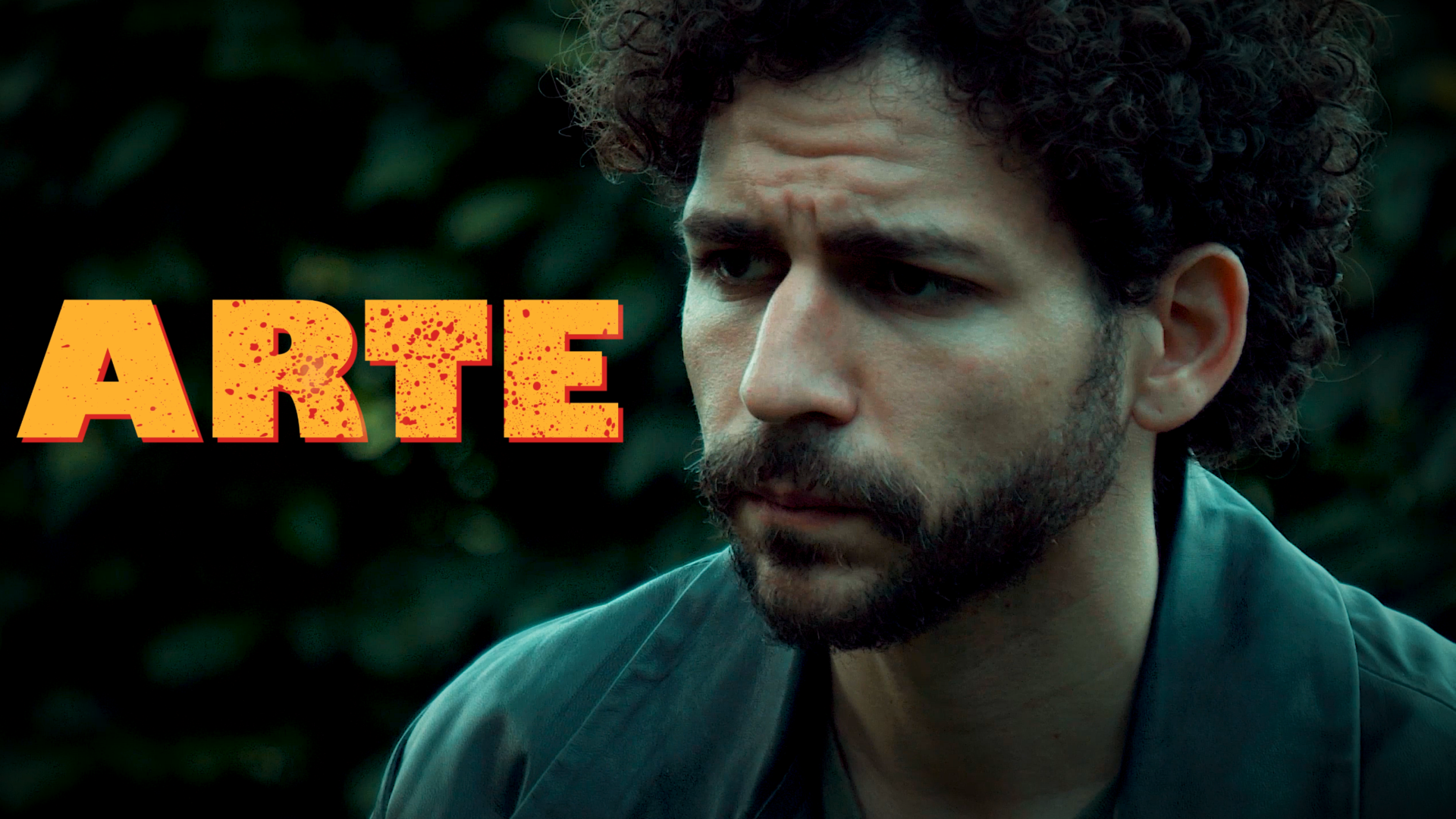
Drama, thriller, by Stefano Scala, Simone Arcidiacono, Italy, 2023.
In a secret and fascinating world, four people meet every week at the mysterious "The Circle" for a gripping game, knowing nothing about each other. However, fate has a different plan for them. As the game progresses, their lives begin to intertwine in unpredictable ways. The boundaries between the game and reality start to blur, revealing buried secrets and creating unthinkable connections. In the heart of "The Circle," the masks fall, and the players' lives will be forever changed.
LANGUAGE: Italian
SUBTITLES: English, Spanish, French, German Portuguese
The Coagula That Society Sells You
There is a moment everyone recognizes, even if they have never lived it directly. Someone walks out of a thirty-day program, carrying a small bag, wearing clean clothes that fit just slightly wrong, like they were chosen by someone who knew approximately who this person should be. Friends are waiting. There are embraces. Someone says, with genuine relief and genuine blindness simultaneously, “you’re back.” And the person smiles, because what else do you do, and the smile is not false exactly, but it is performing a return that has not actually occurred. They have been scrubbed. They have been made legible again. The rough edges that made them unmanageable have been sanded to something socially presentable. They walk back into the same apartment, the same relationships, the same city that produced the original fracture, and everyone agrees to call this transformation.
This is what Eva Illouz, in her 2008 analysis of therapeutic culture, calls emotional capitalism in its purest form. The self is made into a product. Its suffering becomes raw material. Its reconstitution becomes a commodity with a price, a timeline, and most critically, a measurable output that the surrounding social order can recognize and absorb. Illouz argues, with a precision that is almost unbearable, that the therapeutic apparatus does not actually threaten the structures that generate psychological distress. It processes individuals so that they can re-enter those structures intact. The wound is dressed without ever asking what inflicted it.
The wellness industry, now valued at over five trillion dollars globally according to the Global Wellness Institute’s 2023 market data, has constructed an entire architecture of coagula without solve. Journaling, breathwork, retreats, neuroplasticity workshops, somatic healing programs, each one offering a new form, a new self, a reconstituted identity that feels earned because discomfort was involved. And discomfort was involved. That is the seduction. You cried. You sat with difficult feelings. You did the work, as the language insists, and the work was genuinely uncomfortable. But discomfort is not dissolution. Sitting with anxiety in a managed container designed to return you to productivity by Monday is not the same as allowing a structure to collapse down to its foundations.
The alchemical tradition understood something here that modern reconstitution culture systematically suppresses. Solve — true dissolution — is not a phase you pass through on the way to the better version of yourself. It is an annihilation of the self that was generating the problem. The medieval alchemist Gerhard Dorn, writing in the sixteenth century, described the solve as a death of the old nature so complete that no trace of the original form could be recovered in the new substance. Not a renovation. A transmutation. The modern reinvention narrative inverts this entirely: what is being sold is the preservation of the original subject’s fundamental desires and social identity, now upgraded, optimized, and returned to circulation.
Consider what actually gets dissolved in a typical transformation narrative. The bad habit. The negative thought pattern. The dysfunctional relationship style. Never the deeper architecture that made those habits, patterns, and styles the logical adaptive responses to a particular world. The person emerges changed at the level of behavior, identical at the level of structure. Which means the next crisis is already waiting, because the conditions that produced the first one have not been touched.
Carl Rogers believed, and argued at length in his 1961 work on becoming a person, that genuine psychological change required what he called unconditional positive regard — not for the optimized self you were becoming, but for the destroyed and unrecognizable thing you were in the middle of the process. Modern therapeutic culture markets the destination. It sells you the coagulated self, already polished, already legible. What it cannot tolerate, what would destroy its commercial logic entirely, is the interval where there is nothing recognizable to sell.
Fire as the Third Character
There is a particular quality of exhaustion that has nothing to do with sleep. You have slept. You have eaten. The body has been maintained like a machine someone forgot to care about but still bothers to fuel. And yet when you stand in a doorway and someone asks how you are doing, the question lands on you like a foreign language you once knew fluently but can no longer speak from the inside. Something has been burning for a long time, and the burning has changed the material of you in ways that rest cannot reverse.
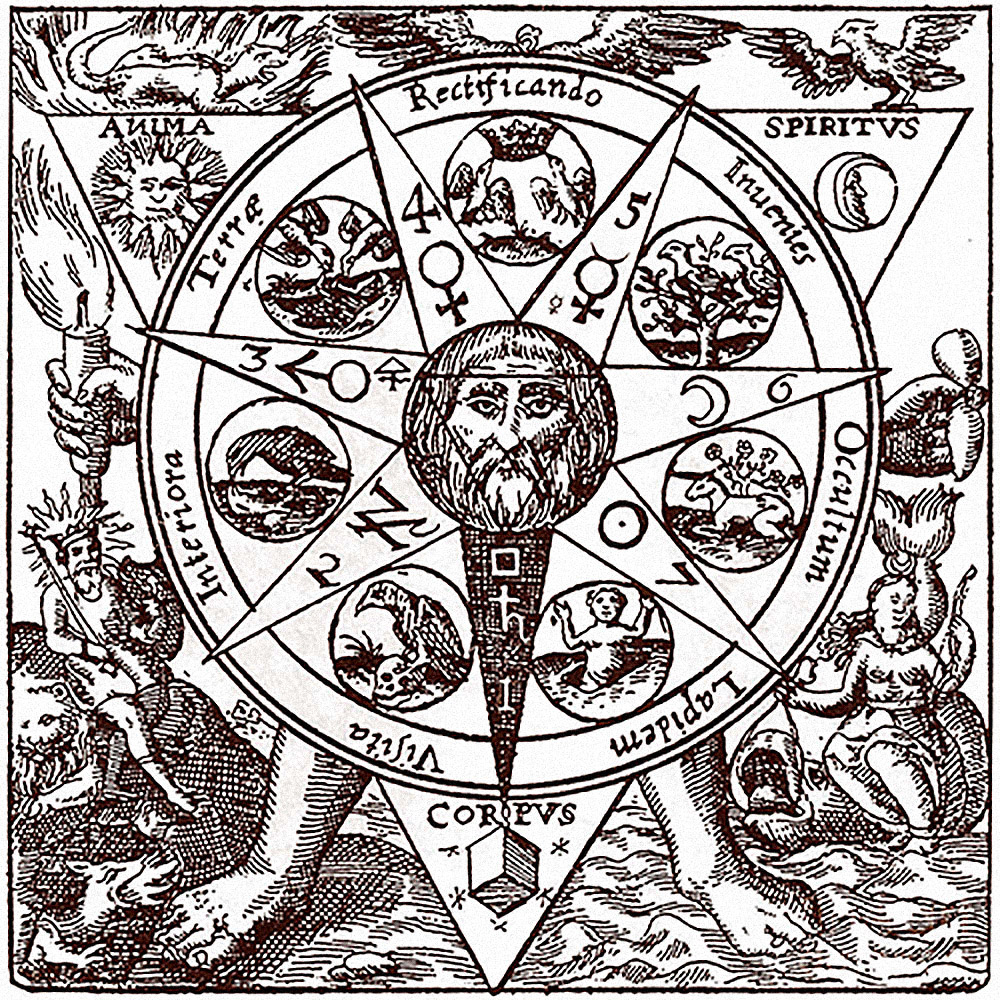
Gaston Bachelard understood this in 1938, when he published his phenomenological study of fire and argued something that sounds simple until it ruins you: fire is not primarily a symbol. It is a function. It does something to matter. It reorganizes the molecular structure of whatever it touches, not by destroying it but by releasing what was latent, separating what was compounded, making possible new configurations that the original cold substance could never have achieved on its own. The alchemists called this calcinatio, the sustained application of heat until the substance surrenders its rigidity, until what seemed permanent proves to be merely frozen. Bachelard traced how human beings have always sensed this, felt in fire not just danger or warmth but a kind of philosophical pressure, a demand that things become what they actually are rather than what they have been holding themselves together to appear.
The functional equivalent of fire in a life is not the painful event itself. This is the confusion that leads people astray, into thinking that suffering alone transforms. A woman spent eleven months sleeping on a cot in a hospital room as her father moved toward death by increments so small they were only visible in retrospect. The fluorescent lights never changed their quality. The machines maintained their conversation with themselves. She learned to read the breathing, its rhythms and hesitations, the way it occasionally gathered itself for something and then released it without arrival. By the fourth month she had stopped grieving. By the seventh she had stopped waiting. What she was doing, though she had no name for it then, was sitting inside sustained heat. Not the heat of the initial diagnosis, not the spike of the terrible news, but the long thermal pressure of duration itself, night after night, the self stripped of its routines and performances and the comfortable distances it keeps from its own depths.
She emerged from that vigil not consoled. Consolation would have been an insult to what had occurred. She emerged reconfigured. The people who had known her before noticed it as a kind of stillness that had not been there previously, a quality of attention that made some of them slightly uncomfortable, as though she could see something they preferred to keep in peripheral vision. What the fire had done was not add anything. It had worked through subtraction, burning away the insulating materials, the assumptions about what her life was for, the social performances she had taken for identity, until something more elemental was exposed. Bachelard writes that fire is the first object of reverie, the privileged phenomenon of transformation, and that it teaches human beings to desire to change, to accelerate time, to bring all of life to its conclusion, to its beyond. The beyond he means is not death. It is the self that exists on the other side of the self you arrived with.
Grief works this way when it extends. So does obsession, the kind that will not release you even when you beg it to. So does prolonged failure, the kind that removes option after option until something you never chose becomes the only remaining path. So does radical love, which is not warmth but pressure, not comfort but the insistence that you become large enough to contain another person’s reality without erasing your own. These are not metaphors for fire. They are fire. They perform chemically identical work on the psyche that heat performs on matter.
The Lost Poet
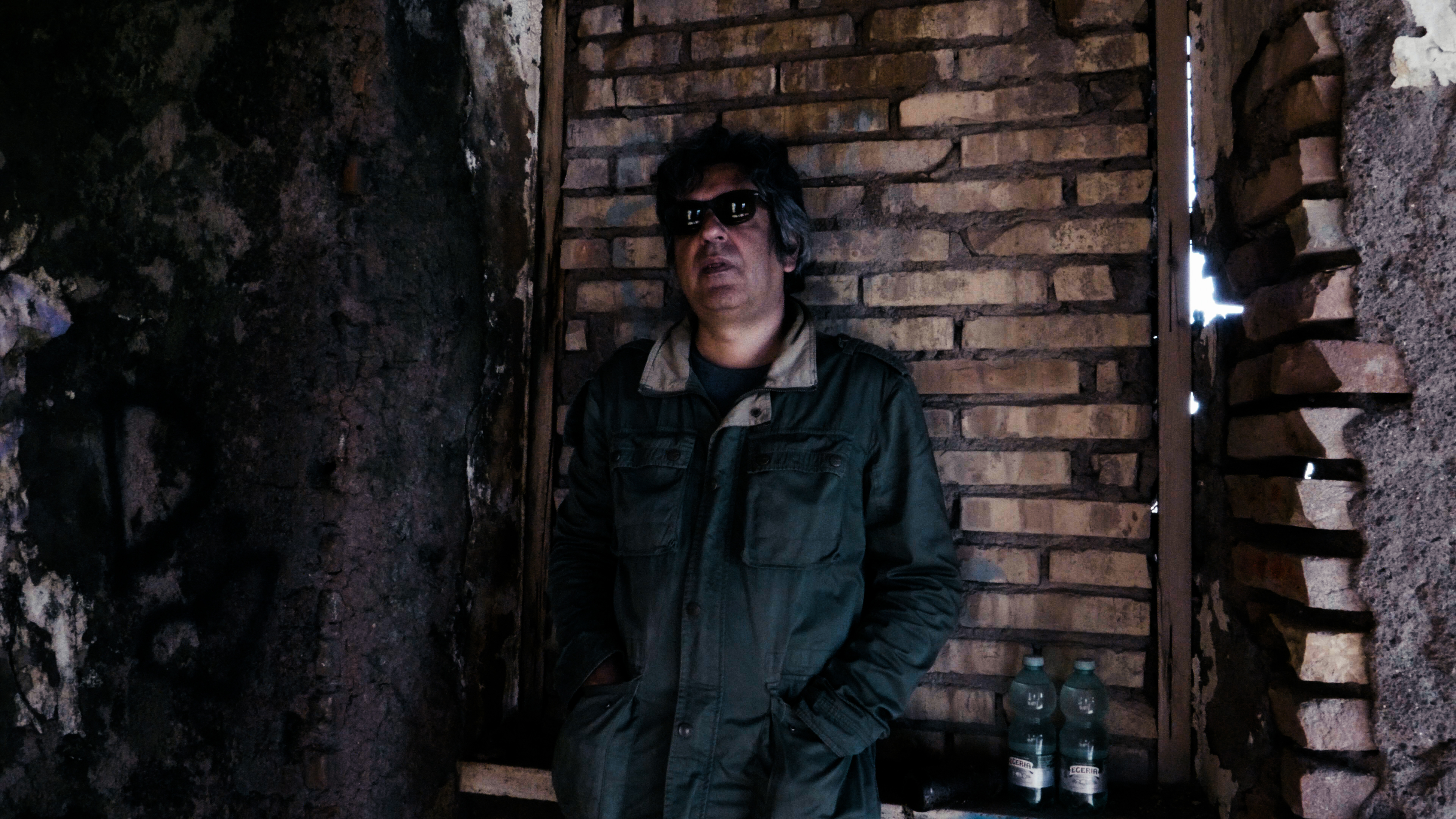
Drama, by Fabio Del Greco, Italy, 2024.
Dante Mezzadri wants to see an old friend, nicknamed the Iguana, whom he has lost sight of for many years, and who has managed to turn their shared youthful passion for poetry into a job, becoming a famous writer and poet. The man escapes from his bourgeois life and his wife to live homeless on the Roman coast, printing and trying to sell his poetry collections. At night he sleeps in a park of old carnival floats, inside a papier-mâché tank, and waits for the opportunity to meet his old friend, who however never shows up for appointments in the places they frequented when they were young, now in ruins. Dante's poetry books do not interest anyone and to support himself he is forced to "change product": he starts selling the infamous "cannibal pill" on behalf of young drug dealers, a new drug that sells like hot cakes and causes sensory and consumerist ecstasy. However, he realizes that this powerful drug is very dangerous for those who take it, he comes into conflict with his ethical conscience and throws all the pills into the sea. However, the dealers want to collect their money.
Shot over a period of 2 years, the film is a reflection on the cultural and artistic rubble of the society in which the protagonist lives, in an increasingly mechanized, consumerist and arid world. Dante Mezzadri is yet another human being who has renounced his inspiration and his creativity, but unlike many he is not willing to give his life to a system that distances him from his true identity. The physical world around him, however, seems constructed in such a way that it seems impossible to escape from this "invisible cage". The enthusiasm of the people he meets is ignited only by sensory gratification, by unreal visions of personal affirmation and success, by "metaverses" that offer an escape into an illusory and destructive reality. The poet's house on the coast, where he met with his friends as a young man, is just a pile of abandoned rubble. What happened to all those who wanted to become poets and ended up becoming something else? Are there internal forces with which that house can be "rebuilt"?
LANGUAGE: Italian
SUBTITLES: English, Spanish, French, German, Portuguese
A vision curated by a filmmaker, not an algorithm
In this video I explain our vision
The Medieval Forge and the Modern Body
There is a moment — you will know it, you have already lived it — when you stand in a doorway, literally or not, and understand with your entire nervous system that the person who walked toward this threshold and the person who will walk away from it are not the same. Not because something dramatic has happened. Because something has dissolved. The old form has given way and the new one has not yet set. You are, briefly, neither.
Mircea Eliade spent years reconstructing what happened inside the medieval alchemical forge, and what he found — published in 1956 in The Forge and the Crucible — was not a primitive chemistry but an elaborate ritual system. The alchemist who entered the workshop observed purifications before touching the materials. He fasted, or prayed, or abstained from certain contacts. He knew that timing mattered: the season, the hour, the position of planets were not superstitions but a genuine understanding that transformation is not mechanical, that it requires alignment between the outer world and the inner state of the operator. And the operator was never separate from the material. This is what Eliade kept returning to: the alchemist did not stand outside the process, supervising it clinically. He was inside it. He transformed as the metal transformed. The dissolution was mutual.
Arnold van Gennep named this structure in 1909 when he mapped the architecture of ritual across dozens of cultures in The Rites of Passage. He found the same three phases everywhere: separation from the old state, a middle zone that defies classification, and incorporation into the new. The middle zone interested him most, and he gave it a name drawn from the Latin for threshold — limen. Victor Turner, building on van Gennep half a century later, called the people moving through it liminal beings, and described them as existing in a condition of what he called structural invisibility. They were between social positions. Their old identity had been formally released. The new one had not been claimed. They belonged, in a precise technical sense, to neither world.
You know this feeling not from anthropology but from your own body. You have stood in that hallway after a conversation that changed everything, holding your phone or your keys or nothing at all, unable to go back to the room and unable yet to walk forward. The body registers liminality before the mind does. The hands do not know what to do with themselves. The chest holds something that is not quite grief and not quite anticipation. Time becomes strange. Minutes behave differently. You are in the forge, and the forge is you.
What the medieval understanding preserved — and what the modern world consistently fails to honor — is that this state is not a malfunction. The person standing in the hallway, paralyzed between two versions of themselves, is not broken. They are in the most serious phase of a process that has its own intelligence, its own timing, its own requirements. The alchemical workshop was designed to hold this state with ceremony. The fasting, the prayer, the attention to the hour — these were not superstition. They were a culture’s way of saying: this moment demands everything you have. Do not rush it. Do not distract yourself from it. The dissolution is doing something.
A man sits at a table in an almost-empty apartment. The furniture is gone. His voice, when he speaks to no one, sounds different in the bare room, as though the space is already practicing for his absence. He is not sad in any simple way. He is between. The walls still hold the shape of a life, but it is a life that is finished, and the next one is not yet imaginable. He sits there longer than he intended. Something in him knows, without language, that this sitting is the work. That moving too fast would forfeit something the dissolution is still trying to give him.
What Gets Lost in the Reconstitution
There is a particular grief that has no name in any language you were taught. You return to a city you lived in before everything broke open — before the dissolution that remade you — and you walk the same streets, recognize the same doorways, smell the same mix of coffee and exhaust and wet stone in the morning, and you feel almost nothing of what you expected to feel. Not numbness. Something more precise than that. The city is entirely itself. You are entirely yourself. But the person who once moved through these streets like they owned some invisible frequency in the air — that person is simply not there. You look for them in the angle of light on a particular corner, in the sound of a tram, in the face of someone sitting in the window of a bar you used to visit. Nothing. They have not gone somewhere else. They are gone.
This is what coagula actually costs.
We speak of reconstitution as though it were a return, as though the dissolved self reforms into something recognizable, enriched, more complete. And in one sense it does. But Hegel, in the Phenomenology of Spirit published in 1807, was describing something far less comfortable than a cycle of growth when he outlined the dialectical movement of consciousness. The synthesis that emerges from thesis and antithesis is not their sum. It is not even their reconciliation in the way that word is usually meant. The negation is real. Something is consumed in the transformation, and what gets consumed does not return wearing a different coat. It simply ceases to be. Hegel called this determinate negation — not the abstract erasure of something, but the specific, irreversible cancellation of a particular form of being so that another form can become actual. The new self is not the old self made wiser. The new self is partly constituted by the permanent absence of what it had to relinquish.
Robert Johnson understood this with a specificity that academic philosophy rarely permits itself. In Owning Your Own Shadow, published in 1991, he argued that psychological integration — the drawing of the shadow into conscious life — requires a sacrifice that is not metaphorical. To become coherent, the self must surrender its claim to certain possibilities. The unlived life does not simply wait to be lived later. When you choose the shape you are becoming, you are simultaneously foreclosing other shapes, not temporarily but permanently. The integrated self is specific, and specificity is always a form of loss. What you gain is definition. What you lose is the vast, vague potential of a self that had not yet committed to its own form.
A man walks into his old apartment building in a city he left years ago, after the years that broke him into pieces he barely recognized. The elevator is the same. The smell of old wood and pipe smoke is the same. He stands in the corridor outside a door that used to be his, and he waits for something to move in him — some recognition, some grief, some warmth. What arrives instead is a clean, almost architectural distance. He sees the door the way you see a photograph of a place you know is meaningful. He understands its significance. He cannot feel it. The self that felt it is no longer the self doing the feeling.
This is not damage. This is not incomplete healing. This is what it means to have actually passed through something rather than merely survived it. The permanence of the loss is the proof that the transformation was real. A self that can return unchanged to what it was has not been through dissolution at all. It has only been through inconvenience.
The coagula that forms after genuine solve is not the original substance restored. It is something new that carries, in its very structure, the shape of what it permanently left behind.
The Unfinished Substance
There is an old man who sits every morning at the same café table, near the window, with a coffee he lets go cold before drinking it. He does not look peaceful. That is the first thing you notice — the absence of that waxy serenity people project onto age when they want it to mean something resolved. His hands move sometimes, as if continuing an argument nobody else can hear. His face has the quality of eroded stone: not smooth, not hardened, but worn in a way that suggests the weather is still at work on it. He has clearly been through the fire. More than once. And the fire, you slowly realize, has not finished with him.
This is precisely what the alchemical tradition’s most radical and least comfortable claim amounts to. The Great Work was never completed. Not by any recorded practitioner. Not even in theory. The philosopher’s stone was always described as imminent, always one more calcination away, always the next stage of the opus. What historians of esotericism tend to classify as failure or mystification was, if read without the condescension of retrospect, a structural description of the process itself. The stone was never the destination. It was the direction.
Mircea Eliade, writing in The Forge and the Crucible in 1956, argued that alchemical labor was inseparable from a soteriological urgency — the transformation of matter was always simultaneously the transformation of the one performing it, and neither process admitted of a final state. The work worked the worker. What the tradition called the lapis philosophorum, the philosopher’s stone, was not a product to be possessed but a capacity that had to be continuously renewed, or it calcified into mere achievement. Eliade saw in this an ancient and widespread intuition: that the sacred was not a place you arrived at but a mode of movement you either maintained or lost.
The old man at the window is not wise in any way that offers comfort. Wisdom, in the reassuring cultural sense, implies that the lessons have been learned and the turbulence is behind you. What he carries is something else — a porousness, an unfinished quality that would be alarming if you expected age to seal a person. He does not seem protected from experience. He seems, if anything, more exposed to it than the young couple at the adjacent table, who are still building the walls they will one day have to dissolve.
Carl Jung, in his 1944 study Psychology and Alchemy, identified this as the central psychological truth the tradition had encoded in symbolic language: the self that undergoes genuine transformation is not stabilized by it. It becomes more capable of transformation, which is an entirely different thing. The coagula that follows each solve does not produce a harder substance. It produces a more responsive one — something that can be dissolved again without annihilation, because it has learned, at some cellular level of the psyche, that dissolution is not death. This is not consolation. It is a description of a state that most people spend their entire lives architecturally avoiding.
Because what the alchemists were quietly insisting, beneath all the sulfur and the mercury and the elaborate symbolic scaffolding, is that the self you have been so carefully maintaining — the consistency you present to others, the narrative you have built around your choices, the identity that makes you legible to yourself — is not the finished product. It is the current coagulation. And the fire is not done.
The old man finishes his cold coffee and opens his coat against a wind that is not blowing inside. Some reflex of the body remembering every crossing it has made. And the question that sits at the center of all of this, the one the alchemical tradition never answered because it understood that answering it would be the end of the work: if the substance is never finished, what exactly have you been so carefully protecting all this time?
🜂 The Hidden Path: Alchemy, Mysticism & Transformation
Solve et Coagula — dissolve and coagulate — is the beating heart of alchemical philosophy, a call to break down the old self and rebuild it into something luminous and refined. This ancient formula resonates far beyond the laboratory, touching the deepest currents of Western esotericism, spiritual practice, and the perennial search for inner gold. Explore these companion readings to deepen your understanding of the transformative traditions that shaped this timeless concept.
What Is Alchemy: History and Origins
Alchemy did not emerge in a vacuum — it grew from a rich soil of ancient Egyptian, Greek, and Arabic thought, weaving together metallurgy, mysticism, and proto-science into a unified vision of cosmic transformation. Understanding its history and origins is essential to grasping why formulas like Solve et Coagula carry such enduring symbolic weight. This article traces that luminous thread from the forges of antiquity to the esoteric workshops of Renaissance Europe.
GO TO THE SELECTION: What Is Alchemy: History and Origins
Aleister Crowley: the Great Beast and the Religion of Will
Aleister Crowley absorbed alchemical symbolism into the very core of his Thelemic system, treating the Great Work as a living metaphor for the total transformation of the self through Will. His provocative life and writings brought the language of dissolution and reintegration into the modern occult mainstream, refusing to separate the spiritual from the transgressive. Exploring Crowley is essential for anyone seeking to understand how alchemy survived and mutated into twentieth-century magical practice.
GO TO THE SELECTION: Aleister Crowley: the Great Beast and the Religion of Will
Pyotr Ouspensky: the Mathematician Who Sought the Fourth Dimension of Spirit
Pyotr Ouspensky devoted his life to mapping the hidden dimensions of reality, and his encounter with Gurdjieff sharpened his sense that ordinary consciousness is a kind of raw, unrefined matter awaiting transmutation. His mathematical and philosophical rigor brought a new precision to ideas that alchemy had always expressed in symbols and metaphor. Reading Ouspensky alongside alchemical texts reveals how the ancient dream of inner transformation reappears in unexpected intellectual forms.
GO TO THE SELECTION: Pyotr Ouspensky: the Mathematician Who Sought the Fourth Dimension of Spirit
Helena Blavatsky and Theosophy: the Woman Who Revolutionized Esoteric Thought
Helena Blavatsky‘s Theosophy drew heavily on alchemical imagery to articulate its vision of spiritual evolution, cosmic cycles, and the refinement of the human soul across lifetimes. Her synthesis of Eastern and Western esoteric currents gave Solve et Coagula a planetary dimension, linking personal transformation to the broader destiny of humanity. This article offers an essential introduction to the movement that kept the alchemical flame burning into the modern age.
GO TO THE SELECTION: Helena Blavatsky and Theosophy: the Woman Who Revolutionized Esoteric Thought
✨ Discover the Cinema of Inner Transformation
If these ideas of dissolution, rebirth, and hidden wisdom speak to you, Indiecinema is the streaming home you’ve been searching for. Our curated catalog of independent, esoteric, and visionary films brings the spirit of the Great Work to the screen — films that challenge, illuminate, and transform. Join us on Indiecinema and let independent cinema be your next alchemical vessel.
👉 EXPLORE THE CATALOG: Watch Indie Films in Streaming
A vision curated by a filmmaker, not an algorithm
In this video I explain our vision

