
The Office Clerk Who Never Left
You arrive at the office before anyone else, not out of ambition but because the street outside feels less suffocating than the room you sleep in. You sit at the wooden desk, open the ledger, and begin copying numbers from one column to another. The morning light comes through the window at a precise angle that will never change, because nothing here changes, because the entire architecture of this place has been designed — not through malice but through accumulated habit — to ensure that nothing ever needs to change. You do this again tomorrow. You do this until the body stops.

This is not a parable about unhappiness. It is far more specific than that. Lisbon, in the years just before the First World War, was a city in the particular condition of a place that had once been the center of the known world and had since been quietly forgotten by history. The empire that had stretched from Brazil to Macau was by 1913 already a bureaucratic fiction, maintained on paper with the same dull faithfulness that Bernardo Soares maintains his accounting books. The country was holding figures in columns that no longer corresponded to any living reality. So was he. There is a symmetry there that Pessoa never needed to underline because it was structural, built into the very arrangement of the material.
Fernando Pessoa invented dozens of heteronyms — not pen names, but fully constructed interior persons with their own biographies, philosophies, and handwriting. Alberto Caeiro died young and had almost no education. Ricardo Reis was a Latin scholar who admired the Stoics. Álvaro de Campos was an engineer who wrote modernist odes with the velocity of a man trying to outrun his own nervous system. But Bernardo Soares, who narrates the sprawling, unfinished, posthumously assembled Book of Disquiet, is described by Pessoa himself as a semi-heteronym — not a different person, but a mutilation of himself, a version from which certain capacities had been quietly removed, like organs extracted without the patient’s knowledge. What remains is the capacity for perception, for language, and for endurance. What is absent is the will to act, to connect, to want.
This is not clinical depression as the twenty-first century has learned to diagnose it. Soares wakes up, goes to work, eats simple meals, watches the light change over the Tagus, and writes. He does not suffer in the dramatic, operatic register that literature often assigns to its isolated figures. He suffers in the administrative register — the way a person suffers when they have organized their life with such precision around a wound that the wound has become load-bearing. Remove it and the whole structure collapses. So you leave it. You go to the office. You copy the numbers.
What makes the Book of Disquiet — first published in Portuguese in 1982, forty-seven years after Pessoa’s death, assembled from thousands of loose pages found in a trunk — so resistant to comfortable categorization is that it refuses to position its narrator as a tragic figure deserving rescue. The philosophical tradition from Kierkegaard onward has given Western culture a rich vocabulary for the anguished individual who fails to leap into commitment, who hovers eternally in the aesthetic stage of existence, paralyzed by infinite possibility. Soares is not that. He has already foreclosed on infinite possibility. He is not hovering. He has landed, quietly, in a life of complete smallness, and he has chosen — if chosen is even the right word — to treat that smallness not as a wound to be healed but as the exact correct aperture through which to observe everything.
The office is not where his real life fails to happen. The office is the instrument through which he sees.
The Kempinsky Method

Drama, by Federico Salsano, Italy 2020.
The introspective imaginary road movie of a man in the maze of his own mind, his memories of his youth, his never dormant passions and contradictory truths. The road is made of water, the destination is falsely unknown. His traveling companions are three mysterious men, projections of his imagination and of different aspects of his personality: the perennial melancholy, the crazy creative, the introverted child. He is also followed by a female presence that tells the umpteenth human story. At a certain point of the crossing he decides to abandon the boat and his ghosts of him diving into the sea and arrives swimming on a deserted beach, naked, with a small Pinocchio puppet closed by a padlock.
In this splendid film life is like a long sea voyage and the human being is a small creature confronting immensity. Sometimes the ocean is calm, other times there are terrible storms. Sometimes we are captains of a boat with a well-defined route, other times we are shipwrecked in search of a land in which to save ourselves. But despite the long journey and the movement in physical space, there are other questions that resonate in the mind: who are these men I travel with? What is the mystery of this immense mass of water that seems to be made of my memories? You can circumnavigate the whole world but the main question always remains the same: who am I really?
LANGUAGE: italian
SUBTITLES: english, spanish, portuguese, german, french
Fragmentation as Philosophical Method
You are sitting with a manuscript that was never meant to be a manuscript. Thousands of loose pages, scraps, folded notes — discovered in a trunk after Fernando Pessoa’s death in 1935, none of them numbered, none of them ordered, most of them contradicting each other in tone, in mood, in the very assumptions they make about what a human being is. The editors who first assembled the Portuguese text in 1982 had to make decisions Pessoa never made, which means every edition you have ever read is already an act of fiction imposed on a refusal of fiction. The book you hold is not the book. There is no book. That is precisely the argument.
This is not a formal accident that critics should apologize for or work around. The structural disorder is the epistemological claim. When Pessoa — writing as his semi-heteronym Bernardo Soares, an assistant bookkeeper in Lisbon who watches the city’s light change and feels almost nothing about almost everything — refuses to build toward resolution, refuses to let one entry confirm the next, he is not failing at coherence. He is demonstrating that coherence is the lie we tell about a mind that has never actually experienced itself as unified. The self does not develop; it accumulates, contradicts, abandons. Every entry in the text is an abandoned draft of a person who might have been.
Nietzsche had already seen this mechanism operating beneath the polite fictions of moral philosophy. In Beyond Good and Evil, published in 1886, he attacked what he called the assumption of the soul’s atomism — the lazy grammatical habit of saying “I think” as though the “I” were a stable agent prior to the thinking rather than a temporary effect produced by it. The subject, for Nietzsche, is not the author of its thoughts; it is a retrospective story told about a process that has no single teller. What Pessoa does is not illustrate this idea — illustration would be too orderly, too intentional — but rather inhabit it so completely that the book’s physical form becomes its own strongest evidence. You cannot read The Book of Disquiet progressively, accumulating understanding toward some final insight, because the text actively resists that movement. Each fragment closes a door it had barely opened.
What makes this philosophically serious rather than merely formally clever is the specific texture of what gets abandoned. Soares does not abandon plot or character in the way an experimental novelist might strip away conventional machinery. He abandons positions — metaphysical positions, emotional positions, positions about whether suffering has dignity or whether beauty is worth the noticing. A passage will articulate a kind of tender stoicism toward the smallness of his life, and then, several pages later in whatever edition you are reading, a different passage will treat that same smallness with a contempt so cold it reads like a different nervous system entirely. The reader’s instinct is to ask which one is the real Soares, which one Pessoa actually believed. That instinct is the trap.
The philosophical tradition had always treated revision as a movement toward truth — the draft exists to be improved, the earlier position exists to be corrected by the later one. What Pessoa’s trunk revealed was a practice of revision that did not operate on that assumption at all. Nothing supersedes anything. The abandoned page is not wrong; it is simply no longer being inhabited. Georg Simmel, writing in 1900 in The Philosophy of Money, described modern urban consciousness as characterized precisely by this quality — a blunting of response through overstimulation that produces not numbness exactly but a kind of perpetual incompletion, a starting and stopping that never coheres into continuous experience. Soares, watching Lisbon from a window above the Rua dos Douradores, is Simmel’s metropolitan subject taken to his logical extreme: a man for whom interiority itself has become a city he is always passing through and never inhabiting.

The Heteronym as Escape and Trap
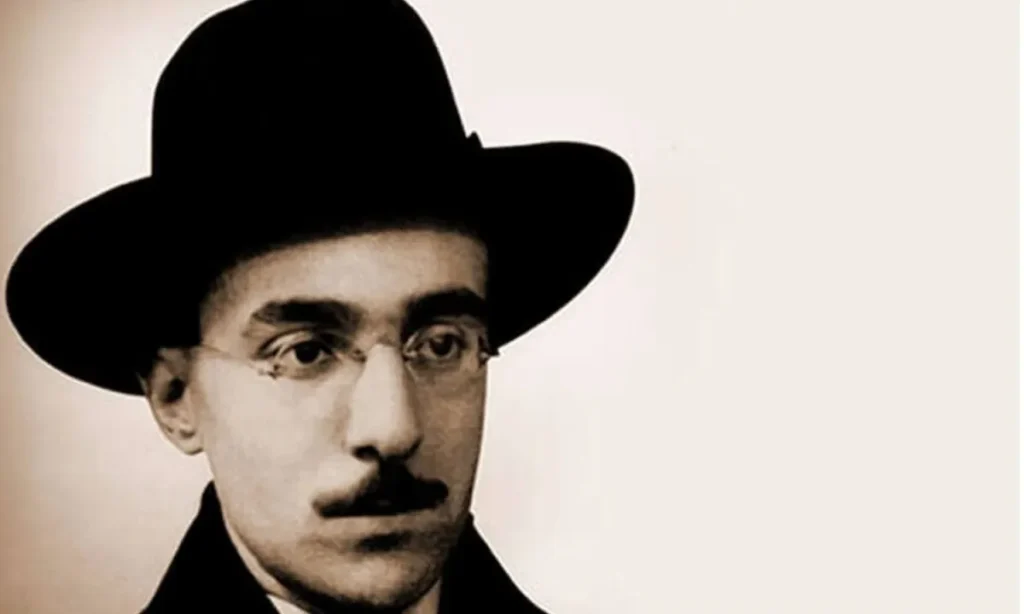
You have probably done it at some time — walked into a room and felt the person you were a moment ago dissolve, replaced by something more presentable, more legible, more acceptable to the air in that room. Not a lie, exactly. A version. And you told yourself this was flexibility, social intelligence, the normal tax of living among others. What you did not ask was whether the version you left behind in the hallway had any more claim to being you than the one you just assembled on the spot.
Fernando Pessoa asked that question so relentlessly that it swallowed his entire existence. By the time he died in Lisbon in 1935, he had constructed over seventy distinct authorial identities, each with its own biography, literary style, philosophical temperament, and emotional signature. Alberto Caeiro was the bucolic anti-metaphysician who saw nothing beyond what his eyes touched. Ricardo Reis was a pagan classicist, melancholic and disciplined. Álvaro de Campos was the modernist engineer drunk on sensation and industrial vertigo. These were not pseudonyms in any conventional sense, not masks worn to protect a single coherent face behind them. Each heteronym, as Pessoa named them, had its own face. The problem was that this multiplication was supposed to produce freedom, and it produced instead an architecture of confinement more elaborate than any single identity could have built.
Erving Goffman published The Presentation of Self in Everyday Life in 1959, nearly a quarter century after Pessoa’s death, and without knowing it produced the sociological autopsy of everything Pessoa had lived. Goffman argued that social life is performance all the way down — that what we call the self is not the actor but the role, not the person but the staging, and that the backstage regions where we supposedly rest from performance are themselves just another kind of stage. The disturbing implication, which Goffman documented with the cool precision of an ethnographer cataloguing funeral rituals, is that there is no exit from the theatre. Multiplying your roles does not get you closer to some authentic core. It only proliferates the stages.
Pessoa seemed to understand this intuitively, and Bernardo Soares, the semi-heteronym who narrates The Book of Disquiet, is the figure in whom this understanding has become unbearable. Soares is not free from the heteronymic project — he is its residue, the consciousness left over after all the fully formed identities have been dispatched into the world to write their poems and publish their manifestos. He sits in a rented room above a Lisbon street and watches the city with the exhausted lucidity of someone who has already tried every available version of himself and found each one equally hollow. His disquiet is not romantic melancholy. It is the specific anguish of a man who sees the mechanism clearly and cannot stop being operated by it.
What makes this structurally different from ordinary alienation is the absence of nostalgia for a lost unity. Soares does not mourn a self he once had and lost. He suspects there was never one to lose, and this suspicion does not arrive as liberation — it arrives as vertigo. The philosopher Derek Parfit, in Reasons and Persons published in 1984, would construct an entire rigorous argument for why the self is not what we think it is, why personal identity over time is a conventional fiction sustained by psychological continuity rather than metaphysical fact. Parfit reported finding this conclusion peaceful, even freeing. Soares had reached the same conclusion fifty years earlier and found it catastrophic. The difference is not philosophical. It is temperamental. It is the difference between standing at the edge of an abyss and concluding it poses no danger, and standing at that same edge and feeling the ground tilt beneath you regardless of what you conclude.
What the heteronyms reveal, then, is not the richness of a single man’s imagination but the violence of consciousness turned against the very concept of its own singularity — and still unable to stop wanting one.
Modernity’s Orphan
You are standing in a city that has forgotten what it was for. The trams still run. The cafés still fill at dusk. But the empire — the one that once stretched from Goa to Macau to the mouth of the Congo — has been quietly folding in on itself for decades, and what remains in Lisbon by the early twentieth century is not a capital so much as a stage set, populated by people performing a grandeur they can no longer locate. The republic declared in 1910 did not liberate Portugal from its imperial psychology; it simply removed the monarchy that had given that psychology its costume. What was left was a nation structurally dependent on nostalgia, and Pessoa understood this with a precision that bordered on contempt.
The Portuguese word saudade resists clean translation not because it describes something uniquely Portuguese but because it describes something universally convenient — the ache for an absence that was never quite as beautiful as it is now remembered. Every culture manufactures a version of this feeling, but Portugal elevated it to a national aesthetic, a philosophical position, almost a form of civic duty. By the time Bernardo Soares is wandering the Baixa district and recording his fragments in what would eventually be assembled as The Book of Disquiet, saudade had already been institutionalized: it was in the fado, in the official rhetoric of Sebastianism, in the persistent myth of Dom Sebastião — the young king who died at the Battle of Alcácer Quibir in 1578 and whose return the Portuguese had been awaiting, with varying degrees of sincerity, for three centuries. This was not folklore. It was a political technology, a way of directing grief away from structural failure and toward an aestheticized, permanent yearning that demanded nothing and changed nothing.
Soares’ disquiet is partly the disquiet of a man who has recognized this mechanism and cannot un-recognize it. His melancholy is not the melancholy of saudade — it does not point backward with longing. It is the more corrosive condition of someone who has watched the longing itself and found it hollow. When the sociologist Max Weber, writing in the same era, described the “disenchantment of the world” as the defining psychological wound of modernity in works like Science as a Vocation, he was pointing at the same rupture Pessoa circles from within — the collapse of the sacred architectures that once gave ordinary suffering a frame. But where Weber diagnosed from the outside, Pessoa inhabited the wound and wrote from inside it, which is why Disquiet does not read like sociology. It reads like a fever.
Lisbon in the 1910s and 1920s was also a city of remarkable political instability — between 1910 and 1926, Portugal cycled through forty-five governments. This is not background noise. It is the specific texture of a society incapable of producing a collective future, lurching from crisis to crisis while the cultural mainstream responded by retreating further into the past. The Book of Disquiet is, among other things, a document of what it feels like to be a lucid mind inside a culture that has chosen narcosis. Soares does not march. He does not organize. He goes to his job as an assistant bookkeeper in a commercial firm on the Rua dos Douradores, and he writes, and the writing is not a substitute for action — it is something more unsettling than that. It is the record of a man who has concluded that the available forms of action are themselves part of the sedation.
What Pessoa indicts is not Portugal specifically but the psychological structure that Portugal had made unusually visible: the way a culture in decline can aestheticize its own exhaustion so thoroughly that the exhaustion begins to feel like depth, and depth begins to feel like identity, and identity becomes the last fortress no one is willing to storm.
Sensation Without Action
You are sitting at a desk you have sat at for twenty years, and nothing has ever happened there except thought. The window faces the same courtyard. The light falls the same way in October. You have not moved, and yet you feel, with a certainty that embarrasses you slightly, that you have lived more than the people who boarded ships.
This is not laziness Bernardo Soares is describing when he insists that the dreamed voyage surpasses the actual one. It is a metaphysics of interiority so complete that action becomes almost vulgar by comparison, a dilution of experience into the crude medium of events. For Soares, the man who travels to India arrives somewhere — which means he stops arriving, stops anticipating, stops holding the pure electric charge of the possible. The man who imagines the journey retains it whole and intact, never soiled by the specific. This position is aesthetically coherent. It is also, when held unflinchingly, a position that has to be defended against the nagging suspicion that it costs something.
Herbert Marcuse, writing in Eros and Civilization in 1955, gave a name to exactly this cost. He argued that bourgeois civilization had learned to redirect libidinal energy — the whole force of erotic and aggressive drives — away from transformation of the world and toward aesthetic production and contemplation. What Freud had described as sublimation, Marcuse reread as a structural feature of a specific historical arrangement: capitalism needed subjects who could renounce satisfaction in the present tense, who could aestheticize their own deprivation and call it refinement. The clerk who finds infinity in the grain of a wooden desk is, from this angle, not transcending his condition but metabolizing it into a form of consent. The beauty he discovers in limitation is partly the beauty of limitation itself.
Soares is too intelligent to be unaware of this trap. The Book of Disquiet contains within itself a persistent countermovement — a recognition that the very sensitivity which makes inner life seem inexhaustible might be a compensation for powerlessness rather than an alternative to it. He writes of his tedium with a precision that refuses to aestheticize it fully, refuses to let it settle into something merely gorgeous. The tedium remains tedious. The dreaming intensifies but does not resolve. This is the honesty that separates the text from its own temptation.
And yet the structural fact remains. Soares works as an assistant bookkeeper in Lisbon in the early twentieth century, a city then governed by the rigid hierarchies of a decaying empire, a society offering men of his class and temperament very little room to move. The Portuguese First Republic collapsed in 1910 and gave way to chronic instability; by 1926, a military coup had installed the conditions that would calcify into Salazar’s Estado Novo. The man who retreats entirely into sensation, into the exquisite management of inner weather, is also a man living inside a political arrangement that rewards such retreats. The privatization of meaning is always, in some measure, historically produced.
What Marcuse could not fully account for, however, is the difference between sublimation as unconscious adaptation and sublimation pursued with open eyes and a documented grief. Soares knows what he is doing. The knowing does not liberate him from the structure, but it transforms the moral valence of the act. He is not consoled. He is precise about the absence of consolation. Sensation without action becomes, in his hands, not a resolution but a wound kept deliberately open — a refusal to heal into the false wholeness that action, narrative, and completion typically provide. The question the text leaves turning in the air is whether this wound is a form of integrity or simply the most sophisticated available disguise for surrender, and whether there is, in the end, any reliable way to tell the difference from the inside.
A vision curated by a filmmaker, not an algorithm
In this video I explain our vision
The Second Scene: A Body in a City That Moves Around It

He sits on a bench near a tram stop, coat collar turned against nothing in particular — the morning is not cold. People move past him in the particular urgency that cities manufacture between eight and nine, that shared choreography of people who have somewhere to be and have decided that having somewhere to be is proof enough of existing. He does not move. Not in the way of someone waiting, which carries its own forward tension, its own lean toward the future. He sits the way sediment sits, the way a stone in a riverbed sits, with something that looks from the outside like peace and from the inside — if you have ever been inside it — is closer to a total severance from the machinery of forward motion.
This is not poetic immobility. This is not the romanticized stillness of the contemplative, the monk, the genius at rest. Pessoa spent the better part of his adult life as a commercial correspondence clerk in Lisbon, writing invoices and business letters in English and French for firms that needed the translation, dying at fifty-three in 1935 with the trunk of unpublished manuscripts that would only begin to enter the world in 1982 with the first critical edition of the Livro do Desassossego assembled by Maria Aliete Galhoz and Teresa Sobral Cunha. The immobility in that book is not a philosophical posture adopted for effect. It is the literal record of a man who watched Lisbon from the position of someone who had removed himself from its forward logic without ever physically leaving.
What the city does not understand about the figure on the bench is that his stillness is not a refusal to participate but an inability to believe in what participation promises. Georg Simmel argued in 1903, in his essay on the metropolis and mental life, that the urban nervous system adapts to the bombardment of sensation by developing what he called a blasé attitude — a protective dulling, an anaesthetic against overstimulation. But Soares operates beyond blasé. Blasé is still a social strategy, still a way of managing one’s position inside the collective rhythm. What Soares documents is something prior to strategy: the moment when the self looks at the collective rhythm and cannot locate in it a single beat it recognizes as its own.
The city accelerates through the twentieth century at a rate that makes this problem structurally inevitable for a certain kind of consciousness. Walter Benjamin, working through his Arcades Project across the 1930s, understood Baudelaire’s flaneur as someone who still moved through the city, who still converted its surfaces into personal meaning, who still metabolized modernity through the act of walking. But the flaneur belongs to an earlier phase, when the pace of the street still allowed for individual absorption. By Pessoa’s Lisbon the metabolism has broken down. The street no longer waits for you to mean something from it. It simply proceeds.
What remains when the street proceeds without you is not nothing. This is the thing that looks like nothing from the outside, from the angle of the people who have somewhere to be. It is, in Soares’s rendering, a hyper-presence — a condition of noticing so intense and so continuous that it forecloses action entirely, the way a surgeon who becomes suddenly aware of every nerve in their own hand can no longer hold the scalpel steady. Consciousness, pushed to a certain pitch, becomes its own obstacle. The man on the bench is not absent from his life. He may be more present in it than anyone passing him — present to its texture, its actual weight, the specific quality of the light at that hour, the sound the tram makes before it rounds the corner, the precise and unrepeatable configuration of strangers moving through a morning that will never occur again and that no one else appears to have noticed is already ending.
Disquiet as Social Diagnosis
You are sitting at a desk that is not yours, copying numbers into a ledger that will be reviewed by someone who will never learn your name. The window to your left frames a rectangle of Lisbon sky you will not enter today, and the thought arrives — as it always does, just before noon — that you were made for something larger than this. The thought feels metaphysical. It is not.
Pierre Bourdieu spent much of his career demonstrating that what feels like individual sensibility is almost always the internalized shape of a social position. In Distinction, published in 1979, he developed the concept of habitus to describe precisely this mechanism: the set of durable, transposable dispositions that a class position installs in a person before they have the language to name it. The habitus is not ideology imposed from outside; it is the body’s learned grammar of what is possible, what is thinkable, what is owed. Soares, the semi-heteronym through whom Pessoa writes The Book of Disquiet, is a textbook specimen of a particular habitus — that of the educated minor clerical worker, a figure produced in enormous numbers by the Europeanization of Lisbon’s commercial economy in the late nineteenth and early twentieth centuries.
What makes this figure structurally tragic is not poverty, which at least offers the dignity of a legible grievance. It is the specific mismatch between cultural capital and economic capital that Bourdieu describes as one of the most corrosive positions in any social field. Soares has read enough to dream, not enough capital to act, and just enough wage to survive without the pressure that forces transformation. He occupies what might be called the zone of frozen aspiration: educated into appetites the market will never satisfy, employed in tasks that require he suppress everything his education trained him to value. His suffering is real. But its texture — that particular mixture of grandiosity and paralysis, of contempt for the world and inability to leave it — is produced by social coordinates, not by the cosmos.
The Book of Disquiet, assembled posthumously from fragments Pessoa left in a trunk and first published in 1982, has been read predominantly as a monument to existential sensitivity. That reading is not wrong, but it is incomplete in a way that serves a particular ideological function: it aestheticizes structural suffering, converts a diagnosis into a temperament, and makes the reader feel that their own analogous paralysis is a sign of depth rather than a condition with material causes. Every time a reader recognizes themselves in Soares and concludes that the problem is consciousness itself — the unbearable weight of being a thinking creature — the social architecture producing that consciousness escapes scrutiny entirely.
What Soares calls his inability to want, his famous tedium, his sense that action is always a betrayal of some purer inner state, maps almost precisely onto the psychological profile of someone whose social position offers no legitimate path toward the life their formation promised them. The education that taught him to value interiority, nuance, and aesthetic perception also cut him off from the practical networks of capital and patronage that would have made those values economically viable. He was trained for a world that does not exist and employed in one he was trained to despise. The disquiet is the name he gives to the friction between those two facts.
To read this as metaphysics rather than sociology requires a kind of determined blindness to the ledger on his desk, the rua dos Douradores where he lives and works, the fact that his rapturous inner voyages happen exclusively during office hours when the exterior world has been temporarily suspended by routine. The transcendence Soares experiences is a function of his captivity, not its antidote. It is what the mind does when the body cannot move, and the question of why the body cannot move has an answer that precedes every sentence he writes about the soul.
The Lie of the Interior Life
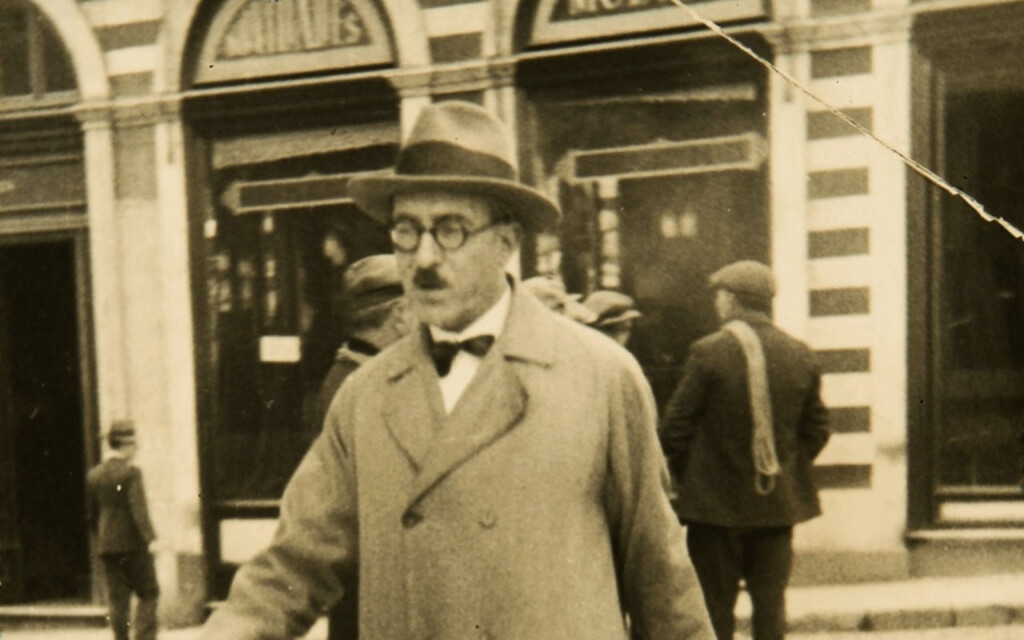
You have probably, at some point in your life, told yourself that the richness of what you felt made up for the smallness of what you did — that the texture of your inner world was itself a kind of achievement, invisible to others perhaps, but real, perhaps more real than the measurable accomplishments of people you considered less sensitive than yourself.
This is not a personal failing. It is a cultural inheritance with a specific genealogy. The Romantic movement of the late eighteenth and early nineteenth centuries performed a transaction that has never been fully audited: it elevated interiority to the status of heroic act, made suffering consciousness the mark of distinction, and taught several generations of Europeans that to feel deeply was already to live fully. What began as a philosophical rebellion against Enlightenment rationalism — against the reduction of the human being to a measurable, productive unit — gradually became its own form of consolation for those the industrial order had already silenced. The sensitive soul who could not compete in the world of manufacture and accumulation was offered a private kingdom instead. The trade seemed generous. It was not.
Bernardo Soares, the semi-heteronym Pessoa constructed to carry The Book of Disquiet, is the most ruthlessly honest embodiment of this transaction in modern literature. He works as an assistant bookkeeper in Lisbon. He lives in a rented room. He goes nowhere. He does nothing. And he writes, in sentences of almost unbearable beauty, about the infinitude of his inner experience, the oceanic quality of his sensations, the metaphysical weight of an afternoon. The prose is genuine. The intelligence is real. And yet somewhere in the accumulation of those entries — which Pessoa left unordered, unpublished, stuffed into a trunk when he died in 1935 — the reader begins to feel not elevation but a slow, cold dread, the suspicion that all this richness of feeling has produced exactly nothing, not even the life that was supposedly being compensated for.
The philosopher Charles Taylor, in Sources of the Self published in 1989, traced how the modern ideal of authenticity — the belief that each person contains a unique inner truth that must be expressed — descended from this same Romantic framework and became, in secularized consumer societies, a mechanism of individual responsibility that conveniently absolved social structures of theirs. If you have not realized your inner potential, you have failed yourself. The system remains exonerated. Soares enacts this logic from the inside: he is so thoroughly committed to his interiority that the question of whether the conditions of his existence were just never fully surfaces. He aestheticizes his own entrapment so completely that the trap disappears into the wallpaper.
What makes this particular cruelty so durable is that the compensation is not entirely false. The inner life is real. The sensitivity is real. The prose that emerges from it can be extraordinary. This is precisely what makes the consolation so effective — it contains enough truth to prevent the larger lie from being seen. A completely empty promise is easy to reject. A promise that delivers something genuine while withholding something essential is the kind that entire lives are built around without ever being examined.
The Book of Disquiet endures not because it glorifies the interior life but because, read with sufficient coldness, it reveals the cost of that glorification with an honesty its author may not have fully intended. The trunk in which those pages were found is not a symbol of hidden treasure. It is a record of what the consolation actually produces: fragments, beautiful and precise and utterly private, addressed to no one, answering nothing, surviving their author only because someone else eventually opened the lid and decided they mattered — which is to say, the interior life required, in the end, exactly the external validation it had always claimed to transcend.
🌀 Fragments of Self: Writing the Unwritable Interior
Fernando Pessoa’s The Book of Disquiet inhabits a strange borderland between diary, prose poem, and philosophical confession, tracing the restless inner life of a solitary soul adrift in Lisbon. Its themes—identity dissolution, the burden of consciousness, the impossibility of authentic selfhood—echo across literature, philosophy, and psychology. These related articles illuminate the labyrinth Pessoa built word by word.
Stream of Consciousness in Literature and Cinema
Stream of consciousness as a literary technique finds its purest expression in works that attempt to transcribe the unfiltered flow of thought, much as Pessoa does through his heteronym Bernardo Soares. This article traces the history of the form from William James‘s psychological theories to its flowering in Joyce, Woolf, and beyond. Understanding this tradition is essential to grasping why The Book of Disquiet feels less like a novel and more like an interior weather report.
GO TO THE SELECTION: Stream of Consciousness in Literature and Cinema
Virginia Woolf: Life and Works
Virginia Woolf, like Pessoa, made the mapping of inner experience the central project of her literary life, producing works in which consciousness itself becomes the landscape. This article explores her life and writings, examining how she dismantled conventional narrative to capture the texture of thought and feeling in real time. Her resonance with Pessoa’s project of radical interiority makes this a natural companion piece.
GO TO THE SELECTION: Virginia Woolf: Life and Works
Hesse’s Steppenwolf: Analysis
Hesse’s Steppenwolf shares with The Book of Disquiet a profound preoccupation with the fractured self, the individual who feels constitutionally unable to belong to the world around him. Both works construct their meaning through obsessive self-observation and the suspicion that ordinary life is a kind of exile. This analysis unpacks the philosophical dimensions of Hesse’s divided protagonist and the spiritual crisis that drives the narrative forward.
GO TO THE SELECTION: Hesse’s Steppenwolf: Analysis
Albert Camus: Life and Philosophical Thought
Albert Camus‘s philosophy of the absurd offers one of the most powerful frameworks for understanding Pessoa’s lifelong meditation on meaninglessness, paralysis, and the impossibility of action. Soares, like the absurd hero, is fully aware of the gulf between human longing and the world’s silence, yet continues to write rather than rebel or surrender. This article traces Camus’s life and thought, providing essential philosophical context for reading Pessoa’s disquiet as a sustained confrontation with absurdity.
GO TO THE SELECTION: Albert Camus: Life and Philosophical Thought
Discover the Cinema of Inner Worlds on Indiecinema
If Pessoa’s prose has awakened your appetite for works that dare to explore consciousness, solitude, and the fragile architecture of the self, Indiecinema’s streaming platform offers a curated selection of independent and art-house films that carry the same spirit of radical interiority. From meditative European cinema to visionary international productions, Indiecinema is the space where literature and film meet in their most adventurous forms. Subscribe and let the labyrinth continue on screen.
👉 EXPLORE THE CATALOG: Watch Indie Films in Streaming
A vision curated by a filmmaker, not an algorithm
In this video I explain our vision

