The Architecture of Shared Silence
You are sitting across from someone you have loved for years, and there is nothing left to say — not because something broke, not because the silence is hostile, but because the silence has become the most honest thing left in the room. The bread is passed. The wine is poured. Somewhere in the architecture of that stillness, you realize you have stopped translating yourself for this person. They already know the translation. Or you believe they do, which amounts to the same thing.

This is the particular damage marriage does not advertise. Not cruelty, not abandonment, not the operatic exits. The thing it does quietly, across years, is convert a person into furniture. The word sounds brutal because the sensation is so gentle. Over-familiarity does not arrive like a verdict — it accumulates the way sediment does, layer by layer, until the original riverbed is unrecognizable beneath it. The philosopher Simone de Beauvoir noted in “The Second Sex” in 1949 that marriage as a social institution is designed not around intimacy but around management — the management of property, of legitimacy, of emotional labor distributed along lines that predate the couple’s own desires entirely. What she observed structurally, most people discover personally, usually around the eighth or ninth year, when assumption has replaced attention so completely that they cannot remember the last time they actually looked.
To look, in the phenomenological sense Edmund Husserl described in his “Logical Investigations” — to genuinely attend to an object without the shortcuts of pre-formed categories — is precisely what proximity destroys. The closer you are to something across time, the more aggressively your perception replaces the thing itself with your accumulated theory of it. You stop seeing your partner and start seeing your archive of your partner, which is a subtly different entity. The archive does not age. It does not surprise. It confirms. And the confirmation, initially a comfort, gradually becomes a kind of erasure — because the person in front of you is still changing, still producing new signals, and you are no longer receiving them.
Virginia Woolf understood this not as a failure of love but as a structural consequence of presence itself. In “To the Lighthouse,” published in 1927, the marriage between Mr. and Mrs. Ramsay operates less as an emotional relationship than as a gravitational system — two bodies exerting enormous force on everything around them while the space between them remains, in crucial ways, unmeasured. Mrs. Ramsay knits. Mr. Ramsay paces. They orbit without intersecting. Woolf’s formal innovation, her dissolving of linear time into interior consciousness, was not merely stylistic — it was diagnostic. She was writing about the gap between what is felt and what is communicated, and how that gap, in a long marriage, does not close through conversation but widens into the primary landscape of the relationship.
The sociologist Erving Goffman, in “The Presentation of Self in Everyday Life” published in 1959, argued that all social interaction is performance, and that intimacy is distinguished not by the absence of performance but by backstage access — the permission to be unguarded. The cruel paradox embedded in this framework is that backstage access, once granted, tends to eliminate the performance entirely, and with it the very vitality that made the other person interesting to watch. You married the performance without knowing you were marrying the performance. By the time you have full backstage access, you cannot remember what the show looked like from the front, and neither can they.
What replaces it is not emptiness, exactly. It is something more like a shared weather system — pervasive, ambient, so constant that it registers only when it changes.
Redemption

Drama, by Maria Martinelli, Italy, 2023.
Hanna meets her lover in an isolated place, a refuge in the mountains. The present and the past intertwine in search of a possible redemption, while the choices to be made, such as that of a child on the way, can no longer wait. In that place, together and isolated, shreds of their past life appear in the room and seem to dance with their present life. An enigmatic mirror of their lives lived with other people, at other ages. In those fragments we see missed appointments, broken hopes, pieces of life like a cell phone ringing and no one answering and like in a puzzle, which slowly comes together, we sense something that unites their lives.
Is there a truth that we tell ourselves to others? Redemption is the story of a woman, of the complex life that she finds herself facing, of the moral choices that follow one another in her life. In romantic encounters we don't always talk about our experiences and perhaps loving each other refers exactly to this instinctive peculiarity, to the attempt to reconstruct an existence beyond our own past, which sometimes we even hide ourselves. But the past is often a threshold that we must cross if we want to start living in the present again.
LANGUAGE: Italian
SUBTITLES: English, Spanish, French, German, Portuguese
Woolf's Geometry of Domestic Distance
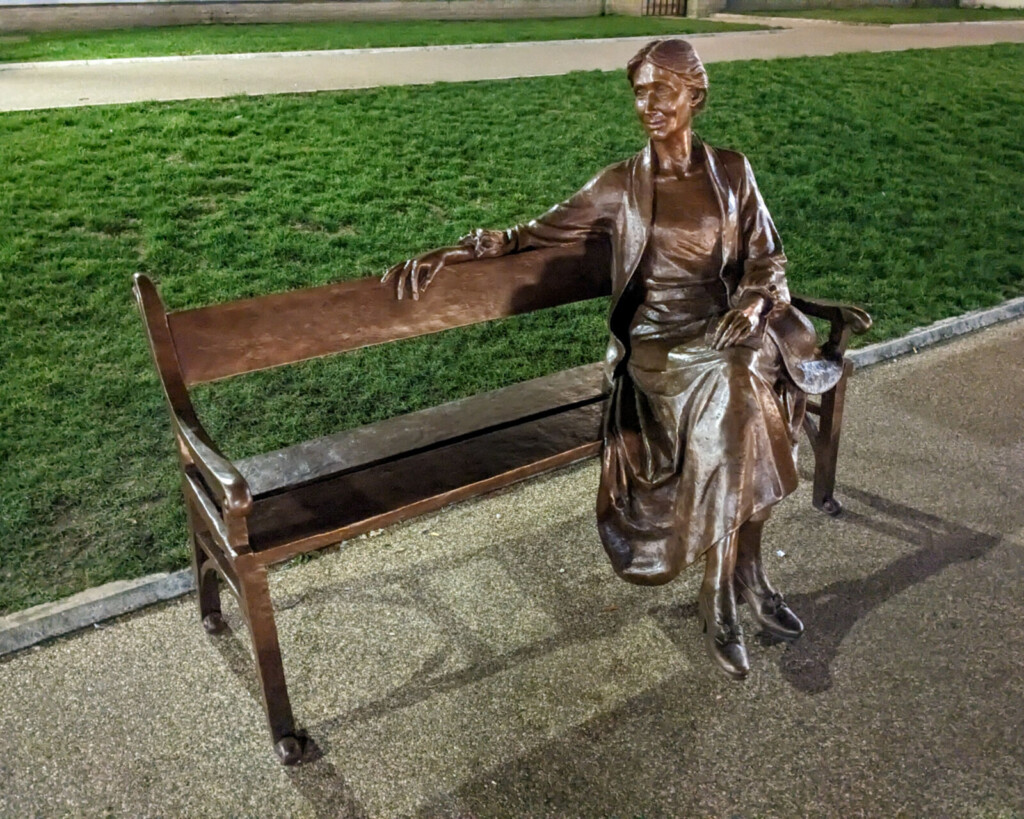
You are standing in a room full of people you love, and you are completely alone in the task of holding the room together. No one asked you to do this. No one will thank you for it. And if you stopped, the entire architecture of the evening would collapse — the conversation, the warmth, the sense that life is, after all, worth living — and everyone would feel the absence without being able to name its source.
This is not a metaphor Virginia Woolf is reaching for in To the Lighthouse. It is the structural condition she is dissecting with the precision of someone who has lived inside it. Mrs. Ramsay does not simply love her husband and children. She manufactures the emotional atmosphere they breathe. Her interior monologue, fractured and luminous across the novel’s opening section, reveals a consciousness perpetually calibrating the needs of others — measuring her husband’s ego against his fragility, her children’s disappointment against what they can bear, the social temperature of a dinner table as though it were a thing that could tip and shatter. She is not performing love. She is performing the conditions under which love becomes possible for everyone else, while remaining, herself, structurally unreachable by it.
What Woolf understood, and encoded in the novel’s very form — that stream of interiority that never quite arrives at a stable surface — is that Mr. Ramsay’s emotional demands are not cruelties but entitlements. He requires reassurance the way a machine requires fuel. His philosophical project, his fragile masculinity, his terror of failure: these are not burdens he carries quietly. They are burdens he deposits, repeatedly, at his wife’s feet, and she absorbs them without the exchange being named as exchange. The asymmetry is so complete it has ceased to be visible. That invisibility is the point.
Woolf was writing from inside a marriage that tested the same architecture. Her relationship with Leonard Woolf, documented across her diaries and letters, was in many respects unusually egalitarian for its time — Leonard read her manuscripts, managed her finances during her breakdowns, organized the practical scaffolding of her life. And yet her 1915 mental collapse, the worst of her recurring crises, occurred within the first years of that marriage, at the precise moment domesticity closed around her. The question she could not fully ask in life she displaced into fiction: what does it cost a woman to be the emotional load-bearing wall of a household, and who is authorized to notice that cost?
Silvia Federici’s Caliban and the Witch, published in 2004, provides the structural answer Woolf’s novel holds open as a wound. Federici’s argument is not sentimental. She traces, through the enclosures of the sixteenth and seventeenth centuries and the systematic destruction of communal female knowledge, how the figure of the housewife was not a natural development but a capitalist construction — a means of producing and reproducing labor power at zero acknowledged cost. The invisibility of women’s interior lives within marriage was not a cultural accident or a failure of individual husbands to pay sufficient attention. It was the necessary condition of a system that required the work to be done without being categorized as work. Once you name it, you must compensate it. Once you compensate it, the entire economy of the household — and by extension the economy of the market it feeds — begins to tremble.
Mrs. Ramsay dies between sections of the novel, offhandedly, in a parenthetical clause. Woolf does not give her a death scene. The woman who held everything together is simply gone, noted in brackets, and the house begins its decade of decay. The brackets are not cruelty. They are the most precise thing Woolf ever wrote about what the labor of a wife looks like from the outside — which is to say, like nothing at all, until its absence makes the walls show damp.

The Sociological Grammar of Conjugal Blindness
You have lived with someone long enough that you no longer hear the particular way they set a cup down on a counter — not the sound itself, but what the sound means, whether it carries frustration or contentment or simple distraction. The cup lands and you process nothing. This is not rudeness. It is something more unsettling: it is fluency turned against itself, the competence of long acquaintance becoming a form of erasure.
Erving Goffman, in his 1963 study of public behavior, described what he called civil inattention — the practiced art by which strangers in shared space grant each other the gift of not being examined. You acknowledge the other person just enough to signal that you have registered their humanity, then you look away. It is a social lubricant, a kindness built into urban life. What Goffman never fully pursued is the grotesque inversion of this mechanism when it migrates indoors. Between strangers, civil inattention is a courtesy. Between people who share a bed, a kitchen, a surname, it becomes the slow dismantling of a person. The agreement to stop reading each other is rarely spoken. It accumulates the way sediment does — layer by imperceptible layer, until the riverbed has changed shape and no one remembers the original channel.
What makes this especially treacherous is that it does not feel like neglect. It feels like comfort. The nervous scanning of early intimacy — that hypervigilance of new love, when every expression is a text to be decoded — eventually settles into what we call ease. We celebrate this settling. We call it stability. We hand it out as evidence that a marriage has matured. But Arlie Hochschild’s research, published in 1989, exposed what lives inside that ease when it is distributed unevenly. Interviewing dual-income couples across the United States, Hochschild found that women were performing an average of fifteen hours more domestic and emotional labor per week than their partners — a figure she called the Second Shift. The number itself is startling enough. What is more disturbing is the internal accounting she uncovered: the way each partner develops a private ledger, tracking contributions and deficits, gratitude and resentment, but almost never showing the other the books. The marriage runs on a currency that only one person knows is being spent.
Routine is the engine of this concealment. When a person performs the same acts of maintenance day after day — the scheduling, the remembering, the emotional preparedness for everyone else’s crises — those acts begin to vanish into the background of the household like furniture. They become part of the architecture rather than evidence of a life being expended. And here is the precise mechanism of conjugal blindness: the more reliably someone does something, the less visible their doing of it becomes. Competence punishes itself. The person who never forgets becomes the person who is never thanked for remembering, because remembering is simply what they are now, a function rather than a choice made freshly each time at some personal cost.
This is what Mrs. Ramsay is inside her household, though Woolf renders it without the vocabulary of sociology — she renders it as atmosphere, as the quality of light in a room when one particular person has been moving through it. Her husband thinks in propositions. She thinks in everything else: the temperature of an interaction, the unspoken need behind a child’s sharpness, the way a dinner can be steered away from disaster if she angles the conversation precisely enough at the right moment. None of this appears in any ledger. It has no name in the marriage. It simply is the marriage, invisible in the way that load-bearing walls are invisible — you only discover what they were holding up once they are gone.
Distance as Mutual Construction

You are sitting across from someone you have chosen, someone who chose you back, and yet the table between you feels wider than it did a year ago, wider than either of you intended, and neither of you can name exactly who moved first.
The instinct is to assign authorship to that distance — to locate the architect, the one who built the wall brick by brick while the other stood bewildered in the rubble. This is the story couples tell themselves and tell their therapists: one retreats, one pursues; one withdraws into silence, one hammers at the door. But John Bowlby’s foundational work Attachment and Loss, published in 1969, destabilizes that clean narrative before it can settle. Bowlby demonstrated that the proximity-seeking behaviors we deploy in adult intimacy are not chosen strategies but inherited architectures, patterns laid down in the earliest relational experiences before language existed to name them. What looks like one person’s coldness is often the precise activation of another person’s anxiety, which in turn triggers the coldness more deeply, which sharpens the anxiety further. The system is circular and co-produced, each person faithfully playing the role the other’s nervous system has unconsciously scripted for them.
In Woolf’s novel, Mr. and Mrs. Ramsay do not simply drift apart the way furniture drifts in an empty house. They hold each other at exactly the distance their respective inner worlds require. He needs her reassurance as an almost metabolic function — her gaze is the mirror in which his intellectual existence becomes real to him. She needs, equally and desperately, to remain needed, because the alternative is a selfhood that has no external justification, no socially legible form. Their distance is not a failure of love. It is love’s architecture, constructed jointly with tools neither of them forged consciously.
What Simone de Beauvoir identified in The Second Sex in 1949 was the structural condition that makes this architecture almost inevitable for women of a certain historical formation. Marriage, she argued, asks the woman to perform the dissolution of her own subjectivity at precisely the historical moment when the man is culturally permitted and even encouraged to expand his. The husband’s self-enlargement — his projects, his philosophical abstractions, his expeditions to lighthouses real and metaphorical — is not simply personal ambition. It is a social permission slip issued at birth and renewed by every institution he moves through. The wife’s self-contraction is equally not personal failure. It is the other side of the same permit, the shadow economy of subjectivity in which one party’s expansion is funded by another’s compression.
This does not reduce Mrs. Ramsay to victim, which would be its own form of blindness. She exercises genuine power in the novel’s social world — she orchestrates, she sees, she holds the emotional weather of every room she enters. But the power available to her is the power of influence rather than assertion, the power of the one who shapes from within the constraint rather than naming the constraint aloud. And crucially, she has internalized the logic so completely that she does not experience the contraction as loss. She experiences it as vocation. The distance between her and her husband is not something imposed on her from outside. She has helped build it, because building it was the only form of selfhood the available vocabulary offered her.
Here is the sharper discomfort: this is not only historical. The attachment patterns Bowlby mapped do not dissolve with feminist legislation or generational progress. They run beneath the level of politics, in the body’s oldest grammar, which means that even couples who have consciously rejected the Ramsays’ arrangement may still be fluent in their language without knowing they are speaking it.
What the Lighthouse Was Never About
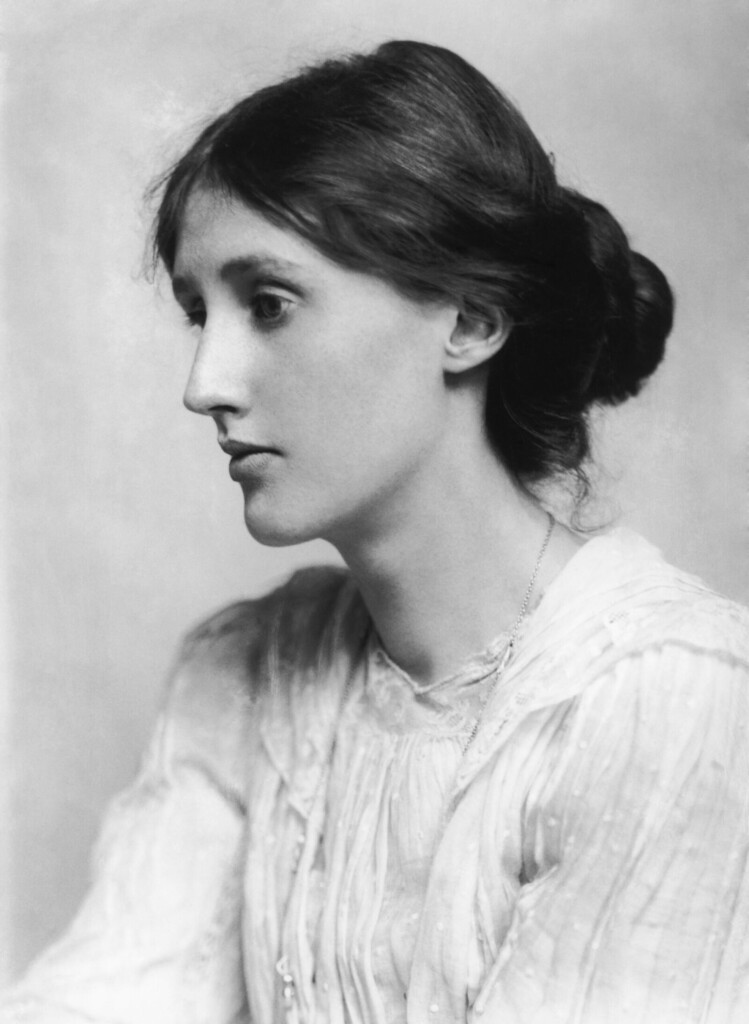
You reach the lighthouse eventually, at the end of ten years and a novel, and the arrival feels nothing like what was promised. James, who spent his entire childhood burning for that crossing, feels almost nothing when the boat finally touches the rocks. Not disappointment, exactly — something more unsettling than that. The thing itself was always real. It was the meaning layered onto it that evaporated the moment it was no longer needed as a container for longing.
This is what tends to go unexamined about fixed points: they do not move, which is precisely why they are so useful for measuring movement in everything else. Sailors have always known this. A lighthouse does not guide you toward itself — it tells you where you are in relation to something stable, so you can calculate how far you have drifted from your intended course. The Ramsays, across the whole architecture of that novel, use the lighthouse in exactly this way without ever knowing it. It is not a destination. It is a coordinate.
Henri Bergson, writing in 1889 in what he called his Essai sur les données immédiates de la conscience — translated into English as Time and Free Will — made a distinction that most people instinctively understand but have never had language for. He separated clock time from what he called durée, lived duration: the thick, continuous, undivided flow of inner experience that cannot be sliced into measurable units without being falsified. Clock time is spatial. It lays moments end to end like beads on a string and counts them. Durée is something else — it accumulates without being countable, it thickens without producing events, it changes everything while appearing to change nothing visible from the outside. A marriage does not erode through incidents. It erodes through durée. Through the ten thousand mornings that left no record, the silences that were not arguments and therefore were never examined, the small retreats from honesty that felt, in the moment, like kindness.
What makes this so difficult to confront is that durée resists the retrospective narratives people build to explain their own lives. When a relationship fractures visibly — through a betrayal, a spoken cruelty, a door slammed with sufficient force to mark a before and after — the mind has something to organize itself around. The event becomes the cause, the story becomes manageable, the wound has an address. But when nothing happened, when the distance accumulated in the unmeasured time between moments, the mind cannot find its footing. There is no single point of failure to examine and either forgive or condemn. There is only the accumulated weight of a thousand small choices to remain slightly less present than you could have been.
The sociologist Arlie Hochschild, decades after Bergson, tracked something adjacent to this in her 1983 work The Managed Heart, showing how the labor of emotional presentation — the constant work of feeling the right thing, or performing the right thing, or suppressing the wrong thing — exhausts the interior life in ways that leave no visible scar. Two people can perform a functional marriage for years, adapting their emotional expression to the demands of domesticity and social legibility, and find one day that the performance has consumed the performer. Not because they failed each other in any nameable way. Because the structure of the institution itself demanded a kind of continuous self-management that cost more than was ever acknowledged or repaid.
The question that remains — the one that does not resolve into an answer the way events resolve into lessons — is whether the distance inside a marriage is ever truly the result of something that went wrong, or whether it is what inevitably forms when two separate durations, two irreconcilable inner flows of lived time, are asked to synchronize indefinitely into a single shared life.
A vision curated by a filmmaker, not an algorithm
In this video I explain our vision
🌊 The Invisible Distances That Shape Us
Virginia Woolf‘s To the Lighthouse maps the unmeasured space between two people who share a life yet inhabit entirely different inner worlds. These four articles explore the silences, suppressions, and psychological distances that define intimacy, identity, and the self in modern literature and thought.
Virginia Woolf: Life and Works
Virginia Woolf stands as one of the defining voices on feminine interiority and the impossible distances within domestic life. Her biography illuminates how personal grief, marriage, and creative struggle shaped the very themes she explored in To the Lighthouse, turning autobiography into universal psychology.
GO TO THE SELECTION: Virginia Woolf: Life and Works
Woolf’s A Room of One’s Own: Feminism and Writing
In A Room of One's Own, Woolf dissects the structural silence imposed on women within marriage and society, arguing that true creative and emotional selfhood requires both literal and symbolic space. This essay remains a foundational text for understanding why the distance between Mrs. and Mr. Ramsay is not merely emotional but deeply political.
GO TO THE SELECTION: Woolf’s A Room of One’s Own: Feminism and Writing
Marcel Proust: Life and Works
Marcel Proust, like Woolf, understood that time and memory are the true architecture of intimate relationships, revealing how two people can inhabit the same moment yet experience entirely different emotional realities. His monumental work illuminates the invisible interior distances that To the Lighthouse maps with such precision and melancholy.
GO TO THE SELECTION: Marcel Proust: Life and Works
Fromm’s The Art of Loving: Analysis
Erich Fromm‘s The Art of Loving argues that most human beings mistake the initial dissolution of boundaries for love, only to find themselves stranded in a deeper, more painful solitude once the illusion fades. This analysis speaks directly to the Ramsay marriage, where care and resentment coexist in a silence that neither partner can fully bridge.
GO TO THE SELECTION: Fromm’s The Art of Loving: Analysis
Discover the Cinema of Inner Worlds on Indiecinema
If Woolf’s exploration of invisible distances moves you, Indiecinema is the streaming platform where cinema meets the depth of literature. Discover independent films that trace the same unmapped territories of marriage, silence, and the self — works that, like Woolf, dare to look at what cannot be said.
👉 EXPLORE THE CATALOG: Watch Indie Films in Streaming
A vision curated by a filmmaker, not an algorithm
In this video I explain our vision