
The Factory Floor You Never Left
You clock in and something leaves you. Not slowly, not metaphorically — it happens in the precise second the card slides through the machine and the timestamp prints your arrival like a receipt. You are now accounted for. You are now a unit of something larger that does not know your name, only your number, only the gap your absence would create in the line. The floor stretches ahead of you under lights that have no interest in morning or evening, lights that exist to eliminate the variable of time, and you walk to your station the way water finds a groove it has worn before, without deciding, without choosing, with the body remembering what the mind has long since stopped supervising. Your hands will do what they do. The hours will pass the way hours pass when there is nothing to mark them except the accumulation of identical gestures. By midday you will have forgotten what it felt like to stand outside, in air that moved, in a world that was not organized entirely around a single repeating motion.

This is not a metaphor for alienation. This is alienation’s actual texture — the grain of it against the skin, the specific weight of a shift that begins before full consciousness and ends after the body has spent everything it had. Nanni Balestrini understood this not as a sociological category but as a physical condition, and when he published We Want Everything in 1971, he built a novel from the inside of that condition rather than from above it. The book arrived three years after the events it describes — the eruptions of worker insurgency at the Fiat plants in Turin between 1969 and 1970, a period Italians came to call the Hot Autumn, that season when the assembly line stopped being something workers merely endured and became instead something they collectively refused. Balestrini himself was born in Milan in 1935, and by the time he shaped this material into a novel, he had spent years at the intersection of the Italian avant-garde and the political left, a position that gave him both the formal restlessness and the ideological commitment to produce something that conventional literary fiction could not have managed — a first-person narrator who is less an individual than a conduit, a voice assembled from interviews and testimonies and the collective speech of workers who had never been given a voice in any text that called itself literature.
The narrator of the novel arrives in Turin from the south, from Campania, carrying the particular dispossession of someone who has left a poverty that was at least local, at least his, for a poverty that is anonymous and industrial and designed by engineers. He enters the factory and the factory enters him. What Balestrini captures, with a prose style stripped to repetition and accumulation and a syntax that mirrors the structure of the work it describes, is not the drama of a man resisting a system but the prior condition — the way the system installs itself in the body before resistance has even become thinkable. You feel this if you have ever worked a line, but you also feel it if you have ever sat in an open-plan office performing the digital equivalent, clicking through tasks that reset themselves, answering messages that generate more messages, producing outputs that feed a process whose total shape you will never see from where you sit. The factory floor, it turns out, did not stay in the factory. It expanded, refined itself, shed the oil and the noise and became something that looked like freedom while retaining every essential feature of the original arrangement.
The novel knows this because it was written at the exact moment the arrangement was first being consciously named. Not theorized — named. By the people inside it. And that distinction is everything.
The Smartphone Woman

Drama, thriller, dark comedy, by Fabio Del Greco, Italy 2020.
On a bridge over the Tiber River, an elderly and severely ill man has decided to end his life, but an unusual discovery changes his mind: he comes across a lost smartphone. Intrigued, he decides to return home and watch the videos contained within it. On the screen, a series of videos unfold, telling the story of a woman who has emigrated from southern Italy to Rome to work as a teacher in schools and her struggles with integration in a social reality she cannot fully grasp.
"The Smartphone Woman" is a realistic tale of a woman's life and her complex relationship with an "infernal" city. It portrays the challenges she faces, her connection to her origins, the social discomfort she discovers in the outskirts, and the eerie presence of the ghosts of ancient Roman empire. Fabio Del Greco employs a fragmented style, using pieces of "real life" shot with the smartphone, to construct a narrative that ambiguously oscillates between fiction and truth. This creates a captivating exploration of the discomfort and alienation within the bustling city, contrasting with the peaceful village life from which the protagonist hails. The film is constructed with a variety of heterogeneous characters and situations, an emotional kaleidoscope, weaving between evenings of exploration in the Eternal City and daily struggles. Realistic smartphone-shot videos are alternated with a narrative thread reminiscent of film noir and, ultimately, surrealism in the finale. On screen, a succession of grotesque characters unfolds, representing the director's vision of a tumultuous humanity. The film's potency lies in the emotion it manages to convey and in the protagonist's naive perspective. "The Smartphone Woman" is a must-see for enthusiasts of independent and experimental cinema.
LANGUAGE: italian
SUBTITLES: English, French, German, Portuguese, Spanish
Nanni Balestrini and the Hot Autumn That Burned Paper
What Balestrini understood, before most of his contemporaries were willing to say it plainly, is that the subject who speaks in literature is always already a construction — assembled, like a consumer product, from available parts. The question was never whether language shaped consciousness, but who controlled the assembly line. By 1969, that question had moved from the page into the street, and the street in question ran through the gates of the Fiat Mirafiori plant in Turin, one of the largest automobile factories in Europe, employing tens of thousands of workers, many of them migrants from the south who had followed the promise of the economic miracle northward only to find themselves performing the same motion eight hours a day on a line that moved faster every year. The Hot Autumn — autunno caldo — was not a metaphor. Between September and December of 1969, Italy was convulsed by more than five thousand strikes involving approximately five and a half million workers. Mirafiori was its symbolic heart. Workers did not only stop the line; they invented new forms of struggle — internal marches through the factory floor, the serpentone, a slow procession that wound through the plant in deliberately unproductive disorder, designed to disrupt without giving management the legal clarity of a formal strike. They were learning, in real time, how to use the body as an argument.
Balestrini was there. Not as a journalist, not as a sociologist with a recorder and an ethics form, but as a writer who understood that what was being spoken on those factory floors — the raw, repetitive, furious language of men who had been turned into extensions of a machine — was already literature, already a text that needed to be heard in its own cadence rather than translated into the reassuring grammar of reportage. We Want Everything emerged directly from interviews and encounters with workers at Mirafiori, above all with a man identified only as Alfonso, a southern migrant whose trajectory from the fields of Campania to the assembly lines of Turin forms the spine of the book. Balestrini did not clean up his speech. He did not soften the edges or provide context that would make a middle-class reader comfortable. He let the language remain jagged, cyclical, full of repetition — because repetition was not a stylistic flaw but the precise form of a life governed by the machine’s rhythm.
The book appeared in September 1969, simultaneous with the strikes themselves, which means it was not a retrospective account but something closer to a document written inside the event, still wet with the friction of what it was describing.

The Nameless Worker as a Structural Argument
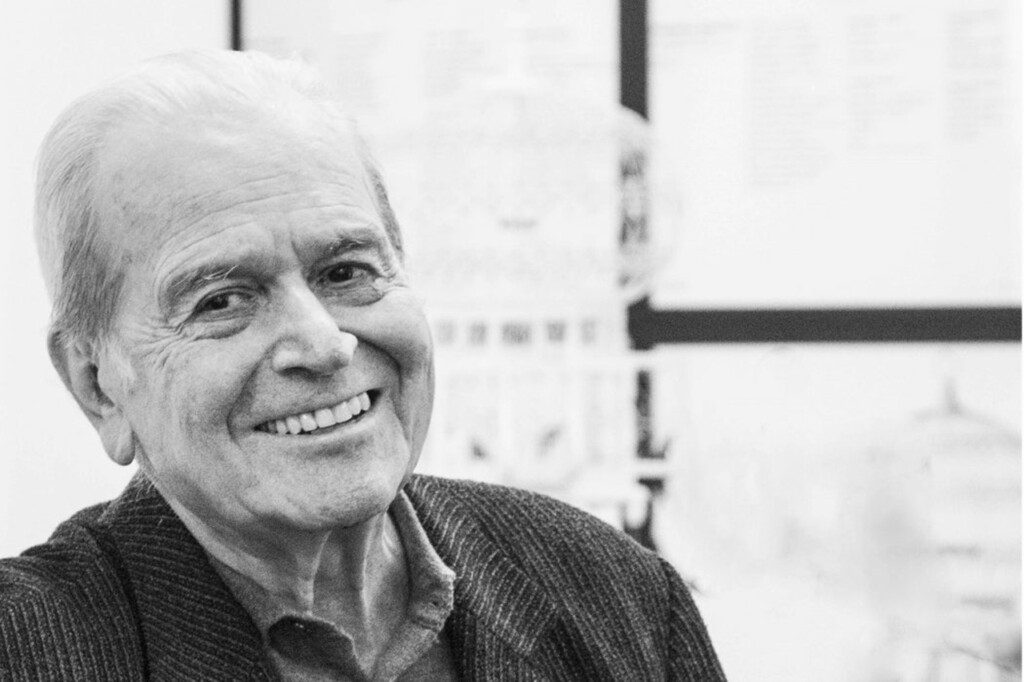
You already know his face. You have seen it on the bus at six in the morning, the jaw set against something that has no name yet, the eyes carrying the particular blankness of a man who has learned not to expect the day to surprise him. He works. He moves. He speaks in the flat declarative sentences of someone who has had interiority slowly drained out of him by repetition, not by tragedy. There is no tragedy here, and that is exactly the point.
Nanni Balestrini‘s protagonist in We Want Everything, published in 1971, has no name. This is not an oversight and it is not minimalism for minimalism’s sake. It is a structural argument embedded in the form of the book itself. The man at the center of the novel arrives from the south of Italy, passes through the hiring gates of Fiat’s Mirafiori plant in Turin, and begins to work. He thinks, in a fashion. He desires, in a fashion. But Balestrini refuses him the literary privileges that Western fiction has traditionally used to certify a human being as worthy of attention: the interiority, the backstory that explains and therefore excuses, the arc of transformation that allows the reader to watch someone become. There is no becoming. There is only the continuous present tense of labor and its consequences.
To deny a character psychological depth and then present that absence not as poverty but as evidence is to make a philosophical claim that most novels are too cowardly to attempt. What Balestrini understood, drawing directly from the operaismo tradition that surrounded him, from Mario Tronti’s 1966 Operai e Capitale and its insistence that the worker exists inside capitalist production not as a subject but as a function, is that the system does not hire people. It hires labor-power, which is something different. Labor-power is measurable, replaceable, and fundamentally indifferent to the biography of its carrier. When the protagonist speaks, he speaks in a register that feels assembled rather than felt, and that sensation in the reader is not a failure of craft. It is the text performing its argument on your nervous system.
The redemption arc, which the novel conspicuously withholds, is one of capitalism’s most efficient ideological instruments. It tells the individual that the system is a site of transformation, that suffering has meaning because it produces character, that endurance is a form of authorship over one’s own life. Balestrini strips this away with something close to violence. The protagonist does not grow wiser. He does not arrive at a private peace. He arrives at collective anger, which is categorically different, because collective anger does not redeem the individual, it dissolves him into something larger and more threatening. The novel treats this not as loss but as political maturation, and it is precisely here that most readers feel the destabilization, because they have been trained since childhood to read the movement inward as the movement toward truth.
What Balestrini does instead is move outward. The unnamed worker’s consciousness expands not into self-knowledge but into structural knowledge, the recognition that what is happening to him is not happening to him specifically. This is the crucial inversion. Psychological fiction teaches us that to understand oneself is to become free. Balestrini’s novel proposes that to understand the structure that produced oneself is the only knowledge that carries any real weight. The individual name, in this logic, is not a marker of dignity but a mechanism of isolation, the thing that makes you believe your suffering is yours alone and therefore requires a personal rather than a collective solution.
The namelessness is, in the end, not about the character at all. It is about the reader, who has a name, who believes that name protects them, and who is being quietly asked whether that belief has ever actually been tested.
Refusal as Political Ontology
You have, at some point in your life, stayed in a job you hated not because you needed the money badly enough to justify the misery, but because leaving felt like an admission that work itself had won. That quiet paralysis — not laziness, not cowardice, but something closer to a philosophical refusal to accept the terms on offer — is exactly what Nanni Balestrini‘s novel refuses to let you romanticize or dismiss. The unnamed worker at the center of the narrative does not want a raise. He does not want safer machinery or a slightly shorter shift. What he wants, and what the novel builds toward with the relentless logic of someone who has finally stopped lying to themselves, is the end of the arrangement entirely. Not reform. Abolition.
This is the distinction that most readings of worker literature have historically softened or avoided, because it is genuinely destabilizing to take it seriously. The tradition of labor narrative — from Zola’s Germinal to the American social realism of the 1930s — tends to frame the worker’s desire in the language of dignity, of fair exchange, of recognition within the system. Give us our share. See us as human. Balestrini’s protagonist refuses this grammar completely. He does not want to be seen within the system. He wants to refuse the system’s right to require that he make himself visible to it at all. This is not a political position in the conventional sense. It is, as Mario Tronti argued in Operai e Capitale in 1966, an ontological one — a statement not about what the worker deserves but about what the worker fundamentally is in relation to capital.
Tronti’s concept of the “strategy of refusal” emerged from his break with the Italian Communist Party’s accommodation of reformist unionism, and it reoriented the entire theoretical framework of what resistance could mean. Where orthodox Marxism had positioned the working class as the historical subject destined to seize the means of production and redirect them toward collective ends, Tronti proposed something more radical and more uncomfortable: that the working class’s power lay precisely in its capacity to withhold itself, to refuse participation, to make itself an obstacle rather than an alternative management. The goal was not to run the factory better. The goal was to make the factory’s logic illegible, unsustainable, exposed as dependent on a cooperation that could always be withdrawn. Balestrini absorbed this framework not as theory but as narrative temperature. His novel does not explain Tronti. It enacts him.
What makes this novelistically devastating is the way the refusal is rendered not as heroism but as exhaustion arriving at clarity. The protagonist does not refuse out of ideological conviction in any clean sense. He refuses because the demand for his total self — his time, his body, his attention, his silence — has become so absolute that compliance would require a kind of self-erasure he is no longer willing to perform. This is what Tronti meant when he wrote that labor-power, once it recognizes itself as distinct from the worker who carries it, becomes the site of a fundamental antagonism that no wage negotiation can resolve. The worker is not selling his time. He is being asked to sell his separateness, his capacity to exist outside the cycle of production and consumption. The refusal to do this is not a tactic. It is a declaration that the self exists prior to and independently of its economic function — which is, within a capitalist ontology, an almost criminal assertion.
The Hot Autumn of 1969, which the novel dramatizes from inside, was not simply a wave of strikes. It was the moment when this ontological claim became collective and therefore visible as a threat rather than a personal aberration. And the terror it provoked in management, in the state, in the reformist left, was precisely proportional to how clearly it revealed what the system actually required: not labor, but surrender.
The Language That Eats Itself
You have read a sentence three times before you realized you read it. Not because you were distracted, but because the sentence was built to be read that way — to repeat, to double back, to refuse the courtesy of resolution. This is not a flaw in Nanni Balestrini’s prose. It is the prose. The form of We Want Everything is not a container for its argument. It is the argument, pressed into syntax, made to breathe or choke according to the same rhythms that governed the body of every man who ever stood at a conveyor belt and counted the seconds until something changed.
Balestrini was working within a tradition that Italian literary culture called Neoavanguardia, a movement that emerged in the early 1960s and crystallized around the Gruppo 63, whose participants believed — with an almost violent conviction — that bourgeois literary form was itself an ideological instrument. To write a well-ordered sentence, with its proper subject and predicate, its tidy arc from tension to release, was to reproduce the very hierarchies that kept the reader docile. This was not merely a stylistic position. It was a theory of how power survives through grammar. Balestrini took that theory and sent it to work in a factory in Turin, where it became something far less comfortable than a manifesto.
The prose of the novel moves in blocks, often without punctuation to anchor the reader to a single meaning, cycling through the same phrases — the line, the foreman, the body that aches, the money that is never enough — until the repetition itself becomes a kind of pressure. What Balestrini understood, and what makes the book structurally ruthless, is that repetition is not emphasis in the language of labor. Repetition is the condition. The worker does not repeat the gesture for rhetorical effect. He repeats it because the machine requires it, because the production quota requires it, because the entire architecture of Fordist capitalism is built on the premise that the human body can be synchronized to a mechanical interval and that this synchronization can be mistaken, eventually, for normality. The fragmented, looping prose forces the reader into that synchronization. You are not reading about exhaustion. You are performing a version of it.
Roland Barthes, writing in Mythologies in 1957, argued that one of the central functions of bourgeois culture is to naturalize what is historical — to take arrangements that were invented, at a particular moment, for particular interests, and make them appear inevitable, biological, simply the way things are. The syntax of the realist novel does precisely this. Its forward momentum, its causality, its respect for psychological coherence — all of these conventions carry an implicit message: that the world is ordered, that experience has a shape, that the individual who moves through it is a coherent subject capable of growth and reflection. Balestrini dismantles this not through irony but through structural demolition. His narrator does not grow. He accumulates. He encounters the same surfaces again and again and pushes against them with an energy that the text refuses to romanticize into heroism.
This is where the form becomes genuinely destabilizing, because the reader trained on the novel as a vehicle for individual interiority finds no purchase here. The character’s thoughts arrive in the same mechanical rhythm as his movements. The language does not elevate his consciousness above his conditions. It insists, with something close to cruelty, that consciousness is also produced on the assembly line — that even the desire to refuse, to strike, to walk out, comes through a syntax that the factory has already shaped. The rebellion is real, the anger is real, but the words available to express it are the same words that were handed over along with the work card and the shift schedule, and Balestrini makes you feel the weight of that inheritance in every clause that loops back before it can close.
A vision curated by a filmmaker, not an algorithm
In this video I explain our vision
What the Welfare State Was Actually Selling

There is a moment in the novel when the narrator receives his first real paycheck at Fiat — not a laborer’s envelope of coins, but a printed slip with a number on it that seems, briefly, like a door opening. He stares at it. He thinks of the south he left behind, the dust and the absence and the arithmetic of hunger. And then something shifts, not in the money itself, but in what the money requires of him: to return the following Monday, and the Monday after that, and every Monday stretching forward into a future that looks, from this angle, indistinguishable from a sentence. The paycheck was never a door. It was a lease agreement, and he had already signed it.
Nanni Balestrini understood this transaction with the precision of someone who had watched it happen at scale. The Italian economic miracle — il miracolo economico — ran roughly from 1958 to 1963, a period in which GDP growth averaged above five percent annually, industrial output doubled, and the automobile became a symbol not merely of mobility but of arrival. Fiat’s workforce in Turin expanded enormously through precisely this period, absorbing hundreds of thousands of internal migrants from the Mezzogiorno who had been deliberately displaced from an agricultural south that offered no future. The wages were real. The refrigerators were real. The televisions were real. What Balestrini refused to do, and what makes the novel still uncomfortable to read, is pretend that the reality of the objects settled the question of what they cost.
Guy Debord published The Society of the Spectacle in 1967, the same decade in which the contradictions Balestrini was documenting began to detonate publicly. Debord’s central argument was not that capitalism deceived workers with false images, but something more structurally devastating: that the accumulation of spectacles — of commodities, of televised abundance, of advertised desire — had replaced lived experience as the primary substance of social life. Survival, Debord wrote, had been augmented to such a degree that it had colonized the space where life itself was supposed to occur. The worker who earned enough to buy what the factory produced was not liberated by his wages. He was completing a circuit. The consumption was the second shift.
What Balestrini dramatizes in the body of his narrator is the exact phenomenology of this circuit being perceived, for the first time, as a circuit. The rage that organizes itself in the novel is not simply the rage of exhaustion or exploitation in the classical sense. It is the rage of recognition — the moment when a man understands that the welfare state was not built to protect him from the market but to make him stable enough to remain inside it. The housing blocks, the canteens, the modest contractual protections: these were not concessions wrested from capital. They were infrastructure. They kept the labor force reproductively viable, emotionally contained, and politically manageable. Beveridge in Britain, the Christian Democrat consensus in Italy, the broader postwar settlement across Western Europe — all of it operated on the same logic that a worker who is warm and fed and watching television is a worker who is not in the street.
The Italian state and Fiat’s management understood this with particular clarity. Company towns, company buses, company housing: the architecture of Fordist paternalism was designed to make the factory the total horizon of a man’s life, so that the only available language for desire was the language the company already spoke. A raise was not freedom. It was a renegotiation of the terms of captivity, one in which the prisoner was made to feel that the cell had grown larger, when what had actually happened is that his imagination of the cell’s exterior had been quietly, systematically, made to shrink.
The Southern Body in the Northern Machine
You already know what it feels like to walk into a room and have your mouth betray you before your mind has a chance to speak. The vowels land wrong, the consonants drag a half-beat too long, and the face across from you performs a microscopic recalibration — not hostility exactly, but something colder: a quiet reclassification. In Balestrini’s novel, this moment is not metaphor. It is the protagonist’s daily atmosphere, the invisible tax levied on a body that arrived in Turin from the Mezzogiorno carrying nothing but its own geography.
The internal migration that restructured Italy between the 1950s and early 1970s was one of the largest demographic movements in postwar European history. Roughly four million people relocated from the southern regions to the industrial triangle of the north — Turin, Milan, Genoa — in less than two decades. FIAT alone absorbed hundreds of thousands of workers, many of them Calabrian, Sicilian, Campanian, arriving at Porta Nuova station with cardboard luggage and addresses written on scraps of paper. Antonio Gramsci, writing from a prison cell decades earlier, had already diagnosed the structural logic that made this movement inevitable: the Southern Question, as he framed it in his Prison Notebooks, was not a question of culture or character but of an economic arrangement in which the south functioned as an internal colony, supplying labor and raw material to a northern industrial core that returned neither capital nor dignity. Balestrini’s protagonist is not a symbol of this dynamic. He is its precise, embodied consequence.
What the novel makes visible — and what official histories of the economic miracle preferred to obscure — is that the migrant worker did not simply relocate. He was processed. Turin’s factory system received southern bodies the way a machine receives raw material: as something to be shaped into function, stripped of particularity, rendered interchangeable. The boarding houses that landlords rented exclusively to southerners, the signs reading “no Meridionali,” the factory hierarchy that funneled new arrivals into the lowest-paid, most physically punishing assembly positions — these were not aberrations. They were the system operating correctly. Antonio Gramsci‘s framework finds its living illustration in the factory gate, where the protagonist enters not as a citizen of the same republic but as something categorically adjacent to a foreigner, subject to a discrimination that the Italian state had no legal language to name because it was discrimination enacted within the nation’s own skin.
The accent is the mechanism by which this dispossession is maintained and renewed daily. Erving Goffman, in Stigma published in 1963, described how certain attributes become the basis for a spoiled identity — not through any single dramatic act of exclusion but through the accumulated micro-adjustments that others perform in the presence of someone who carries a stigmatized mark. The southern accent in a northern factory is exactly this: a sonic stigma that precedes every negotiation, every demand, every refusal. When the protagonist speaks on the assembly line, in the union hall, in the rented room, his voice carries the coordinates of his origin, and those coordinates translate immediately into a social position he did not choose and cannot shed. Balestrini records this without commentary, which is the most devastating editorial choice available — to simply transcribe the logic of humiliation until the reader recognizes it as structure, not incident.
What remains genuinely unsettling about this dimension of the novel is that the protagonist eventually turns this mark into a weapon. The anger that the northern workers express through the grammar of labor rights, through union procedure and negotiated grievance, he expresses through a fury that has no patience for procedure — because procedure is a luxury built on decades of recognition that the southern body was never granted. His rage is not louder. It is older.
Fifty Years Later, the Demand Remains Obscene

Fifty years after the novel’s publication, you do not need to find its protagonist in a Fiat factory. You can find him in yourself, on a Sunday evening, already mentally composing the Monday morning version of yourself that will be productive, aligned, and grateful for the opportunity. The language has changed so completely that the original conflict has become almost invisible, buried under a vocabulary of self-actualization that makes exploitation sound like a gift you have not yet learned to unwrap.
What Balestrini captured in 1971 was a specific historical moment when the contradiction was still naked: the worker knew he was selling his time, his body, and his attention to someone who would profit from all three, and he was angry about it in a way he could name. The anger had an address. It pointed somewhere. Nanni Balestrini understood that this clarity was itself a form of power, which is precisely why he structured the novel around a voice that refuses the neutralizing logic of institutional language and insists on calling the exchange what it is. But the decades that followed did not simply suppress that anger. They did something more sophisticated: they absorbed it, translated it, and sold it back as the premise of a better life.
The sociologist Luc Boltanski and the economist Eve Chiapello published their landmark study in 1999, tracking exactly this process. They argued that capitalism responded to the upheavals of 1968 not by defeating the critique but by incorporating it. The demands for autonomy, creativity, authenticity, and self-direction that the workers and students had raised against the rigid hierarchies of industrial capitalism were transformed into the ideological architecture of the new economy. Flexibility, which once meant the power of labor to refuse a fixed and degrading schedule, became the name of a condition in which the worker is available at all times and bears alone the risk of an unstable market. Self-investment, which once gestured toward education and dignity, became the imperative to continuously retrain yourself at your own expense so that your employer never has to carry the cost of your obsolescence.
The protagonist of the novel would recognize this structure immediately, not as progress, but as the same demand wearing different clothes. What he refused was the idea that his value as a human being was identical to his value as a productive unit. What the contemporary worker is asked to accept is something more total: not just that productivity defines your economic worth, but that it defines your identity, your narrative, your relationship to time, your sense of whether a day was well lived. The refusal the novel imagines is now harder to perform because it is harder to name. To refuse productivity in 1969 was to strike, to slow down, to walk off the line. To refuse productivity in the present is to risk being diagnosed, by yourself before anyone else, as lazy, unfocused, or, most damning of all, ungrateful.
The philosopher Byung-Chul Han has described this shift as the passage from a disciplinary society to an achievement society, where the external prohibitions of the old order are replaced by internal imperatives that feel like freedom because nobody imposed them at gunpoint. The achievement subject, as he calls it, exploits himself voluntarily, and does so with enthusiasm, believing that the pressure he feels is ambition rather than coercion. What disappears in this transition is not the extraction itself but the knowledge that it is happening, which is the only thing that could make resistance conceivable.
Balestrini’s novel survives because it preserves that knowledge in amber, voices an anger that the present tense works very hard to make unspeakable, and holds open the question of whether a human being’s wants can ever be legitimately excessive, or whether the obscenity of wanting everything is simply what dignity looks like when the system has decided you deserve nothing.
🌀 Revolt, Labor, and the Italian Radical Imagination
Balestrini’s We Want Everything plunges into the raw energy of factory revolt, collective identity, and the language of proletarian rage. To fully understand this landmark of Italian neo-avant-garde literature, it helps to explore the wider cultural and political landscape from which it emerged — one shaped by alienation, urban myth, and literary experimentation.
Karl Marx and Alienation: Economic and Philosophical Manuscripts
Karl Marx’s concept of alienation, developed in the Economic and Philosophical Manuscripts, offers a foundational lens for reading Balestrini’s novel. The anonymous worker-protagonist of We Want Everything embodies the estrangement from labor, product, and species-being that Marx diagnosed as capitalism’s deepest wound. Understanding this philosophical framework illuminates the visceral fury that drives the narrative’s political energy.
GO TO THE SELECTION: Karl Marx and Alienation: Economic and Philosophical Manuscripts
Alberto Moravia: Life and Works
Alberto Moravia spent decades mapping the psychological and social landscapes of Italian working-class and bourgeois life, making him a crucial point of comparison for Balestrini’s harder, more politically charged prose. Where Moravia’s characters are often trapped by desire and social conformity, Balestrini’s are ignited by collective refusal. Together they reveal two radically different ways of imagining the Italian subject in the twentieth century.
GO TO THE SELECTION: Alberto Moravia: Life and Works
Pier Paolo Pasolini and the Roman Suburbs
Pier Paolo Pasolini‘s engagement with the Roman suburbs introduced a poetic and political vocabulary for representing the bodies and voices excluded from Italy’s economic miracle. Like Balestrini, Pasolini saw the factory and the periphery as sites of both exploitation and potential resistance. Exploring Pasolini’s vision of the subproletariat deepens our understanding of the literary tradition within which We Want Everything intervenes.
GO TO THE SELECTION: Pier Paolo Pasolini and the Roman Suburbs
Mass Social Homologation Today
Mass social homologation — the flattening of individual and class differences into a uniform consumer identity — is precisely what Balestrini’s protagonist rebels against on the Fiat assembly line. This article examines how contemporary society manufactures consent and conformity, erasing the very antagonisms that We Want Everything insists on making visible. Reading it alongside Balestrini reveals how little the logic of homologation has changed since 1969.
GO TO THE SELECTION: Mass Social Homologation Today
Discover the Cinema of Revolt on Indiecinema
If Balestrini’s radical prose has stirred something in you, Indiecinema is where that energy finds its visual form. Stream independent and avant-garde films that share the same spirit of political urgency, collective imagination, and refusal to conform — all in one place, waiting to be discovered.
👉 EXPLORE THE CATALOG: Watch Indie Films in Streaming
A vision curated by a filmmaker, not an algorithm
In this video I explain our vision

