
The Hypnotic Threshold: Entering the Past-Life Chamber
You are lying down in a room that smells faintly of sandalwood and recycled air, and someone is telling you, in a voice calibrated to the precise frequency of parental reassurance, that you are going deeper. The ceiling above you is unremarkable — a smooth, neutral surface your eyes have already stopped registering. Your hands rest at your sides with the deliberate stillness of someone performing relaxation rather than experiencing it. And yet something is happening. The hypnotherapist counts backward from ten, and somewhere around six you notice that the boundary between your body and the chair beneath you has grown ambiguous, as though the category of “you” has become temporarily negotiable.

This is the threshold that has fascinated and disturbed researchers, clinicians, theologians, and charlatans in roughly equal measure for over two centuries. What occurs in that room — whether it constitutes recovered memory, narrative confabulation, dissociative experience, or genuine contact with a prior existence — remains one of the most contested questions in the overlapping territories of psychology, neuroscience, and religious studies. The stakes of the question are not merely academic. They concern the nature of personal identity, the architecture of memory, and the degree to which human beings are capable of generating convincing, emotionally coherent fictions about themselves without any conscious intent to deceive.
Franz Anton Mesmer did not invent hypnosis — he invented the conditions under which hypnosis would eventually make sense to a Western audience. His theory of animal magnetism, published in 1779, proposed an invisible fluid connecting all living organisms, a fluid that could be directed by a trained practitioner to produce altered states, convulsions, and inexplicable cures. The French Royal Commission of 1784, which included Benjamin Franklin among its investigators, systematically dismantled the physical premises of mesmerism while inadvertently confirming its psychological effects. What they could not explain, they dismissed. What they dismissed continued to function.
By the mid-nineteenth century, James Braid had stripped the theatrical excess from Mesmer’s practice and reframed the phenomenon as neurohypnology — a state of focused attention produced entirely within the subject’s own nervous system, requiring no external fluid, no magnetic wand, no cosmic intermediary. This reframing was decisive because it relocated the source of the experience inside the person, which meant that whatever emerged under hypnosis — visions, voices, alternative identities — was now, definitionally, something the mind itself was producing. The question of whether that production constituted discovery or invention has never been cleanly resolved.
Past-life regression as a distinct therapeutic and spiritual practice crystallized in the twentieth century, though its roots run through Spiritualist movements of the 1840s and 1850s, through Theosophical doctrine as codified by Helena Blavatsky in “The Secret Doctrine” in 1888, and through the early psychoanalytic encounter with what Freud’s colleague Josef Breuer called the “hypnoid state” — moments of altered consciousness in which repressed material surfaced with unexpected vividness. The leap from repressed childhood trauma to repressed past-life trauma required only a willingness to extend the timeline of the self backward beyond birth, which is either a profound metaphysical claim or a very human refusal to accept that suffering must have a finite origin.
What makes the regression session so difficult to evaluate is precisely what makes it so compelling to undergo. The material that surfaces tends to be emotionally convincing rather than factually verifiable. A woman weeps for a child she has never had in this lifetime. A man describes the physical sensation of drowning in water he has never entered. The specificity is granular, the affect is genuine, and the therapist sitting across from them has been trained not to plant suggestions — or at least believes they have. The room smells of sandalwood. The ceiling is still unremarkable. And the question of what is actually being remembered has not yet been asked aloud.
Beyond Our Lives

Drama, noir, by Fabio Martorana, Italy, 2021.
Alex and Claire have something in common, between recurring nightmares and restless memories; only time will allow them to understand what is happening. Where is the truth hidden? Perhaps in a time that the two protagonists don't even imagine. A sweet and complicated, painful and troubled love story, between a psychoanalyst and a woman who must fight a tough battle against herself and her introspective fears. Two soul mates that fate brought together after reliving distant experiences over time.
Dedicated to the world of noir, where lighting rich in chiaroscuro, the contrast between light and shadow symbolically represents the conflict between good and evil, the feature film tells of a sweet and complicated, painful and troubled love story. The film was shot between the provinces of Rome and Latina in the splendid settings of Circeo and Doganella di Ninfa.
LANGUAGE: Italian
SUBTITLES: English, Spanish, French, German, Portuguese
Mesmer, Puységur, and the Pre-Freudian Unconscious
You are sitting across from a man who has never heard the word “hypnosis,” who would reject it as a category, and who believes with complete sincerity that he is redirecting an invisible fluid coursing through your nervous system. His hands move slowly near your body without touching it. The room is dim, the music is deliberate, and you feel something — a warmth, a loosening, a strange suspension of the ordinary effort required to hold yourself together. What you feel is real. What he believes is causing it is not.
Franz Anton Mesmer arrived in Paris in 1778 carrying a theory built on Isaac Newton’s gravitational physics and the medical vitalism of his era, a theory he had been developing since his 1766 doctoral dissertation at the University of Vienna, “De Influxu Planetarum in Corpus Humanum.” He proposed that a universal magnetic fluid permeated all living matter and that illness was nothing more than its obstruction. His treatment, animal magnetism, involved group sessions around a baquet — an oak tub filled with iron filings and magnetized water — from which iron rods protruded for patients to grasp while Mesmer or his assistants moved among them, making passes with their hands. Patients convulsed, wept, laughed, fainted into what were called crises, and frequently reported improvement afterward. A royal commission in 1784, which included Antoine Lavoisier and Benjamin Franklin, concluded that no magnetic fluid existed and that the effects were entirely attributable to imagination. They were correct about the fluid. They drew the wrong conclusion about the significance of what imagination could do.
What the commission did not investigate, because they had no framework for it, was the specific quality of consciousness that Mesmer’s procedures were inducing. That question fell to one of Mesmer’s students, Armand-Marie-Jacques de Chastenet, the Marquis de Puységur, who in 1784 was attempting to magnetize a young peasant named Victor Race on his estate at Buzancy. Instead of the convulsive crisis that orthodox mesmerism expected, Victor fell into a quiet, lucid state — eyes closed, speaking coherently, responsive to suggestion, apparently capable of diagnosing his own illness and those of others, and upon waking, retaining no memory of anything that had occurred. Puységur called this artificial somnambulism, and the name itself reveals the conceptual horizon he was working within: it looked like sleepwalking, so that is what he called it. He had no vocabulary for the fact that he had opened a door into a stratum of mental functioning that operated independently of waking consciousness and that carried its own logic, its own access to memory, its own capacity for narrative.
The gap between what these men were producing and what they could theorize about it is not a minor historical footnote. It is the structural condition under which altered states have always been exploited. Puységur’s somnambulists began, with no prompting from spiritualism or theology, to claim access to hidden knowledge — their own medical conditions, the conditions of absent patients, occasionally the experiences of people they had never met. He documented these claims in his 1784 “Mémoires pour servir à l’histoire et à l’établissement du magnétisme animal” with the scrupulous puzzlement of a man who believed in the fluid but was honest enough to admit that what he was observing exceeded his model. What he could not see, and what would take another century to articulate with any precision, was that the somnambulistic state dramatically amplified suggestibility — that what patients reported as discovered knowledge was often knowledge constructed in the moment, shaped by the implicit expectations of the magnetizer, organized into whatever narrative the relational field between operator and subject seemed to demand.
Henri Ellenberger, writing in “The Discovery of the Unconscious” in 1970, would later argue that this entire pre-Freudian tradition constituted a kind of protopsychology, a groping toward the recognition that mind extended further than consciousness could see.

Theosophy and the Manufacture of Reincarnation as Western Doctrine
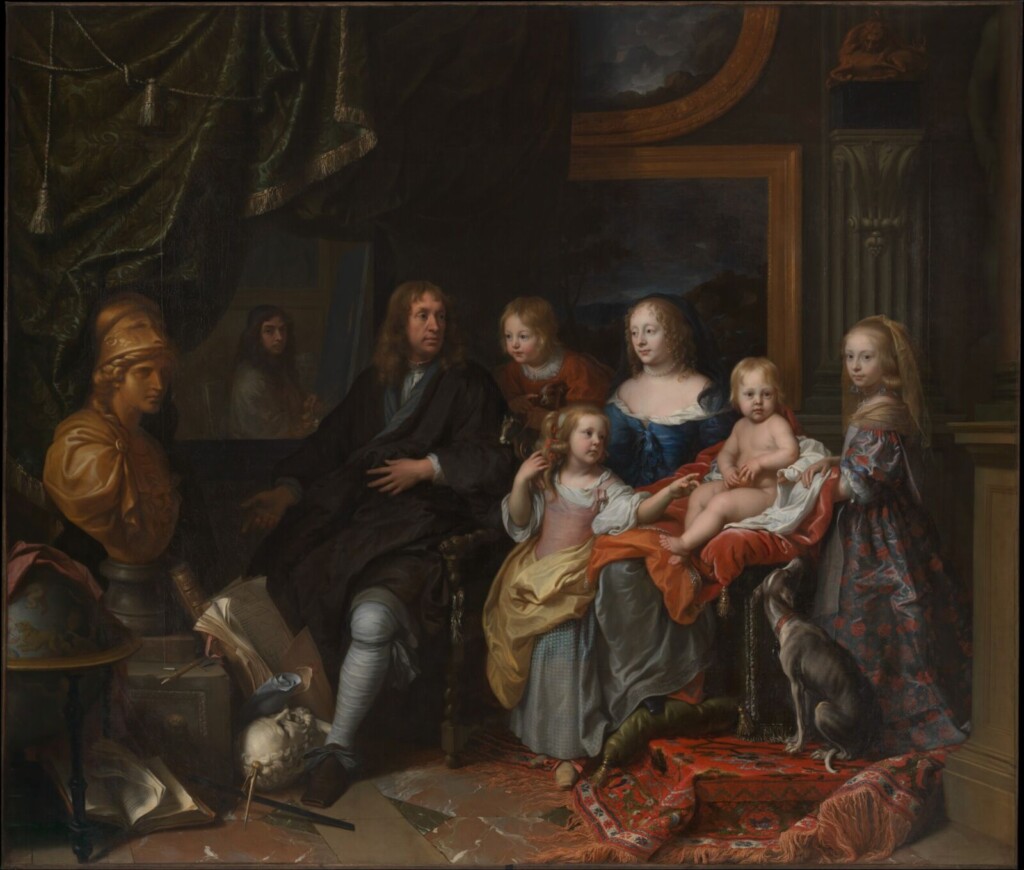
You are sitting in a London parlor in 1882, surrounded by people who have stopped believing in God but cannot bear to stop believing in something. The gaslight flickers. Someone at the table is speaking about their previous life in ancient Egypt, and nobody laughs.
Helena Petrovna Blavatsky understood something that most reformers miss: the human appetite for cosmic significance does not disappear when institutional religion loses its grip. It migrates. In 1877, when she published Isis Unveiled, she was not merely synthesizing Eastern metaphysics for a Western audience — she was performing a kind of spiritual arbitrage, identifying a gap between what post-Darwinian Europe had lost and what it desperately needed to recover. The book ran to two volumes and was sold out within ten days of publication. That speed is not a detail about printing history. It is a measurement of hunger.
What Blavatsky imported was not quite the Buddhist conception of rebirth, nor the Hindu understanding of karma as elaborated in texts like the Bhagavad Gita or the Upanishads. The doctrine she reassembled was something new — cleaned of its caste implications, stripped of its ethical austerity, and repositioned as a system in which the self persists, accumulates wisdom across lifetimes, and moves purposefully toward a kind of spiritual graduation. The original Buddhist anatta, the doctrine of non-self, dissolves the very entity that Western seekers most wanted to preserve. Blavatsky quietly set that inconvenience aside. What remained was a version of rebirth that felt ancient, Eastern, and therefore authentic, while being perfectly calibrated to Victorian individualism.
The Theosophical Society, co-founded with Henry Steel Olcott in New York in 1875, became the institutional machinery through which this reconstructed doctrine spread. By the 1880s it had branches in London, Paris, and Madras, and it attracted figures ranging from the Irish poet W.B. Yeats to the Indian nationalist Annie Besant, who eventually took over the organization after Blavatsky’s death in 1891 and pushed the concept of reincarnation even further into the foreground. Besant’s 1896 work Karma expanded the doctrine into a social framework — suffering was explicable, inequality was cosmic rather than political, and personal misfortune could be attributed to debts accumulated in previous existences. The philosophical convenience of this position, for a society that preferred spiritual explanation over structural reform, was not accidental.
What the Theosophical model produced, almost as a byproduct, was the concept of the accessible past life — the idea that one’s previous incarnations were not merely theological postulates but recoverable memories, potential material for investigation and narration. This was new. Neither the Vedic tradition nor orthodox Buddhist teaching had suggested that ordinary practitioners could or should excavate their former selves. The past life became, within Theosophy’s cultural ecosystem, something like a personal archive: private, meaningful, and available, at least in principle, to those with sufficient sensitivity or guidance.
That shift — from metaphysical doctrine to personal narrative territory — is what made past life regression therapeutically imaginable decades later. Without it, the idea that a trained practitioner could lead a client backward through previous incarnations would have had no cultural grammar in which to operate. Theosophy provided that grammar, embedding it in the language of spiritual evolution and self-knowledge that literate Europeans had already begun to absorb by the early twentieth century.
Ernest Wood, C.W. Leadbeater, and other Theosophical writers produced detailed accounts of their own past life memories throughout the 1900s and 1910s, normalizing the first-person past life narrative as a form of spiritual testimony. These accounts circulated widely, establishing a narrative convention — the moment of recognition, the flood of detail, the sense of explained destiny — that would later structure the testimonials collected in clinical and hypnotic settings as though they were spontaneous and unmediated.
Bridey Murphy and the Industrialization of Past Lives
You are sitting in a suburban living room in Colorado, 1952, watching a housewife named Virginia Tighe sink into a trance while a businessman with a tape recorder leans forward in his chair. She begins to speak in a voice that is not quite hers, describing cobblestone streets in Cork, a wooden house, a name — Bridey Murphy — that nobody in the room has ever heard before. The session lasts hours. The tape recorder runs. And something that had previously belonged to séance parlors and theosophical lodges crossed, in that moment, into the domain of ordinary American life.
Morey Bernstein was not a therapist, a mystic, or a trained hypnotist in any clinical sense. He was an amateur who had read broadly and believed passionately, and when he published The Search for Bridey Murphy in 1956, Doubleday printed it into a sensation. The book sold nearly 170,000 copies in its first weeks and generated a cultural phenomenon so intense that Life magazine dedicated a full investigative spread to debunking it. Hypnosis kits appeared in toy stores. “Come as you were” parties became a genuine social trend. The joke was everywhere, and jokes of that particular kind — the ones that spread because they are half-serious — reveal exactly where a culture’s anxious fascination lives.
What the Bernstein case made visible was not proof of reincarnation but proof of appetite. The United States in 1956 was a country that had survived two wars, was conducting nuclear drills in elementary schools, and had recently watched a generation of men return from combat unwilling or unable to describe what had happened to them. Ernest Hilgard at Stanford was already publishing research on hypnotic susceptibility that would eventually become Divided Consciousness in 1977, demonstrating that the hypnotic state involves not fabrication but a genuinely altered relationship between the subject’s attention and their narrative production. The mind under hypnosis does not simply lie — it tells stories with unusual conviction, drawing on fragments of memory, ambient cultural material, and the deep human pressure to be coherent. Virginia Tighe had grown up near communities with Irish immigrant populations. The name Bridey, the texture of the details, the emotional register — all of it was available inside her own biography, rearranged by trance into something that felt like foreign evidence.
The newspapers that tried to expose the case were, in their exposure, still feeding it. The Chicago American ran a series purporting to debunk every biographical claim Tighe had made, but the very architecture of the debunking — specific dates, named streets, genealogical counterevidence — legitimized the framework of inquiry itself. You do not spend weeks investigating a claim you consider entirely without structure. And the public read both the original book and the refutations with the same hungry attention, which tells you that the question being answered was never really whether Bridey Murphy had lived. The question was whether there was something in a person that survived, that carried forward, that mattered beyond the span of a single biographical life — and that question, in 1956, was not theological. It was existential in the most literal sense, posed against a backdrop in which the possibility of total annihilation had become governmental policy.
Ian Stevenson at the University of Virginia began his systematic documentation of children’s past-life memories in 1960, publishing Twenty Cases Suggestive of Reincarnation in 1966, and the methodological seriousness of his work existed in direct conversation with the Bernstein moment — not because Stevenson endorsed it, but because the cultural permission for the inquiry had been granted by a Colorado living room and a tape recorder running in the dark. What regression became after Bridey Murphy was something it had never quite been before: a question that ordinary people felt licensed to ask about themselves, in their own homes, without institutional permission.
Ian Stevenson's Research and the Problem of Empirical Credibility
A seven-year-old boy in rural Sri Lanka begins describing, with unsettling specificity, a house he has never visited, a family he has never met, and a violent death he could not have witnessed. He names the street. He names the man who killed him. When researchers bring him to the location he described, he identifies relatives of the deceased by name before anyone introduces them. Ian Stevenson, a psychiatrist at the University of Virginia and not a mystic, not a theologian, documented over two thousand five hundred cases like this one across India, Lebanon, Turkey, Alaska, and Brazil between the 1960s and his death in 2007, publishing the foundational record in 1966 under a title that was itself a careful act of epistemic restraint: Twenty Cases Suggestive of Reincarnation — not “proving,” not “demonstrating,” merely suggesting.
What makes Stevenson’s archive genuinely disturbing to dismiss is the methodological discipline he brought to material that practically begged to be sensationalized. He was not interested in hypnotic regression, not interested in adults recovering memories under therapeutic suggestion, not interested in any phenomenon where the contamination of leading questions or cultural expectation could explain the data. He focused exclusively on spontaneous childhood memories, typically reported between the ages of two and five, typically fading by age eight, typically accompanied by behavioral anomalies — phobias, skills, emotional attachments — that corresponded with precision to the biography of a specific deceased individual who could be independently verified. He cross-referenced testimonies with death records, interviewed families separately before allowing them to meet, and attempted to account for what he called the “normal means” by which a child might have acquired the information. The methodology was not perfect. But it was far more rigorous than most critics acknowledged, and Stevenson knew it, which is why he spent decades inviting falsification rather than claiming proof.
The deeper problem his work exposes is not whether reincarnation is real but what science is actually permitted to do with evidence that challenges its foundational categories. Karl Popper’s criterion of falsifiability, which became the working grammar of scientific legitimacy in the twentieth century, creates a particular paradox here: a hypothesis about consciousness surviving death is extraordinarily difficult to falsify, but that difficulty does not make the evidence gathered around it meaningless — it makes the existing framework inadequate to evaluate it. Stevenson himself noted, in his 1997 volume Reincarnation and Biology, that approximately thirty-five percent of his cases involved birthmarks or birth defects that corresponded anatomically to the wounds that killed the previous personality, with medical records sometimes confirming the correlation. This is not metaphysics. This is a body carrying what appears to be documentation.
The scientific establishment’s response was neither rigorous engagement nor honest refutation. It was largely silence, occasionally broken by dismissal on principle rather than on evidence. The Journal of Nervous and Mental Disease, which published a lengthy review of Stevenson’s work in 1977, was unusual in treating it as a serious empirical contribution, and the academic isolation that followed that gesture was itself revealing — institutions protecting their categories more than their curiosity. This is not a story unique to research on consciousness; it mirrors the reception of Semmelweis on infection, of Marshall on ulcers, of any data that requires dismantling the furniture before it can be properly examined.
What Stevenson’s cases actually do, stripped of their metaphysical implications, is expose how thin the consensus really is on what memory is, where it resides, and why it should be bounded by a single biological lifetime. Neuroscience has not located memory in a specific structure. It has located correlates, processes, patterns of activation — but the substrate of what persists, of what makes a self continuous across even a single night of dreamless sleep, remains genuinely unresolved territory, and the children Stevenson documented were standing in that territory long before the laboratories arrived.
A vision curated by a filmmaker, not an algorithm
In this video I explain our vision
Brian Weiss, Therapeutic Markets, and the Commodification of Trauma

You are sitting in a therapist’s office in 1988, and the man across from you has degrees from Columbia and Yale, a former department chief at Mount Sinai Medical Center, a publication record that would satisfy any tenure committee. He leans forward and tells you that your crippling phobia of drowning originated not in this life but in ancient Egypt, where you died choking on floodwater. The remarkable thing is not that he believes this. The remarkable thing is how many people needed him to believe it.
Brian Weiss published Many Lives, Many Masters that year with a careful, almost defensive framing: he had not sought this territory, it had ambushed him through a patient he calls Catherine, whose hypnotic sessions produced not recovered childhood memories but apparent recollections of eighteen previous incarnations. His professional discomfort is performed on every page, yet the book sold over a million copies and generated a self-help franchise that continues to operate across cruise ship seminars, online certification programs, and weekend intensives that cost upward of two thousand dollars per participant. The distance between his stated reluctance and the resulting industry deserves more scrutiny than it typically receives.
The 1980s created a specific market niche that Weiss filled almost surgically. The decade had witnessed the full institutionalization of trauma as a clinical and cultural category — Judith Herman’s work on complex post-traumatic stress, formalized in Trauma and Recovery in 1992, was already circulating in earlier forms, and the DSM-III had introduced PTSD as an official diagnosis in 1980, expanding the vocabulary of suffering available to ordinary people. A population newly licensed to describe itself as traumatized was simultaneously encountering the limits of insurance-covered talk therapy, the side-effect profiles of antidepressants, and a wellness industry that was learning to monetize spiritual hunger. Regression therapy arrived at this intersection offering something conventional psychiatry structurally could not: a narrative origin story for suffering that was both ultimate and untestable.
What Weiss introduced that earlier regression practitioners like Morey Bernstein had not was the therapeutic alibi. Bernstein’s 1956 Bridey Murphy sessions were spectacle, a parlor curiosity dressed in journalistic clothes. Weiss repackaged the same procedure as a healing modality, which meant that skepticism became not just intellectually awkward but potentially cruel — to question whether Catherine’s Egyptian death was real was to question whether her relief from phobia was real, and her relief was demonstrably, observably present. This conflation of phenomenological outcome with metaphysical truth is the mechanism that made the entire enterprise commercially impenetrable. The product being sold was not the truth of reincarnation but the experience of resolution, and experience resists refutation.
The certification market that emerged from Weiss’s work by the mid-1990s reveals how quickly therapeutic legitimacy transfers into credential economies. Organizations now offer past-life regression therapist certification through programs that typically run between forty and one hundred training hours, placing them in the same temporal range as many state-licensed massage therapy programs and far below the supervised clinical hours required for any recognized psychotherapy license. The credential performs professional seriousness while operating entirely outside the regulatory architecture that governs actual clinical practice. What is being purchased is not competence but permission — the social permission to sit across from a suffering person and guide them into hypnotic states without the institutional accountability that psychiatry, however imperfectly, attempts to impose.
This is where the history of past-life regression becomes inseparable from a broader question about what trauma culture actually sells back to the people it claims to serve. Nicholas Rose, in Governing the Soul published in 1990, argued that the proliferation of psychological expertise in the twentieth century was never primarily about healing — it was about the production of a certain kind of self, introspective and perpetually available for professional management. Regression therapy extends that production backward through imagined centuries, multiplying the self’s surface area for therapeutic intervention until the work of knowing oneself becomes, in principle, inexhaustible.
Memory, Confabulation, and the Brain's Narrative Compulsion
You are sitting in a reclining chair, eyes closed, a calm voice counting down from ten, and somewhere around six you begin to see a village — cobblestones, a market square, a woman in wool who you somehow know is your mother from another century. The image feels true in a way that your actual childhood memories rarely do. It feels unedited, unperformed, delivered from somewhere beneath intention. This is precisely what should alarm you.
Elizabeth Loftus spent decades demonstrating that human memory is not a recording device but a reconstruction engine, and the implications of her work land far harder than most people are willing to admit. In her 1974 studies on eyewitness testimony, later expanded in her landmark 1996 book The Myth of Repressed Memory, co-authored with Katherine Ketcham, Loftus showed that subjects could be made to remember events that never occurred — not as vague impressions, but as vivid, emotionally charged, detail-saturated experiences indistinguishable from genuine recollection. The famous “lost in the mall” experiment embedded false childhood memories in roughly twenty-five percent of participants using nothing more than a short written suggestion. They didn’t just accept the false memory. They embellished it. They wept over it.
What hypnosis does to this already unstable system is not unlock a deeper archive but dramatically amplify the brain’s pre-existing tendency toward what cognitive scientists call confabulation — the neurological compulsion to generate plausible, coherent narratives to fill gaps in experience. The hypnotic state does not suspend the constructive imagination; it removes the friction that normally allows a person to question their own imagery. Under standard waking conditions, you might picture a medieval village and think, “I’m imagining this.” Under hypnosis, the editorial voice that appends that qualifier goes quiet, and the image arrives without the metadata that would identify it as fiction. The architecture of the experience is identical to genuine memory. The origin is not.
This matters because the brain does not encode experience the way a camera captures footage. Every time a memory is retrieved, it is also rewritten — a process neuroscientists call reconsolidation, established through the work of Karim Nader and his colleagues at McGill University in the early 2000s. Each retrieval is a new act of composition, influenced by the emotional state of the moment, the questions asked by the person guiding the session, and the cultural scripts available to the rememberer. A subject who has consumed narratives about Victorian England will produce Victorian imagery. A subject primed with questions about persecution will find persecution in the story. The regression therapist, however gently, is always also a co-author.
The specific narrative coherence that past-life accounts tend to exhibit — the clear arc of identity, the emotionally resonant death scene, the explanation of a present-day wound — is not evidence of genuine recollection but of exactly the kind of story the human mind is biologically compelled to produce when asked an open-ended question under reduced critical vigilance. The mind abhors a fragmentary self. Given the prompt “who were you before this life,” it will not return silence. It will return character, setting, and plot, because that is the only format human cognition knows how to use when organizing experience into something that can be lived with.
What is actually being revealed in a past-life regression session is therefore something real — not a previous incarnation, but the extraordinary, largely invisible machinery by which a person constructs and maintains a coherent identity under pressure. The grief that surfaces is real. The symbolic logic connecting a past-life wound to a present-life fear is often psychologically precise. The question is whether the story requires a literal past in order to do its therapeutic work, or whether the comfort it provides depends entirely on the subject never examining the manufacturing process behind the curtain.
The Cultural Function of Prior Selves in Secular Societies
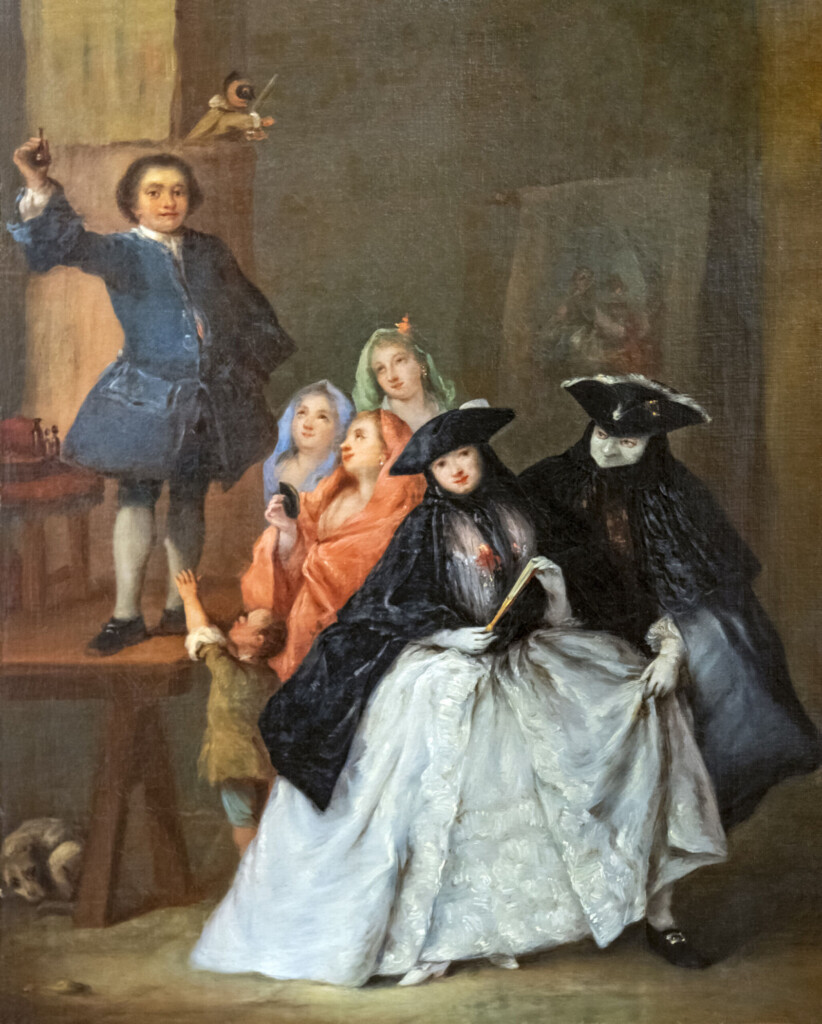
You sit across from a therapist who asks you not about your childhood but about who you were before you were born, and something in you — something that has been waiting without knowing it was waiting — exhales.
That exhale is not mystical. It is sociological. The German sociologist Max Weber, writing in the early twentieth century, diagnosed modernity as a process of Entzauberung, the disenchantment of the world, in which rational bureaucratic systems progressively stripped existence of the sacred canopy that had once made suffering legible. What Weber could not fully anticipate was the specific hunger this would produce — not a hunger for God exactly, but for a grammar of causality that makes personal pain feel earned rather than arbitrary. Past-life regression did not fill this void by accident. It filled it with surgical precision because it offers exactly what secular rationalism removed: a narrative in which your suffering has a prehistory, your character has a genealogy, and your present circumstances are the consequence of choices made across a timespan larger than one lifetime.
Institutional religion, for all its doctrinal rigidity, performed a function that is easy to underestimate now that its authority has collapsed across much of Western Europe and urban North America. It located the individual inside a story that was larger than the individual. The collapse did not come cleanly. Between 1960 and 2020, weekly church attendance in the United Kingdom fell from roughly forty percent to below five percent of the population, and similar trajectories unfolded across France, the Netherlands, and Scandinavia. What replaced it was not atheism as a coherent philosophical position but rather a diffuse spiritual improvisation — what the sociologist Robert Bellah, in his 1985 study of American individualism Habits of the Heart, called Sheilaism after a nurse who described her faith as simply her own little voice. The past-life regression industry is, in structural terms, Sheilaism made therapeutic, given a couch and a billing code.
The specific mechanism is not belief in reincarnation as a metaphysical proposition. Survey data consistently shows that many people who undergo regression sessions do not consider themselves Hindu, Buddhist, or even particularly spiritual in any doctrinal sense. What they are purchasing is not a cosmology but a mythology — and the distinction matters enormously. A mythology does not require literal assent. It requires emotional coherence. When a forty-three-year-old accountant recovers a hypnotic memory of dying in a nineteenth-century war, the question of whether that memory corresponds to any historical event is almost beside the point. The question is whether it organizes something that previously felt chaotic. Trauma researchers have long understood that the mind does not heal through factual accuracy but through narrative integration, a point that Bessel van der Kolk made with clinical precision in his 2014 work on the body’s response to overwhelming experience. The past life is the ultimate narrative prosthetic for experiences that resist ordinary explanation.
What makes this culturally remarkable is not that people believe strange things — they always have — but that this particular strange thing flourishes specifically in conditions of high education, relative affluence, and weakened communal identity. It is not the desperate or the destitute who fill regression workshops in London and Los Angeles and Amsterdam. It is precisely the people who have everything that secular modernity promised and have discovered that the promise did not include a reason to have it. The philosopher Charles Taylor spent nearly a thousand pages in A Secular Age tracing how the buffered self of modernity — sealed off from enchantment, responsible only to its own interior — became not liberated but marooned, cut off from sources of meaning it no longer has language to request. Past-life regression gives that marooned self a passport stamped with dates it never lived, visas for countries it never visited, and the vertiginous, privately necessary conviction that it has been somewhere before and is therefore, in some way that cannot be argued with, going somewhere still.
🔮 Echoes of the Soul Beyond Time
Past life regression sits at the crossroads of memory, identity, and the unconscious — a practice that invites us to question where the self truly begins and ends. The articles gathered here explore the philosophical, psychological, and spiritual territories that illuminate what it means to carry the past within us, across lifetimes and through layers of consciousness.
Regression in Psychology: When the Mind Returns to Childhood
Regression in psychology is not merely a therapeutic curiosity — it is a window into the mind’s tendency to retreat toward earlier states when the present becomes unbearable. Understanding psychological regression provides essential context for the broader phenomenon of past life regression, revealing how memory, trauma, and identity intertwine beneath the surface of conscious experience.
GO TO THE SELECTION: Regression in Psychology: When the Mind Returns to Childhood
Eliade’s The Myth of the Eternal Return: Analysis
Mircea Eliade‘s meditation on the myth of the eternal return explores humanity’s deep need to escape linear time and reconnect with sacred, cyclical origins. This archetype resonates powerfully with past life regression practices, which similarly seek to dissolve the boundaries of chronological selfhood and recover a timeless dimension of existence.
GO TO THE SELECTION: Eliade’s The Myth of the Eternal Return: Analysis
Jungian Individuation and the Great Work
Jungian individuation — the lifelong process of integrating the unconscious into a coherent self — finds a striking parallel in the symbolism of the alchemical Great Work. Past life regression can be read as a modern expression of this ancient inner alchemy, a ritual of psychological transformation that attempts to transmute unresolved experience into self-knowledge.
GO TO THE SELECTION: Jungian Individuation and the Great Work
Eliade’s The Sacred and the Profane: Analysis
Eliade’s foundational work on the sacred and the profane reveals how religious experience structures human perception of time, space, and identity. The rituals and altered states associated with past life regression draw directly from this sacred framework, placing the individual at the threshold between ordinary consciousness and a mythic, eternal dimension of the self.
GO TO THE SELECTION: Eliade’s The Sacred and the Profane: Analysis
Discover the Cinema of the Soul on Indiecinema
If these themes stir something deep in you — the mystery of memory, the weight of lives unlived, the search for meaning beyond a single existence — then independent cinema is your most intimate companion for the journey. On Indiecinema, you’ll find films that dare to explore consciousness, time, and the hidden architecture of the self. Come and watch.
👉 EXPLORE THE CATALOG: Watch Indie Films in Streaming
A vision curated by a filmmaker, not an algorithm
In this video I explain our vision

