
There is something deeply uncomfortable about the idea that you are not entirely present in your own mind. That somewhere below the threshold of awareness, processes are running — shaping your desires, distorting your memories, driving your choices — and you have no direct access to them. This discomfort is not incidental. It is, in fact, the very reason the unconscious remains one of the most contested, most generative, and most culturally explosive ideas in the history of human thought. Other psychological concepts can be discussed with a certain clinical detachment. Attention, memory, perception — these feel like mechanisms, and we can treat them as such. The unconscious is different. It implicates you personally. It suggests that the self you narrate to yourself every morning is a partial fiction, a surface story assembled from materials you did not choose and cannot fully inspect.

This page exists because the unconscious is too large, too philosophically loaded, and too historically tangled to survive being a subsection of something else. It demands its own space. Not because Freud said so — and we will complicate Freud considerably — but because the question of what lies below conscious awareness cuts across every domain of human inquiry: neuroscience, literary theory, anthropology, political philosophy, clinical practice, aesthetics. The moment you start pulling this thread, you find that it is woven into almost everything else.
The concept did not originate with psychoanalysis, though psychoanalysis crystallized it into a doctrine. Long before Freud published his Interpretation of Dreams in 1900, European intellectuals were wrestling with the idea that the mind was not transparent to itself. Leibniz, in the seventeenth century, had already proposed the existence of “petites perceptions” — minute perceptions below the threshold of awareness that nonetheless influence thought and feeling. He was gesturing toward something important: consciousness is not the whole of mental life. It is a selection, a edited highlight reel, not the raw footage. Kant deepened the problem by making the structures of perception themselves unconscious — the categories through which we organize experience are not themselves experienced. They are the frame, not the picture. You cannot step outside your own cognitive architecture to examine it the way you might examine a piece of furniture.
By the nineteenth century, German Romanticism had begun to aestheticize the unconscious, treating it as the source of artistic inspiration, the dark reservoir from which creativity erupts into the light of reason. Schelling saw nature itself as an unconscious absolute, a kind of vast dreaming. Schopenhauer went further, positing a blind, irrational Will as the true ground of reality, with conscious reason a mere flickering lamp held up against an overwhelming darkness. This was not yet psychology in any clinical sense — it was metaphysics, philosophy of nature, aesthetics. But it prepared the cultural ground for what would come. When Freud arrived, he was not introducing an alien idea into Western culture. He was systematizing a suspicion that had been building for two centuries: that consciousness is an effect, not a cause, and that the real action is happening somewhere else.
What Freud did — and it was genuinely radical, whatever reservations we now hold about his methodology and his mythology — was to make the unconscious a clinical object. He gave it structure. The unconscious, in his model, was not simply a dimmer zone of awareness. It was a dynamic space governed by its own logic, the primary process, operating through condensation and displacement, indifferent to contradiction, to time, to the distinction between fantasy and reality. It did not follow the rules of conscious, rational thought. It was, in a real sense, alien to the self that identified itself as the subject of its own life. The id does not know that you have a mortgage, a career, a social reputation to maintain. It wants what it wants with an urgency that consciousness finds embarrassing and spends enormous energy suppressing.
This suppression — repression — is where the clinical stakes enter. Freud’s argument was that the energy required to keep unconscious material out of awareness does not disappear. It gets converted, redirected, and eventually it returns in disguised forms: symptoms, dreams, slips of the tongue, compulsive behaviors, inexplicable emotional reactions. The therapeutic project of psychoanalysis was fundamentally an archaeological one. You dig through the layers of symbolic displacement and defensive distortion to reach the original material, name it, bring it into consciousness, and thereby loosen its grip. Whether this project actually worked in the ways Freud claimed is another question — one to which we will return repeatedly in the articles gathered here — but its cultural impact was seismic. It gave Western modernity a new way to understand human suffering, human motivation, and human irrationality.
The twentieth century was shaped by this understanding in ways we have still not fully reckoned with. Literature, film, advertising, political theory — all were transformed by the assimilation of psychoanalytic ideas. Surrealism was an explicit attempt to grant the unconscious artistic sovereignty, to bypass the censoring function of rational consciousness and let the primary process speak directly through automatic writing, dreamlike imagery, and the deliberate cultivation of the irrational. The Surrealists were not simply making strange art. They were making a philosophical argument about where meaning comes from, and they were siding, emphatically, with the unconscious. André Breton’s manifestos read as documents of a genuine metaphysical position: that the truly real is what consciousness excludes, that the marvelous is the product of unconscious eruption into the ordered surface of waking life.
In political thought, the implications were darker and harder to assimilate. If individuals are driven by unconscious forces they cannot access or control, then the entire Enlightenment project of the rational, autonomous citizen becomes questionable. Early propaganda theorists — Edward Bernays is the most notorious, and the most honest — drew directly on psychoanalytic ideas to develop techniques for manipulating mass behavior below the threshold of conscious deliberation. The crowd, Le Bon had already suggested, behaves not like a rational deliberative body but like an unconscious entity, regressing to archaic, infantile patterns of response. Fascism, whatever else it was, was a politics of the unconscious — an appeal to archaic fantasies of unity, purity, and the elimination of internal division. Wilhelm Reich and Herbert Marcuse, from within the broader psychoanalytic tradition, tried to understand why oppressed populations sometimes actively desire their own oppression, why irrational authoritarianism can be experienced as liberation. These are not comfortable questions. They are not questions that can be answered by appealing to ignorance or false consciousness in any simple sense. They require taking the unconscious seriously as a domain of genuine motivation, not just error.
Carl Jung broke with Freud on several crucial points, but the most consequential was his expansion of the unconscious from a personal repository of repressed material to a collective dimension shared across humanity. The collective unconscious, with its archetypes — the Shadow, the Anima, the Self, the Great Mother — was Jung’s attempt to account for the remarkable convergences in myth, religion, and symbol across cultures that have no historical contact with each other. This was a bold and controversial move, and it has been criticized, fairly, for its tendency toward essentialism and its sometimes uncritical appropriation of non-Western traditions. But it opened a conversation between depth psychology and anthropology, between clinical work and the study of myth, that remains productive and unresolved. The question of whether there are universal structures in unconscious mental life — whether the deep grammar of symbol and image is in some sense cross-cultural — has not been answered. It has been complicated by cognitive science, by evolutionary psychology, by postcolonial critique. But it has not gone away.
Here is where the contemporary picture becomes genuinely interesting and genuinely confused. Cognitive science and neuroscience have, in their own ways, confirmed that the vast majority of mental processing occurs below conscious awareness. This is not the Freudian unconscious — it is not a cauldron of repressed wishes and infantile fantasies. It is something more like an enormously powerful, parallel information-processing system that handles perception, motor coordination, pattern recognition, emotional evaluation, and decision-making with a speed and efficiency that conscious deliberation cannot match. Daniel Kahneman’s System 1 and System 2 framework — now so overexposed as to have become a cliché of popular psychology — is a simplified version of this picture. The deeper research is more complex and more unsettling. Experiments in social priming, implicit attitude measurement, and the neuroscience of decision-making have repeatedly suggested that what we experience as free, conscious choice is often a post-hoc rationalization of processes that were already underway before we became aware of them. Benjamin Libet’s famous experiments on the readiness potential seemed to show that the neural preparation for a voluntary action precedes conscious awareness of the intention to act — which raises, in extremely condensed form, the entire problem of free will.
The scientific unconscious and the psychoanalytic unconscious are not the same thing, and conflating them — as popular science writing often does — produces muddle rather than clarity. The cognitive unconscious does not dream, does not repress, does not produce symptoms in Freud’s sense. It is not structured like a language, as Lacan claimed. It is not full of Jungian archetypes. What it shares with its psychoanalytic predecessor is the basic challenge to the sovereignty of conscious experience — the demonstration that what we are aware of is the surface, not the depth. The relationship between these two traditions, and the question of whether they can be integrated or must remain incommensurable, is one of the genuinely open intellectual problems of our moment.
Lacan’s reading of Freud, which dominated French intellectual life for several decades and continues to influence literary theory, film studies, and cultural critique, deserves mention not because it is easily accessible — it is famously, deliberately, maddeningly difficult — but because it shifted the axis of the debate in a way that remains consequential. For Lacan, the unconscious is not a depth below consciousness but a structure — specifically, the structure of language. “The unconscious is structured like a language” is his most cited formulation, and what it means, roughly, is that the unconscious is not a biological reservoir but a dimension of the subject’s inscription in the symbolic order, the system of language and law into which every human being is born. The subject is split — always already divided between the speaking self and the dimension of desire that can never be fully represented in speech. This is not a therapeutic framework in the conventional sense. It is an ontological claim: that lack, division, and the impossibility of complete self-knowledge are not problems to be solved but constitutive features of what it means to be human.
This is where the unconscious becomes most uncomfortable, and most honest. The therapeutic promise — that analysis can bring the unconscious to light, that insight can produce liberation — was always more complicated than its popular reception suggested. The goal of Freudian analysis was never the elimination of the unconscious. It was the enlargement of ego functioning, a modest and realistic aim compared to the transformative fantasies sometimes projected onto it. Lacan was even more austere: the end of analysis is not integration but the acceptance of constitutive lack. You do not resolve your division. You learn to stop pretending it is not there.
The cultural appetite for unconscious exploration has not diminished, though its forms have mutated. The popularity of dream journaling, somatic therapy, parts-based models like Internal Family Systems, psychedelic-assisted psychotherapy — all testify to a continuing demand for access to dimensions of inner life that ordinary waking consciousness does not provide. Whether these practices actually access the unconscious in any meaningful sense, or whether they are constructing experiences that feel like depth while remaining at the surface, is a question worth taking seriously. The experience of depth is not the same as actual depth. The feeling of accessing something hidden is not proof that the thing accessed was genuinely there before the accessing.
This page is organized around that tension. The articles here approach the unconscious from multiple directions — historical, clinical, philosophical, neuroscientific, aesthetic — not because we believe all perspectives are equally valid or that truth is merely a matter of framework, but because the unconscious is one of those concepts that genuinely requires triangulation. No single discipline owns it. Psychoanalysis gave it its most elaborate map, but the map has been revised and contested from within and without. Neuroscience has given us new instruments for measurement but has not resolved the interpretive questions. Philosophy has kept the conceptual problems visible when practitioners were tempted to forget them.
What we will not do here is simplify. The unconscious is not a self-help resource. It is not a reservoir of authentic selfhood waiting to be uncovered beneath the conditioning and the social masks — that fantasy, however appealing, is itself a form of avoidance. The unconscious, in all of its serious theoretical formulations, is precisely what resists the comfortable narrative of self-knowledge and self-improvement. It is the part of mental life that will not be domesticated by the will to transparency. That is what makes it worth thinking about carefully, rigorously, and without the reassurance that thinking about it will make you feel better.
A vision curated by a filmmaker, not an algorithm
In this video I explain our vision
Redemption and atonement: psychology of inner change

Redemption is one of the oldest and most persistent stories the human mind tells about itself — the story of wrongdoing, of rupture, of the possibility of repair. But what actually happens, psychologically, when a person genuinely changes? Not the performance of change, not the language of transformation without its substance, but the real, effortful, uncertain inner work through which a self is reshaped? This article examines the psychology of redemption and atonement with the seriousness these concepts deserve, drawing on depth psychology, moral philosophy, and clinical experience to map the inner architecture of genuine transformation. Guilt and shame, the article argues, are not the same thing, and confusing them is one of the most common reasons that the desire for redemption stalls. True atonement requires not only acknowledging what was done but sustaining the discomfort of that acknowledgment long enough for it to actually change something — a process that cannot be rushed, performed, or shortcut. The piece also explores the social dimension of redemption: what communities and relationships require before trust can be rebuilt, and whether forgiveness is something that can or should be demanded. In an era saturated with public apologies and cycles of cancellation and reinstatement, these questions feel more urgent than ever.
Synchronicity and meaningful coincidences: Jung and chance
You think of someone you haven't spoken to in years, and within the hour they call. You dream of a place you have never visited, and three weeks later you find yourself standing in it. A book falls open to exactly the passage you needed to read. These experiences are common enough that almost everyone has had one, and unsettling enough that almost everyone wonders what to make of them. Jung called them synchronicities — meaningful coincidences that resist explanation by ordinary causality — and he spent years developing a theoretical framework to take them seriously without collapsing into mysticism. This article examines Jung's concept of synchronicity with the rigor and openness it requires, exploring its theoretical foundations, its relationship to quantum physics and the philosophy of causality, and its significance for the practice of depth psychology. Are synchronicities evidence of something beyond the materialist worldview, or are they sophisticated products of a meaning-making mind operating below the threshold of consciousness? The article does not offer easy answers — but it argues that dismissing these experiences entirely is as intellectually dishonest as accepting them uncritically, and that sitting with the question is, in itself, a form of psychological and philosophical work worth doing.

Recurring nightmares: meaning of obsessive dreams
The same dream, night after night. The same corridor, the same pursuer, the same inexplicable dread — and then the same waking in the dark, heart pounding, with the sense that something unresolved has followed you out of sleep. Recurring nightmares are among the most distressing and least understood of all sleep phenomena, and this article takes their meaning seriously. Far from being random neural noise, obsessive dreams carry a psychological charge that deserves careful attention. This piece explores what recurring nightmares tell us about the inner life of the dreamer — drawing on Freudian dream theory, Jungian amplification, and contemporary trauma psychology to build a picture of why certain images and scenarios return with such relentless insistence. Recurring nightmares are often understood, in clinical contexts, as a feature of unprocessed trauma or unresolved emotional conflict: the mind's way of staging the same drama again and again in hopes that this time, something will shift. But the article goes beyond diagnosis to ask what it would mean to genuinely engage with these dreams rather than simply endure them — to treat the recurring nightmare not as an affliction to be eliminated but as a message that has not yet been heard.
Paranoia: how it develops, and distorts the perception of reality
Paranoia does not arrive fully formed. It builds — slowly, incrementally, through a series of small perceptual shifts that feel, to the person experiencing them, completely justified by the evidence. This is what makes it so difficult to recognize from the inside, and so important to understand from the outside. This article examines the psychology of paranoia in depth, tracing the cognitive and emotional processes through which ordinary vigilance can transform into a distorted, self-sealing system of belief in which every piece of evidence confirms the threat and no counter-evidence is admitted. It is not simply a symptom of severe mental illness, though it can be that. Paranoid thinking exists on a spectrum, and mild forms of it are far more common than most people are comfortable admitting. The article explores the developmental roots of paranoid cognition, the role of trauma and chronic stress in lowering the threshold for threat perception, and the social environments that can amplify or trigger paranoid thinking in otherwise healthy people. It also asks the uncomfortable question that any serious treatment of paranoia must eventually face: how do we distinguish between pathological distortion and a genuinely accurate reading of a threatening world? The line, it turns out, is not always as clear as we would like.
The instinct for self-preservation: the psychology of survivalism

What drives a person to stockpile food, build a bunker, rehearse disaster scenarios, and dedicate significant portions of their life to preparing for a collapse that may never come? The psychology of survivalism is more complex and more illuminating than its cultural caricature suggests, and this article takes it seriously. At its core, the instinct for self-preservation is one of the most fundamental forces in the human psyche — but when does healthy prudence become something else? When does preparedness tip into anxiety, and when does anxiety harden into a worldview? This piece examines the psychological mechanisms behind survivalist thinking, drawing on attachment theory, existential psychology, and the psychology of risk perception to understand what these behaviors reveal about human beings and their relationship with uncertainty, mortality, and control. There is something genuinely interesting and genuinely troubled in the survivalist mindset — a heightened awareness of fragility that the rest of us may simply be better at suppressing. Understanding it requires us to ask uncomfortable questions about our own denial, our own relationship with catastrophe, and what we would actually do if the systems we depend on stopped working. The survivalist, this article suggests, may be wrong about the timing but not entirely wrong about the stakes.
A vision curated by a filmmaker, not an algorithm
In this video I explain our vision
The rejection of the future and the dynamics behind the fear of change
Change is supposed to be desirable — growth, progress, new beginnings. And yet a significant portion of human behavior can only be understood as a systematic effort to prevent exactly that. The fear of change is not irrational weakness; it is a deeply rooted psychological phenomenon with its own internal logic, its own history, and its own costs. This article examines the dynamics behind what psychologists call metathesiophobia and the broader spectrum of change resistance, asking why the future so often feels like a threat rather than a promise. Drawing on both psychoanalytic theory and contemporary cognitive psychology, the piece explores the roles that identity, loss aversion, and attachment to familiar narratives play in keeping people locked in patterns they consciously wish they could escape. The rejection of the future is rarely simple laziness or cowardice — it is often a sophisticated protective strategy developed in response to genuine experiences of loss, disruption, or betrayal. Understanding this is the first step toward something different: not a naive embrace of change for its own sake, but a more honest reckoning with what we are actually afraid of losing, and whether the price of that protection is one we can afford to keep paying.
The Uncanny in Freud: The Unheimliche
There is a particular feeling that has no clean translation in English — a sense of unease, of wrongness, of something familiar that has become suddenly and inexplicably strange. Freud called it the Unheimliche, often translated as the uncanny, and in his 1919 essay on the subject he identified it as one of the most psychologically revealing of all aesthetic experiences. This article offers a close and illuminating reading of Freud's concept, tracing its roots in the German language itself — where heimlich means both familiar and secret, so that its opposite is also its hidden double — and exploring what it tells us about the structure of the human mind. The uncanny appears in ghost stories and automata, in doppelgängers and déjà vu, in the moment when a doll's face seems almost human, in the childhood home that no longer feels safe. Freud argued that these experiences are not random: they point to something repressed, something that was once known and has been forced out of consciousness, returning in distorted form to produce that specific, irreducible chill. More than a century after Freud wrote about it, the uncanny continues to haunt literature, film, and everyday experience — and this article explains exactly why.
Music as an Awakening of the Unconscious

Music reaches places that words cannot. Before we have language to describe what we feel, before consciousness organizes experience into narrative, there is sound — rhythm, melody, vibration — working directly on something older and deeper in us than thought. This article explores the relationship between music and the unconscious mind, drawing on Jungian psychology, neuroscience, and the philosophy of aesthetics to ask why music moves us in ways we rarely fully understand. Why does a particular chord progression produce grief in someone who has no conscious reason to grieve? Why does rhythm compel the body to move before the mind has decided anything? Why do certain pieces of music feel like they are excavating something that was buried — memories, emotions, entire selves we had forgotten? Music, this article argues, functions as one of the most powerful and accessible pathways to the unconscious available to us, not as therapy in a clinical sense, but as a form of psychic awakening available to anyone willing to truly listen. From ancient ritual drums to contemporary ambient soundscapes, the article traces a thread connecting music-making and music-listening to the deepest layers of human inner life.
Carl Gustav Jung and the Shadow: The Dark Side We Don’t Want to See
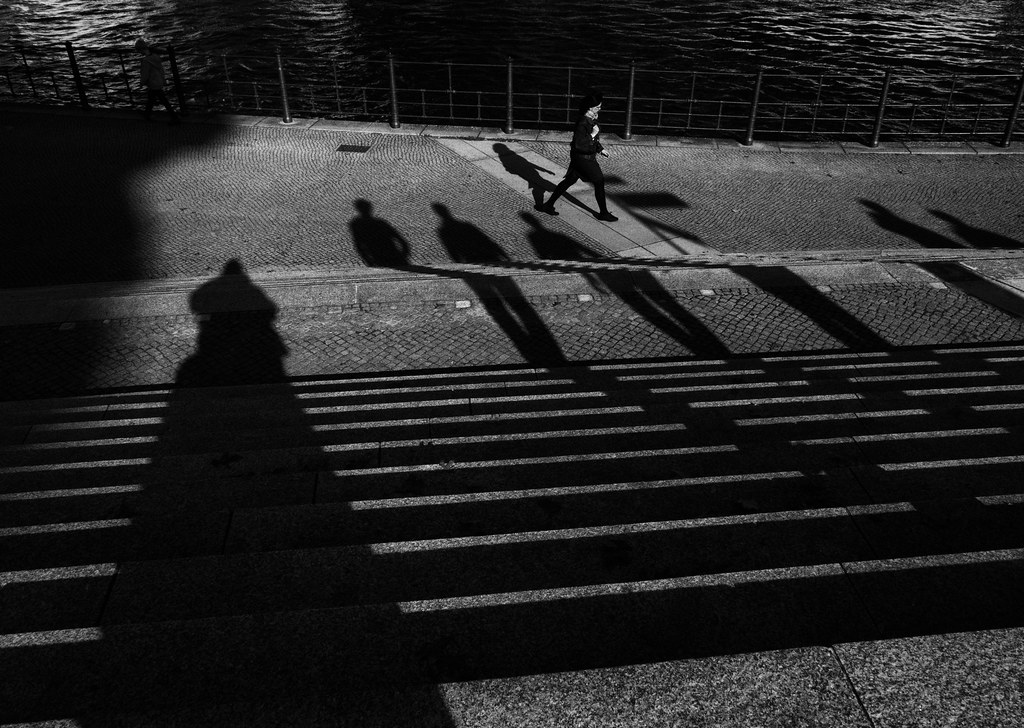
It watches from the corner of every self-image we construct — the parts of ourselves we have decided are unacceptable, shameful, too dark, too weak, too frightening to acknowledge. Jung called it the Shadow, and he spent much of his career arguing that it is not our enemy but our most important teacher. This article offers a rigorous and compelling exploration of one of Jung's most influential and widely misunderstood concepts, tracing its origins in his theoretical work while connecting it to lived experience in ways that feel immediate and recognizable. The Shadow is not simply evil — it is everything we have rejected, repressed, or never been allowed to develop. It includes not only our cruelty and our envy but also, paradoxically, our unlived potential, the gifts and capacities we buried because someone once told us they were too much. Learning to see the Shadow clearly — not to be consumed by it, but not to pretend it doesn't exist — is, Jung argued, essential to psychological maturity. This piece asks what it actually takes to look honestly at the parts of ourselves we have spent a lifetime avoiding, and what we might find there if we do.
Jung and the Persona: The Mask That Becomes a Face

Jung called it the Persona — the mask we wear to navigate the social world, the carefully constructed face we present to colleagues, strangers, and even loved ones. Named after the masks worn by actors in ancient Greek theater, the Persona is not inherently pathological; it is, in fact, a necessary tool for functioning in society. The problem arises when we forget it is a mask. When the role we play becomes indistinguishable from who we believe ourselves to be, we lose contact with the deeper self beneath, and the consequences can be quietly devastating. This article explores Jung's concept of the Persona with the seriousness and nuance it deserves, asking what happens to the person behind the performance. How do we build our social masks? What do we sacrifice in the process? And what does it actually take to remove them — not in a single dramatic act, but in the slow, uncomfortable work of individuation? In an era of personal branding, curated online identities, and relentless social performance, Jung's insights feel less like historical theory and more like an urgent diagnosis of the present moment. The mask has never been more polished, or more dangerous.
The Secret and the Rite: Initiation, Transformation and Jungian Psychology

Every culture across human history has developed rituals of initiation — ceremonies, ordeals, and symbolic deaths designed to transform the individual and mark their passage from one state of being to another. These rites are not mere tradition or superstition; they encode a profound psychological wisdom about how transformation actually works, a wisdom that Jungian psychology has spent decades trying to articulate in modern terms. This article investigates the deep connection between secrecy, ritual, and psychological transformation, asking what the ancient initiatory traditions of mystery schools, shamanic practices, and religious rites can teach us about the inner work of becoming. Jung himself was fascinated by initiation — he recognized in it the symbolic structure of individuation, the lifelong process by which a person becomes more fully themselves. But what does initiation look like when the old rites have disappeared? Where do modern people find the ordeals, the thresholds, the symbolic deaths and rebirths that the psyche seems to require? This piece argues that the hunger for initiation has not gone away — it has merely gone underground, expressing itself in unexpected and sometimes dangerous forms, from extreme sports to spiritual crisis to the obsessive pursuit of secret knowledge.
Regression in Psychology: When the Mind Returns to Childhood

There are moments when an adult, faced with overwhelming stress or emotional pain, does not move forward — they move back. Regression in psychology refers to the unconscious return to earlier modes of thinking, feeling, and behaving, patterns that belong to childhood but resurface when the present becomes too difficult to bear. It is one of the most recognizable and yet least understood defense mechanisms in the human repertoire. This article unpacks the concept of psychological regression with clarity and depth, tracing its roots in Freudian theory while examining how contemporary psychology has refined and expanded our understanding of the phenomenon. Why does a grown adult suddenly throw a tantrum? Why do people in crisis reach for comfort objects, childlike language, or behaviors they thought they had long outgrown? The answers lie not in weakness but in the extraordinary adaptability of the human mind, which will reach into its own history to find resources when the present offers none. Understanding regression is not about shame or judgment — it is about recognizing the deep continuity between who we were and who we are, and learning to respond to our own vulnerability with something closer to compassion.
Jung’s Red Book: Analysis

Carl Gustav Jung spent sixteen years filling a handmade book with visions, paintings, and meditations that he himself considered the foundation of all his later work — and yet he kept it locked away, hidden from the public for nearly a century. The Red Book, finally published in 2009, is one of the most extraordinary and unsettling documents in the history of psychology: part illuminated manuscript, part spiritual autobiography, part descent into madness and meaning. This article offers a careful and illuminating analysis of what Jung actually recorded in those pages, and why it still matters. What does it mean that the father of analytical psychology spent years in dialogue with inner figures he called Elijah, Salome, and Philemon? What can we learn from a man who deliberately confronted his own unconscious at the risk of losing himself entirely? Far from being a historical curiosity, the Red Book speaks to anyone who has ever felt the pull of something deeper beneath the surface of ordinary life. It raises urgent questions about creativity, spiritual experience, madness, and the thin line between visionary insight and psychological collapse. Reading it — and reading about it — changes how you understand the mind.
The Unconscious and its Relationship With Cinema
What does the flickering darkness of a movie theater have to do with the hidden depths of the human psyche? More than we might think. Cinema has always functioned as a mirror of the unconscious — a space where collective fears, repressed desires, and archetypal symbols find their way onto the screen, often without the audience even noticing. This article explores the profound and largely underexamined relationship between film as a medium and the unconscious mind as theorized by Freud, Jung, and their successors. From the dreamlike logic of surrealist cinema to the shadow figures lurking in noir thrillers, from the recurring motifs in horror to the hero's journey embedded in blockbusters, the language of film speaks directly to parts of ourselves that rational thought rarely reaches. Directors may not always intend it, but the unconscious leaks through — in symbols, in narrative structures, in the monsters we choose to put on screen. This piece invites readers to reconsider how they watch films, not merely as entertainment but as a kind of collective dreaming, a shared psychic experience that reveals more about who we are than any press release or box office number ever could.

