
The Man Who Decided Who Mattered
Imagine finding out that someone removed you from a photograph. Not that you were absent — you were there, you remember standing in that exact light, in that exact room — but someone, at some point, decided that the image would be cleaner without you. No explanation, no confrontation. Just the smooth continuation of a story in which you simply never existed. That is not a metaphor for something. That is the oldest and most ordinary exercise of power there is.

Giorgio Vasari understood this before almost anyone else in the Western tradition put it into systematic practice. Born in Arezzo in 1511, he grew up inside the workshops and courts of a world where talent was abundant but memory was scarce, where a painter could spend forty years producing work of extraordinary refinement and still vanish entirely within a generation of his death because no one had thought to write his name down with sufficient conviction. Vasari thought to. In 1550 he published the first edition of Le Vite de’ più eccellenti pittori, scultori e architettori — the Lives of the Most Excellent Painters, Sculptors and Architects — and in doing so became something unprecedented: the first architect of the artistic canon in the modern Western sense, the man who sat down and decided, with the authority of a judge and the instincts of a dramatist, which lives would endure and which would dissolve back into the silence from which they had briefly emerged.
This is not a small thing to have done. It is, in fact, a staggering act of cultural violence dressed in the costume of cultural generosity. The historian Ernst Gombrich, whose The Story of Art sold over eight million copies and shaped more popular understanding of Western painting than perhaps any other single text, acknowledged the degree to which that story’s very architecture rested on Vasari’s choices. Those choices were not neutral. They were the choices of a Tuscan, a protégé of the Medici, a personal friend of Michelangelo, a man whose aesthetic convictions had been formed in a specific place at a specific historical moment and who then applied those convictions retroactively to two and a half centuries of artistic production as if they were universal laws of quality and progress.
The philosopher Michel Foucault, in his 1969 essay “What Is an Author?”, described the author function not simply as a name attached to a text but as a principle of classification, a mechanism that determines what counts as legitimate discourse and what gets excluded from it. Vasari was precisely this kind of mechanism, but deployed not over texts — over human beings. He classified the dead. He determined which painters had been moving toward something, contributing to a coherent narrative of artistic development, and which had merely existed without advancing the plot. The ones who fit his story became Renaissance masters. The ones who did not became footnotes, or nothing at all.
There is something deeply disorienting about recognizing how much of what you believe to be your own aesthetic perception was, in fact, pre-formed by one man’s opinions written down in sixteenth-century Florence. When you stand before a Giotto and feel the weight of history behind it, when you sense intuitively that here something important was beginning — that intuition was not born in you. It was built. Vasari built it, and then generations of critics, historians, and educators reinforced the construction until it felt as natural and inevitable as gravity.
He had help, of course. The Medici court provided the social infrastructure, and the Florentine tradition of disegno — drawing as the intellectual foundation of all art — provided the ideological framework. But Vasari provided the narrative, and narrative, as anyone who has ever been erased from a photograph knows, is the thing that finally determines what happened.
Trench

Thriller, Mystery, by Serge Turgeon, Italy, 2023.
In Venice, an art historian realizes that her brilliant mind will not be enough to solve the mystery surrounding the disappearance of an unknown woman. In addition to regaining trust in her intuition and her heart, she will need the help of a series of colorful characters from her community.
The idea behind Trench is to tell, through a detective story, the journey of an intellectual woman who suffered while growing up in a working-class district of Venice, where she never felt truly valued. In order to solve a mystery, she must face danger and rely on the help of the “non-intellectual” members of her community, rediscovering along the way her resourcefulness, her Venetian identity, and her true self.
LANGUAGE: Italian
SUBTITLES: English, Spanish, French, German, Portuguese
Florence as a Stage, Vasari as the Playwright
You are walking through a city that has decided, very deliberately, what it wants to look like. Every loggia, every fresco cycling across a chapel wall, every bronze figure arrested mid-gesture in a public square — none of it is decoration. It is argument. Florence in the early sixteenth century is not a backdrop to history; it is history made visible, made permanent, made legible to anyone with eyes trained to read it correctly. And the Medici understood this before almost anyone else in Europe understood it: that beauty is governance, that aesthetic preference is political statement, that the man who commissions the painting controls, in some deep and unacknowledged way, the story the painting tells about him.
Giorgio Vasari was born in Arezzo in 1511, which means he came to consciousness inside a world already saturated with this logic. Arezzo was not Florence — it was a provincial town, quieter, less feverish — but it sat within the orbit of Florentine power the way a smaller planet sits within the gravitational pull of a larger one. His family had artistic lineage stretching back several generations, a fact Vasari himself would later record with the pride of a man who believes that talent runs in blood the way a river runs through stone. When he arrived in Florence at around age thirteen, sent there by his father with letters of introduction and the barely suppressed ambition of a family investing everything in one gifted child, he entered not merely a city but a theater — and the theater had already assigned its roles before he walked through the door.
The patronage system he encountered was not a simple transaction between wealth and skill. Michel Foucault, in his analysis of how power diffuses itself through social institutions, described the relationship between knowledge and authority as constitutively entangled: you cannot produce knowledge without already being positioned within a network of power that both enables and constrains what can be said. Sixteenth-century Florentine artistic patronage was exactly this — a network in which the Medici did not simply buy paintings but licensed realities, determined which version of beauty would survive into the future and which would dissolve without record. An artist who understood this could thrive. An artist who misunderstood it, who imagined that aesthetic quality alone was sufficient currency, could vanish from history with astonishing ease.
Vasari understood it almost instinctively. His early training under Michelangelo’s influence, his exposure to Andrea del Sarto’s workshop, his proximity to figures like Baccio Bandinelli and Rosso Fiorentino — these were not simply artistic apprenticeships. They were lessons in survival, in navigating a court where a badly placed compliment or a commission accepted from the wrong patron could collapse an entire career. The Florence Vasari inhabited was a city that had expelled the Medici in 1494 and restored them in 1512, that had expelled them again in 1527 and restored them definitively by 1530 under Alessandro, and then under Cosimo I from 1537 — a city, in other words, that had learned to change its official story repeatedly, and needed artists agile enough to change with it.
What this environment produced in Vasari was not cynicism exactly, but something more sophisticated: a conviction that art history itself was a political instrument, that the act of recording who had made what, and why it mattered, was inseparable from the act of constructing a particular version of civilization. He did not arrive at this conviction through philosophical reflection alone. He arrived at it through watching how quickly a name could disappear from conversations, how casually a work could be attributed to someone more convenient, how the story of art was always being rewritten by whoever currently held the pen.

Lives of the Artists: The Book That Invented Art History
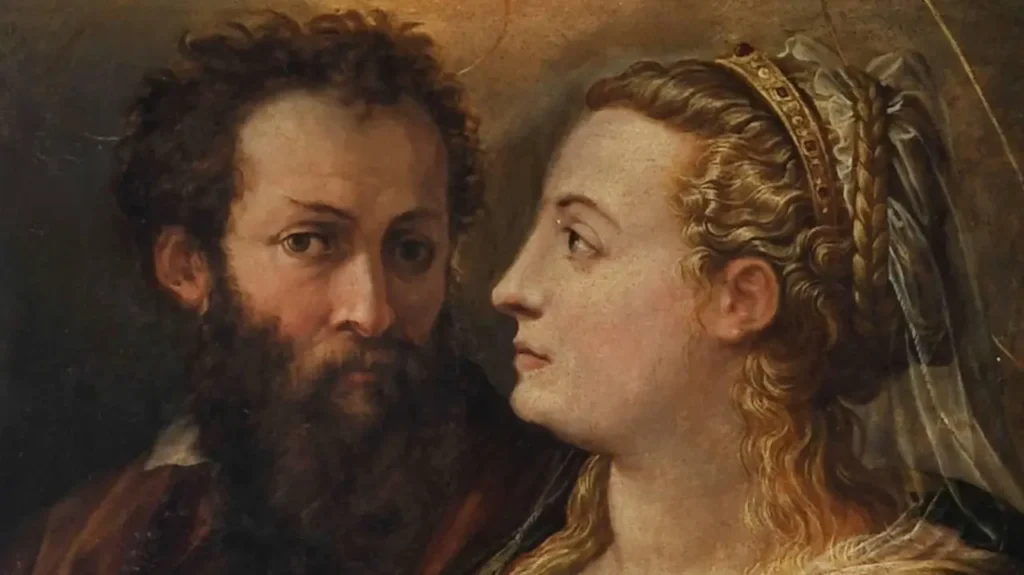
There is a kind of love that organizes everything around itself. You have seen it — the person who claims to celebrate a friendship while quietly ensuring they remain at its center, who praises others in the precise language that confirms their own superior judgment. Giorgio Vasari loved artists with exactly this kind of love. His Le Vite de’ più eccellenti pittori, scultori e architettori, published first in 1550 and then expanded in 1568, is one of the most genuinely affectionate books ever written about human creativity, and one of the most quietly ruthless acts of narrative control in the history of Western culture.
The 1550 edition runs to two volumes and covers roughly 130 artists. The 1568 revision swells further, adds living contemporaries, includes a self-portrait biography, and sharpens the theological architecture that was already latent in the first version. That architecture is teleological in the most precise sense: it moves forward, it moves upward, it moves inevitably toward a single destination. Vasari divides artistic history into three ages — an emergence from the medieval darkness, a refinement through the early Renaissance, and a perfection achieved in his own century. The structure does not describe history. It justifies a conclusion already reached before the first sentence was written. The conclusion is Michelangelo.
Everything Vasari writes flows toward that man like tributaries toward a sea. Cimabue appears not as himself but as a step. Giotto transcends Cimabue but remains a step. Masaccio, Donatello, Brunelleschi — they are giants assigned the role of anticipation. Ernst Gombrich, writing in The Story of Art in 1950, recognized this structure immediately: Vasari created not a record but a narrative grammar, one so successful that Western art history spent four centuries unable to think outside it. The teleological myth of artistic progress, the idea that art moves toward increasing mastery of nature and culminates in a singular genius, was not discovered by Vasari. It was invented by him, and then mistaken for a fact.
What this cost is not abstract. A man spends an evening before a painting by Rogier van der Weyden, or Gentile da Fabriano, or any of the Flemish masters Vasari assessed as technically admirable but spiritually limited, and feels something he cannot quite name — a complexity, a devotion, a different relationship between the image and the sacred that does not fit inside the vocabulary of progress. That vocabulary came from Vasari. The feeling of not quite knowing how to honor what does not advance is also his legacy.
The political geography of exclusion is equally precise. Artists outside Florence — and outside the particular Florentine lineage Vasari traced — receive shorter lives, thinner praise, or the specific accusation of envy. Envy is Vasari’s preferred weapon for dismissing inconvenient talent. Jacopo della Quercia, whose work on the portal of San Petronio in Bologna contains some of the most powerful relief sculpture of the entire Renaissance, exists in the Vite largely as a cautionary note about a man who could not celebrate others. The accusation of envy is particularly elegant as a rhetorical instrument because it simultaneously diminishes the accused and positions the accuser as generous. Vasari was a man who understood rhetoric before he sat down to write a word.
Women artists are not excluded — exclusion implies they were considered and found wanting. They are simply absent from the architecture. The lives Vasari writes are lives of men in workshops, men competing, men impressing patrons, men dying and being mourned by other men. The entire social structure that made art possible — the women who ran households, managed correspondence, prepared materials, sometimes painted directly and were absorbed into workshop production without credit — vanishes before it was ever seen.
What endures from the Vite is not the accuracy of its history but the persuasiveness of its shape. Vasari gave art history the feeling of inevitability, which is perhaps the most dangerous gift any writer can offer a discipline still learning to see.
The Architect of His Own Legend
There is a moment when you walk through a long, narrow corridor and feel, without being able to explain it, that the space is doing something to you. Your pace adjusts. Your voice lowers. You become, without choosing it, a particular kind of person moving in a particular direction at a particular speed. This is not architecture as decoration. This is architecture as argument.
Vasari understood this before most people had the vocabulary to name it. When Cosimo I de’ Medici commissioned him in 1560 to design the building that would house the Florentine magistracies, Vasari did not simply solve a logistical problem. He created a machine for the production of meaning. The long U-shaped structure running along the Arno, with its open ground-floor loggia and its corridors of offices above, was engineered so that power could be seen at work and simultaneously protected from the view of those it governed. The visual access was entirely asymmetrical. You could look in at the mechanisms of administration without being able to touch them. Michel Foucault, writing in Discipline and Punish in 1975, described how modern institutions produce docile bodies through the organization of space and visibility, but Vasari was practicing this logic four centuries earlier with a painter’s instinct for what the eye believes.
The elevated corridor he added in 1565, completed in an astonishing five months to allow Cosimo to move between his palace and the government offices without descending into the streets where his subjects lived, is the single most honest architectural statement of the Renaissance. It does not pretend. A ruler who does not walk among the people is not walking among the people, and the corridor makes this fact into stone and mortar. But Vasari’s stroke of genius was to line that passage with paintings, to transform the exercise of political insulation into an act of cultural patronage. The person who moves above the crowd does so surrounded by beauty. The extraction of power from public space is reframed as the enrichment of civilization. You cannot criticize what you can only see as a gift.
Then there is the Salone dei Cinquecento in the Palazzo Vecchio, where Vasari’s ceiling frescoes completed between 1563 and 1565 perform an operation so audacious it is easy to miss. The room itself had been conceived under the Florentine Republic as a space of collective deliberation, a hall built to hold five hundred citizens in democratic assembly. Vasari took that republican room and painted its ceiling with the apotheosis of Cosimo de’ Medici, the glorification of a man who had crushed that republic. The space that once held the voice of the many was crowned, literally, with the image of the one. The sociologist Pierre Bourdieu spent much of his career describing how symbolic violence works precisely by making domination appear natural, even beautiful, even earned. Vasari’s ceiling is a textbook case, except there was no textbook yet. He was writing it with pigment and gold leaf.
What this reveals about Vasari is something that his Lives can sometimes obscure: he was not primarily a historian. He was a strategist of representation. He knew, with the cold clarity of someone who had grown up watching patrons rise and fall, that the person who designs the frame controls what counts as inside it and what is left out. The corridor keeps the ruler invisible to the ruled. The ceiling makes conquest look like divine selection. The building itself teaches you, through the pressure it places on your body as you move through it, what kind of world you are living in and who it belongs to.
He built spaces that thought for the people inside them, before those people had a chance to think for themselves.
Michelangelo’s Shadow and the Anxiety of the Witness
There is a kind of love that does not liberate the beloved but rather pins them, like a specimen under glass, to the admirer’s own need for significance. You have seen it, perhaps, in someone who speaks of another person with such ferocious devotion that you begin to understand the devotion is not really about that person at all. Vasari loved Michelangelo this way.
He visited him in Rome, sat with him in his studio, exchanged letters across decades with a frequency that bordered on the obsessive. When Michelangelo died in February 1564, at the age of eighty-eight, Vasari was among those who circled the event with the particular hunger of someone who understood that proximity to a great death is itself a form of inheritance. The body had barely cooled before the interpretive machinery began turning. Vasari would later write that Michelangelo had been sent by God as a corrective to all previous art, a divine gift to remedy the errors of nature. The phrasing seems like praise. It is something more complicated than that.
Harold Bloom argued in 1973, in The Anxiety of Influence, that strong poets cannot simply admire their predecessors — they must misread them, distort them, wrestle them into a shape that makes room for the successor’s own existence. The greater the precursor, the more violent the necessary revision. What Bloom described as poetic clinamen, a deliberate swerve away from the original, is precisely what Vasari performs across the pages of the Lives whenever Michelangelo appears. He praises him with a completeness that is also a kind of burial. By making Michelangelo the absolute culmination of a historical arc that Vasari himself has constructed and narrated, he simultaneously elevates the master and absorbs him. The story belongs to Vasari now. Without Vasari’s architecture of progress, Michelangelo is merely a genius floating in time. With it, he is the endpoint of a teleology, which means he cannot exceed the frame Vasari has built around him.
René Girard’s concept of mimetic desire illuminates the other dimension of this relationship. Desire, Girard maintained throughout Violence and the Sacred and his subsequent work, is never spontaneous or original — it is always triangulated, always modeled on another’s desire. We want what someone else wants, or we want to become what someone else is, and the closer we approach that model, the more the model becomes a rival. Vasari did not simply want to document Michelangelo. He wanted what Michelangelo had — the capacity to make things that would outlast everything — and finding that capacity inaccessible through his own work, he found a different route to permanence: the one who names the genius becomes necessary to the genius’s survival in cultural memory. The witness becomes indispensable. The biographer quietly colonizes the life they describe.
This is not cynicism. The anguish in Vasari’s relationship with Michelangelo reads as entirely genuine. When he describes watching the old man work at night with a candle mounted in a cardboard cap so that the light fell directly on the marble without shadows, there is something raw in the precision of that detail, something that could only come from a man who stood in that room and felt the full weight of being in the presence of something he could not be. The image lodges itself. The old sculptor carving in darkness with improvised light, the younger man watching, memorizing, already beginning the translation of the seen into the written.
The translation is where the seizure happens. What passes through language comes out reshaped by the hand that writes it. Vasari gave Michelangelo to posterity, yes, but posterity received a Michelangelo that fit inside Vasari’s narrative of art as progressive revelation, as divine ascent, as a story with Vasari himself positioned at the very hinge between witness and verdict.
A vision curated by a filmmaker, not an algorithm
In this video I explain our vision
What Vasari Erased: Women, Foreigners, the Inconvenient

The archive is always also a weapon. What it preserves, it glorifies. What it omits, it erases — not through violence but through the far more durable mechanism of silence, which leaves no fingerprints and requires no justification. When you read the Vite and find yourself moving through a vast procession of genius, workshop master following workshop master across two centuries of Italian art, you do not immediately notice the shape of what is missing. The absences do not announce themselves. That is precisely the point.
Sofonisba Anguissola was, by the 1550s, celebrated enough to be invited to the Spanish court of Philip II, her portraits circulating among European nobility with a reputation that drew the explicit admiration of Michelangelo himself. Vasari mentions her, briefly, in a later addition to the Vite — a footnote dressed as a compliment, an acknowledgment so thin it functions more as containment than recognition. Lavinia Fontana, who would go on to paint large-scale public commissions in Rome and support a husband and eleven children on her professional earnings, barely registers in his architecture of memory. Barbara Longhi, Marietta Robusti, Irene di Spilimbergo — names that existed, that worked, that were paid and praised within their own lifetimes, and that Vasari’s editorial vision rendered peripheral or invisible entirely.
Linda Nochlin, writing in 1971 in what remains one of the most structurally devastating essays in art criticism, asked why there had been no great women artists — and then answered her own question by dismantling it. The problem, she argued, was never biological or spiritual. It was institutional. It was the systematic exclusion from the academies, from the life-drawing classes where the male nude was studied and mastered, from the apprenticeship networks that transmitted technical knowledge and social capital simultaneously. The question itself, she showed, was the trap: it accepted the premise that greatness was a natural phenomenon that simply had or had not occurred, rather than a category constructed by precisely the kind of canonical machinery that Vasari was, in 1550, busily inventing. Vasari did not merely reflect existing hierarchies. He manufactured the architecture within which those hierarchies would appear self-evident for four centuries.
The erasure of Flemish influence operates by a different mechanism but serves an identical function. Jan van Eyck’s development of oil technique, which transformed European painting’s capacity for luminosity and material richness, traveled south into Italian workshops through channels Vasari acknowledges only awkwardly, preferring to locate innovation within Italian soil whenever possible. The complex transmission of technique across the Alps — through Antonello da Messina, through Venetian traders, through the restless movement of objects and people across a Europe that was far more porous than nationalist art history would prefer — becomes, in the Vite, a story in which Italy teaches itself. The debt to the north is acknowledged just enough to neutralize it.
And then there is the question that the Vite cannot even bring itself to frame: the Islamic geometric and decorative traditions that passed through Sicily, through Spain, through the Byzantine intermediary, into the very ornamental vocabulary of the Renaissance. The muqarnas that influenced vaulting. The arabesque that migrated into grotesque decoration. The mathematical treatises translated from Arabic that underwrote the entire theoretical project of perspective. Vasari’s Italy is a civilization that sprang, essentially, from itself — with Greece and Rome as ancestors, and no other serious claimants to the bloodline.
This is what Erwin Panofsky, writing in 1960, meant when he described the Renaissance as a mythological construction as much as a historical one. The myth required clean borders. It required a genealogy. And genealogies, as any honest historian will tell you, are documents of exclusion wearing the costume of celebration. What Vasari built was not simply a record of who had made beautiful things. It was a decision, repeated hundreds of times across hundreds of pages, about whose making would count as history and whose would dissolve back into the anonymous noise of mere occurrence.
The Workshop, the Fresco, the Deadline: Vasari as Working Artist
The letter arrives in Florence on a Tuesday, written from Rome in a hand that slopes with fatigue. Vasari tells his correspondent that he has not slept properly in eleven days. The ceiling is enormous, the scaffolding unstable, and Duke Cosimo’s emissary has already asked twice about the completion date. He has four assistants working beside him, two of whom he does not entirely trust with the more delicate passages of anatomy. The pigments need grinding again. He will write more when there is time, but there is never time.
This is the man behind the Vite. Not the serene philosopher of artistic progress, not the elegant theorist tracing the arc from Cimabue to Michelangelo, but a body on a plank suspended above a floor it cannot afford to see. Giorgio Spini’s archival work on Vasari’s correspondence — drawn from the dense epistolary record now housed across Florentine collections — restores this figure with uncomfortable precision. What emerges is not the solitary genius Vasari himself celebrated in his prose, but something far more ordinary and far more interesting: a working professional, a manager of labor, a man whose art was inseparable from logistics.
The bottega Vasari ran was a complex organism. At its height, he coordinated teams of specialists — figure painters, ornamental decorators, perspective specialists, assistants responsible for transferring cartoons to wet plaster before the intonaco dried and the moment of receptivity closed forever. Buon fresco does not negotiate. The surface is alive for a matter of hours, sometimes less in summer heat, and whatever is not painted in that window must be chipped away and replastered. Every morning on a major fresco cycle was a minor emergency. Vasari knew this intimately across decades of work: the Palazzo Vecchio’s Salone dei Cinquecento alone required years of sustained collective effort, producing a painted surface of approximately 1,300 square meters that no individual human being could have executed alone, regardless of genius.
And yet the Vite, which Vasari was revising and expanding even as these exhausted letters crossed the peninsula, constructs an almost entirely different mythology. The great artists in his pages are solitary, driven by an inner fire that burns without institutional support, without assistants grinding pigment at dawn, without patrons sending impatient emissaries up the scaffold. Ernst Kris and Otto Kurz, in their 1934 study of the legend of the artist, identified precisely this mechanism: the biographical tradition systematically strips the workshop from the artist’s story, rendering invisible the collective labor that was simply the normal condition of Renaissance production. Vasari did not invent this erasure, but he codified it with such narrative force that it became the template for every artist biography that followed.
The contradiction is not hypocrisy. It is something more structurally interesting. Vasari understood perfectly well how work actually happened — his letters prove it, his accounts prove it, the sheer physical evidence of what his teams produced proves it — and yet the Vite required a different grammar. The Lives needed heroes, not foremen. They needed divine inspiration, not shift rotation. This was not dishonesty so much as genre: he was writing within a tradition that demanded individual genius as its organizing principle, even when the material reality of artistic production made that principle a useful fiction.
What Vasari could not fully see, or perhaps could not afford to see, was that the myth of solitary genius served specific interests. It elevated the artist above the artisan, secured a more dignified social position, justified the patronage structures that paid for everything, including his own sleepless weeks on unstable scaffolding. The philosophical prose of the Vite was, among other things, a labor negotiation conducted in the key of eternity. And the exhausted body that wrote those letters from Rome was simultaneously the evidence against that myth and its most committed producer.
The Canon Is a Wound That Keeps Deciding
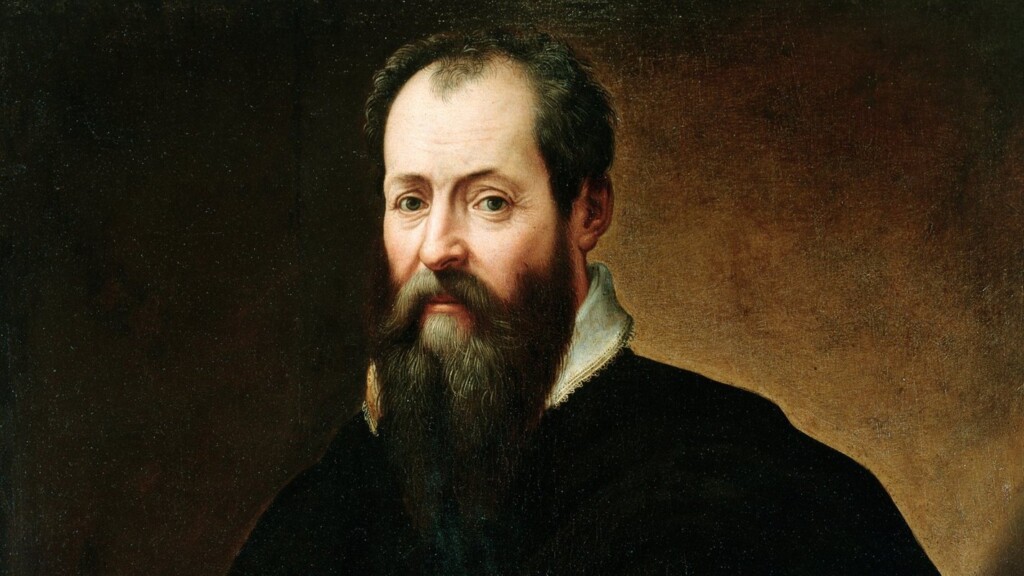
The auction hammer falls and a number appears on a screen, and that number is not a price. It is a verdict. It is the current market value of a decision made in Florence in the 1550s about whose life was worth narrating, whose hand was worth studying, whose obsessions deserved to be called genius rather than madness or craft or mere decoration. You are watching the machinery work in real time and you do not recognize it as machinery because it looks like taste, like expertise, like the natural order of things settling into its proper shape.
Pierre Bourdieu spent much of his career — most sharply in Distinction, published in 1979, and in The Rules of Art, published in 1992 — demonstrating that what we call aesthetic judgment is almost never aesthetic. It is social positioning wearing the costume of sensibility. Symbolic capital, in his framework, is the accumulated prestige that allows certain works, certain names, certain lineages to be treated as self-evidently valuable, their authority so thoroughly internalized by the field that questioning it feels not like intellectual dissent but like philistinism, like missing something everyone else can plainly see. Vasari did not merely write about painters. He manufactured symbolic capital on an industrial scale for a specific tradition, a specific geography, a specific idea of what the human figure meant and what transcendence looked like in pigment. And that capital has been compounding ever since, through museum acquisitions and university syllabi and the hang order of permanent collections where certain rooms feel inevitable and certain artists are housed in the annexe, reached through a corridor that smells faintly of institutional afterthought.
Hans Robert Jauss argued in Toward an Aesthetic of Reception, first delivered as a lecture in Constance in 1967, that a work does not have meaning in isolation — it enters into dialogue with a horizon of expectations already shaped by everything that came before it. The reader, the viewer, brings a template to the encounter, and the work is judged by how it negotiates that template. What Jauss did not say loudly enough, perhaps, is that the horizon of expectations is not neutral geography. It was built. Someone drew the map. Someone decided which mountains counted as mountains and which were merely hills not worth naming. Vasari drew that map for Western art, and the horizon he established — male, Italian, obsessed with the representation of the body, committed to a teleology of progress from Byzantine flatness to Florentine mastery — is still the default orientation against which novelty measures itself, often without knowing it is doing so.
A young painter who has not been taught this history still feels it. She feels it in which work gets selected for the degree show and which gets passed over with a murmur about it not quite resolving. She feels it in which grants require her to situate her practice in relation to traditions she was not raised inside, traditions that claim universality while remaining stubbornly particular. She feels it in the silence that greets certain kinds of beauty — beauty that is not interested in the body as Vasari understood the body, beauty that does not aspire to the condition of fresco, beauty that comes from elsewhere and is going somewhere the map does not yet show.
The machinery is not maintained by villains. It is maintained by people who love art, who have devoted their lives to it, who genuinely believe they are serving something larger than themselves. That is what makes it so difficult to interrupt. A wound that causes pain is easy to locate. A wound that has been present long enough to feel like the body’s natural shape is something else entirely.
The next Vasari is already writing. Somewhere a mind is building the categories that will decide, for the next five centuries, whose life counted and whose work was a footnote, and we are almost certainly reading their sentences without understanding yet what they are doing to us.
🎨 Art, Biography, and the Renaissance Spirit
Giorgio Vasari stands as a towering figure in Renaissance art history, both as a painter and as the founding father of art biography. The articles below explore the cultural and intellectual worlds most closely connected to Vasari’s life and legacy, from the flourishing of Renaissance creativity to the broader history of artistic thought.
Alchemy in the Italian Renaissance
Alchemy in the Italian Renaissance reveals the hidden intellectual currents that ran alongside the explosion of artistic and humanist achievement in which Vasari himself was immersed. Renaissance figures moved fluidly between art, science, and esoteric philosophy, making alchemy an integral part of the period’s cultural fabric. Understanding this dimension enriches our reading of Vasari’s world and the symbolic depth of the works he documented.
GO TO THE SELECTION: Alchemy in the Italian Renaissance
Titian: Life and Works
Titian was one of the towering masters whose life and works Vasari chronicled and admired, making this article an ideal companion to any study of Vasari’s writings. The Venetian painter’s career represents the pinnacle of the Renaissance tradition that Vasari sought to celebrate and preserve for posterity. Exploring Titian’s art alongside Vasari’s accounts illuminates how biography and artistic judgment intertwined in the sixteenth century.
GO TO THE SELECTION: Titian: Life and Works
Caravaggio: Life and Works
Caravaggio emerged in the generation after Vasari, and his revolutionary approach to painting marked a dramatic break from the Renaissance ideals that Vasari had so carefully codified. Studying Caravaggio‘s life and works offers a vivid counterpoint to Vasari’s vision of art history as a progressive ascent toward perfection. Together, these two figures bookend one of the most transformative epochs in Western art.
GO TO THE SELECTION: Caravaggio: Life and Works
Baroque Art: History and Characteristics
Baroque Art grew directly from the fertile soil of the Renaissance tradition that Vasari had documented and theorized, making it impossible to understand one without the other. The shift from Renaissance harmony to Baroque dynamism reflects the cultural and religious upheavals that followed the world Vasari knew. This article provides essential context for tracing the long arc of Italian artistic genius from the cinquecento onward.
GO TO THE SELECTION: Baroque Art: History and Characteristics
Discover the Art of Independent Cinema on Indiecinema
If these explorations of art, biography, and creative genius have stirred your imagination, Indiecinema invites you to continue the journey through the lens of independent film. On our streaming platform you will find bold, visionary works that carry the same spirit of inquiry and beauty that animated the great artists Vasari celebrated. Join us and let independent cinema open new doors to culture, history, and the human story.
👉 EXPLORE THE CATALOG: Watch Indie Films in Streaming
A vision curated by a filmmaker, not an algorithm
In this video I explain our vision

