
The Body as Currency
You clock in at 7:43 a.m. and the app registers your location, your arrival delta against the predicted optimal window, and something the platform calls your “reliability score,” which has dropped two points since Tuesday because you took eleven minutes longer than the algorithm expected to complete a delivery in rain. You did not sign a contract that mentioned rain. You signed something called a “service agreement,” which is a document engineered specifically to ensure that the word “employment” never appears inside it, because employment would imply that the body showing up each morning — your body, with its tired shoulders and its specific face and its measurable capacity for sustained physical effort — belongs, in any legally actionable sense, to you while it is performing.

This is not metaphor. The granularity with which contemporary labor platforms assess the human body has surpassed anything the nineteenth century factory floor attempted. Amazon’s internal productivity-tracking systems, documented in reporting from 2019 and confirmed through warehouse worker testimonies submitted to the Senate Commerce Committee, log toilet break durations, measure “time off task” in increments as small as ninety seconds, and generate termination recommendations automatically when a worker’s physical output falls beneath a dynamically recalculated threshold. The body is not the worker’s tool in this architecture. The body is the inventory.
Karl Marx identified something in 1867 that most readers absorbed as economic theory and almost no one internalized as anatomical fact: that what the worker sells in a wage relationship is not labor in the abstract but labor-power, the living, perishable, physically bounded capacity of an organism to exert itself over time. Capital, Volume I is not a book about money. It is a book about what happens to flesh when it enters a market as a unit of measurement. The century and a half since its publication has produced enormous refinements in how that measurement is conducted, and essentially no refinement in the underlying transaction.
What has changed is the phenomenology of consent. The classical slave had no vocabulary of choice inserted between themselves and their condition. The contemporary gig worker, the zero-hours contract employee, the unpaid intern completing their third consecutive “trial period,” each of them moves through a dense atmospheric layer of voluntarism — the language of flexibility, opportunity, self-determination — which performs a precise ideological function. It makes the extraction of bodily capacity feel like a lifestyle preference. Michel Foucault, lecturing at the Collège de France between 1978 and 1979 in the course published as The Birth of Biopolitics, traced the emergence of what he called the “entrepreneur of the self,” the neoliberal subject who is invited to experience their own subordination as personal investment. The genius of this inversion is that it relocates the site of coercion from the overseer to the interior of the worker’s own psychology.
There is a specific kind of exhaustion that comes not from having been commanded but from having been convinced. The worker who collapses after sixty hours of voluntary overtime does not feel oppressed; they feel that they have not tried hard enough, that the market has simply revealed an inadequacy that was always theirs. This is not false consciousness in the crude sense that older Marxist frameworks proposed, some external ideology plastered over authentic class awareness. It is something more structurally elegant: a system in which the subject genuinely experiences their dispossession as agency, because the alternative — recognizing that their body is being rented, assessed, and depreciated like capital equipment — would require dismantling the story through which they have organized their entire adult identity.
The market for bodies has never required chains when it can achieve the same result through a sufficiently sophisticated semiotics of freedom. The question worth holding is not whether this constitutes a form of ownership, but who benefits from the sustained cultural insistence that it does not.
Urban Traffik

Thriller, by Jason Figgis, United States, 2017.
In the heart of a dark and hidden Dublin, Adam appears to be a kind-hearted man when he offers shelter to Sue, a lonely and vulnerable young woman who has just arrived in the city. The reality, however, is far more tragic: Adam serves as bait for a ruthless human trafficking ring led by the cold and calculating Dan and managed by his partner, Alex. Their chilling scheme is simple: lure defenseless young women and sell them into the international sex trade. But this seemingly perfect criminal enterprise is about to unravel. As disturbing family secrets linking Dan to Adam's sister come to light, and Adam desperately tries to break free from a brutal world he can no longer endure, the lives of everyone involved spiral into uncontrollable violence.
Directed by acclaimed independent filmmaker Jason Figgis, Urban Traffik leaves horror behind to embrace the raw, tense, and hyper-realistic territory of urban crime drama, recalling the visceral intensity of British cult films such as London to Brighton. The film's greatest strength lies in its outstanding performances: thanks to its razor-sharp screenplay, the cast succeeds in making viewers empathize even with its darkest and most morally ambiguous characters. Visually, the film is a noir gem. Alan Rogers' striking cinematography captures Dublin's hidden and ghostly side, transforming neglected alleyways and bare interiors into landscapes of palpable despair. Avoiding easy moralizing, Urban Traffik offers a hypnotic, intimate, and uncompromising look at the inner workings of organized crime.
LANGUAGE: English
SUBTITLES: Spanish, French, German, Portuguese
Freedom as Ideological Architecture
You sign the contract on a Tuesday morning, and for a moment — just a fraction of a second — something in you hesitates. Not because you have read the fine print, but because some animal part of your nervous system registers the transaction for what it is: the sale of your hours, your attention, your physical and cognitive capacity, delivered in exchange for tokens that will allow you to eat, sleep indoors, and repeat the process tomorrow.
That hesitation is the oldest political inconvenience in modern history, and an enormous infrastructure of ideas was built specifically to suppress it.
When the Thirteenth Amendment was ratified in December 1865, the official story was that a civilization had corrected itself. The language was solemn: “Neither slavery nor involuntary servitude… shall exist within the United States.” But the sentence did not end there. It continued: “except as a punishment for crime whereof the party shall have been duly convicted.” Eleven words that immediately carved open the abolition and reinserted the mechanism of coerced, uncompensated labor through the back door of the criminal justice system. Within months of ratification, Southern states passed Black Codes criminalizing vagrancy, idleness, and the failure to carry proof of employment — effectively making poverty a criminal offense. The people who had been property the previous season were arrested, convicted, and leased back to the very plantations and railroads and coal mines that had depended on their labor before. The Freedmen’s Bureau counted hundreds of thousands cycling through this system in the decade following the war. The chains were not metaphorical. They were iron, and the paperwork was impeccable.
What changed was not the condition. What changed was the philosophical vocabulary used to describe it.
Karl Marx, writing Capital in 1867 — two years after that amendment — identified what he called the “peculiar commodity” of labor-power: the human capacity to work, which the worker sells not directly but in timed increments, and which the buyer then consumes under conditions entirely of the buyer’s design. The genius of this arrangement, Marx observed, was that it appeared as freedom — the laborer was legally unowned, could theoretically walk away, could choose their employer. What this formal freedom concealed was the structural compulsion behind it: that without access to the means of production, which capitalism concentrates in private hands, the worker must sell or starve. The marketplace of employment presented as a meeting of equals was in fact a confrontation between desperation and leverage. The contract, that sacred liberal instrument, laundered the power differential into the language of mutual consent.
This was not an accident of economic development. It was philosophical engineering. The emergent capitalist order required a moral differentiation from slavery — not because slavery was less profitable, but because the abolition movements had made it politically undefendable, and because the ideological legitimacy of the new system depended on the worker believing in the authenticity of their own choice. John Locke‘s labor theory of property, which entered English political thought a full century and a half before Marx, had already established the conceptual groundwork: a man who mixes his labor with the world acquires a natural right to the product. What capitalism quietly accomplished was the dissociation of this principle from its consequences — the worker mixes labor with the machine but acquires only a wage, while the employer acquires the product and the profit, having contributed nothing but the permission to begin.
The ideological separation between “free labor” and “slave labor” was therefore never really about the experience of the laborer. It was about the legal status of the transaction — a distinction that matters enormously to legal scholars and almost nothing to the body performing twelve-hour shifts in a textile mill or a meat processing plant, where the physiological reality of exhaustion, injury, and disposability remains identical regardless of what the contract says at the top.

The Ledger That Never Closed
You have held a performance review document in your hands without knowing it was a confession. The quarterly targets, the efficiency benchmarks, the productivity curves your manager presents as neutral mathematics — these did not emerge from industrial rationality. They emerged from something far older and far more specific, something that was never fully disclosed to you when you signed your employment contract.
Edward Baptist’s 2014 work The Half Has Never Been Told did something that professional historians had largely avoided for over a century: it read plantation account books as economic documents in the full technical sense, not as artifacts of moral horror but as operational records of a sophisticated labor extraction system. What Baptist found inside those ledgers was a feedback mechanism of extraordinary precision. Plantation owners in Mississippi and Louisiana between roughly 1820 and 1860 tracked daily cotton-picking output per enslaved worker, identified the lowest performers, administered punishment, and recorded the subsequent increase in yield. They were running controlled experiments. They were generating performance data. They were, in the language of contemporary management science, optimizing their human capital — and the whip was the variable they adjusted when the numbers fell below expectation.
The historical community pushed back, some of it fiercely, on Baptist’s methodology. But the discomfort in those critiques was itself revelatory. What disturbed reviewers was not the accuracy of the data but the implication of the lineage it suggested. If antebellum planters were practicing a recognizable form of productivity management, then the conceptual architecture of modern labor metrics does not begin with Frederick Winslow Taylor’s 1911 Principles of Scientific Management, as business schools prefer to teach. Taylor’s stopwatch and his time-motion studies inherited a logic that had already been refined across decades of enforced agricultural labor, a logic built on the assumption that the human body contains extractable output which the threat of consequences can incrementally increase.
What makes this genealogy particularly difficult to absorb is that it requires no conspiracy. No meeting of industrialists gathered to adopt plantation techniques. The transfer happened through the movement of capital, through the migration of financial instruments and investment patterns from the cotton economy into early manufacturing. Historians Walter Johnson and Sven Beckert have documented extensively how antebellum slavery financed the textile mills of New England and Lancashire, how the same capital that purchased enslaved bodies in New Orleans was lending against future cotton harvests to fund the looms in Manchester. The bodies and the machines were always on the same balance sheet. The violence did not stop when slavery formally ended; it was simply converted into a different kind of debt and a different kind of threat.
What gets called wage labor rests on a distinction that looks structural but functions as theater. The formally free worker can leave — this is the celebrated difference, the moral bright line drawn in 1865 and enshrined in every subsequent labor rights framework. But leaving requires somewhere to go, and the concentration of capital that emerged directly from the cotton economy ensured that the destinations were controlled by the same class of people, or their direct inheritors, who had set the original extraction rates. The mobility that defines freedom in capitalist ideology was built on a geography of employers, not of exits.
Baptist’s research showed something that corporate HR departments have never been asked to acknowledge: that the performance improvement plan sitting in your file has ancestors. Not metaphorical ancestors, not mere philosophical precedents, but actual historical antecedents in the form of documents where the word “hand” was used to describe a human being as a unit of productive capacity, and where the calculation of that capacity was refined through the systematic application of pain. The ledger never closed. It was simply reformatted, its columns retitled, its enforcement mechanisms rendered invisible by the substitution of economic pressure for physical force — a substitution that feels like liberation only if you never ask what the pressure is pressing against.
Consent Under Duress
You sign the form. That act — pen touching paper, the small muscular contraction of agreement — is supposed to be the moment freedom proves itself real, the instant where your autonomy becomes legally legible. But watch what precedes it: the months of unpaid bills, the expired visa stamped with a finality that forecloses options faster than any locked door, the children’s school fees accumulating like a slow verdict. By the time the pen moves, the choosing is already over. What remains is the ceremony of it.
Orlando Patterson spent years reconstructing the architecture of bondage across sixty-six societies in his 1982 landmark work, and the central finding was not about chains or auction blocks but about a condition he named social death — the severing of a person from all claims of birth, kinship, and belonging that would otherwise give their existence social weight. The enslaved person was not merely owned; they were natally alienated, stripped of the inherited protections that make a human being legible to power as something more than a unit of expendable capacity. Patterson’s insight was structural, not historical. It described a position, not a period.
That position is currently occupied by approximately 169 million migrant workers globally, according to the International Labour Organization’s 2021 figures, many of whom entered receiving countries through documented channels and became undocumented not through crossing any border but through the simple expiration of a visa — a bureaucratic event that does not move them spatially but annihilates them legally. They remain physically present while becoming socially absent. They cannot sue employers for wage theft without risking deportation. They cannot report violence without becoming the subject of the enforcement action. Their bodies remain productive and therefore valuable; their personhood remains unrecognized and therefore unprotected. This is natal alienation achieved not through purchase but through administrative process.
The incarcerated present a variation on the same structure that is harder to dismiss because it wears the costume of punishment. In the United States, the Thirteenth Amendment to the Constitution, ratified in 1865, abolished slavery “except as a punishment for crime” — a subordinate clause that functions not as an exception but as a mechanism of continuation, providing a legal corridor through which coerced labor was rerouted rather than ended. The more than 800,000 incarcerated people performing labor inside American facilities as of recent federal census data earn wages ranging from nothing to approximately fifty-two cents per hour. They are excluded from the protections of the Fair Labor Standards Act. Their labor is compelled. Their consent is, by the structure of their situation, incoherent as a legal concept — yet contract language still appears in many prison work assignments, a formality so grotesque it becomes philosophical.
The fiction of voluntary contract requires a baseline condition that liberal theory prefers not to examine too closely: the genuine availability of refusal. John Rawls, constructing his theory of justice from behind a veil of ignorance in 1971, built consent into the architecture of fairness by assuming parties negotiating from a position of structural equality. But the precarious worker — the one who will lose housing in seventy-two hours, whose work permit is tied to a single employer under a sponsorship system that makes departure economically catastrophic — does not refuse. Not because they lack the cognitive capacity to understand what they are agreeing to, but because the cost of refusal has been engineered to exceed the cost of acceptance. This is not a failure of contract theory. It is contract theory functioning correctly, because contract theory was never designed to ask whether the conditions producing consent were themselves just.
What makes this structurally identical to Patterson’s social death is not suffering — suffering varies in intensity and kind — but the removal of the institutional scaffolding through which a person could become grievable, claimable, legally recoverable. The migrant without status, the person incarcerated for profit, the worker whose visa is contingent on silence: none of them disappear from the physical world. They disappear from the world that counts.
The Invisible Auction Block
The fluorescent light in the waiting room does not flicker. It holds, steady and indifferent, over a row of plastic chairs occupied by people who arrived early because early arrival signals compliance, and compliance is what gets you selected. A man in his late forties fills out a form asking whether he has consumed grapefruit in the last seventy-two hours. He has not. He checks the box with the careful handwriting of someone who understands that neatness here functions as a kind of audition. Across from him, a younger woman reads the consent document for the third time, not because she is uncertain about participating but because she wants to appear thoughtful rather than desperate, though the distinction between those two things stopped mattering the moment she calculated that twelve hundred dollars would cover her rent. A technician in a white coat emerges, calls a name, and evaluates the respondent’s gait before a single clinical word is spoken.
What happens in that room has a genealogy that most people would prefer not to trace. The pharmaceutical industry spent roughly two hundred and fourteen billion dollars on research and development globally in 2022, and a structurally significant portion of that expenditure flows directly into the bodies of individuals who would not be there if they had other options. Phase I trials, the earliest stage of human drug testing, have historically recruited from populations with the least economic leverage — incarcerated people until federal regulations curtailed the practice in the mid-1970s, and thereafter the unemployed, the underinsured, the chronically indebted. The regulatory shift did not eliminate the economic logic; it simply relocated it. The prison yard became the waiting room with the steady fluorescent light.
Harriet Washington documented in her 2006 work Medical Apartheid how the extraction of biological value from vulnerable bodies has never required explicit coercion — only the right architecture of scarcity. The body becomes a liquid asset precisely when every other asset has been exhausted. This is not metaphor. It is the operational mechanism by which a man checks a box about grapefruit while rehearsing, silently, how to present his medical history as attractive rather than disqualifying. He has done this before. He knows that certain conditions make him ineligible and others make him desirable, and he has learned to navigate that distinction the way a person learns to dress for a job interview — not to deceive but to perform legibility within a system that has already decided what it values.
Michel Foucault‘s lectures at the Collège de France between 1978 and 1979, later published as The Birth of Biopolitics, identified the moment when the human body ceased to be merely a subject of governance and became a unit of economic calculation. What he could not have fully anticipated was how thoroughly that calculation would be internalized by the bodies themselves — how efficiently people would learn to audit their own biological inventory, to rank their veins, their organs, their reproductive capacity, their neurological profiles according to market demand they did not set and cannot negotiate. The consent form signed in that waiting room is the legal residue of a transaction whose terms were written long before anyone in that room was born.
There is a particular grammar of dignity that survives in these spaces, and it is worth acknowledging because it is real and because it is also ruthlessly functional. People maintain eye contact. They answer questions directly. They do not cry. The performance of composure is understood by everyone present to be part of the evaluation, and everyone present understands this without speaking it, the way passengers on a delayed flight understand that visible frustration will not accelerate the aircraft but will cost them something harder to quantify than time.
A vision curated by a filmmaker, not an algorithm
In this video I explain our vision
Quantified Flesh in the Platform Economy

You clock in without clocking in. The app opens, the GPS locks onto your coordinates, and somewhere in a server farm the size of a city block, a model begins updating its prediction of what your body will do next — how fast your thumb moves across the screen, how long you pause before accepting a fare, whether the slight hesitation at 11:47 PM signals fatigue or caution or the beginning of a pattern that will lower your reliability score by morning.
The innovation here is not exploitation — that is centuries old — but the resolution at which it operates. Amazon warehouse workers between 2015 and 2023 were subject to what internal documents called “time off task” monitoring: a system that logged not just output but micro-intervals of inactivity, building a physiological dossier that no foreman with a clipboard could have assembled. The body had always been the raw material of industrial capital, but it had never before been legible in this granularity. A worker could be dismissed not for failing a task but for the algorithmic inference that their body was trending toward failure. The prediction preceded the event, and the punishment preceded the proof.
Shoshana Zuboff named the structural logic behind this in 2019, in The Age of Surveillance Capitalism, with a precision that makes the discomfort hard to locate and harder to dismiss. Her central claim is not that corporations collect data — that much was already known — but that the raw material being harvested is behavioral surplus: the residue of human action that exceeds what is needed to deliver a service, scraped, packaged, and sold to prediction markets designed to modify future behavior. The product is not information about you. The product is the modification of what you will do next without your awareness that the modification is occurring. Every hesitation, every reroute, every moment your hand trembles near the “decline” button on an Uber ride at 2 AM — these are not incidental data points. They are the commodity.
What makes this genealogically strange is that it inverts the logic of the nineteenth-century factory. Frederick Winslow Taylor, whose 1911 Principles of Scientific Management became the operational bible of industrial capitalism, wanted to eliminate the worker’s discretion — to reduce the human body to a reliable mechanical unit by scripting every motion. The platform economy does not eliminate discretion. It studies it. It needs the hesitations, the detours, the biological irregularities, because those are where the predictive signal lives. The body is most valuable not when it performs uniformly but when it deviates, because deviation is information, and information is inventory.
This distinction matters because it forecloses the traditional routes of resistance. You cannot work to rule inside an algorithmic system the way you could on a factory floor, because the system’s intelligence feeds on exactly the kind of behavioral data that rule-following disrupts. Gig workers who discovered in 2019 and 2020 that gaming Uber’s surge pricing algorithm — by logging off in clusters to manufacture artificial scarcity — were briefly effective, but the platform’s behavioral models updated within weeks. The resistance became training data. The mutiny became a lesson the system absorbed and priced in.
The philosopher Antoinette Rouvroy, working on what she calls “algorithmic governmentality,” has argued that data-driven systems do not govern individuals — they govern populations of behavioral profiles, statistical persons who may share almost nothing with the living body generating the data. The warehouse worker monitored for “time off task” is not being managed as a person. They are being managed as a cluster of biological indicators whose divergence from an optimal pattern triggers an automated correction. The person is incidental. The pattern is the asset.
Which raises a question that the architecture of the system is specifically designed to prevent you from asking: if the thing being extracted is not your time, not your skill, not even your attention, but the measurable tremor of your nervous system under pressure —
The Aesthetics of Voluntary Submission
You signed the gym membership on a Tuesday in January, which is statistically the most popular day of the year to do exactly that, and you felt, in that moment, something that registered as personal determination. The resolution felt sovereign. It was not. It arrived on schedule, manufactured by a fitness industry that generated 96 billion dollars globally in 2019 precisely by selling you the sensation of autonomous decision while you executed a mass behavior coordinated down to the calendar week. The body you are sculpting is not your own project — it is a legible product, and its audience is not yourself in the mirror but every future employer, every dating profile viewer, every client meeting, every camera. The gym-honed physique communicates reliability, discipline, and most crucially, self-governance, which is exactly the psychological profile the market requires from its more ambitious participants. You are not getting healthy. You are becoming more hireable in a register that has not yet appeared on any job description.
What makes this particular form of capture so durable is that it operates entirely through desire. The startup founder who broadcasts seventeen-hour workdays across social media is not being coerced by a visible authority — no overseer stands behind them. They are performing a voluntary aesthetic of productive suffering that signals total dedication to a value system that has displaced every competing one. Arianna Huffington published her 2016 The Sleep Revolution partly as a corrective to this culture, noting that sleep deprivation had been so thoroughly rebranded as ambition that executives were destroying their cognitive capacity while believing they were demonstrating strength. The performance of exhaustion became a credential. The damaged body became proof of loyalty. And the audience for that proof was not family, not community, not any human relationship — it was the abstract judgment of a market that rewards the signal and has no mechanism to mourn the person.
Arlie Hochschild, writing in 1983 in The Managed Heart, named something that the culture had not yet fully confronted: that emotional states themselves had become labor. Her study of Delta Airlines flight attendants and bill collectors documented how workers were trained not merely to perform pleasant or aggressive emotions but to actually feel them on demand, to manage their inner lives as a productive resource. The company owned the smile, and by owning the smile, it reached backward into the psychological interior and colonized whatever was there. Hochschild called the human cost emotional exhaustion, and she noted that workers who spent years producing managed feelings for commercial purposes often lost the capacity to identify what they actually felt in private. The interior had been rented out so long it stopped generating its own signal.
That colonization has since expanded far beyond the service sector. The therapist must perform warmth. The teacher must perform enthusiasm. The content creator must perform authenticity, which is the most totalizing demand of all, because it requires that the last interior space — the genuinely unscripted self — be rendered as a marketable product. Authenticity, once it becomes a strategy, negates itself, but the market does not care about this philosophical incoherence. It cares only that the performance generates engagement metrics, and those metrics convert directly to advertising revenue, and nowhere in that conversion does the human organism appear as anything other than a medium.
The question this poses is not whether people suffer under these conditions — they do, measurably, in rates of burnout that the World Health Organization formally recognized as an occupational phenomenon in 2019. The question is why the suffering is so consistently experienced as personal failure rather than structural outcome. When the gym-honed body breaks down, when the founder’s performance collapses into a hospitalization, when the service worker’s managed smile curdles into numbness, the culture has a ready diagnosis: insufficient resilience. The individual did not optimize well enough. The market’s demand for the body was reasonable.
What the Mirror Does Not Reflect
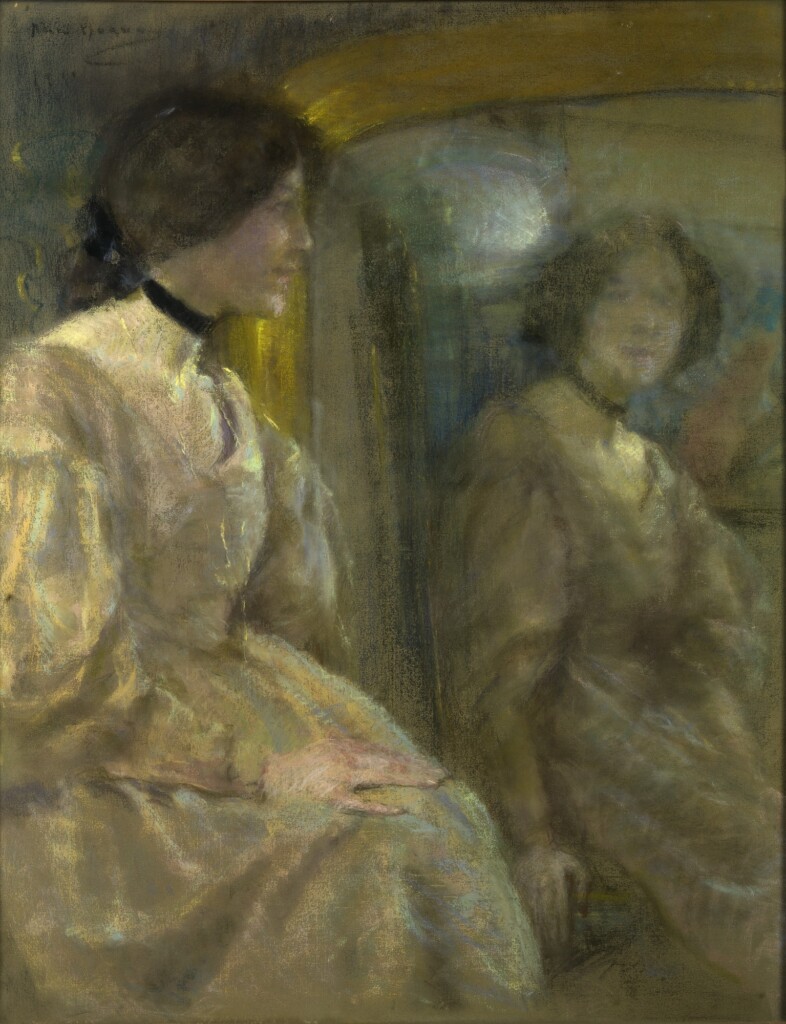
You are standing in front of a bathroom mirror at six in the morning, running the usual inventory. The face that looks back at you is already performing — already composing itself into the version of you that will be legible to others today, that will move through the world with the correct degree of visibility. And the uncanny part is not the performance. The uncanny part is that it feels like recognition.
The philosophical tradition calls this a problem of immanent critique — the difficulty of evaluating a system using only the conceptual tools that system has already handed you. Herbert Marcuse pressed on this in One-Dimensional Man in 1964, arguing that advanced industrial society had achieved something genuinely new: not repression, but assimilation. The system no longer needed to silence opposition because it had learned to generate the very vocabulary through which opposition would have been articulated, and to generate it in forms that served reproduction rather than rupture. People were not prevented from thinking freely. They were given thoughts that felt free and were not.
What this produces is not false consciousness in the crude sense — the idea that someone is simply deceived and needs only to be told the truth. That model still imagines a stable truth waiting outside the system, available to anyone who escapes the fog. The actual problem is harder. When the categories of self-understanding have been shaped at depth by the same apparatus that commodifies the self, there is no outside position from which to perceive the distortion. The person who has learned to see their own body as an asset, their personality as a brand, their emotional responses as data points in a personal performance metric — that person is not confused. They are operating with perfect clarity, using perfectly functional tools, inside a perfectly enclosed epistemological room.
Pierre Bourdieu spent most of his career mapping the mechanics of this enclosure. His concept of doxa — from Distinction in 1979 and elaborated across decades of fieldwork — names the layer of social reality that is so thoroughly internalized it no longer appears as a position at all. Doxa is what goes without saying because it comes without saying. It is not ideology you can argue against because it never presents itself as an argument. It presents itself as the texture of reality, the way things simply are. A worker who describes their labor as a passion, who genuinely experiences the commodification of their time as self-expression, is not lying. They are speaking from within a doxa so complete that the distance between self and market has collapsed into something that feels like authenticity.
The cruelest achievement of any total system is that it renders its own analysis unintelligible from the inside. Not repugnant. Not dangerous. Simply unintelligible — like a color your eye has no cone for. When a person’s sense of worth is structured around metrics of attention, productivity, and market desirability, a critique of those metrics does not land as revelation. It lands as nihilism, as an attack on meaning itself, because the metrics have become the architecture inside which meaning is built. To remove them would not be liberation. It would be, experientially, annihilation.
This is what makes the question of freedom so much harder than it sounds when people invoke it casually. The 1948 Universal Declaration of Human Rights speaks of the right to be free from servitude, and its language assumes that servitude is recognizable — that there is a self, outside the condition, capable of naming the condition as such. But when the self has been assembled inside the market, when the very grammar of interiority was issued by the same structure that profits from that interiority, then the question is not whether you are free, but whether the entity asking the question was ever in a position to know what freedom would feel like before the answer was already prepared for it.
⛓️ Bodies, Power, and Invisible Chains
Human trafficking and modern slavery do not exist in a vacuum — they are sustained by deep structures of power, economic despair, and social invisibility. The articles below trace the philosophical, literary, and sociological roots of a world that commodifies human beings, from the mechanics of manipulation to the political economy of exploitation.
Guy Standing’s The Precariat: Analysis
Guy Standing‘s concept of the precariat illuminates how millions of people exist in a state of chronic insecurity, stripped of stable identities and legal protections. This structural vulnerability is precisely the soil in which modern slavery takes root, offering false promises to those with nothing left to lose. Standing’s analysis is indispensable for understanding why invisible markets for bodies thrive in the cracks of global capitalism.
GO TO THE SELECTION: Guy Standing’s The Precariat: Analysis
Polanyi’s The Great Transformation: Analysis
Karl Polanyi‘s landmark work reveals how the fiction of the ‘self-regulating market’ inevitably transforms human beings and their labor into mere commodities. His argument that society must protect itself from the destructive logic of pure market forces resonates powerfully with contemporary debates on trafficking and coerced labor. Reading Polanyi today means confronting the systemic origins of a world where bodies are bought and sold in silence.
GO TO THE SELECTION: Polanyi’s The Great Transformation: Analysis
Karl Marx and Alienation: Economic and Philosophical Manuscripts
Marx’s early manuscripts on alienation describe the terrifying process by which human beings are reduced to instruments of production, severed from their own lives and labor. This philosophical framework provides a foundational lens for understanding how modern slavery denies its victims not only freedom but selfhood. The invisible market for bodies is, at its core, the most extreme expression of alienated labor.
GO TO THE SELECTION: Karl Marx and Alienation: Economic and Philosophical Manuscripts
Affective Manipulation in Psychology
Affective manipulation is one of the primary tools used to ensnare victims of trafficking, who are often groomed through false affection, manufactured dependency, and systematic psychological control. This article explores the mechanisms by which manipulators dismantle a person’s autonomy from the inside out. Understanding these dynamics is essential for recognizing how exploitation disguises itself as care, loyalty, or love.
GO TO THE SELECTION: Affective Manipulation in Psychology
Discover the Cinema That Dares to Look
On Indiecinema you will find independent films that refuse to look away from the darkest corners of human experience — stories about exploitation, resistance, and the fight to reclaim dignity. Explore our streaming catalog and let cinema be the light that illuminates what power would rather keep invisible.
👉 EXPLORE THE CATALOG: Watch Indie Films in Streaming
A vision curated by a filmmaker, not an algorithm
In this video I explain our vision

