
The Wager You Never Agreed to Take
It is two in the morning and you are not sleeping. You know you should be. The room is dark, the body is tired, and yet the phone is already in your hand before you have consciously decided to pick it up. You scroll through nothing in particular — a feed of images that do not interest you, news you have already absorbed, the lives of people you barely know rendered in rectangles of light. You are not looking for anything. That is precisely the point. You are looking away from something, and the something you are looking away from is the silence itself, the bare fact of being alone with your own mind in the dark.

Blaise Pascal saw you doing this. He saw you doing this in 1657, three hundred and fifty years before the smartphone existed, and he wrote it down with the precision of a man who had looked directly into the same abyss and flinched. “All of humanity’s problems,” he wrote, “stem from man’s inability to sit quietly in a room alone.” The French is starker: “tout le malheur des hommes vient d’une seule chose, qui est de ne savoir pas demeurer en repos dans une chambre.” All the misery. One cause. A room. Silence. You.
The Pensées is one of the most misclassified books in the Western canon. It is shelved under theology, catalogued as Christian apologetics, assigned in seminaries and philosophy courses as evidence of a brilliant mind surrendering itself to faith. This reading is not entirely wrong, but it is profoundly incomplete, in the way that diagnosing a fever as a symptom of warmth is not entirely wrong but misses everything that matters. Pascal began assembling his fragments sometime around 1656, working on them through illness and interruption until his death in 1662 at the age of thirty-nine. The book he never finished was published posthumously in 1670, and even then it appeared in a sanitized, reordered form that the Port-Royal editors believed would be more palatable to the educated public. What they could not sanitize was the core of the thing, the raw diagnostic force of a man who had trained one of the finest mathematical minds of the seventeenth century — the mind that invented probability theory, that designed what is widely considered the first mechanical calculator, that formulated what we now call Pascal’s theorem at the age of sixteen — on the least tractable problem he could find: why human beings cannot bear to be themselves.
This is not a theological question. Or rather, it is not only that. It is the question that lives underneath every distraction you have ever chosen, every conversation you have prolonged past its natural end, every project you have thrown yourself into not because it mattered but because the alternative was stopping. Pascal called this divertissement, a word his translators render as “diversion” but which carries in French the additional sense of turning away, of deflection. We divert ourselves not toward pleasure but away from a specific, nameable terror: the confrontation with our own condition, with finitude, with the silence that does not flatter us or confirm us or give us anything to do.
What makes the Pensées something other than a theological treatise is precisely this: Pascal is not primarily interested in getting you to believe in God. He is interested in getting you to look clearly at what you are doing when you believe in anything — in work, in love, in progress, in the endless scrolling — as a substitute for sitting still. The wager he is most famous for, the calculated bet on God’s existence, is not the center of the book. It is a late move in an argument that begins much earlier and much closer to the bone, in the recognition that you already lost a wager you never agreed to take, simply by being born into a condition of radical unease that you have been fleeing ever since you were old enough to flee.
Trench
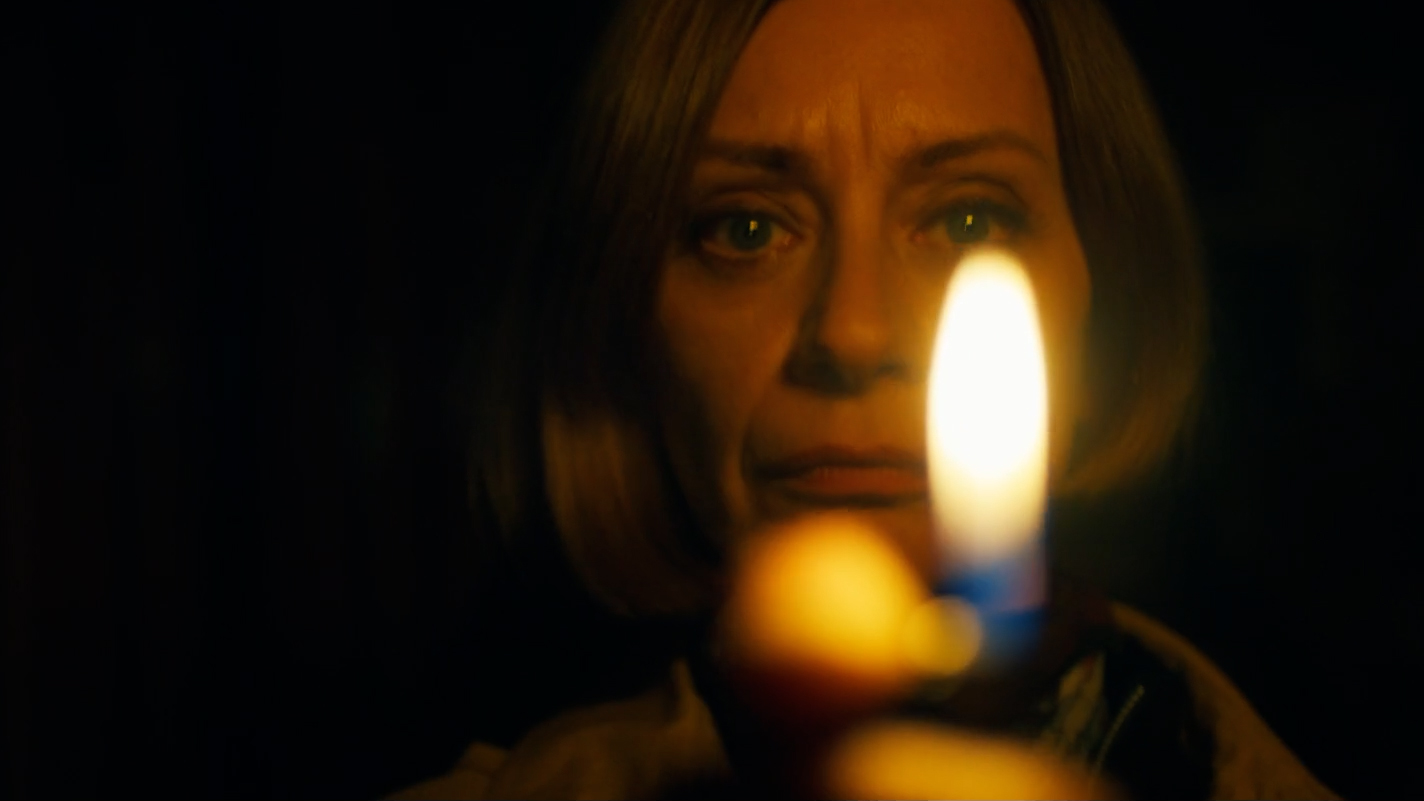
Thriller, Mystery, by Serge Turgeon, Italy, 2023.
In Venice, an art historian realizes that her brilliant mind will not be enough to solve the mystery surrounding the disappearance of an unknown woman. In addition to regaining trust in her intuition and her heart, she will need the help of a series of colorful characters from her community.
The idea behind Trench is to tell, through a detective story, the journey of an intellectual woman who suffered while growing up in a working-class district of Venice, where she never felt truly valued. In order to solve a mystery, she must face danger and rely on the help of the “non-intellectual” members of her community, rediscovering along the way her resourcefulness, her Venetian identity, and her true self.
LANGUAGE: Italian
SUBTITLES: English, Spanish, French, German, Portuguese
Diversion as Architecture
You wake before the alarm, in that small gap between sleep and obligation, and something is already wrong. Not pain, not grief — just the raw fact of yourself, present and undeflected. Before the phone screen, before the coffee, before the first notification colonizes your attention, there is a fraction of a second in which you exist without content. And it is intolerable.
This is the trap Pascal saw with devastating clarity in fragment 136 of the Pensées, written sometime in the 1650s and never polished into final argument because Pascal died at thirty-nine before the book was finished. The fragment describes a man who cannot sit quietly in a room. Not because the room is uncomfortable. Not because he has somewhere to be. But because stillness forces a confrontation with what he is — finite, mortal, uncertain — and that confrontation is the one thing the entire architecture of human civilization has been designed, with extraordinary ingenuity, to prevent.
The hunter does not want the hare. Pascal is explicit about this, almost cruelly so. If you offered him the hare already caught, already delivered, he would refuse it, or accept it with a kind of hollow disappointment that would confirm everything. What he wants is the chase — the noise of dogs, the breaking of branches underfoot, the burning in his lungs, the total occupation of every faculty by something external and demanding. He wants, in short, to not be there. The hunting is a machine for producing his own absence.
What makes this more than a psychological observation — what makes it architectural, in the truest sense — is the scale at which the mechanism operates. Pascal was not describing an eccentric. He was describing the organizing principle beneath entire economic systems. Consider what happens when you trace the genealogy of most industries devoted to leisure, entertainment, spectacle, competitive sport, political theater, and social ritual. At the foundation of each you find the same engineering logic: generate enough noise, enough demand on attention, enough forward motion toward the next thing, that the static moment never arrives. The stadium is built for the same reason the hunt exists. The algorithm is tuned to the same frequency as the chase. The calendar is filled not because the events matter but because the gaps between them cannot be permitted.
Søren Kierkegaard, writing two centuries after Pascal and clearly in his debt, described this as the aesthetic stage of existence — a life organized entirely around stimulation, novelty, and the avoidance of the interior. What Kierkegaard added to Pascal’s diagnosis was a sense of its self-perpetuating momentum: the more successfully you evade yourself, the less capacity you retain for tolerating the evasion’s failure. Each distraction requires a stronger successor. Each silence, when it does break through, becomes more unbearable than the last, because you have grown less practiced at surviving it.
A man sits in an expensive restaurant with people he has known for years, and the conversation is quick and bright and almost entirely about other people, other places, future plans, past events — anything that is not the present table, not the present fact of being alive together in a room. He is not unhappy. This is crucial. The diversion is working. The architecture is holding. He will drive home and feel a faint deflation, assign it to tiredness, and be asleep before it can become a question.
Pascal saw that this was not weakness. He was too honest for consolation. He called it the natural condition of man after the Fall — whether you accept the theology or not, the phenomenology is precise. The human being knows, at some level beneath argument, that looking directly at their own condition is unbearable, and so they build, collectively, obsessively, and with genuine brilliance, a world whose primary function is to ensure that they never have to.

The Infinite Spaces That Terrify

You have stood somewhere — a parking lot at midnight, a hospital corridor, a window at 3am when the street below is empty — and felt it. Not sadness exactly. Something colder. The sudden, vertiginous sense that you could simply not exist, that the world would continue its rotations without registering your absence, that the particular arrangement of memories and habits and fears that constitute what you call yourself is not necessary in any way that the universe acknowledges. It lasts perhaps four seconds. You shake it off. You make tea.
Pascal could not shake it off.
On the night of November 23, 1654, between roughly ten-thirty and half past midnight, something happened to him that he spent the rest of his life trying to hold onto. He wrote it down on a piece of parchment — a cascade of fire, certainty, joy, tears of joy — and then sewed it into the lining of his coat so it would remain against his body. When that coat wore out, he transferred the note to the next one. He did this until he died. The Memorial, as scholars call it, was found only after his death, hidden in cloth, carried everywhere, never shown to anyone.
This is a man who understood that certain experiences cannot survive exposure to daylight conversation.
What preceded that night, and what continued to haunt the fragments that became the Pensées, was the terror articulated in one of the most honest sentences in the history of thought: the eternal silence of these infinite spaces frightens me. Not wonder. Not awe in the Kantian sense of the sublime, which still flatters human consciousness by making it the measure of what overwhelms it. Terror. The silence specifically. The indifference of space to the fact that you are there, thinking, inside it.
This is not the fear of death in any ordinary sense. Kierkegaard would later describe a structurally similar experience as the dizziness of freedom — the nausea that comes not from external threat but from the groundlessness of one’s own existence, from glimpsing that you are radically contingent, that nothing in the architecture of the cosmos required you to be here, now, this. Pascal arrived at this vertigo two centuries earlier and with none of the philosophical scaffolding that Kierkegaard or later Heidegger would construct around it. He arrived there through mathematics, of all things. Through his own calculation of the immensity of the universe, through the infinite divisibility of matter on one side and the incomprehensible expanse of space on the other, with the human being stranded at some middle point between two infinities, belonging fully to neither, explained by neither.
The sociologist Hartmut Rosa has argued in his work on alienation and resonance that the fundamental wound of modernity is not poverty or injustice but the experience of being a subject in a mute world — a world that no longer calls back. Pascal felt this three and a half centuries before Rosa named it. The spaces are silent not merely in the acoustic sense but in the relational one. They do not respond. They do not witness. You are there, and the universe processes this information the way it processes the position of a grain of sand.
What makes the line so piercing is the pronoun. Not these infinite spaces are terrifying. Me. They frighten me. The terror is first-person and irreducible. It cannot be generalized into a philosophical proposition without losing the thing that makes it matter. Someone is frightened. Specifically. In a specific moment that he could not unsew from his coat.
You have felt this. The parking lot. The corridor. The window. The four seconds before the tea.
The Two Abysses and the Reed That Thinks
You are standing at the edge of something — a balcony, a cliff, a hospital window at three in the morning — and the sheer scale of what exists beyond you produces not awe but a particular species of vertigo. Not fear of falling. Fear of how small the falling would be. The universe would not notice. That is the thought Pascal could not escape, and it is the thought he refused to let you escape either.
He sets it up with a precision that feels almost cruel. Man is but a reed, he writes, the most feeble thing in nature. A vapor, a drop of water is enough to kill him. And yet, if the universe were to crush him, man would still be more noble than what kills him, because he knows that he dies and the advantage the universe has over him. The universe knows nothing. This is not consolation. Read it again and you will feel why: it is the most devastating non-comfort in the history of European thought. You are superior to everything that destroys you, and that superiority changes nothing about the destroying.
Pascal was writing in the 1650s and 1660s, a period when the intellectual landscape of France was bifurcated between two enormous shadows. Montaigne had spent the previous century constructing the most elaborately inhabited skepticism ever committed to prose — the Essais, published between 1580 and 1588, are three volumes of a man turning every certainty inside out and finding, beneath it, only the warm and provisional fact of his own experience. Que sais-je? What do I know? Montaigne’s answer was essentially: very little, and that is fine, let us live gently within that ignorance. Then Descartes had arrived with the cogito — I think, therefore I am — and attempted to anchor all certainty in the one thing that doubt cannot dissolve: the very act of doubting. By the time Pascal was tearing up papers and sewing notes into his coat lining, these were the two available postures: Montaigne’s horizontal, smiling uncertainty and Descartes’ vertical, triumphant reason.
Pascal accepted neither and was contemptuous of both, which is the rarest intellectual move of all. He found Montaigne’s skepticism accurate but morally evasive — a man who sees the abyss clearly and then decorates the room facing it. He found Descartes’ rationalism heroic and finally empty, a ladder built to reach a ceiling that turns out to be another floor, not the sky. The thinking reed image demolishes both positions simultaneously. Against Montaigne: yes, we are fragile and ignorant and temporary, but our awareness of that fragility is not nothing — it is everything, it is the only asymmetry we have with a cosmos that has none. Against Descartes: yes, thought is our singular dignity, but thought does not save us, does not stabilize us, does not place us above the terror — it only means we experience the terror with full consciousness rather than none.
This is Pascal’s anthropology, and it is built on two abysses that he identifies with almost geometric obsession — the infinitely large and the infinitely small. He asks you to imagine yourself suspended between the two, between the incomprehensible vastness of galaxies and the incomprehensible intricacy of a mite’s wing, and to feel there your exact and dizzying position. You are the middle term in an equation that has no solution. The philosopher Blaise Pascal — mathematician, physicist, the man who invented one of the first mechanical calculators at nineteen, who corresponded with Fermat on probability theory — understood better than most that being in the middle of an infinite series means there is no ground beneath your feet in either direction.
And the reed still thinks. Even now, suspended. Even knowing.
Custom, Habit, and the Manufactured Self
There is a particular cruelty in returning to the house where you were formed. You walk through the door and something in your posture shifts before a single word is spoken — shoulders slightly inward, voice a fraction quieter, opinions held back behind your teeth like objects you have learned not to leave on the counter. The body remembers what the mind spent years insisting it had outgrown. The hierarchies coded into those rooms, the particular grammar of approval and silence, the weight of certain chairs at the dinner table — none of it needed to be reinstated. It was simply still there, waiting, and you stepped back into it the way water finds a channel it carved decades ago.
Pascal watched this happen and called it by its right name. In the Pensées, he writes that custom is our nature, that habit — not reason, not authentic desire, not the soul’s original inclination — is what constitutes the self we believe to be most intimately ours. “Custom is our nature,” he states with a flatness that should disturb anyone who reads it carefully. The first nature, whatever it might have been, is not merely overlaid by habit. It is destroyed by it. The second nature does not coexist with the first. It replaces it so thoroughly that the replacement is invisible. You cannot feel the seam.
This is not a marginal observation in the Pensées. It sits at the heart of Pascal’s anthropology, his attempt to explain why human beings are so comprehensively strange to themselves. Pierre Bourdieu, writing three centuries later, would formalize the same intuition into the concept of habitus — the system of durable, transposable dispositions that structure behavior below the threshold of conscious decision, encoded not in the mind but in the body, in posture, in timing, in the precise degree of confidence with which one enters a room. Bourdieu’s 1977 Outline of a Theory of Practice made the argument with sociological apparatus, but the raw perception was already Pascal’s: what you call yourself is largely a sediment of repetitions, and those repetitions were not chosen.
A man returns after fifteen years to the town where he grew up, to the people who knew him before he had any idea of who he might become. Within hours, something has reorganized itself. The version of himself he constructed elsewhere — the one with considered opinions, a certain freedom of movement, a way of taking up space in conversation — begins to feel like a performance he is giving for an absent audience. The older self does not announce its return. It seeps in through familiar smells, through the specific acoustics of a kitchen, through the way a parent’s pause before answering carries a judgment the whole body receives before the ears process the silence. He does not become who he was. He becomes aware that he never entirely stopped being it, that the constructed self and the habituated self have been cohabiting all along, and the constructed one is, if anything, the more fragile tenant.
What Pascal identifies is something more unsettling than mere nostalgia or psychological regression. He is pointing at the philosophical impossibility of a self that precedes its own formation. There is no original nature waiting to be recovered beneath the layers of custom, because the layers of custom are not a covering. They are the substance. When Augustine spoke of the restless heart seeking rest in God, he at least preserved the idea of a soul with an intrinsic shape, a nature capable of being satisfied or unsatisfied. Pascal removes that comfort. The restlessness is real, but the shape beneath it may simply be more habit — habits so old they feel like essence, customs so deeply repeated they have the texture of destiny.
And you are back at that dinner table, taking up exactly the amount of space you were always permitted.
A vision curated by a filmmaker, not an algorithm
In this video I explain our vision
The Hidden God and the Demand for Evidence

You know the feeling. A letter arrives — physical, or the kind that sits unread in your inbox for three days — and you are aware, with a certainty that requires no analysis, that opening it will change something. Not might. Will. So you leave it on the table. You make coffee. You leave it on the table again. The envelope does not accuse you. It simply exists, radiating the unbearable potential of its contents, and you choose, with full consciousness, not to know. Not yet. Maybe not ever. And in that suspension you are, paradoxically, still free.
Pascal would have recognized this immediately. Not as weakness, not as avoidance, but as the precise structure of the relationship between the human mind and its God. The Deus absconditus — the hidden God — is not an embarrassment to be explained away in his theology. It is the architecture. Isaiah had already named it: “Truly you are a God who hides himself.” Pascal inherited that silence and turned it into a psychological argument of extraordinary precision, one that most of his readers, even sympathetic ones, have consistently underestimated.
The claim is not that God cannot be found. It is that God refuses to be obvious. There is, Pascal insists in the Pensées, exactly enough evidence in the world to permit belief, and exactly enough silence to permit doubt. This symmetry is not accidental. It is designed. And the design serves a purpose that has nothing to do with cruelty or indifference: a God who proved himself with incontrovertible force would not save human beings. He would annihilate them. Not physically — existentially. The capacity to choose, to turn, to refuse and then return, would be obliterated by the weight of certainty. You cannot love under compulsion. You cannot freely orient yourself toward something that has already crushed you with its evidence.
William James, writing two centuries after Pascal in The Will to Believe (1897), would articulate something structurally adjacent: that certain truths are only available to those who risk believing them first, that the demand for prior proof before commitment is itself a form of choice, one that forecloses possibilities as definitively as any other. But Pascal goes further and darker. He is not talking about epistemic courage. He is talking about the specific mercy of concealment.
Think of what it means to be in a room with someone whose opinion of you is entirely transparent, who cannot hide approval or contempt. There is no relationship there. There is only performance and response, stimulus and reaction. The hiddenness of the other — their genuine interiority, their resistance to being fully read — is what makes encounter possible. Pascal’s hidden God is not absent. He is private in the way that another person is private, which is to say irreducibly so, and this irreducibility is what preserves the space in which something called faith can actually occur.
The letter on the table is still there. You have not thrown it away. That matters enormously to Pascal. The person who destroys it without opening it is in a different position than the person who leaves it untouched but present, who builds their days around its unread weight. The latter is engaged in something — not belief exactly, not yet, but a sustained relationship with possibility that keeps the question alive. And for Pascal, keeping the question alive is the beginning of everything. The gambler who refuses to bet is still at the table. The person who will not open the letter is still in the room.
What this means is that the absence of proof is not where Pascal’s argument breaks down. It is where it becomes most serious. The silence is load-bearing. And the question it asks — not whether God exists, but what you do with the space his hiddenness opens — has never been easier to ignore or harder to honestly answer.
The Wager Reconsidered: What You Are Already Betting
Look at your calendar for next week. Not the one you describe to people at dinner, the one full of intentions and aspirations, but the actual grid of committed hours. Where your time goes is not a preference. It is a theology.
Pascal understood this before the word theology became something reserved for seminaries. The wager, which generations of philosophy students have been taught to approach as a piece of clever mathematics, a cost-benefit analysis dressed in spiritual clothing, is in fact something far more uncomfortable. It is a diagnosis. Its famous structure, infinite gain against finite loss, eternal life weighed against the pleasures you might sacrifice, was never meant to be a proof of God’s existence. Pascal was explicit about this. He was addressing someone who had already decided the question was undecidable, who had settled into the comfortable position of suspension. And he wanted to show that position was a fiction. You cannot suspend. The coin is already in the air, and you have already called heads.
Voltaire found this scandalous. In his Philosophical Dictionary he called the wager unworthy and beneath its author’s intelligence, the kind of argument a street merchant might use to sell amulets. His objection was essentially aesthetic: a God worth believing in could not be moved by such mercenary calculation. But Voltaire, whose own life was a sustained bet on reason, progress, and the perfectibility of human institutions, was already deep inside the wager’s logic the moment he complained about it. He had committed his finite existence to a particular vision of what mattered. He had spent his decades, his ink, his exile, his fury, on the proposition that ideas could reform society. That is not suspension. That is a wager of enormous stakes placed with enormous conviction.
Diderot came closer to something genuinely troubling when he pointed out that Pascal’s argument would work equally well for any religion. An imam in Constantinople could run the same calculation, he noted, and arrive at Islam with perfect logical consistency. This is a real problem, and Pascal does not fully resolve it. But notice what Diderot’s objection actually demonstrates. He does not say the wager is wrong to identify commitment as unavoidable. He says it fails to specify which commitment. He has accepted the architecture of the argument and is haggling over the address.
William James, writing in 1897 in the essay that became his most consequential, pressed the same nerve from a different angle. In The Will to Believe he argued that in genuine forced options, where you cannot avoid choosing and where the evidence is genuinely insufficient to compel a decision, it is not only permissible but rational to let your passional nature decide. This was widely read as a departure from Pascal. It was actually a translation. James was saying that belief is not a conclusion you reach after evidence is assessed. It is a posture your whole organism takes toward reality, and that posture shapes what evidence you subsequently notice, weight, and remember.
You have met someone who decided, at some point below the level of conscious resolution, that other people are fundamentally unreliable. Watch how they move through a room. Every ambiguous gesture confirms the thesis. Every warmth is logged as a preliminary to disappointment. They are not being irrational. They are being exactly as rational as their wager permits. The commitment came first. The evidence followed, obediently.
This is what Pascal was pointing at when he said that the heart has its reasons that reason does not know. He was not being sentimental. He was describing a causal sequence. The 3am scrolling is not a failure of willpower. It is a revealed preference for a cosmology in which there is nothing serious enough to protect your sleep for. You have voted. The ballot was cast quietly, in accumulated small decisions, but it was cast.
The Unfinished Architecture of a Dying Man
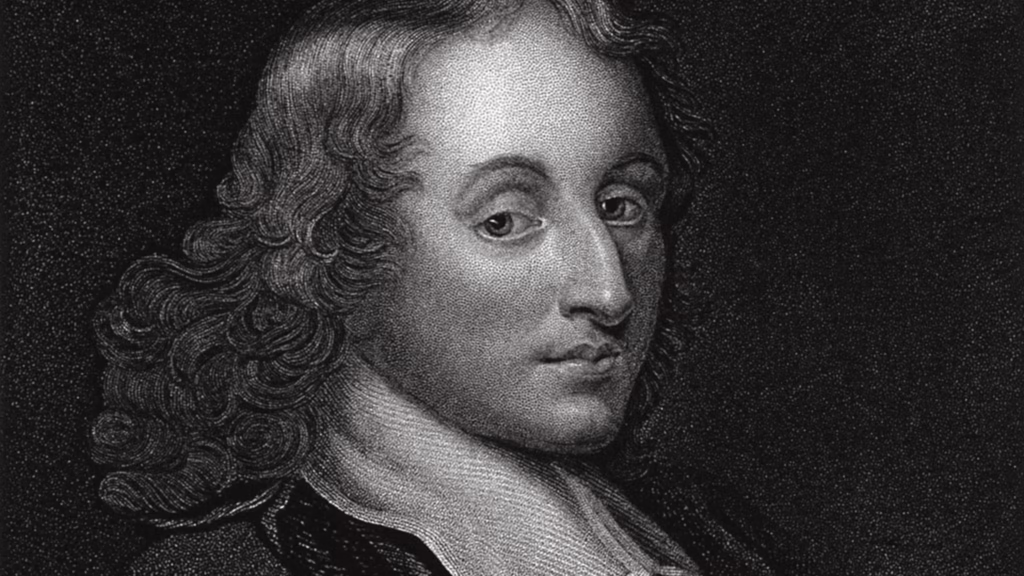
There are 923 of them. Scraps of paper, some barely larger than a hand, covered in handwriting that grows unsteady toward the end, sentences that stop mid-thought, arguments that begin with extraordinary precision and dissolve into a dash or a blank. This is what remained when Blaise Pascal died in August 1662 at thirty-nine years old, his body having betrayed him for most of his adult life — migraines so severe he could not read for months, gastrointestinal pain that made eating a form of suffering, a nervous system that seemed to register the world at a frequency too high for ordinary flesh to sustain. He had been assembling these notes toward an apology for the Christian religion, a great systematic work that would have been, by all accounts, something unprecedented. He never finished it. What we call the Pensées is not a book. It is the wreckage of one.
And yet the wreckage is more honest than the cathedral would have been. This is the thing that is almost impossible to accept about Pascal: the incompletion is not a failure of his project but its most faithful expression. A man who spent years arguing that human beings are constitutively incapable of sustaining coherent self-knowledge, that we are bundles of contradictions held together by distraction and habit, could not, in intellectual good conscience, hand you a completed system. The fragments enact what the arguments describe. You cannot write a tidy book about the impossibility of tidy books.
Walter Benjamin, who died before finishing his own great unfinished project, the Arcades Project — itself a mosaic of fragments, citations, and half-reasoned passages running to nearly a thousand pages — understood something similar about incompletion as a philosophical method. For Benjamin, the fragment was not a lesser form but a truer one, because it refused the false totalizing gesture of the system, refused to pretend that thought could be sealed off from the time and body that produced it. Pascal would not have used Benjamin’s vocabulary, but he lived the same understanding. The Pensées bleed. You can feel the days when the pain was worse, when the sentences shorten, when the handwriting tilts.
There is something destabilizing about reading a text that was never meant to be read in this form. You are not receiving an argument. You are watching someone think, which is a different and more uncomfortable thing. The man arguing for the wager, for the hidden God, for the necessity of faith, is also the man who wrote in another fragment that he is terrified by the eternal silence of infinite spaces. These two Pascals coexist without resolution, because resolution requires time, and time ran out at thirty-nine on a late summer night in Paris.
Søren Kierkegaard, who read Pascal carefully and carried his own version of the same wound, wrote that subjectivity is truth — meaning not that truth is whatever you feel, but that truth which does not pass through the living subject, through the body that bleeds and doubts and chooses, is not truth at all but only information. Pascal’s fragments are subjectivity made visible. They are truth in process, caught before it could be cleaned up and made presentable.
What remains, then, is a question you cannot easily dismiss. You organize your days around answers — schedules, commitments, beliefs, frameworks that hold the chaos at arm’s length. You reach for completed things, finished arguments, books that end with conclusions. But the thinkers who looked longest and most honestly at the human condition — Pascal dying at thirty-nine with his notes unbound, Benjamin leaving his life’s work in a suitcase at the Spanish border, Kierkegaard collapsing in the street before he could finish his final journal — left ruins, and the ruins tell you more than the monuments ever could about what it actually means to be here, thinking, unfinished, and still trying.
🌀 Between Reason, Faith, and the Abyss of Meaning
Pascal's Pensées stands at the crossroads of philosophy, theology, and existential anguish — a fragmented yet luminous meditation on human wretchedness and divine grace. The articles below trace the deepest thematic veins running through Pascal’s thought: the confrontation with mortality, the mystery of consciousness, the labyrinth of belief, and the restless search for meaning in an indifferent universe.
Albert Camus: Life and Philosophical Thought
Albert Camus, like Pascal, was haunted by the silence of the universe in the face of human longing for clarity. His philosophy of the absurd — the unbridgeable gap between humanity’s need for meaning and the world’s refusal to provide it — echoes Pascal’s own ‘wager’ and his terror before infinite spaces. Reading Camus alongside the Pensées reveals a persistent philosophical conversation that spans centuries.
GO TO THE SELECTION: Albert Camus: Life and Philosophical Thought
Heidegger’s Being and Time: Guide to Reading
Heidegger’s Being and Time shares with Pascal's Pensées a radical confrontation with finitude and the anxiety of human existence. Both thinkers insist that authentic life demands an unflinching gaze upon death, and both diagnose a modern tendency toward distraction and self-concealment — what Pascal called divertissement. This guide to Heidegger’s masterwork illuminates the deep structural affinities between existentialist ontology and Pascal’s Christian anthropology.
GO TO THE SELECTION: Heidegger’s Being and Time: Guide to Reading
Medieval Mysticism: History and Main Figures
Medieval mysticism offers a vital context for understanding the spiritual intensity that pervades Pascal's Pensées, particularly his famous Memorial and the notion of the ‘God of Abraham, not the God of the philosophers.’ The mystics explored in this article — from Eckhart to Bernard — map the interior terrain of soul and silence that Pascal would later traverse with mathematical precision and trembling faith. Their legacy shadows every page of the Pensées.
GO TO THE SELECTION: Medieval Mysticism: History and Main Figures
Camus’s Myth of Sisyphus: The Absurd Explained
Camus’s reading of the myth of Sisyphus provides a secular mirror to Pascal’s meditation on human misery and the desperate need for transcendence. Where Pascal finds salvation through the leap of faith, Camus insists on revolt without hope — yet both begin from the same abyss of meaninglessness that the human condition inhabits. Exploring the absurd helps readers understand exactly the precipice over which Pascal extended his famous wager.
GO TO THE SELECTION: Camus’s Myth of Sisyphus: The Absurd Explained
🎬 Discover Independent Cinema on Indiecinema
If Pascal's Pensées has stirred in you a hunger for depth, silence, and the great unanswerable questions, Indiecinema is your next destination. Our streaming platform curates independent films that dare to explore faith, mortality, consciousness, and the fragile beauty of being human — the same territories Pascal mapped with his restless, luminous mind. Come and lose yourself, meaningfully.
👉 EXPLORE THE CATALOG: Watch Indie Films in Streaming
A vision curated by a filmmaker, not an algorithm
In this video I explain our vision

