The Inheritance of Beauty
You arrive not to see the city but to survive it. There is a difference that takes most people years to understand, and by then they have already been consumed. The vaporetto deposits you at a landing stage that smells of diesel and green water, and you carry your bag up a narrow calle where the walls are so close you could touch both sides simultaneously, and the light falls in that particular way — golden, theatrical, slightly wrong — and you understand immediately that this place was not built for your comfort. It was built for something else entirely. For the staging of human desire at its most elaborately dressed and most nakedly ruthless.

Venice does not welcome. It auditions you.
The weight you carry when you first arrive matters enormously, because the city has a remarkable talent for amplifying whatever you brought with you. Bring joy and Venice turns it into nostalgia before the first evening is out. Bring ambition and the palaces along the Grand Canal will show you exactly what ambition looks like after five hundred years of operation — still beautiful, still commanding, and absolutely indifferent to the people who built it. But bring something more complicated than either of those — bring a dying hope, a debt you cannot name, a longing so entangled with calculation that you can no longer separate the two — and Venice becomes something close to a diagnosis.
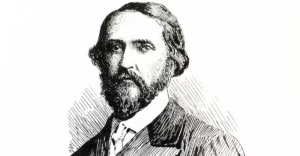
This is what Henry James understood when he sat in his Palazzo Barbaro apartments in the 1890s and looked out at the water and began, slowly and with that extraordinary patience of his, to construct the architecture of The Wings of the Dove, published in 1902. James had come to Venice repeatedly across his life, had written about it in his travel essays collected in Italian Hours, had felt its particular gravitational pull on the imagination. But in the novel he did something more precise than celebrate the city. He used it as the mechanism of exposure — the stage on which the most civilized people he could imagine would reveal, beneath every layer of refinement and tenderness and genuine feeling, the predatory structure underneath.
The story James tells is, on its surface, about love and illness and money. Milly Theale, a young and extraordinarily wealthy American woman, is dying. Kate Croy, beautiful and brilliant and financially precarious, loves Merton Densher. Together, with a complicity never quite spoken aloud, they maneuver Densher into Milly’s confidence — into what looks like love — so that when she dies he will inherit, and the money will make possible what poverty currently forbids. It is a scheme of extraordinary coldness dressed in extraordinary warmth, and the most disturbing thing about it is that none of the characters are simply villains. They all feel genuine emotion. The calculation and the tenderness coexist without canceling each other, which is precisely the mechanism James was interested in.
Georg Simmel, writing his famous essay on Venice in 1907, five years after James’s novel appeared, argued that the city had achieved something philosophically singular: it had aestheticized death to such a degree that even decay felt like ornament. The stones are sinking, have always been sinking, and the beauty is inseparable from that slow subsidence. What Simmel was pointing toward, though he framed it in his characteristically cool sociological register, is the same thing James felt in his bones: that Venice makes visible the way human beings dress necessity in the language of desire, the way we transform what we cannot avoid into what we claim to have chosen.
You have done this. Not in Venice necessarily, not with anything as dramatic as a dying heiress. But the mechanism — the way calculation learns to speak in the accent of feeling — this you know. You have felt it from both sides of the transaction.
Venetian Arcanum
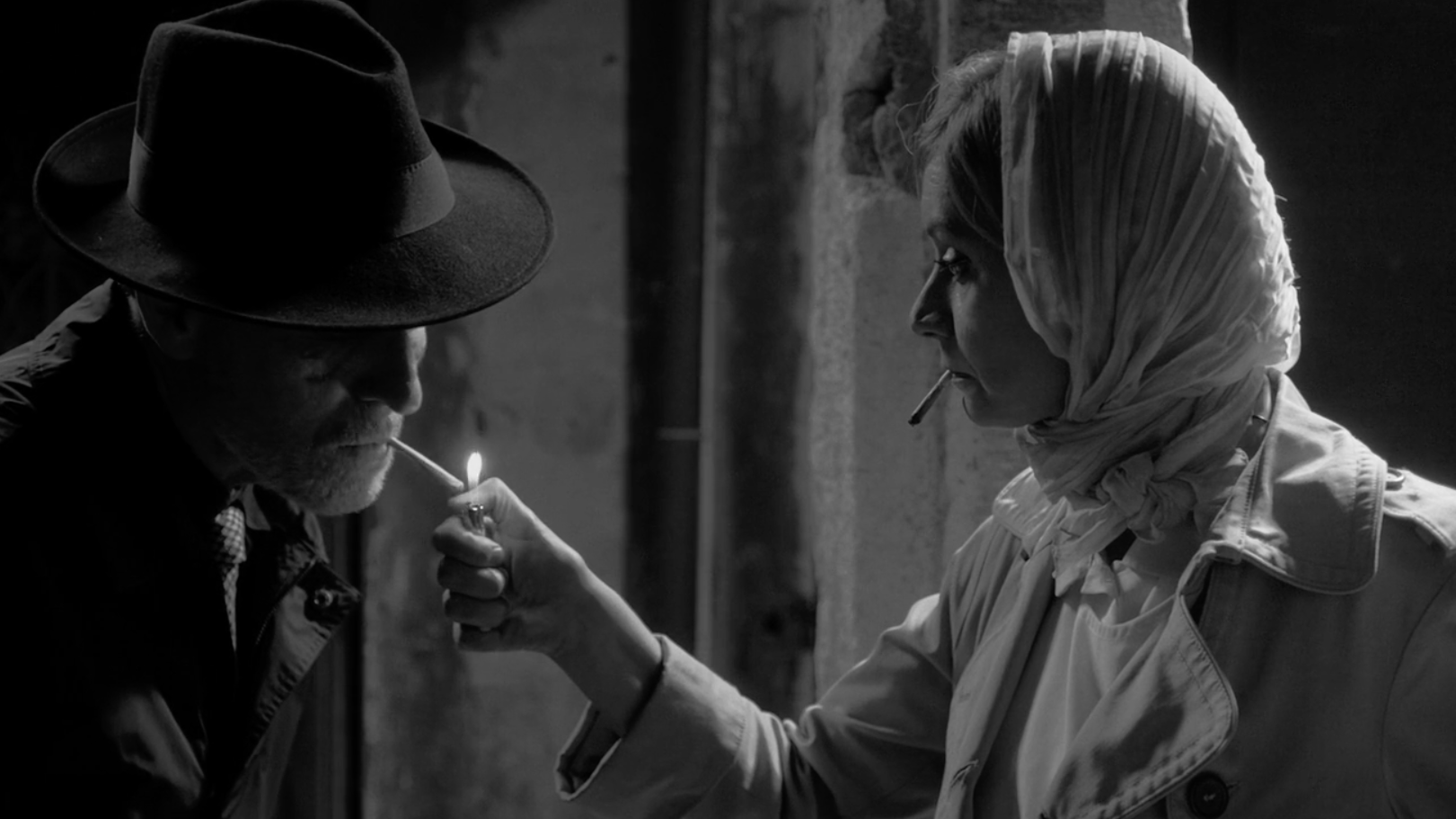
Thriller, by Serge Turgeon, Italy, 2025.
In Venice, a mysterious presence appears once every century or two, haunting the canals and hidden corners of the city. Driven by a sense of destiny, a woman decides to search for it. Following its elusive traces, she is drawn deeper and deeper into the city’s arcane secrets. Reality and myth begin to blur, and Venice itself transforms into a labyrinth of dangers.
LANGUAGE: Italian
SUBTITLES: English
Milly Theale and the American Myth of Innocent Wealth
There is a moment when you realize that the most powerful person in the room is the one everyone is pretending not to watch. She moves through a Venetian palazzo the way light moves through water — softly, diffusely, touching everything without quite landing anywhere. People turn toward her without appearing to turn. Conversations shift around her arrival the way tides shift around a stone dropped into still water. She is being consumed by the gaze of every person present, and she experiences this consumption as love.
This is Milly Theale’s fundamental condition, and it precedes her illness by years. She arrived in Europe already rich beyond the comprehension of the people she would meet — an inheritance so vast it had ceased to be a number and become instead a quality, something atmospheric, something that changed the pressure in a room. Henry James understood, with the cold precision of a diagnostician, that this kind of wealth does not liberate its possessor. It makes her into an object of interpretation. Everyone around Milly is reading her fortune the way one reads a text, looking for openings, for weaknesses in the argument, for places where meaning might be redirected.
Alexis de Tocqueville, writing in 1835 after his famous journey through the young American republic, noted something that has never stopped being true: that Americans possess an unusual compulsion to moralize their material condition. They cannot simply be rich. They must deserve to be rich, must demonstrate that their wealth is the outward sign of an inward virtue, a covenant with providence. The inheritance that cannot be earned must be justified through character, through suffering, through the conspicuous performance of goodness. Milly Theale is the literary perfection of this observation. She does not flaunt her money. She atones for it.
And here is where James is most ruthless, most precise: her illness becomes the instrument of that atonement. A young woman surrounded by people who hover at a careful, tender distance, their faces arranged in expressions of concern that are also expressions of appetite — there is something in that scene, something almost unbearable, in watching how the news of her dying changes the quality of the attention she receives. Before, she was merely extraordinarily wealthy. Now she is extraordinarily wealthy and dying, which means she is finally interesting in a way that cannot be reduced to calculation. Or so she believes. The people around her have simply added a new variable to their calculations.
The illness grants her what money alone could not: the tenderness of being needed rather than merely wanted. To be wanted for your wealth is a transaction. To be needed in your fragility is, or appears to be, a relationship. James knew that this distinction, this thin membrane between being seen and being used, is precisely where Milly chooses to live. She chooses it. That is the part we are reluctant to say plainly. There is a young woman who learns she is dying and rather than withdrawing, rather than protecting herself, moves deeper into the social world that is eating her alive. She opens her palazzo. She receives. She performs a kind of radiant, terminal generosity that is also, if we are honest, a form of purchase.
De Tocqueville’s Americans believed that suffering ennables. That it cleanses. That a fortune received without labor can be morally laundered through the experience of loss. Milly Theale has internalized this theology so completely that she turns her own death into a spiritual credential, a proof of innocence. She gives, finally and enormously, from her deathbed, as though the act of giving everything away will retroactively make the having of it pure.
What no one in the palazzo says aloud, what the gondolas carry away silently into the lagoon, is that being watched with love and being watched with hunger are gestures so similar in the dark that only the watched can tell them apart, and sometimes not even then.

Kate Croy and the Grammar of Survival
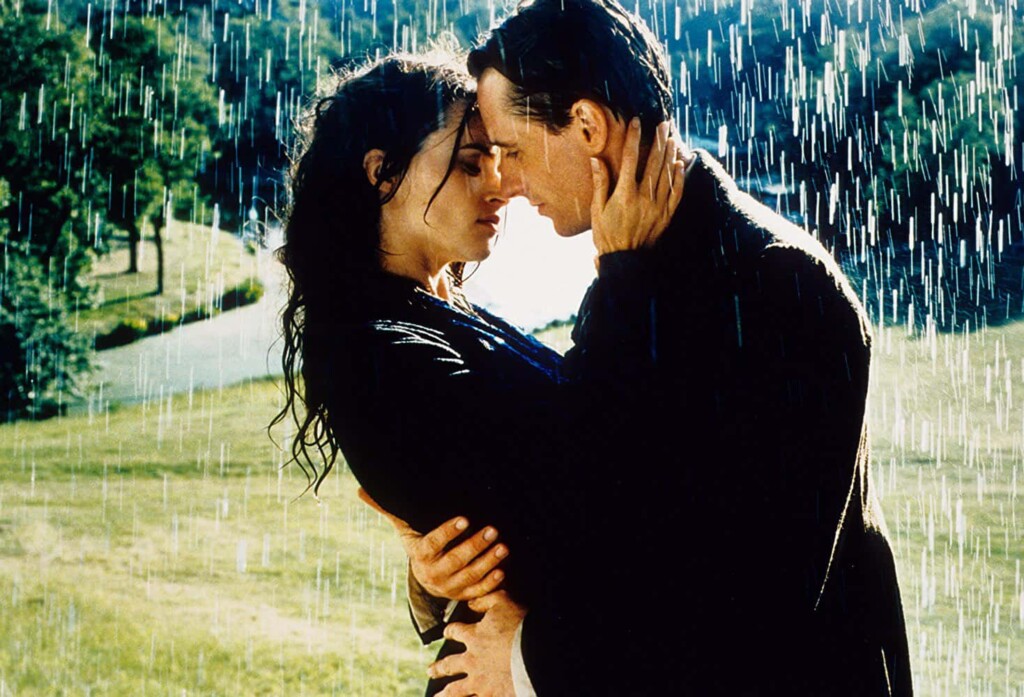
There is a woman in the room who understands everything and says almost nothing. She laughs at the precise moment laughter is required. She tilts her head when a man speaks, not because she finds him interesting, but because the tilt costs her nothing and purchases something she may need later. You have seen her. You may have been her. She has read the room so completely that the room no longer feels like a cage — it feels like an instrument she knows how to play.
Kate Croy was born into ruin and educated by it. Her father is a wreck of gentility, her sister drowning in domestic poverty, her aunt Maud Lowder a monument to everything money can solidify into. Kate looks at all of this and draws the only conclusion available to an intelligent woman in a system that has decided intelligence in women is decorative at best and dangerous at worst: she will use what she has. She will use her beauty, her composure, her extraordinary capacity to see several moves ahead, and she will use the people around her the way a chess player uses pieces — not with malice, but with the cold clarity of someone who knows the alternative is checkmate.
Simone de Beauvoir argued in 1949 that women, denied access to direct power for centuries, had been forced to develop what she called an oblique relationship to agency — not weakness, but a different grammar of force, shaped entirely by the architecture of their exclusion. The woman who cannot own property, cannot pursue a profession, cannot declare desire without social destruction, learns to achieve her ends through indirection. She becomes fluent in a language that has no name because naming it would expose the system that made it necessary. De Beauvoir was not celebrating this. She was diagnosing it, with the precision of someone who had watched it operate her entire life.
Kate speaks that language without accent. When she maneuvers Merton Densher toward Milly Theale, she does not issue commands. She suggests. She implies. She creates the conditions in which he arrives at conclusions she has already reached for him, so that he believes himself the author of his own decisions. The genius of it — and it is a kind of genius — is that it leaves no fingerprints. There is a scene of two people speaking in an empty room, and the woman is doing something so precise it nearly passes as conversation: she is dismantling the man’s resistance to a plan he hasn’t yet been told he’s part of, using only inflection and timing. He will remember this as a discussion. She will remember it as work.
This is not cruelty. Cruelty requires indifference to the other person’s experience. Kate is not indifferent to Densher. She loves him in the way someone can love another person while also recognizing that love, unassisted by strategy, will not survive the economics of their situation. She has watched love fail too many times to trust it as a mechanism. Her mother’s love failed. Her father’s love failed. Love, in Kate’s taxonomy, is a feeling that requires infrastructure, and she has appointed herself the architect of that infrastructure because no one else will do it, and because the alternative — waiting, hoping, being good — is a luxury available only to the already-saved.
The reader who finds Kate cold has perhaps never been poor and intelligent and female and forced to watch every door close from the outside. The reader who finds her cruel has perhaps never done the arithmetic of a life in which your options are so narrow that manipulation is not a character flaw but a survival technology, developed under pressure, refined by necessity, deployed with the kind of steady hand that looks, from the outside, remarkably like ruthlessness but feels, from the inside, like the only mathematics that adds up.
Venice as the Architecture of Desire
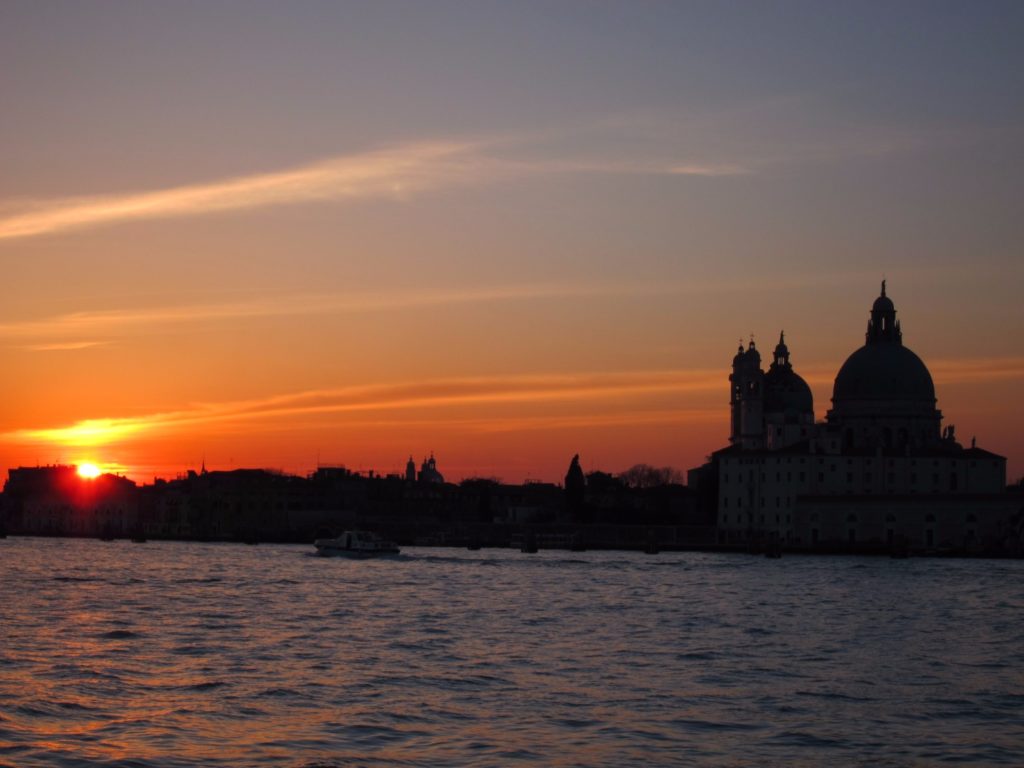
There is a particular quality of light that belongs only to late afternoon in Venice, when the sun drops behind the Frari and the canals go the color of hammered bronze. You have seen it, or something like it — the way a beautiful place can make you feel, briefly, that the normal rules of consequence have been suspended, that what you do here will not follow you home. That sensation is not accidental. It is the city working on you, as it has worked on every visitor for five centuries, softening the edges of accountability until what would elsewhere be recognizable as predation begins to feel like romance.
Walter Benjamin understood this mechanism with cold precision. Across the thousands of pages he accumulated between 1927 and 1940 in what became the Arcades Project, he argued that certain constructed environments function as collective dream-spaces, places where the logic of capital and desire operates beneath the threshold of conscious recognition. The Parisian arcade was his primary exhibit, but the principle extends wherever architecture conspires to produce enchantment as a condition for consumption. The dream-space does not merely house transactions. It transforms them. It clothes the extraction of value in the language of beauty, so that the person being consumed participates willingly, even gratefully, in the process. Benjamin called this the phantasmagoria, and he meant it as a critique, not a description of something charming. The charm was precisely the danger.
When James was completing The Wings of the Dove in 1902, Venice was already deep inside this logic. The city’s economy had been restructuring itself around tourism for decades, with revenues from foreign visitors reshaping labor, property, and social life across the entire Veneto. The palaces were filling with wealthy northerners and Americans who rented by the season, who paid for the sensation of living inside history, inside beauty, inside a place that felt exempt from the grinding ordinaries of modernity. This was the Venice that Milly Theale enters, and the Palazzo Leporelli that Milly inhabits is not incidental to what happens to her there. It is the mechanism.
James describes the palace with a strange and deliberate ambiguity, a place of corridors that seem to extend beyond any reasonable architectural logic, of rooms opening onto other rooms, of windows that offer views over water and light but also the persistent, unshakeable sensation of being watched from above. Imagine: a woman moving through those corridors alone in early evening, the sound of her own footsteps returned to her from walls that are four centuries old, the lagoon visible through arched windows in a light that makes everything look already like memory. She is being housed in beauty, and the beauty is not neutral. It is doing something to her perception of what is happening, making the attentions she receives feel like gifts rather than calculations, making the palace itself feel like a proof of something — her own significance, perhaps, or the sincerity of those around her. The geography is complicit. It has always been complicit.
This is what distinguishes James’s Venice from the Venice of postcards and from the Venice of simpler fictions. He sees the city not as a backdrop but as an actor, one with its own interests in the proceedings. The water that glitters beneath every window, the corridors that watch, the ceilings painted with figures who look down from their heavens with expressions of baroque indifference — all of it constitutes an environment engineered, by history and by the particular desires of those who have preserved it, for the suspension of moral accounting. Milly is not only being deceived by Merton Densher and Kate Croy. She is being deceived by the city itself, by its ancient expertise in making those who pass through it feel that here, in this light, on this water, something different from ordinary life is taking place, and that different is the same as safe.
The Conspiracy of Kindness
There is a particular kind of attention that feels like love until you understand what it is paying attention to. Someone holds your hand just a moment longer than comfort requires. They remember the name of your childhood dog, the tea you prefer, the way you like the curtains in the morning. They are, by every measurable standard, kind to you. And somewhere in you — not in your mind, which has been thoroughly charmed — something older and less articulate registers the weight of that hand as assessment rather than tenderness.
This is the room James builds and never lets you leave. Milly Theale is surrounded by people who are, in the most technically precise sense of the word, good to her. Kate Croy visits. Merton Densher is attentive. Mrs. Lowder extends her considerable social machinery on Milly’s behalf. Lord Mark, even, presents himself with the punctuality of care. Nobody raises their voice. Nobody is coarse. The silver is correctly placed, the condolences are correctly timed, and the betrayal is executed with a fluency that would require years of practice to achieve — which, in fact, it has had.
Erving Goffman, writing in 1959 with the dispassionate precision of a sociologist who had looked directly at the thing most people look past, argued that social life is fundamentally a performance — not in the sense of fakery, but in the structural sense that every interaction is a staged presentation of self calibrated to produce specific impressions in a specific audience. What his analysis in The Presentation of Self in Everyday Life maps so precisely is the way performance absorbs moral accountability into technique. When you are busy executing the correct gesture, you are not, in any operative psychological sense, responsible for its effect. The form of kindness replaces the fact of it. The performance of care makes the absence of care invisible, first to the audience and then, crucially, to the performer.
Kate Croy does not think of herself as someone who is destroying a dying woman. This is not hypocrisy in the crude sense. It is something more architecturally sophisticated: a consciousness so thoroughly organized around social performance that cruelty and care have become genuinely indistinguishable at the level of sensation. She holds Milly’s hand and feels warmth. She prolongs a look and experiences something she would honestly describe as affection. The calculation and the tenderness occupy the same gesture, the same nerve, the same moment of genuine feeling — because the feelings of people trained to perform are not false, they are simply structured to serve.
James understood something that most novelists are too humane to follow through on: that the most violent acts in bourgeois life are always committed with the correct fork. The violence is not concealed by the manners. The manners are the violence, refined to the point where it no longer recognizes itself. When everyone at the table is behaving perfectly, the question of who is being consumed does not arise in any form that would interrupt dinner.
You have perhaps been in this room yourself — not necessarily as the one being consumed. Perhaps you have been the one whose attention was impeccably given and quietly instrumental. Perhaps you told yourself that your affection was real, and it was, and it was also a vehicle for something your affection did not examine. The terrible thing about this particular dynamic is that the kindness is never entirely false. That is what makes it so complete. A straightforward cruelty could be named and resisted. A kindness that is also a strategy has no edge you can get your hands on.
Goffman’s performers are not villains. They are, in his framework, simply social beings operating within the only grammar of interaction available to them. James does not disagree. He simply shows you what that grammar costs, charged to the account of whoever in the room has the least power to refuse the transaction.
A vision curated by a filmmaker, not an algorithm
In this video I explain our vision
Merton Densher and the Cowardice of Ambiguity
There is a kind of man who never lies outright. He simply does not correct the misunderstanding. He does not propose the scheme, he merely fails to dismantle it. He is present at the table, he eats the food, he sleeps in the house that the scheme has furnished, and in the morning he tells himself, with complete sincerity, that he never wanted any of this.
Densher is this man in his most fully realized literary form. He loves Milly Theale, or believes he does, which amounts to the same thing in his own accounting. He loves Kate Croy, or is enslaved by her, which in the Venice of late autumn feels identical to love. He has not designed the trap that closes around a dying woman’s hope. He has simply not opened the door. He has simply not spoken the words that would have ended it. And his silence, sustained across weeks of Venetian intimacy with Milly, is not emptiness. It is load-bearing architecture.
Hannah Arendt, watching the trial of Adolf Eichmann in Jerusalem in 1961 and publishing her account two years later, arrived at a conclusion that scandalized precisely because it removed the comfort of monstrosity. The evil she observed was not demonic. It was the evil of a man who processed, who complied, who followed the logic of the situation he found himself in without ever pausing to think from the position of the other person. She called it the banality of evil, but what she was really naming was something far older and far more intimate than any bureaucratic machinery: the moral vacancy that masquerades as passivity, the way a man can participate fully in a harm while preserving, through sheer avoidance of explicit consent, the internal narrative of his own innocence. Eichmann is an extreme case. Densher is the recognizable case. The structure is identical.
James wrote The Wings of the Dove in 1902, and what he understood then was that this masculine type, this man of sensibility and deferral, was not an aberration. He was a product. An educated, aesthetically alive, genuinely feeling man who had simply never been required to transform feeling into decision. Densher knows what is happening to Milly. He knows with the particular clarity of intelligence applied everywhere except inward. And his knowledge, far from being exculpatory, is precisely what makes his non-action an action. Ignorance would have been mercy, for both of them. What he exercises instead is something Arendt would have recognized immediately: the capacity to be present without being answerable.
The passivity is itself a form of agency. This is the knife James turns slowly. Every day Densher spends in Milly’s Venetian palazzo, allowing her to believe in a future organized around his presence, is a day in which he chooses. Not loudly, not with a signed document, but with the accumulated weight of continued attendance. He chooses with his feet by not leaving. He chooses with his eyes by meeting hers with warmth he does not revoke. The mechanism of deniability requires constant maintenance, and that maintenance is work, even when it resembles nothing so much as a man simply being charming at a window above the Grand Canal.
What the twentieth century would go on to manufacture in extraordinary numbers was exactly this figure: the man in the institution who did not design the policy but implemented it, the man in the marriage who did not strike anyone but simply was never there, the man at the meeting who said nothing while the decision was taken. Sensitive men, often. Readers of difficult books. Men who could speak movingly about suffering in the abstract, and who in the concrete specific moment of a single woman’s dying hope simply did not say the words that would have cost them something.
James saw him clearly a full century before anyone had the language to name what they were looking at.
What the Dying Know That the Living Refuse To
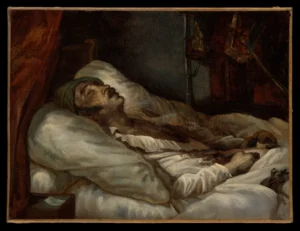
There is a moment, and you may have lived it, when you walk back into a room that someone has just left forever, and the air is still arranged around their absence. The glass on the nightstand. The impression in the pillow. A book open to a page they will never finish. You stand there and you understand, with a clarity that has nothing to do with thought, that the person who was dying knew something you did not. Knew it in the weeks before, perhaps in the months. Knew it in the way they looked at you sometimes — not with need, not with fear, but with a kind of lucid, unbearable patience.
Elisabeth Kübler-Ross spent years sitting with the dying at the University of Chicago Billings Hospital in the 1960s, and what she recorded in On Death and Dying in 1969 has been flattened by popular culture into a five-step ladder that grief is supposed to climb. But that is not what she found. What she found, underneath the stages, was something more disturbing: that the dying are frequently the most perceptive people in any room they occupy, and that the living instinctively keep their distance from them precisely because of this. Not out of discomfort with mortality. Out of discomfort with being seen.
Milly Theale sees everything. This is the unbearable center of the whole arrangement. She sees Kate’s design, she sees Densher’s compliance, she sees the architecture of the tenderness offered to her and recognizes it for what it is — a performance sustained by people who need her money more than they need her life. And she does not expose it. She forgives it. She rewrites her will in Densher’s favor and turns her final act into something that neither Kate nor Densher can ever fully absorb or escape. This is not grace in the religious sense, not softness, not the passive surrender of someone too weak to resist. It is the most precise exercise of agency available to a person who has been stripped of every other form of it. The dying, Kübler-Ross observed, often achieve a detachment that the living mistake for resignation. It is not resignation. It is the removal of the last illusion that other people’s behavior has anything to do with you personally — that it was ever about you, rather than about their own fear, their own hunger, their own inability to tolerate the fact of what they are.
There is a scene — not from a film, but from the kind of afternoon that exists in actual memory — where a man returns to a Venice apartment after a death. The shutters are still half-open at the angle she preferred. Her coat hangs on the hook near the door. The canal light moves across the ceiling in the same pattern it made when she was alive, indifferent, continuous, beautiful in a way that is now insulting. He sits down and understands that she knew. She knew what he had wanted from her, what the visit had really been, what the softness in his voice had been protecting. She knew and she let him keep his version of himself. She gave him that. And it is the most devastating thing anyone has ever done to him.
James understood this as a formal problem. How do you render the consciousness of someone who has arrived at a clarity that the novel’s very structure — built from desire, from plot, from the machinery of wanting — cannot accommodate? Milly retreats from the narrative. She recedes behind doors, behind reported speech, behind the silence of others who come back from her presence shaken and unable to explain why. Her knowledge cannot be written directly because it exists at a frequency the living cannot quite receive. They carry it afterward, like a sound just below hearing, felt in the chest before it is understood in the mind.
The Letter That Changes Everything and Nothing
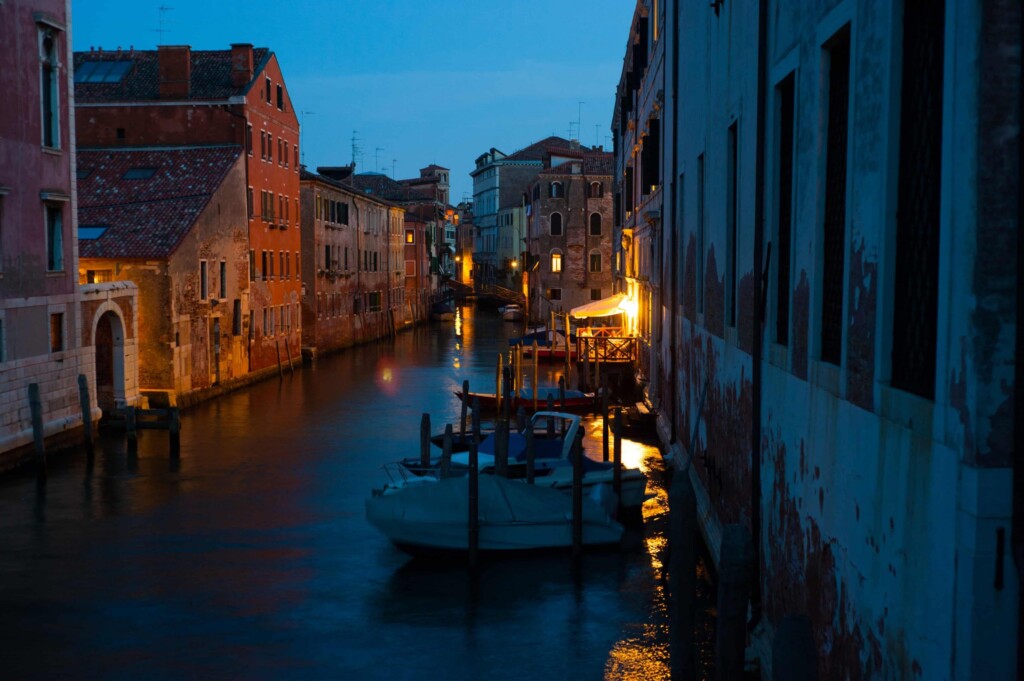
The letter sits on the table between them. Milly Theale is dead, and she has left them money — enough money to make the future they always claimed to want suddenly, terrifyingly possible. Kate looks at Densher. Densher looks at the envelope. Neither of them moves, because moving would mean choosing, and choosing would mean admitting what they have already, irrevocably, become.
Georg Simmel understood this moment before it arrived. In his Philosophy of Money, published in 1900, he argued that money is not simply a medium of exchange but a revealer — that the moment value is assigned in monetary terms to something previously held sacred or merely unspoken, the true architecture of a relationship becomes visible for the first time. Money does not corrupt, Simmel insisted. It clarifies. It takes what was ambient and floating in the social air and crystallizes it into something nameable, something that can be counted, something that can be refused or accepted. James published The Wings of the Dove in 1902, two years after Simmel’s treatise, and both men were watching the same machine operate on human interiority with the precision of a surgical instrument. Neither flinched from what they saw.
What Milly’s bequest does is not punish Kate and Densher. It simply completes the sentence they began when they first decided that love was a project requiring capital. The money makes legible what their entire arrangement had always been: a valuation. Densher was dispatched to Venice not because Kate did not love him but because she loved the idea of a life more than she loved its untidy, unfinanced reality. And Densher went, which is its own form of agreement, its own signature on the contract. The envelope on the table is not the revelation. The revelation is that neither of them is surprised by the envelope.
Densher tells Kate he will marry her if she relinquishes the inheritance. Kate tells him she will accept it if he admits that he no longer remembers Milly without tenderness. They are negotiating still — still fluent in the only language their relationship has ever truly spoken. Simmel wrote that the tragedy of money-culture is not that people become greedy but that they become translators, endlessly converting qualitative experience into quantitative terms until the original quality disappears and only the translation remains. Densher has translated his months with Milly into guilt. Kate has translated them into leverage. Between these two translations, Milly herself has ceased to exist as a person and become a function — the dead girl who makes the future possible or impossible depending on how you hold her.
James refuses to let us stand outside this. You have made this calculation. Perhaps not with an inheritance, perhaps not with a dying woman’s love, but you have sat across from someone and watched the conversation arrange itself into terms, into conditions, into the unspoken mathematics of what each person is worth to the other and under what circumstances. You have felt the exact texture of that silence — the one that falls when both people in a room understand simultaneously that something has been priced that neither of them had ever meant to price. The silence in James is always that silence.
What Densher and Kate do next is less important than what they have already done, which is simply to have been coherent. They wanted something. They pursued it through the available means. The available means required a dying girl to be handled rather than loved. They handled her. The question that remains, sitting with the same stubborn patience as that unopened letter, is not whether Kate and Densher were monsters of exceptional coldness — it is whether the structure of wanting itself, the ordinary aching human hunger for security and beauty and a life that matches one’s sense of one’s own worth, does not always, in the end, produce exactly this accounting.
🌊 Consciousness, Place, and the Weight of Desire
Henry James‘s The Wings of the Dove is a novel steeped in psychological intensity, the moral ambiguities of wealth, and the dreamlike opacity of Venice as a setting. To fully inhabit its world, one must explore the currents of consciousness, social distinction, and literary symbolism that run beneath its surface.
William James and Consciousness: The Stream of Thought
William James, Henry’s brother, developed the concept of the ‘stream of thought’ — a flowing, unbroken river of inner experience that profoundly influenced the elder James’s narrative technique. In The Wings of the Dove, this psychological continuity manifests in the way characters perceive, withhold, and reinterpret reality through layers of consciousness. Understanding William’s philosophy illuminates the almost hypnotic interiority that defines Henry James‘s late style.
GO TO THE SELECTION: William James and Consciousness: The Stream of Thought
Stream of Consciousness in Literature and Cinema
The stream of consciousness technique, both in literature and cinema, finds one of its most refined ancestors in the late novels of Henry James, where perception and moral ambiguity fuse into a single narrative flow. This article traces how writers and filmmakers have channeled inner experience into form, creating works where feeling and structure become inseparable. For readers of The Wings of the Dove, this context reveals the hidden architecture beneath James’s famously elaborate prose.
GO TO THE SELECTION: Stream of Consciousness in Literature and Cinema
Veblen’s The Theory of the Leisure Class: Analysis
Thorstein Veblen‘s theory of conspicuous consumption offers a sharp sociological lens through which to read The Wings of the Dove, a novel saturated with the rituals of inherited wealth and calculated social performance. Milly Theale’s fortune becomes both a source of power and a mark of vulnerability in a world where status is endlessly performed and negotiated. Veblen’s analysis of the leisure class mirrors the predatory elegance that James renders with such devastating precision.
GO TO THE SELECTION: Veblen’s The Theory of the Leisure Class: Analysis
Titian: Life and Works
Titian’s paintings, drenched in Venetian light and sensuous color, form an invisible backdrop to The Wings of the Dove — James himself famously compared Milly Theale to a portrait by the Renaissance master. Understanding Titian’s visual language, his rendering of mortality and beauty intertwined, deepens the symbolic resonance of Venice in the novel. The city becomes a living canvas where desire, death, and aesthetic contemplation are inseparable.
GO TO THE SELECTION: Titian: Life and Works
Discover Cinema That Dares to Go Deeper
If the psychological depth and moral complexity of Henry James speak to you, independent cinema offers the same uncompromising exploration of the human condition. On Indiecinema, you will find films that refuse easy answers and embrace the full ambiguity of desire, memory, and consciousness — just as James did on the page.
👉 EXPLORE THE CATALOG: Watch Indie Films in Streaming
A vision curated by a filmmaker, not an algorithm
In this video I explain our vision