
Adventure, in cinema, is a concept as vast as the horizon its heroes chase. The collective imagination, forged by iconic productions like Indiana Jones or Pirates of the Caribbean, evokes adrenaline-fueled undertakings, charismatic heroes, and exotic settings. It is a genre that feeds on spectacle, offering an escape from reality through pure action.

But the journey is not just a matter of miles traveled or enemies defeated; it becomes an expedition into the soul. A cinema exists that sheds its exterior to clothe itself in meaning. The unexplored territory is no longer a remote jungle or a distant galaxy, but the rugged landscape of the human psyche. The quest is not for a hidden treasure, but for a lost identity or a meaning for one’s existence.
In this context, the very act of undertaking a journey becomes a declaration, often a rejection of society’s dogmas. This guide is a journey across the entire spectrum. It is a path that unites the great epic adventures with the most intimate independent productions. An exploration of authenticity in a world that seems to have lost it, a personal and unforgettable journey.
Best Adventure Films of the 2020s
The 2020s open under the sign of resilience and sensory expansion. After the forced pause of the pandemic, adventure returns to the cinema as a primal need, focusing on immersive visual experiences that justify the return to theaters. It is the decade of the massive new alien worlds of Dune and Avatar: The Way of Water, where technology reaches such photorealism that “world-building” becomes the true protagonist of the narrative, often overshadowing the plots themselves.
Beat the Devil
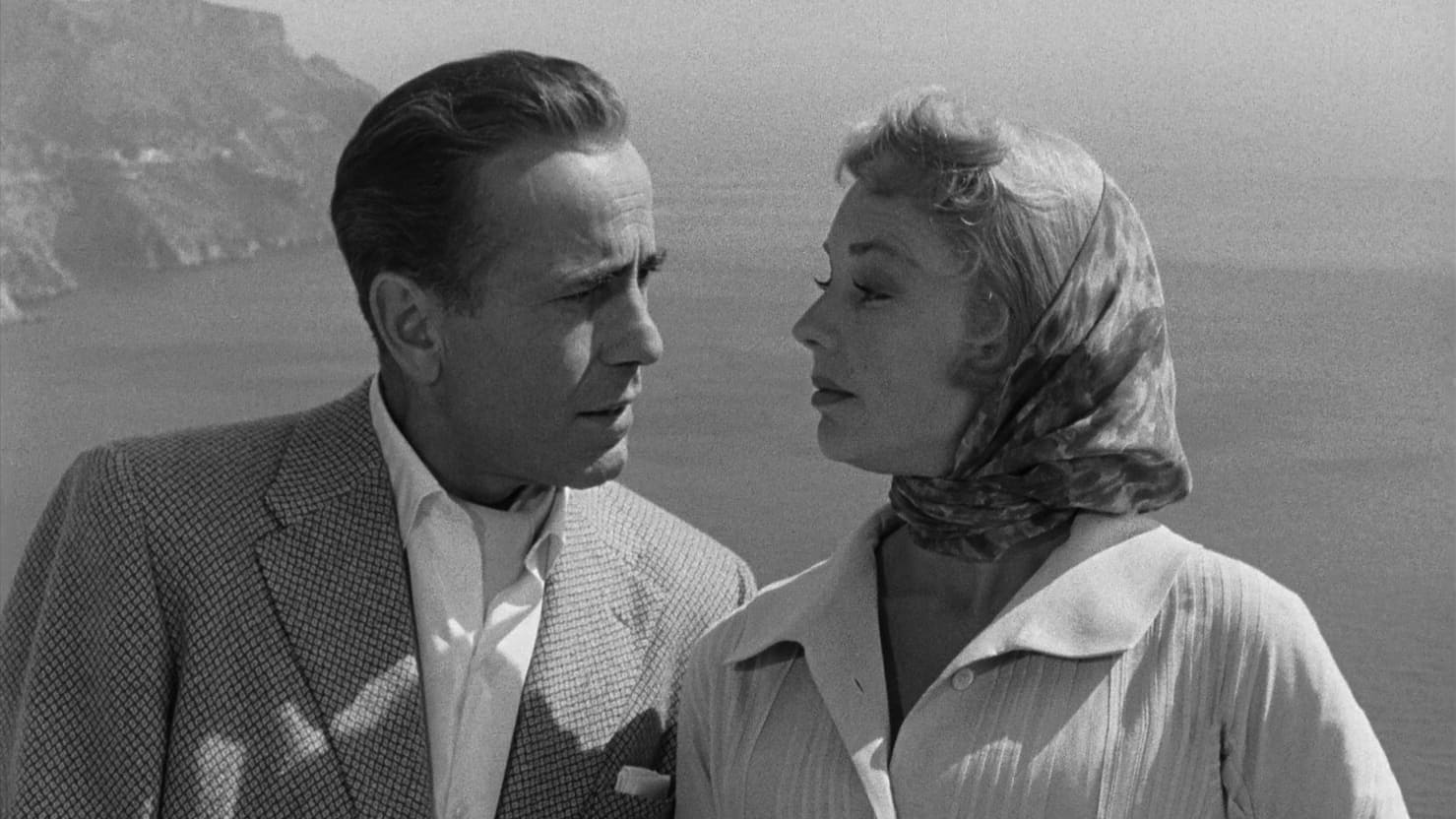
Adventure, comedy, by John Huston, United States, 1953.
The film begins with a group of very varied and ambiguous characters who find themselves in an Italian port waiting for a boat to go to Africa. The group consists of Billy Dannreuther (played by Humphrey Bogart) and his wife Maria (played by Gina Lollobrigida), Charles "O'Hara" (played by Peter Lorre) and his wife Gwendolen (played by Jennifer Jones), as well as an eccentric and wealthy British gentleman, Peterson (played by Robert Morley). These characters, along with others, are all interested in going to a uranium mine in Africa to exploit its potential profits. However, each of them hide their secrets and hidden motivations. As they wait for their transport, they spend their time interacting and trying to decipher each other's true goals. During the journey, tensions and betrayals emerge between the members of the group. The Dannreuthers are revealed to be trying to dupe the other members, Peterson is trying to protect his own financial interests, and O'Hara appears to have a connection to a mysterious hidden diamond. Meanwhile, the idea arises that the mine may be a scam and that the plan may be doomed to fail. The story becomes increasingly chaotic, with unexpected twists and intrigues.
The film is based on a novel of the same name by James Helvick (pseudonym of Claud Cockburn) and is a grotesque comedy that mixes elements of adventure, noir and comedy, often with a satirical tone. The cast of is remarkable and includes actors such as Humphrey Bogart, Jennifer Jones, Gina Lollobrigida, Peter Lorre and Robert Morley. The film was initially advertised as a serious thriller, but in the end it turned out to be very different from the public's expectations, with a lighter and more ironic tone. Although it was a box office failure and received mixed reviews upon its release, over the years it has become a cult film due to its unique style and outlandish nature. It was praised for its daring blending of genres and the eccentric performances of the cast. It is a film that stands out for its unconventional approach and its blend of different elements. His reputation has grown over the years, and today he is often held up as an example of how cinema can experiment with the boundaries of genres and audience expectations.
LANGUAGE: English
SUBTITLES: Spanish, French, German, Portuguese
Civil War (2024)

In a near future, the United States has collapsed into a bloody civil war. A small group of war journalists embarks on a suicidal road trip from New York to Washington D.C., crossing a nation in flames to attempt to interview the President before rebels storm the White House. Along the way, they document the horror, madness, and absurdity of a fratricidal conflict, becoming witnesses to an America transformed into a war zone.
Alex Garland (produced by A24) signs a war Road Movie that is pure anxious adrenaline. It is not a political film (it doesn’t explain who is right), but a war adventure film about the reporter’s profession. The tension is unbearable, the action scenes are realistic and deafening. It is a journey to the end of the night in a familiar landscape rendered alien by violence. A powerful work that uses the language of the blockbuster to issue a chilling warning.

The Promised Land (2023)

Denmark, 1755. Captain Ludvig Kahlen (Mads Mikkelsen) is a rugged man with an impossible goal: to cultivate the Jutland heath, a barren, freezing land infested with outlaws, to earn a noble title from the King. His stubbornness leads him to clash not only with ruthless nature but with the sadistic landowner Frederik De Schinkel, who considers that land his by right. A brutal war of blood, frost, and potatoes begins, where Kahlen must decide how much of his humanity he is willing to sacrifice for his ambition.
An epic and visceral Nordic western. There are no fast guns, but the tension of survival against the elements and tyranny. Mikkelsen delivers a monumental performance in a film that recaptures the breath of David Lean‘s great classics. It is a physical, hard adventure, where every meter of conquered land costs sweat and death. Top-tier European cinema, solid as a rock.
Io Capitano (2023)
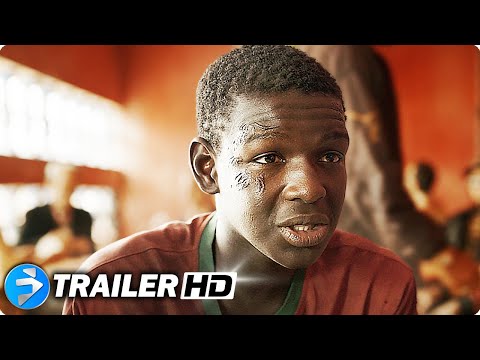
Seydou and Moussa are two Senegalese teenagers who leave Dakar to reach Europe, driven not by war, but by the dream of becoming musicians. Their journey soon turns into a contemporary Homeric odyssey through the pitfalls of the Sahara Desert, the horrors of Libyan prisons, and the dangers of the Mediterranean Sea. Seydou, initially a naive boy, must transform into a man and a captain to save himself and the other desperate souls destiny entrusts to him.
Matteo Garrone avoids the pietistic rhetoric of documentaries to shoot a true epic adventure, visually powerful and at times dreamlike. It is a classic “hero’s journey” set in modern tragedy, restoring dignity and subjectivity to the protagonists. The tension is constant, the landscapes are immense and hostile, and the film manages to be a great adventure tale that breaks your heart with its truth. Oscar-nominated, it is an essential film.
Godland (2022)

In the late 19th century, a young Danish priest is sent to a remote part of Iceland to build a church and photograph the local population. Instead of landing in a safe harbor, he decides to cross the island on foot, challenging a volcanic, frozen, and primordial nature. The journey, guided by a local Icelander who despises the Danes, becomes a descent into madness: the deeper the priest ventures into the landscape, the more he loses his faith, his morals, and his sanity.
An Icelandic film of shocking visual beauty (shot in a square format with rounded corners, like old photos). It is adventure in its purest and most dangerous form: small man against immense nature. Reminiscent of Herzog’s Aguirre or Scorsese’s Silence. It is slow, hypnotic, and brutal, a sensory experience where you feel the cold, the wind, and the physical fatigue of the journey. For those seeking cinema that is a physical experience.
A vision curated by a filmmaker, not an algorithm
In this video I explain our vision
Pig (2021)

Rob, a former world-renowned chef, lives as a hermit in the Oregon woods, foraging for truffles with his beloved pig. When the animal is kidnapped, Rob is forced to return to Portland and confront the world of high-end dining he had abandoned years before. His quest, however, will not be a violent one, but a melancholic journey into his past.
Pig is a brilliant subversion of the revenge film. The John Wick-like premise is completely abandoned to make way for a subdued and deeply spiritual adventure. In one of his best performances, Nicolas Cage embodies a man who has given up everything but the essential. His weapon is not violence, but a deep understanding of food as a vehicle for memory and emotion. The film is a meditation on loss, grief, and the meaning of authenticity in a world obsessed with appearance and success. An adventure of the soul that leaves an unforgettable taste.
The Green Knight (2021)

During the Christmas festivities at King Arthur’s court, a mysterious Green Knight, a tree-like and supernatural being, issues a challenge: whoever has the courage to strike him must suffer the same blow a year and a day later. The young and ambitious Gawain, the king’s nephew, accepts and beheads him. Thus begins for him an agonizing wait, which will culminate in an epic and surreal journey to the Green Chapel to honor the pact.
David Lowery deconstructs the chivalric poem to create a fantasy adventure that is above all a psychological journey. More than a story of heroism, The Green Knight is a meditation on fear, honor, temptation, and mortality. Gawain’s journey is a dreamlike odyssey, an initiatory path through a magical and threatening nature, dotted with allegorical encounters that test his moral fiber. Visually stunning and thematically complex, the A24 film is an adventure that questions the viewer on what it truly means to be a hero.
Best Adventure Films of the 2010s
The 2010s shifted the focus of adventure to extreme and visceral survival. In an era of global uncertainty and climate crisis, cinema reflected man’s fragility in the face of powerful and indifferent nature. Works like The Revenant or Embrace of the Serpent stripped the genre of all romanticism: adventure is suffering, physical endurance, and often a hallucinatory experience.
Monos (2019)
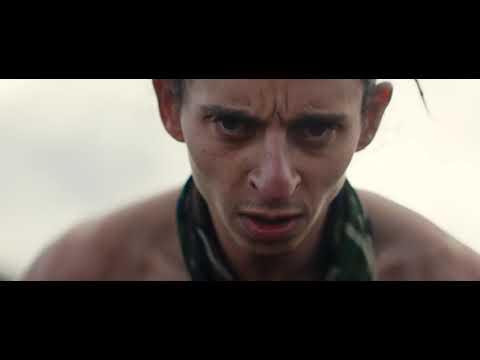
On a remote Colombian mountaintop, a group of teenage soldiers, known only by their codenames, guards an American prisoner and a dairy cow. When their mission goes wrong, they are forced to flee into the jungle, and their fragile hierarchy disintegrates into primordial chaos, turning the youths into wild beasts.
Monos is an adventure that turns into a feverish nightmare, a modern and hallucinatory version of Lord of the Flies. The breathtaking beauty of the Andean landscapes and the Amazon jungle contrasts with the growing brutality of the protagonists’ actions. Director Alejandro Landes creates a visceral and immersive cinematic experience, a journey into the madness and dehumanization caused by war. The adventure is not a quest, but a descent into the darkness of the human soul, a powerful and shocking film that leaves you breathless.
The Peanut Butter Falcon (2019)
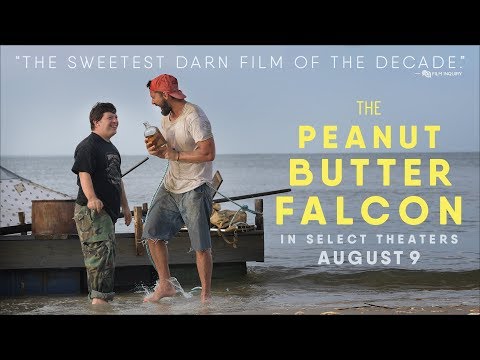
Zak, a young man with Down syndrome, escapes from a nursing home to pursue his dream: to become a professional wrestler and attend the school of his idol, The Salt Water Redneck. During his escape, he meets Tyler, an outlaw fisherman also on the run. The two form an unlikely alliance and embark on an adventurous journey through the waterways of the southern United States.
The Peanut Butter Falcon is a modern Mark Twain-style fable, a heartwarming adventure that celebrates friendship and overcoming barriers. The two protagonists’ raft journey is a clear homage to Huckleberry Finn, but the story is firmly anchored in the present. The film subverts expectations, presenting Zak not as a victim to be pitied, but as the determined hero of his own story. The adventure thus becomes a path of emancipation for Zak and redemption for Tyler, a journey that shows how family can be found in the most unexpected places.
First Cow (2019)

In 1820s Oregon, a lonely cook named “Cookie” joins a group of fur trappers. There, he strikes up an unlikely friendship with King-Lu, a Chinese immigrant on the run. Together, the two start a successful business selling delicious oily cakes, whose secret ingredient is milk stolen at night from the only cow in the region, owned by a wealthy Englishman.
Kelly Reichardt reinvents the western and the frontier film, transforming the adventure into a delicate story of friendship and micro-capitalism. The heroic feat is not a shootout or the hunt for an outlaw, but the nightly theft of milk and the preparation of sweets. The film patiently lingers on the gestures, the silences, and the tender complicity between the two protagonists, two outsiders trying to carve out a small space of happiness in a harsh and ruthless world. First Cow is a minimalist and poetic adventure that tells the origins of the American dream as a fragile story of collaboration and ingenuity.
Leave No Trace (2018)
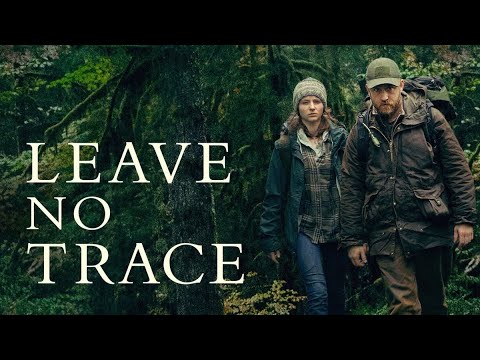
Will, a war veteran suffering from PTSD, and his teenage daughter Tom live unnoticed in a vast public park in Portland, Oregon. Their peaceful and isolated existence is interrupted when they are discovered and placed in the care of social services. While Tom begins to appreciate stability and community, Will is tormented by the need to return to his life on the margins of society.
Debra Granik‘s film is a work of extraordinary delicacy and power, redefining the survival adventure in an intimate key. Their life in the woods is presented as a fragile and silent routine. The real adventure is Tom’s inner journey, as she finds herself having to choose between loyalty to her father and her growing need for belonging. Leave No Trace de-romanticizes the ideal of escaping into the wilderness, showing how isolation can be both a choice of freedom and a psychological prison.
Good Time (2017)

After a bank robbery goes wrong, Nick, a young man with cognitive disabilities, is arrested. His brother Connie embarks on a desperate and frantic nocturnal odyssey through the underbelly of New York to find the bail money and free him. Every attempt, however, drags him deeper into a vortex of violence and chaos.
The Safdie brothers create a heart-pounding urban adventure, an adrenaline-fueled and immersive thriller. The “wilderness” here is the concrete jungle of a nocturnal metropolis, illuminated by neon lights and populated by desperate characters. With a feverish shooting style and a pounding electronic soundtrack, the film throws us into Connie’s race against time. It is a hallucinatory journey that explores toxic brotherly love and the devastating consequences of wrong choices.
The Rider (2017)

Brady, a young and talented rodeo cowboy, suffers a severe head injury that ends his career. Forced to abandon the only life he has ever known, he must face an identity crisis and search for a new purpose in the desolate beauty of South Dakota. His bond with horses, which he trains with an almost magical sensitivity, becomes his only anchor.
Shot by Chloé Zhao with non-professional actors playing versions of themselves, The Rider is a film of shattering authenticity. The adventure here is entirely internal: it is the painful search for a new way of being a man when one’s dream has been shattered. The vast landscapes of the West, traditionally a symbol of freedom and conquest, become a mirror of Brady’s loneliness. The film is a poetic and heartbreaking portrait of human resilience, exploring the fragility of masculinity and the need to reinvent oneself.
Swiss Army Man (2016)

Hank is alone, lost on a deserted island, and about to take his own life. Just then, the tide washes a corpse ashore. To his surprise, the body, which he names Manny, turns out to be a multi-purpose “Swiss army knife,” whose flatulence can be used as a motor for a jet ski. Thus begins a surreal adventure to return to civilization.
Produced by A24, Swiss Army Man is one of the most bizarre and courageous films of recent years. It explodes the survival film genre into a whirlwind of absurd comedy and deep melancholy. The adventure through the forest is a journey into Hank’s psyche, a man crushed by loneliness and shame. Beneath the surface of scatological comedy lies a moving story about self-acceptance and the saving power of friendship, however strange it may be.
Hunt for the Wilderpeople (2016)

Ricky Baker is a rebellious and troubled city kid, placed with an eccentric couple living on a remote farm in the New Zealand countryside. Following a series of unfortunate events, Ricky and his gruff adoptive “uncle,” Hec, find themselves the subjects of a nationwide manhunt, forced to flee and survive in the wild bush.
Taika Waititi directs an irresistible adventure comedy that masterfully blends action, humor, and moments of great tenderness. The unlikely duo’s escape through the breathtaking landscapes of New Zealand is a hilarious and moving journey. The dynamic between the cheeky young boy and the grumpy old man is the heart of the film, showing that true family is the one we choose, even in the midst of an absurd escape.
Captain Fantastic (2016)

Ben Cash has raised his six children in the heart of the Pacific Northwest forests, isolated from society. A family tragedy forces them to leave their self-sufficient paradise and embark on a journey into the “normal” world, questioning everything they believe in.
Captain Fantastic explores adventure as a utopian experiment that collides with harsh reality. The family’s road trip becomes the real test for Ben’s ideology. Is he an enlightened father or a dictator? The film uses the culture clash to explore the complex balance between idealism and responsibility. Unlike the solitary escape of Into the Wild, here the adventure is a collective family odyssey that questions the meaning of education and freedom.
Embrace of the Serpent (2015)
![EMBRACE OF THE SERPENT Official Trailer - Academy Award Nominee [HD]](https://blog.indiecinema.co/wp-content/plugins/wp-youtube-lyte/lyteCache.php?origThumbUrl=https%3A%2F%2Fi.ytimg.com%2Fvi%2FvutkvEOvCi4%2F0.jpg)
The film tells two parallel stories set in 1909 and 1940 in the Colombian Amazon. The protagonist is Karamakate, a powerful shaman and the last survivor of his tribe. In both periods, he guides two Western scientists in search of a sacred psychedelic plant. The journey explores the devastating impact of colonialism and the desperate attempt to preserve ancestral knowledge.
With Embrace of the Serpent, Ciro Guerra offers an indigenous perspective on Amazonian adventure cinema. Shot in hypnotic black and white, the film is a critical response to classic explorer narratives. Here, white explorers are sick men who need native guidance to survive and understand. It is a journey of spirit and myth rather than a tourist postcard.
Wild (2014)

Shattered by the death of her mother and the failure of her marriage, Cheryl Strayed decides to hike more than 1,600 kilometers of the Pacific Crest Trail alone and without experience.
Wild is an adventure of rebirth. The journey on foot is a direct confrontation with pain, where every strenuous step becomes a metaphor for Cheryl’s inner struggle to forgive herself. The film builds a powerful portrait of a woman rebuilding herself piece by piece. It is an adventure of healing and a hymn to the strength found in vulnerability.
Tracks (2013)

In 1977, Robyn Davidson undertakes an extraordinary feat: walking 2,700 kilometers across the Australian desert from Alice Springs to the Indian Ocean, accompanied by her dog and four camels.
Tracks is the ultimate solitary adventure, a total immersion in the experience of self-sufficiency. Robyn’s journey is an inner path to find absolute freedom. The desert, with its boundless landscapes, becomes the true protagonist—a space that purifies and lays bare. The film is a powerful portrait of human determination and the wild beauty of an untouched world.
Prince Avalanche (2013)

In the summer of 1988, in an area of Texas devastated by a fire, two men spend their days repainting the stripes on a desolate road. Their forced isolation leads them to clash, confide, and form an unlikely bond while nature slowly begins to be reborn around them.
The adventure here is static, confined to a spectral and beautiful landscape. The burnt forest is a metaphor for the characters’ inner desolation and the possibility of rebirth. The film is a delicate character study that finds adventure in the ability to connect with another human being even when all seems lost.
Beasts of the Southern Wild (2012)
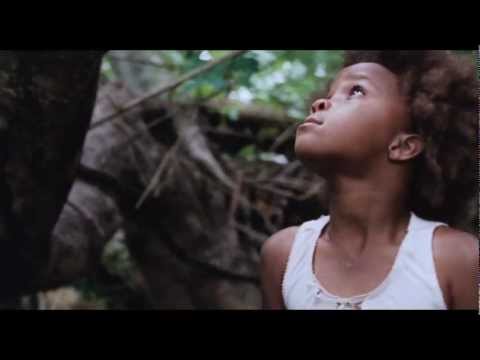
Hushpuppy, a six-year-old girl, lives in an isolated Louisiana bayou community. When a catastrophic storm approaches and her father’s health worsens, reality mixes with myth, and she evokes prehistoric creatures called Aurochs to confront the crisis.
This survival adventure takes on the contours of a magical and primordial fairy tale. Told through the eyes of a child, the film transforms poverty and ecological devastation into an epic struggle. Hushpuppy’s adventure is a rite of passage, a journey to learn to be strong and take care of her fragile universe.
Moonrise Kingdom (2012)
![Moonrise Kingdom - Official Trailer [HD]](https://blog.indiecinema.co/wp-content/plugins/wp-youtube-lyte/lyteCache.php?origThumbUrl=https%3A%2F%2Fi.ytimg.com%2Fvi%2F_eOI3AamSm8%2F0.jpg)
In the summer of 1965, two twelve-year-olds in love, Sam and Suzy, decide to run away together. Their meticulously planned elopement triggers a chaotic search led by well-intentioned but dysfunctional adults.
Adventure according to Wes Anderson is a miniature world, a perfect diorama. Sam and Suzy’s escape is treated with the seriousness of an epic, capturing the feeling of first love as the greatest adventure of all. It is a rebellion against the sad world of adults and an enchanting ode to innocence.
Another Earth (2011)

On the night a “mirror Earth” is discovered, Rhoda’s life is destroyed by a tragic car accident she caused. Years later, she tries to atone for her guilt while the possibility of a journey to the other Earth offers the promise of a second chance.
This low-budget sci-fi film uses its premise for an intimate exploration of guilt and redemption. The greatest adventure is Rhoda’s path to reconcile with her past. “Earth 2” becomes a powerful symbol of the hope to start over. It is a philosophical adventure that asks profound questions about identity and destiny.
Meek's Cutoff (2010)

In 1845, settlers traveling on the Oregon Trail entrust themselves to a guide who promises a shortcut through the desert. They soon realize they are lost. As water dwindles, tension grows, exacerbated by the capture of a Native American.
Kelly Reichardt transforms the western epic into an open-air psychological thriller. Shot in a 4:3 format, the film creates a sense of claustrophobia within the immense landscape. By focusing on the women in the group, Reichardt subverts genre conventions, highlighting psychological resistance and daily fatigue over action.
Best Adventure Films of the 2000s
The 2000s mark the definitive triumph of epic fantasy. In the wake of The Lord of the Rings (which, while pure fantasy, rewrote the canons of the travel adventure), the genre rediscovered grandeur and detailed world-building. CGI was no longer a novelty, but a mature tool allowing the unfilmable to be brought to the screen, from the skeletal pirates of the Caribbean to the Napoleonic naval battles of Master and Commander.
Wendy and Lucy (2008)
Wendy, a young woman with few financial resources, is traveling to Alaska in search of work, accompanied by her only friend, her dog Lucy. When her old car breaks down in a small Oregon town and Lucy disappears, her dream of a better life turns into a desperate and silent struggle for daily survival.
Kelly Reichardt’s film is a kind of “anti-adventure” that dismantles any romanticism associated with the idea of the road trip. For Wendy, the road is not a symbol of freedom, but a place of extreme vulnerability. The obstacles she encounters are not exciting challenges, but humiliating bureaucratic and financial impediments that expose the indifference of a system that has no room for the most fragile. With a minimalist style and an almost documentary-like attention to detail, Reichardt immerses us in the protagonist’s precarity. Wendy’s adventure is an inner battle to not lose hope and dignity, a heartbreaking odyssey that fiercely criticizes the American myth of mobility as a tool for social redemption.
Into the Wild (2007)

Based on the true story of Christopher McCandless, the film follows a young college graduate who abandons a life of privilege for a nomadic existence. Donating his savings to charity and burning his documents, he adopts the name Alexander Supertramp and embarks on a journey across America, with the ultimate goal of living in total isolation in the Alaskan wilderness.
Directed by Sean Penn, Into the Wild is perhaps the archetype of the modern independent adventure film, a manifesto of the radical rejection of materialist society. Christopher’s adventure is not a quest for glory, but a desperate escape from the corruption and hypocrisy he perceives in the adult world, embodied by his parents. His journey is an act of purification, an attempt to shed an imposed identity to find a more authentic one. The wilderness is not just a backdrop, but the protagonist’s true interlocutor, a pure and ruthless entity in which he hopes to find himself. The film’s tragic irony, culminating in the famous note “happiness is only real when shared,” elevates his physical adventure to a universal spiritual path, transforming his practical failure into a profound, albeit belated, existential victory.
Little Miss Sunshine (2006)
![Little Miss Sunshine - Official Trailer [HD]](https://blog.indiecinema.co/wp-content/plugins/wp-youtube-lyte/lyteCache.php?origThumbUrl=https%3A%2F%2Fi.ytimg.com%2Fvi%2FwvwVkllXT80%2F0.jpg)
The Hoover family is a concentrate of dysfunction: a motivational speaker father on the verge of failure, an uncle who is a Proust scholar recovering from a suicide attempt, a son who has taken a vow of silence, and a heroin-addicted grandfather. When little seven-year-old Olive is admitted to a beauty pageant in California, the entire family crams into a yellow Volkswagen bus for a trip that will push them to the brink of a nervous breakdown.
Little Miss Sunshine is a road trip comedy that intelligently and affectionately subverts the American myth of success. The journey itself, aboard a van that is a metaphor for their precarious family unit, becomes a cathartic adventure. The cramped space forces them to confront their own failures and neuroses. The destination, a children’s beauty pageant, is the perfect symbol of the superficiality and pressure to conform in society. Olive’s unforgettable final performance, supported by a family finally united in their eccentricity, is a hymn to the joy of imperfection and the beauty of being oneself. The adventure is not in winning, but in participating and finding solidarity precisely in failure.
The Fall (2006)

In a 1920s Los Angeles hospital, a paralyzed stuntman, Roy, befriends a young immigrant patient, Alexandria. To convince her to steal morphine for him, Roy begins to tell her an epic and fantastical story, an adventure populated by masked heroes, princesses, and evil governors. As the story progresses, the imaginary world and the reality of the hospital begin to merge inextricably.
Tarsem Singh‘s film is an adventure of the imagination, a visually sumptuous work that celebrates the power of storytelling. Shot in over 20 countries without the use of digital special effects for the landscapes, the film is a feast for the eyes, a tapestry of unforgettable images. But its beating heart is the relationship between Roy and Alexandria. The story he creates is an escape from pain and despair, but it also becomes a tool for connection and, ultimately, redemption. The Fall is a love letter to cinema itself, a film that reminds us that the most powerful adventures are those born from our ability to dream.
Old Joy (2006)

Two old friends, Mark, who is about to become a father, and Kurt, who lives a nomadic and precarious life, reunite for a camping weekend in the Oregon mountains. Their journey to a hot spring becomes an opportunity to confront the past, the different paths their lives have taken, and the melancholy for an intimacy that may no longer be recoverable.
The adventure in Old Joy is almost imperceptible, a whisper. Kelly Reichardt builds a film made of silences, glances, and landscapes, where the real exploration is emotional. The journey into nature is a pretext to measure the distance that has grown between the two friends. Almost nothing happens, yet everything happens. The film captures with poignant sensitivity the universal feeling of how friendships change over time, leaving a sense of sweet and bitter loss. It is a minimalist adventure that resonates long after, a moving portrait of the fragility of human bonds.
The Motorcycle Diaries (2004)

In 1952, two young Argentine students, Ernesto Guevara and Alberto Granado, set off on an epic motorcycle journey across South America. What begins as a boisterous adventure in search of fun and romantic conquests gradually transforms into an experience that will open their eyes to the social inequalities and suffering of the continent’s indigenous peoples.
Directed by Walter Salles and based on the real diaries of the two protagonists, the film is the quintessence of adventure as a journey of political formation. The physical journey through breathtaking landscapes parallels Ernesto’s inner journey, as he transforms from a carefree bourgeois youth into a man aware of the world’s injustices. The film’s emotional and ideological turning point occurs in the leper colony in Peru, where Guevara’s act of swimming across the river to join the sick symbolizes the overcoming of all social barriers. The adventure ceases to be an individual experience to become the origin of a revolutionary consciousness.
Master and Commander: The Far Side of the World (2003)

During the Napoleonic Wars, Captain Jack Aubrey of the British ship HMS Surprise receives orders to intercept the French frigate Acheron, larger and faster, which threatens whalers in the Pacific. After being nearly destroyed in a first engagement, Aubrey begins an obsessive pursuit across two oceans, pushing his crew and his ship to the limit. Beside him is his friend and ship’s surgeon Stephen Maturin, a naturalist and spy, who serves as an intellectual and humanist counterpoint to the captain’s martial ardor.
Peter Weir creates with Master and Commander the definitive naval film, a work of meticulous historical realism that immerses the viewer in the daily life of a 19th-century vessel. The adventure is not only in the battles (which are deafening, chaotic, and brutal), but in the forced coexistence in confined spaces, in hierarchical dynamics, and in scientific discovery (the stop in the Galapagos invoking Darwin).
Y Tu Mamá También (2001)

Two Mexican teenagers, Tenoch and Julio, from different social backgrounds, convince an older Spanish woman, Luisa, to join them on an impromptu trip to a fictional beach called “Boca del Cielo.” What begins as a carefree summer adventure turns into an intense journey of sexual, emotional, and social discovery that will change their lives forever.
Alfonso Cuarón’s film is a sensual and melancholic road movie that uses adventure as a catalyst for a profound reflection on the end of innocence. As the three protagonists explore their desires and the dynamics of their friendship, an omniscient narrator anchors them to the harsh political and social reality of Mexico at the turn of the millennium, a context that the boys, immersed in their own world, ignore. This contrast creates a powerful tension, transforming a personal journey into a national fresco. The adventure of Tenoch, Julio, and Luisa does not lead them to a physical beach, but to a metaphorical place where friendship, love, and the illusion of youth shatter against the reality of life.
Crouching Tiger, Hidden Dragon (2000)
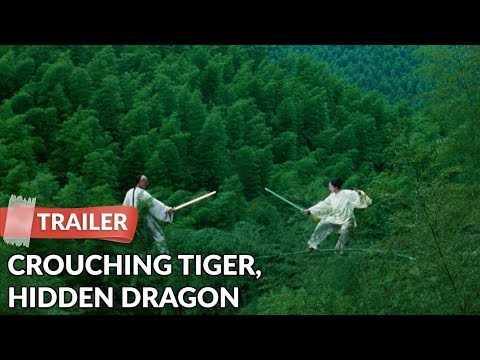
In Qing Dynasty China, legendary swordsman Li Mu Bai decides to retire and entrust his sword, “Green Destiny,” to his friend and secret love Yu Shu Lien. The sword is stolen by the young aristocrat Jen Yu, who wishes to escape an arranged marriage and live a life of adventure like the warriors of legend. Li Mu Bai and Yu Shu Lien must recover the sword and guide young Jen, in a web of aerial combat, past vengeances, and repressed passions.
Ang Lee brings the wuxia genre (Chinese sword and sorcery) to a global audience with Crouching Tiger, Hidden Dragon, blending martial action with Western psychological and sentimental drama. The fights, choreographed by Yuen Woo-ping, are not simple exchanges of blows, but physical dialogues, outward expressions of emotions that the characters cannot verbalize due to rigid Confucian social conventions. The warriors flying over rooftops or fighting balanced on the tops of a bamboo forest represent the lightness of the soul trying to free itself from the weight of duty.
Best Adventure Movies of the 90s
e 1990s mark the technological point of no return for adventure cinema. With the release of Jurassic Park in 1993, CGI (Computer Generated Imagery) broke the barriers of the possible, allowing directors to visualize creatures and worlds with a photorealism that the human eye accepts as true. The “sense of wonder” was radically renewed: dinosaurs breathe, digital crowds fill horizons, and action became more fluid and limitless.
The Straight Story (1999)
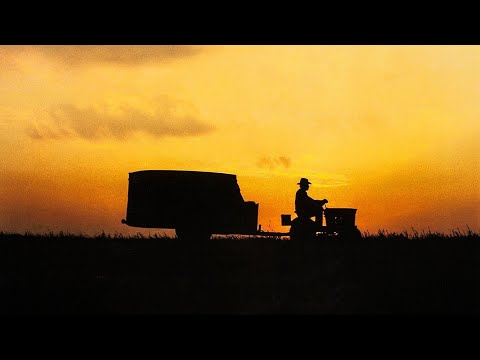
When the elderly Alvin Straight learns that his brother, with whom he hasn’t spoken in ten years, has had a stroke, he decides to go to him to reconcile. Lacking a driver’s license and unable to walk well, Alvin embarks on a journey of hundreds of miles from Iowa to Wisconsin aboard his small lawnmower tractor, slowly crossing the rural heart of America.
In his most anomalous and perhaps most radical work, David Lynch abandons surrealism to embrace a disarming simplicity. The Straight Story is an adventure defined by its profound slowness. The measured pace of the tractor forces Alvin to observe the world with a different attention, valuing the small encounters and conversations that mark his pilgrimage. The film transforms a seemingly absurd undertaking into a powerful meditation on old age, family, regret, and redemption. Alvin’s adventure is an odyssey of the heart that shows how the greatest feats are often the quietest ones.
Princess Mononoke (1997)
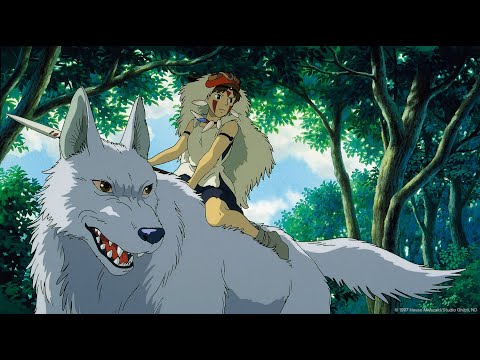
Young Prince Ashitaka, struck by a deadly curse while defending his village from a demon boar, travels west in search of a cure. He finds himself in the middle of a war between Lady Eboshi, mistress of Iron Town who destroys the forest for industrial progress, and San (Mononoke), a human girl raised by wolves who defends nature and the spirits of the forest. Ashitaka tries to mediate between the two opposing forces, seeing with “eyes unclouded by hate.”
With Princess Mononoke, Hayao Miyazaki elevates animation to an adult, violent, and morally complex epic. It is not a Manichean ecological fairy tale; there are no absolute “villains.” Lady Eboshi destroys the forest but gives dignity and work to society’s outcasts. Ashitaka’s adventure is a moral journey in a world of grays, where nature is beautiful but also cruel and vengeful. The animation captures the grandeur of ancient Japanese landscapes and the fluidity of action with pictorial grace.
Jurassic Park (1993)

Billionaire John Hammond invites a group of scientists and his grandchildren to visit a theme park on an island off the coast of Costa Rica, where real dinosaurs have been brought back to life via genetic engineering. When sabotage disables security systems during a tropical storm, the visitors must fight for survival against the T-Rex and intelligent Velociraptors in an environment that transforms from a technological marvel into a primordial death trap.
Steven Spielberg‘s Jurassic Park marks a technological point of no return: the moment when CGI made the impossible photorealistic. Its greatness lies in the narrative construction of the adventure, structured like a roller coaster of suspense. Spielberg alternates moments of pure wonder, such as the arrival of the Brachiosaurus, with Hitchcockian terror sequences like the raptors in the kitchen. It remains a masterclass in pacing and visual storytelling.
The Last of the Mohicans (1992)
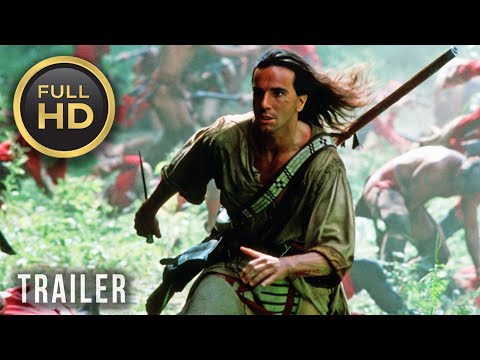
In 1757, during the French and Indian War, Hawkeye—a white man adopted by the Mohicans—and his blood brothers Chingachgook and Uncas, try to live free outside the conflicts of European powers. After saving the daughters of a British colonel from an ambush, Hawkeye and Cora fall in love while crossing dangerous forests in a desperate race for survival and freedom.
Michael Mann applies his visceral style to a 19th-century classic, transforming it into an overwhelming sensory experience. Far from stiff historical reconstructions, the film is pure kinetic energy. Characters run constantly, the landscape is wild, and the violence is brutal and swift. Daniel Day-Lewis embodies a romantic and physical hero perfectly integrated into the natural environment, supported by a legendary score that drives the film’s relentless momentum.
Best 80s Adventure Movies
The 1980s represent the apex of adventure cinema as the perfect entertainment machine. In the wake of Star Wars, the decade codified the model of the modern blockbuster: fast pacing, iconic soundtracks, and a tone that skillfully blends action, irony, and romance. It is the decade of Indiana Jones, which recovered the spirit of the 1930s serials while stripping away any technical naivety, creating a universal hero that defined the collective imagination of a generation.
The Princess Bride (1987)

A grandfather reads a sick and skeptical grandson a story containing “fencing, fighting, torture, revenge, giants, monsters, chases, escapes, true love, and miracles.” The story follows the beautiful Buttercup and her beloved Westley, presumed dead and having become the dread Pirate Roberts. Westley must save Buttercup from the evil Prince Humperdinck, allying with a Spanish swordsman seeking revenge and a gentle giant. Together they face cliffs of insanity, fire swamps, and rodents of unusual size.
Rob Reiner, adapting William Goldman‘s novel, achieves a miracle of tone with The Princess Bride: a film that is simultaneously an affectionate parody of the swashbuckling genre and an excellent example of the genre itself. The adventure is filtered through a meta-narrative frame that allows for the deconstruction of fairy tale tropes while keeping their emotional heart intact. The fencing duels are choreographed with a precision that pays homage to Errol Flynn, but the dialogue is steeped in brilliant, modern irony.
Landscape in the Mist (1988)

Two young Greek siblings, Voula and Alexandros, run away from home to find a father they have never met, believed to live in Germany. Their journey through a harsh, indifferent world becomes a devastating and poetic odyssey through childhood, loss, and the fragile persistence of hope.
Theo Angelopoulos creates a road movie of profound emotional and philosophical weight, stripping the adventure genre down to its most elemental and painful truths. The film’s long, unbroken takes and sparse dialogue give it the quality of a waking dream, while its unflinching portrayal of the dangers facing vulnerable children lends it a raw, aching authenticity. One of European cinema’s most powerful and heartbreaking works.
Brightness (1987)

In ancient Mali, a young man named Niankoro flees his sorcerer father, who seeks to destroy him before he can surpass his power. Drawing on Bambara mythology and oral tradition, Souleymane Cissé crafts a visually stunning epic about generational conflict, spiritual power, and destiny.
Souleymane Cissé’s masterpiece stands as one of African cinema’s crowning achievements, winning the Jury Prize at Cannes and revealing a mythological world virtually unseen on screen before. The film’s imagery — blinding light, sacred ritual objects, vast savanna landscapes — carries genuine mystical force. Cissé treats Bambara cosmology with full seriousness, creating an adventure epic that feels rooted in the earth while reaching toward the transcendent.
Fitzcarraldo (1982)
![Fitzcarraldo (1982) ORIGINAL TRAILER [HD 1080p]](https://blog.indiecinema.co/wp-content/plugins/wp-youtube-lyte/lyteCache.php?origThumbUrl=https%3A%2F%2Fi.ytimg.com%2Fvi%2FxWeb7i8IjYs%2F0.jpg)
Brian Sweeney Fitzgerald, known as Fitzcarraldo, is a dreamer obsessed with the idea of building an opera house in Iquitos, in the heart of the Amazon, to have Enrico Caruso sing there. To finance the enterprise, he must exploit an area of rubber inaccessible by river due to rapids. He conceives a mad plan: to transport an entire steamship over a steep mountain to bypass the rapids and reach the other river side. With the help of local indigenous people, he undertakes this titanic and absurd task.
Herzog again, the jungle again, obsession again. Fitzcarraldo is famous for the fact that the production replicated the protagonist’s feat: Herzog actually had a 320-ton ship dragged up a hill, without special effects, defying all production logic. This madness permeates every frame with staggering documentary truth. The film is a powerful metaphor for the futility and magnificence of art (opera) in a savage and indifferent world.
Raiders of the Lost Ark (1981)

In 1936, archaeologist and adventurer Indiana Jones is tasked by American intelligence to find the Ark of the Covenant before the Nazis do, who are convinced the biblical artifact confers invincible powers. In a race against time taking him from Nepal to Egypt, Indy faces ancient traps, treacherous rivals, and the German army, flanked by the strong-willed Marion Ravenwood. The search culminates in the opening of the Ark, where divine power is unleashed against those who dared to profane it.
Steven Spielberg and George Lucas, with Raiders of the Lost Ark, distill the essence of adventure cinema into 115 minutes of rhythmic and narrative perfection. The film is a clockwork mechanism devoid of superfluous fat, recovering the spirit of 30s serials while elevating it with virtuoso direction and top-level production. Harrison Ford creates a modern icon: a fallible hero, intellectual yet tough, who bleeds, sweats, and often improvises.
Best Adventure Movies of the 70s
The 1970s are the decade of radical bifurcation. On one hand, “New Hollywood” and international auteur cinema pushed adventure into extreme, hallucinated, and often nihilistic territories. Directors like Werner Herzog and William Friedkin dragged crews into real jungles, transforming the making of the film into a feat as dangerous as the plot itself (as in Aguirre or Sorcerer). In these works, adventure becomes a journey to the end of the night, a dirty, desperate experience devoid of redemption, reflecting post-Vietnam disenchantment and the end of hippie utopias.
Stalker (1979)
![STALKER Official Trailer [1979]](https://blog.indiecinema.co/wp-content/plugins/wp-youtube-lyte/lyteCache.php?origThumbUrl=https%3A%2F%2Fi.ytimg.com%2Fvi%2FnFLQEuQuNKM%2F0.jpg)
In an undefined future, an illegal guide called “Stalker” accompanies a cynical Writer and a rationalist Professor into the “Zone,” a mysterious and forbidden area where the laws of physics are altered and where a room is said to exist capable of granting the deepest and most secret desires of those who enter. The journey through this desolate and post-industrial landscape is not physical but metaphysical: the Zone reacts to the travelers’ psyche, forcing them to confront their fears, their faith, and the vacuity of their aspirations.
Andrei Tarkovsky transforms the sci-fi/adventure genre into a cinematic prayer and a philosophical investigation with Stalker. There are no monsters or visible special effects; the threat and wonder are purely atmospheric, created through slow camera movements, symbolic use of color (sepia for the depressing real world, color for the vibrant Zone), and immersive sound design. The adventure is a spiritual pilgrimage toward the inner unknown.
Star Wars (1977)

In a galaxy far, far away, young farmer Luke Skywalker intercepts a distress message from Princess Leia, hidden in the droid R2-D2. Involved by the old Jedi master Obi-Wan Kenobi, Luke discovers his heritage and joins smuggler Han Solo to save the princess from the Death Star, a space station capable of destroying planets, commanded by the evil Darth Vader and the Galactic Empire. Discovering the Force, Luke must join the Rebel Alliance to destroy the imperial threat.
With Star Wars, George Lucas synthesizes and reassembles the entire history of adventure cinema into a perfect mythological pastiche. Strictly following Joseph Campbell‘s “Hero’s Journey,” Lucas creates a modern space opera that redefined the entertainment industry. The revolutionary aspect lies in the aesthetic of the “used future”: spaceships are dirty and droids are dented, lending the fantastic universe a tactile and lived-in verisimilitude.
Sorcerer (1977)
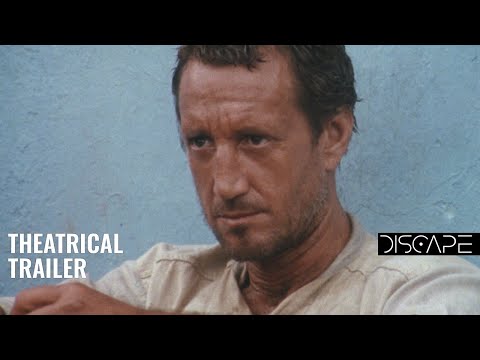
Four international fugitives, hiding in a hellish South American village to escape their past crimes, accept to transport two trucks loaded with unstable dynamite through the jungle to extinguish a fire in an oil well. The journey is an odyssey across dilapidated rope bridges, tropical storms, and impossible terrain. Every obstacle tests their sanity and their capacity to cooperate, in a crescendo of existential tension where fate seems to conspire against them.
Released almost simultaneously with Star Wars and overshadowed by its success, William Friedkin’s Sorcerer is a gritty, dirty, and hallucinated masterpiece. Friedkin creates a gritty reinterpretation of the original novel The Wages of Fear. The famous sequence of crossing the suspension bridge over the swollen river under a torrential storm is perhaps the highest moment of physical suspense ever filmed, realized without digital effects and at great real-world risk to the crew.
Dersu Uzala (1975)

In 1902, Russian explorer and captain Vladimir Arseniev leads a topographic expedition in the Ussuri Siberian taiga. There he meets Dersu Uzala, an elderly nomadic hunter of the Goldi people. Dersu becomes the expedition’s guide, saving Arseniev from death on several occasions thanks to his deep knowledge of nature and his animist respect for every form of life. Between the civilized soldier and the wise man of the woods, a deep friendship is born.
Akira Kurosawa artistically resurrects in the Soviet Union with Dersu Uzala, a film of crystalline purity and touching humanism. Shot in 70mm in real Siberian locations, the film is a hymn to man’s humility before mighty nature. Unlike American conquest westerns, here adventure is an act of learning, observation, and respect. Kurosawa reflects on the blindness of modern man compared to the “primitive” man who feels the soul of the world.
The Passenger (1975)

A disillusioned journalist stranded in the Sahara Desert assumes the identity of a recently deceased stranger, embarking on a journey across Europe and North Africa that slowly, inexorably closes in around him. Antonioni’s existential thriller transforms the adventure genre into a profound inquiry into identity and escape.
Michelangelo Antonioni and Jack Nicholson collaborate on one of cinema’s most intellectually seductive thrillers, a film in which adventure becomes a metaphor for the desperate desire to shed one’s self entirely. The famous seven-minute final shot remains among cinema’s most audacious sequences, dissolving action into pure contemplative space. The desert and urban landscapes are rendered as psychological states, making geography the film’s true subject.
Picnic at Hanging Rock (1975)

On Valentine’s Day 1900, a group of Australian schoolgirls and their teacher mysteriously vanish during an excursion to a volcanic rock formation. Peter Weir’s film refuses to explain the disappearance, instead dwelling in ambiguity, desire, and the uncanny power of the ancient landscape itself.
Peter Weir crafts one of cinema’s great unsolved mysteries, deliberately withholding resolution to create something far more haunting than conventional narrative would allow. The film operates as a dream, suffused with Gheorghe Zamfir‘s otherworldly panpipe score and Russell Boyd‘s luminous cinematography. It explores the collision between repressive colonial order and the primal, indifferent Australian wilderness, producing a genuinely hypnotic and philosophically rich adventure unlike any other.
Badlands (1973)

A teenage girl and her older boyfriend flee across the American Midwest after he kills her father, leaving a trail of bodies in their wake. Terrence Malick‘s debut transforms a real crime spree into a haunting, lyrical meditation on youth, alienation, and the mythologizing of violence.
Malick’s extraordinary debut remains one of American cinema‘s most distinctive achievements. Shot with painterly attention to the vast landscapes of the Great Plains, the film uses Holly’s detached voiceover to create an unsettling distance from the violence unfolding on screen. Martin Sheen and Sissy Spacek deliver performances of eerie, dreamlike conviction, while Malick’s vision of America as both beautiful and morally hollow feels timeless and deeply unnerving.
Aguirre, the Wrath of God (1972)
![Aguirre, the Wrath of God (1972) Original Trailer [FHD]](https://blog.indiecinema.co/wp-content/plugins/wp-youtube-lyte/lyteCache.php?origThumbUrl=https%3A%2F%2Fi.ytimg.com%2Fvi%2F9LqdXayZ6Q0%2F0.jpg)
In 1560, a specialized expedition of Spanish conquistadors descends from the Andes in search of the legendary El Dorado. Lope de Aguirre, a megalomaniacal and violent officer, takes command after a mutiny, leading the men down the Amazon River. As the raft glides deeper into the impenetrable jungle, the expedition is decimated by hunger, disease, and the invisible arrows of the natives.
Werner Herzog realizes with Aguirre, the Wrath of God a work that is itself an act of extreme adventure. Filmed in the Peruvian jungle in prohibitive conditions, the film captures a documentary reality that blends with feverish hallucination. Klaus Kinski offers a performance of demonic intensity; his Aguirre is not a man, but a distorted force of nature, the embodiment of Western imperialism pushed to self-destruction.
Walkabout (1971)

Two siblings, a teenage girl and a small boy, find themselves abandoned in the Australian desert after their father commits suicide. Disoriented and unable to survive in the hostile environment, they meet an Aboriginal boy engaged in his “walkabout,” an initiatory rite of passage. The boy helps them find water and food, guiding them toward civilization, though cultural incommunicability leads to tragic misunderstandings.
Nicolas Roeg transforms Walkabout into a visual poem on the irreconcilability between nature and modern civilization. The film is a sensory experience, edited with an associative logic that juxtaposes the brutality of hunting in the desert with urban butchery. The landscape of the Australian outback is filmed as an alien, ancient, and marvelous entity, vibrant with life and death, where time seems to suspend itself.
El Topo (1970)
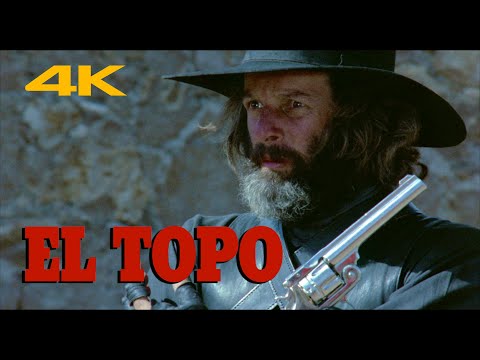
El Topo, a gunfighter dressed in black, travels through a surreal desert with his naked son, challenging and killing four master gunfighters to prove he is the greatest. After being betrayed and left for dead, he is saved by a community of deformed people living in a cave. Reborn and repentant, El Topo seeks redemption by working as a mime and trying to free the community from captivity.
With El Topo, Alejandro Jodorowsky defines the Acid Western genre. The film is a mystical, blasphemous, and symbolist adventure, saturated with esoteric, religious, and psychoanalytic references. The journey is an initiatory path through states of consciousness, blending Zen Buddhism with the aesthetics of the spaghetti western and Artaud’s Theater of Cruelty. It enacts the death of the patriarchal ego in a search for spiritual enlightenment.
Best Adventure Movies of the 1960s
The 1960s was a decade marked by significant cultural shifts and exciting innovations in the world of cinema. This period became renowned for producing some of the most thrilling and captivating adventure movies that continue to enthrall audiences even today. These films, distinguished by their breathtaking landscapes, daring escapades, and charismatic heroes, offered a blend of exhilaration and storytelling that captivated viewers of all ages.
The Wild Bunch (1969)

In 1913, while the old West is dying, crushed by modernity, a gang of aging outlaws led by Pike Bishop attempts one last big score on the Texas-Mexico border. Chased by a former partner forced to collaborate with the law, they take refuge in Mexico where they become involved in the brutal local revolution and the conflict with a corrupt general. Betrayed and cornered, the bandits decide to redeem a life of violence with a final, suicidal act of solidarity and defiance.
With The Wild Bunch, Sam Peckinpah writes the violent and desperate funeral elegy of the western and classic adventure. The film is a poem on the end of times, steeped in twilight melancholy. Lou Lombardo‘s revolutionary editing, which fragments the action into hundreds of subliminal cuts and uses slow motion to dilate death, makes the shootouts a chaotic and visceral experience, forever destroying the bloodless elegance of old Hollywood films.
2001: A Space Odyssey (1968)
![2001: A Space Odyssey - Trailer [1968] HD](https://blog.indiecinema.co/wp-content/plugins/wp-youtube-lyte/lyteCache.php?origThumbUrl=https%3A%2F%2Fi.ytimg.com%2Fvi%2FZ2UWOeBcsJI%2F0.jpg)
A mysterious black monolith appears at the dawn of man, influencing the evolution of primates. Millennia later, another monolith is discovered on the Moon, sending a signal toward Jupiter. The spaceship Discovery One is sent on a secret mission to the gas giant, governed by the supercomputer HAL 9000. When HAL begins to manifest paranoid and homicidal behaviors, astronaut Dave Bowman must struggle to survive the machine and complete the journey into the unknown, which will lead him to a transcendental experience beyond space and time.
Including Stanley Kubrick’s 2001: A Space Odyssey in a list of adventure films is dutiful, as it is the definitive adventure: that of human evolution and the encounter with extraterrestrial intelligence. Kubrick strips space travel of every “pulp” element (laser guns, monstrous aliens) to concentrate on scientific realism and philosophical wonder. The adventure here is intellectual and sensory; dialogue is reduced to a minimum, letting the hypnotic images and classical music (Strauss, Ligeti) narrate the unspeakable.
The Good, the Bad and the Ugly (1966)
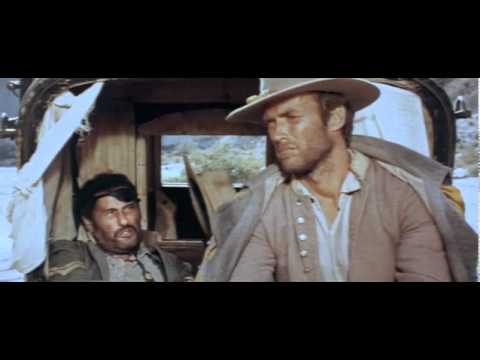
Against the chaotic backdrop of the American Civil War, three unscrupulous gunmen set out on the trail of Confederate gold buried in a cemetery. Blondie (the Good) and Tuco (the Ugly) have an unstable partnership based on swindling, while Angel Eyes (the Bad) is a ruthless hitman. The three possess different fragments of information regarding the gold’s location, forcing them to collaborate and betray each other in a continuous game of alliances, crossing battlefields and deserts until the final standoff.
Sergio Leone transforms the western into an operatic, picaresque, and stylistically exuberant work with The Good, the Bad and the Ugly. The adventure here is cynical, dominated by greed in a world where morality is absent and history (the Civil War) is seen not as an ideal but as a senseless slaughter and an obstacle to the pursuit of personal profit. Leone’s style is revolutionary: he dilates time with long silences and extreme close-ups on eyes and details, alternated with long desert shots, creating an almost unbearable tension.
The Great Escape (1963)

During World War II, the Nazis group the most problematic and escape-expert Allied prisoners in an “escape-proof” maximum-security camp, Stalag Luft III. Led by the British leader “Big X,” the prisoners organize a bold and massive plan: to dig three tunnels simultaneously (“Tom,” “Dick,” and “Harry”) to break out 250 men. The film follows the meticulous preparation, the prisoners’ technical ingenuity, the execution of the escape, and the subsequent manhunt through occupied Germany, mixing triumph and tragedy.
John Sturges‘ The Great Escape is the archetype of the choral adventure film and the “men on a mission” subgenre, a hymn to human ingenuity and the indomitable spirit of freedom. More than on battle scenes, the film focuses on the procedural nature of the enterprise: the fabrication of forged documents, the disposal of dirt from trousers, the construction of ventilation systems and underground rails. This approach gives the adventure a tangible concreteness and an artisanal realism.
Jason and the Argonauts (1963)
![Jason and the Argonauts (1963) ORIGINAL TRAILER [HD 1080p]](https://blog.indiecinema.co/wp-content/plugins/wp-youtube-lyte/lyteCache.php?origThumbUrl=https%3A%2F%2Fi.ytimg.com%2Fvi%2FWbWmMsyqf6k%2F0.jpg)
To regain the throne of Thessaly usurped by the evil Pelias, young Jason must undertake a dangerous voyage to the ends of the known world to retrieve the legendary Golden Fleece. Protected by the goddess Hera, Jason gathers Greece’s greatest heroes and sets sail on the ship Argo. The journey is studded with supernatural challenges: the bronze giant Talos, the tormenting Harpies, the Clashing Rocks, and the seven-headed Hydra, leading to the final showdown with an army of skeleton warriors born from dragon’s teeth.
If The Thief of Bagdad had introduced the fantastic, Don Chaffey‘s Jason and the Argonauts perfects it thanks to the absolute genius of Ray Harryhausen, the master of stop-motion. This film is the triumph of “Dynamation,” the technique that integrates frame-by-frame animated creatures with live-action actors in real settings. The narrative is episodic, faithful to the structure of classic myth and the hero’s journey, but it is the dreamlike, material, and almost tactile quality of the special effects that makes it a timeless masterpiece.
Lawrence of Arabia (1962)

T.E. Lawrence, an eccentric British officer stationed in Cairo during World War I, is sent into the desert to assess the prospects of Arab Prince Feisal in the revolt against the Turks. Lawrence, fascinated by the desert and Bedouin culture, disobeys orders and leads the Arabs on a daring crossing of the Nefud Desert to conquer Aqaba. Becoming a messianic and charismatic figure, Lawrence unites the Arab tribes in a ruthless guerrilla war, but his rise is marked by a progressive delirium of omnipotence and the traumatic reality of war and colonial politics.
With Lawrence of Arabia, David Lean signs the definitive work on the relationship between man and the landscape, a colossal film that is also an intimate psychological study. Shot in glorious 70mm, the film does not use the desert as a simple background, but as a psychological canvas on which to project the complex, ambiguous personality of Lawrence (a hypnotic Peter O’Toole in his debut as a lead). The adventure here is a mystical and destructive experience: Lawrence seeks a purity in the desert that washes away his British identity (“Nothing is written”), but ends up losing himself in his own myth and in violence.
Best Adventure Movies of the 1950s
The 1950s are the decade when adventure cinema launched its technological counter-attack. Threatened by the rise of television, Hollywood responded by widening the frame: this is the era of CinemaScope, VistaVision, and saturated color, designed to offer a panoramic and immersive spectacle impossible to replicate in the living room. The genre became gigantic, transporting the viewer from the depths of Africa to the edges of deep space, which with films like Forbidden Planet became the new frontier of exploration.
North by Northwest (1959)

Roger O. Thornhill, a successful but superficial Manhattan advertising executive, is mistaken for a non-existent spy named George Kaplan by a criminal organization. Kidnapped, nearly killed, and then framed for a murder at the United Nations, Roger is forced to flee across the United States to prove his innocence. Chased by both the police and spies, and helped by an enigmatic blonde, his daring escape culminates in a deadly confrontation on the sculpted faces of Mount Rushmore.
With North by Northwest, Alfred Hitchcock creates the perfect synthesis of the adventure thriller, a genre that here reaches unsurpassed peaks of formal elegance and irony. The film is a machine of pure movement, a succession of iconic set-pieces connected by a clockwork script by Ernest Lehman. Hitchcock plays with the theme of identity and the common man thrown into extraordinary circumstances, but he does so with a sophisticated lightness that masks a direction of geometric precision.
The Hidden Fortress (1958)
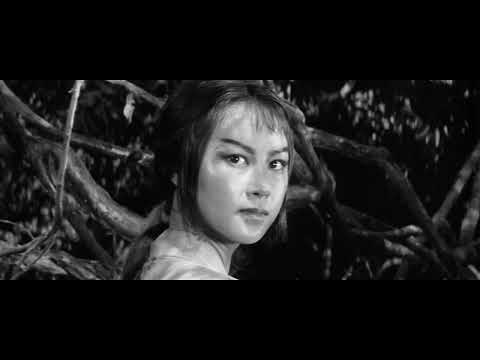
Two greedy and argumentative peasants, Tahei and Matakishi, try to return home through enemy territory after a war, hoping to make a fortune. They stumble upon an undercover general, the fearsome Rokurota Makabe, and a rebel princess, Yuki, who must secretly transport the gold of her destroyed clan to safe territory to rebuild her dynasty. Unaware of the true identity of their companions, the two peasants become involved in a dangerous escort mission, facing enemy soldiers and deadly traps.
Famous for being the main narrative inspiration for George Lucas’s Star Wars, Akira Kurosawa’s The Hidden Fortress is a triumph of widescreen adventure. Kurosawa flips genre conventions by narrating a heroic epic from the point of view of the lowest and least noble characters: two cowardly peasants who serve as a comic and realistic counterpoint to the stoic greatness of the general and the princess.
The Searchers (1956)
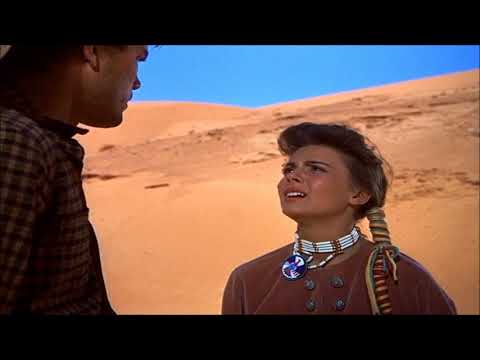
Ethan Edwards, a Civil War veteran with a dark past, returns home to Texas only to see his family massacred and his nieces kidnapped by Comanches. Ethan undertakes an obsessive search lasting five years to find the only surviving niece, Debbie. Accompanied by his adopted nephew Martin, Ethan is guided not only by family love but by a deep and violent racial hatred. Martin fears that Ethan wants to find Debbie not to save her, but to kill her, as she is now “tainted” by life with the natives.
John Ford‘s The Searchers represents the culmination and deconstruction of the classic western, as well as one of the absolute peaks of American cinema. Visually majestic thanks to the VistaVision format that captures Monument Valley in all its indifferent grandeur, the film is thematically one of Hollywood’s darkest and most complex. John Wayne offers his most unsettling and nuanced performance in the role of Ethan Edwards, a tragic hero consumed by racism and a violent neurosis.
Seven Samurai (1954)

A poor village of farmers in 16th-century Japan, tired of constant raids by bandits stealing their harvest, decides to hire samurai for protection. Having no money, they offer only rice. The elderly ronin Kambei accepts the challenge and recruits six other samurai, each with different skills and motivations. Together, they train the farmers and fortify the village, preparing for an epic final battle against forty bandits on horseback under torrential rain, in a fight for survival and dignity.
Akira Kurosawa’s Seven Samurai is not only one of the greatest action films ever made, but the sacred text that codified the modern “team-up” structure. Kurosawa revolutionizes the way choral action and adventure are filmed: the use of telephoto lenses to flatten depth and immerse the viewer in chaos, the frenetic editing that alternates brutal details with strategic long shots, and the masterful use of atmospheric elements create a visceral realism never seen before.
The Wages of Fear (1953)
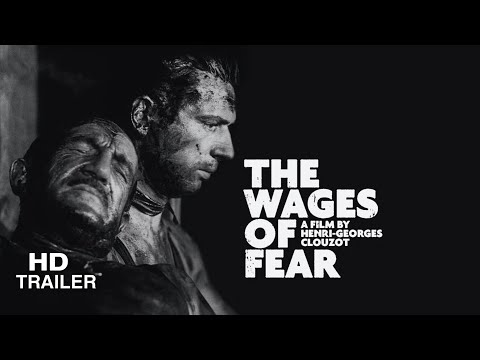
In a desolate village in South America, four desperate Europeans accept a suicide mission offered by an American oil company: to drive two trucks loaded with highly unstable nitroglycerin over a rough mountain path to extinguish an oil well fire. The slightest vibration or shock could make them explode. The journey becomes an ordeal of unbearable tension, where every meter gained is a gamble against death and where fear corrodes the solidarity among the men.
Henri-Georges Clouzot signs with The Wages of Fear a masterpiece of nihilistic suspense that redefines the concept of cinematic tension and existential adventure. The adventure here is stripped of any glory or noble end; it is dirty work, motivated solely by the need for money to escape an existential purgatory. Clouzot’s direction is surgical in constructing sequences of almost physical stress for the viewer, making every maneuver a moment of pure psychological cinema.
The African Queen (1951)

At the outbreak of World War I in German East Africa, coarse riverboat captain Charlie Allnut saves the strait-laced British missionary Rose Sayer after her village is destroyed. Forced to coexist on the decrepit vessel “The African Queen,” the two develop a crazy plan: to sail down the Ulanga River, overcoming deadly rapids and German garrisons, to sink an enemy warship in the lake below. During the dangerous journey, an unlikely love is born between them.
With The African Queen, John Huston creates the prototype of the romantic adventure “on the road,” blending exotic spectacle with an intimate and mature character study. The film is famous for being shot on real locations in Africa (Uganda and the Congo), a choice that gives the film a palpable materiality. The sweat, insects, and mud are real obstacles faced by Humphrey Bogart and Katharine Hepburn, lending a tangible discomfort to their performances.
Best Adventure Movies of the 1940s
The 1940s were a remarkable decade for adventure cinema, with a plethora of films that captured the imagination and excitement of audiences around the world. These classic movies not only offered thrilling escapades and daring exploits but also captivated viewers with gripping narratives and memorable performances. Filmmakers of the era creatively harnessed the technological and storytelling advancements of the time to craft spectacular tales of heroism and exploration that have stood the test of time.
Farrebique (1946)
![Farrebique (1946) - Georges Rouquier [Bande Annonce]](https://blog.indiecinema.co/wp-content/plugins/wp-youtube-lyte/lyteCache.php?origThumbUrl=https%3A%2F%2Fi.ytimg.com%2Fvi%2F2i0B0ZMm26E%2F0.jpg)
Georges Rouquier spent a year filming a single farming family in rural Aveyron, France, capturing the cycle of four seasons on their ancient stone farmstead with extraordinary intimacy, documenting a way of agricultural life on the very threshold of its disappearance into modernity.
A unique and deeply personal document, Farrebique occupies a singular space between documentary and fiction, observation and poetry. Rouquier’s time-lapse sequences of flowers opening and seasons turning give the film an almost cosmic perspective on rural existence. Its loving attention to the textures of ordinary farm life — births, deaths, harvests, and hearth — makes it one of world cinema’s most tender and irreplaceable works.
The Treasure of the Sierra Madre (1948)

Fred C. Dobbs and Bob Curtin, two penniless American drifters in Mexico, team up with the old prospector Howard to search for gold in the Sierra Madre mountains. After exhausting hardships, they find a rich vein, but the discovery of wealth triggers a spiral of paranoia and madness. Dobbs, in particular, progressively slides into insanity, consumed by the suspicion that his companions want to rob him. The journey turns into a psychological nightmare where the true threat is not bandits or nature, but human greed.
John Huston directs The Treasure of the Sierra Madre with a firm and cynical hand, an anti-adventure that deconstructs the myth of fortune and the frontier. Far from the sunny heroics of Errol Flynn, here the adventure is dirty, sweaty, and morally corrosive. Humphrey Bogart offers one of his bravest and most unpleasant performances, transforming his Fred C. Dobbs from a likable loser into a paranoid monster. The film strips adventure of all romanticism: nature is indifferent, and gold is a curse that reveals the intrinsic baseness of the human soul.
Louisiana Story (1948)

Robert Flaherty’s final film follows a young Cajun boy living a solitary, dreamlike existence in the Louisiana bayous, whose enchanted world is quietly transformed by the arrival of an oil drilling crew working amid the Spanish moss and dark, mysterious waters.
Funded by Standard Oil yet transformed by Flaherty’s poetic sensibility into something far more ambiguous and beautiful, Louisiana Story achieves a rare harmony between industrial modernity and primordial nature. Richard Leacock‘s camera work is extraordinarily expressive, capturing the bayou’s mysterious textures with painterly sensitivity. Virgil Thomson‘s Pulitzer Prize-winning score completes one of documentary cinema’s most unexpectedly lyrical masterworks.
Sullivan's Travels (1941)

A successful Hollywood comedy director, convinced his frivolous films lack social purpose, disguises himself as a hobo to experience genuine poverty firsthand. His picaresque journey across Depression-era America delivers unexpected lessons about suffering, art, and the profound human necessity of laughter.
Preston Sturges‘s most searching film is also his most formally daring, shifting tones from screwball comedy to stark social realism with audacious confidence. The film’s final epiphany — prisoners convulsed with laughter in a church screening — is one of Hollywood’s most genuinely moving and philosophically complex moments. Sullivan’s Travels remains a brilliant, restless argument for cinema’s capacity to both illuminate and redeem.
Best Adventure Movies of the 1930s
The 1930s mark the transition from silent film to sound, a revolution that transformed the adventure genre into a complete multisensory experience. While the real world faced the darkness of the Great Depression, Hollywood responded by building the ultimate “dream factory,” offering audiences exotic, mysterious, and distant worlds in which to take refuge for a few hours. This is the decade where the swashbuckler found its voice and color, moving from silent acrobatics to the verbal and physical fencing of Errol Flynn, enhanced by the advent of glorious Technicolor.
Stagecoach (1939)

A motley group of nine people, including a prostitute, an alcoholic doctor, a corrupt banker, a pregnant woman, and the outlaw Ringo Kid, undertakes a dangerous stagecoach journey through the Arizona territory. As they cross desert wastelands threatened by Geronimo’s Apache warriors, social tensions and internal prejudices within the group explode. The passengers are forced to collaborate to survive, revealing their true nature in the face of mortal danger.
John Ford’s Stagecoach elevated the western from B-movie entertainment to a respected art form, creating the paradigm of the choral adventure. The narrative structure is a social microcosm compressed into a tight space and launched into a hostile environment. The adventure assumes a precise sociological dimension: the journey through Monument Valley serves to strip away social masks, revealing that nobility of spirit often resides in the outcasts—like the Ringo Kid and Dallas—rather than in the “respectable” bourgeoisie.
The Adventures of Robin Hood (1938)

While King Richard the Lionheart is a prisoner in Austria, his treacherous brother, Prince John, oppresses the Saxons of England with unbearable taxes. Sir Robin of Locksley, a Saxon noble, rebels against the injustice and takes refuge in Sherwood Forest, becoming the outlaw Robin Hood. With his band of “Merry Men,” Robin robs the rich to feed the poor, courts the beautiful Lady Marian, and fights to restore the rightful king to the throne.
If there is a film that defines the Platonic concept of the Hollywood adventure, it is The Adventures of Robin Hood. Shot in blazing three-strip Technicolor, the film is the quintessence of the swashbuckler. Errol Flynn offers the definitive performance of the romantic hero: easygoing, athletic, and morally incorruptible but anarchic in spirit. He defined a model of heroic masculinity that combined physical grace with verbal wit, making this the gold standard for historical adventure.
Lost Horizon (1937)

British diplomat Robert Conway and a motley group of civilians flee a revolution in China, but their plane is hijacked and crashes in the snowy Himalayas. They are rescued and led to the secret valley of Shangri-La, an isolated utopian paradise where people age slowly and live in harmony. Conway is fascinated by the philosophy of the High Lama, but he must choose between staying in this idyllic refuge or returning to the war-torn world out of a sense of duty.
Frank Capra signs a work of metaphysical adventure of rare disquiet and visual beauty. Released on the eve of World War II, the film resonates as a plea for pacifism and the preservation of culture in the face of imminent barbarism. The adventure here is deeply intellectual and spiritual: the discovery of Shangri-La represents the universal desire for refuge from the storms of history. The monumental Art Deco set design creates a sense of spatial estrangement that reflects the “other” nature of the valley.
Man of Aran (1934)

Robert Flaherty spent three years on the storm-battered Aran Islands off the west coast of Ireland, documenting the brutal daily struggle of a family against the sea, the rock, and the ceaseless Atlantic wind in one of documentary cinema’s most awe-inspiring works.
Flaherty’s romanticism here reaches its purest expression, elevating the hardships of island subsistence life into near-mythological grandeur. The storm sequences remain among the most genuinely terrifying footage of nature’s power ever committed to film. While critics debated its reconstructed elements, the elemental force of Man of Aran — its marriage of landscape and human endurance — is beyond dispute.
King Kong (1933)
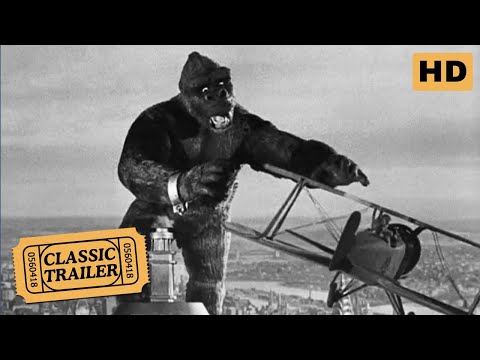
Director Carl Denham leads a film expedition to the mysterious Skull Island, bringing with him unemployed actress Ann Darrow. On the island, the natives kidnap Ann to offer her as a sacrifice to Kong, a gigantic prehistoric gorilla. Instead of killing her, the beast develops a protective obsession with her. Captured and brought to New York as an attraction, the giant breaks free, unleashing panic until the tragic epilogue on the Empire State Building.
The cultural impact of King Kong transcends the monster spectacle. Beyond Willis O’Brien’s revolutionary stop-motion technique, the film is an ambivalent exploration of the conflict between primordial civilization and industrial modernity. Kong is a tragic king torn from his natural realm and destroyed by capitalist greed and war technology. It establishes the “creature feature” model while maintaining an emotional depth that makes the monster’s death a moment of genuine tragedy rather than simple triumph.
Tabu: A Story of the South Seas (1931)

A young pearl diver and a beautiful woman declared sacred by tribal law flee their Polynesian island community to pursue a forbidden love, only to find that fate and tradition relentlessly pursue them across the luminous waters of the South Pacific.
F.W. Murnau‘s final film, completed in uneasy collaboration with Flaherty, is a visually ravishing farewell to silent cinema. Shot entirely on location with non-professional Polynesian actors, it achieves a lyrical purity of image that few sound films would dare attempt. The film’s tragic romanticism and its haunting final sequence on dark waters confirm Murnau’s place among cinema’s supreme visual poets.
Best Adventure Movies of the 1920s
The 1920s represent the age of innocence and lost grandeur of adventure cinema. In this decade, free from the constraints of recorded dialogue, the genre codified its universal language based on pure kinetic movement and visual wonder. It is the era when scenic architecture defied imagination — from the expressionist megalopolises of Metropolis to the dream spires of Bagdad — and when special effects were massive engineering feats, not pixels.
Chang: A Drama of the Wilderness (1927)

Filmed entirely on location in the jungles of Siam, this remarkable documentary-drama follows a Lao farmer and his family battling wild animals, including tigers and elephants, to protect their small homestead carved from the relentless, encroaching jungle.
Merian C. Cooper and Ernest Schoedsack crafted an extraordinary adventure document that blurs the line between reality and staged drama with remarkable grace. The authentic jungle footage is breathtaking, especially the legendary elephant stampede sequence. Chang captures the genuine terror and beauty of wilderness life with an immediacy and physical courage that few films before or since have matched.
The General (1926)

Johnnie Gray, a Southern railway engineer during the American Civil War, is rejected by the army because he is deemed more useful on the home front, thus being labeled a coward by his beloved Annabelle. When Union spies steal his beloved locomotive, “The General,” with Annabelle on board, Johnnie launches into a solitary and desperate pursuit across enemy lines. Using cunning and courage, he must recover the train, save the girl, and warn the Confederates of an impending surprise attack.
Often relegated solely to the comedy category, Buster Keaton and Clyde Bruckman‘s The General is, upon closer analysis, one of the most geometrically perfect adventure and action films ever made. The narrative structure is a masterpiece of linearity and symmetry: a chase there and a chase back, orchestrated with a rhythmic precision that borders on mathematical perfection. Keaton, with his impassive mask (“The Great Stone Face”), is not a traditional hero but a common man forced by circumstances to perform acts of involuntary heroism, interacting with the massive mechanics of steam locomotives in ways that are simultaneously hilarious and dangerously real. There is no cinematic trickery or stunt double; Keaton’s physicality is authentic, as are the risks he takes jumping between moving train cars.
The Thief of Bagdad (1924)

Ahmed is a cunning and athletic thief who roams the streets of Bagdad, living by his wits and defying authority with brazenness. When he falls in love with the Caliph’s daughter, he must compete with three royal princes for her hand. To prove his worth and win the princess, Ahmed undertakes a fantastic journey through mythical lands, facing monsters, magic, and impossible trials, transforming from a cynical rogue into a noble hero worthy of royal love.
In an era when cinema was still defining its epic language, Raoul Walsh‘s The Thief of Bagdad stands as an unsurpassed monument to unbridled fantasy and performative athleticism. Douglas Fairbanks, not only the protagonist but the true creative and producing soul of the project, embodies a heroism that is pure kinetic joy; his Ahmed does not walk, but dances through the cyclopean sets designed by William Cameron Menzies. These sets, which blend Art Deco with a romantic and dreamy Orientalism, are not simple backgrounds, but psychological spaces that the actor’s body must conquer and dominate. A critical analysis of this work cannot ignore the revolutionary use of practical special effects: flying carpets, giant monsters, and suspended cities are not simple tricks, but extensions of the protagonist’s will to power and the magic intrinsic to the cinematic medium.
Survival Movies: Man vs. Nature
It is the oldest narrative conflict in the world. Survival cinema strips human beings of every social and technological protection, returning them to their primal state. Here, adventure is not a choice, but a brutal necessity: whether it is a desert, a stormy ocean, or an unclimbed peak, the antagonist is not a “villain,” but the ruthless indifference of nature itself. These are physical, exhausting, and powerful films that celebrate the resilience of the human spirit and the will to stay alive against all odds.
👉 GO TO THE LIST: Survival Movies
Shipwreck Movies: Isolation and Despair
The desert island is not a tropical paradise; it is an open-air prison. This subgenre explores the psychology of extreme isolation. When civilization vanishes, what remains of the human? From modern retellings of Robinson Crusoe to darker psychological dramas, these films recount the struggle against loneliness, hunger, and madness, where the true adventure is managing not to lose one’s mind while waiting for a ship on the horizon.
👉 GO TO THE LIST: Shipwreck & Castaway Movies
Movies about the Sea & Oceans
The sea is the last unexplored frontier of our planet, a place of sublime beauty and profound terror. Maritime cinema takes us aboard ships at the mercy of storms, into the depths of the abyss, or on long, silent crossings. It is a cinema of infinite horizons, where water becomes a metaphor for the unconscious and destiny, capable of giving life or taking it away in an instant.
👉 GO TO THE LIST: Sea Movies
Pirate Movies
Forget family blockbusters for a moment. Historically, the figure of the pirate represents anarchy, rebellion against established authority, and absolute freedom paid for at a high price. This subgenre mixes frenetic action with the allure of the outlaw life, telling stories of codes of honor, betrayal, and the eternal hunt for a treasure that is often just a mirage of freedom.
👉 GO TO THE LIST: Pirate Movies
Surf Movies
More than a sport, surfing is a philosophy of life, almost a secular religion. Films on this subject capture the mystical relationship between man and the wave. It is not just about adrenaline, but about the search for the perfect moment, harmony with the ocean’s power, and a subculture that has made freedom and travel its banner. Visually hypnotic cinema, made of anticipation and ecstasy.
👉 GO TO THE LIST: Surf Movies
Travel & Road Movies
Adventure does not always require monsters or catastrophes; sometimes a beat-up car and a straight road are enough. The Road Movie is the adventure of the soul. In these films, physical movement from point A to point B always corresponds to an inner transformation. It is the favorite genre of independent cinema: stories of escape, self-discovery, and life-changing encounters along the way.
👉 GO TO THE LIST: Road Movies & Travel Films
Greed (1924)

Erich von Stroheim’s monumental adaptation of Frank Norris‘s novel McTeague follows a dentist whose marriage and friendships disintegrate under the corrosive weight of obsessive greed, culminating in a harrowing chase across the scorching Death Valley desert.
A mutilated masterpiece — originally over nine hours long — Greed stands as one of cinema’s most uncompromising artistic visions. Von Stroheim’s unflinching naturalism and his use of real locations, including the brutal Death Valley finale, give the film a raw, almost documentary intensity. Its savage critique of materialism remains devastatingly relevant, making every surviving frame feel essential.
Nanook of the North (1922)

A vision curated by a filmmaker, not an algorithm
In this video I explain our vision
Robert Flaherty’s groundbreaking documentary follows Nanook, an Inuit man, and his family as they struggle to survive in the harsh, frozen landscapes of northern Quebec. A poetic portrait of human endurance against the relentless forces of an unforgiving Arctic wilderness.
Often cited as the first feature-length documentary, Nanook of the North transcends its ethnographic origins to become a profound meditation on human resilience. Flaherty’s intimate camera work forges an emotional bond between viewer and subject rarely matched in cinema history. Despite its constructed elements, the film captures an authenticity of spirit that remains deeply moving and cinematically revolutionary.

