
The Drawings Nobody Was Supposed to See
You find them folded inside a pillowcase, or scratched into the plaster behind a wardrobe that nobody had moved in thirty years. Dozens of sheets covered in a handwriting that is not quite handwriting, figures that are not quite figures, systems of marks so dense and internally consistent that they suggest a language you almost understand, a grammar operating just below the threshold of legibility. Nobody asked for these. Nobody was waiting for them. The person who made them never showed them to anyone, and in many cases actively concealed them, sewing them into mattress linings, burying them in boxes beneath floorboards, returning to them in the hours between midnight and four in the morning when the ward was quiet or the family was asleep. There is no audience here, no gallery, no transaction, no ambition in any sense the art world would recognize. There is only the making, which apparently could not be stopped.

This is the thing that troubles you when you first encounter it, and the trouble does not go away with familiarity. It deepens. Because everything we have been taught about art, whether we absorbed that teaching consciously or not, rests on a set of assumptions so old they feel biological: that art is communication, that it moves from a maker toward a receiver, that it participates in some shared symbolic order, that it earns its name by entering a social space where it can be judged, appreciated, historicized, bought or at least acknowledged. The drawings under the mattress violate every single one of these assumptions simultaneously, and they do it without argument, without manifesto, without even apparent awareness that there is anything to violate. They simply exist in their impossible completeness, indifferent to your categories.
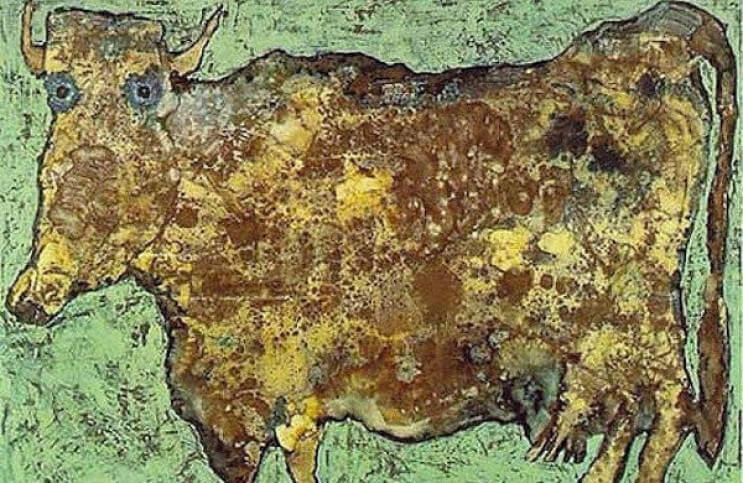
Jean Dubuffet, who spent years collecting exactly these kinds of objects before he found a name for what he was seeing, understood that the disturbance they caused was not aesthetic but ontological. When he coined the term Art Brut in 1945, he was not describing a style or a movement. He was pointing at a category of human production that exposed the entire institutional apparatus of Western art as a convention, arbitrary and historically contingent, dressed up as nature. The art he had been gathering, from psychiatric hospitals, from prisons, from the margins of societies across several continents, did not aspire to the condition of Art with its capital A. It did not know that condition existed. And that ignorance, that magnificent structural innocence, was precisely what gave it its explosive charge.
The French philosopher and sociologist Pierre Bourdieu spent much of his career demonstrating that what we call aesthetic taste is inseparable from social position, that the capacity to recognize and produce legitimized art is itself a form of capital, unequally distributed and systematically reproduced through institutions like schools, museums and families. His 1979 work Distinction remains the most rigorous demolition of the myth of pure aesthetic judgment ever assembled. But Bourdieu’s analysis, for all its precision, could not fully account for the person in the cell or the ward who makes intricate, compulsive, cosmologically complete visual systems with no knowledge of and no stake in the field Bourdieu was mapping. That person falls outside the economy entirely. Which means either Bourdieu’s framework has a limit, or the drawings under the mattress are not art, or the definition of art has to break open to accommodate something it was never designed to hold.
The third option is the one that has proven most historically consequential. And it has not been comfortable. When a category breaks open, everything that was kept outside comes flooding in, and nothing inside stays where it was. What Dubuffet found in those hidden caches of paper and plaster and cloth was not a charming exception to the rule of art. It was a refutation.
Don Barry: A Quixotic Exploration
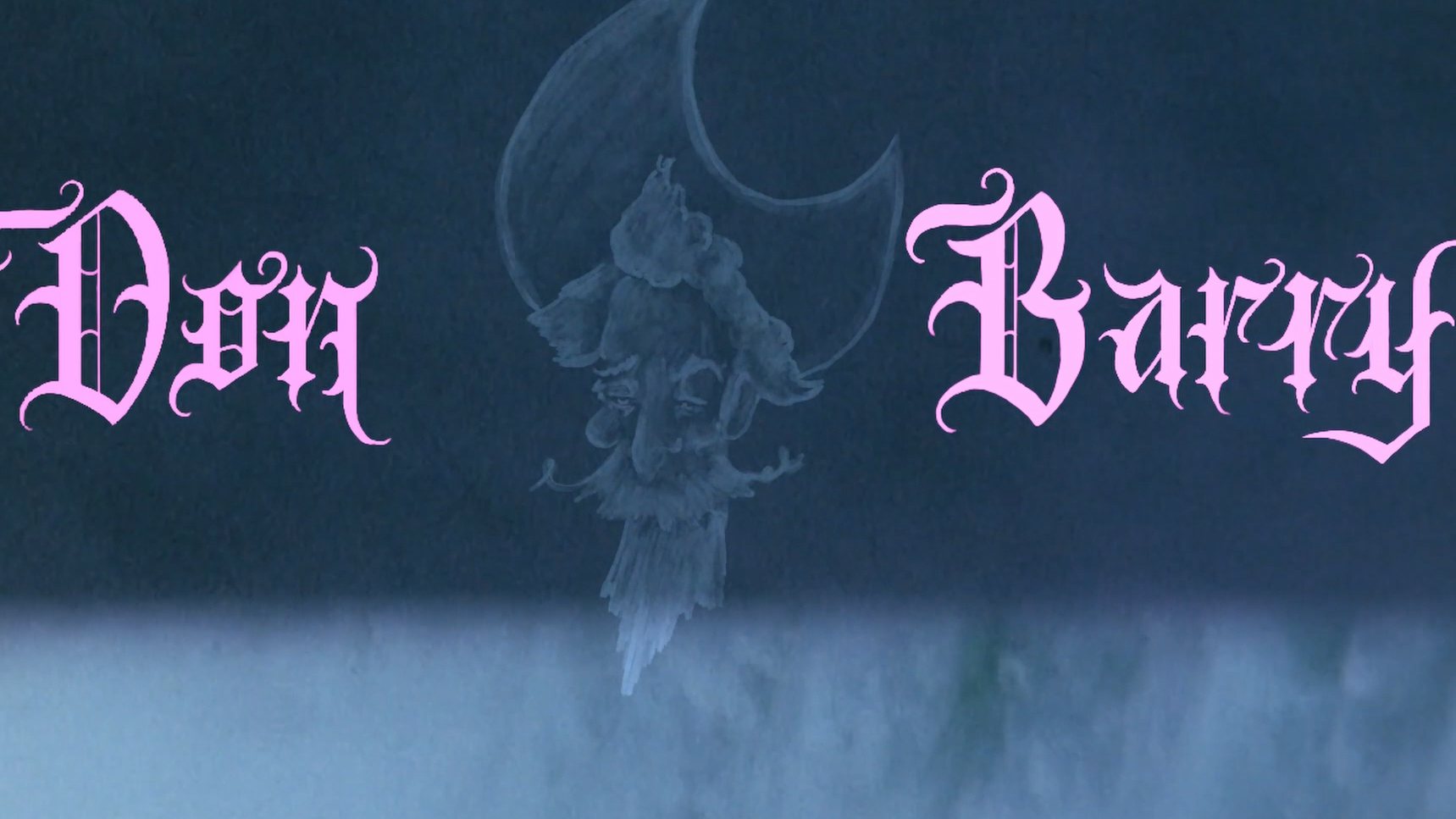
Docufiction, Experimental, by Paul Smart, Mexico, 2026.
Don Barry: A Quixotic Exploration is a debut feature that places the biography of an eighty-year-old experimental filmmaker and artist, Barry Gerson, within the metanarrative of Miguel de Cervantes’ Don Quixote. Don Barry was filmed in the city of Guanajuato during the 51st edition of the Cervantino Festival, as well as during the vibrant Day of the Dead celebrations held in the city’s UNESCO-listed tunnels. The film honors the director’s long friendship with artist Barry Gerson, drawing inspiration from Cervantes’ Don Quixote. Paul Smart’s directorial choices create something new that celebrates life and goes beyond conventional storytelling. A search for magic in our real lives. A moving film about the meaning of life, art, and death. Not to be missed.
Paul Smart is a proud outsider filmmaker with a long history of film screenings. In the 1980s, he emerged in New York’s vibrant youth art scene, working in theater production and later filmmaking, before retreating to rural upstate New York, in the Catskill Mountains, where he made a living writing and screening independent films in old parish halls for rural audiences, many of whom had never seen a film.
LANGUAGE: English
SUBTITLES: Spanish, French, German, Portuguese
Jean Dubuffet and the Declared War on Culture
There is a particular kind of fury that does not shout. It organizes. It catalogs. It builds a collection. Jean Dubuffet came back from the war years with exactly that kind of fury — quiet, methodical, and absolutely uncompromising — and in 1945 he gave a name to something that had always existed but had never been allowed to exist officially: Art Brut, raw art, art scraped from the walls of asylums and prisons and marginal lives, art made by people who had never heard of perspective and did not care.
The naming was itself an act of violence against the institutions that control naming. Dubuffet understood this perfectly. He was not a naive enthusiast stumbling onto outsider creativity; he was a trained, commercially successful painter who had passed through the academies and galleries and knew exactly what he was refusing. His 1949 manifesto, “Art Brut Preferred to the Cultural Arts,” did not argue a position so much as indict a civilization. He called official culture asphyxiating — and he meant it physiologically, as something that cuts off breath, that suffocates the authentic impulse under layers of tradition, technique, and the desperate need for approval from people who already decided what beauty is. The European cultural authority he was targeting was not some abstract concept. It was rubble in 1945, materially and morally, and Dubuffet was one of the few who refused to pretend the rubble could simply be rebuilt into the same structure.
Postwar Europe had the specific problem of institutions that had participated in atrocity while continuing to present themselves as custodians of civilization. The great museums had hidden or sold works. The academies had not, in any meaningful collective sense, resigned. The cultural apparatus that was supposed to represent the highest human achievement had proven entirely compatible with barbarism, and sometimes useful to it. Into this moral wreckage, Dubuffet introduced the suggestion that perhaps the people who had been locked away, dismissed, institutionalized — the ones the culture had excluded precisely because it found them threatening or unintelligible — were making the only honest art there was. This was not a marginal aesthetic preference. It was a philosophical provocation aimed at the foundations.
Hannah Arendt, writing in those same years about the collapse of traditional authority, argued that the crisis was not just political but ontological — that the very frameworks through which Western civilization had organized meaning had been exposed as contingent, reversible, potentially murderous. Dubuffet arrived at something similar from the direction of paint and wood and obsessive line-making. His collection grew to over five thousand works, gathered across decades, assembled from correspondence with psychiatrists, from visits to institutions, from a web of contacts that extended across Europe and eventually further. He was not curating taste. He was building evidence.
The paradox hardened over time, and no one saw it more clearly than Michel Thévoz, the Swiss art historian who became the first director of the Collection de l’Art Brut when it opened in Lausanne in 1976. Dubuffet had donated his entire collection to the city of Lausanne, creating a permanent institution dedicated to art that was, by definition, outside institutions. Thévoz spent his subsequent career thinking through what this meant, writing in 1975 that the very act of institutional preservation transforms the object — that once you put a frame around the unframed, hang the unhung, catalog the uncatalogued, you have already altered the essential condition of what you are trying to honor. The Collection exists today with more than seventy thousand works, in a converted castle in one of the most orderly cities in Europe, and the tension Thévoz identified has never resolved. It has only deepened, which is perhaps the most honest thing an institution can do with a contradiction — not solve it, but make it permanent and visible enough that no one can look away.

The Asylum and the Canvas
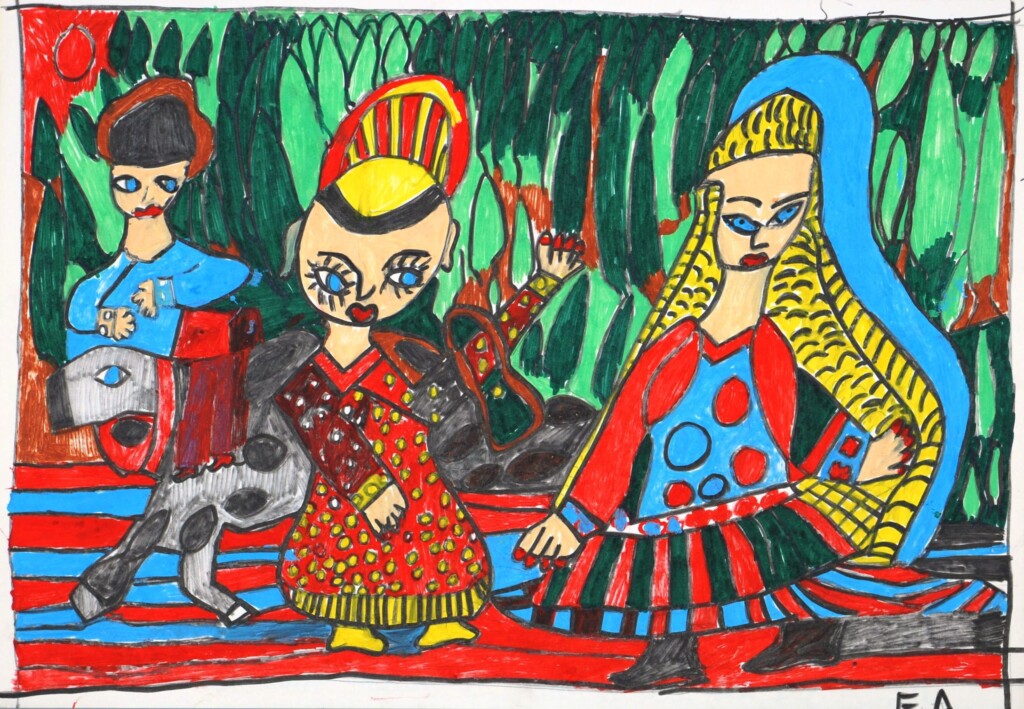
There is a particular kind of silence that fills a locked ward at night, and someone who has spent time near one knows it is not the silence of absence but of pressure — as though the building itself is holding something in. In 1919, a young psychiatrist in Heidelberg began asking his patients to make things. Not as therapy. Not as evidence of illness. Simply to see what would emerge when a human hand was given material and left alone with itself.
Hans Prinzhorn spent three years gathering what that experiment produced, traveling across Germany, Austria, Switzerland, Italy, the Netherlands, and beyond, collecting drawings, paintings, sculptures, and textile works from psychiatric institutions. By 1922, when he published Bildnerei der Geisteskranken — Artistry of the Mentally Ill — he had assembled more than five thousand patients’ contributions, representing nearly ten thousand individual works. The book landed like something thrown through a window. Klee read it. Ernst read it. The Surrealists passed it between themselves like a contraband document. What unsettled them was not the strangeness of the images but their completeness — the sense that each work had arrived fully formed from somewhere unreachable by education or ambition.
Prinzhorn was not naïve about what he was looking at. He was careful, technically rigorous, and precisely because of that he arrived somewhere uncomfortable: the works he was cataloguing did not conform to the psychiatric logic that had produced their authors’ confinement. They were not symptoms. They were not illustrations of delusion. They were, in his own careful language, expressions of a configurative drive — Gestaltungsdrang — a need to give form that he argued was as fundamental to the human being as hunger or sexuality. The illness and the creativity ran parallel, not as cause and effect. This distinction was not academic. It meant that the institution holding these people had no particular claim on the meaning of what they made.
Michel Foucault, writing in 1961 in Madness and Civilization, would spend four hundred pages excavating the same nerve. His argument was not that psychiatry was wrong in its diagnoses but that the very act of diagnosis is a social performance, a way of drawing a line that serves those on the inside of it. The Great Confinement of the seventeenth century — when France began systematically imprisoning not only the mad but the unemployed, the vagrant, the immoral, the inconvenient — established an architecture of exclusion that medicine later inherited and legitimized. What had been a moral judgment became a clinical one, which made it considerably harder to argue with. Foucault’s insight was structural: the frame does not merely contain the picture, it decides what a picture is.
You can feel this when you stand before one of those Prinzhorn works in a museum — and several are now displayed in exactly those terms, in the collection that still bears his name at Heidelberg University. The moment the white wall surrounds it and the light falls at the correct angle, something shifts. A drawing made in secret on found paper by a man who was never asked his opinion of his own confinement becomes, in that frame, a masterpiece. The discomfort this produces is not sentimental. It is structural. The work did not change. The man did not change. What changed was the institutional permission to take it seriously, and that permission arrived decades after his death, granted by people who would have been just as complicit in his confinement as everyone else who walked past the locked door.
Prinzhorn himself was aware of this reversal, or at least its shadow. He noted that several of his most striking contributors had created entire parallel worlds — cosmologies, scripts, visual languages — with an internal logic more coherent than the one that had decided they needed to be removed from ordinary life. The question he could not quite bring himself to answer was the one that stays with you: removed by whom, and for whose comfort.
The Lost Poet
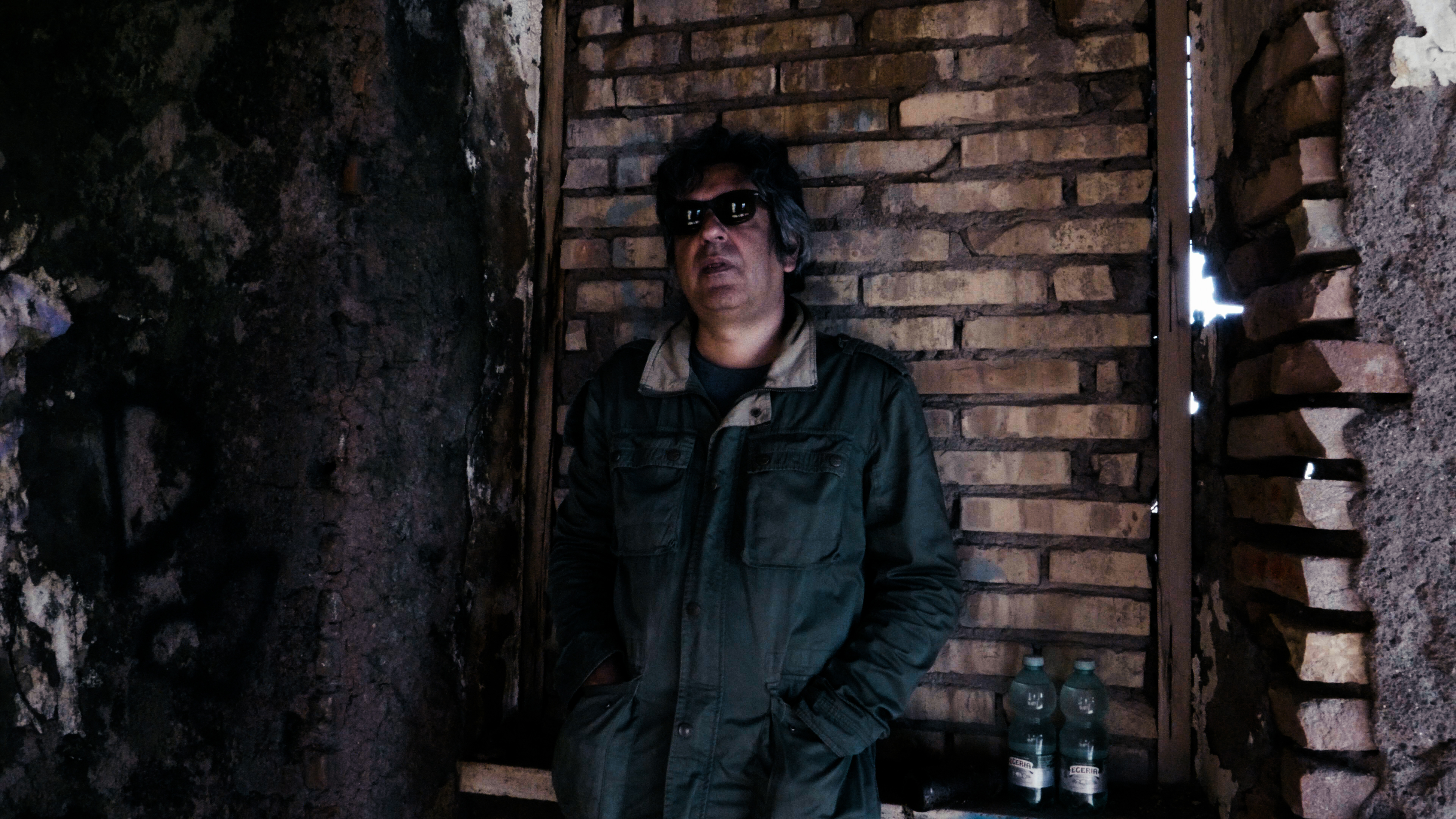
Drama, by Fabio Del Greco, Italy, 2024.
Dante Mezzadri wants to see an old friend, nicknamed the Iguana, whom he has lost sight of for many years, and who has managed to turn their shared youthful passion for poetry into a job, becoming a famous writer and poet. The man escapes from his bourgeois life and his wife to live homeless on the Roman coast, printing and trying to sell his poetry collections. At night he sleeps in a park of old carnival floats, inside a papier-mâché tank, and waits for the opportunity to meet his old friend, who however never shows up for appointments in the places they frequented when they were young, now in ruins. Dante's poetry books do not interest anyone and to support himself he is forced to "change product": he starts selling the infamous "cannibal pill" on behalf of young drug dealers, a new drug that sells like hot cakes and causes sensory and consumerist ecstasy. However, he realizes that this powerful drug is very dangerous for those who take it, he comes into conflict with his ethical conscience and throws all the pills into the sea. However, the dealers want to collect their money.
Shot over a period of 2 years, the film is a reflection on the cultural and artistic rubble of the society in which the protagonist lives, in an increasingly mechanized, consumerist and arid world. Dante Mezzadri is yet another human being who has renounced his inspiration and his creativity, but unlike many he is not willing to give his life to a system that distances him from his true identity. The physical world around him, however, seems constructed in such a way that it seems impossible to escape from this "invisible cage". The enthusiasm of the people he meets is ignited only by sensory gratification, by unreal visions of personal affirmation and success, by "metaverses" that offer an escape into an illusory and destructive reality. The poet's house on the coast, where he met with his friends as a young man, is just a pile of abandoned rubble. What happened to all those who wanted to become poets and ended up becoming something else? Are there internal forces with which that house can be "rebuilt"?
LANGUAGE: Italian
SUBTITLES: English, Spanish, French, German, Portuguese
What Culture Cannot Tolerate
There is a moment, walking through any major museum, when you stop pretending. You have been moving dutifully from room to room, reading the small placards, nodding at the correct intervals, and then something catches you — not a painting you were told to admire, but the way the light falls on a corridor wall, or a stranger’s coat, or nothing at all — and you realize the entire apparatus around you exists not to help you see but to tell you what seeing means. The museum is not a neutral container. It is a machine for producing authority.
Pierre Bourdieu understood this with surgical clarity. In The Rules of Art, published in 1992, he mapped what he called the artistic field — an autonomous social space governed not by aesthetic truth but by the accumulation and exchange of symbolic capital. To exist within the field is to participate in a system of consecration: critics consecrate artists, institutions consecrate critics, collectors consecrate institutions, and the whole structure rotates in elegant self-justification, producing the fiction that what rises to the top does so because it deserves to. Bourdieu called this misrecognition — the collective agreement to forget that the game is a game. The rules are invisible precisely because everyone agrees to pretend there are no rules.
Art Brut does not break the rules. It does something more unsettling: it reveals that the rules were always already arbitrary. And that is what culture cannot tolerate.
A man in southern France, a rural postal worker with no formal training, begins constructing a palace in his garden. He works alone, at night, after his daily route, carrying stones in his wheelbarrow, then in his pockets, then in a basket worn around his neck. He works for thirty-three years. The structure that emerges is neither Gothic nor Eastern nor anything classifiable — it swallows all of those languages and invents its own, encrusted with shells and fossils and cement animals and towers that quote nothing and everything simultaneously. He builds tombs for himself inside it. He inscribes the walls with phrases that are simultaneously grandiose and tender. He has no dealer, no manifesto, no exhibition history. The palace exists because he could not stop building it.
The art world, when it finally arrives to look, does not know what to do with this. It cannot consecrate what preceded consecration. The structure refuses the placard. It was not made for the museum’s light.
A woman, elderly, living alone in a house that has long since stopped being a house in any functional sense, writes on every surface available to her. Walls, ceilings, the insides of drawers, the backs of cabinet doors, the margins of already-margined paper. The writing is dense, sometimes mirrored, sometimes layered over itself until legibility collapses into texture. She is not communicating in any direction the field recognizes. She is not addressing a public, a critic, a posterity. The writing is not performance. It is — and this is what makes it unbearable to the trained eye — entirely sufficient to itself.
Bourdieu noted that the artistic field depends on the belief that art transcends interest, that the artist acts from pure vocation. But this very belief is itself a social production, cultivated in academies, reproduced in criticism, enforced through the slow exclusion of everything that does not perform disinterestedness in the right way. Art Brut does not perform disinterestedness. It simply has no interest in the performance. And that indifference, that magnificent structural blindness to the game, is experienced by the field not as naivety but as aggression.
What culture cannot tolerate is not the primitive or the mad or the untrained. It can absorb all of those, has absorbed them, has turned them into movements and retrospectives and auction records. What it cannot absorb is the work that does not want to be absorbed — that was never, even in its first gesture, reaching toward legitimacy.
The Outsider Is Always Inside Something
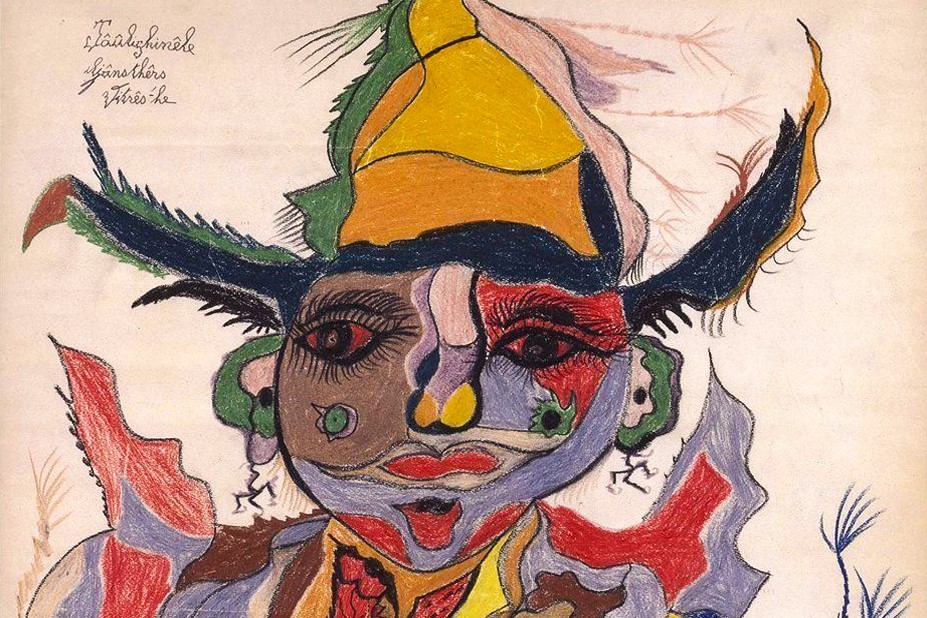
Something shifts the moment a stranger walks into that room. The walls are covered floor to ceiling — newspaper clippings, hand-drawn maps of imaginary territories, sequences of numbers that only make sense from inside the logic that generated them. The stranger looks, nods slowly, and says: he made all this himself. The word himself carries a weight that has nothing to do with admiration. It means: without training, without intention in the recognized sense, without belonging to the conversation the rest of us are having. It means: from outside. And in that single syllable, an entire life’s work is reclassified from statement to symptom.
When Roger Cardinal coined the term Outsider Art in 1972, he was trying to bring Jean Dubuffet‘s concept of Art Brut into the Anglophone world, to give English-speaking audiences access to what Dubuffet had spent decades assembling and theorizing. The translation was practical, even necessary. But something warped in transit. Art Brut, for Dubuffet, was a combative idea — it was raw art against polished art, compulsion against convention, the uncontaminated against the institutionally groomed. Outsider Art, by contrast, is a relational term. It defines someone not by what they make but by where they stand. And where they stand is always determined by where you stand.
Erving Goffman, writing in Stigma in 1963, made the essential observation that social labels do not describe people — they manage them. A stigma is not a property of an individual but a transaction between an individual and a social norm. The label outsider operates precisely this way. It appears descriptive, even respectful, even celebratory, but its function is organizational. It draws a line. It says: this person’s production comes from a different place than ours, which means it can be appreciated without being taken seriously as competition, without threatening the existing hierarchies of taste and training and institutional validation. The outsider label contains what it appears to celebrate.
The romantic projection is the most dangerous version of this containment. The cultural insider, exhausted by self-consciousness, by the weight of art history and critical theory and market anxiety, looks at the person in that room surrounded by their obsessive, total, uncurated world, and sees something they believe they have lost: authenticity, directness, freedom from irony. The outsider becomes a mirror for the insider’s nostalgia. But this nostalgia is entirely the insider’s invention. The person in that room was not trying to be free. They were trying to be coherent. The work on the walls was not a rejection of convention — it was the construction of a system, no less rigorous than any academic tradition, simply running on different axioms. To read it as pure and instinctive and unmediated is to refuse to read it at all.
What Goffman understood, and what the Outsider Art industry persistently forgets, is that no one is outside everything. The man in that room had a history, a language, a set of fears and desires and references absorbed from a world that was fully social, fully historical. His images were in conversation with things he had seen, heard, been told, been denied. The walls were not the product of isolation from culture but of a particular, pressured, unrecognized relationship with it. Calling him an outsider does not liberate him from that relationship. It simply reassigns him within a different hierarchy — one in which he becomes valuable precisely because he is presumed to be unaware of his own value.
The gallery that hangs his work, the collector who acquires it, the critic who writes about it with careful sensitivity — they do not step outside the system to meet him. They extend the system’s reach to include him, on terms he was never consulted about. The room that was his entire world becomes, in translation, someone else’s discovery.
A vision curated by a filmmaker, not an algorithm
In this video I explain our vision
Adolf Wölfli, Henry Darger, and the Cosmologies of the Invisible
You find, after someone dies, a room. Not a room left in disorder, not the ordinary residue of a life — but a room that turns out to have been, all along, a universe. Boxes stacked to the ceiling. Scrolls of paper rolled and tied with string. Thousands of pages covered in a script so dense it seems to breathe. You had lived next to this person for years, passed them in the hallway, exchanged the small civilities of neighbors, and understood nothing. The room was there the whole time, generating itself in silence, indifferent to your existence.
This is not a metaphor. This is what happened, and it forces a question that most assumptions about art cannot survive: what does it mean to make something that was never, at any point, intended to be seen?
Adolf Wölfli arrived at the Waldau psychiatric clinic outside Bern in 1895, having committed acts of violence that left him no future outside those walls. He was thirty-one years old. What followed, over the next three decades until his death in 1930, was the production of more than twenty-five thousand pages of work — illustrated manuscripts, musical compositions, collages assembled from scraps of newspaper, an imagined autobiography that began with his childhood, exceeded it almost immediately, and expanded outward through invented geographies, invented cosmologies, invented languages, until it encompassed something resembling a parallel universe running alongside the one that had discarded him. He called the central figure of this epic Saint Adolf II. The scale was not incidental. It was the point.
Hannah Arendt, writing in 1958 in The Human Condition, drew a distinction that most people absorb without registering how radical it is. She separated labor — the biological cycle of production and consumption that leaves nothing behind — from work, which she defined as fabrication, the making of durable objects that outlast the maker and constitute a shared human world. Beyond both, she placed action: the capacity to begin something new, to insert oneself into a public realm through deed or speech. The entire architecture of her thinking assumed that work acquires meaning through its entry into a common world, that the object requires an audience to become real in the fullest sense.
Wölfli and Henry Darger collapse this framework without arguing against it. They simply proceed as though it does not apply.
Darger lived in a rented room in Chicago for most of his adult life, working as a janitor in a hospital, attending mass sometimes twice a day, and constructing, over decades, a manuscript of approximately fifteen thousand pages accompanied by more than three hundred illustrations — watercolor and collage works of enormous scale, some of them nearly ten feet wide when unfolded. The narrative, which he titled In the Realms of the Unreal, concerned a war waged by armies of children against adult oppressors, presided over by seven sisters named the Vivian Girls. No one knew. His landlord discovered the work only after Darger was taken to a care home in 1972, months before his death. Darger’s response, when told that people found his work remarkable, was apparently one of mild, almost detached acknowledgment, as though the information was interesting but not particularly relevant to anything he had been doing.
What Arendt’s distinction cannot quite hold is the possibility that the durable world an object constitutes might be entirely interior — that the act of making might complete itself in the making, with no remainder requiring an audience to activate it. Not because the maker is indifferent to beauty or meaning, but because the cosmos being built is already fully inhabited. Wölfli did not need a reader. The twenty-five thousand pages were not a message sent outward. They were a place he lived.
When the Museum Arrives, What Survives?
There is a photograph that circulates in certain curatorial circles — not the kind of image anyone poses for, but the kind that gets taken by accident and then kept because it catches something true. In it, a man sits in a folding chair outside the institution that now houses his life’s work. He is not looking at the building. He is looking at the ground. Inside, behind climate-controlled glass, his drawings — made in secret over forty years, in the margins of receipts and on the backs of envelopes, in pencil so fine it required a magnifying glass to decipher — are being admired by strangers who use words like visionary and raw and authentic. The word authentic appears on the wall panel in a font chosen by a graphic designer who billed the institution at an hourly rate.
This is not a story about ingratitude. It is a story about what happens to a thing when the world it was never made for decides it belongs there anyway.
Walter Benjamin understood this problem in a way that still cuts cleanly. In 1935, he wrote that the work of art possesses an aura — a quality of presence, uniqueness, and situatedness in time and place that is its essential condition. The aura is not a mystical concept; it is a material one. It arises from the specific circumstances of a work’s making and its embeddedness in a particular human context. What Benjamin feared most was not destruction but displacement: the moment the work is extracted from its original conditions and reproduced, circulated, celebrated, it loses the very thing that made it irreducible. It becomes a copy of itself, even when it remains physically whole.
For work made in radical isolation — made without a public, without an audience, sometimes without any conscious intention that it would ever be seen — the arrival of institutional legitimacy is not a neutral event. It is a kind of violence dressed in admiration. The Collection de l’Art Brut in Lausanne, which houses thousands of works across multiple buildings and draws researchers and tourists from across the world, was founded on Dubuffet’s passionate conviction that these works needed protection from the cultural machine. The supreme irony is that the collection itself has become a node in that machine, a destination on the circuit of cultural tourism, a reference point for auction houses where individual works now sell for figures that would have bewildered and possibly horrified their makers.
A woman covered every surface of her bedroom walls with interlocking figures she had been receiving in visions since childhood. She called no one. She showed no one. She worked in the hours before dawn because daylight made her feel watched. When she died, the walls were photographed, the room was documented, and eventually panels were carefully removed and transported to a white cube space where they were lit with the precise intensity recommended by conservation specialists. Visitors stood before them and felt moved. They described the experience as spiritual. What they were feeling, in Benjamin’s terms, was the residue of an aura that the act of exhibition had already begun to dissolve.
The market has no theory of this dissolution. It only knows that scarcity and strangeness command price, and that the biography of suffering — of isolation, of mental illness, of marginalization — adds a narrative premium that collectors have learned to value. The outsider status of the maker becomes, paradoxically, the very credential that earns insider approval. By the time a work reaches the auction block at Christie’s or Sotheby’s, it has been translated into a language its maker never spoke, assessed by criteria its maker never held, and assigned a value in a system its maker never entered.
What survives the journey is the object. What does not survive it is harder to name, but you recognize its absence the moment you stand in front of the glass.
The Mirror the Institution Cannot Break
There is a particular silence that falls in a museum after closing time. The guards have gone, the lights have dimmed to their preservation levels, and the works on the walls simply exist without being looked at, without being interpreted, without being purchased or praised or debated. In that silence, something like a question persists. It is not the question the curators have answered in their catalogue essays, not the question the acquisition committees resolved when they approved the budget. It is older and more stubborn than any of that.
Jean Dubuffet believed, with the fierce sincerity of someone who had watched the cultural machine devour everything it touched, that the creative impulse existed in precise inverse proportion to social integration. The more thoroughly a person belonged to the world of shared meanings and inherited values, the less capable they were of producing anything that genuinely ruptured perception. This was not romantic primitivism. It was a structural argument about where power concentrates and what it costs. He understood, as Michel Foucault would make explicit in Discipline and Punish in 1975, that institutions do not simply exclude the deviant and the marginal — they produce them, name them, classify them, and in doing so neutralize the threat they represent. The asylum does not merely contain madness. It defines it, and in defining it, makes it manageable, studiable, eventually exhibitable.
What Dubuffet could not have fully anticipated was the speed and thoroughness with which the very gesture of refusal would become a commodity. The Collection de l’Art Brut in Lausanne, which he founded in 1976, now receives hundreds of thousands of visitors. Works by Henry Darger, who died in 1973 leaving behind fifteen thousand pages of illustrated manuscript discovered only after his death, now sell at auction for hundreds of thousands of dollars. Aloïse Corbaz, who painted on bedsheets with crushed flower petals and toothpaste because no other materials were available, is reproduced on exhibition posters and discussed in peer-reviewed journals. The institution did not break these works. It did something more quietly devastating: it framed them, and the frame changed everything.
Giorgio Agamben, writing in The Coming Community in 1990, proposed the concept of whatever singularity — the being that belongs to no category, that cannot be classified as this or that, and therefore escapes every system that requires classification in order to assign value. Whatever singularity is not nothing. It is intensely, specifically itself, but it refuses the predicate. It cannot be made into a representative of a type, a symbol of a condition, an example of a movement. The moment you name it, you have already lost it. What Dubuffet was reaching toward, in his manifestos and his collections and his furious exhibitions, was something very close to this: a form of making that existed prior to the name, prior to the category, prior to the price.
The difficulty — and it is the difficulty that no institution has solved and no theorist has dissolved — is that whatever singularity cannot survive being pointed at. The pointing itself is the end of it. A man covers the walls of his room with thousands of tiny figures because something in him cannot stop, because the figures are more real to him than the walls, because the act of making them is indistinguishable from the act of breathing. The moment a curator enters that room with a camera and a notebook, something has already shifted. The act has acquired a witness, and the witness belongs to a system of value, and the system has already begun its quiet work of absorption.
So what remains, after the absorption? What survives the catalogue, the auction, the retrospective, the PhD dissertation? Whether any creative act, born in the most radical solitude, can remain genuinely outside the systems that need to name it in order to understand it, is the question that Art Brut leaves open, and has never stopped asking.
🎨 Raw Visions: Art, Rebellion, and the Outsider Mind
Art Brut emerged from the margins of culture, celebrating creative expression untouched by academic tradition or social convention. Its spirit echoes through many currents of thought — from the psychology of the unconscious to the radical aesthetics of the avant-garde. Explore these thematic pathways to deepen your understanding of outsider art and its hidden connections.
The Unconscious and its Relationship With Cinema
The unconscious mind is the very soil from which Art Brut draws its most powerful imagery, bypassing rational control in favor of raw psychic eruption. Just as Jean Dubuffet celebrated art made outside cultural norms, cinema has long explored the mysterious workings of the unconscious as a creative and disruptive force. This article examines how film and psychology intersect in ways that illuminate the deeper roots of outsider creativity.
GO TO THE SELECTION: The Unconscious and its Relationship With Cinema
Jungian Alchemy: Jung and Alchemical Psychology
Carl Jung‘s engagement with alchemical symbolism shares a surprising kinship with Art Brut’s fascination with primal, unfiltered imagery emerging from deep psychological layers. Jung believed that spontaneous visual expression could reveal the architecture of the psyche, a conviction that resonates strongly with the work of artists like Adolf Wölfli or Henry Darger. This piece traces how Jungian thought offers a rich framework for understanding the inner logic behind outsider art.
GO TO THE SELECTION: Jungian Alchemy: Jung and Alchemical Psychology
The Avant-Garde Cinema: Movies to Watch
The avant-garde cinema has always harbored the same rebellious spirit that defines Art Brut, rejecting polished conventions in favor of visceral, uncompromising expression. From Dadaist films to underground visual experiments, these works share with outsider art a refusal to be absorbed by the mainstream cultural machine. This curated selection offers an essential cinematic companion to anyone drawn to art that breaks its own rules.
GO TO THE SELECTION: The Avant-Garde Cinema: Movies to Watch
Mass Social Homologation Today
Art Brut was born as a direct challenge to the mechanisms of social homologation that flatten individual expression into acceptable, marketable forms. Understanding how mass culture enforces conformity helps illuminate why Dubuffet so fiercely defended the work of the institutionalized, the self-taught, and the socially marginalized. This article examines the contemporary dynamics of cultural standardization that make the Art Brut legacy more urgent than ever.
GO TO THE SELECTION: Mass Social Homologation Today
Discover Outsider Cinema on Indiecinema
If Art Brut has stirred something in you — that hunger for expression beyond the rules — then independent cinema is your next frontier. On Indiecinema you will find a curated streaming selection of films that share the same radical spirit: raw, personal, and stubbornly outside the mainstream. Come explore a world of cinema that refuses to be tamed.
👉 EXPLORE THE CATALOG: Watch Indie Films in Streaming
A vision curated by a filmmaker, not an algorithm
In this video I explain our vision

