
The Bureaucracy of Evil
You are handed a document. It is dense, procedural, cross-referenced, and organized into three parts with numbered questions and formal responses. It opens with a papal bull granting its authors jurisdictional authority. It contains chapters on how to conduct an interrogation, how to evaluate testimony from those who cannot legally testify in ordinary courts, how to apply torture without killing the subject before confession is obtained. You might assume this is a colonial administrative manual, or a military tribunal handbook, or a corporate compliance guide written by people who have learned to love bureaucratic cover. It is none of those things, and yet it is all of them. It is a witch-hunting manual published in Strasbourg in 1487, and it went through at least fourteen editions before 1520, then another sixteen by the end of the sixteenth century — making it one of the most widely reproduced texts in Europe during a period when reproduction itself was still a revolutionary technology.

The Malleus Maleficarum, written by the Dominican inquisitors Heinrich Kramer and Jacob Sprenger, is almost always discussed as a document of superstition, a monument to medieval irrationality that scholars hold at arm’s length with the tongs of retrospective pity. This framing is itself a kind of protection mechanism, because the moment you read it closely, what you encounter is not hysteria but method. The text does not scream. It files. It categorizes. It anticipates procedural objections and neutralizes them in advance with legal argumentation. Part Two, Question One opens with a formal disputation structure directly borrowed from scholastic university culture — the same intellectual architecture that produced Thomas Aquinas. The authors were not outside the institutions of legitimate knowledge; they were credentialed products of those institutions, using academic methodology to transform local folk terror into a scalable persecution apparatus.
What made the Malleus dangerous was not its theology but its portability. Theology had existed for centuries without producing systematic witch trials at this scale. What the text introduced was reproducibility — a word that belongs, uncomfortably, to science as much as to violence. Before 1487, witch accusations were locally variable, shaped by regional custom, personal vendettas, and the particular disposition of a local judge. The Malleus standardized the evidentiary threshold, the interrogation sequence, the legal classification of the accused, and the jurisdictional question of who had authority to prosecute. It solved, in other words, the coordination problem of persecution. Scattered anxiety became institutional procedure, and institutional procedure became transferable from one jurisdiction to another like a franchise model.
The historian Brian Levack, in The Witch-Hunt in Early Modern Europe, estimated that between forty thousand and sixty thousand people were executed for witchcraft across Europe between roughly 1450 and 1750, with the peak intensity falling in the century between 1580 and 1680. That number collapses when you understand that the vast majority of trials were not driven by popular mob violence but by formal legal proceedings — courts, notaries, written accusations, appeals processes, hierarchies of review. The machinery of law did not constrain the persecution; it was the persecution. And that machinery required texts, because texts are how institutions remember what they have decided to do.
Kramer had already been expelled from Innsbruck in 1485 by the local bishop, who found his interrogation methods excessive and his fixation on female sexuality embarrassing to the Church. He responded by writing a book that made his methods mandatory. The Malleus was, at least partly, an act of bureaucratic revenge — a loser in one institutional conflict who escalated by changing the rules of the game at a higher level of abstraction. The papal bull of Innocent VIII that opens the text, Summis desiderantes affectibus, was issued in 1484 and was not originally written to endorse the Malleus specifically, but Kramer reprinted it as a preface, allowing readers to infer an endorsement that had never been granted.
The Witches of Mount Sciliar

Docufiction, by Andrea Dalfino, 2022, Italy.
The Witches of Scillar is a documentary that delves deeply into the trials that took place in Alto Adige, in Castel Presule and surrounding areas at the beginning of the 16th century, following which more than 10 were condemned to the stake on charges of witchcraft, becoming the real and precursors of the infamous Witch Hunt. Starting from the analysis of the historical context and intertwining local legends with actual events and analyzing the locations of the events with the help and guidance of experts, this film offers a new historical perspective on what happened, culminating with the exposition of what remains of the witches in South Tyrol today and how the crimes of the inquisition are judged in retrospect today.
Alto Adige is a land full of mystery, where history and legend are intertwined, with its magical and fascinating scenarios that push the mind and imagination to wander, investigate, discover. Here is the Sciliar, a suggestive mountain massif located in the natural park of the same name against the backdrop of the Dolomites, and no other mountain is so full of myths and legends as this one, on which it is said that fairy creatures and spirits of all sorts live , and in the Middle Ages it was held up as a meeting place for witches and devils. Here, during the time of the Inquisition, 10 women accused of witchcraft were tried and killed. Director Andrea Dalfino made the documentary The Witches of the Sciliar, enriching the film with fictional scenes that retrace the intricate events of the Fiè trial.
LANGUAGE: Italian
SUBTITLES: English, Spanish, French, German, Portuguese
Kramer's Obsession and the Architecture of Misogyny
You are sitting across from someone who has just explained, with complete sincerity, that women are inherently more susceptible to evil than men because their faith is weaker, their bodies more porous, their desires more treacherous. You might assume this is a troubled individual speaking from private wound. What you are actually reading is a legal and theological manual that shaped inquisitorial procedure across Central Europe for nearly two centuries.
Heinrich Kramer did not stumble into the Malleus Maleficarum as a dispassionate scholar. He arrived at it as a man who had already been humiliated. In 1485, the Bishop of Brixen, Georg Golser, ejected Kramer from Innsbruck following a botched witch trial in which Kramer had interrogated a woman named Helena Scheuberin with such prurient obsession — fixating on her sexual history, her bodily functions, her menstrual experiences — that even the ecclesiastical court found his conduct embarrassing and his reasoning incoherent. Golser’s letter to Kramer survives. It describes him, with episcopal restraint, as “childish” and suggests he is not entirely well. Kramer was expelled. Within two years, the Malleus was published.
This is not a biographical footnote. It is the structural key to everything the text does. The Malleus Maleficarum, completed in 1486 and printed by Peter Drach of Speyer, opens with a forged papal endorsement — a 1484 papal bull by Innocent VIII that Kramer reproduced alongside a letter of approval from the University of Cologne theology faculty, a letter the faculty later claimed was obtained through deception. The architecture of the book’s authority was built on misrepresentation before a single argument was made. And yet it was reprinted at least thirteen times before 1520, and another sixteen times by the end of the century. A text rejected by its own institutional home became the foundational instrument of prosecution across German-speaking territories, France, and beyond.
What Kramer laundered into doctrine was a theology of female ontological deficiency. The word femina, he argued in the Malleus, derives from fe and minus — faith and less — meaning women are etymologically, essentially, constitutionally deficient in the quality that protects against demonic influence. This is philologically false, and would have been recognizable as false to any competent Latinist of his era. But the argument’s function was never accuracy. It was permission. It gave legal and theological cover to interrogators who already arrived at the trial with a conclusion and needed the procedural architecture to reach it.
The deeper pathology embedded in the text is the extraordinary attention Kramer devotes to sexual incapacity in men allegedly caused by witches. Entire sections of the Malleus concern impotence, the illusion that the male member has been removed, the power of women’s gaze to interfere with masculine function. The obsession is so specific, so elaborately theorized, so disproportionate to any pastoral or theological concern that it reads less like doctrinal instruction than like the externalization of private anxiety. Sigmund Freud would not formalize the concept of projection until roughly four centuries later, but the mechanism Kramer performs is textbook: unbearable internal material relocated onto an external figure who can then be controlled, punished, destroyed.
What makes this historically unbearable is not that one disturbed inquisitor wrote a disturbed book. It is that the institutional machinery of the Church and the nascent print industry transformed his private neurosis into repeatable procedure. The Malleus was used as a reference text in actual trials. Real women were tortured under its protocols. The specific fears of one rejected, possibly unwell man in the Tyrol became the evidentiary framework for deciding who lived and who burned — not because the arguments were sound, but because they arrived dressed in Latin, bound between covers, and stamped with the appearance of papal sanction.

The Papal Imprimatur as Weaponized Credibility
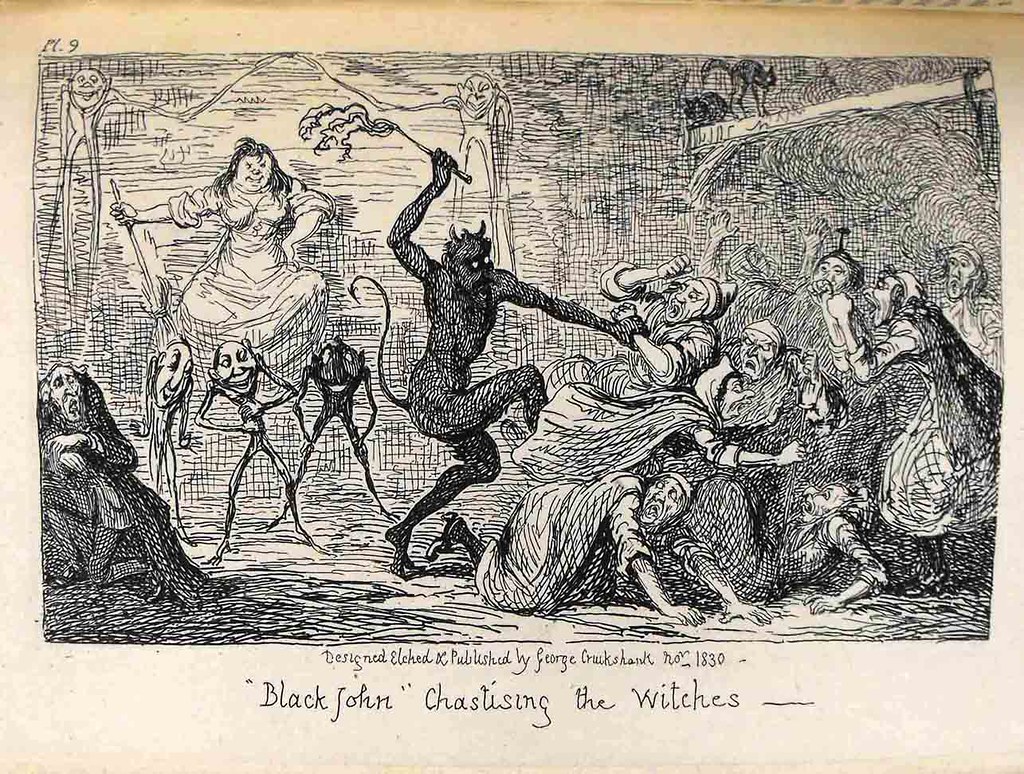
You are handed a document and told it comes from the highest authority on earth. Not a king, not a general — someone who speaks, according to the cosmology of the age, for God himself. The paper is dated 1484. It bears the seal of Innocent VIII. It tells you that witches are real, that they are multiplying, that they have been destroying crops and livestock and the sexual faculties of men across the German territories, and that two Dominican inquisitors have been empowered to root them out. You do not question the document. You cannot. The document has already answered the question of whether it deserves to be questioned.
Summis desiderantes affectibus was not, in any technical sense, a theological innovation. Innocent VIII did not invent the witch. What the papal bull of December 5, 1484 accomplished was something far more consequential and far more modern in its mechanism: it converted a dispersed, uneven, locally contested set of accusations and folk anxieties into an officially certified operational reality. Heinrich Kramer, the Dominican friar whose obsessive persecution of women in the Tyrol had already been censured by local ecclesiastical authorities, received through this document precisely what he lacked — the imprimatur of institutional credibility. His own bishop had expelled him from Innsbruck in 1485, finding his proceedings embarrassing and legally dubious. The bull did not resolve the embarrassment. It simply overrode it from a higher altitude.
What Kramer understood intuitively — and what makes him a genuinely disturbing figure rather than a merely deluded one — is that credibility is not earned through argument but through association. When the Malleus Maleficarum appeared in 1487, it carried the papal bull as a preface. It also carried, fraudulently it would later emerge, the apparent endorsement of the University of Cologne’s theology faculty, whose actual deliberations had been deeply skeptical. The forgery was not discovered for decades. By then the book had gone through fourteen editions before 1520 and sixteen more between 1574 and 1669, becoming one of the most reproduced texts in early print culture. The printing press, arriving precisely at this historical juncture, turned a single act of institutional endorsement into an infinitely replicable authority. Each copy carried the weight of Rome. Each reader received the persecution not as someone’s opinion but as sanctioned fact.
The deeper violence of this mechanism is epistemological. When an institution of sufficient prestige declares something real, it does not merely persuade — it restructures what counts as evidence. Historians of science have traced a structurally identical process in the way early modern courts handled confessions extracted under torture: the confession became the proof that justified the torture that produced the confession. The circle was not a flaw in the logic. It was the logic. Robert Muchembled, in his 1978 study of popular culture and elite culture in early modern France, demonstrated that witch-hunting intensified precisely in regions where ecclesiastical and civil authority were working in coordinated alignment — not where superstition was most virulent, but where institutional machinery was most synchronized.
This is the thing that escapes the comfortable narrative in which witch trials are relics of ignorance waiting to be dissolved by reason. The Inquisition was not operating outside rational institutional logic; it was operating entirely within it, with procedural documentation, jurisdictional protocols, and evidentiary standards that would be recognizable to any modern bureaucracy. The horror was not irrationality. It was the application of rational procedure to premises that had been immunized against challenge by the very authority granting the procedure its legitimacy — a closed system that looks, from inside, indistinguishable from rigorous governance.
Protestant Demonology and the Reformation's Dark Mirror
You are sitting in a pew the morning after the revolution, and the sermon sounds different — the cadences have shifted, the saints have been stripped from the walls, the priest has become a minister — but the man beside you is still watching the woman across the aisle with the same ancient suspicion, and the institution surrounding you is still perfectly willing to organize that suspicion into law.
The Protestant Reformation is typically narrated as a rupture: a severing from the corrupt medieval church, a return to scripture, a liberation of conscience from hierarchical mediation. What this narrative consistently fails to account for is that the machinery of persecution not only survived the break but accelerated through it. The decades following Luther’s 1517 theses did not produce a cooling of witch trials across Europe. They produced the opposite. The period between roughly 1580 and 1650 — spanning the high Protestant moment — accounts for the majority of the estimated forty to sixty thousand executions recorded across the European witch-hunt’s full arc, a figure assembled by historians Brian Levack and Wolfgang Behringer through decades of archival reconstruction. The theological rupture created not peace but competition, and competition between two confessional systems claiming absolute truth required each to demonstrate its spiritual seriousness through the vigor of its war against the Devil’s agents on earth.
James VI of Scotland, who would later become James I of England and authorize the Bible translation that still bears his name, wrote Daemonologie in 1597 not as a detached intellectual exercise but as a direct intervention in an active crisis. He had personally presided over the interrogation of accused witches in the North Berwick trials of 1590 and 1591, cases involving torture, confession, and execution, in which he appears to have believed with total sincerity that a demonic conspiracy had targeted him specifically during a sea crossing. His treatise, structured as a dialogue between two figures named Epistemon and Philomathes, insists on the absolute reality of demonic pacts and the necessity of capital punishment for all who enter them. What makes the document remarkable is not its cruelty but its theological self-consciousness: James was not simply a frightened king reaching for folk tradition. He was a Protestant monarch constructing a Reformed framework for demonic intervention that would distinguish his theology from both Catholic superstition and what he dismissed as the dangerous skepticism of Reginald Scot, whose Discoverie of Witchcraft in 1584 had argued that witch beliefs were largely delusion. James had Scot’s book burned.
The burning of Scot’s book is a more revealing gesture than any execution, because it shows that the threat James perceived was not primarily supernatural but epistemological. A theology that admitted uncertainty about demonic activity risked undermining the entire scaffolding of providential governance — the idea that God actively intervened in political affairs and that a Protestant king was His appointed instrument. Skepticism about witches was therefore not merely intellectual error; it was a political solvent. The anthropologist Mary Douglas, in Purity and Danger published in 1966, described how societies under internal stress consistently externalize their anxieties onto boundary figures who seem to violate categorical order. The witch in early modern Protestant culture was precisely such a figure: someone who had crossed from the human community into an invisible allegiance with its enemy, and whose exposure and punishment restored the community’s sense of its own coherence and divine favor.
What Protestant demonology reveals, beneath its elaborate scriptural apparatus, is that the Reformation changed the address of authority without changing its appetite. The vocabulary of demonic agency was scrubbed of what Reformers called popish accretion — the holy water, the exorcism rituals, the intercessory saints — and rebuilt in starker, more textual terms. But the social function remained structurally identical: to locate the source of collective disorder in a human body that could be named, tried, and destroyed, leaving the community’s self-image momentarily intact.
The Demonic Pact as Contract Theory
You sign the paper before you understand what the paper means. That is the structure of every social arrangement that has ever claimed your loyalty — the nation, the guild, the marriage, the mortgage — and in 1580, Jean Bodin looked at the figure of the witch kneeling before Satan and saw, with the precision of a legal mind, not a horror story but a contract problem.
Bodin was not merely a demonologist. He was the author of Les Six Livres de la République, published four years before De la Démonomanie des Sorciers, and in that earlier work he had constructed one of the most rigorous early modern theories of sovereignty — the idea that legitimate power requires an indivisible, perpetual authority, a single point where obligation terminates. When he turned to witchcraft, he did not abandon that framework. He imported it wholesale. The demonic pact in his treatment becomes something uncannily legible: a bilateral agreement, negotiated in the dark between a human party seeking advantage and a sovereign entity offering terms. Satan in Bodin’s schema is not chaos. He is a counterparty. He holds his side of the bargain, which is precisely what makes him terrifying — not his disorder, but his contractual reliability.
What Bodin was doing, without announcing it, was thinking through consent. The central problem of early modern political philosophy was this: what transforms raw power into legitimate authority? Thomas Hobbes would answer that question most nakedly in 1651 in Leviathan — the individual surrenders natural freedom to the sovereign in exchange for protection, and that surrender is constitutive, not incidental, to political life. But Bodin was already wrestling with the same architecture thirty years before Hobbes, and the demonic pact gave him a laboratory for it. Because the pact crystallizes consent at its most extreme: a human being freely chooses an allegiance that destroys them. If sovereignty can be established by consent, then the witch’s compact proves that consent itself carries no inherent moral weight. It is the act of binding, not the object of the binding, that produces obligation.
This is where demonology becomes genuinely dangerous as a body of thought, and not for the reasons usually cited. The standard condemnation focuses on the violence it licensed — the burnings, the torture, the estimates ranging from forty thousand to sixty thousand executions across Europe between 1450 and 1750. That violence is real and requires no minimization. But the intellectual damage runs deeper, because the demonic pact framework smuggled a specific theory of human agency into theology. It insisted that the witch chose freely, that she was not mad, not deceived, not coerced in any legally meaningful sense. The Malleus Maleficarum, compiled by Heinrich Kramer in 1486, had already established this: witchcraft required intent, and intent required will, and will required a self capable of genuine election. The witch, paradoxically, became the early modern period’s most rigorous subject — a person whose autonomy was so fully recognized by the prosecuting apparatus that it could be used as the grounds for her annihilation.
Political philosophy borrowed this structure without acknowledging the loan. The social contract tradition needed individuals who were genuinely capable of consenting, genuinely free to bind themselves. But what it inherited from the theological framework was a conception of consent entirely divorced from the conditions under which consent is given — the hunger, the fear, the asymmetry between the party who drafts the terms and the party who accepts them in the cold. Bodin could look at a woman accused of witchcraft and see a sovereign actor making choices. What he could not see, or would not, was that the pact she supposedly signed was always already written before she arrived at the crossroads, that the document existed before the hand reached for the pen, that the freedom to choose had been carefully constructed to look like freedom while functioning as something considerably more like a trap.
A vision curated by a filmmaker, not an algorithm
In this video I explain our vision
Confession Under Torture and the Epistemology of Forced Truth

You are sitting in a chair that has been designed specifically so that you cannot sit still in it, and someone with institutional authority is waiting for you to say the name of someone you love.
The confession occupied a paradoxical throne in early modern legal epistemology. Roman-canon procedure, inherited through centuries of ecclesiastical jurisprudence and codified in texts like the Constitutio Criminalis Carolina of 1532, established confession as the regina probationum — the queen of proofs. Not eyewitness testimony, not physical evidence, not documented correspondence with the accused, but the accused’s own voice, broken open under sufficient pressure, saying yes. What is almost never acknowledged is that this hierarchy of evidence was not the product of naivety. The jurists who constructed it were not primitive men stumbling toward rationality. They understood, with some precision, that a confession extracted under physical duress was a performance, not a disclosure. They built the system this way regardless.
Heinrich Kramer’s Malleus Maleficarum, published in 1487 and reprinted in at least fourteen editions before 1520, devoted considerable procedural attention to the management of testimony. Kramer was careful to specify that torture should be applied incrementally, that confessions extracted under direct physical coercion should be ratified the following day in a separate session — technically, a moment of free will — so that the confession could be classified as voluntary. This procedural laundering was not a loophole in the system. It was the system. The gap between the extraction and the ratification existed precisely to manufacture the category of consent where none existed, transforming a scream into a legal document.
What this reveals is something that modern epistemology has been slow to name directly: knowledge systems are sometimes constructed not as instruments of discovery but as instruments of confirmation. The philosopher of science Karl Popper spent the better part of his career distinguishing between systems that genuinely risk falsification and systems that are structurally insulated from disconfirmation. Witch trial procedure belonged entirely to the second category. If an accused confessed, guilt was proven. If an accused refused to confess after prolonged torture, this was attributed to diabolical fortitude granted by Satan, which was itself evidence of guilt. The logical architecture had no exit. Every response the accused could produce — silence, screaming, weeping, praying, fainting — had already been assigned its predetermined meaning in manuals that were circulating across Europe before the trial began.
Consider what this demanded of the accused’s body specifically. The strappado, in which the hands were bound behind the back and the body hoisted by a rope before being dropped sharply, was widely deployed across German, French, and Italian tribunals through the sixteenth and seventeenth centuries. It was not designed to cause the kind of pain that sharpens memory or clarifies thought. It was designed to produce a state in which the boundary between what a person knows and what they will say to make the pain stop becomes physiologically meaningless. A woman named Walpurga Hausmännin, executed in Dillingen in 1587, confessed to acts that spanned decades and involved supernatural collaborators she named in extraordinary detail. Historians who have examined the records understand that the specificity of such confessions was produced by the questions themselves — the interrogator’s script was so detailed that it supplied the very narrative the confession then appeared to confirm.
Michel Foucault, writing in Discipline and Punish in 1975, identified the confession as a technology of power that modern institutions never fully abandoned, only refined — moving from the rack to the polygraph to the deposition room where silence is legally weaponized against the silent. The witch trial did not end. It became administrative.
The Geography of Persecution and Its Statistical Silence
You are standing in a village in the Rhineland in 1590, and the woman being led through the square is not a stranger. You have borrowed salt from her. Your children played near her garden. She is fifty-three years old, widowed, and accused of causing a neighbor’s cow to stop giving milk. Within six weeks she will be dead, and her name will appear in a parish register under a column that says nothing about what happened to her.
The numbers that historians have reconstructed from those registers are not comfortable. Brian Levack, in his 1987 study “The Witch-Hunt in Early Modern Europe,” calculated that somewhere between 40,000 and 60,000 people were executed across Europe between roughly 1450 and 1750, with roughly 75 to 80 percent of those condemned being women. What those figures obscure is the savage unevenness of the geography. The Holy Roman Empire — that fractured, contested mosaic of principalities, bishoprics, and free cities — accounts for the majority of executions on the continent. Places like the Electorate of Trier or the Prince-Bishopric of Bamberg became killing zones in the 1580s and 1620s in ways that England or Spain, under more centralized legal structures, never did. The question that this asymmetry forces open is not theological but jurisdictional: who had the institutional power to prosecute, and who had the institutional power to stop.
Where Roman law had penetrated most deeply, torture was most legally permissible, and where torture was permissible, confessions cascaded. A confession extracted under duress almost always included names — neighbors, relatives, the midwife, the old man by the mill — and those names became the next round of accused. This procedural architecture, not demonic theology, is the true engine of the mass trials. The witch panic at Würzburg between 1626 and 1631 killed somewhere between 157 and 300 people depending on the source, including children as young as seven and a man described in records only as “the fattest burgher in Würzburg.” The social profile of the victims across these concentrated outbreaks follows a pattern that Erik Midelfort documented meticulously in “Witch Hunting in Southwestern Germany” in 1972: early accusations targeted marginal women, but as the panic deepened, it consumed respectable men, wealthy property owners, and eventually members of the very councils authorizing the trials. The machinery, once running, had no natural governor.
What determined whether a region became a killing ground was rarely the intensity of local religious belief and almost always the structure of competing authorities. The territories where persecution spiked most violently were precisely those trapped between Catholic and Protestant jurisdictions, where neither side could afford to appear lax on diabolism without handing a propaganda weapon to the other. Confessional rivalry weaponized the sabbath. The prince-bishops of the Empire were simultaneously temporal rulers and ecclesiastical princes, and a spectacular witch trial demonstrated the seriousness of their spiritual mandate to populations who might otherwise drift toward Lutheran communities across a nearby border. The persecution was, in this sense, a form of territorial signaling.
England, which executed perhaps 500 people over two centuries and abandoned capital punishment for witchcraft in 1736 with the Witchcraft Act, had common law courts that did not permit judicial torture, which meant confessions could not be structurally manufactured at scale. The legal architecture was the variable, not the depth of cultural superstition. Scotland, operating under a different legal tradition closer to Roman procedure, executed proportionally far more. Ireland, under English colonial administration, executed almost none. The silences in the archive are as meaningful as what was recorded, because silence marks the places where power was either too consolidated to need the theatre of a trial, or too fragmented to organize one.
What the statistical silence actually protects is not the dead but the institutions that presided over their deaths — and those institutions wrote the commentaries, organized the archives, and decided what a witch trial meant before anyone thought to ask who was being tried.
Reginald Scot and the Dissenting Treatise
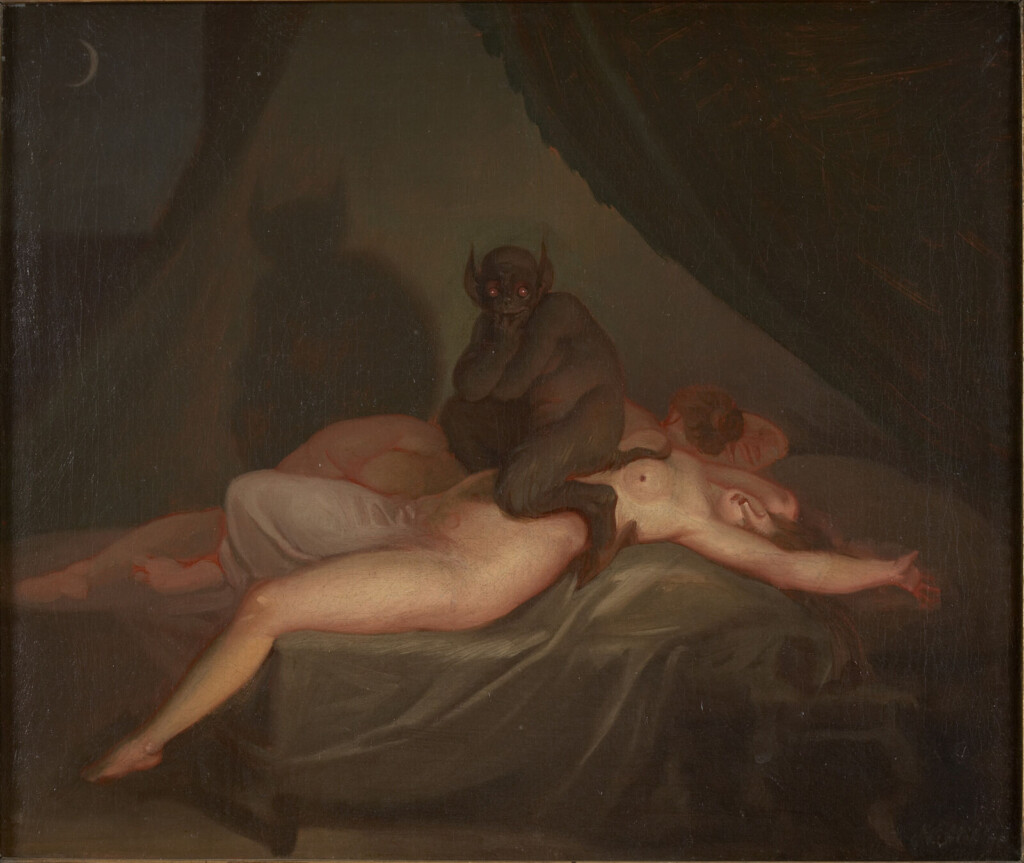
You are holding a book that everyone around you insists is dangerous, and the danger they describe is not that it contains lies but that it might convince you the monsters are not real.
Reginald Scot published The Discoverie of Witchcraft in 1584, and what made it intolerable to his contemporaries was not its prose but its method. Scot was a Kentish gentleman with no university theology to defend and no ecclesiastical office to protect, and he applied to the question of witchcraft exactly the kind of patient, empirical scrutiny that his peers reserved for agriculture and husbandry. He interviewed accused women. He examined confessions against the physical plausibility of what was confessed. He traced the Latin demonological tradition back through Johann Weyer’s 1563 De Praestigiis Daemonum and further still, finding not revelation but a chain of citations in which one authority legitimized the next without any of them ever touching observable fact. What he found at the bottom of the chain was not Satan but loneliness, poverty, and the cognitive vulnerability of elderly women under judicial terror.
The epistemological structure Scot dismantled was one that Karl Mannheim would later describe in Ideology and Utopia as a self-sealing system of thought — a framework capable of absorbing every challenge as further confirmation of its premises. Confessions proved witches existed. Recantations proved witches lied. Scot’s denial of demonic agency could itself be read, within the system, as evidence of diabolical influence over his mind. This is not paranoia as a psychological disorder but paranoia as an institutional architecture, and institutions rarely surrender it voluntarily when it is serving them well. The Malleus Maleficarum had by 1584 run through at least fourteen editions since its 1487 publication, and its authors Heinrich Kramer and Jacob Sprenger had embedded within it a preemptive strike against skepticism — a section arguing that disbelief in witchcraft was itself heresy, a move that transformed the rules of evidence into a closed loop no empirical observation could enter.
When James VI of Scotland ordered Scot’s book burned upon his accession to the English throne in 1603, the act was not ignorance performing itself as power but rather intelligence performing itself as power, which is a different and more instructive spectacle. James had written his own demonological treatise, the Daemonologie of 1597, in direct refutation of Scot’s arguments, and he understood exactly what Scot had done. The burning was not the response of a man who had not read the book. It was the response of a man who had read it carefully enough to know that its arguments, left to circulate, would corrode the evidentiary foundations upon which hundreds of prosecutions had already been conducted and hundreds more would need to be. To validate Scot retroactively was to invalidate the courts, the confessions, the executions, the entire administrative machinery of supernatural crime. Epistemic systems do not collapse under the weight of disconfirming evidence; they collapse only when the social cost of maintaining the system exceeds the social cost of abandoning it.
What Scot’s fate within the tradition reveals is something that goes beyond the history of witchcraft into the structure of all authoritative knowledge: dissenters are not simply ignored but actively metabolized. The treatise tradition did not pretend Scot had never written. It engaged him, refuted him, and in refuting him gave the system another cycle of apparent self-examination without genuine revision. This is the particular genius of closed epistemic communities — they can perform their own critique so thoroughly that real critique has nowhere left to stand. Scot had hoped that reason, applied with sufficient care to the evidence, would dissolve the apparatus. What he could not have anticipated was that the apparatus had already developed antibodies against exactly that form of care, and that the most dangerous thing a closed system can do with a rational challenge is answer it.
🕯️ Shadows of the Occult: Demons, Witches & Dark Knowledge
The history of demonology and witchcraft treatises reveals a fascinating intersection of theology, fear, and power. From medieval inquisitors to Renaissance scholars, the attempt to systematize and combat supernatural evil produced some of the most revealing documents in Western cultural history. These related articles illuminate the broader esoteric and occult traditions that shaped — and were shaped by — belief in demonic forces.
Eliphas Lévi and Modern Occultism
Eliphas Lévi stands as one of the pivotal figures in the codification of modern occultism, drawing heavily from earlier demonological traditions to construct a systematic magical philosophy. His works, particularly ‘Dogma and Ritual of High Magic,’ transformed medieval grimoire culture into a framework that would influence every subsequent esoteric movement. Understanding Lévi is essential for grasping how ancient witch-trial demonology was reinterpreted and preserved in the modern age.
GO TO THE SELECTION: Eliphas Lévi and Modern Occultism
Giordano Bruno and the Hermetic Tradition
Giordano Bruno operated in a world where the boundary between natural philosophy, Hermetic magic, and demonology was dangerously thin — a fact that ultimately cost him his life. His engagement with the Hermetic tradition placed him in direct confrontation with ecclesiastical authorities who viewed such knowledge as diabolical. Bruno’s fate illustrates how demonological paranoia shaped the persecution of thinkers who dared to explore the occult dimensions of Renaissance thought.
GO TO THE SELECTION: Giordano Bruno and the Hermetic Tradition
Necromancer and Necromancy: History and Meaning
Necromancy represents one of the most condemned practices in historical witchcraft treatises, described in exhaustive detail by demonologists precisely to define its dangers and diabolical origins. The figure of the necromancer served as a focal point for theological anxiety about the boundaries between the living and the dead, and between human will and demonic agency. This article traces the long cultural and theological history of a practice that haunted the imagination of inquisitors and witch-hunters alike.
GO TO THE SELECTION: Necromancer and Necromancy: History and Meaning
The Pact with the Devil in Literature: History and Symbolism
The literary and theological tradition of the pact with the Devil is directly rooted in the demonological literature of the late medieval and early modern periods, where such agreements were treated as juridical facts with terrifying consequences. Witchcraft treatises like the ‘Malleus Maleficarum’ devoted extensive analysis to how demons solicited and sealed compacts with human beings, forming the doctrinal backbone of the witch trials. This article explores how that historical obsession evolved into one of Western literature’s most enduring and powerful archetypes.
GO TO THE SELECTION: The Pact with the Devil in Literature: History and Symbolism
Discover the Darkness on Indiecinema
If these shadows of demonology and occult history have stirred something in you, Indiecinema is the streaming platform where independent cinema dares to explore the hidden, the forbidden, and the spiritually unknown. From esoteric documentaries to visionary art films, Indiecinema offers a curated journey into the films that mainstream platforms won’t show you. Step beyond the familiar — your next profound cinematic experience is waiting.
👉 EXPLORE THE CATALOG: Watch Indie Films in Streaming
A vision curated by a filmmaker, not an algorithm
In this video I explain our vision

