The Architecture of Perpetual Interruption
You check your phone within the first eight minutes of waking. Not because anything urgent has happened, not because you expect news of consequence, but because the architecture of the device has been precision-engineered to make the alternative — stillness, silence, the slow assembly of your own thoughts — feel like a kind of deprivation. This is not a failure of willpower. It is the intended outcome of an industry that has, over roughly fifteen years, rebuilt the scaffolding of daily human consciousness around a single economic principle: attention is the commodity, and fragmentation is the harvest.

The numbers are not ambiguous. By 2023, the average adult in a high-income country was spending between six and seven hours per day looking at screens, a figure that does not include passive television viewing. The average smartphone user unlocks their device somewhere between eighty and one hundred times daily. But the raw quantity of screen exposure is almost beside the point — what matters is the structural rhythm it imposes. Microsoft Research published findings as early as 2015 showing that after a digital interruption, the human brain requires an average of twenty-three minutes to return to a state of deep focused engagement. The notifications, the pings, the red badge counts — each one does not merely steal a second. It forecloses nearly half an hour of cognitive depth.
Herbert Simon, writing in 1971, identified with almost eerie precision the problem that would metastasize into the defining pathology of the following century. “A wealth of information creates a poverty of attention,” he wrote in a paper on the economics of information processing — and what he described as a theoretical constraint, engineers in Silicon Valley would later systematize into product design. The slot machine mechanic embedded in the social media feed, the variable reward schedule that B.F. Skinner demonstrated could sustain compulsive behavior in pigeons indefinitely, was consciously imported into interface design. Aza Raskin, who invented the infinite scroll feature while working at Mozilla, estimated in 2018 that his design alone costs humanity approximately 200,000 hours of collective human attention every single day. He built it in a weekend. He has spent years since in public regret.
What makes this architecture so difficult to resist is that it does not announce itself as hostile. It arrives dressed as connection, as relevance, as the reasonable demand to stay informed. The philosopher Bernard Stiegler spent decades arguing that modern technology constitutes a form of what he called “psychic and collective individuation” — or rather, its systematic disruption. His three-volume work “Technics and Time,” completed across the 1990s and 2000s, insisted that every technology that externalizes human memory or attention also transforms the interior structure of the person who uses it. We are not merely distracted by our devices. We are being gradually relieved of the cognitive labor of sustained selfhood.
The advertising model that funds the dominant platforms is not incidental to this process — it is its engine. A user in a state of calm, sustained concentration is worth almost nothing to an advertiser. A user in a state of mild anxiety, novelty-seeking, emotionally activated, clicking laterally across content — that user is worth a great deal. Tim Wu, in “The Attention Merchants” published in 2016, traced the commercial logic of attention capture from the first penny newspapers of the 1830s through to the present, showing that each technological leap in media history has been accompanied by a corresponding intensification of the techniques used to seize and hold human consciousness against its own interests. What is different now is the intimacy of the seizure — the device in the pocket, the notification on the wrist, the algorithm that knows before you do what will make you stop scrolling.
The Sands

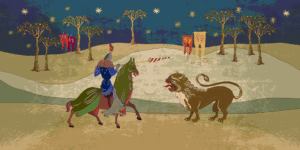
Science fiction, by Noah Paganotto, Argentina, 2022.
In an undetermined location on planet Earth, in an unknown time, Zoilo lives with his family in a wasteland surrounded by ruins. They live uprooted, without mothers, knowing that pregnancy for women is synonymous with death. For them there is only one collective routine; keep the fire alive. Only Zoilo escapes this logic, observing, intrigued, details that others do not see and therefore do not appreciate. Zoilo's personal search for answers will increase the differences with his relatives, increasingly revealing an empty world of interiority.
Avant-garde film that burns slowly in the first part and then reveals in the second the profound conflicts of a family prisoner of archaic beliefs. It is a dystopian and visionary work, with wonderful photography and images of rare power that allow us to grasp the depth of the story and its poetic potential. The faces of the actors, especially the protagonist boy, are perfect. The Sands metaphorically represents the world we live in: an alienated society, where what keeps us alive is demonized and blamed for death. In opposition to the fast pace of the typical mainstream film, The Sands is a meditative journey into the depths of images. The film was shot in natural environments in the city of Necochea, Buenos Aires province, Argentina.
LANGUAGE: Spanish
SUBTITLES: English, Spanish, French, German, Portuguese
Stillness as Historical Deviance
You are sitting in a waiting room with nothing in your hands. No phone, no book, no paper cup to rotate between your fingers. People glance at you the way they glance at someone who has just said something slightly wrong at a dinner party — not with hostility, but with that particular unease that registers when a social contract is being quietly violated. Doing nothing in public, in 2024, reads as either poverty or pathology.
This is not a natural human condition. It is an engineered one, and the engineering has a traceable date. Before the Factory Acts of the 1830s and 1840s reshaped British labor law — and before the ideology that justified those factories reshaped British consciousness — the texture of a working day included what historians of labor like E.P. Thompson documented with uncomfortable precision in his 1967 essay “Time, Work-Discipline, and Industrial Capitalism”: irregular rhythms, feast days, “Saint Monday” absenteeism, long pauses woven into the productive hours themselves. Pre-industrial artisans did not experience time as a container to be filled. They experienced it as a medium to move through at varying speeds, and silence within work was not a failure of output — it was part of the craft.
Medieval monastic culture formalized this intuition into architecture. The Benedictine Rule, written by Benedict of Nursia around 516 AD, structured the entire day around eight liturgical hours, not primarily as religious performance but as rhythmic interruption — a forced return to interiority at fixed intervals regardless of what task had been underway. The monastery produced manuscripts, managed farms, educated children, and brewed ale, but its organizing principle was the pause, not the production. What looks from the outside like devotion was, functionally, a sophisticated technology for preventing the self from being entirely consumed by its own usefulness.
The Industrial Revolution did not merely change working hours. It changed the metaphysics of time itself. When factory owners needed synchronized labor — when a loom stopping meant a line stopping — the interior rhythms of individual workers became an operational liability. Idleness, which had been morally neutral or even spiritually valorized for centuries, was reclassified. The Calvinist theology of the elect, filtered through what Max Weber traced in “The Protestant Ethic and the Spirit of Capitalism” in 1905, provided the ideological scaffolding: rest that was not recuperation for more work was waste, and waste was sin wearing secular clothing. The inner life, unless it produced measurable virtue, was simply lost time.
What followed was not a gradual cultural drift but something closer to a targeted suppression. The English working class’s traditional relationship with contemplative leisure — their festivals, their wandering, their irregular relationship with productivity — was not merely inconvenient to industrial capitalism. It was actively prosecuted. Vagrancy laws expanded. Public idleness became a legal category of deviance. By the mid-nineteenth century, a person sitting still without economic justification was not at peace — they were suspicious.
The deeper violence of this transformation is that it did not stay in the factory. It migrated inward, until the people who had been disciplined by the external clock began to discipline themselves. By the time Sigmund Freud was writing in Vienna at the turn of the twentieth century, he was already treating patients whose suffering was not poverty or violence but the relentless internal pressure to justify their own existence through action. The compulsion had become autonomous. No overseer was needed anymore. The factory had moved inside the skull, and the workers had forgotten they ever built it.
What gets called distraction today — the need to fill every gap with stimulus, the physical discomfort of an unscheduled hour — is not a symptom of modern technology. It is the terminal expression of a discipline that began in the mills of Lancashire and completed itself quietly, over two centuries, in the architecture of the self.

The Self That Cannot Locate Itself
You are somewhere in the middle of your own life and you cannot find yourself in it. Not in the dramatic sense that makes for good confession — the kind you read on a screen at 2 a.m. while something plays in the background — but in the precise, clinical sense: you have lost the thread of your own interiority. There is no silence in which to locate it. There is only the next input.
William James, writing in his Principles of Psychology in 1890, described consciousness not as a series of discrete mental events but as a stream — continuous, flowing, always arriving from somewhere and moving toward something. What James could not have anticipated is the industrial-scale effort that would eventually be deployed to interrupt that stream at every possible point, until interruption itself became the baseline condition of thought. He was describing a river. We have since learned to live in a rapids.
The neurological architecture that makes selfhood possible is not an abstraction. In the early 2000s, neuroscientist Marcus Raichle and his colleagues at Washington University identified what they called the default mode network — a constellation of brain regions that activates not during focused tasks but during rest, during mind-wandering, during the unstructured internal time when a person is doing, by external measures, nothing. This network is where autobiographical memory consolidates. It is where the brain rehearses social scenarios, processes moral complexity, and constructs the narrative continuity that allows a person to experience themselves as a self across time. It is, in the most literal neurological sense, where you happen. Chronic overstimulation systematically suppresses it.
The implications of this are not motivational. They are structural. A person who never experiences unstructured cognitive time is not merely distracted or stressed — they are being prevented, at the level of neural architecture, from assembling the very apparatus through which identity becomes coherent. The philosopher Charles Taylor argued in Sources of the Self, published in 1989, that selfhood is not a given but a moral achievement, constituted through the ongoing project of orientation — of knowing, in any moment, where one stands in relation to what matters. That orientation requires interiority. Interiority requires silence. Silence has become a resource so scarce that most people experience its sudden arrival as discomfort, even threat.
There is something precise and almost cruel in the design of this condition. The platforms and technologies that colonize attention are not simply loud — they are calibrated to produce a specific cognitive state that researchers at Stanford, including Clifford Nass in studies published around 2009, found to be paradoxically degraded: heavy media multitaskers performed worse than light multitaskers on every measure of cognitive control, including the ability to filter irrelevant information and switch tasks effectively. They were worse at the very operations that multitasking supposedly trains. What it actually trained was a chronic low-grade vigilance, a scanning posture, an inability to settle — a mind permanently poised for the next interruption and therefore incapable of depth in any direction.
What gets lost in this is not productivity or focus in the managerial sense. What gets lost is the capacity for what the psychoanalyst D.W. Winnicott, in his 1958 paper on the capacity to be alone, identified as one of the most sophisticated achievements of emotional development: the ability to be present with oneself without the mediating presence of another stimulus. Winnicott believed this capacity was foundational — not to creativity or contemplation as luxury pursuits, but to the basic coherence of the ego under ordinary conditions. He was writing about children learning to play alone in a room. He was writing, without knowing it, about every adult who now cannot sit in a waiting room for four minutes without reaching for their phone, not because they are bored, but because the self that would have to bear the silence has not been given the conditions in which to exist.
Meditation as Epistemological Act, Not Wellness Ritual

You download the app on a Tuesday because your therapist mentioned it and the interface is clean and the narrator’s voice is engineered to feel like warm water. Eight minutes later you are told you did well. This is the first lie, and you accepted it without noticing, because the entire architecture of the experience was designed to ensure you would.
What the Stoics called askesis had nothing soothing about it. It was a practice of deliberate friction — a methodical exposure of the self to its own evasions. Marcus Aurelius did not sit with his breath to lower his cortisol; he interrogated his own impressions with the specific goal of finding them false. The Meditations, written between roughly 161 and 180 AD and never intended for anyone else’s eyes, read less like a wellness journal than like an internal cross-examination. Every entry is a man catching himself in the act of wanting comfort, approval, legacy — and refusing to grant himself the ease of those desires. The practice was epistemological before it was ethical: you had to know what you were actually thinking before you could begin to question whether it was worth thinking at all.
The Pali canon’s account of vipassana — insight meditation as formalized in texts like the Satipatthana Sutta — operates on a structurally identical premise, though the vocabulary is entirely different. The meditator is not asked to relax. They are asked to observe the arising and passing of phenomena with enough precision to notice that what they took to be a stable self is in fact a rapid succession of impermanent events, each one already gone before it has been fully registered. This is not a comforting discovery. The tradition was explicit about this: the first sustained encounter with impermanence in practice, what the Theravada texts call dukkha-nana, the knowledge of suffering, is described as a period of destabilization, sometimes fear, sometimes grief. The point was never relief. The point was accuracy.
Simone Weil, writing in the early 1940s in essays collected posthumously in Waiting for God, proposed that attention — genuine, sustained, undivided attention — was not a cognitive skill but a moral faculty. She was careful to distinguish it from the kind of effortful concentration that strains toward its object. Real attention, she argued, is a form of self-erasure: the practitioner must suspend their own needs, interpretations, and projections so completely that reality can enter without distortion. She applied this logic not only to prayer but to the act of learning geometry, the act of listening to a suffering person, the act of reading a difficult text. The common thread was radical self-suspension. What she described is structurally incompatible with any practice that rewards you for completing it.
The commodification did not happen by accident. When Jon Kabat-Zinn developed Mindfulness-Based Stress Reduction at the University of Massachusetts in 1979, he made a deliberate decision to excise the contemplative framework — its metaphysics, its ethics, its implied demands on the practitioner’s life — in order to make the practice legible to secular medical institutions. The clinical results were real. But something was also quietly amputated: the tradition’s insistence that what you find when you look closely at your own mind will require you to change how you live, what you want, who you think you are. The wellness industry inherited the technique and jettisoned the threat. It kept the posture and discarded the interrogation. It made the practice available to millions while ensuring it would disturb no one.
What remains after that surgery is a product that functions, paradoxically, as a tool of adaptation — a way of becoming more resilient within conditions that perhaps deserve resistance, more focused on goals that have never been examined, more present to a life whose structure has never been questioned.
The Social Cost of Collective Shallowness
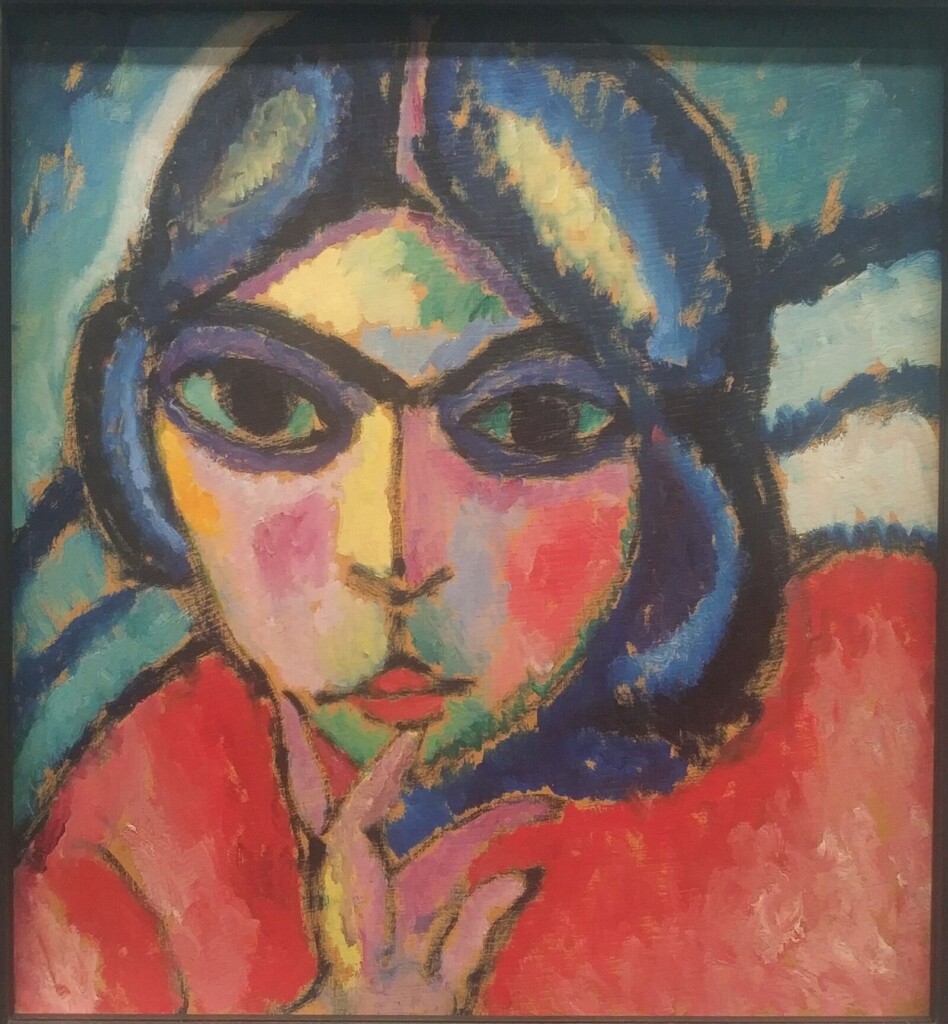
You are at a town hall meeting, and the man behind the microphone has not finished a single sentence in four minutes. He pivots, interrupts himself, responds to a heckler, cites a number he cannot source, and the room — rather than demanding coherence — rewards him with noise. Not because the crowd is stupid. Because coherence has stopped feeling like a civic value.
Hannah Arendt spent the years after the Eichmann trial trying to explain something that disturbed her more than cruelty itself: that the greatest administrative evil of the twentieth century had been executed largely by people who were not monsters but simply men who had stopped thinking. In “The Life of the Mind,” published posthumously in 1978, she argued that thinking — genuine, patient, self-interrogating thinking — is not an intellectual luxury but a moral prerequisite. Without it, human beings become efficient operators of whatever system surrounds them. The banality she identified was not stupidity. It was the absence of that internal friction which makes a person pause before obeying.
What makes this analysis unbearable in the present moment is its precision. A population trained by platform architecture to respond rather than reflect, to perform rather than deliberate, does not need an authoritarian command structure to produce moral abdication at scale. It produces it organically, through the ordinary rhythms of a day: the scroll, the reaction, the share, the dopamine loop that punishes hesitation. The philosopher Michael Crawford, in “The World Beyond Your Head” (2015), documented how modern environments are engineered to capture attention rather than cultivate it — and that this capture is not neutral but directional. It steers cognition toward the immediate, the affective, and the tribal.
Deliberative democracy, as a political form, was always a wager on a particular kind of citizen. Not an educated one, necessarily, but an interior one — someone capable of holding a position provisionally, of entertaining the discomfort of a counterargument, of distinguishing between what they feel and what they think. Jürgen Habermas spent decades in works like “The Theory of Communicative Action” (1981) mapping the conditions under which public reason could function as more than theater. Those conditions required time, attention, and the willingness to be changed by a conversation. None of these are compatible with a media environment that monetizes outrage and punishes nuance with invisibility.
The political consequence is not simply the rise of demagogues, though that is real and measurable. The deeper consequence is the disappearance of the citizen as a category of person distinct from the consumer. When a population cannot sustain interiority, it cannot sustain disagreement without rupture, cannot process complexity without rage, and cannot hold elected representatives to standards that require patience to enforce. What fills that void is not ideology but reactivity — an endless present tense of grievance and stimulation that makes long-term collective reasoning structurally impossible.
The sociologist Robert Putnam, in “Bowling Alone” (2000), tracked the collapse of civic associational life in America through the final decades of the twentieth century and identified the erosion of social trust as its primary casualty. But what he measured in membership statistics and volunteer hours was, underneath, a collapse in the capacity for sustained shared attention — the willingness to sit in the same room, with the same people, long enough to build something that requires more than one session to complete. Meditation, in this light, is not a private retreat from politics. It is the last available training ground for the cognitive and affective skills without which self-governance is a procedural fiction — the only remaining practice that insists, against every ambient pressure, that the present moment is worth inhabiting fully before acting inside it.
A vision curated by a filmmaker, not an algorithm
In this video I explain our vision
🧘 The Quiet Within: Stillness Against the Storm
In a world increasingly defined by speed, noise, and relentless distraction, the call to meditative living has never been more urgent. These articles explore the philosophical, psychological, and cultural dimensions of inner life, slowness, and the search for authentic depth in an age of hyperactivity.
The Slow Life: Philosophy and Culture of Slowing Down
The philosophy of slowing down challenges the modern compulsion to fill every moment with productivity and stimulation. This article explores how thinkers and movements have reclaimed time as a space for genuine human experience rather than mere efficiency. It offers a powerful cultural antidote to the frenetic pace that defines contemporary life.
GO TO THE SELECTION: The Slow Life: Philosophy and Culture of Slowing Down
The trap of consumer society and the loss of interiority
Consumer society promises fulfillment through accumulation, yet quietly hollows out the interior life of those who surrender to its logic. This article examines how the relentless pursuit of external goods erodes our capacity for stillness, reflection, and genuine presence. It is essential reading for anyone seeking to understand why modern life feels spiritually impoverished despite its material abundance.
GO TO THE SELECTION: The trap of consumer society and the loss of interiority
Modern alienation and the need for a new ecology of the soul
Modern alienation is not merely a social phenomenon but a wound inflicted upon the soul by a civilization that has forgotten how to listen to itself. This article argues for a new ecology of the inner world, one that restores meaning, rhythm, and contemplative depth to everyday existence. It speaks directly to those who feel the exhaustion of living in a culture that never pauses.
GO TO THE SELECTION: Modern alienation and the need for a new ecology of the soul
Hadot’s Philosophy as a Way of Life: Analysis
Pierre Hadot‘s revolutionary reading of ancient philosophy reveals that the great thinkers of Greece and Rome conceived of their work not as abstract theory but as a daily spiritual practice. This article unpacks how philosophy as a way of life offers a rigorous and transformative model for cultivating inner attention and meditative awareness. It is a profound invitation to reconsider how we live, not just how we think.
GO TO THE SELECTION: Hadot’s Philosophy as a Way of Life: Analysis
Discover the Cinema of Inner Silence on Indiecinema
If these reflections on meditative life and inner depth resonate with you, Indiecinema is the streaming platform where cinema becomes a contemplative act. Explore our curated selection of independent and art-house films that invite you to slow down, look inward, and rediscover the quiet power of authentic storytelling.
👉 EXPLORE THE CATALOG: Watch Indie Films in Streaming
👉 Questo articolo fa parte dell'hub Psychology: The Complete Guide to Mind, Behavior, and Human Nature
A vision curated by a filmmaker, not an algorithm
In this video I explain our vision