
The Bargain as Cultural Architecture
You are standing in a room where the offer has just been made. Not by a figure with horns — by something quieter, more precise: a number on a screen, a handshake held a beat too long, the moment you decided to know the price of something you had previously refused to price. Nobody forced you. That is the point. The devil, in every version of the story Western culture has produced, never forces anyone.

The figure of Mephistopheles — the name itself likely derived from the Hebrew mephitz and tophel, meaning “spreader of lies” — enters European literary consciousness not as a monster but as a gentleman. In Christopher Marlowe’s Doctor Faustus, written around 1592, he appears almost reluctantly, answering the summoning of a scholar who has exhausted every legitimate form of knowledge and found it insufficient. What Marlowe understood, four centuries before anyone thought to frame it as a cultural diagnosis, is that the bargain is not the story’s crisis — it is the story’s premise. Faust does not fall into the deal; he architects it. The soul is not stolen. It is invoiced.
This distinction matters more than it first appears, because the Western tradition persistently insists on reading the Faustian pact as a cautionary tale — a warning about hubris, about transgression, about the punishment awaiting those who reach too far. But this reading is itself a form of ideological protection. It allows the culture to stage the desire for unlimited power, unlimited knowledge, unlimited self-expansion, and then ritually condemn it, without ever examining why that desire is so precisely the desire modernity cultivates from birth. The cautionary tale and the aspirational myth are the same text, read from opposite ends.
Goethe saw this with uncomfortable clarity. His Faust, published in two parts in 1808 and 1832, is often taught as a redemption narrative — the man who bargains with the devil and ultimately transcends the bargain. But what the text actually documents is something stranger: a civilization that has decided the restless, unsatisfied, infinitely striving self is the highest form of human being. Goethe's Faust is not punished for his ambition. He is, in a deeply troubling sense, rewarded for it. The theological machinery of salvation is retrofitted to endorse precisely the psychological structure that produced the bargain in the first place.
What this means in practical, historical terms is that the Faustian structure did not remain inside literature. It migrated. The sociologist Max Weber, in The Protestant Ethic and the Spirit of Capitalism published in 1905, traced how a certain theological framework — the Calvinist doctrine of predestination — produced a type of person for whom relentless worldly striving became the only available evidence of divine election. You could not know if you were saved. But you could accumulate. The bargain was no longer made with a supernatural figure; it was made with time itself, with the future, with the abstract promise that sacrifice now would produce meaning later. The structure of the deal remained perfectly intact. Only the counterparty had been secularized.
By the twentieth century, this structure had become so thoroughly embedded in the architecture of Western selfhood that it ceased to feel like a bargain at all. It felt like ambition. It felt like drive. It felt like the responsible management of a life. The person who traded present intimacy for future success, who deferred joy in exchange for the accumulation of credentials or capital or influence, was not seen as selling anything. They were seen as investing. The devil had not disappeared from the cultural imagination — he had been absorbed into its most normalized and celebrated forms, rebranded as the logic of the possible, the voice that says the cost is acceptable because look at what you will become.
Etymology, Demonology, and the Politics of Naming
You are sitting with a name you have used your entire life without once questioning what it means, and that incuriosity is not accidental.
“Mephistopheles” arrives in the historical record fully formed and already suspicious, first appearing in the 1587 Historia von D. Johann Fausten published by Johann Spies in Frankfurt, a book that sold out its first print run within weeks and required multiple reprintings before the year was out. The name carries no clear genealogy. Scholars have spent centuries attempting to anchor it to something stable, and the instability itself is the finding. One philological tradition traces it to the Hebrew mephiz, meaning destroyer, combined with tophel, meaning liar — a compound that would make the name a theological accusation rather than a proper noun. Another line of reasoning pulls it toward the Greek mé, meaning not, phôs, meaning light, and philos, meaning loving — the one who does not love the light, a being defined entirely by negation. A third and less frequently cited hypothesis reaches toward the Persian, connecting syllables to concepts of corruption and spiritual contamination predating Christian demonology by centuries. None of these derivations has ever been settled. The scholarly literature does not converge; it multiplies.
What that multiplication tells you is that the name was designed to feel ancient without being traceable, authoritative without being verifiable. Medieval and early modern demonology operated precisely this way. The Malleus Maleficarum, published in 1486 by Heinrich Kramer, constructed an entire legal and theological architecture around demonic entities whose nature was simultaneously asserted with total confidence and left conveniently undefined at the edges. Demons had ranks, territories, specializations — and yet their essential character remained fluid enough to be retroactively assigned to any behavior the Inquisition found threatening. The name did not describe a being; it produced one, summoning into existence whatever the cultural moment required.
This is what naming does when it is wielded politically rather than descriptively. Ernst Cassirer, in The Philosophy of Symbolic Forms published between 1923 and 1929, argued that mythical thinking does not distinguish between a thing and its name — to name something is to possess it, to control it, and equally to be controlled by the anxiety of losing that control. The instability of “Mephistopheles” is not a failure of etymology; it is the mechanism of power. A name that cannot be pinned down cannot be refuted. It can only be redirected.
Heresy trials from the twelfth century onward demonstrate this redirect in operation. The Cathars of southern France were identified with demonic influence not through any coherent theological argument but through accumulated accusation — each new charge borrowing the authority of the last, the demonic name functioning as a kind of conceptual solvent that dissolved the accused’s humanity before any evidence was examined. The name arrived before the trial. Jeffrey Burton Russell documented this pattern across four volumes of demonological history, from Lucifer in 1984 through The Prince of Darkness in 1988, showing that the devil’s attributes consistently mirrored the attributes of whatever group the dominant culture needed to expel. The figure was a mirror, not a portrait.
What makes this intellectually vertiginous is the recognition that the linguistic anxiety around demonic naming never dissolved — it was simply modernized. When a political movement, a nation, an ideology, or a person is described as diabolical in contemporary discourse, the speaker is drawing on a rhetorical infrastructure built by people who believed they were describing something ontologically real. The metaphor carries the structure of the original belief intact, including its exemption from the requirement of proof. You call something evil and the name does the work that argument was supposed to do, inheriting five centuries of procedural authority from institutions that burned people on the strength of a word.

The Pre-Christian Devil and the Problem of Evil's Ownership

You are standing in a temple archive sometime around 540 BCE, and the scrolls being copied around you are not the same documents that entered Babylon seventy years earlier. Something has gotten into them.
The Hebrew Bible’s earlier strata present a figure called ha-satan who functions as a prosecuting attorney in the divine court, not an enemy of God but a mechanism of God, a stress-test applied to human faith. In the Book of Job, which scholars now date to roughly the 6th or 5th century BCE, this figure approaches the divine throne with bureaucratic ease, requesting permission to afflict a righteous man. There is no rebellion here, no cosmic warfare, no empire of darkness operating in permanent opposition to heaven. The adversary is on the payroll. Evil, in this older architecture, is not owned by anyone — it circulates as a function of divine administration, which is a far more unsettling idea than any personal devil, because it makes suffering structurally inevitable rather than externally imposed.
What the Babylonian exile introduced into Israelite religious consciousness was contact with a tradition that had already solved this problem by splitting the universe in two. Zoroastrianism, the Persian cosmological religion whose roots extend to the prophet Zarathustra — whom scholars now place between 1500 and 1000 BCE, though the tradition itself was institutionally powerful by the Achaemenid period — posited Ahura Mazda and Angra Mainyu as twin eternal principles, one of light and creative truth, one of darkness and destruction. These were not employer and employee. They were opponents in a war that preceded human history and would not conclude until a final renovation of existence. The Gathas, the oldest hymns attributed to Zarathustra, frame moral life as conscription into this conflict. You choose a side. Your choice has cosmic weight. Evil is not a shadow cast by God — it is a sovereign force with its own will, its own origin, its own territory.
When a population saturated in this dualist cosmology spent decades in direct cultural exchange with Jewish exilic communities, the theological contamination ran in both directions, but the pressure on monotheism was structurally asymmetric. Dualism offers explanatory comfort that monotheism, in its strict form, cannot easily match: the innocent child’s death, the wicked man’s prosperity, the silence of heaven during atrocity — all of these become legible if there is an opposing force actively working against the good. Monotheism’s honest answer to theodicy is either mystery or complicity, neither of which produces sustainable popular religion. The absorption of a true adversary, a being genuinely outside divine intention, solved the pastoral problem while quietly fracturing the metaphysical one.
By the time the Book of Daniel was composed, during the 2nd century BCE under the pressure of Seleucid persecution, the angelology and demonology structuring that text bear marks that have no clear precedent in earlier Hebrew writing but correspond precisely to late Achaemenid and early Hellenistic Persian cosmological frameworks. The angels now have names, ranks, and territorial jurisdictions. There are princes of Persia, princes of Greece, spiritual forces attached to nations and operating in opposition to divine messengers. The infrastructure of a counter-kingdom is assembling. Elaine Pagels, in her 1995 study of Satan’s cultural emergence, traces exactly this transition — the shift from Satan as internal adversarial function to Satan as the head of an organized opposition, a development she links directly to the social experience of communities under existential threat from external power.
What persecution does to cosmology is give evil a face that matches the face of the persecutor, and that transaction never fully reverses itself, because the theological form outlasts the historical emergency that produced it, long after the specific empire has collapsed into archaeology.
Marlowe, Goethe, and the Humanist Hijacking of Hell
You are in a study lined with books you will never finish reading, and a visitor sits across from you who has already read them all, who speaks better Latin than your professors, who laughs at exactly the right moment. You do not feel damned. You feel, for the first time, genuinely met.
This is what Christopher Marlowe constructed in 1592 when he put Mephistopheles on the English stage in Doctor Faustus — not a monster dispatched from below, but a figure of devastating lucidity. The medieval devil had been a tempter who exploited weakness. Marlowe’s Mephistopheles is something far more unsettling: he tells Faustus the truth. When Faustus asks where hell is, Mephistopheles answers without evasion — “Why, this is hell, nor am I out of it” — and the line carries a weight of existential honesty that no other character in the play can match. The theologians, the scholars, the angels who appear in the margins of the drama are all, in comparison, vague and rhetorical. The devil alone speaks with precision about what suffering actually is.
Marlowe was writing in a cultural moment when the Protestant Reformation had already cracked the institutional authority of the Church without fully replacing its metaphysical architecture. The question of what damnation meant — whether it was a place, a condition, a consequence of divine predestination — was genuinely unresolved in popular and theological discourse alike. Into that rupture walked a devil who had metabolized the uncertainty and come out the other side as a kind of negative theologian, knowing hell from the inside rather than describing it from a safe doctrinal distance. What the Reformation inadvertently created by attacking clerical authority was an imaginative vacuum, and Marlowe’s genius was to let the devil step into it as the most epistemically credible voice in the room.
By the time Johann Wolfgang von Goethe published Faust Part I in 1808, the vacancy had grown into something far larger. The Enlightenment had spent a century rationalizing the universe, and in doing so had produced not clarity but a new and specifically modern dread — the suspicion that striving itself might be meaningless, that human ambition pointed nowhere, that the restless intellect was its own punishment. Goethe’s Mephistopheles is no longer primarily a deceiver; he is a dialectician. His function in the drama is to provide the only genuine opposition to Faust’s idealism, and because idealism without opposition becomes delusion, Mephistopheles becomes structurally necessary to the play’s moral logic. Goethe gave him the most honest line in German Romantic literature: “I am the spirit that always negates” — not a boast, but a job description for the only character willing to perform the philosophical labor no one else would accept.
What both works encode, separated by more than two centuries, is the same anxiety wearing different period costumes: the fear that the most honest intelligence available might belong to the opposition. The Enlightenment produced institutions — academies, encyclopedias, constitutions — predicated on the assumption that reason was inherently humanizing. But reason in the mouth of Mephistopheles is cold, elegant, and indifferent to human dignity, and it works. It cuts through sentiment. It anticipates every counter-argument. The humanist project needed reason to be warm, to lead naturally toward freedom and moral progress, and the literary devil kept demonstrating, with infuriating consistency, that reason carried no such obligation.
There is a structural trap embedded in giving the devil good arguments, and it is not the trap the moralists worried about. The danger was never that audiences would convert to Satanism after seeing Marlowe’s play. The danger was subtler — that by making Mephistopheles the sharpest mind on stage, both writers quietly transferred the burden of proof onto the human characters, who consistently fail to meet it, and that this failure goes largely unremarked because the devil is so entertaining that the audience forgets to notice what exactly he has won.
The Devil as Mirror of Social Transgression
You have probably never noticed the moment it happened — the precise instant when a desire you carried quietly inside you became, in the mouth of someone else, the name of something evil. Not a metaphor. A literal renaming, performed in public, with institutional weight behind it, and suddenly the thing you wanted was no longer a want but a symptom, a sin, a species.
Émile Durkheim argued in The Rules of Sociological Method, published in 1895, that crime and deviance are not pathologies of a society but its constitutive grammar — the boundary violations that allow a community to locate its own edges, to feel itself cohesive precisely by expelling what it designates as other. Deviance, for Durkheim, is functional. A society that suddenly had no criminals would invent them, because the machinery of moral condemnation is also the machinery of collective identity. The devil, in this light, is never discovered. He is manufactured, periodically, out of the raw material of whatever the dominant order cannot absorb without losing its shape.
Medieval canon law provides a clinical demonstration. The term sodomy, as deployed in ecclesiastical courts from the twelfth century onward, was never a precise sexual category — it was a theological waste-bin. Peter Damian’s Liber Gomorrhianus, written around 1049, extended the concept across a bewildering range of acts, and what unified them was not anatomy but their perceived proximity to demonic influence: the sodomite was not merely a sinner but a collaborator, someone who had opened a channel. The devil’s body in medieval iconography was consistently sexualized in ways that mapped directly onto this condemned territory — cloven, furred, excessively and grotesquely phallic, a body that was itself the proof of where transgressive desire led. The image taught the theology before the theology was ever explained.
Michel Foucault‘s genealogical method, laid out across Discipline and Punish in 1975 and the first volume of The History of Sexuality in 1976, insists that power does not primarily repress — it produces. It produces categories, subjects, confessable identities. The witch trial was not simply a suppression of women who stepped outside domestic roles; it was a production of a particular kind of dangerous feminine subject, one whose danger was defined precisely by her alleged pact with the adversary. Early modern demonology, from the Malleus Maleficarum of 1487 onward, encoded a specific sociology of threat: the Jew as secret poisoner, the heretic as infiltrator, the sexually autonomous woman as bride of Satan. Each figure named a genuine social anxiety — about economic precarity, about religious fragmentation, about gender order — and then resolved the anxiety by locating it outside the human community altogether, in the infernal.
What is remarkable about Victorian Satanism, particularly in its literary and occult registers, is the degree to which it understood this mechanism and attempted to reverse its polarity. When figures like Aleister Crowley began formally inverting Christian ritual in the early twentieth century — his Thelema system developed after 1904 — they were not naively worshipping a medieval monster. They were reaching for the precise inventory of everything their culture had designated as contaminating and claiming it as liberation. Sexual freedom, the dissolution of class propriety, the refusal of reproductive domesticity: these were the charges the Victorian devil carried, and the Decadent and occult movements wore them as decoration. The gesture was simultaneously lucid and trapped, because it accepted the devil’s inventory wholesale — it simply reversed the valuation without questioning the taxonomy.
What no individual era ever quite manages to see is that the taxonomy itself is the operation. The specific content loaded onto the devil in any given century is less important than the structural need for the loading — the requirement that some cluster of desires, bodies, or behaviors be rendered metaphysically alien so that the remainder can feel naturally ordained.
A vision curated by a filmmaker, not an algorithm
In this video I explain our vision
Romanticism, Rebellion, and the Sympathy Inversion

You have read the argument before you understood it, which is the only honest way to receive it: Milton sat down in 1667, blind, dictating to his daughters, and produced a Satan so architecturally magnificent that the poem’s official theology never quite recovered. The declared purpose was to justify the ways of God to men, and instead Milton handed Western literature its first genuinely charismatic insurgent. Satan in Paradise Lost does not slink or grovel. He raises an army, delivers speeches that would not embarrass a Roman senate, and looks upon the abyss with something closer to tragic dignity than to comic villainy. The theology demanded his defeat; the poetry refused to make it convincing.
William Blake saw this contradiction with the precision of a man who had spent years engraving copper plates and understood that what a surface says and what it shows are rarely the same thing. In 1793 he published The Marriage of Heaven and Hell, a work that did not merely rehabilitate the devil but dissolved the moral geometry that had kept him subordinate. Blake’s argument was not sentimental — it was structural. Energy, he wrote, is eternal delight, and the Angels who preach restraint are not protecting virtue; they are administering a system of control that profits from immobility. Hell, in his cosmology, is not the place of punishment but the place of productive contradiction, the forge where genuine thought occurs. Heaven, correspondingly, is the bureaucratic management of a population that has been persuaded to fear its own vitality.
What the Romantic poets inherited from this was not a theology but a political template. Percy Shelley, translating his fury at monarchy and priestcraft into verse, took the Promethean figure — the one who steals fire from the gods and is destroyed for it — and made him explicitly the hero of the poem rather than its cautionary example. Prometheus Unbound, published in 1820, refuses the reconciliation that Aeschylus had written into the myth. Prometheus does not capitulate. The tyrant collapses under the weight of his own illegitimacy. Shelley understood, as any serious political thinker must, that the figure who suffers for challenging sovereign power is only a devil from the sovereign’s perspective; from every other position he is simply the person who refused to pretend the authority was legitimate.
Byron carried this further into biography and made it scandalous, which was more effective than making it philosophical. The Byronic hero — Manfred, Cain, the narrating presence that saturated his verse — was satanic not because he worshipped evil but because he refused to perform contrition for appetites that authority had labeled transgressive. The social function of this was enormous and has been largely misread. What Byron popularized was not libertinism for its own sake but the refusal of shame as a governance mechanism. Shame is extraordinarily efficient as a tool of social control: it requires no police, no prison, no visible coercion. It operates entirely within the subject. The Romantic devil, in Byron’s hands, became the figure who had examined the shame installed in him and declined to let it do its administrative work.
This is why the Romantic rehabilitation of Lucifer is inseparable from the emergence of modern individualism as a political and not merely philosophical category. The individual who owes no apology to collective norms for the fact of his own difference, who treats authority as a claim requiring justification rather than a fact requiring obedience — this figure has a genealogy that runs directly through Satan’s refusal to bow in Paradise Lost, through Blake’s engraving rooms, through Shelley’s unbowed Titan. The devil became, in the span of roughly a century, the symbolic infrastructure for an entire mode of selfhood that liberal modernity would later institutionalize while carefully forgetting where it learned the posture.
Psychoanalysis and the Internalization of Mephistopheles
You are sitting across from your therapist, describing a version of yourself you cannot quite claim — the one who lies smoothly, who wants things you find shameful, who occasionally wishes harm on people you are supposed to love — and the therapist nods, unhurried, and says: that is just your shadow. The relief is instantaneous and also, if you are honest, faintly suspicious. Something that once required an exorcism now requires fifty minutes and a co-pay.
Sigmund Freud‘s 1923 essay on the seventeenth-century painter Christoph Haizmann is one of the stranger documents in the psychoanalytic canon. Haizmann had signed two pacts with the devil — one in blood, one in ink — after his father’s death, and Freud’s reading is relentless in its reductionism: the devil is a father substitute, the pact is a neurotic response to grief and ambivalence, the demonic visions are hysterical symptoms wearing theological costumes. What Freud performs here is not merely an interpretation but an annexation. The entire apparatus of demonology — centuries of theological precision about the nature of infernal agency, the moral architecture of temptation, the cosmic stakes of the soul — gets absorbed into the vocabulary of libido and repression. Mephistopheles stops being an entity that exists in relation to God and becomes instead a projection that exists in relation to the father. The vertical axis of medieval metaphysics collapses into the horizontal plane of family psychology.
Carl Jung pushed this internalization further but introduced a tension Freud had smoothed over. The Shadow, as Jung developed it across works like Aion in 1951, is not simply repressed desire — it is the morally inferior counter-personality that every individual carries and that every culture collectively disowns. The genius of Jung’s formulation is that it preserves something of the devil’s genuine weight: the Shadow is not trivial, it is dangerous, it has real destructive power, and refusing to acknowledge it does not neutralize it but amplifies it. When an entire civilization projects its Shadow outward onto a racial group, a religious minority, a class of enemies, the results are not neurotic but genocidal. Jung watched the 1930s happen and understood, at least partially, that collective Shadow projection was not a metaphor but a mechanism with body counts.
Yet the very move that gave depth psychology its moral seriousness also quietly performed a depoliticization. Once evil becomes a psychological structure rather than a social or historical one, the grammar of accountability shifts. The question is no longer who built the institution, who wrote the law, who held the whip — it becomes who has failed to integrate their Shadow. Structural violence gets translated into personal pathology. A landlord who extracts rent from people with no alternatives is not enacting an economic logic centuries in the making; he is, within this framework, projecting his unacknowledged greed. The language is not wrong exactly, but it is dangerously partial, and its partiality serves certain interests with remarkable consistency.
There is also something the psychoanalytic reframing could not quite account for: the pleasure. Medieval demonology understood, with uncomfortable frankness, that the devil’s appeal was not a malfunction of the psyche but a coherent response to an offer. Mephistopheles does not trick Faust — he delivers. The bargain works. What Goethe published in its first part in 1808 is not a story about delusion but about a man who receives exactly what he asked for and finds the price unexpected only at the moment of collection. Psychology tends to treat this as pathological ambivalence, a death drive dressed in academic robes, but the theological tradition was perhaps more honest in treating it as a real choice made by a real agent who understood the terms and signed anyway — which means the question of why someone would do that cannot be answered by pointing inward alone.
Commercial Demonology and the Aestheticization of the Adversary
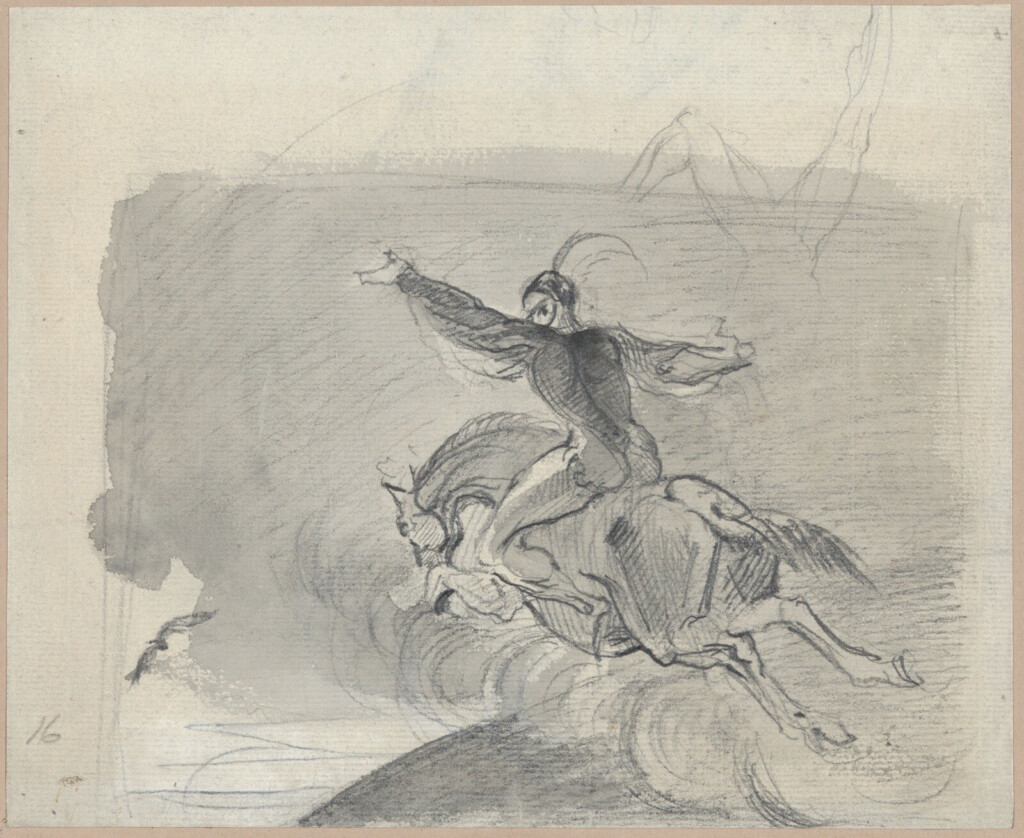
You are standing in a merchandise shop at the edge of a festival ground, and on the rack in front of you hangs a T-shirt bearing the inverted pentagram, the goat skull, the horned silhouette — symbols that once carried, in their original theological register, the full weight of eternal damnation, the negation of the sacred order, the annihilation of the soul’s immortal contract. The price tag reads twenty-two dollars. You buy it because it looks interesting, because it signals something about your taste, because it is, in a word that would have horrified every theologian who ever wrestled with the problem of evil, aesthetic.
Anton LaVey understood this before almost anyone in the twentieth century, and his 1969 publication of The Satanic Bible was less a theological document than a branding exercise of remarkable precision. LaVey stripped Satanism of its supernatural content entirely, replaced the trembling terror of genuine transgression with a philosophy of rational self-interest, and dressed it in theatrical stagecraft borrowed from carnival performance and Cold War counterculture. The result was not a challenge to Christian metaphysics but a mirror held up to late-capitalist individualism: do what thou wilt, consume what thou desire, reject the weak herd. Nietzsche’s will to power laundered through showmanship and sold as rebellion. The Church of Satan attracted not the damned but the disappointed — people who wanted permission to be selfish in a culture that already rewarded selfishness at every level, who needed a costume for an ideology the mainstream had already quietly adopted.
Heavy metal took this aestheticized transgression and amplified it into a visual grammar so codified it became a genre convention, indistinguishable from any other marketing category. By the mid-1980s, the devil had an approved color palette, an approved font, an approved stage production. When the Recording Industry Association of America began slapping Parental Advisory labels on albums in 1985, it did not suppress this imagery — it certified it, turned the mark of supposed corruption into a quality assurance stamp guaranteeing authenticity to the target demographic. The transgression was now industrially verified. The adversary had become a product category with reliable quarterly returns.
What gets lost in this process is not innocence but pressure. The Mephistophelian figure historically derived its psychological force from the genuine cost of the bargain — the soul was not a metaphor but a specific theological unit of infinite value, and its exchange for finite earthly gain represented a permanent, irreversible catastrophe. The drama required that something real be surrendered. Once the soul evacuates the transaction — once the only thing at stake is a consumer’s disposable income — the figure becomes decorative, a gargoyle on a building whose architect no longer believes in the protective function of gargoyles.
Silicon Valley completed the arc with characteristic efficiency. The entire rhetorical architecture of the tech disruption era — move fast and break things, ask forgiveness not permission, be a pirate not a sailor — is structurally Mephistophelian: it positions itself against established order, celebrates transgression as virtue, promises transformation of the world through audacious refusal of limits. But the broken things were other people’s livelihoods, privacy, attention, and democratic infrastructure. The pact was signed not by the founder but by the user, who exchanged data, time, and cognitive autonomy for a free service, without ever being shown the contract’s final clause. Mephistopheles here wears a hoodie and carries a term sheet, and the genius of the arrangement is that the person surrendering the soul believes they are the one doing the disrupting.
What the full arc from carnival showmanship to venture capital reveals is that a culture need not believe in the devil to be organized by his logic — it only needs to forget that the bargain was ever meant to cost something real.
🔥 Demons, Pacts, and the Abyss of Evil
Mephistopheles is not simply a literary character — he is a mirror in which Western civilization has gazed upon its deepest fears, temptations, and moral contradictions. From Goethe’s Faust to the witch trials of the early modern era, the figure of the devil has haunted theology, philosophy, literature, and art for centuries. These articles explore the cultural and symbolic terrain that surrounds the devil’s long shadow over the Western imagination.
Thomas Mann and the Devil’s Pact: Doctor Faustus
Thomas Mann‘s Doctor Faustus resurrects the ancient pact with the devil as a metaphor for Germany’s descent into totalitarianism and artistic self-destruction. The novel’s protagonist, Adrian Leverkühn, sells his soul in exchange for musical genius, echoing Mephistopheles in the most modern and tragic of registers. Mann transforms the Faustian myth into a profound meditation on hubris, creativity, and civilizational collapse.
GO TO THE SELECTION: Thomas Mann and the Devil’s Pact: Doctor Faustus
The Pact with the Devil in Literature: History and Symbolism
The pact with the devil is one of literature’s most enduring archetypes, appearing from medieval legends to Romantic poetry and modernist fiction. This article traces the symbolic and narrative evolution of the diabolical contract, exploring what it reveals about human desire, ambition, and the fear of damnation. Understanding this tradition is essential for grasping the full cultural weight of Mephistopheles as a figure.
GO TO THE SELECTION: The Pact with the Devil in Literature: History and Symbolism
Goethe’s Faust: Meaning and Analysis
Goethe’s Faust is arguably the most important literary text for understanding Mephistopheles, who appears here not merely as an evil tempter but as a complex philosophical force representing negation, wit, and restless human striving. The drama transforms the devil into a vehicle for exploring the limits of knowledge, pleasure, and redemption. No study of Mephistopheles is complete without a deep engagement with Goethe’s masterwork.
GO TO THE SELECTION: Goethe’s Faust: Meaning and Analysis
Demonology and historical treatises on witchcraft
The history of demonology and its treatises offers a crucial scholarly context for understanding how Mephistopheles and devil figures were systematically theorized, codified, and feared in Western culture. From medieval theological texts to early modern manuals, demonological thought shaped the popular and intellectual imagination of evil for centuries. This article provides the historical and doctrinal backbone behind the myths that gave rise to figures like Mephistopheles.
GO TO THE SELECTION: Demonology and historical treatises on witchcraft
Discover the Cinema That Dares to Go Deeper
If these explorations of the devil, the pact, and the shadows of Western culture have stirred something in you, Indiecinema is where that curiosity finds its cinematic home. On our streaming platform you will find independent films that dare to confront darkness, myth, and the eternal questions of the human soul — without compromises, without formulas.
👉 EXPLORE THE CATALOG: Watch Indie Films on Streaming
A vision curated by a filmmaker, not an algorithm
In this video I explain our vision

