
The Locked Room and the Hidden Key
You find it by accident, the way all the important things arrive. A secondhand bookshop, the kind with no system, where theology bleeds into cookery and someone has filed astrology under science without irony. You are not looking for anything in particular, which is perhaps why your hand stops on a spine you cannot quite read. The title is in Latin. The frontispiece, when you crack the cover, shows a garden of impossible geometry: a king dissolving in a bath, a sun and moon locked in opposition, a bird with no species you have ever seen perched on a tree whose roots descend into fire. You do not understand any of it. And yet something in your chest tightens, the way it does when someone across a crowded room turns and looks directly at you before you have given them any reason to.

This is not mysticism. This is cognition. The human nervous system is exquisitely calibrated to detect pattern and, more precisely, to detect the suggestion of pattern concealed behind apparent noise. When something appears to be encoded, the brain does not wait for confirmation before beginning to feel addressed. It leans forward. It assumes the message is for it. Carl Gustav Jung spent the better part of four decades — from his break with Freud around 1912 through the publication of Psychology and Alchemy in 1944 — documenting exactly this phenomenon: the encounter with alchemical symbolism produces in the modern psyche a response disproportionate to any rational understanding of the material. The symbols speak first, and the scholarship arrives later, if at all.
This is the world Michael Maier understood completely, because it was the world he deliberately constructed. Born in Rendsburg in 1568, trained as a physician, appointed personal physician to the Holy Roman Emperor Rudolf II at the court in Prague — a court that was itself one of the most concentrated gatherings of esoteric learning Europe had ever assembled — Maier became the most sophisticated propagandist the early seventeenth century ever produced for a movement that may or may not have existed. His books, above all the Atalanta Fugiens of 1617 and the Symbola Aureae Mensae of 1617, were not simply treatises on alchemy. They were engineered experiences. Atalanta Fugiens contained fifty emblems, each pairing an engraving with a musical fugue and a Latin epigram, creating a multi-sensory object that had to be heard as well as read and seen. You could not simply consume it. You had to participate. And participation, in Maier’s logic, was already initiation.
The Rosicrucian manifestos had appeared just years before: the Fama Fraternitatis in 1614, the Confessio Fraternitatis in 1615, both published anonymously in Kassel, both claiming the existence of a secret brotherhood founded by one Christian Rosenkreuz, a man who had supposedly traveled to the Arab world and returned with hidden knowledge, then died and been buried in a vault that remained sealed for 120 years before being rediscovered by the brothers themselves. The vault contained the founder’s perfectly preserved body, a library of secret wisdom, and a pact to heal the sick for free. The manifestos invited worthy seekers to make contact. They gave no address. They offered no method of approach. The invisibility of the Brotherhood was, the texts insisted, the Brotherhood’s greatest proof.
Hundreds of people wrote letters into the void. Descartes, traveling through Germany in 1619, reportedly tried to find the Rosicrucians and could not, concluding — with a logic that is either rational or devastating — that since invisible men leave no trace, the fact that he found nothing proved nothing at all. The trap was perfect. The absence of the Brotherhood was indistinguishable from its presence. And Maier, moving through the courts of northern Europe with his books and his music and his emblems, was the trap’s most elegant mechanism.
The locked room always implies a key. The key always implies that someone, somewhere, chose not to give it to you yet.
The Man Behind the Emblems
There is a kind of man who cannot say a thing plainly even when plainness would save him. Not from cowardice, but from a deep conviction that the plain thing, once said, dies. Michael Maier was that kind of man. Born in Rendsburg in 1568, trained as a physician in the most rigorous scholarly tradition of late Renaissance Germany, elevated to the court of Rudolf II in Prague as personal physician and imperial count palatine — a title that meant something once — he spent the better part of his adult life constructing labyrinths rather than doors. Every text he wrote was an architecture of indirection. Every emblem a locked room with the key hidden inside the lock.
To understand why, you have to feel the temperature of the world he moved through. The Holy Roman Empire in the early seventeenth century was not a political entity so much as a pressure cooker with religious ornament painted on the outside. The Defenestration of Prague was coming in 1618, the Thirty Years’ War behind it like a tidal wave already formed offshore. Rudolf’s court at Prague, that extraordinary hothouse of astrologers, alchemists, painters, and astronomers — Tycho Brahe arrived there in 1599, Kepler followed — was itself a kind of organized anxiety, a collective attempt to find some knowledge that transcended the confessional wars tearing Christendom apart. Rudolf himself, melancholic and brilliant, understood that the esoteric offered something orthodox theology had forfeited: a language that could speak across borders without triggering inquisitors.
Maier understood this with the precision of a physician diagnosing a chronic condition. When he published Atalanta Fugiens in 1617, he produced something that had never quite existed before — fifty alchemical emblems, each accompanied by an epigram, a prose discourse, and a three-voice fugue he composed himself. The music was not decorative. It was argumentative. The idea that transformation, the central obsession of alchemy, could not be contained in a single medium — that it required image, word, and sound simultaneously to even approach the thing — this was not mysticism for its own sake. It was an epistemological position. Maier believed, with the intensity of someone who has thought about little else for decades, that truth at a certain depth refuses reduction. It will not sit still in one form. You have to chase it across registers. That is what the figure of Atalanta meant to him — not merely the mythological girl who could not be outrun, but the nature of the hidden itself, always slightly ahead, always requiring a ruse to catch.
He traveled extensively through those years, and travel then was not leisure. It was exposure. He spent time in England, where he encountered Robert Fludd, physician and Rosicrucian apologist, a man equally devoted to the proposition that the universe had a harmonic structure that conventional natural philosophy was too coarse to perceive. Their meeting was not the collision of two eccentrics at the margins of respectable thought. It was two representatives of a serious intellectual current trying to consolidate, before the wars made consolidation impossible. Frances Yates, in her landmark 1972 study The Rosicrucian Enlightenment, traced this network with the patience of an archaeologist, showing how the Rosicrucian manifestos of 1614 and 1615 — the Fama Fraternitatis and the Confessio — circulated through exactly this milieu, and how figures like Maier were not merely responding to them but actively shaping the discourse around them.
His Silentium post Clamores, also published in 1617, was a defense of the Rosicrucian brotherhood that managed simultaneously to affirm its existence and maintain its mystery — a rhetorical performance of considerable sophistication. The title alone is a provocation: silence after the clamor. As if the real answer to all the noise of theological warfare was not a louder argument but a strategic withdrawal into encoded form.
What drove a man of his learning to spend his life this way, encoding rather than declaring, composing fugues for ideas that might have been stated in a paragraph — that question does not have a comfortable answer.

The Brotherhood That May Not Have Existed
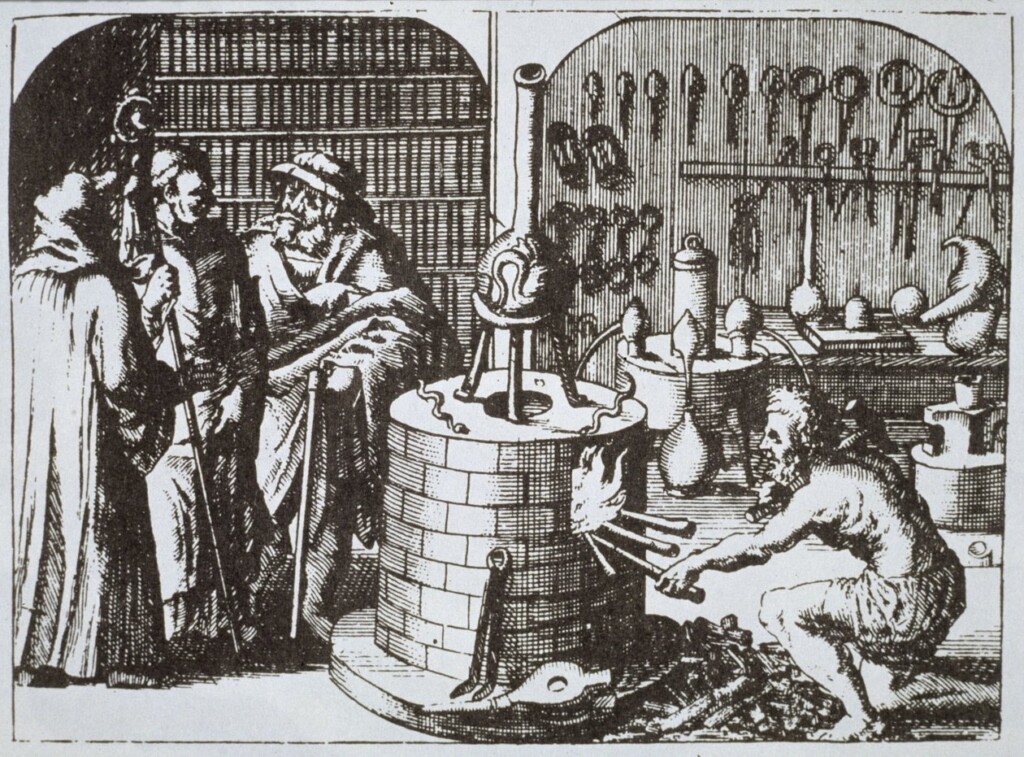
Imagine receiving a letter from an organization you have never heard of, written in a language that seems designed precisely for you, describing a brotherhood of philosophers who possess the secrets of nature and medicine, who work invisibly among the populations of Europe, who ask nothing of you except that you make yourself known to them. You do not know if they exist. You cannot verify the return address. And yet you find yourself composing a response.
This is what happened across the German-speaking lands beginning in 1614, when a document called the Fama Fraternitatis began circulating in manuscript before finding its printed form. Within a year, the Confessio Fraternitatis followed. Together they described the life of one Christian Rosenkreutz, a German pilgrim who had traveled to the Islamic world, absorbed ancient wisdom, founded a secret brotherhood, and died at the age of one hundred and six, his incorruptible body discovered in a hidden vault a hundred and twenty years after his death. The vault was illuminated by its own internal light. The inscription above the entrance read: I shall open after one hundred and twenty years. The mathematics were impeccable. The symbolism was overwhelming. The invitation was unmistakable.
Frances Yates, writing in 1972 in her exhaustive study of what she called the Rosicrucian Enlightenment, estimated that within a decade of the first publication, more than two hundred separate responses, rebuttals, petitions, and philosophical treatises had been published by individuals seeking contact with or debating the existence of the Brotherhood. Two hundred documents generated by an organization that may never have had a single physical meeting room, a single dues-paying member, a single face. Yates understood immediately that this was the wrong way to frame the problem. Whether the Rosicrucian Brotherhood existed or not was, she argued, almost irrelevant to understanding what it did. What it did was activate.
This is the structural feature that belief systems share with viruses and with rumors: they do not require a source to function. A man sits in his study in Frankfurt sometime around 1615, a serious man, a man who has read Paracelsus and Pico della Mirandola and knows the difference between Hermetic philosophy and street magic. He reads the Fama. He reads it again. Something in him resists immediate dismissal. The document is too precisely calibrated to his existing intellectual longings. The Hermetic tradition that Yates had traced so meticulously in her earlier work on Giordano Bruno — the tradition that imagined an ancient Egyptian wisdom flowing through Neoplatonism, through Renaissance magic, toward some imminent renovation of human knowledge — here seemed to be offering its own culmination. The Brotherhood claimed to hold the key to a universal reformation of all things. Not of religion alone, not of science alone, but of everything together, simultaneously, without contradiction.
The philosopher in his study does not believe everything he reads. That is precisely what makes him vulnerable. He is sophisticated enough to suspect hoaxes, which means he is sophisticated enough to know that sophisticated hoaxes sometimes conceal genuine things. He is trapped by his own critical intelligence into taking the document seriously.
Yates recognized in the Bruno she had studied for decades a similar mechanism. Bruno had been burned in Rome in 1600 for, among other things, his insistence that the Hermetic magical worldview was not merely metaphor but operational truth. Fourteen years later, the Rosicrucian manifestos appeared, and the intellectual climate that had produced Bruno’s martyrdom had not disappeared — it had gone underground, where it was precisely where the Brotherhood claimed to operate. The timing was not coincidental. The manifestos arrived in the wake of decades of religious war, scientific revolution in its earliest and most unstable phase, and a widespread conviction among European intellectuals that something enormous was about to change or had to change or was already invisibly changing.
What the Brotherhood offered was not information but structure for an anxiety that already existed. The genius of the Fama, whether it was authored by Johann Valentin Andreae alone or by a circle of Tübingen theologians or by someone else entirely, lay in its understanding that you do not create belief by providing evidence. You create belief by providing a container perfectly shaped for the longing that is already there, waiting to be named.
Alchemy as the Language Power Speaks When It Cannot Speak Plainly
There is a kind of language that exists precisely because the direct version of it would cost you something. You have sat in a meeting where someone described a catastrophic corporate failure as a “strategic realignment opportunity.” You have watched a politician explain a lie through the grammar of ambiguity, each clause carefully engineered to mean two opposite things simultaneously. You have read an academic paper where the conclusion — something obvious, something almost dangerous — was buried under fourteen layers of passive construction and methodological qualification, dressed in the borrowed authority of specialized terminology until it became unrecognizable even to the person who wrote it. This is not incompetence. This is survival. This is what language does when the thing it needs to say would, spoken plainly, destroy the speaker.
Carl Jung understood this dynamic not as a pathology but as a structural feature of human symbolic life. When he published Psychology and Alchemy in 1944, he was not arguing that the alchemists were deluded proto-chemists fumbling toward a science they would never reach. He was arguing something far more unsettling: that the entire symbolic apparatus of alchemy — the sulfur and mercury, the red king and white queen, the dragon devouring its own tail — was the unconscious mind of an entire civilization, projected onto matter because it had nowhere else to go. The individuation process, Jung’s term for the psychological journey toward wholeness, was being performed in furnaces and written in margins not because these men were confused about chemistry, but because the interior life had no socially permissible vocabulary. You could not, in the early seventeenth century, walk into a Calvinist court and announce that you were engaged in the symbolic reconciliation of your masculine and feminine principles. You could, however, say you were heating mercury.
Umberto Eco, working from a completely different direction, arrived at a conclusion that rhymes precisely with Jung’s. In his semiotic analysis of secret societies and hermetic traditions, Eco demonstrated that secrecy is not primarily about hiding information. Secrecy is a performance of power, a social technology. The secret does not derive its value from what it conceals but from the act of concealment itself, which creates an interior and an exterior, an initiated and an uninitiated, a language that speaks and a language that withholds. The hermetic text is powerful not despite its opacity but because of it. Maier’s emblems in Atalanta Fugiens — published in 1617, that pivotal year when Rosicrucian fever was at its most febrile — operate on exactly this principle. The image of a woman nursing the earth, the figure of a king dissolving in water, the hermaphrodite standing at the crossroads: none of these were puzzles waiting to be solved. They were demonstrations of the ability to speak in a register that most could not enter.
There is a man sitting at a desk, reading a report he has written himself. He knows what it means. He has deliberately ensured that no one else will, not entirely, not on first reading, not without asking him to clarify. The clarification will never fully come. This is not the seventeenth century. This is Tuesday afternoon in a building with fluorescent lighting and a corporate wellness program. The mechanism is identical. Solve et coagula — dissolve and coagulate — was the central operative instruction of alchemical practice, meaning roughly: take apart, then reassemble. Applied to matter, it is a chemical procedure. Applied to knowledge in a politically hostile environment, it is a survival strategy. You dissolve the dangerous idea into symbol, you coagulate it again inside the initiated reader who knows how to read the symbol back.
What Maier was doing with his engravings was not mysticism in the sense of irrationality. It was rationalism under conditions of extreme surveillance. When the Emperor Rudolph II — a known patron of occult arts, a man whose court at Prague had become the most intellectually permissive environment in Europe — when even that protection could not guarantee safety, the symbolic became not a choice but the only available grammar.
Rudolf II’s Prague and the Politics of Forbidden Knowledge

There is a particular kind of exhaustion that comes from being valued for the wrong reasons. You have experienced it, perhaps, in a performance review where your manager praised you for a quality you do not actually possess, or in a relationship where you understood, slowly and then all at once, that the person across the table was in love with a version of you that bore only coincidental resemblance to who you actually were. The praise lands correctly on the surface and hollows you out underneath. Prague in the first decade of the seventeenth century was an entire city organized around that feeling.
Rudolf II had assembled, within the walls of Hradčany Castle and across the narrow streets descending from it, the most concentrated gathering of genuine intellectual talent in Europe. He had done so for reasons that were sincere but structurally deranged. R.J.W. Evans, in his meticulous reconstruction of that court published in 1973, shows us an emperor who was not the credulous mystic of popular mythology but something stranger and more recognizable: a man who used esoteric patronage simultaneously as an instrument of political legitimacy and as a screen behind which his escalating psychological fragility could be sheltered from scrutiny. The Kunstkammer he assembled, with its rhinoceros horns and mechanical automata and astrological instruments, was not mere eccentricity. It was a territorial claim, an argument that the Habsburg court stood at the center of all knowable things. The hermetic tradition suited this argument perfectly because it promised precisely that: a unified knowledge beneath the fragmented surface of disciplines, a single grammar underlying all of nature’s dialects.
Into this structure walked men who knew, with varying degrees of clarity, that they were being funded for something different from what they were actually doing. Tycho Brahe arrived in 1599 carrying twenty years of observational data so precise it would eventually destroy the cosmology he himself still publicly defended. He needed imperial patronage and he had it. What Rudolf wanted from him was essentially astronomical legitimacy, a court astrologer of incomparable credentials. What Brahe actually possessed was the empirical groundwork for a heliocentric universe he could not bring himself to fully accept. Johannes Kepler, who inherited Brahe’s data and ultimately cracked it open, sat in Prague writing imperial horoscopes while privately constructing the laws of planetary motion. He understood the transaction completely. He wrote about it with a kind of weary precision, describing astrology as a foolish daughter who nonetheless fed her wise mother mathematics, because without the income from casting charts, the pure astronomical work could not continue.
John Dee had passed through Prague a decade earlier, in 1584, accompanied by Edward Kelley whose gift for angelic communication was either genuine mediumship or exceptional fraud, and possibly, in ways that resist easy resolution, both simultaneously. Dee carried with him a system of symbolic notation he called Enochian, a complete language allegedly dictated by angels through Kelley’s scrying mirror. Rudolf received them, was fascinated and then alarmed, and eventually yielded to papal pressure and expelled them. What Dee wanted from the emperor was recognition that his project was philosophically serious. What Rudolf wanted from Dee was something closer to supernatural insurance, confirmation through celestial channels that his reign had cosmic sanction.
Michael Maier arrived into this atmosphere after its most volatile phase had passed but while its essential structure remained intact. His position as court physician was not metaphorical. He administered to a body, Rudolf’s, that was by this period genuinely compromised: the emperor suffered from what Evans describes as recurring depressive episodes of disabling intensity, withdrawing for months into his collections and his experiments while the governance of the empire proceeded without him or collapsed around him. Maier therefore occupied the most intimate possible proximity to power while being required, professionally and personally, to maintain the fiction that what he was treating was a physical condition rather than a dissolution of the will to exist publicly at all.
This is the specific geography of his situation. He was inside the institution completely. He was misread by it completely. And the work continued anyway, in that peculiar pressurized silence that serious thought sometimes requires precisely because the people paying for it are looking somewhere else.
A vision curated by a filmmaker, not an algorithm
In this video I explain our vision
What the Sealed Door Protects and What It Destroys
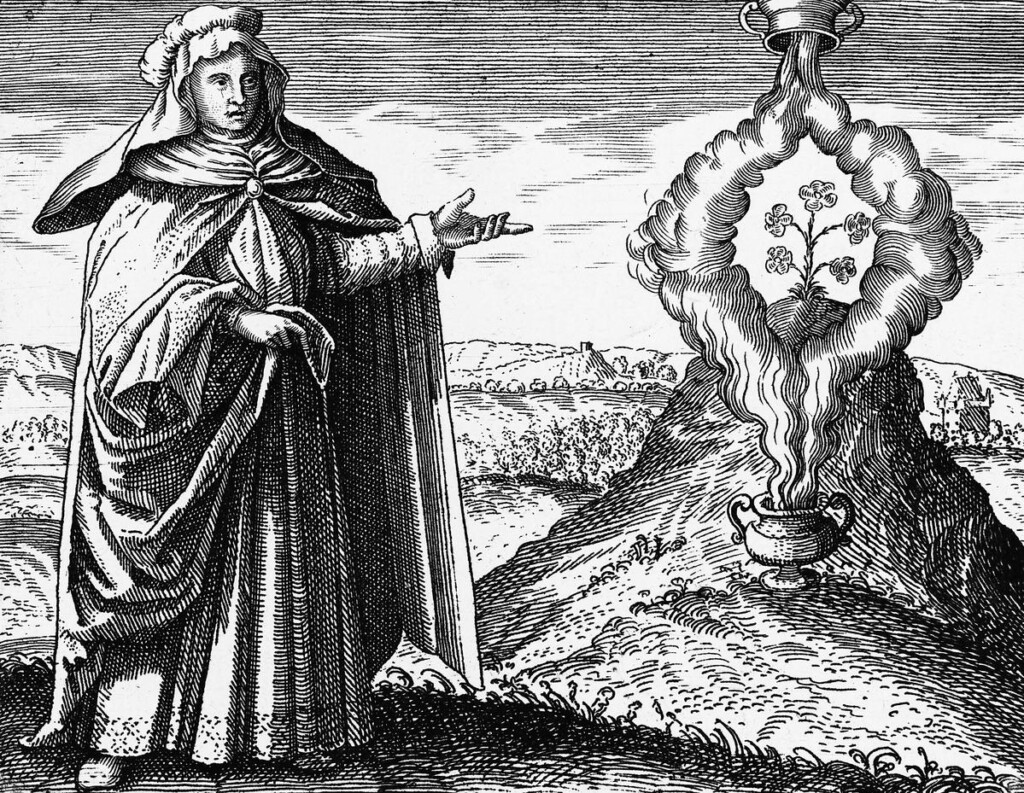
There is a moment most people recognize but rarely discuss — standing in a conversation where something important is clearly being communicated, but not to you. The words are audible. The language is familiar. And yet the meaning moves between the other speakers like a current you cannot touch, and you understand, without anyone saying so, that the door was closed before you arrived.
This is not paranoia. It is a structural experience, one that the Rosicrucian project encoded into its very architecture. The invisible college, the brotherhood that could not be found, the manifestos that invited and simultaneously withheld — these were not rhetorical accidents. They were the mechanism itself. Michael Maier understood, with the precision of someone who had survived courts and confessions and the long patience of Protestant suspicion, that knowledge kept partially hidden is knowledge that generates its own gravity. What cannot be fully reached pulls harder than what lies open on a table.
Michel Foucault, in his 1975 work Surveiller et punir and throughout his lectures at the Collège de France, argued that knowledge and power are not merely related but mutually constitutive — that every system of truth produces a corresponding system of exclusion, and that the question is never simply what is known, but who is permitted to know it, under what conditions, and at what cost. The Rosicrucian brotherhood, whether it existed as a literal organization or not, was a perfect machine of this kind. It created insiders by the logic of exclusion alone. To be outside was already to be defined. To seek admission was already to accept the terms of a hierarchy you had not negotiated.
And yet Foucault’s analysis, applied too cleanly here, risks missing something genuine. Because the sealed door did protect something real. In the years between 1614 and the outbreak of the Thirty Years’ War, the space for heterodox inquiry was genuinely narrow and genuinely dangerous. Paracelsian medicine, Hermetic cosmology, the dream of a reformed Christianity that did not belong to Rome or to Wittenberg — these were not abstract positions. They were positions that could end careers, trigger imprisonment, invite the slow administrative violence of ecclesiastical prosecution. Secrecy was not only power’s instrument. It was also survival’s instrument. The same lock serves different purposes depending on which side of the door you are on.
Peter Sloterdijk, in his 2009 work Du musst dein Leben ändern, introduced the concept of the anthropotechnic — the human compulsion to transform the self through disciplined, often hidden practice, to become something other than what circumstance produced. What the Rosicrucian texts offered, beneath the symbolic density and the cryptographic imagery, was precisely this: a grammar of self-transformation that could not be fully handed over because its transmission required the recipient to already be in motion. Maier’s Atalanta Fugiens, with its fifty emblems and its fugues for three voices, was not a book you read. It was a book you underwent. The music and the image and the epigram demanded simultaneous processing, a form of attention that was itself the initiation. The medium was the discipline.
But this is where the double edge becomes impossible to deny. Because what Sloterdijk describes as a human drive toward transformation, the Rosicrucian structure quickly converted into a criterion of worthiness. The discipline was real, but the gatekeeping was also real, and the two cannot be fully separated. Every system that says the truth requires preparation also implies that the unprepared do not deserve it, and from there the distance to contempt is shorter than any initiate would wish to admit.
A man spends years before a tradition that acknowledges his effort but never opens completely. He learns its language, adopts its posture, mirrors its values. And still there is another room, another level, another text that remains just beyond reach. He cannot know whether the deeper teaching exists or whether the door is the teaching — whether the locked room contains the answer or whether the locked room is the answer, and the question it poses is the only thing that was ever really there.
🜂 The Hidden Architects of Hermetic Knowledge
Michael Maier stands at the crossroads of alchemy, Rosicrucianism, and Renaissance esotericism, weaving together symbolic languages that shaped centuries of occult thought. These related articles trace the intellectual web surrounding his world, from hermetic philosophy to the emblematic traditions he helped define.
Robert Fludd: Macrocosm Microcosm and Alchemy
Robert Fludd was a contemporary and intellectual ally of Michael Maier, sharing his deep commitment to Rosicrucian ideals and Hermetic cosmology. His vision of the macrocosm and microcosm mirrors the emblematic language Maier encoded in his famous Atalanta Fugiens, making both figures essential pillars of early seventeenth-century esoteric thought. Exploring Fludd’s work illuminates the symbolic architecture that Maier sought to transmit through music, image, and alchemical allegory.
GO TO THE SELECTION: Robert Fludd: Macrocosm Microcosm and Alchemy
Paracelsus: Life and Alchemical Thought
Paracelsus stands as one of the foundational influences on Michael Maier‘s alchemical worldview, having revolutionized the understanding of medicine, nature, and spiritual transformation. His integration of alchemy with practical philosophy and natural magic created a living tradition that the Rosicrucians, including Maier, openly drew upon. Understanding Paracelsian thought is essential to grasping the deeper layers of meaning encoded in Maier’s emblematic writings.
GO TO THE SELECTION: Paracelsus: Life and Alchemical Thought
Giordano Bruno and the Hermetic Tradition
Giordano Bruno‘s radical Hermetic philosophy challenged institutional boundaries in ways that resonated strongly with the Rosicrucian movement Maier championed. Bruno’s art of memory and his vision of an animated, spiritually alive cosmos echo throughout the symbolic systems Maier deployed in his alchemical emblem books. Their shared debt to the Hermetic tradition places Bruno as a crucial precursor in the lineage of ideas Maier would carry into the seventeenth century.
GO TO THE SELECTION: Giordano Bruno and the Hermetic Tradition
The Corpus Hermeticum: Guide to Esoteric Reading
The Corpus Hermeticum forms the philosophical bedrock upon which figures like Michael Maier constructed their alchemical and Rosicrucian visions. Its teachings on divine intellect, transformation, and the ascent of the soul provided the esoteric grammar that Maier translated into elaborate symbolic compositions. Reading this foundational text alongside Maier’s work reveals how ancient Hermetic wisdom was reactivated and reinterpreted during one of history’s most fertile moments of occult renaissance.
GO TO THE SELECTION: The Corpus Hermeticum: Guide to Esoteric Reading
Discover the Cinema of Inner Transformation on Indiecinema
If the labyrinthine world of alchemy, symbolism, and esoteric tradition speaks to something deep within you, Indiecinema streaming is your next portal. Our curated selection of independent and visionary films explores the same hidden currents of meaning that Maier and the Rosicrucians pursued — through image, myth, and cinematic revelation. Step inside and let the screen become your alchemical mirror.
👉 EXPLORE THE CATALOG: Watch Indie Films in Streaming
A vision curated by a filmmaker, not an algorithm
In this video I explain our vision

