
The Price of Entry
You are in a room that smells like someone else’s decision. The negotiation has already happened — not here, not with words spoken between the two of you, but somewhere upstream, in the accumulated pressure of rent unpaid and options exhausted and the precise moment when a person calculates that their own refusal has become a luxury they can no longer afford. What is exchanged in the next hour is not a body. It is the temporary right to treat another human being’s interiority as irrelevant. That is the transaction. That is what has always been for sale.

The history of prostitution is almost always narrated as the history of bodies — their regulation, their disease, their vulnerability, their rescue. What this framing systematically obscures is that the body is merely the medium through which something far more troubling is transmitted: the suspension of the other person’s subjectivity as a contractual condition. The philosopher Martha Nussbaum, in her 1998 essay “Whether from Reason or Prejudice,” attempted to normalize the exchange by comparing it to other forms of bodily labor — the philosopher who rents out her mind, the factory worker who rents out her hands. The comparison is formally coherent and substantively evasive, because it ignores the specific content of what is being transferred. A factory worker’s will, however constrained by economic necessity, is not itself the product being purchased. In the transaction Nussbaum attempts to domesticate, the buyer’s satisfaction depends precisely on the seller’s performance of willingness — a performance that can only exist because the underlying unwillingness has been economically suppressed.
This is not a moral argument against the exchange. It is a structural description of what the exchange requires in order to function. Power, in this context, is not an accident or an abuse of the system — it is the system’s operating logic. Sociologist Elizabeth Bernstein, in her 2007 book “Temporarily Yours,” documented what she called “bounded authenticity” — the phenomenon whereby clients in the contemporary sex trade seek not mere physical access but the simulation of genuine desire, emotional presence, the fiction of mutual want. They are not simply purchasing a service. They are purchasing the temporary erasure of the power differential they themselves created by having the money to purchase it. The transaction contains its own contradiction: you cannot buy the authentic suspension of someone’s will, because the act of buying guarantees its performance.
What is remarkable is how ancient this contradiction is, and how consistently it has been ignored in favor of simpler stories. In classical Athens, the pornai — enslaved women available to any man with a coin — existed alongside the hetairai, educated companions whose elevated status depended on the performance of autonomous choice. Aspasia of Miletus, companion to Pericles in the fifth century BCE, was admired precisely because her consent appeared real, appeared chosen, appeared uncoerced. The Athenian male citizen paid more not for a better body but for a more convincing fiction of equality. The price of entry has always included, as its premium tier, the cost of forgetting that there is a price.
What legal frameworks have tried to do, from the Contagious Diseases Acts imposed in Britain between 1864 and 1886 to the Nordic Model adopted by Sweden in 1999, is regulate the edges of this dynamic while leaving its center untouched. The British Acts submitted women to compulsory medical examination while the men who purchased them faced no legal consequence whatsoever — a legislative enactment of exactly the power asymmetry it claimed to manage. The Swedish model criminalized buying while decriminalizing selling, a structural inversion that displaced stigma without dissolving the economic conditions that make the market legible in the first place. Every law written about this exchange has been, in some sense, a law written around the thing it cannot bring itself to name directly.
Urban Traffik

Thriller, by Jason Figgis, United States, 2017.
In the heart of a dark and hidden Dublin, Adam appears to be a kind-hearted man when he offers shelter to Sue, a lonely and vulnerable young woman who has just arrived in the city. The reality, however, is far more tragic: Adam serves as bait for a ruthless human trafficking ring led by the cold and calculating Dan and managed by his partner, Alex. Their chilling scheme is simple: lure defenseless young women and sell them into the international sex trade. But this seemingly perfect criminal enterprise is about to unravel. As disturbing family secrets linking Dan to Adam's sister come to light, and Adam desperately tries to break free from a brutal world he can no longer endure, the lives of everyone involved spiral into uncontrollable violence.
Directed by acclaimed independent filmmaker Jason Figgis, Urban Traffik leaves horror behind to embrace the raw, tense, and hyper-realistic territory of urban crime drama, recalling the visceral intensity of British cult films such as London to Brighton. The film's greatest strength lies in its outstanding performances: thanks to its razor-sharp screenplay, the cast succeeds in making viewers empathize even with its darkest and most morally ambiguous characters. Visually, the film is a noir gem. Alan Rogers' striking cinematography captures Dublin's hidden and ghostly side, transforming neglected alleyways and bare interiors into landscapes of palpable despair. Avoiding easy moralizing, Urban Traffik offers a hypnotic, intimate, and uncompromising look at the inner workings of organized crime.
LANGUAGE: English
SUBTITLES: Spanish, French, German, Portuguese
Control as Infrastructure
You are standing at the edge of something that was never designed to be seen whole. The paperwork exists, the registers are archived, the inspections were logged in triplicate — but no one was supposed to notice that the machinery of control and the machinery of commerce were the same machine. In 19th-century France, the maison de tolérance was not a concession to human weakness. It was an administrative instrument, catalogued and supervised by the prefecture of police, its women registered under numbered cards, subjected to mandatory venereal examinations, confined to specific streets, visible only within designated hours. Alexandre Parent-Duchâtelet published his exhaustive survey of Parisian prostitution in 1836, and what he produced was not a moral tract but an urban management document — the same analytical gaze he had previously directed at the sewers of Paris. The parallel was not accidental. Prostitution and sewage occupied the same conceptual category: necessary flows that, if left unmanaged, threatened the health of the social body.
Michel Foucault argued in Discipline and Punish, published in 1975, that modern power does not primarily operate through spectacle or prohibition but through classification, surveillance, and the normalization of bodies. The Parisian regulatory system demonstrated this with unusual clarity. The registered woman — the fille en carte — did not disappear from social life. She was made legible, tracked, assigned coordinates. Her body became a document in a municipal archive. The unregistered woman, the clandestine, was the true target of enforcement — not because she sold sex but because she had escaped the grid. The crime was invisibility, not the act itself.
What the registers reveal, when you read them against the economic history of the period, is a system calibrated not around female morality but around male labor. Industrial cities required men who could discharge sexual tension without forming domestic entanglements that might complicate their mobility, their debt structures, their factory attendance. The brothel solved a logistics problem. Alain Corbin’s forensic reconstruction of 19th-century French prostitution, L’Héritage de la putain, traces how municipal regulation explicitly framed the maison close as a buffer protecting bourgeois marriage from contamination while simultaneously preserving the availability of male workers for capital. The moral language was always there, draped over the architecture — but the architecture served productivity schedules, not scripture.
Germany moved through similar terrain. The Sittenpolizei, the morality police operating in cities like Hamburg and Berlin across the latter half of the 19th century, enforced registration systems that functioned as internal passport controls for certain categories of women. A woman once registered could rarely exit the registry — employers were informally notified, landlords refused leases, and the documentation followed her. The register was not a temporary record of circumstance. It was a permanent reclassification of personhood. What the state created through the act of regulation was a legally bounded underclass whose existence it officially tolerated precisely because tolerance was the mechanism of containment.
Foucault’s concept of biopower — the governance of populations through the administration of life itself — finds one of its least examined applications here. The female body under regulated prostitution was not simply policed; it was enrolled as infrastructure. The examinations were not health interventions in any meaningful clinical sense: syphilis treatment was rudimentary at best, and women found to be infected were institutionalized in lock hospitals, removed from circulation rather than cured. The examination was a ritual of state inscription, a weekly proof that the body remained within the administrative perimeter. Health was the idiom; containment was the function.
What this infrastructure accomplished across decades was the naturalization of a two-tier sexual economy — one in which male desire was treated as a civic variable requiring management, and female sexuality was the managed resource. The deviance was never in the transaction itself.

The Abolitionist Trap
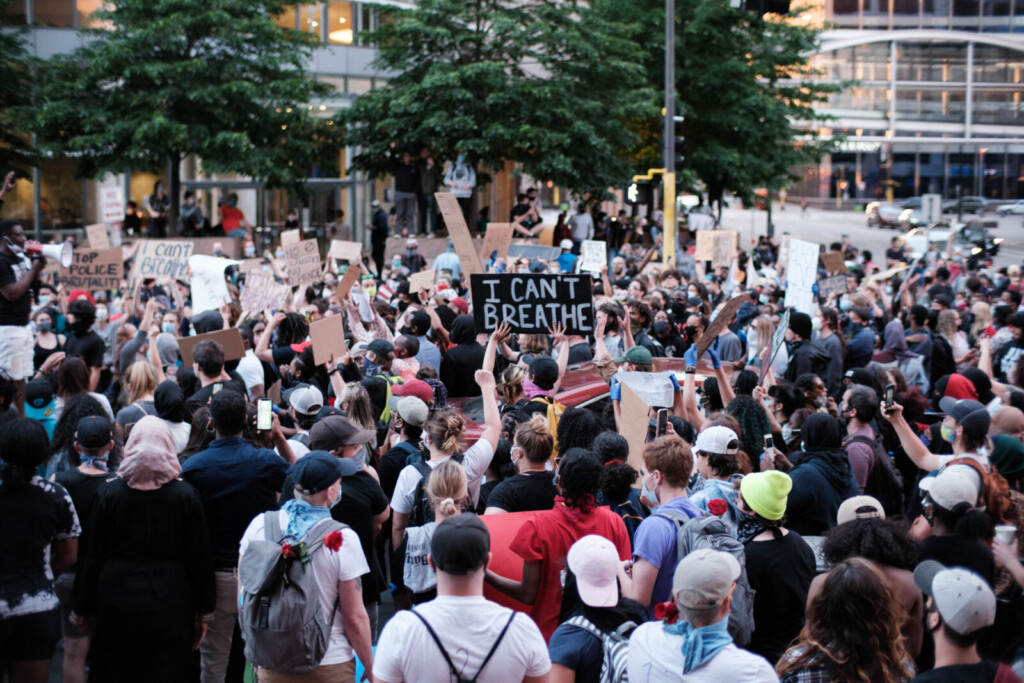
You are handed a pamphlet outside a subway station. On the front, a photograph: a young woman, eyes cast downward, shadows heavy across her face. The headline reads “She Needs You.” Somewhere in the design — in the carefully chosen darkness of the image, in the grammatical structure of that sentence — a transaction has already occurred, and you are not the one who paid for it.
Josephine Butler launched her campaign against the Contagious Diseases Acts in 1869 with genuine moral fury. The Acts allowed police in English garrison towns to forcibly examine any woman suspected of prostitution and detain her indefinitely in lock hospitals if she tested positive for venereal disease. Butler’s outrage was legitimate: women were being subjected to state-sanctioned violation with no legal recourse. Yet the framework she constructed to fight this — one built on the figure of the fallen woman, the innocent victim seduced and ruined by male appetite — required a subject who was passive, voiceless, and essentially without history. To be saved, you had to be helpless. The politics of rescue encoded this requirement into its grammar from the very beginning.
What Butler could not tolerate, and what the rescue movement after her has consistently refused to accommodate, is the woman who says she is not drowning. The archive is full of such women — women who appeared before Butler’s own committees and declined the role assigned to them, who described economic calculation rather than coercion, who named landlords, police, and reformers alike as sources of danger rather than salvation. These testimonies were not incorporated into the campaign’s narrative. They were absorbed, softened, or quietly discarded, because a subject with agency cannot generate the emotional architecture that fundraising and legislative lobbying require.
The structural logic Butler established migrated intact into the twentieth century and arrived in the contemporary NGO rescue complex with its machinery fully operational. Siddharth Kara, in his 2009 study Sex Trafficking: Inside the Business of Modern Slavery, documented how raid-and-rescue operations conducted across South and Southeast Asia routinely resulted in the detention, deportation, or criminal prosecution of the women they claimed to liberate. The rescue was indistinguishable, in its material effects, from arrest. What differed was the vocabulary used to describe it and the emotional affect of those who performed it.
The legal architecture constructed around abolitionist premises deepens this paradox rather than resolving it. The Trafficking Victims Protection Act, passed in the United States in 2000 and reauthorized multiple times since, built its enforcement mechanisms on a distinction between the trafficked victim and the voluntary sex worker — a distinction that requires law enforcement to determine which category a woman belongs to before offering her any form of assistance. In practice, this adjudication is performed by the same institutions that criminalize her regardless of the outcome. Elizabeth Bernstein, in Temporarily Yours: Intimacy, Authenticity, and the Commerce of Sex, published in 2007, described how this framework forged an unlikely coalition between evangelical Christian organizations and certain strands of mainstream feminism, united not by shared analysis but by shared investment in the iconography of victimhood. The policy product of that coalition increased surveillance, restricted migration, and defunded harm reduction programs, while leaving the economic conditions that generate vulnerability entirely intact.
There is a specific violence in being told that your account of your own life is a symptom of your oppression. It forecloses the possibility of disagreement before the conversation begins. Women in sex industries who testified against criminalization during the drafting of various national and international frameworks found their testimony categorized in advance as evidence of false consciousness, of traumatic bonding, of the successful internalization of patriarchal values. The interpretive move is elegant in its brutality: any voice that contradicts the rescue narrative is absorbed by it as proof that rescue is needed.
When the State Becomes the Pimp
You are walking home at two in the morning through a neighborhood that used to have a name for what happened on its corners, and now it has a different name — a cleaner one, one that appears in parliamentary reports — and the corners are empty, and you do not know where the people who used to stand there have gone, and that not-knowing is precisely the point.
Sweden passed its Sex Purchase Act in January 1999, a piece of legislation that criminalized the buyer while formally decriminalizing the seller, and within five years the government commissioned Anna Skarhed to evaluate its effects. The 2004 report that bore her name declared the law a success, citing a measurable reduction in visible street prostitution — numbers down, the thinking ran, meant harm down. What the report could not see, almost by methodological design, was everything that had moved out of its field of vision. Counting the bodies on the corner was easy. Counting the bodies that had disappeared into apartments, into encrypted messaging platforms that did not yet exist, into cars that drove further from city centers to negotiate in darkness, was not a form of counting the report was built to perform.
Michel Foucault argued in Discipline and Punish, published in 1975, that modern power does not primarily destroy its objects — it displaces, organizes, and renders them invisible to the instruments that measure them. What the Swedish model achieved was not a reduction in the exchange of sex for money but a reorganization of where and how that exchange occurred, under conditions systematically more dangerous for the person selling. When buyers face criminal risk, they demand speed, secrecy, and the elimination of any moment in which the seller might evaluate, negotiate, or refuse. The Swedish street-level researcher Don Kulick documented in his 2005 work that workers who remained in the trade after 1999 reported less time to assess clients, less ability to insist on condoms, and a sharper material dependency on third parties who could provide the indoor infrastructure criminalization had suddenly made indispensable.
The state had not removed exploitation from the equation. It had simply inserted itself as the condition under which exploitation intensified, while retaining the political language of protection. This is not a paradox of good intentions gone wrong — it is a structural feature of how governance functions when it addresses symptoms rather than the material conditions producing them. Poverty, housing precarity, migration status, addiction, histories of institutional abandonment: none of these appear in the Skarhed framework as variables to be addressed. They appear, if at all, as background noise against which the law’s signal could be measured clean.
The sociologist Elizabeth Bernstein introduced the concept of “carceral feminism” to describe precisely this alignment — a strand of feminist politics that routes its abolitionist energy through the punitive apparatus of the state, conflating incarceration and prosecution with liberation. What makes this alignment seductive is that it produces visible action. Laws are passed, statistics are gathered, press releases are issued. The woman in the apartment who is now more isolated, whose client now refuses to give a name or a number because he is afraid, whose negotiating position has contracted to the vanishing point — she does not appear in the press release. She appears, if she appears at all, in the notes of a harm reduction outreach worker who cannot publish what she finds without threatening the political consensus the law depends on.
Norway replicated the Swedish model in 2009, and New Zealand had by that point already taken the opposite path, decriminalizing in 2003 under the Prostitution Reform Act. The New Zealand Ministry of Justice review of 2008 found no increase in the size of the sex industry following decriminalization, while workers reported measurably improved ability to refuse clients and access health services. Two legislative experiments, running simultaneously, producing divergent empirical outcomes — and the country whose results were worse continued to export its model as the international standard of feminist progress.
The Myth of the Free Market Body
You are standing in a job center in Manchester in 2011, the year the UK government slashed housing benefit for under-35s and accelerated the rollout of Universal Credit, and a woman in her late twenties is being told by a caseworker that her options are limited. Not nonexistent. Limited. The distinction is doing enormous work in that sentence, and everyone in the room understands it without saying so aloud.
The language of choice has become the most sophisticated instrument of contemporary coercion precisely because it requires no enforcement apparatus. When Wendy Brown published Undoing the Demos in 2015, she was tracking something colder and more precise than simple inequality — she was watching the slow conversion of citizens into entrepreneurial units, each one responsible for monetizing their own capacities in a marketplace that was presented as neutral but had been architecturally designed long before they arrived. The subject under neoliberalism does not experience commands; she experiences options. The options are not equivalent, but their formal equivalence is what makes the system morally self-sealing. If you chose it, the framework cannot be blamed.
This is where the sex-worker-as-entrepreneur argument derives its rhetorical power and its analytical blindness simultaneously. The argument is not wrong to insist on agency — it would be condescending and factually dishonest to deny that individuals make real decisions under constraint. But the argument becomes ideological the moment it treats the existence of a decision as evidence that the conditions surrounding the decision are legitimate. A person who sells a kidney to pay a debt has made a decision. The voluntariness of that transaction tells us almost nothing about the world that produced it.
Nancy Fraser, in her 2013 collection Fortunes of Feminism, identified with surgical precision how market feminism had managed to sever the language of women’s autonomy from any structural analysis of the economy producing the conditions in which that autonomy was exercised. The result was a feminism useful to capital — one that celebrated the female CEO and the self-determining sex worker within the same conceptual framework, because both figures confirmed that institutional barriers had fallen and individual merit or individual choice now governed outcomes. What disappeared from this picture was the roughly 90 percent of women for whom neither executive ascent nor sexual entrepreneurship represented a genuine expansion of possibility — for whom it represented, instead, the final enclosure of the last thing left to sell.
The numbers are not incidental. Research published by the Urban Institute in 2014, examining underground sex economies across eight American cities, found that entry into street-based sex work correlated overwhelmingly with prior episodes of housing instability, childhood abuse, or sudden income collapse — not with an entrepreneurial calculus about market opportunity. When researchers in New Zealand reviewed the outcomes of the Prostitution Reform Act of 2003, often cited as the global gold standard of decriminalization, they found that economic necessity remained the dominant reported motivation for entry among street-based workers even a decade after the legal framework changed. Law altered the conditions of work; it did not alter the conditions that produced the workers.
What the free market body framework cannot accommodate is the concept of structural coercion — pressure that leaves no fingerprints because it is distributed across an entire economic architecture rather than concentrated in a single exploiter. The trafficker with a debt-bondage scheme is legible as a villain because his coercion is localized and intentional. The housing market, the wage floor, the benefit sanction, the credit system — these exert force without a face, which is precisely why liberal political philosophy has always struggled to name them as violence. Locke’s framework required a specific aggressor. The modern labor market requires only a sufficiently narrow corridor of options and the assurance that no one is formally blocking the exit, even when the exit leads nowhere a person can actually survive.
A vision curated by a filmmaker, not an algorithm
In this video I explain our vision
Desire as a Political Economy

You have been told, at some point in your life, that male desire is a force — geological, pre-social, something that precedes culture the way rivers precede maps. You accepted this without much resistance, because the alternative required a more uncomfortable investigation into who benefits from that particular story remaining unexamined.
Elizabeth Bernstein’s fieldwork, published in her 2007 study “Temporarily Yours: Intimacy, Authenticity, and the Commerce of Sex,” dismantled this geology with something more unsettling than a counterargument: evidence. What she documented across three cities — San Francisco, Stockholm, Amsterdam — was not men seeking discharge. It was men constructing an experience with enormous specificity. They requested eye contact. They asked to be listened to. They described what they wanted in terms of feeling chosen, noticed, held in attention. The transaction was not about a body made available. It was about the performance of a particular emotional architecture, one that Bernstein named “bounded authenticity” — the purchase of something that mimics genuine encounter while contractually severing the buyer from any of its obligations.
This distinction is not semantic. An experience designed to feel real while remaining categorically consequence-free reveals something precise about what ordinary intimacy has come to cost men who live inside contemporary configurations of work, status, and emotional self-concealment. The demand is not for sex as a biological function. The demand is for recognition without vulnerability, for warmth without the destabilizing exposure that warmth between equals actually requires. What gets bought is a facsimile of presence — and the market for it expanded dramatically in the decades when men’s participation in emotional reciprocity within partnerships was simultaneously being renegotiated by feminism’s transformation of domestic life. That timing is not incidental.
Sociologist Arlie Hochschild, in “The Managed Heart” from 1983, had already theorized emotional labor as a commodity — the invisible work of producing feeling states in others as a paid service. What Bernstein’s research revealed was the extension of this market into a domain where the emotional labor is not ancillary to the transaction but is the transaction. The physical act becomes, for a significant portion of buyers, merely the delivery mechanism for something else entirely: a sustained fiction of being genuinely wanted. The price is set not for a body but for the duration of that fiction, maintained without fracture, delivered with technical skill that must never appear as skill.
What this means economically is that the demand side of prostitution is not a biological constant with a stable floor. It is a historically specific appetite produced by particular failures of connection, particular formations of masculine identity that treat emotional need as shameful and therefore seek to satisfy it in spaces where it can be denied the moment the hour ends. Pierre Bourdieu‘s analysis of symbolic capital in “Masculine Domination,” published in 1998, traced how men inherit the structure of their own emotional impoverishment as a form of prestige — stoicism mistaken for strength, unavailability mistaken for authority. The market that Bernstein documents is, in this light, the downstream industry of that inheritance: a place where men can spend money to feel something they have been taught to be ashamed of needing.
This reframing destroys the demand-side argument most often deployed in policy debates — that prostitution exists because male sexuality is an uncontainable pressure requiring a valve. A pressure requiring a valve does not ask for sustained eye contact and the sensation of being found interesting. That is not hydraulics. That is loneliness organized into a consumer preference, and consumer preferences are not forces of nature; they are social products with traceable genealogies, shaped by incentive structures that could, in principle, be altered.
Which raises a question that the political economy of desire has never seriously been forced to answer: if the product being purchased is intimacy without reciprocity, what exactly does it mean that an entire infrastructure has been built to supply it at scale rather than to examine why the demand arose in the first place.
Violence Without a Face
You are sitting in a waiting room that looks like any other — plastic chairs, fluorescent lights, a magazine from three months ago on the table beside you. The woman across from you has not spoken since you arrived. She is holding her own hands in her lap the way people hold something they are afraid will fall.
The body keeps a ledger that the mind refuses to open. In 2003, Melissa Farley and her colleagues published findings from a study conducted across nine countries — Canada, Colombia, Germany, Mexico, South Africa, Thailand, Turkey, the United States, and Zambia — involving 854 people currently or recently in prostitution. Sixty-seven percent met the diagnostic criteria for post-traumatic stress disorder. To put that number in the room where it belongs: studies of combat veterans returning from active war zones typically report PTSD rates between 12 and 30 percent. The women in Farley’s study were not returning from a front line anyone had named. They were returning from Tuesday.
What makes PTSD clinically legible is not the event itself but the architecture of helplessness surrounding it — the perception, confirmed repeatedly, that one’s body is not one’s own to protect. Judith Herman, in Trauma and Recovery published in 1992, described this condition not as a pathology of the individual but as a rational response to conditions of prolonged captivity and coercion. The diagnostic category was built, in part, from testimony. Testimony that was, for decades, refused the status of evidence by the very institutions designed to evaluate it.
The Farley data did not vanish into obscurity from lack of publication. It appeared in peer-reviewed journals. It was cited. And then it became a chess piece in a debate that was never really about the women it described. On one side, prohibition advocates deployed the numbers as proof that all prostitution is inherently traumatic and therefore all prostituted persons are victims requiring rescue, whether or not they identify as such. On the other side, sex worker rights organizations — many of them doing essential and legitimate harm-reduction work — read the framing of the study as politically contaminated, as weaponized data in service of policy that would criminalize clients and increase the exposure of street-based workers to violence during hasty transactions. Both readings contained something true. Neither reading required engaging with what the numbers actually described: a scale of psychological damage so consistent across nine radically different national contexts that geography, culture, and legal regime barely registered as variables.
This is the particular violence of ideological capture — it does not suppress evidence, it metabolizes it. The evidence enters the system, gets assigned a team, and loses its capacity to demand anything. Epidemiology becomes ammunition. The 67 percent dissolves into argument, and the argument generates papers, conferences, policy briefs, and position statements, and the woman in the plastic chair remains exactly where she was.
There is a term in trauma research — secondary wounding — that describes the additional harm caused when a survivor’s account is met with skepticism, procedural indifference, or institutional redirection. The Farley findings suggest that secondary wounding operates not only at the interpersonal level but at the level of public discourse itself: a society can receive data about mass psychological injury, confirm it across nine countries and hundreds of subjects, and still arrange its arguments in such a way that the injury becomes an abstraction useful for other purposes. The numbers are not ignored. They are digested and neutralized.
What remains unchallengeable in the data, regardless of which political frame one applies, is the sheer breadth of the nervous system’s response to conditions of chronic violation. PTSD does not distinguish between ideological positions about the nature of sex work. It does not care whether the transaction was legally sanctioned or criminalized, indoors or outdoors, chosen or coerced in ways that are impossible to cleanly disentangle. It registers what happened to the body, and it registers it with a fidelity that no argument has yet found a way to answer.
The Unasked Question
You are sitting across from someone who needs to eat tomorrow, and you are holding something they need, and the transaction is about to happen, and neither of you will call it what it is.
That scene is not exceptional. It is the grammar of an entire civilization, repeated in offices, in bedrooms, in courtrooms, in therapy rooms, in every place where survival and desire meet across an asymmetry of power. What makes the specific transaction of prostitution so philosophically unbearable is not that it is unique, but that it makes the grammar visible. The body, which Western liberal thought has insisted on treating as the sovereign territory of the individual self, becomes the currency. And when currency becomes too literal, the whole architecture of consent, choice, and freedom starts to crack along seams that were always there.
Both the abolitionist and the sex-positive frameworks share one structural commitment they never announce: they compete over the meaning of prostitution while leaving untouched the conditions that produce it. Abolitionists argue that no woman truly chooses this, that poverty and trauma are forms of coercion that void consent. Sex-positive advocates argue that the body is labor like any other labor, that moralistic rescue politics infantilize adult women. Both arguments are coherent. Both arguments are also ways of answering a question that has not been asked. The unasked question is not about consent or choice or dignity in the abstract. It is about what kind of social arrangement requires that a person’s access to food, shelter, and survival be structurally contingent on another person’s willingness to pay, and whether any framework that accepts that arrangement as background condition can be taken seriously as a theory of freedom.
Karl Polanyi, in The Great Transformation published in 1944, described what he called the “fictitious commodities” — land, labor, and money — things that were not produced for sale but were treated by market logic as if they were. His argument was that embedding these fictitious commodities fully within market mechanisms produces social catastrophe, because human beings are not raw material, and when they are treated as such the social fabric tears. The body sold for survival is the limit case of that fictitious commodity, the place where the abstraction becomes flesh, where the philosophical problem stops being theoretical and starts bleeding.
What makes current political vocabularies structurally inadequate to this question is that they are all, without exception, built on the market as background reality rather than as historical choice. The language of rights, the language of harm reduction, the language of labor protections — all of these operate inside the market frame, proposing adjustments to how the transaction happens rather than interrogating why the transaction is necessary. Even the most radical abolitionist position, in practice, tends toward criminalization or exit programs rather than toward the material question of why exit requires a program in the first place, why survival is conditional at all.
Simone Weil wrote in 1934, in Reflections Concerning the Causes of Liberty and Social Oppression, that oppression is not maintained by force alone but by the way it makes itself necessary, by the way it colonizes the imagination of both the oppressor and the oppressed until neither can conceive of a world organized otherwise. The debate about prostitution, conducted endlessly in parliaments, in academic journals, in advocacy organizations, is a debate that takes place entirely within that colonized imagination, arguing fiercely about the terms of a necessity that no side is willing to name as contingent, as historical, as something that was built and could therefore be unbuilt.
The question that neither side can afford to ask is the one that would dissolve both of their positions: not how to regulate the sale of the body, but how to build a world in which no body is for sale because no survival is conditional.
⛓️ Power, Control, and the Body as Currency
Prostitution has never existed in a vacuum: it is woven into the broader fabric of social power, economic exploitation, and cultural hypocrisy. These articles explore the intersecting forces of domination, desire, and resistance that shape lives lived at the margins of respectability.
Devadasi: History and Indian Culture
The Devadasi tradition in India reveals how religious, economic, and sexual exploitation can be institutionalized under the guise of sacred duty. Women dedicated to temple service were often denied autonomy over their own bodies, existing at the intersection of divine reverence and social marginalization. Understanding this history is essential for any serious inquiry into how culture legitimizes the commodification of women.
GO TO THE SELECTION: Devadasi: History and Indian Culture
Social Hypocrisy: The Double Face of Respectability
Social hypocrisy operates as one of the most powerful mechanisms sustaining systems of sexual exploitation, allowing societies to simultaneously condemn and consume what they publicly forbid. The double face of respectability ensures that those who profit from prostitution remain invisible while those who are exploited bear the full weight of moral stigma. This article dissects how bourgeois respectability has historically functioned as a shield for the powerful and a cage for the vulnerable.
GO TO THE SELECTION: Social Hypocrisy: The Double Face of Respectability
Courtesans in Indian Literature
Courtesans in Indian literature occupy a fascinating and deeply ambivalent space, celebrated for their artistry and intelligence while simultaneously denied the social dignity afforded to respectable women. Their stories illuminate the contradictions of a society that aestheticizes female talent even as it forecloses female freedom. Reading these narratives through a lens of power reveals just how much beauty and brilliance could be weaponized by those who held economic and social control.
GO TO THE SELECTION: Courtesans in Indian Literature
The Psychology of Power: History and Theory
The psychology of power is indispensable for understanding how exploitation sustains itself not only through force but through the internalization of hierarchy by those who are subjugated. From Milgram’s obedience experiments to Foucault’s analyses of disciplinary society, this article traces the mechanisms by which domination becomes normalized and even desired. In the context of prostitution, these frameworks help explain how control is exercised not just physically but psychologically and structurally.
GO TO THE SELECTION: The Psychology of Power: History and Theory
Discover Independent Cinema That Dares to Look
If these themes of power, body, and exploitation resonate with you, Indiecinema streaming is where cinema becomes a tool for critical vision. Explore independent and world films that confront what mainstream culture prefers to keep in the shadows — stream them now on Indiecinema.
👉 EXPLORE THE CATALOG: Watch Indie Films in Streaming
A vision curated by a filmmaker, not an algorithm
In this video I explain our vision

