
The Cartography of a Rupture
You are sitting with a book that was published in 1927 and you feel, with some discomfort, that it was written about the decade you are currently living through. The author does not flatter you. He does not suggest that the problems of your civilization are technical malfunctions awaiting a smarter policy or a better technology. He suggests, with the calm precision of a cartographer marking a coastline, that Western civilization has been traveling in the wrong direction for approximately seven centuries, and that what it calls progress is the accelerating momentum of a fall.

René Guénon published La Crise du monde moderne in French in 1927, and the book operates less like a philosophical argument than like a cold diagnosis delivered without anesthetic. Its central claim is not that the modern West has made errors of judgment, but that it has inverted the fundamental orientation of human civilization itself, mistaking descent for ascent, confusing proliferation with depth, and constructing an entire worldview on the systematic exclusion of metaphysical knowledge. The book appeared between two world wars, in the years when European intellectuals were still arguing about whether the catastrophe of 1914 had been an accident of statecraft or something structurally inevitable. Guénon’s answer was that it was neither accident nor structure in any political sense — it was a symptom of something far older than the nation-state.
His framework was borrowed, deliberately and provocatively, from Hindu cosmology. The doctrine of the four yugas — the Krita, Treta, Dvapara, and Kali — describes time not as a line moving from primitive origins toward enlightened futures, but as a cycle of descent from a golden age of spiritual clarity toward an iron age of material density and spiritual opacity. Guénon located the modern West squarely within the Kali Yuga, the fourth and darkest age, characterized precisely by the dominance of quantity over quality, of the horizontal over the vertical, of production over contemplation. What made this argument genuinely destabilizing was not the use of Hindu categories per se, but the logical inversion it performed on the entire Enlightenment narrative: every indicator of Western achievement that the nineteenth century had celebrated — industrial output, scientific method, democratic expansion, the conquest of nature — Guénon read as confirmation of the descent, evidence not of humanity rising toward the light but of a civilization cutting its own roots with increasing technical efficiency.
The rupture Guénon identified was not the French Revolution or the Industrial Revolution, though both appear in his analysis as symptoms. He traced the fundamental break to the European fourteenth century, to the nominalist philosophy associated with William of Ockham and the gradual abandonment of the conviction that universal principles were real and accessible to the intellect. Once universals became mere names, mere linguistic conveniences without ontological weight, the entire metaphysical scaffolding of medieval civilization began its slow collapse — and what replaced it was not freedom but a particular kind of blindness that could not even recognize itself as blindness because it had discarded the very instruments of vision. Francis Bacon‘s declaration in the early seventeenth century that knowledge is power — that the purpose of understanding nature is to dominate it — was for Guénon not the dawn of a new era but the formal announcement of a complete reversal of intellectual priorities that had been building for three hundred years.
What makes this cartography so difficult to simply dismiss is its internal coherence. Guénon is not making a sentimental argument for a lost golden age. He is making a structural argument about the relationship between civilization and what he called the primordial Tradition — a body of metaphysical knowledge he claimed was not the property of any single culture but had expressed itself in different formal languages across Hinduism, Islam, Christianity, and Taoism before the modern West systematically dismantled the institutional forms that transmitted it.
The Choice to Stay

Documentary, by Mattia Mura, Italy, 2020.
Damanhur is a community of spiritual seekers located in Valchiusella, Piedmont. The people of Damanhur, who live in the largest ecovillage in Italy, consider themselves to belong to a micronation, although it is not recognized by the Italian state. The community, active since the mid-seventies, secretly built an underground temple recognized today by the Guinness Book of Records as the largest underground religious structure in the world. Through the eyes of Celastrina, a Swedish girl who arrived in the community to shoot a documentary and who instead chose to stay and live inside, the film tells the story of lights and shadows of the spiritual community, amidst the accusation of being a sect and the creation of a possible alternative society.
Damanhur constantly appears to the director in a series of coincidences, as if there were a calling, a mission. So Mattia Mura proposed the project to Fabrica who rejected it because it was "not in line with his editorial choice". But Mattia believes in his intuition and manages to carry out the project on his own, independently. It was a long journey, but the documentary was finally made.
LANGUAGE: Italian, English
SUBTITLES: English, Spanish, French, German, Portuguese
Tradition as Ontological Category
You are standing in a university library sometime in the late twentieth century, pulling a book from the shelf because the spine catches your eye, and within three pages you feel a strange vertigo — not because the ideas are unfamiliar, but because they name something you had dismissed before you ever examined it.
What René Guénon meant by Tradition had nothing to do with the sentimental residue of the past that politicians invoke before elections or that families perform at Christmas tables. He was not describing custom, habit, or heritage — the horizontal transmission of behavior across generations. He meant something closer to a vertical axis: a set of metaphysical principles that, in his formulation, descend from a supra-human source and find their expression through the great doctrinal bodies of civilization — Vedanta, Taoism, Islamic esoterism, medieval Christian scholasticism at its apex. Tradition with the capital letter was, for Guénon, an ontological category before it was a historical one. It named the structure of reality as it is, not as contingent epochs happen to interpret it.
This is precisely where the collision with Enlightenment rationalism becomes irreducible. The Enlightenment’s central wager, formalized across the seventeenth and eighteenth centuries from Descartes through Kant, was that unaided human reason constitutes a universal instrument — that what cannot be verified through rational procedure is either superstition or private sentiment, not knowledge. Guénon’s counter-claim, developed with meticulous technical precision in works like “The Crisis of the Modern World” (1927) and “East and West” (1924), was that reason operates within a register that is genuinely subordinate to intellect in the classical, non-psychological sense — the nous of Plotinus, the buddhi of Sanskrit metaphysics — and that mistaking the subordinate instrument for the supreme faculty is not merely an error but a catastrophe of orientation. The map declares itself the territory.
What makes this more than a reactionary complaint against secularism is the specificity of Guénon’s diagnosis. He located the rupture with extraordinary precision: the Cartesian moment, the cogito as founding gesture of modernity, is where Western thought amputated itself from metaphysical knowledge and sealed the wound by calling the operation liberation. Descartes’ methodical doubt did not merely clear the ground; it established doubt as the ground, which means it institutionalized the absence of first principles as the only legitimate starting point. Everything built afterward — the empiricist tradition, the critical philosophy, the various materialisms — inherits this foundation without questioning it, because to question it would require standing somewhere outside the methodological enclosure that doubt erected.
The concept Guénon opposed to this trajectory was the philosophia perennis — not the diluted, ecumenical version that later twentieth-century thinkers would invoke to suggest that all religions say roughly the same thing if you squint correctly. His sophia perennis was a body of exact metaphysical doctrine, non-discursive in character, transmitted through initiatic lineages rather than academic institutions, and entirely indifferent to the progressive narrative in which each century corrects the previous one. It does not accumulate because it does not forget. The Hindu doctrine of the four yugas — the cosmic ages descending from satya to kali — provided him with the temporal framework: what modernity experiences as progress is, within this schema, a deepening descent into quantification, fragmentation, and the loss of qualitative hierarchy. The chronological arrow pointing forward points, metaphysically, downward.
There is something in this that the secular mind finds nearly impossible to process without immediate reflex. The conditioned response is to call it nostalgia, or elitism, or religious fundamentalism in philosophical dress. But nostalgia is an emotional condition oriented toward a personal past, and Guénon was describing something he held to be structurally real regardless of whether anyone longed for it — the way a missing organ remains absent whether or not the patient grieves its loss.

The Esoteric Underside of Western History
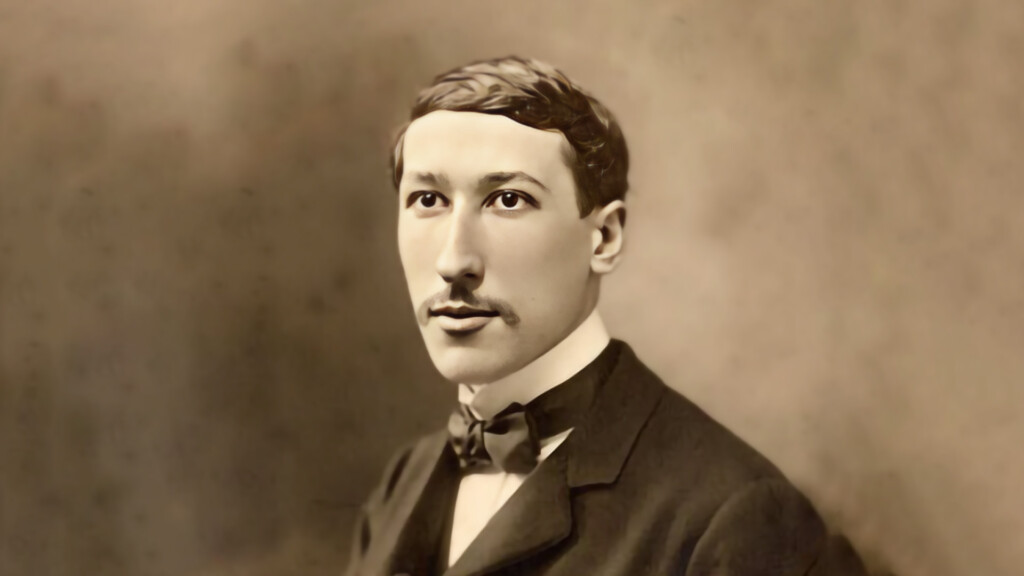
You are sitting with a document that claims to trace an unbroken chain — Hermes Trismegistus to Paracelsus to Eliphas Lévi to Helena Blavatsky — and the chain feels convincing precisely because each link is real. The names existed. The texts circulated. The initiations were performed in candlelit rooms with men in aprons or robes reciting phrases older than the lodges that preserved them. The appearance of continuity is not a fraud exactly; it is something more unsettling, which is a genuine historical transmission of forms whose interior has been evacuated.
Guénon’s reading of Western esoteric history was not dismissive — that is the crucial distinction. He did not argue that Hermeticism was invented or that Neoplatonism was merely poetry dressed in theological language. He argued something harder to refute: that these traditions had once been connected to operative centers of initiation, that by the time they became available as literature, as systems, as movements one could join, the connection had already been severed. The Hermetic corpus — those Greek texts composed roughly between the first and third centuries of the common era, falsely attributed for centuries to an Egyptian sage predating Moses — transmitted a coherent metaphysical grammar. But a grammar is not a living language. You can learn every rule and never speak to anyone.
Neoplatonism sharpens this. Plotinus, writing in the third century, produced in the Enneads one of the most rigorous accounts of interior ascent in any tradition — the soul’s return through intellect toward the One, a movement described with geometric precision. His student Porphyry sanitized the account. Iamblichus reintroduced theurgy and ritual as compensatory mechanisms, which for Guénon was already a symptom: when a tradition needs to prop up contemplation with ceremony, the contemplative faculty has begun to weaken. The rites multiply in inverse proportion to the realization they were designed to facilitate.
By the seventeenth century this inversion had become structural. Rosicrucianism — announced in the Fama Fraternitatis of 1614 and the Confessio Fraternitatis of 1615 — presented itself as the rediscovery of a universal science hidden in Christian esotericism. Scholars have debated for four centuries whether the Rosicrucian Brotherhood ever existed as an organization. Frances Yates in The Rosicrucian Enlightenment (1972) argued it functioned primarily as a utopian intellectual provocation, a thought experiment that recruited real adherents. What Guénon identified was the characteristic gesture: a claim to ancient lineage combined with doctrinal imprecision so severe that almost any reader could project their own system onto it. This is not initiation. This is the structure of a mirror.
Freemasonry received more credit from Guénon than is usually acknowledged by those who cite him polemically. He recognized in the operative masonry of the medieval guilds a genuine initiatic craft, a transmission of sacred geometry embedded in practical work, the lodge as a functional analogy to what other traditions called a school. In Perspectives on Initiation (1946), he argued that speculative Freemasonry — formalized in London in 1717, when the Grand Lodge transformed a working craft into a philosophical society for gentlemen — had retained the forms while losing the principle that animated them. The symbols remained: the compass, the square, the letter G suspended in the arch. But symbols without a living interpreter who has received and can transmit what the symbol points toward are archaeological specimens. They mean everything a scholar says they mean, which is to say they mean nothing operative.
His 1921 attack on Theosophy was the sharpest version of this argument applied to the most visible target of his era. Blavatsky’s synthesis in The Secret Doctrine (1888) assembled genuine fragments — Vedantic cosmology, Kabbalistic sephiroth, Buddhist cyclical time — into a system that looked unified because the prose never paused long enough for the seams to show. Guénon’s charge was not that the sources were false but that the assembly itself was the problem: a tradition cannot be constructed from parts any more than a living body can be assembled from anatomy diagrams.
Initiation Versus Mysticism
You have been told, at some point in your life, that the most profound transformations come unbidden — that grace descends, that insight strikes, that the sacred opens itself to those who wait with sufficient sincerity. This story is so deeply embedded in Western spiritual culture that questioning it feels almost like an act of cruelty. Guénon questioned it without apology.
The distinction he drew was surgical and, to most readers shaped by post-Romantic assumptions, genuinely disorienting. Initiation, in his technical vocabulary, is not a ceremony, not a feeling, and emphatically not a peak experience. It is the transmission of an operative influence — what the Scholastics might have called a virtus — through a legitimate chain of doctrinal and ritual continuity, one that connects the individual to a supra-individual principle and makes possible a transformation of being, not merely of psychology. The word “operative” is doing enormous work here. Guénon means that something actually changes at the level of what a human being is, not merely at the level of what they believe or how they feel about themselves at three in the morning.
William James had published his landmark study in 1902, and its intellectual authority over the following decades was immense. James catalogued mystical experience with the precision of a naturalist — passivity, noetic quality, transiency, ineffability, four markers that became the standard taxonomy for an entire century of religious scholarship. What he was doing, whether he fully recognized it or not, was constructing a psychology of the sacred, reducing the question of metaphysical reality to the question of subjective report. The experiences he documented were genuine, James insisted, and he was right that they were genuine — but genuine as experiences. The question of whether they corresponded to anything beyond the experiencing subject’s nervous system was, for him, finally secondary. Pragmatism demanded that truth be measured by consequences, and the consequences of mystical experience for the individuals James studied were often beneficial, stabilizing, even transformative in the ordinary biographical sense.
For Guénon, this represented a categorical confusion so fundamental that no quantity of sympathetic documentation could rescue it. The mystic, in his framework, is a passive recipient — someone to whom something happens, someone who receives, who is acted upon, who undergoes. The mystic’s experience may be authentic, may point toward something real, may even constitute a kind of partial and uncontrolled contact with supra-individual states, but it arrives without guarantee, without doctrinal framework capable of situating it, and without the technical means of stabilizing and extending what has been glimpsed. Teresa of Ávila’s interior castle is a magnificent record of a soul being moved. It is not, Guénon argued, a map that anyone else can follow with precision, because the movements described are not the result of a willed and structured ascent but of an unsolicited infusion. The difference between being carried and knowing how to walk is not a matter of destination — it is a matter of whether the faculty of locomotion has been genuinely developed.
What this bifurcation exposed was the degree to which Western religious scholarship, even at its most rigorous, had accepted the dissolution of the contemplative orders as a fait accompli. By the time James was writing, the living initiatic chains of the Christian West — those that had once been housed in the operative guilds, in certain monastic lineages, in currents that ran beneath the surface of official theology — had either gone underground, degenerated into purely speculative forms, or vanished entirely. What remained visible, and therefore available for scholarly study, was precisely the residue: the passive, the visionary, the mystical in James’s sense. The academic apparatus built to study inner life was, from the beginning, calibrated to a sample that had already been filtered by centuries of institutional rupture, and it mistook the fragment for the whole without ever noticing what had been lost in the selection.
The Politics of Sacred Form
You are sitting in a bookshop in a northern European city, sometime in the early twenty-first century, holding a translation of one of Guénon’s major works, and you are experiencing what feels like recognition — the sensation that someone has finally named the absence you have been carrying. The book tells you, with glacial precision, that the tradition you were born into has been stripped of its operative dimension, that the rites transmitted to you in childhood were empty vessels, that the chain of legitimate transmission was broken long before your grandparents were born. The diagnosis is impeccable. The prescription, never stated but structurally implied, is annihilating.
Guénon’s departure from France was not a personal eccentricity. When he settled in Cairo in 1930, took the name Sheikh Abd al-Wahid Yahya, married, and built a life within a functioning traditional civilization, he was enacting the logical terminus of his own doctrine. He had argued since at least The Crisis of the Modern World, published in 1927, that legitimate initiation required an unbroken chain of transmission — what he called a regular initiatic chain — connecting the living practitioner to a living center. Without that chain, no interior transformation was metaphysically possible, only psychological mimicry of it. His own conversion to Sufism through the Shadhiliyya order years earlier had given him, by his own criteria, what the West structurally could not offer. Cairo was not exile. It was proof.
The structural violence of this position becomes visible only when you follow it to its logical perimeter. Guénon acknowledged, with careful qualifications, that Roman Catholicism had once constituted a legitimate traditional form, and that certain currents of Freemasonry retained fragments of an older operative craft initiatory transmission. But “once” and “fragments” are demolitions disguised as concessions. The sociologist Pierre Bourdieu spent considerable energy in his 1979 Distinction demonstrating how cultural legitimacy operates by defining who was always already too late — and Guénon performs exactly this operation on a metaphysical register. The Western seeker is not told they are wrong. They are told they are structurally orphaned, arriving after the library burned.
What makes this more than an intellectual position is that Guénon was describing a real historical process, not inventing a polemical device. The suppression of the Knights Templar in 1307 to 1312, the dissolution of the medieval guild system across the sixteenth and seventeenth centuries, the progressive secularization of Freemasonry through the eighteenth century — these were not invented by a polemicist seeking to discredit the West. They were documented ruptures, transitions in which the operative was systematically replaced by the speculative, the technical knowledge of transformation replaced by its symbolic commemoration. When Guénon pointed at the wound, the wound was real. The problem was that pointing at it placed the pointer in an authority position that the diagnosis itself should have made impossible.
Because the moment you accept that only an intact traditional form can confer legitimate initiation, you must also accept that the authority to evaluate which forms remain intact belongs exclusively to someone already inside one. Guénon became, whether he intended it or not, a gatekeeper whose gatekeeping was self-validating. The Western reader who found him convincing was being convinced by someone who had already left — someone whose credibility rested on a departure that the convinced reader could not easily replicate, tied as they were to language, family, career, identity, the entire sediment of a life built inside the civilization Guénon had diagnostically condemned. The spiritual statelessness was not a temporary condition awaiting resolution. It was the permanent address to which his logic delivered you, with no forwarding instructions and no appeal to a higher court, because the higher court had already ruled and its ruling was the silence of an empty transmission line.
A vision curated by a filmmaker, not an algorithm
In this video I explain our vision
Evola, Schuon, and the Fracturing of Guénon’s Legacy

You inherit a map drawn by someone who refused to travel. That refusal, that sovereign distance Guénon maintained from any active engagement with the political catastrophes of his era, was not an oversight but a structural feature of his thought — and it is precisely what his two most consequential readers could not tolerate, each in a radically different direction.
Julius Evola read Guénon with the hunger of a man who had already passed through Dadaism, racial mysticism, and a failed attempt to levitate himself through tantric practice. His 1934 work Rivolta contro il mondo moderno absorbed the entire architecture of Guénon’s cyclical decline — the Kali Yuga, the regression of castes, the inversion of spiritual hierarchy — and immediately weaponized it. Where Guénon saw the modern world as metaphysical catastrophe requiring withdrawal and contemplation, Evola saw it as a battlefield demanding an aristocratic warrior class capable of riding the tiger, his phrase from 1961 for surviving civilizational collapse through active engagement with destruction rather than flight from it. The tension this exposed was real and had always been latent: Guénon’s framework contained a warrior caste, the kshatriya, but offered it no actual role in the present age. Evola simply refused that silence. He filled it with fascist aesthetics, solar mythology, and a spiritual racism that Guénon privately found repugnant, though his public criticisms remained measured. What Evola’s divergence revealed was that a doctrine of hierarchy without a sociology of power is an invitation — to whoever arrives with one.
Frithjof Schuon arrived from a completely different wound. Born in Basel in 1907, he encountered Guénon’s writings as a young man and immediately recognized in them a permission he had been waiting for: the permission to treat all authentic religious forms as transparent windows onto the same transcendent light. But Guénon had been careful, almost obsessive, about insisting on the necessity of a specific initiatic chain, a real transmission within a living tradition. Schuon took the universalist implication and stretched it into a founding principle. His 1948 work The Transcendent Unity of Religions argued that the esoteric core of every major tradition converges at a point beyond doctrinal difference, and this argument became the doctrinal foundation for the Maryamiyya, the Sufi order he established in which initiates might arrive already formed by Christianity or Buddhism and find their way to a shared metaphysical summit. Guénon’s framework had always balanced the universality of primordial tradition against the absolute necessity of formal initiation within a specific chain — Schuon essentially dissolved that tension by deciding that the summit justified the ascent by whatever path the seeker already inhabited. By the time Schuon relocated to Bloomington, Indiana, in 1980, surrounded by a community of devoted followers that included prominent scholars of religion, the Maryamiyya had become a genuinely syncretic organism — one that Guénon’s original architecture could neither have predicted nor endorsed.
What is striking, seen from a distance, is that both ruptures were acts of loyalty. Evola and Schuon were not dismantling Guénon; they were each rescuing what they believed he had abandoned. Evola rescued action. Schuon rescued compassion, or something he named compassion but which functioned more like the elimination of the hard institutional edges that genuine initiation demands. The original framework had held these two pressures — the demand for vertical hierarchy and the demand for universal accessibility — in a tension so unresolved that it reads, in retrospect, less like a synthesis than like a postponement. Guénon’s move to Cairo in 1930, his conversion to Islam, his life as a practicing Sufi under the name Abd al-Wahid Yahya — none of this resolved the question of whether the primordial tradition he described was one’s destination or simply one’s inheritance, already given, already present, waiting only to be uncovered beneath whatever rubble modernity had piled on top of it.
Academic Containment and the Domestication of Heresy
You are sitting in a university seminar room sometime in the late 1990s, the kind where fluorescent light drains color from everything, and a professor is explaining René Guénon the way a curator explains a vase — here is its provenance, here is its cultural context, here is what the civilization that produced it believed. The word “believed” does the entire work of the sentence. It is a past tense, a glass case, a burial.
This is not accidental. It is the operating procedure of a discipline. When Mircea Eliade built his monumental comparative framework across works like “The Myth of the Eternal Return” (1949) and “Patterns in Comparative Religion” (1958), he was conducting an operation that looked like enlargement but was structurally a quarantine. Eliade had read Guénon. He absorbed the Traditionalist critique of modernity, the hierarchical conception of sacred time, the diagnosis of profane civilization as ontological descent. He then translated all of it into the vocabulary of phenomenology and history of religions — a translation that preserved the furniture of Guénon’s thought while quietly removing the load-bearing wall. For Eliade, the sacred was real as a category of human experience; whether it corresponded to anything outside that experience was a question the discipline would not ask. Guénon had insisted that metaphysical truth was objective, verifiable through intellective participation, and that modernity’s refusal to acknowledge it was not a cultural choice but a form of blindness. Eliade turned that insistence into data about what certain people in certain periods happened to insist. The radicalism survived the translation only as texture.
What Eliade accomplished through intellectual absorption, Antoine Faivre accomplished through institutional architecture. His 1992 essay formalizing Western Esotericism as a coherent academic field — built around six defining characteristics including the doctrine of correspondences, living nature, imagination, and transmutation — was an act of extraordinary organizational intelligence. It gave scholars a shared vocabulary, a defensible perimeter, a way to publish without embarrassment. It also performed, with surgical precision, the reclassification that Guénon had spent his entire career resisting. Faivre’s framework treated esotericism as a “form of thought,” a historical current with identifiable features that could be mapped, compared, and periodized. This is the move. The moment you ask whether Hermeticism or Neoplatonism or Guénon’s own Traditionalism constitutes a form of thought, you have already decided that it is not a form of knowledge. Thought is something humans produce. Knowledge is something they receive. The discipline chose the first noun and never looked back.
What makes this containment so effective is that it does not feel like rejection. Academic religious studies after Faivre treated Guénon with increasing seriousness — dissertations multiplied, journals published close readings, conferences devoted entire panels to his influence. The apparatus of scholarly attention expanded precisely as the metaphysical claim at the center of his work became more thoroughly invisible. The more carefully you describe the historical conditions under which someone argued that history is a veil over timeless truth, the more thoroughly you have made their argument impossible to hear. The description colonizes the claim.
There is a precedent for what happens to a body of thought when the institution processing it is constitutionally forbidden from taking its central assertion seriously. Sigmund Freud observed in 1927, in “The Future of an Illusion,” that civilization manages dangerous ideas by first making them objects of study. He meant it as a critique of religion. He could not have anticipated that the same mechanism would be deployed against the very traditions that had diagnosed civilization’s tendency to do exactly this — to render the sacred harmless by making it interesting, to defuse the knife by putting it in a display case with a card explaining the metallurgy of its blade.
The scholars who came after Faivre produced genuinely important work. Wouter Hanegraaff’s rigorous genealogies, Marco Pasi’s careful archival recoveries — these are not dishonest projects. They are honest projects working inside a frame whose deepest assumption remains unexamined: that the question of whether any of this is true is not a question the academy is equipped to ask.
The Unresolved Wager of the Modern Seeker
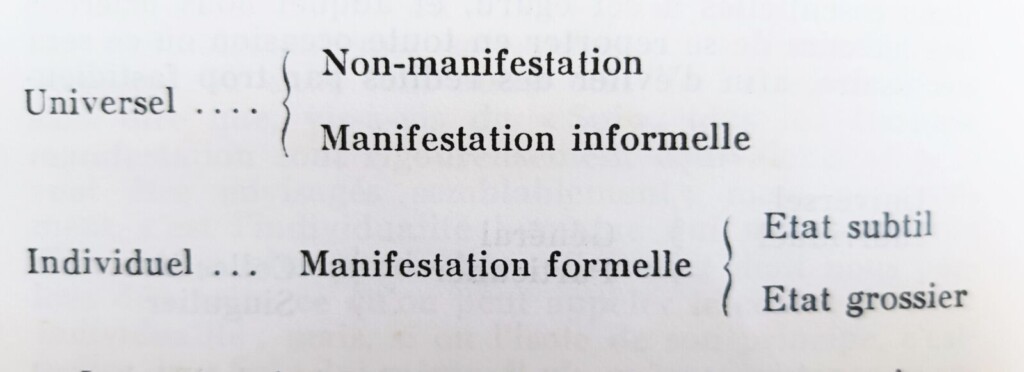
You pick up Guénon for the first time sometime in your thirties, perhaps because a philosopher you trusted mentioned him in passing, perhaps because the ordinary explanations for your persistent unease had stopped working. Within a hundred pages something happens that is difficult to name: the framework he offers feels not like a new idea but like a structural memory, a diagram of something you already suspected but could never articulate. This is precisely where the trap springs shut.
The trap is not that Guénon is wrong. The trap is the specific consequence of his being right on his own terms. His entire edifice rests on the doctrine that initiatic transmission is a living chain requiring unbroken human continuity — not metaphor, not personal sincerity, not intensity of seeking, but an actual lineage of qualifications passed from master to disciple across centuries. He wrote this with clinical precision in “Aperçus sur l’Initiation” in 1946, distinguishing categorically between genuine initiation and what he called pseudo-initiation, the counterfeit spirituality that the modern West produces in abundance precisely because the real thing is no longer accessible through Western forms. The Roman Church, the last institutional vessel that might have preserved operative transmission in the Occident, had in his analysis long since reduced its rites to purely commemorative gestures, the exoteric shell without the esoteric kernel. What remains in the West, by his own diagnosis, is a spiritual landscape from which the living current has withdrawn.
This produces a peculiar phenomenology in the contemporary reader who takes him seriously. The diagnosis is lucid and internally consistent, but it points toward a door and then explains, in footnotes, that the door requires a key that Western civilization discarded sometime before the industrial revolution. A small number of Guénon’s readers convert to Sufi orders or to certain traditional forms of Hinduism, following the path he himself took when he settled in Cairo in 1930 and died there in 1951 as the Shaykh Abd al-Wahid Yahya. But the majority of serious readers find themselves in a condition the existentialists would have recognized without endorsing: fully persuaded of a framework that renders their own situation structurally unredeemable within the terms of that same framework.
What is rarely examined is how much of this paralysis is cultural rather than metaphysical. The sociologist Pierre Bourdieu, working entirely outside Guénon’s vocabulary, spent decades documenting how symbolic capital operates to make certain fields of knowledge feel simultaneously authoritative and inaccessible to those who lack the inherited dispositions to enter them — what he called, in “La Distinction” in 1979, the logic of cultural consecration that presents contingent exclusions as natural hierarchies. Guénon’s architecture of initiation performs exactly this operation at the level of the sacred: it consecrates inaccessibility itself, making the unreachability of tradition a further proof of tradition’s authenticity. The harder it is to enter, the more genuine it must be. This circularity does not invalidate the content, but it should make any honest reader notice the aesthetic pleasure concealed inside the despair — there is something gratifying about belonging to an age too corrupt to be saved, something that relieves the pressure of ordinary transformation.
The wager that Guénon places before the modern seeker is ultimately this: whether the recognition of loss is itself a form of orientation, whether knowing with precision what has been forfeited constitutes a different kind of contact with it. He never answered this question cleanly, and his refusal to answer it may have been the most honest thing he did. What his work leaves behind is not a path so much as the precise shape of an absence — a cartography of what the modern world excised from itself so gradually that it mistook the amputation for progress, and now sometimes catches itself reaching for a limb that the official record insists was never there.
🔮 The Esoteric Tradition: Paths to the Primordial
René Guénon’s work stands as one of the most rigorous and uncompromising critiques of Western modernity, pointing toward a timeless wisdom that transcends any single tradition. To fully grasp his thought, one must explore the broader landscape of esotericism, perennial philosophy, and the mystical currents that shaped and challenged the West. These related articles illuminate the intellectual and spiritual world from which Guénon emerged and against which he defined himself.
The Theosophical Society: History, Principles and Influence on Western Culture
The Theosophical Society represented one of the most influential attempts to recover ancient wisdom in the modern West, and Guénon’s relationship with it was both formative and deeply critical. He recognized its aspirations while rejecting what he saw as its distortions and pseudo-initiatic character. Understanding Theosophy is essential to understanding where Guénon situates himself in the esoteric landscape.
GO TO THE SELECTION: The Theosophical Society: History, Principles and Influence on Western Culture
Rudolf Steiner and Anthroposophy: A Guide to Modern Esoteric Thought
Rudolf Steiner and Anthroposophy represent another major current of Western esotericism that Guénon engaged with critically, viewing it as a spiritualist deviation rather than a genuine connection to primordial tradition. Steiner’s attempt to build a modern initiatic science drew from many of the same sources Guénon valued, yet arrived at radically different conclusions. Comparing the two figures reveals the deep fault lines within twentieth-century esoteric thought.
GO TO THE SELECTION: Rudolf Steiner and Anthroposophy: A Guide to Modern Esoteric Thought
The Corpus Hermeticum: Guide to Esoteric Reading
The Corpus Hermeticum is one of the foundational texts of the Western esoteric tradition, embodying the Hermetic philosophy that Guénon recognized as a legitimate expression of primordial metaphysics. Its themes of gnosis, inner transformation, and the correspondence between macrocosm and microcosm resonate throughout Guénon’s writings on symbolism and initiation. Reading the Corpus Hermeticum alongside Guénon reveals the ancient roots of the tradition he sought to defend.
GO TO THE SELECTION: The Corpus Hermeticum: Guide to Esoteric Reading
Medieval Mysticism: History and Main Figures
Medieval mysticism, from Meister Eckhart to Bernard of Clairvaux, represented for Guénon one of the last authentic expressions of esoteric wisdom within the Western Christian world. He saw in the great mystics of the Middle Ages a genuine connection to the intellectual intuition that modernity had progressively lost. Their writings offer a bridge between the exoteric and esoteric dimensions of religion that Guénon spent his life analyzing and defending.
GO TO THE SELECTION: Medieval Mysticism: History and Main Figures
Discover the Cinema of Inner Transformation on Indiecinema
If these themes of esoteric wisdom, primordial tradition, and the search for deeper meaning resonate with you, Indiecinema’s streaming platform offers a curated selection of independent and art-house films that explore spirituality, mysticism, and the hidden dimensions of human experience. Step beyond the mainstream and let independent cinema open new doors of perception.
👉 EXPLORE THE CATALOG: Watch Indie Films in Streaming
A vision curated by a filmmaker, not an algorithm
In this video I explain our vision

