The Designated Victim as Social Infrastructure
You are standing in a crowd and you do not know precisely when the mood shifted, only that it has, and that the shift feels like relief. Someone near you said a name. Others repeated it. By the third repetition it was no longer a name but a verdict, and you felt your own shoulders loosen, a tension you had not consciously carried dissolving into the shared air. You did not choose this. You barely noticed it. And yet you participated, which is the thing you will not examine later, because later there will be no reason to — the group will have moved on, lighter, and the question of why it needed to move at all will have been quietly buried beneath the very cohesion the episode produced.

René Girard spent the better part of his intellectual life insisting that this moment is not a failure of civilization but one of its primary engines. In Violence and the Sacred, published in 1972, he argued that human communities are structurally prone to what he called mimetic contagion — a process in which desire and aggression propagate through imitation rather than individual will. People do not simply want things; they want what others want, and this convergence generates rivalry, and rivalry generates violence, and violence, once it begins to circulate, threatens to consume the community from within. The scapegoat mechanism is the resolution, not the problem. A single victim, selected through criteria that feel urgent and self-evident to everyone inside the process, absorbs the accumulated tension and is expelled or destroyed. The group then experiences a wave of unity that it retrospectively reads as proof of the victim’s guilt. The violence worked, therefore the target must have deserved it.
What makes this architecture so durable is that it does not require malice in its participants. Girard was careful to distinguish between the structural function of sacrifice and the conscious intentions of those who carry it out. The people in the crowd are not performing cruelty; they are performing solidarity. The designated victim is not incidental to social order — the victim is load-bearing. Communities under stress do not first solve their internal tensions and then, secondarily, find someone to blame. The blame is the solution, which means the victim is being asked to perform genuine infrastructural work. This reframing collapses the comfortable distance between the bystander and the persecutor and leaves very little room for the self-exonerating claim that one was simply swept along.
The sociologist Émile Durkheim had touched an adjacent truth decades earlier when he described collective effervescence in The Elementary Forms of Religious Life in 1912 — that charged, almost electric sensation of being dissolved into a group larger than oneself. He understood it primarily through ritual and celebration, but the same neurological and social machinery operates in collective condemnation. The crowd turning against someone feels, from the inside, remarkably similar to the crowd celebrating together. Both states produce belonging. Both temporarily dissolve the anxiety of individual separateness. The difference is only in the direction of the energy: inward, as shared joy, or outward, as shared contempt. Communities learn, often below the level of explicit decision, that the outward direction is more reliable. Joy requires circumstances. A target can always be found.
This is why scapegoating persists across cultures with no contact with one another, across millennia, across every variety of political and religious organization humans have constructed. It is not a bug introduced by particular ideologies or bad leaders, though ideologies and bad leaders certainly learn to weaponize it. It precedes them. The Aztec sacrificial calendar, the European witch trials that killed an estimated forty to sixty thousand people between the fifteenth and eighteenth centuries, the show trials of Stalinist Russia, the online pile-ons of the present moment — these are not different phenomena with a superficial resemblance.
The Witches of Mount Sciliar

Docufiction, by Andrea Dalfino, 2022, Italy.
The Witches of Scillar is a documentary that delves deeply into the trials that took place in Alto Adige, in Castel Presule and surrounding areas at the beginning of the 16th century, following which more than 10 were condemned to the stake on charges of witchcraft, becoming the real and precursors of the infamous Witch Hunt. Starting from the analysis of the historical context and intertwining local legends with actual events and analyzing the locations of the events with the help and guidance of experts, this film offers a new historical perspective on what happened, culminating with the exposition of what remains of the witches in South Tyrol today and how the crimes of the inquisition are judged in retrospect today.
Alto Adige is a land full of mystery, where history and legend are intertwined, with its magical and fascinating scenarios that push the mind and imagination to wander, investigate, discover. Here is the Sciliar, a suggestive mountain massif located in the natural park of the same name against the backdrop of the Dolomites, and no other mountain is so full of myths and legends as this one, on which it is said that fairy creatures and spirits of all sorts live , and in the Middle Ages it was held up as a meeting place for witches and devils. Here, during the time of the Inquisition, 10 women accused of witchcraft were tried and killed. Director Andrea Dalfino made the documentary The Witches of the Sciliar, enriching the film with fictional scenes that retrace the intricate events of the Fiè trial.
LANGUAGE: Italian
SUBTITLES: English, Spanish, French, German, Portuguese
Unanimity as the Symptom, Not the Cause
You are sitting in a room where everyone around you has already decided. Not decided through argument, not through evidence weighed carefully against counter-evidence, but decided in the way weather is decided — as a collective atmospheric shift that simply arrives. The person across from you has a name that has become a problem. You don’t remember when that happened. You only know that disagreeing now would feel like shouting into a cathedral during a funeral, and so you say nothing, and your silence is counted as agreement, and the unanimity grows one more unit larger.
This is the mechanism Gustave Le Bon was trying to name when he published The Crowd in 1895, a text so uncomfortable to academic psychology that it was simultaneously dismissed and plagiarized for a century. Le Bon’s central observation was not that crowds make people stupid — that is the condescending misreading — but that crowds make people anonymous to themselves. The individual moral threshold, which functions precisely because a person can be identified, located, held responsible, dissolves when identity diffuses into collective belonging. What remains is not irrationality but a different rationality entirely, one organized around cohesion rather than accuracy, around the group’s survival of internal tension rather than the truth of any external claim.
The Salem witch trials of 1692 offer something more disturbing than mere historical cruelty. They offer statistics. In the span of approximately fourteen months, more than two hundred people were accused, nineteen were executed by hanging, one was pressed to death under stones, and several died in prison awaiting trial. What is rarely confronted directly is the near-total absence of dissent within the institutional proceedings at the time of accusation. The unanimous consent of the accusatory community — neighbors, ministers, magistrates — was not the result of uniform corruption or uniform stupidity. It was the result of a social environment in which the cost of disagreement had become existential. To question the accusation was to invite the question of why you were defending the accused, which was itself a diagnostic symptom of guilt by association. The unanimity was self-sealing. It grew not because everyone believed with equal conviction but because the architecture of the situation made individual doubt functionally equivalent to confession.
What Le Bon understood and what most political theory still refuses to absorb is that unanimity is not consensus. Consensus is a noun of result; unanimity is a noun of pressure. When you see a community, an institution, a digital forum, or a legislative body converging on a single target with complete agreement and remarkable speed, you are not witnessing the natural conclusion of collective reasoning. You are witnessing a symptom, the same way a fever is a symptom — it tells you the body is fighting something, but it tells you nothing about whether the fight is justified or whether the enemy it has identified is real.
The sociologist Émile Durkheim, writing in The Elementary Forms of Religious Life in 1912, described what he called collective effervescence: those moments when individual consciousness is overtaken by the sensation of participating in something larger, producing a feeling of moral elevation that is physiologically indistinguishable from certainty. Righteousness, in this account, is not a conclusion — it is a hormone. Groups experiencing collective effervescence do not feel like mobs; they feel like congregations. They feel clarified. The person they have targeted does not appear to them as a victim of their psychology but as the necessary exception that proves the community’s integrity, the dark matter that explains why things have gone wrong, the leak they have finally found in a ship that was already taking on water before the accused ever boarded.
This is why the diagnostic signal is never the guilt of the individual but the quality of the certainty surrounding them — the absence of hesitation, the social penalty attached to asking obvious questions, the way doubt itself becomes evidence of contamination.

The Neurological Architecture of Contagion
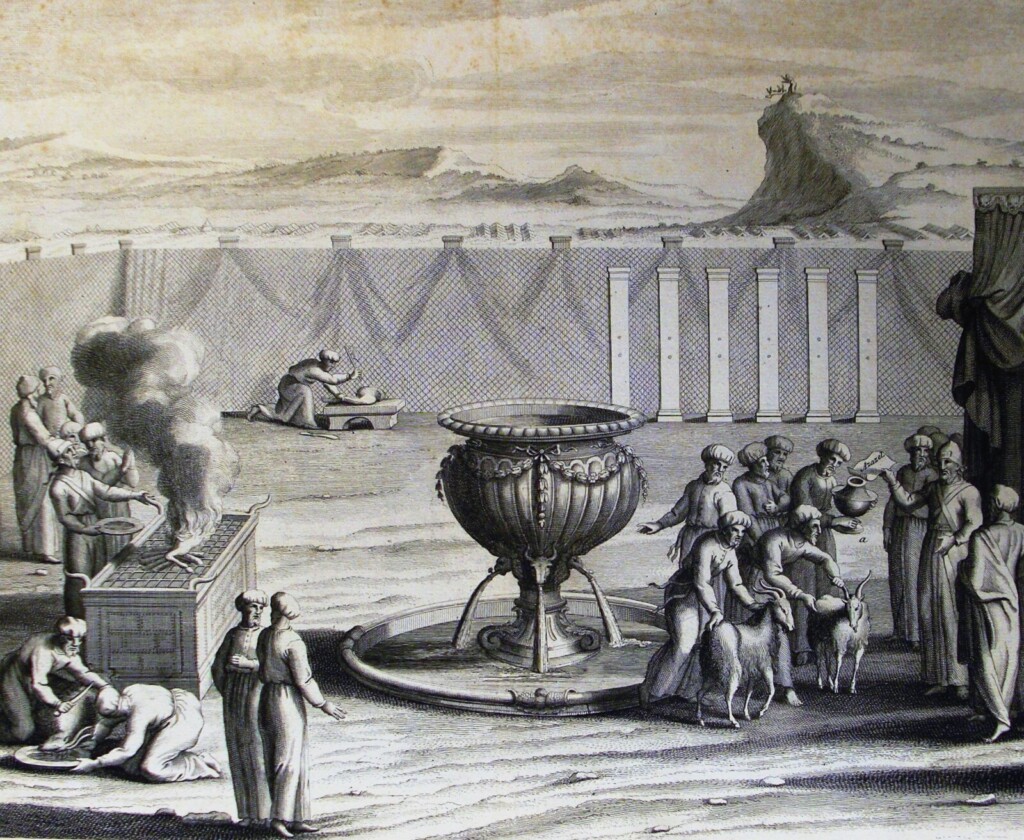
You are standing in a crowd and someone points. You do not yet know at what. But your body has already begun to orient — shoulders squaring, jaw tightening, breath shallowing into the upper chest — before a single piece of information has reached the part of your brain capable of evaluating it. The pointing happens, and something in you answers. This is not metaphor. This is the prior architecture beneath every witch trial, every public denunciation, every online pile-on that leaves a person professionally destroyed by nightfall.
Elias Canetti spent decades trying to name this force. When Crowds and Power arrived in 1960, after thirty-five years of his own obsessive investigation, it refused the comfort of sociological abstraction. Canetti was interested in the crowd as a living organism with its own physiology — the discharge he described, that moment when individual boundaries dissolve and the mass becomes a single body, is not a breakdown of civilization but one of its most ancient operating systems. The crowd does not think its way into persecution. It feels its way there, and feeling, in this context, is faster and more total than any argument.
What Canetti could not yet access, neuroscience has since begun to map with uncomfortable precision. The discovery of mirror neuron systems in the 1990s, initially documented in macaque monkeys by Giacomo Rizzolatti’s team at the University of Parma, revealed that the brain does not distinguish cleanly between performing an action and witnessing it. The same neural circuits fire in both cases. When you watch someone else’s face contort in disgust, your own insular cortex activates. You do not simulate the disgust — you partially experience it. Empathy, which we tend to celebrate as the corrective to mob violence, uses the same neurological hardware as contagion.
This is where the trap closes. Because the same mirroring that allows you to feel another person’s grief also allows you to feel another person’s hatred as though it were your own moral conviction. The crowd’s rage enters you not as an external pressure you can evaluate but as an internal sensation you recognize as righteous. The distinction between borrowed emotion and authentic judgment collapses entirely at the level of bodily experience, which means that participating in a mass persecution does not feel like losing your mind. It feels like finally thinking clearly.
Tania Singer’s research at the Max Planck Institute, particularly her 2006 study published in Nature on empathy and fairness, demonstrated that when subjects watched someone they perceived as having behaved unjustly receive pain, the empathic response in their brains was suppressed — and in male subjects, the reward circuitry actually activated. Schadenfreude is not a social aberration. It is a measurable neurochemical event, and it intensifies in proportion to how strongly the group has pre-labeled the suffering person as deserving. The scapegoat mechanism does not require cruelty as a personality trait. It requires only a prior consensus about guilt, after which the biology runs itself.
Gustave Le Bon recognized a version of this in 1895 when he wrote in The Crowd that individuals submerged in a group regress to a more primitive mental functioning — but Le Bon’s framework was contaminated by class anxiety and a desire to pathologize the masses while exempting the educated. What the neuroscience corrects is precisely this: there is no exempt class. The prefrontal cortex, which handles deliberate moral reasoning, is structurally slower than the limbic and subcortical systems driving emotional contagion. No level of education immunizes you against a process that operates beneath the threshold of conscious deliberation. The philosopher, the judge, the scientist — all carry the same mirror neurons, the same insular cortex, the same reward circuitry that lights up when a designated enemy suffers.
What this means for how communities assign guilt is something most institutions are structurally unable to admit.
Purity Rituals and the Grammar of Accusation
You have been in a room when the air shifted — not because of what was said, but because of who said it. The accusation came dressed as concern, as protection, as the maintenance of something clean. And the moment the target was named, something loosened in the crowd, something almost physical, as though a pressure had found its valve.
Mary Douglas, writing in 1966 with the kind of anthropological precision that cuts through centuries, argued in Purity and Danger that societies do not simply react to dirt — they construct it. Dirt, she demonstrated, is matter out of place. It is not an objective condition but a classificatory failure, the thing that violates the boundaries a culture has drawn to make itself legible to itself. Pollution, by this logic, is never accidental. It is the consequence of someone or something crossing a line that the group needs to believe is sacred and fixed.
What follows from this is uncomfortable: the accused does not need to have done anything. They need to embody the boundary violation. Their crime is structural before it is personal. The medieval heretic was not merely wrong about theology — they were wrong in a way that suggested the church’s walls were permeable, that the sacred could be infiltrated, that purity was an illusion requiring urgent restoration through public ceremony. The Inquisition’s procedural grammar followed a logic so consistent across centuries that it reads less like justice and more like liturgy: denunciation, isolation, extraction of confession, spectacular punishment. The content of the charge shifted — Catharism, Waldensianism, witchcraft — but the rhetorical architecture never did.
McCarthyism, which reached its peak between 1950 and 1954 and destroyed the careers of thousands of Americans, reproduced this grammar with only the thinnest ideological reskin. The polluting agent was now communism, but the accusation’s power did not come from evidence — it came from the symbolic charge of the word itself. To be named was already to be contaminated. Guilt operated by proximity and association, which is precisely how pollution logic works: the unclean spreads by contact, by resemblance, by the mere suggestion of category overlap. Roy Cohn, chief counsel in those hearings, understood instinctively what Douglas would articulate academically — that the accusation’s job is not to prove but to stain.
The continuity into contemporary cancellation culture is not an analogy. It is the same mechanism wearing different insignia. What changes is the designated pollutant — privilege, complicity, the wrong silence at the wrong moment — but the grammar of accusation preserves its medieval bones. The accused must be shown to embody the threat categorically, not merely to have committed an act. This is why the personal history is excavated, why tweets from twelve years prior surface with the gravity of confessions, why the question is never only what did they do but what does their existence reveal about the contamination we feared was already among us. The crowd does not want punishment. It wants proof that the boundary is real.
What makes Douglas’s insight so difficult to absorb is its implication that no group is immune by virtue of its values. The purity logic runs equally through communities organized around tolerance, progressive politics, or radical transparency. The specific vocabulary of pollution changes — in one century it is heresy, in another it is disloyalty, in another it is harm — but the underlying need to identify, isolate, and expel an embodiment of categorical danger is not ideological. It is structural. It belongs to the architecture of collective identity itself, which apparently cannot be maintained without a periodic ritual of boundary clarification.
The scapegoat, then, is not chosen arbitrarily, but neither is the choice rational. It follows a grammar that the crowd speaks without having learned it, a syntax of pollution whose rules are enforced most violently by those who believe they are simply speaking the truth.
The Innocence of the Persecutors
You are standing in a courtroom in Jerusalem in 1961, watching a man in a glass booth explain, with genuine patience and bureaucratic precision, that he was simply doing his job. He does not seem monstrous. He seems, horrifyingly, like someone you might have met at a neighborhood association meeting, someone who would have held the door open for you.
Hannah Arendt sat in that courtroom and came away with something the public never quite forgave her for: the observation that Adolf Eichmann was not a sadist, not a fanatic, not a man consumed by ideological hatred. He was, in her 1963 account, a functionary of extraordinary ordinariness, a man who had essentially stopped thinking. What she called the “banality of evil” was not a euphemism or an exoneration. It was a diagnosis of something far more structurally dangerous than cruelty — the suspension of moral imagination in the service of institutional belonging. The horror was not that he enjoyed what he did. The horror was that he felt, sincerely, that he had done nothing wrong.
This sincerity is the mechanism that makes mass persecution sustainable over time. Cruelty requires effort and eventually exhausts itself. Conviction, by contrast, is self-replenishing. When participants in a witch trial, a political purge, or a social media pile-on believe themselves to be agents of justice, they do not experience what they are doing as persecution at all. They experience it as correction. The internal phenomenology of the persecutor during a hysteria episode is indistinguishable from the internal phenomenology of someone genuinely defending the vulnerable — the same sense of urgency, the same moral clarity, the same righteous fatigue at the end of a long day of accusations.
Gustave Le Bon observed in 1895, in “The Crowd,” that individuals submerged in collective action undergo a measurable cognitive transformation: personal responsibility dissolves, suggestibility spikes, and the group’s emotional current replaces individual judgment. What Le Bon could not fully articulate was the subjective texture of that transformation. The person inside the crowd does not feel that they have abandoned their conscience. They feel, with absolute certainty, that their conscience has finally been activated. The crowd does not experience itself as a mob; it experiences itself as a moral uprising.
This is why historical exculpation — the comfortable belief that we would have behaved differently — is itself a symptom of the same cognitive structure it claims to reject. Philip Zimbardo’s work at Stanford in 1971, later elaborated in “The Lucifer Effect” in 2007, demonstrated that ordinary people assigned institutional roles of authority will, within days, begin inflicting psychological harm on others not out of malice but out of role fidelity. The guards in the basement of Jordan Hall were not bad people who revealed their true nature. They were ordinary people who discovered that the situation itself had become their moral compass, and that the situation was pointing somewhere terrible.
What this means for mass hysteria specifically is that the most dangerous participants are never those at the extremes. The ideologue at the edge is visible, legible, arguable. The person of moderate conviction who simply goes along because the direction of the crowd feels self-evidently righteous — that person is the engine of the whole machine. They provide legitimacy. They transform fringe accusation into institutional consensus. They make the exceptional feel statistically normal. And they do all of this while experiencing themselves as careful, as measured, as reluctantly but necessarily involved.
The accused, meanwhile, occupies a position of almost surreal disorientation: they are expected to argue against a charge that has already been absorbed as truth by the people who will judge them, argued against by people who feel that their very willingness to argue proves the original accusation correct. The structure of the trial is already a verdict, and the verdict arrived before the evidence, carried there by the forward momentum of collective moral certainty that mistakes its own velocity for truth.
A vision curated by a filmmaker, not an algorithm
In this video I explain our vision
The Scapegoat Who Accepts the Role

You are sitting across from someone who has been told, long enough and by enough people, that they are the problem. Watch their hands. They do not gesticulate with the confidence of someone defending themselves. They fold inward, they pause before answering simple questions, they pre-apologize for opinions they have not yet stated. Something has happened to the architecture of their selfhood that no single accusation could have accomplished alone — it required repetition, social unanimity, and time.
What makes the scapegoating mechanism most disturbing is not the cruelty of the crowd but the moment the target begins to assist in their own prosecution. This is not weakness. It is the result of a precise psychological process that Henri Tajfel spent much of the 1970s mapping. In his social identity theory, developed alongside John Turner and laid out across a series of papers culminating in his 1981 collection Human Groups and Social Categories, Tajfel demonstrated that individuals derive a significant portion of their sense of self from the groups to which they belong — and, critically, from the groups that define them from the outside. When a community brands someone, that branding does not stay outside the skin. The social category precedes the self, and the self, hungry for coherence, eventually reorganizes around the label it has been given. The accused does not simply receive a verdict. They are handed a new identity and given no visible alternative.
Irving Goffman understood this as a structural condition rather than a personal failure. In Stigma, published in 1963, he documented the way spoiled identity — his term — functions as a total reorganization of social existence. The stigmatized individual does not simply suffer socially; they begin to see themselves through the eyes of those doing the stigmatizing. Goffman called this process the internalization of the normals’ perspective, where the stigmatized person adopts the values of mainstream society and uses them to evaluate their own conduct, typically finding themselves wanting. The result is not just shame but a kind of cognitive occupation — the accuser takes up residence inside the accused. Every gesture becomes suspect. Every silence becomes evidence. The person who was once simply a person becomes someone perpetually managing the gap between who they are and who they are believed to be.
This dynamic is sharpest and most dangerous when the social pressure achieves unanimity. A single accusation can be dismissed. A dissenting voice in the crowd preserves the possibility of doubt. But when every institution, every relationship, every casual glance confirms the same verdict, the target loses access to the social mirrors that might reflect a different image. Sociologist Erving Goffman noted that stigmatized individuals often seek what he called the wise — people who by circumstance or sympathy have been granted insider knowledge of their situation — because only from such figures can they receive a reflection untainted by the group consensus. When the wise disappear, or recant, or join the chorus, something in the target’s capacity to resist epistemically collapses. They do not confess because they are broken. They confess because they have been systematically deprived of any social surface that would allow them to remain coherent as an innocent person.
This is why the historical record of forced confessions is not a record of exceptional torture or extraordinary psychological fragility. The Moscow show trials of the 1930s produced confessions from men like Nikolai Bukharin who were intellectually sophisticated enough to understand exactly what was being done to them, and who nonetheless produced statements of guilt with apparent conviction. Arthur Koestler, reconstructing this logic in Darkness at Noon in 1940, traced it to its root: the individual who has accepted the group’s framework of reality entirely loses the internal ground on which to stand and say the accusation is false. The self that would deny the charge has already been dissolved by the consensus that made the charge feel inevitable.
Institutional Amplification and the Feedback Loop
You are called into the room before the meeting ends. You have not been told why. The chair at the head of the table is occupied by someone who stopped meeting your eyes two weeks ago, and the HR representative sitting beside him has a folder with your name on the tab, and you understand, with the particular clarity that arrives before catastrophe rather than after, that the process began long before you entered.
This is not dysfunction. It is the system working precisely as designed. What gets misread as institutional failure in cases of mass accusation is almost always institutional efficiency — the machinery of formal process converting social anxiety into administrative procedure with a speed and thoroughness that individual actors alone could never achieve. Brian Levack’s exhaustive historical reconstruction in The Witch-Hunt in Early Modern Europe places the total execution count across European witch trials at approximately sixty thousand between 1450 and 1750, and the detail that consistently disturbs historians is not the violence but the paperwork. Torture protocols, witness depositions, appeal procedures, records of confessions obtained and confirmed — the apparatus of legal legitimacy ran alongside the killing without interruption. The courts did not contaminate the process. They were the process.
What formal institutions provide that informal accusation cannot is the conversion of social panic into something that looks, from a sufficient distance, like evidence. A rumor circulating among colleagues is psychologically fragile — it can be denied, laughed off, contradicted. But once HR opens a file, the rumor becomes an allegation; once the allegation enters a formal review, it becomes a matter of record; once the record exists, anyone who questions the original claim must now argue not against gossip but against procedure. The weight shifts entirely. The accused is no longer fighting a story. They are fighting the institution’s own investment in the story’s coherence.
Organizational psychologists studying what the German researcher Heinz Leymann termed mobbing — systematic workplace persecution through coordinated exclusion and reputational destruction — found in the 1990s that HR involvement, counterintuitively, correlated with escalation rather than resolution. Leymann’s surveys across Scandinavian workplaces estimated that roughly three to four percent of the working population experienced severe mobbing at any given time, and in the majority of documented cases, the formal intervention stage marked not the end of the cycle but its most damaging intensification. The institution, by taking the matter seriously, communicated to bystanders that the matter was serious. People who had privately doubted the accusations revised their assessments. Silence became complicity in people’s minds, and the social cost of defending the target suddenly exceeded the social cost of abandoning them.
Media operates on an identical logic, though the timescale is compressed and the feedback loop runs hotter. A story that breaks the threshold of coverage generates coverage about the coverage; the volume of attention becomes, in public perception, a proxy for the gravity of the original claim. By the time a retraction or complication enters the information stream, the architecture of assumption has already been built, and most readers encounter the correction in a cognitive environment already furnished against it. The mechanism is not editorial malice but structural — journalism’s professional norms around newsworthiness privilege emergence over resolution, accusation over exoneration, the moment of rupture over the slow, undramatic reinstatement of someone’s credibility.
What makes this feedback loop so difficult to interrupt is that each institution involved is, by its own internal standards, behaving responsibly. The court follows evidentiary procedure. The HR department follows policy. The journalist follows the story. The party committee follows its charter. Each node in the chain can point outward to the next node as the source of the pressure, and no single actor ever has to acknowledge that the system they are faithfully serving has become the engine of someone’s destruction.
The Moment the Crowd Needs a New Target
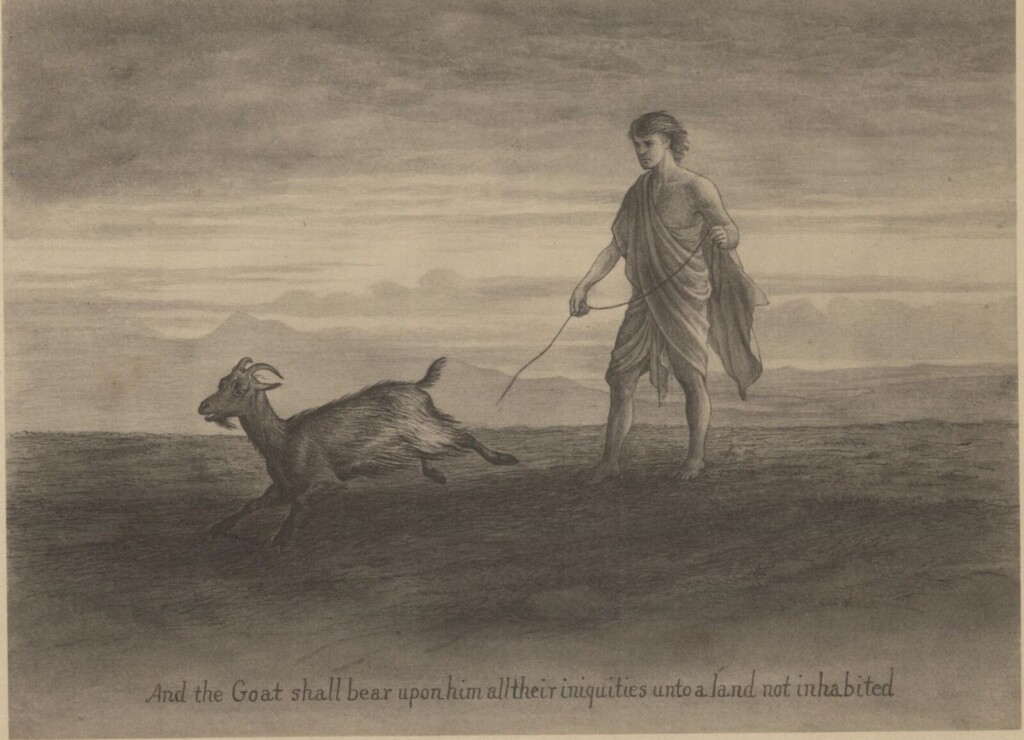
You are standing in the square the morning after. The effigy has burned, the crowd has dispersed, the name that was screamed into the night is now absent from conversation in that particular way that signals not forgetting but completion. There is a stillness that feels like peace but is physiologically closer to exhaustion — the group body has discharged something, and in the hours immediately following, there is measurable relief. People speak more gently. Minor disputes are set aside. The social temperature drops below the threshold at which ordinary friction becomes ignition.
This relief is real, and that is precisely what makes it so dangerous as evidence. Because its reality persuades the group that the mechanism worked — that the expulsion was not only emotionally satisfying but causally effective, that the source of the disturbance has genuinely been removed rather than temporarily displaced. The community misreads the symptom of its own catharsis as proof of diagnosis. And so the logic calcifies: if we felt better after, then the problem was him, was her, was them.
Norbert Elias and John Scotson documented this structure with uncomfortable precision in their 1965 study of a Leicester suburb, where an established community — older residents with a modest three-generation advantage — systematically stigmatized newcomers using the worst behavioral examples from the outsider group to define the entire population, while selecting only their own best examples as representative of the established. This was not racism in the classical sense; the groups were ethnically identical. It was pure positional logic, the need for an inside to exist requiring an outside to be held in place, with gossip, exclusion, and periodic public shaming serving as the enforcement mechanisms. What Elias identified was not a pathology specific to certain societies or historical periods but a sociological grammar, a structural demand built into the way groups manufacture and maintain their own sense of coherence.
The tension always returns. It returns because the original sources of it — inequality, anxiety, the unnamed fear of dissolution, the gap between what the group believes itself to be and what it actually is — were never addressed by the expulsion. They were only briefly eclipsed by the theater of punishment. Within weeks, sometimes days, the internal friction resurfaces, now carrying an additional charge: the frustration that even after everything, the promised relief was not permanent. This is the moment at which a group becomes structurally hungry for a new target, and the hunger is not metaphorical but operational — it produces heightened sensitivity to deviance, a lowered threshold for accusation, and an almost aesthetic appetite for a figure that can be narratively fitted to the role.
What changes with each cycle is the specificity of the accusation, not the mechanism. The charge adapts to whatever vocabulary of danger is currently available — heresy, contamination, subversion, degeneracy, privilege, toxicity. The label shifts with the cultural moment; the underlying movement of social energy does not. A group that has expelled someone is not a group that has healed. It is a group that has practiced.
What no sociological framework has yet resolved — and Elias himself left this question structurally open — is whether there exists any form of collective human organization that can maintain internal coherence over time without periodic expulsion, or whether the expulsion is not an aberration of social life but one of its load-bearing elements, as structural to the group as debt is to certain economies: always deferred, never discharged, compounding silently until the next name rises to the surface and the crowd, with the particular relief of people who have found their answer, turns toward it with something that looks unmistakably like recognition.
🐑 The Crowd, the Victim, and the Mob
Mass hysteria and the scapegoat mechanism reveal some of the darkest patterns in human social behavior. When collective anxiety rises, groups instinctively seek an outlet — a figure to blame, exclude, and destroy. These articles explore the psychological and sociological roots of this ancient and recurring dynamic.
The roots of social prejudice and the mechanisms of exclusion
Social prejudice does not emerge from nowhere: it is constructed through shared narratives that identify a group as dangerous, inferior, or guilty. Understanding the mechanisms of exclusion helps us trace the path from latent prejudice to collective persecution. This article dissects the psychological architecture that makes scapegoating not only possible but socially rewarding.
GO TO THE SELECTION: The roots of social prejudice and the mechanisms of exclusion
Thomas Hobbes and the State of Nature: When Man Is Enemy to Man
Thomas Hobbes envisioned a state of nature in which human beings are locked in perpetual conflict, driven by fear and the will to dominate. This foundational philosophical vision illuminates why crowds, stripped of institutional restraint, can turn into mobs seeking a sacrificial victim. Hobbes’s thought remains a crucial lens through which to understand mass hysteria and collective violence.
GO TO THE SELECTION: Thomas Hobbes and the State of Nature: When Man Is Enemy to Man
Golding’s Lord of the Flies: Analysis
Golding’s Lord of the Flies is one of literature’s most devastating explorations of how quickly a group abandons reason and targets the weakest among them. The novel dramatizes the birth of the scapegoat from within a community under pressure, showing how fear and hierarchy transform into ritual violence. It remains an essential parable for anyone seeking to understand the psychology of mass persecution.
GO TO THE SELECTION: Golding’s Lord of the Flies: Analysis
The Psychology of Evil: Why People Commit Violent Acts
Why do ordinary people commit acts of extraordinary cruelty when embedded in a group? The psychology of evil examines the conditions — social, emotional, and cognitive — that allow individuals to suspend empathy and participate in collective harm. This article bridges individual psychology and mass behavior, shedding light on the inner mechanics of hysteria-driven violence.
GO TO THE SELECTION: The Psychology of Evil: Why People Commit Violent Acts
Discover the Films That Dare to Tell the Truth
If these themes stir something in you, independent cinema has long been the space where the scapegoat finds a voice and the crowd is forced to look at itself. On Indiecinema you can explore a curated selection of films that confront power, exclusion, and collective madness with the courage that mainstream cinema rarely allows.
👉 EXPLORE THE CATALOG: Watch Indie Films in Streaming
👉 Questo articolo fa parte dell'hub Psychology: The Complete Guide to Mind, Behavior, and Human Nature
A vision curated by a filmmaker, not an algorithm
In this video I explain our vision